
Research article · 2023 · Full text
International Journal of Biology SciencesExploration of Ethno- medicinal plants of Kota, Rajasthan and their practices
Volume 5(1) · Pages 156–160 · DOI: 10.33545/26649926.2023.v5.i1c.159 ↗
Research areasEthnobotanical and Medicinal Plants StudiesFood Science and Nutritional Studies
Abstract
Author-writtenThe present study focus on importance of ethno medicinal plants from Kota, Rajasthan. A field survey of the study area was carried out to document the medicinal utility of plants occurring in this area. The study revealed the new ethno- botanical uses of 64 plant species belonging to 30 families. A list of plants along with their local names, plant part used and route of administration for effective control in different diseases are recorded in this paper. Documentation of such traditional knowledge of these plants is essential for conservation efforts and for new medicine development.
Summary
Source-checkedPlain-language reading of the full paper, prepared with AI and checked against the text. Each point links to the authors' own words.
Why it matters
- Documenting traditional knowledge of medicinal plants is critical for developing new medicines and supporting conservation efforts. View evidence ↗
- The Kota district in Rajasthan's Hadoti region is characterized by fertile black soil and natural deciduous vegetation. View evidence ↗
The question
- The study aimed to document the medicinal utility and importance of ethno-medicinal plants found in the Kota region of Rajasthan. View evidence ↗
What they did
- Information regarding the medicinal uses of the plants was gathered through interviews with local informants. View evidence ↗
- Plant identification was performed using standard monographs and the Flora of Hadoti region. View evidence ↗
What they found
- The survey identified 64 plant species from 30 different families with ethno-botanical uses. View evidence ↗
- Medicinal extracts in the region are derived from various plant parts, including leaves, roots, seeds, fruit, bark, and latex. View evidence ↗
- The identified plants are frequently used by locals to treat conditions such as fever, cold, flu, headache, vomiting, diarrhea, and respiratory problems. View evidence ↗
- Amaranthus hybridus (Smooth pig weed) is used locally for its anti-cancer, anti-malarial, and anti-diabetic properties. View evidence ↗
- Tridax procumbens L. (Sadahari) is utilized as an antifungal agent and to assist in blood clotting. View evidence ↗
- Azadirachta indica (Neem) is recognized for its anti-bacterial, anti-fungal, and anti-inflammatory properties. View evidence ↗
- Lantana camara L (Panchfuli) is used in the treatment of rheumatism, eczema, chicken pox, and cancer. View evidence ↗
What it means
- The authors conclude that ethno-medicinal plants play a significant role in Kota, as evidenced by the documentation of 64 species across 30 families. View evidence ↗
- The authors recommend ongoing research and conservation initiatives to protect these botanical resources from regional climatic and environmental challenges. View evidence ↗
Figures & tables
From the original paper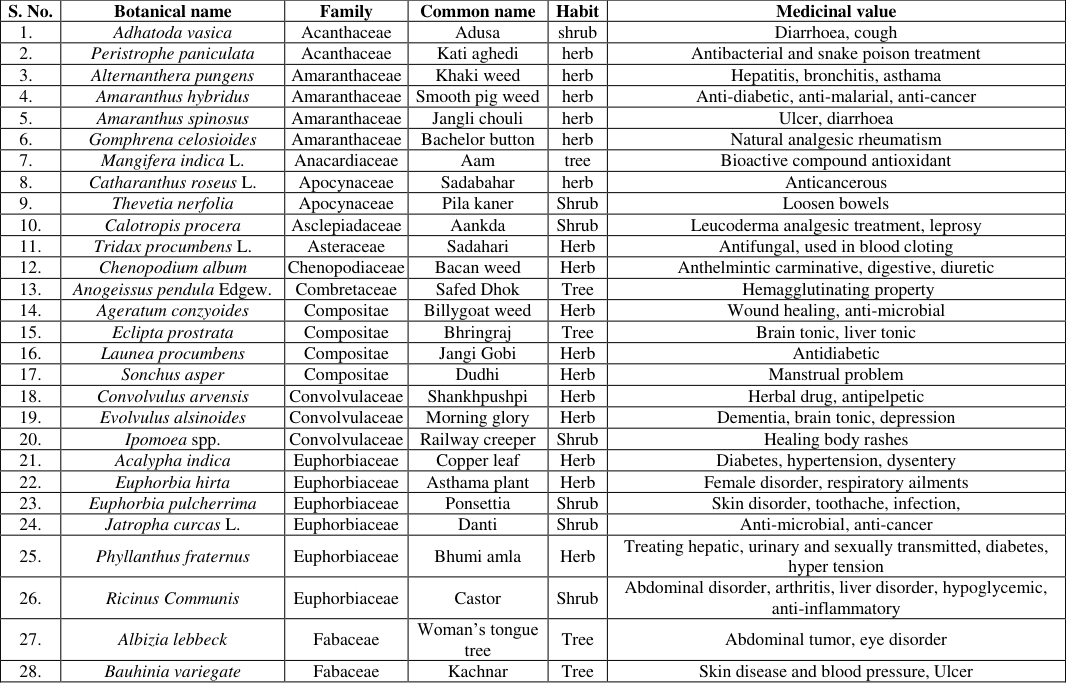 Table 1
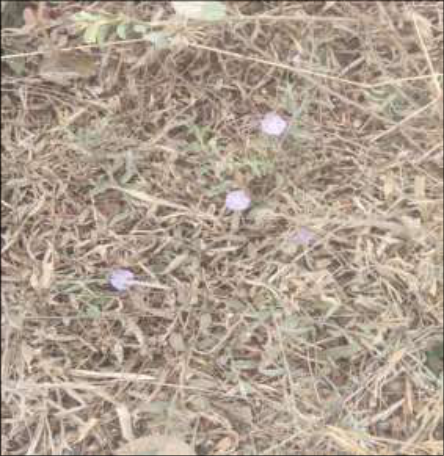 Figure 1
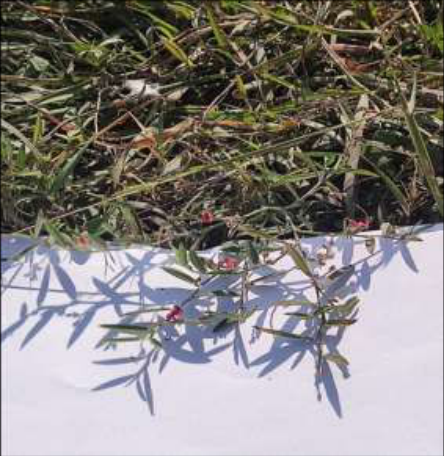 Figure 2
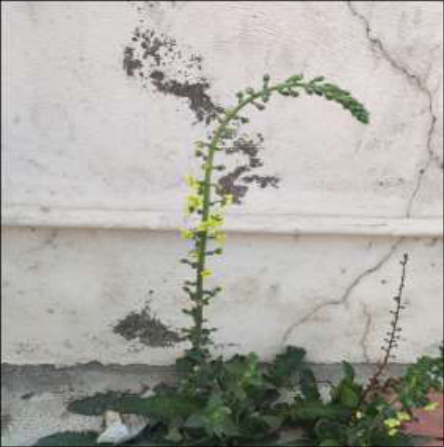 Figure 3
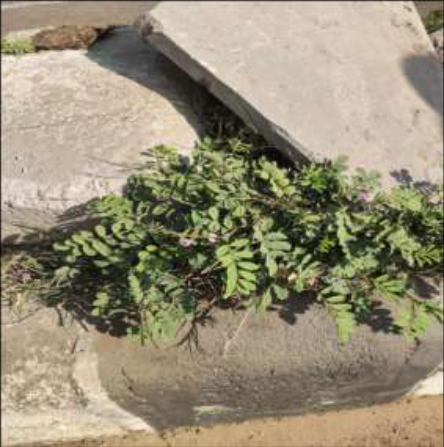 Figure 4
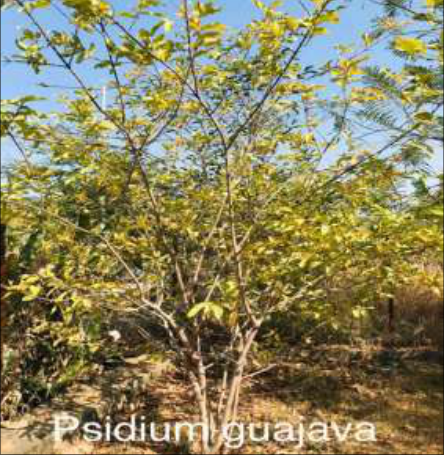 Figure 5
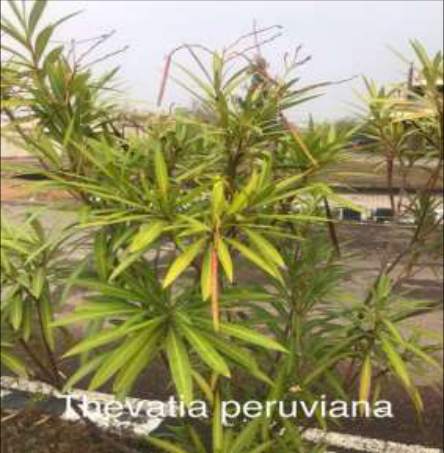 Figure 6
Introduction
Rajasthan, the largest state of India is located in the north western part of the country. Rajasthan has very rich diversity of plants with different habitats. The Kota district is situated in the south eastern part of state known as Hadoti region. The Hadoti plateau has fertile black soil with the natural deciduous vegetation. It is third in terms of land areas. It encompasses an area of 12,436 km² which is about 3.63 percent of the total land area of state. Its average elevation is 271 metres (889 ft) height. Information about the taxonomic description of Kota district of Rajasthan were taken from various references such as Singh and Pandey, 1988 [23] ; Shetty and Singh, 1987 [20] ; Joshi and Shringi, 2014 [24] ; Khandelwal and Shrivastav, 2014-15 [25] ; Sharma and Kumar, 2010 [26] ; Pareek and Mishra, 2016 [27] . Ethnobotany term was first used by taxonomist W. Harshberger (1895) [2] for study of plants used by indigenous people. It deals with natural relationship between plants and human beings. Ethnobotany is usually the study of relationship exists between people of primitive society and their plant environment (Hada and Katewa, 2015) [21] . The healing properties of certain herbs or their parts were discovered either through animals or by accident (Jain et al; 1995) [22] . The present study includes preparation of list of flora of Kota in different seasons and highlights the useful ethno-medicinal information and their uses by local people. During the study approx 64 plant species belonging to approx 30 families has been observed.
Geographical location and climatic conditions
The Kota city is situated along the bank of Chambal River. The climate is moderate to semiarid in this area with the average rainfall is about 60-75 cm in rainy period between June to September. The temperature varies between 38 °C to 40 °C in hottest month, 5 to 8 cm coldest month. The soil is fertile black soil.
Materials and Methods
Materials and Methods
Study Area
In order to recognize plants of medicinal value detailed survey was made and information regarding use of medicine has been documented. The plants were identified by using standard monograph and flora (Flora of Hadoti region-N.K. Sharma, 2002) [28] .
Data collection
Extensive survey of study area conducted seasonally during year Dec.2021 to 2022 for preparation of list of plant species occurring in different seasons. List was prepared for registering plants with herbaceous shrubby and tree habitats. The families were classified using Benthem and Hooker classification. Identification was done with help of different flora, herbarium and various literature resources. Ethnomedicinal information about plant species was collected on basis of interviews from local people. The authors interacted with many local informants and came to knew about the medicinal uses of plants.
Results and Discussion
The present work is based on the result of one year's systematic survey of vegetation growth in study area. The aim of this study is to find out the ethno medicinal plants growing as wild as well as cultivated forms thrive well in this specific climatic condition without any extra care. It was observed that Kota region experienced the condition of drought except a wet spell of two or three months i.e. late June to September, herbaceous annuals had luxuriant growth during the rainy season. (Khandelwal & Shrivastava, 2013) [10] . The dominant plant species were marked specifically, recorded and collected as needed in each periodic season. In present work total 64 species belonging to 30 families have been enumerated. In enumeration, the identified plant species were arranged according to their botanical names, family, common name and their uses. Photographs of some species are also added. To know comparative status of plant diversity at Kota district results were compare with the data collected during review of literature including, Dadhich and Kasat 1988 [1] , Shetty and Singh, 1991 [14] Khandelwal and Shrivastava, 2011 [9] , & Karoliwal 2021 [11] . The review of literature indicates that dominant tree species observed were Cassia siamea, Cassia fistula, Azadiecta indica, Albizzia lebbek, Anogeissus pendula, Bauhinia varigata, Acacia nilotica, Ziziphus nummularia, Alianthus excels, Dalbergia sissoo, Holoptelea integrifolia, Eucalyptus rudis, Parkinsonia aculeate, Ficus benghalensis, Ficus religiosa, etc. and the native herbaceous flora that was consistently observed in last few decades is Euphorbia hirta, Amaranthus hybridus, Chenopodium, alba, Tidex procombances, Achyranthes aspera, Tephrosia hamiltonii, Launaea asplenifolia, Oxaliss spp., Ageratum conyoides, Rinkosia spp., Convolvulus microphyllus, and Ziziphus spp., Datura alba, Calotropis procera, Lantana camera Nerium indium, Thevetia peruviana etc. are common occurring shrubs found in this area. After screening of biodiversity of Kota approximately 64 plant species have been recognized as important medicinal plant for treatment of various ailments by the locals. Medicines are extracted from different plant parts such as bark, fruit, seed, roots, leaves and latex. The information can be helpful to make a database of Kota for biodiversity studies and the comparative changes occur due to environmental changes and seasonal variations and the collection of information by locals about screened medicinal plants and their utility for future prospects. These plants have been used since ages in treatment of various diseases. These plant species are commonly used in diarrhea, vomiting, respiratory problem, fever, cold, flu, and headache. The study will be helpful to prepare taxonomic database of arid plant species found in the region.
Acknowledgement
AcknowledgementWe are thankful to the Department of Botany, University of Kota, Kota, Rajasthan.
Figures and tables from the paper
| S. No. | Botanical name | Family | Common name | Habit | Medicinal value |
|---|---|---|---|---|---|
| 1. | Adhatoda vasica | Acanthaceae | Adusa | shrub | Diarrhoea, cough |
| 2. | Peristrophe paniculata | Acanthaceae | Kati aghedi | herb | Antibacterial and snake poison treatment |
| 3. | Alternanthera pungens | Amaranthaceae | Khaki weed | herb | Hepatitis, bronchitis, asthama |
| 4. | Amaranthus hybridus | Amaranthaceae | Smooth pig weed | herb | Anti-diabetic, anti-malarial, anti-cancer |
| 5. | Amaranthus spinosus | Amaranthaceae | Jangli chouli | herb | Ulcer, diarrhoea |
| 6. | Gomphrena celosioides | Amaranthaceae | Bachelor button | herb | Natural analgesic rheumatism |
| 7. | Mangifera indica L. | Anacardiaceae | Aam | tree | Bioactive compound antioxidant |
| 8. | Catharanthus roseus L. | Apocynaceae | Sadabahar | herb | Anticancerous |
| 9. | Thevetia nerfolia | Apocynaceae | Pila kaner | Shrub | Loosen bowels |
| 10. | Calotropis procera | Asclepiadaceae | Aankda | Shrub | Leucoderma analgesic treatment, leprosy |
| 11. | Tridax procumbens L. | Asteraceae | Sadahari | Herb | Antifungal, used in blood cloting |
| 12. | Chenopodium album | Chenopodiaceae | Bacan weed | Herb | Anthelmintic carminative, digestive, diuretic |
| 13. | Anogeissus pendula Edgew. | Combretaceae | Safed Dhok | Tree | Hemagglutinating property |
| 14. | Ageratum conzyoides | Compositae | Billygoat weed | Herb | Wound healing, anti-microbial |
| 15. | Eclipta prostrata | Compositae | Bhringraj | Tree | Brain tonic, liver tonic |
| 16. | Launea procumbens | Compositae | Jangi Gobi | Herb | Antidiabetic |
| 17. | Sonchus asper | Compositae | Dudhi | Herb | Manstrual problem |
| 18. | Convolvulus arvensis | Convolvulaceae | Shankhpushpi | Herb | Herbal drug, antipelpetic |
| 19. | Evolvulus alsinoides | Convolvulaceae | Morning glory | Herb | Dementia, brain tonic, depression |
| 20. | Ipomoea spp. | Convolvulaceae | Railway creeper | Shrub | Healing body rashes |
| 21. | Acalypha indica | Euphorbiaceae | Copper leaf | Herb | Diabetes, hypertension, dysentery |
| 22. | Euphorbia hirta | Euphorbiaceae | Asthama plant | Herb | Female disorder, respiratory ailments |
| 23. | Euphorbia pulcherrima | Euphorbiaceae | Ponsettia | Shrub | Skin disorder, toothache, infection, |
| 24. | Jatropha curcas L. | Euphorbiaceae | Danti | Shrub | Anti-microbial, anti-cancer |
| 25. | Phyllanthus fraternus | Euphorbiaceae | Bhumi amla | Herb | Treating hepatic, urinary and sexually transmitted, diabetes, hyper tension |
| 26. | Ricinus Communis | Euphorbiaceae | Castor | Shrub | Abdominal disorder, arthritis, liver disorder, hypoglycemic, anti-inflammatory |
| 27. | Albizia lebbeck | Fabaceae | Woman’s tongue tree | Tree | Abdominal tumor, eye disorder |
| 28. | Bauhinia variegate | Fabaceae | Kachnar | Tree | Skin disease and blood pressure, Ulcer |
Table text extracted from the original PDF; superscript letters are shown inline. The original table image is below.
View original table image
References
19 in the original paper- Harshberger JW. Some new ideas; the plants cultivated by aboriginal people and how used in primitive commerce. The Evening Telegraph. 1895;64(34):2-5. Philadelphia.
- Jain V. Traditional subsistence grains of the poor now health foods for the rich. Ethnobotany. 2013;25(1&2):109-114.
- Joshi P. Herbal drugs in tribal Rajasthan from childbirth to childcare. Ethnobotany. 1989;1(1-2):77-87.
- Khandelwal M, Shrivastava N. Status of plant diversity during last two decades at KTPS campus Kota. Indian Journal of Environmental Sciences. 2011;17(2):119124.
- Khandelwal M, Shrivastava N. Impact of pollution emission of KTPS on growth performance of selected herbaceous Flora of Kota district. Advances in plant Sciences. 2013;17(2):119-124.
- Kharoliwal S. Unrecorded ethno medicinal use of biodiversity from university campus Kota. International Journal of Science and Research. 2021;10(6):272-274.
- Shrivastava N, Joshi S. Effect of particulate pollutants from automobile air pollution at Kota on the growth performances of some plants. Geobios. 2002;29(4):281282.
- Shrivastava N, Joshi S. Comparative studies on growth performances of some plants affected by automobile pollution. Pollution Research Journal. 2003;22(4):591593.
- Singh V, Pandey RP. Medicinal plant lore of tribal of eastern Rajasthan (India). Journal of Economic and Taxonomic Botany. 1980;1:137-147.
- Singh V, Pandey RP. Economic and medicinal plants of Indian desert. Desert Resources and Technology. 1983;1:307-368.
- Vyas LN, Gupta RS. An annotated list of medicinal plants of Alwar, Rajasthan Series I. Proceeding of Rajasthan Academic Sciences. 1962;9(2):49-55.
- Shetty BV, Singh V. Flora of Rajasthan. Botanical Survey of India. Calcutta. 1987;1:451.
- Hada BS, Katewa SS. Ethnomedicinal plants used against various diseases in Jhalawar district of Rajasthan, India. Journal of Global Biosciences. 2015;4(4):2077-86.
- Singh AK, Singh DP, Panday KK, Singh VN. Wollastonite as adsorbent for removal of Fe (II) from water. Journal of Chemical Technology & Biotechnology. 1988;42(1):39-49.
- Joshi S, Shringi SK. Floristic diversity with special reference to rare and threatened plants of Jawahar Sagar Sanctuary area near Kota Rajasthan. InBiological Forum. Research Trend. 2014;6(1):84-91.
- Naqvi A, Saxena D, Srivastava S, Khandelwal K, Singh C, Gupta V, et al. Studies on a New Antimalarial Agent 97/78: Assay Method, Stability and Influence of Cyclodextrins on the Stability and Permeability. Journal of Biomaterials and Tissue Engineering. 2015;5(1):7177.
- Singh A, Sharma RK, Agrawal M, Marshall FM. Health risk assessment of heavy metals via dietary intake of foodstuffs from the wastewater irrigated site of a dry tropical area of India. Food and chemical toxicology. 2010;48(2):611-619.
- Mishra AN, Sahoo R, Sahoo P, Pareek P, Behera NK, Nandi BK. Energy and centrality dependence of dNch/d $\eta $ η and dET/d $\eta $ η in heavy-ion collisions from $\sqrt {s_ {NN}}= 7.7$ s NN= 7. 7 GeV to 5.02 TeV. The European Physical Journal A. 2016;10(52):18.
- Gupta BD, Sharma NK. Fabrication and characterization of U-shaped fiber-optic pH probes. Sensors and Actuators B: Chemical. 2002;82(1):89-93.