
Research article · 2023 · Full text
International Journal of Horticulture and Food ScienceEffect of chromium induced stress on seed germination and physiological parameters of Barley (Hordeum vulgare L.)
Volume 5(1) · Pages 81–86 · DOI: 10.33545/26631067.2023.v5.i1b.162 ↗
Research areasPlant Micronutrient Interactions and EffectsPolymer-Based Agricultural EnhancementsPlant Stress Responses and Tolerance
Abstract
Author-writtenCrop plants are\r\nnegatively affected by heavy metals. Chromium is also a heavy metal that harms\r\ncrops. This study aims to examine the effects of several chromium treatments on\r\nthe germination and physiological processes of barley seedlings. A Petri\r\nculture experiment was performed to accomplish this purpose. In this\r\nexperiment, sterilized barley seeds were sown in Petri dishes lined with\r\nWhatman No. 1 filter paper in triplicate. Filter papers were wetted with four\r\nconcentrations of chromium (25, 50, 75, and 100 µM), and distilled water was\r\nused as a control (0 µM) treatment. The seedlings were measured on the\r\nfourteenth day. Resulted, various Cr treatments insignificantly decreased the\r\ngermination percentage (GP) and speed of germination index (SGI). The number of\r\nlateral roots was reduced significantly by all Cr treatments. Treatments with\r\nCr decreased the growth of the seedling and biomass (fresh and dry) of\r\nseedlings. Higher treatments (75 and 100 µM) resulted in significant decreases\r\nin root length, and the treatments with 50, 75, and 100 µM of Cr caused\r\nsignificant reductions in shoot length and total seedling length. All chromium\r\ntreatments significantly decreased the fresh weight of root, shoot, and total\r\nseedlings. Higher Cr treatments (50, 75, and 100 µM) caused significant\r\nreductions in root dry weight. Several chromium treatments caused significant\r\ndecreases in shoot and total seedling dry weight. Different Cr treatments\r\ndiminished the seedling vigor index (SVI) and tolerance index (TI). By\r\nincreasing the chromium treatments, the percentage difference from the control\r\n(% DFC) for germination and the percentage of phytotoxicity (PP) were found to\r\nincrease.
Summary
Source-checkedPlain-language reading of the full paper, prepared with AI and checked against the text. Each point links to the authors' own words.
Why it matters
- Heavy metals, including chromium, are known to have negative impacts on crop plants. View evidence ↗
- Chromium is a significant environmental pollutant, ranking second in the contamination of soil and water. View evidence ↗
- The first physiological effect of chromium exposure on plants is typically toxicity during seed germination. View evidence ↗
The question
- The study aimed to evaluate how different concentrations of chromium affect the germination and physiological processes of barley seedlings. View evidence ↗
What they did
- The experiment used distilled water as a control and four chromium concentrations: 25, 50, 75, and 100 µM. View evidence ↗
- Twenty seeds of barley variety RD 2552 were sown per petri dish, with three replicates for each treatment group. View evidence ↗
- Growth parameters were recorded on the fourteenth day after seeding. View evidence ↗
What they found
- Germination percentage decreased from 100% in the control to 86.67% at the 100 µM chromium concentration, though this effect was not statistically significant. View evidence ↗
- The number of lateral roots decreased significantly at all chromium levels, with the greatest reduction of 32.55% occurring at 100 µM. View evidence ↗
- Root length was reduced by all treatments, with significant reductions observed at 75 µM (17.72%) and 100 µM (22.25%). View evidence ↗
- Shoot length was significantly reduced at 50 µM (10.05%), 75 µM (15.48%), and 100 µM (22.12%) compared to the control. View evidence ↗
- Root fresh weight decreased significantly across all treatments, reaching a maximum reduction of 35.2% at 100 µM. View evidence ↗
- Root dry weight was significantly reduced at 50 µM (9.07%), 75 µM (16.08%), and 100 µM (21.6%), while the 25 µM reduction (3.37%) was insignificant. View evidence ↗
- The seedling vigor index (cm) dropped from 1951 in the control to 1317.93 at 100 µM chromium. View evidence ↗
- The tolerance index (TI) for both roots (78.65) and shoots (79.39) reached its lowest values at the 100 µM chromium concentration. View evidence ↗
What it means
- The authors concluded that chromium negatively impacts both the germination percentage and the overall seedling growth of barley. View evidence ↗
- The authors suggest that these findings can help develop protection guidelines for crops in chromium-contaminated environments and aid in breeding chromium-tolerant barley varieties. View evidence ↗
Visual summary
3 visualsIllustrations explain the paper; charts are replotted from the paper's own table values.
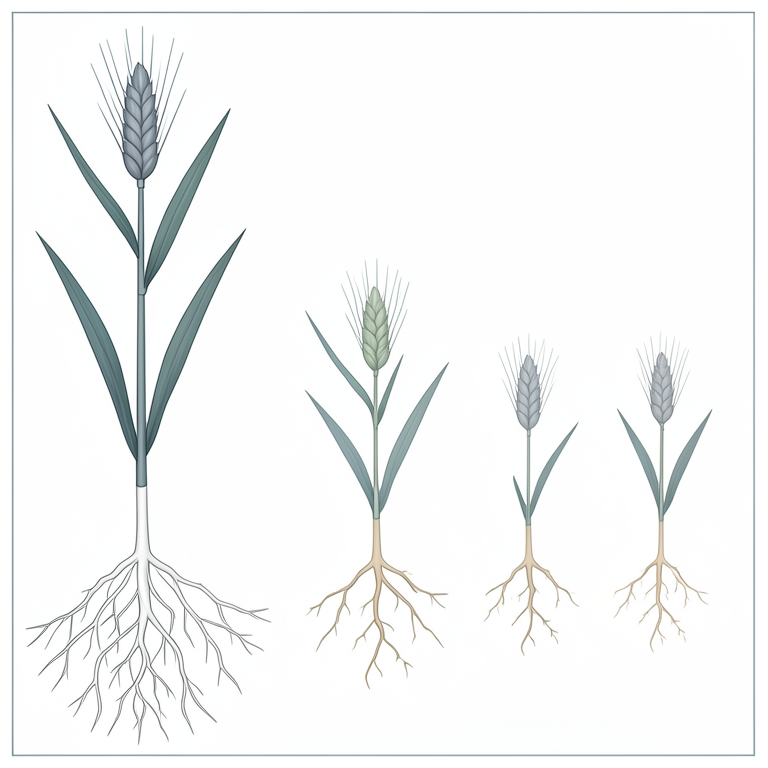
Dose-Response Effect of Chromium on Barley
AI-generated conceptual illustration (Barley seedlings (Hordeum vulgare L.)). It explains the idea and does not show study data.
View source evidence ↗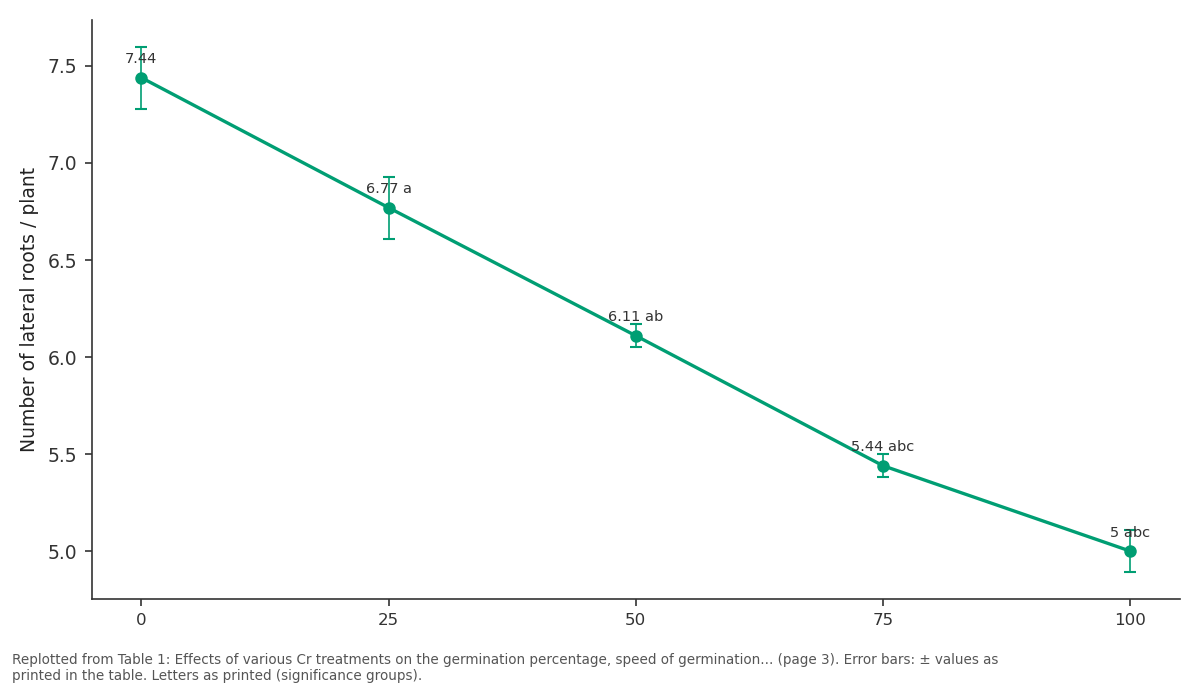
Number of lateral roots / plant: 0 vs 25 vs 50 vs 75 vs 100
Replotted from Table 1 (page 3) of the original paper. Every bar is the paper's own table value.
View source evidence ↗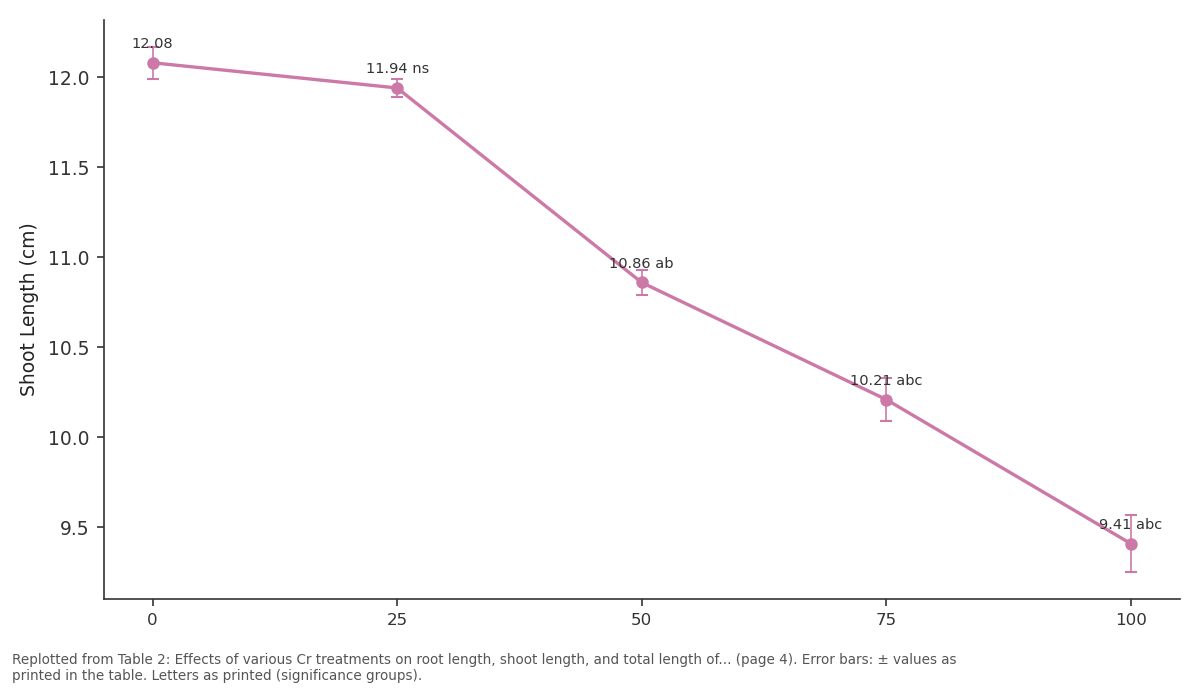
Shoot Length (cm): 0 vs 25 vs 50 vs 75 vs 100
Replotted from Table 2 (page 4) of the original paper. Every bar is the paper's own table value.
View source evidence ↗Figures & tables
From the original paper Table 1
 Table 2
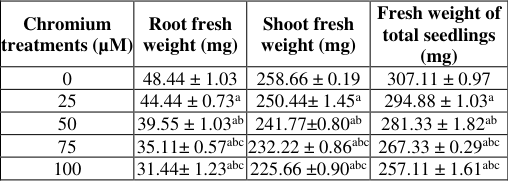 Table 3A
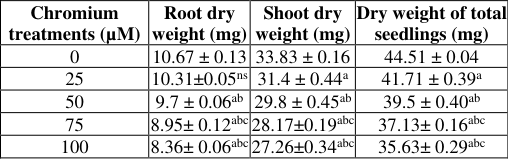 Table 3B
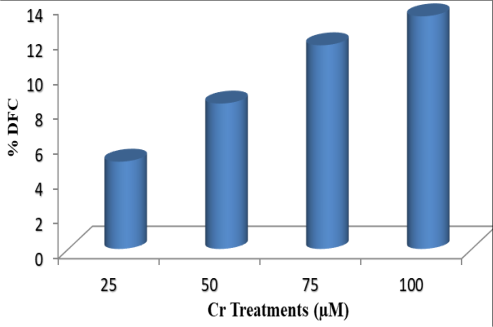 Figure 1
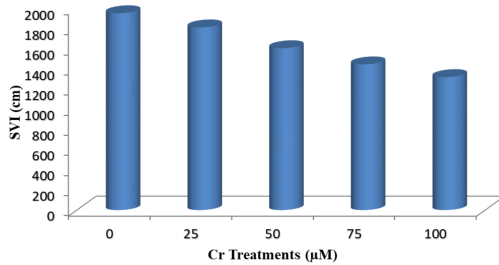 Figure 2A
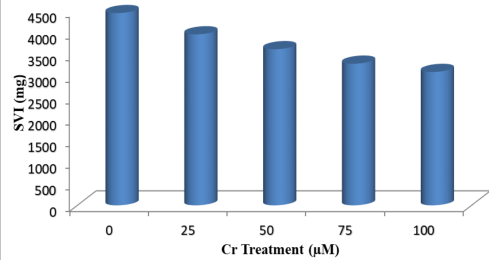 Figure 2B
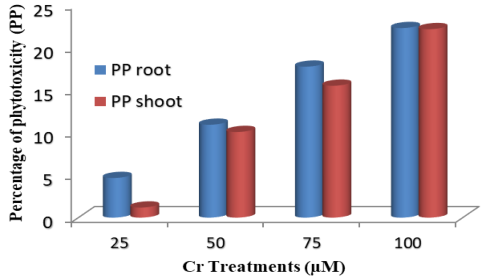 Figure 3A
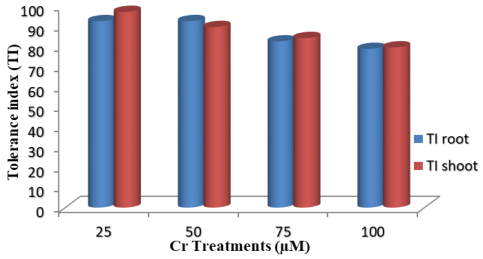 Figure 3B
Introduction
Various heavy metals are present in the atmosphere and contaminate the environment. Oversaturation of soil and water with heavy metals adversely affects crop plants and their yield (Sangwan et al., 2014) [1] . In these heavy metals, chromium is also contaminated the environment and secures second rank to contaminate soil and water (Kumar et al., 2017; Kumar et al., 2021) [2,3] . Chromium is an extremely poisonous heavy metal for living things, with several negative consequences seen in people, animals, plants, and microorganisms (Cervantes et al., 2001; Lushchak 2011) [4,5] . A negative impact of chromium on the physiological and biochemical processes of crop plants had been documented (Ali et al., 2011a) [6] . There are various physiological functions of plants, including photosynthesis, plant water relation, and mineral nutrient absorption in plants that can be negatively impacted by excessive Cr (Ali et al., 2011b; Ali et al., 2012) [7,8] . In recent decades, Cr has been widely used in a wide range of industrial activities, like leather tanning, extracting, and electroplating (Ertani et al., 2017) [9] . Exposure to Cr is expected to cause seed germination toxicity, and it is the initial physiological impact of Cr on plants. Plants are impacted by chromium through a number of metabolic activities, including germination of seeds and early seedling development, root and shoot growth, biomass, and chlorosis deficits in photosynthetic capacity, as well as plant death on the whole (Scoccianti et al., 2006) [10] . A decrement was found in the length and weight (fresh and dry) of seedlings by chromium toxicity (Anuradha and Tejasvi 2022) [11] . Animal feed, malt, and human meals all use barley grain in some capacity. In a number of developing nations, notably India, barley straw gets used as food for livestock. (Cavallero et al., 2002) [12] . The possible health benefits of barley are now the principal benefit of using grain in diets. It has been widely observed that barley lowers blood cholesterol when combined with b-glucans (Behall et al., 2004) [13] and the glycemic index (Cavallero et al., 2002) [12] . The purpose of the present study was to investigate the effects of various concentrations of chromium on seed germination and seedling growth of barley.
Material and Method
A Petri culture experiment was carried out in the Department of Botany, Agra College, Agra, Uttar Pradesh, India. In this experiment, distilled water was used as the control (0 µM), and four chromium concentrations (25, 50, 75, and 100 µM) were applied. CrCl 3 .6H 2 O was used to provide chromium treatments. A completely randomized design was used in the experiment with three replicates. Barley seeds were disinfected with 0.1% HgCl 2 (mercuric chloride) for one minute, then washed several times with distilled water. After this, the seeds were dried between two filter sheets. Sterilized petri plates were lined with Whatman number 1. Filter paper. Twenty seeds of barley (Hordeum vulgare var. RD 2552) were sown in each petri dish and three replicates were used for each treatment. The filter papers were wetted with four different concentrations of chromium solution; consisting of 25, 50, 75, and 100 µM. Distilled water was used as a control treatment (0 µM). The seeds were allowed to sprout for 5 to 7 days in a dark growth chamber. Seeds were considered to have germinated with a radical length of 2 mm (Mohammadi, 2009) [14] . Growth parameters were measured on the fourteenth day of seeding.
Growth parameters
The germination percentage was calculated according to the given formula which was described in the earlier study (Anuradha and Tejasvi 2023) [15] . Number of lateral roots was counted manually. The root length and shoot length were measured by using a scale. Fresh weight of the root and shoot was taken immediately after removing the plant from the filter paper, and dry weight was measured after drying the plants when weight was until stabled. Germination percentage was computed by using this formula Germination % = [Number of germinated seeds / Total number of seeds] x 100 Speed of germination index (SGI) The speed of germination index was calculated by the following formula given by (Carley and Watson 1968) [16] .
Where G is the number of germinated seeds after 24 hours (1 day), the sum of germinated seeds was multiplied with 5 to calculate the germination percentage. % DFC for germination: % DFC was computed by using (Mhatre and Chaphekar's 1982) [17] formula. % DFC = [Germination % of control -Germination % of test solution / Germination % of control] x 100 Seedling vigour index I was calculated by using formula proposed by (Abdul-Baki and Anderson, 1973) [18] .
Seedling Vigour index I (SVI I) = Germination percentage × root length + shoot length (cm). Seedling vigour index II was calculated by using formula given by (Hossein and Kasra, 2011) [19] .
Percentage of phytotoxicity: PP for shoot and root was calculated according to the formula of (Chou et al., 1978) [20] . % Phytotoxicity = [root or shoot length of controlroot or shoot length of test solution / root or shoot length of control] x 100.
Tolerance index (TI) of root and shoot was determined according to the formula of (Turner and Marshal 1972) [21] as follows. TI = [mean length of longest root or shoot in test solution / mean length of longest root or shoot in control] x 100.
Statistical analysis
The experiment was a completely randomized design with three replicates. The obtained data from germination and growth characteristics of barley by statistically analyzed to determine the level of individual variation by the mean and standard error (N = 3) and then one-way ANOVA was performed using SPSS software and the Least significance difference (LSD) at 0.05 probability.
Result and discussion
The effects of chromium were examined on barley var. RD 2552 and its results have been assessed for seed germination and physiological characteristics such as germination percentage, number of lateral roots, length, and biomass of seedlings.
Effect of chromium on seed germination
The results of the present study indicated in Table 1 and found that Cr showed deleterious effects on seed germination at all levels. The maximum value of germination percentage (100%) was at the control, and the minimum GP value (86.67%) was found at 100 µM concentrations of chromium. The speed of seed germination was also affected by the chromium treatments. It was the maximum in the control-treated plant and minimum under 50 µM chromium level (Table 1). But the effect of chromium on germination percentage and speed of germination index was not significant. Figure 1 shows that the % DFC for germination increased with chromium levels increased. It was 5%, 8.33%, 11.66%, and 13.33% under 25, 50, 75, and 100 µM levels of Cr treatment, respectively. Various studies show that the sprouting of plants is inhibited by chromium stress as, Hou et al. (2014) [22] studied on 5 different crop plants; Sharma et al. (2016) [23] studied on rice; Lei et al. (2021) [24] studied on wheat.
| Chromium treatments (µM) | Germination percentage | Speed of germination index (SGI) | Number of lateral roots / plant |
|---|---|---|---|
| 0 | 100.00 ± 0 | 1386.66 | 7.44 ± 0.16 |
| 25 | 95.00 ± 2.88ns | 1283.33ns | 6.77 ± 0.16a |
| 50 | 91.66 ± 6.00ns | 963.33ns | 6.11 ± 0.06ab |
| 75 | 88.33 ± 6.00ns | 1116.66ns | 5.44 ± 0.06abc |
| 100 | 86.66 ± 3.33ns | 1106.66ns | 5.0 ± 0.11abc |
Table text extracted from the original PDF; superscript letters are shown inline. The original table image is below.
View original table image
Number of lateral roots / plant
Lateral roots increase the amount of soil reached by roots, provide the anchor, and participate in the absorption and transport of water and nutrients. Data shown in Table 1; the numbers of lateral roots were decreased by various chromium levels significantly. At all Cr levels 25, 50, 75, and 100 µM, it declined 8.53%, 17.76%, 26.74%, and 32.55% respectively, compared with the control. Many studies indicates that the number of lateral roots were decreased by chromium such as, Zeid et al. (2001) [25] in phaseolus vulgaris, Mallick et al. (2010) [26] reported in Zea mays, and Lopez-Bucio et al. (2015) [27] seen in Arabidopsis thaliana.
Length of seedlings
As shown in Table 2, root length was reduced by all chromium treatments. It was significantly elevated at 75 and 100 µM and negligible at chromium levels of 25 and 50 µM. The root length was reduced by 4.65%, 10.9%, 17.72%, and 22.25% at 25, 50, 75, and 100 µM treatments respectively, relative to the control. It is known as the percentage of phytotoxicity in the root (Figure 3a). The shoot length was diminished by all doses of chromium (Table 2). A significant reduction was seen at the 50, 75, and 100 µM levels, and the % reduction was 10.05%, 15.48%, and 22.12% respectively. But at low treatment (25 µM), the reduction was 1.18%, which was not significant in comparison with the control. It is called the percentage of phytotoxicity in the shoot (Figure 3a). Chromium was toxic for the total seedling length (Table 2). The total seeding length shows an insignificant reduction to less (25 µM) with a % reduction of 2.45%. It was significant at 50, 75, and 100 µM treatments with 10.34%, and 22.21% respectively, compared to the control. Similar results were recorded in previous studies by various researchers, Akinci & Akinci (2010) [28] measured in melon, Handa et al. (2018) [29] examined Brassica juncea, Anuradha and Tejasvi (2022) [11] investigated on barley, and reported that the seedling length reduced by chromium.
| Chromium treatments (µM) | Root Length (cm) | Shoot Length (cm) | Total length of seedlings (cm) |
|---|---|---|---|
| 0 | 7.42 ± 0.17 | 12.08 ± 0.09 | 19.50 ± 0.26 |
| 25 | 7.08 ± 0.26ns | 11.94 ±0.05ns | 19.02 ± 0.29ns |
| 50 | 6.61 ± 0.16ns | 10.86 ± 0.07ab | 17.47 ± 0.10ab |
| 75 | 6.11 ± 0.22a | 10.21 ± 0.12abc | 16.32 ± 0.09ab |
| 100 | 5.75 ± 0.17ab | 9.41 ± 0.16abc | 15.16 0.32abc |
Table text extracted from the original PDF; superscript letters are shown inline. The original table image is below.
View original table image
Weight of seedling (fresh and Dry)
According to the findings listed in Table 3a, all amounts of chromium significantly reduced the fresh weight of the seedlings' root, shoot, and total weight. The root fresh weight decreased by 8.2% at 25 µM, 18.3% at 50 µM, 27.3% at 75 µM, and 35.2% at 100 µM treatments versus control. At 25, 50, 75, and 100 µM Cr treatments, the reduction in shoot fresh weight was 3.17%, 6.52%, 10.22%, and 12.75% lower than the control, respectively. Under 25, 50, 75, and 100 µM Cr concentrations, respectively the fresh weight of total seedlings decreased by 3.97%, 8.39%, 12.94%, and 16.28% above the control. According to the results shown in Table 3b, all chromium concentrations caused negative impacts on the seedling's dry weight and significantly decreased the dry weight of the shoot and total seedlings. The root dry weight declined significantly, at 50, 75, and 100 µM treatments, the reduction was 9.07%, 16.08%, and 21.6% respectively, and insignificantly at 25 µM, reduction was 3.37%, compared to the control. At 25, 50, 75, and 100 µM treatments, the decrease in shoot dry weight was 7.2%, 11.94%, 16.71%, and 19.41%, respectively as compared to control. At treatments of 25, 50, 75, and 100 µM chromium, the dry weight of total seedlings decreased by 6.3%, 11.26%, 16.57%, and 19.95% in comparison to control-treated plants. Our results show similarities with the given studies; Ashfaque et al. (2017) [30] worked on mustard, Joshi et al. (2019) [31] investigated some Indian crops, Anuradha and Tejasvi (2022) [11] researched on barley and recorded the plants' biomass was reduced by various Cr levels.
Seedling vigor index (SVI)
The chromium treatments harmed the seedling vigor index. The seedling vigor index (cm) decreased significantly at higher treatments (50, 75, and 100 µM) but not at the lowest treatment (25 µM). The greatest SVI (cm) Value (1951) was recorded under control treatment, and the lowest SVI (cm) value (1317.93) with 100 µM Cr dosage, as shown in Figure 2a. The seedling vigor index (mg) dramatically decreased at all chromium treatments. The maximum SVI (mg) was 4451, discovered under control, while the lowest value was 3087.77, recorded at a 100 µM Cr treatment (Figure 2b). Our findings are consistent with Amin et al. (2013) [32] , Amin et al. (2014) [33] , and Murtaza et al. (2017) [34] , they discovered that chromium lowered the seedling vigor index.
Tolerance index (TI)
The root and shoot TI values decreased considerably under 75 and 100 µM Cr treatments, but the reduction was not significant at lower treatments (25 and 50 µM). The highest root TI value was 92.41 for the 25 µM and 50 µM treatments. Under a 100 µM Cr level, the lowest value was 78.65 (Figure 3b). According to Figure 3b, at a 25 µM treatment, the highest shoot TI value was 96.99, whereas the 100 µM treatment recorded the lowest value (79.39). Several researchers, including Amin et al. (2013) [32] , Amin et al. 2014 [33] , Murtaza et al. (2017) [34] , and Ashfaque et al. (2017) [30] found that higher chromium treatments considerably decreased the tolerance index compared to lower treatments that dropped insignificantly. Data are mean of 3 replicates, mean ± SE (standard error); "ns" for non-significant at p<0.05; "a" to be significant at p<0.05 and compare with the control; "b" for significantly at p<0.05 and compare to 25 µM; "c" for significant at p<0.05 and compare with 50 μm of Cr treatments. Data are mean of 3 replicates, mean ± SE (standard error); "ns" for non-significant at p<0.05; "a" to be significant at p<0.05 and compare with the control; "b" for significantly at p<0.05 and compare to 25 µM; "c" for significant at p<0.05 and compare with 50 μm of Cr treatments. Data are mean of 3 replicates, mean ± SE (standard error); "ns" for non-significant at p<0.05; "a" to be significant at p<0.05 and compare with the control; "b" for significantly at p<0.05 and compare to 25 µM; "c" for significant at p<0.05 and compare with 50 μm of Cr treatments. Data are mean of 3 replicates, mean ± SE (standard error); "ns" for non-significant at p<0.05; "a" to be significant at p<0.05 and compare with the control; "b" for significantly at p<0.05 and compare to 25 µM; "c" for significant at p<0.05 and compare with 50 μm of Cr treatments.
Conclusion
The study's findings demonstrated that chromium hurt the germination percentage and seedling growth of barley (Hordeum vulgare). The germination percentage, speed of germination index (SGI), seedling vigor index (SVI), and tolerance index (TI) were negatively affected by all measured concentrations of this heavy metal (Cr; 25, 50, 75, and 100 µM). When Cr was used to treat the roots and shoots, their growth, biomass, and number of lateral roots were severely hampered. This study may provide more protection guidelines for crop plants for Cr in soils and water and also helps to prepare Cr-tolerant varieties of barley.
Acknowledgement
AcknowledgementsThe authors are thankful to the Head, Department of Botany, Agra College and Agra, India for providing the necessary facilities for conducting the experimental work.
Figures and tables from the paper
| Chromium treatments (µM) | Root fresh weight (mg) | Shoot fresh weight (mg) | Fresh weight of total seedlings (mg) |
|---|---|---|---|
| 0 | 48.44 ± 1.03 | 258.66 ± 0.19 | 307.11 ± 0.97 |
| 25 | 44.44 ± 0.73a | 250.44± 1.45a | 294.88 ± 1.03a |
| 50 | 39.55 ± 1.03ab | 241.77±0.80ab | 281.33 ± 1.82ab |
| 75 | 35.11± 0.57abc | 232.22 ± 0.86abc | 267.33 ± 0.29abc |
| 100 | 31.44± 1.23abc | 225.66 ±0.90abc | 257.11 ± 1.61abc |
Table text extracted from the original PDF; superscript letters are shown inline. The original table image is below.
View original table image
| Chromium treatments (µM) | Root dry weight (mg) | Shoot dry weight (mg) | Dry weight of total seedlings (mg) |
|---|---|---|---|
| 0 | 10.67 ± 0.13 | 33.83 ± 0.16 | 44.51 ± 0.04 |
| 25 | 10.31±0.05ns | 31.4 ± 0.44a | 41.71 ± 0.39a |
| 50 | 9.7 ± 0.06ab | 29.8 ± 0.45ab | 39.5 ± 0.40ab |
| 75 | 8.95± 0.12abc | 28.17±0.19abc | 37.13± 0.16abc |
| 100 | 8.36± 0.06abc | 27.26±0.34abc | 35.63± 0.29abc |
Table text extracted from the original PDF; superscript letters are shown inline. The original table image is below.
View original table image
References
32 in the original paper- Sangwan P, Kumar V, Joshi, UN. Effect of chromium (VI) toxicity on enzymes of nitrogen metabolism in clusterbean (Cyamopsis tetragonoloba L.). Enzyme Research. 2014;2014:1-9.
- Kumar P, Malik M, Singh R, Rani A, Kumar A. A comparative study on the biosurfactant producing bacteria from oil contaminated water. Bio-Science Research Bulletin. 2017;33(1):37-43.
- Kumar M, Mukherjee, TK, Sharma I, Upadhyay SK, Singh, R. Role of bacteria in bioremediation of chromium from wastewaters: An overview. BioScience Research Bulletin. 2021;37(2):77-87.
- Cervantes C, Campos-Garcia J, Debars S, GutierrezCorona F, Loza-Tavera, H, Carlos-Tarres-Guzman, M, Moreno-Sanchez R. Interaction of chromium with microorganisms and plants. FEMS Microbiology Reviews. 2001;25:335-347.
- Lushchak VI. Adaptive response to oxidative stress: Bacteria, fungi, plants and animals. Comparative Biochemistry and Physiology -Part C: Toxicology & Pharmacology. 2011;153(2):175-190.
- Ali S, Cai S, Zeng F, Qiu, B, Zhang GP. The effect of salinity and chromium stresses on uptake and accumulation of mineral elements in barley genotypes differing in salt tolerance. Journal of Plant Nutrition. 2012;35:827-839.
- Ertani A, Mietto A, Borin M, Nardi, S. Chromium in agricultural soils and crops: a review. Water Air & Soil Pollution. 2017;228:190-201.
- Scoccianti V, Crinelli R, Tirillini B, Mancinelli V, Speranza A. Uptake and toxicity of Cr (III) in celery seedlings. Chemosphere. 2006;64:1695-1703.
- Anuradha, Tejasvi A. Evaluation of chromium induced stress on growth of barley (Hordeum vulgare L.). Bulletin of Pure & Applied Sciences-Botany. 2022;41b(2):148-153.
- Behall KM, Scholfield DJ, Hallfrisch J. Diets containing barley significantly reduce lipids in mildly hypercholesterolemic men and women. American Journal of Clinical Nutrition. 2004;80:1185-1193.
- Cavallero A, Empilli S, Brighenti F, Stanca AM. High (1 -> 3, 1 -> 4)-beta-glucan barley fractions in bread making and their effects on human glycemic response. Journal of Cereal Science. 2002;36:59-66.
- Mohammadi, GR. The influence of NaCl priming on seed germination and seedling growth of canola (Brassica napus L.) under salinity conditions. American-Eurasian Journal of Agricultural and Environmental Science. 2009;5:696-700.
- Anuradha, Tejasvi, A. Effects of sodium bicarbonate stress on seed germination and seedling growth of mustard (Brassica campestris L.). Indian Journal of Advanced Botany. 2023;3:1-5.
- Carley HE, Watson RD. Effect of various aqueous plant extracts upon seed germination. Botanical Gazette. 1968;129(1):57-62.
- Mhatre GN, Chaphekar SB. Effect of heavy metals on seed germination and early growth. Environmental Biology. 1982;3:53-63.
- Abdul-Baki, AA, Anderson JD. Vigor determination in soybean seed by multiple criteria. Crop Science. 1973;13:630-633.
- Hossein AF, Kasra M. Effect of hydropriming on seedling vigor in Basil (Ocimum basilicum L.) under salinity conditions. Advances in Environmental Biology. 2011;5(5):828-833.
- Chou CH, Chiang YC, Kao CI. Impact of water pollution on crop growth in Taiwan. II phytotoxic nature of six River waters and twenty seven industrial waters in Kaohsiung area. Botanical Bulletin of Academia Sinica (Taiwan). 1978;19(2):107-124.
- Turner RG, Marshall C. The accumulation of zinc by subcellular fractions of roots of Agrostis tenuis Sibth. in relation to zinc tolerance. New phytologist. 1972;71:671-676.
- Hou, J., Liu, G.N., Xue, W., Fu, W.J., Liang, B.C., Liu, X.H., 2014. Seed germination, root elongation, root-tip mitosis, and micronucleus induction of five crop plants exposed to chromium in fluvo-aquic soil. Environmental Toxicology and Chemistry. 2014;33:671-676.
- Sharma P, Kumar A, Bhardwaj R. Plant steroidal hormone epibrassinolide regulate -heavy metal stress tolerance in Oryza sativa L. by modulating antioxidant defense expression. Environmental and Experimental Botany. 2016;122:1-9.
- Lei K, Sun S, Zhong K, Li S, Hu H, et al. Seed soaking with melatonin promotes seed germination under chromium stress via enhancing reserve mobilization and antioxidant metabolism in wheat. Ecotoxicology and Environmental Safety. 2021;220:1-9.
- Zeid IM. Responses of Phaseolus vulgaris to chromium and cobalt treatments. Biologia Plantarum. 2001;44:111-115.
- Mallick S, Sinam G, Mishra RK, Sinha S. Interactive effects of Cr and Fe treatments on plants growth, nutrition and oxidative status in Zea mays L. Ecotoxicology and Environmental Safety. 2010;73:987995.
- Lopez-Bucio J, Ortiz-Castro R, Ruiz-Herrera LF, Juarez CV, Hernandez-Madrigal F, et al. Chromate induces adventitious root formation via auxin signalling and SOLITARY-ROOT/IAA14 gene function in Arabidopsis thaliana. Biometals. 2015;28:353-365.
- Akinci IE, Akinci S. Effect of chromium toxicity on germination and early seedling growth in melon (Cucumis melo L.) African Journal of Biotechnology. 2010;9:4589-4594.
- Handa N, Kohli SK, Thukral AK, Bhardwaj R, Alyemeni MN, et al. Protective role of selenium against chromium stress involving metabolites and essential elements in Brassica Juncea L. seedlings. 3Biotech. 2018;8:1-4.
- Ashfaque F, Inam A, Inam A, Iqbal S, Sahay, S. Response of silicon on metal accumulation, photosynthetic inhibition and oxidative stress in chromium-induced mustard (Brassica juncea L.). South African Journal of Botany. 2017;111:153-160.
- Joshi N, Menon P, Joshi A. Effect of chromium on germination in some crops of India. Journal Agricultral Science Botany. 2019;3(1):1-5.
- Amin, H., Arain, B. A., Amin, F. and Surhio, M. A. Phytotoxicity of Chromium on Germination, Growth and Biochemical Attributes of Hibiscus esculentus L. American Journal of Plant Sciences. 2013;4(12):1-12.
- Amin H, Arain BA, Amin F, Surhio MA. Analysis of growth response and tolerance index of Glycine max (L.) Merr. Under hexavalent chromium stress. International Journal Advancements in Life Sciences. 2014;1(4):231-241.
- Murtaza S, Parveen N, Murtaza S, Iqbal M Z, Shafiq M, et al., Effects of Chromium on seed germination, growth and yield of pink lentil. Bioscience Research. 2017;14(4):1246-1252.
Cited by 1
From OpenAlex, OpenCitations and reference lists read by Scinovex
- Phytotoxicity of mercury, chromium and fluoride in crop plants: Mechanisms of damage and mitigation strategies - A review ↗
Dr. Manju M George · South Asian Journal of Agricultural Sciences · 2026
Heavy metal and fluoride contamination of agricultural soils poses escalating threats to crop productivity and food security worldwide. This review examines the phytotoxic effects of mercury (Hg), chromium (Cr), other heavy metals, and fluoride (F⁻) on seed germination and seedling growth in leguminous and other crop plants, with emphasis on concentration-dependent responses and underlying toxicity mechanisms. Mercury and chromium induce