
Research article · 2019 · Full text
International Journal of Advanced Chemistry ResearchSteady state simulation of production of sulfuric acid by contact process using Aspen Hysys V8.8
Volume 1(1) · Pages 43–47 · DOI: 10.33545/26646781.2019.v1.i1a.51 ↗
Research areasProcess Optimization and IntegrationAdvanced Control Systems Optimization
Abstract
Author-writtenThe aim of this study was to simulate the production of sulfuric acid by contact process using Aspen Hysys V8.8 with steady state mode making some assumptions and using hypothetical reactors. Antoine Model is used as fluid package in this simulation where the values of minimum and maximum temperature and the coefficients (A through F) are estimated for each component. The increase of boiler outlet temperature shows linearly decrease relation with waste energy heat flow. Inlet water temperature shows no effect on molar enthalpy of sulfuric acid product and value of molar enthalpy of sulfuric acid product remains constant and equal to -9.329e+005 kJ/kg mole. Air temperature also shows no effect on product sulfuric acid flow rate. Flu gas temperature shows linearly increase relation with absorber inlet water temperature for the range of 10 to 120 0C and sharply increase for the range of 120 to 130 0C and finally become roughly constant after 130 0C with the increase of absorber inlet water temperature.
Summary
Source-checkedPlain-language reading of the full paper, prepared with AI and checked against the text. Each point links to the authors' own words.
Why it matters
- Sulfuric acid is a fundamental chemical widely used in the fertilizer industry. View evidence ↗
- Updating sulfuric acid plants is challenging due to high support costs, strict SO2 emission requirements, and the need for energy efficiency and precise equipment sizing. View evidence ↗
- Chemical engineering simulators are used to design and operate plants, which reduces the time and cost compared to manual modeling. View evidence ↗
The question
- The study aims to create a steady-state simulation of sulfuric acid production via the contact process using Aspen Hysys V8.8. View evidence ↗
What they did
- The simulation utilized the Antoine Model as the fluid package, with estimated coefficients and temperature limits for each component. View evidence ↗
- The process design included four individual converters to simulate the four converter beds used to transform sulfur dioxide into sulfur trioxide. View evidence ↗
- The simulation used specific stream conditions, such as liquid sulfur at 105°C and 1500 KPa with a flow rate of 24.95 kgmole/hr. View evidence ↗
- The four converter beds were modeled with varying conversion rates, ranging from 67% in the first bed to 99.5% in the fourth bed. View evidence ↗
- The simulation included two absorption towers, each with 15 stages and overall efficiency. View evidence ↗
What they found
- Flue gas temperature increases linearly with absorber inlet water temperature between 10°C and 120°C, increases sharply between 120°C and 130°C, and then stabilizes after 130°C. View evidence ↗
What it means
- The authors conclude that the developed simulation model can serve as a guide for understanding the sulfuric acid production process. View evidence ↗
Visual summary
2 visualsIllustrations explain the paper; charts are replotted from the paper's own table values.
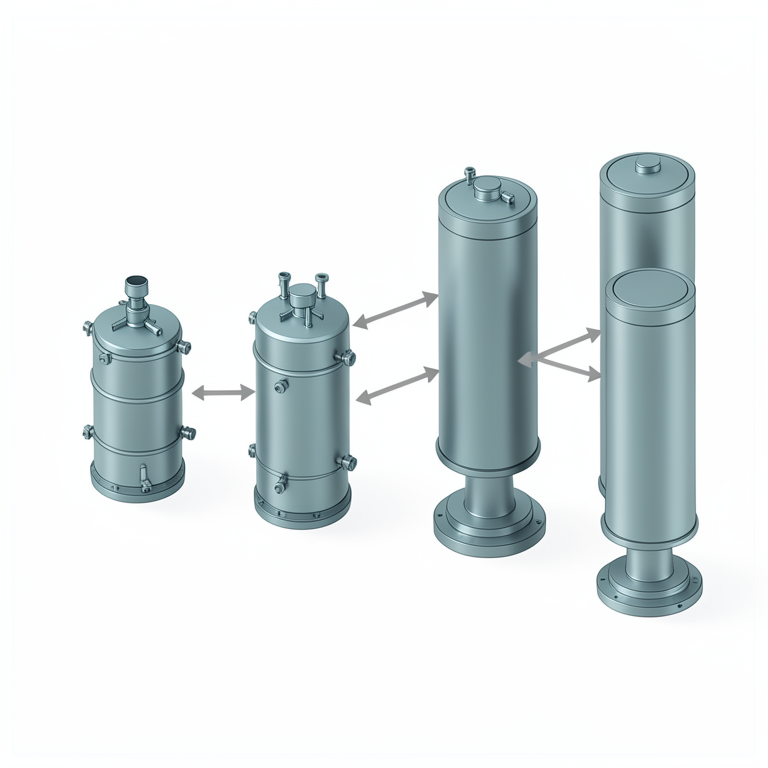
Contact Process Simulation Flow
AI-generated conceptual illustration (Industrial chemical plant equipment for the contact process of sulfuric acid production). It explains the idea and does not show study data.
View source evidence ↗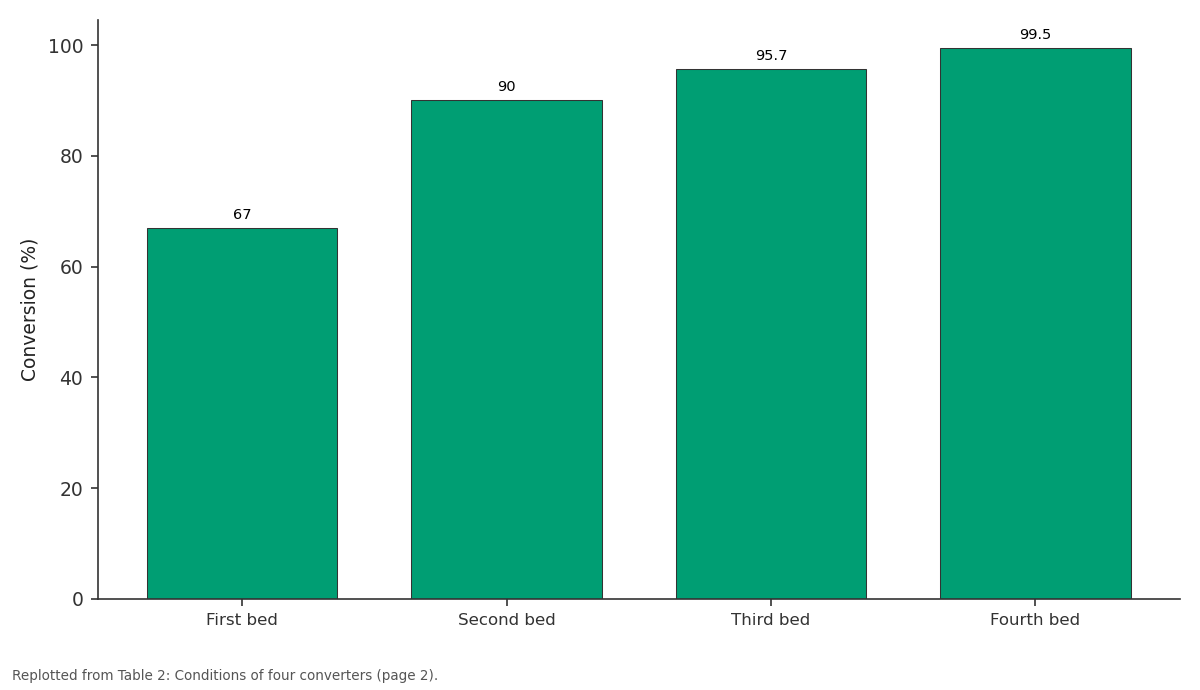
Conversion (%): First bed vs Second bed vs Third bed vs Fourth bed
Replotted from Table 2 (page 2) of the original paper. Every bar is the paper's own table value.
View source evidence ↗Figures & tables
From the original paper Table 1
 Table 2
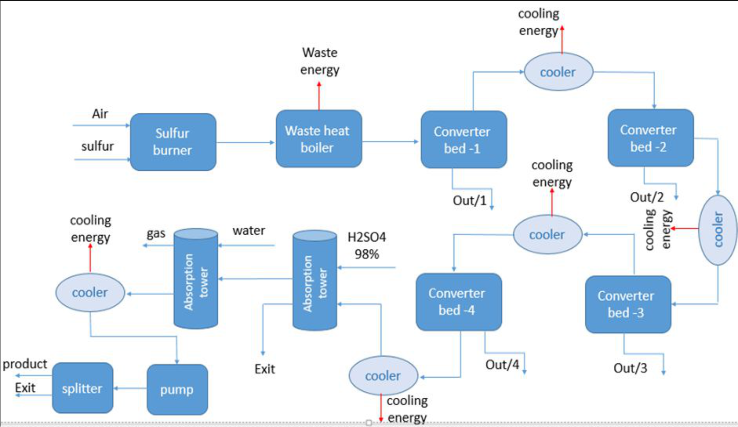 Figure 1
 Table 3
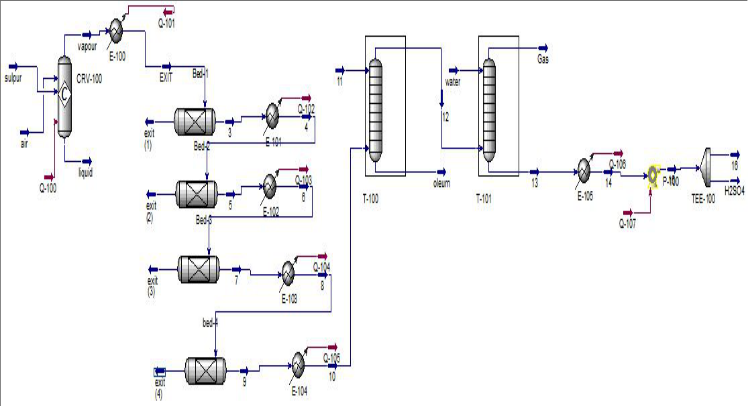 Figure 2
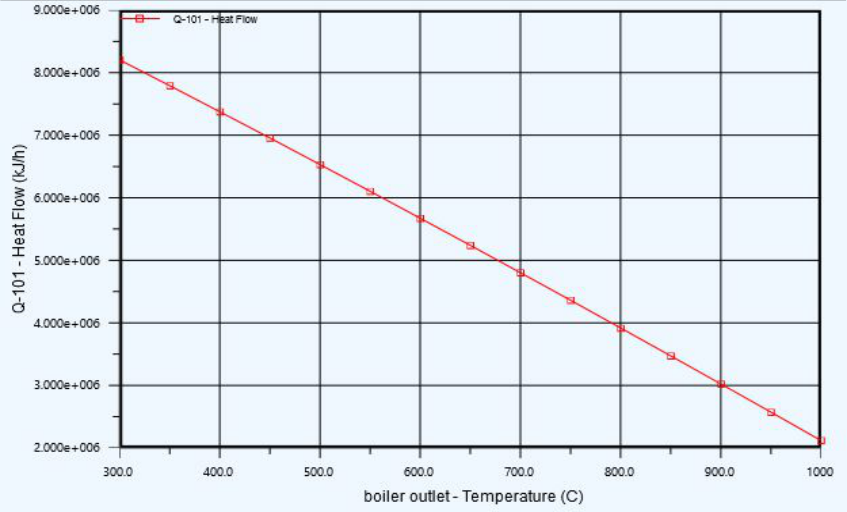 Figure 3
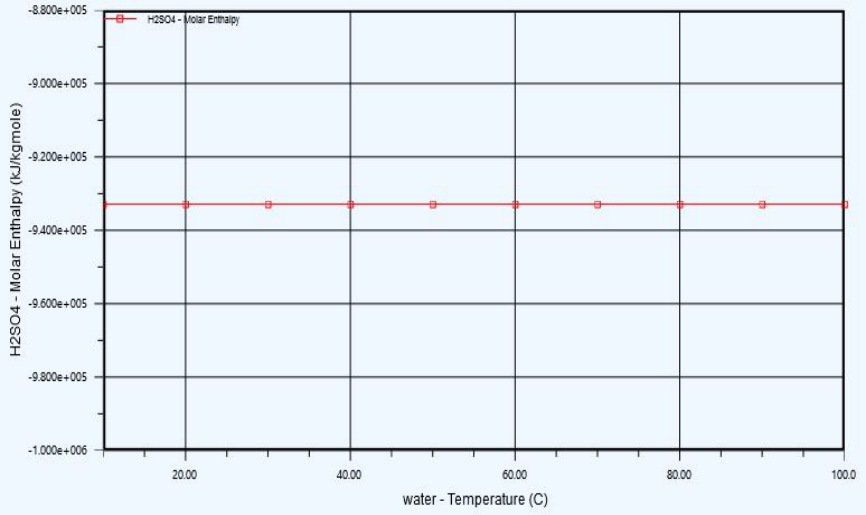 Figure 4
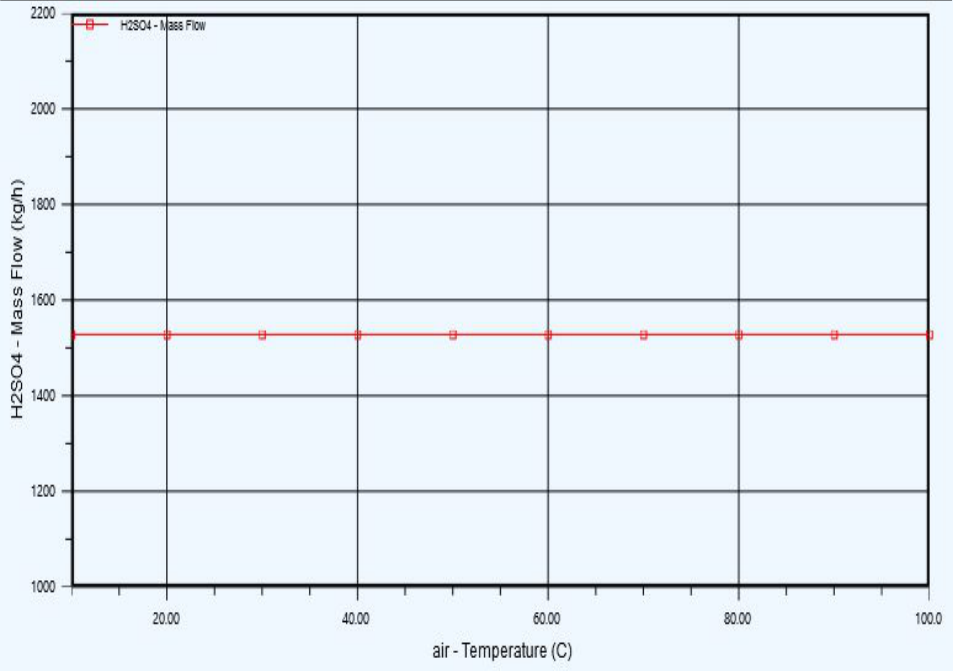 Figure 5
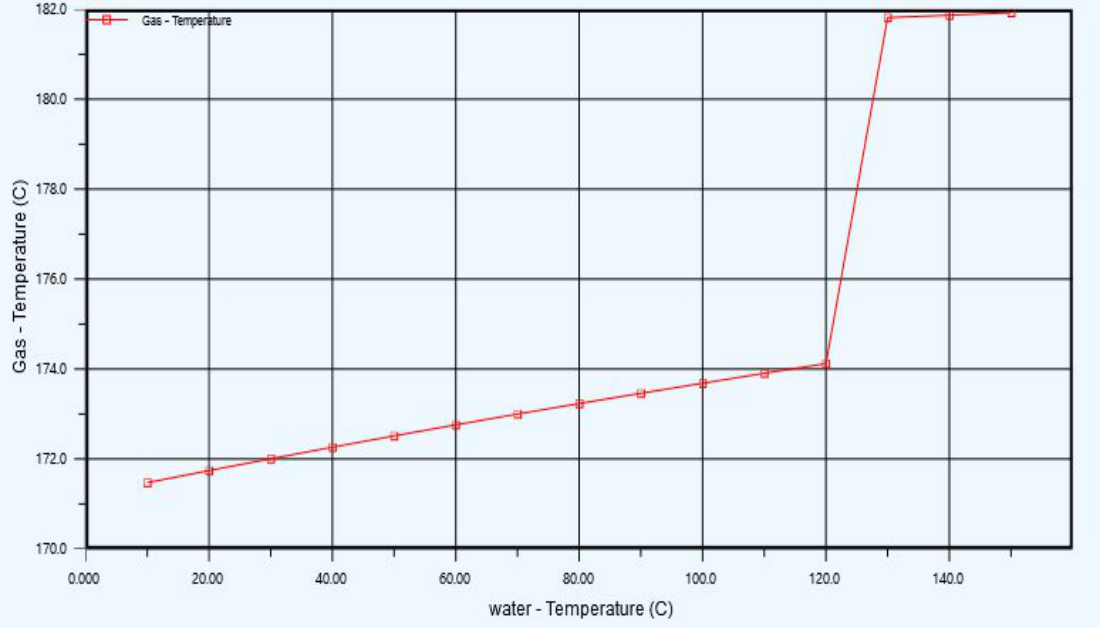 Figure 6
Introduction
Sulfuric acid is one kind of fundamental chemicals. It's generally utilized in fertilizer industry. Sulfuric acid is utilized to produce fertilizer including ammonia sulfate, magnesium sulfate, potassium sulfate and etc (Wagenfeld, Al-Ali, Almheiri, Slavens, & Calvet, 2019) [8] . It's also utilized in military chemical plant and metallurgy industry. Sulfuric acid is acting as main additives in a lot of the processes of pharmaceutical production. It's likewise used to dry chemicals in dozens chemical process (Sanders, 2015) [7] . Worldwide market of sulfuric corrosive in 2021 is assessed to be around 11.1 billion USD (Peng, 2000) [6] . Sulfur, Oxygen and water are used to produce sulfuric acid by the contact process. In the initial step, sulfur is burned to yield sulfur dioxide then sulfur dioxide is sulfur trioxide utilizing oxygen within the sight of a vanadium (V) oxide catalyst (Weil, Sandler, & Gernon, 2000) [9] . At last the sulfur trioxide is reacted with water to produce 98-99% sulfuric acid. The high support cost of sulfuric acids plants, rigid necessities on SO2 discharges, significance of energy proficiency, precise equipment sizing and rating has made the renewal of the plant testing. Due to overall strain to lessen SO2 discharges, most new plants currently use Double Contact Double Absorption and many existing plants have been changed to utilize it (Mousdale, 2010) [5] . Computer assisted modeling and simulation has increasingly become popular in all fields of engineering and in particular in chemical engineering, oil & gas and petrochemical industries (Klatt, Marquardt, & Engineering, 2009) [3] . Nowadays, a number of simulators are developed and/or updated in order for engineers to make fast and precise calculations. Among all of the simulators, chemical engineering simulators assist a chemical engineer to simulate design and operation of a chemical equipment and plant, which saves a lot of time and money. They also enable chemical engineers to design large plants by using defined thermodynamic or other equations of state, kinetic data, practical and mathematical models and equations, and other user input data. Without simulators modeling and design of such large plants would be expensive and time consuming (Dobre & Marcano, 2007) [2] . Today Aspen HYSYS software is the master process modeling solution that gives large economic benefits throughout the process engineering lifecycle (Al-Lagtah, Al-Habsi, Onaizi, & Engineering, 2015) [1] . Now-a-days chemical engineer used Aspen HYSYS to design new plants and also optimize production for greater margins. The present work aims to simulate the production of sulfuric acid by contact process using Aspen Hysys V8.8 with steady state.
Methodology 2.1 Process description:
Liquid sulfur is burnt with air in a burner of sulfur to produce sulfur dioxide. The main important steps in this process are to change sulfur dioxide to sulfur trioxide and at that time combining sulfur trioxide with water to produce a solution containing 98-99%. This is done by using four converter beds where sulfur dioxide is passing through them. Due to the constraint of Aspen HYSYS programming four individual converters were utilized as converter bed. The produced sulfur dioxide from a burner is gone through a waste heat boiler to lower the temperature of the produced sulfur dioxide before entering the 1 st bed converter (Converter-1). The exit stream from a waste heat boiler is entering to Converter-1 where the conversion of sulfur dioxide to sulfur trioxide is done but it isn't complete conversion. The exit stream from Converter-1 is cooled and passed to Converter-2 to complete the convert of remaining of sulfur dioxide to sulfur trioxide. The exit stream from Converter-2 is cooled and passed to Converter-3. Then the exit stream from Converter-3 is cooled and passed to Converter-4 where complete conversion of sulfur dioxide to sulfur trioxide. The exit stream from Converter -4 is gone through a cooler to keep up temperature as excessively high. The cooled sulfur trioxide is passed to an absorption tower where sulfur trioxide reacts with 98% sulfuric acid to form 98.5 % sulfuric acid. At the top of absorption tower, the vent of stack gas which contains mainly of Nitrogen. The produced sulfuric acid from absorption tower is cooled and split into two streams where one of them is the final product.
Fluid package
In this simulation the used fluid package is Antoine Model where the values of minimum and maximum temperature and the coefficients (A through F) are estimated for each component.
Reaction involved
There are three reactions involved in this simulation. Reaction (1) occurs in the sulfur burner while reaction (2) occurs in the four converter reactor bed with different conversion percentage. Finally, reaction (3) occurs in the absorber tower (Leiva, Flores, & Aguilar, 2020) [4] .
Process condition
The process conditions of this simulation is described below
Streams
The streams condition used in this simulation are shown in table (1).
Converters
The conditions of four converters used in this simulation are shown in table (2).
Absorption tower
The conditions of two absorption tower used in this simulation are shown in table (3).
Result and Discussions
After performing the simulation, the influence of different processing parameters on the process are observed. From the simulation result, those effects are described in below.
Effect of boiler outlet temperature on waste energy heat flow
From figure 3, it is shown that the increase of boiler outlet temperature cause linearly decrease in waste energy heat flow. Waste energy heat flow comes to a value of practically 8.204 e+006 kJ/h. With extra increase in boiler outlet temperature at 300 0 C of boiler outlet temperature, waste energy heat flow decreases in a linear way and arrives at a value of practically 2.1e+006 kJ/h at 1000 0 C of boiler outlet temperature.
Effect of inlet water temperature on molar enthalpy of sulfuric acid product.
From figure 4, it is noticed that molar enthalpy of sulfuric acid product is -9.329e+005 kJ/kg mole and remains constant throughout the change of inlet water temperature so, inlet water temperature has no effect on molar enthalpy of sulfuric acid product.
Effect of air temperature on product sulfuric acid flow rate
From figure 5, it is noticed that product sulfuric acid flowrate is 1520 kJ/hr and remains constant throughout the change of air temperature so, air temperature has no effect on product sulfuric acid flow rate.
Conclusion
In this work the simulation of Sulfuric acid process was done by using aspen hysys software. This simulation model was able to be used as guide for understanding the process of production Sulfuric acid. In addition to studying of the impact of different parameter on this process can be taken in consideration when commissing these simulation design where the increase of boiler outlet temperature shows linearly decrease relation with waste energy heat flow. Inlet water temperature shows no effect on molar enthalpy of sulfuric acid product and value of molar enthalpy of sulfuric acid product remains constant and equal to -9.329e+005 kJ/kg mole. Air temperature also shows no effect on product sulfuric acid flow rate. Flu gas temperature shows linearly increase relation with absorber inlet water temperature for the range of 10 to 120 0 C and sharply increase for the range of 120 to 130 0 C and finally become roughly constant after 130 0 C with the increase of absorber inlet water temperature.
Figures and tables from the paper
| Condition | Liquid sulfur | Air | water | Sulfuric acid (product) |
|---|---|---|---|---|
| Temperature (0C) | 105 | 50 | 30 | 25 |
| Pressure (KPa) | 1500 | 1500 | 250 | 250 |
| Flow rate (kgmole/hr) | 24.95 | 251.3 | 90 | 15.65 |
Table text extracted from the original PDF; superscript letters are shown inline. The original table image is below.
View original table image
| Converter bed number | Inlet Temperature (0C) | Outlet Temperature (0C) | Conversion (%) |
|---|---|---|---|
| First bed | 422 | 612 | 67 |
| Second bed | 450 | 534 | 90 |
| Third bed | 420 | 429.1 | 95.7 |
| Fourth bed | 420 | 420.4 | 99.5 |
Table text extracted from the original PDF; superscript letters are shown inline. The original table image is below.
View original table image
| Condition | First absorption tower | Second absorption tower |
|---|---|---|
| Number of stages | 15 | 15 |
| Top Pressure (KPa) | 250 | 200 |
| Bottom Pressure (KPa) | 300 | 250 |
| Efficiency type | overall | overall |
Table text extracted from the original PDF; superscript letters are shown inline. The original table image is below.
View original table image
References
9 in the original paper- Al-Lagtah NM, Al-Habsi S, Onaizi Sajjongs. Engineering. Optimization and performance improvement of Lekhwair natural gas sweetening plant using Aspen HYSYS. 2015;26:367-381.
- Dobre TG, Marcano JGS. Chemical engineering: Modeling, simulation and similitude: John Wiley & Sons, 2007.
- Klatt K-U, Marquardt WJC, Engineering C. Perspectives for process systems engineering-Personal views from academia and industry. 2009;33(3):536-550.
- Leiva C, Flores V, Aguilar CJJoS. A Computer Simulator Model for Generating Sulphuric Acid and Improve the Operational Results, Using Operational Data from a Chemical Plant. 2020 .
- Mousdale DM. Introduction to biofuels: CRC Press, 2010.
- Peng CY. Integrating local, regional and global assessment in China's air pollution control policy, 2000.
- Sanders RE. Chemical process safety: learning from case histories: Butterworth-Heinemann, 2015.
- Wagenfeld J-G, Al-Ali K, Almheiri S, Slavens AF, Calvet NJWM. Sustainable applications utilizing sulfur, a byproduct from oil and gas industry: A state-of-the-art review. 2019;95:78-89.
- Weil ED, Sandler SR, Gernon MJKOEoCT. Sulfur compounds, 2000
Cited by 1
From OpenAlex, OpenCitations and reference lists read by Scinovex
- Integrated process-to-system modeling of a sulfuric acid plant with thermal management ↗
Khalid Al-Khaldi, Fdhi Alrashidi, Mohammed Aldosarry, Haris Ishaq · Energy · 2026
❝ 1