
Research article · 2020 · Full text
International Journal of Advanced Chemistry ResearchSynthesis and characterization of (E)-4, 5-dimethyl-2-(1-(2-phenylhydrazono) ethyl) phenol from 2-hydroxy-4, 5-dimethyl acetophenone
Volume 2(2) · Pages 41–47 · DOI: 10.33545/26646781.2020.v2.i2a.27 ↗
Research areasInorganic and Organometallic Chemistry
Abstract
Author-writtenThis study reports the event of substituted hydrazone prepared from 1-(2-hydroxy-4, 5-dimethylphenyl) ethanone and phenyl hydrazine in alkaline medium at controlled conditions which yields as corresponding hydrazone [(E)-4, 5-dimethyl-2-(1-(2-phenylhydrazono) ethyl) phenol]. The structure of synthesized [(E)-4, 5-dimethyl-2-(1-(2-phenylhydrazono) ethyl) phenol was elucidated by elemental analysis and spectroscopic techniques like Infrared spectroscopy, Ultraviolet–visible spectroscopy, High-performance liquid chromatography, Proton nuclear resonance and spectrum.
Summary
Source-checkedPlain-language reading of the full paper, prepared with AI and checked against the text. Each point links to the authors' own words.
Why it matters
- Hydrazones are organic compounds derived from ketones and aldehydes where the oxygen atom is replaced by a Nitrogen-Nitrogen-Hydrogen functional group. View evidence ↗
- Because they possess both electrophilic and nucleophilic properties, hydrazones are frequently utilized in organic synthesis. View evidence ↗
The question
- The study aims to synthesize the substituted hydrazone (E)-4, 5-dimethyl-2-(1-(2-phenylhydrazono) ethyl) phenol using 1-(2-hydroxy-4, 5-dimethylphenyl) ethanone and phenyl hydrazine. View evidence ↗
What they did
- The synthesis involved stirring equimolar amounts (1 mole each) of 2-Hydroxy-4, 5-dimethyl acetophenone and Phenyl Hydrazine in 150 ml of methanol for 25 minutes at room temperature. View evidence ↗
- The mixture was refluxed for three hours at 65°C with hydrochloric acid, and the reaction progress was monitored using Thin Layer Chromatography (TLC) with a 10% Ethyl acetate to n-Hexane ratio. View evidence ↗
- The resulting off-white compound was filtered, washed with chilled methanol, dried at 50–55°C, and purified via re-crystallization in methanol. View evidence ↗
What they found
- HPLC analysis determined the purity of the compound to be 99.3% with a retention time of 14.789 minutes. View evidence ↗
- The water content of the compound in methanol was measured at 0.35% using Karl Fischer titration. View evidence ↗
- Theoretical evaluation using T.E.S.T. software predicted that the synthesized hydrazone is mutagenicity positive. View evidence ↗
What it means
- The authors conclude that (E)-4, 5-dimethyl-2-(1-(2-phenylhydrazono) ethyl) phenol was successfully synthesized and its structure was thoroughly characterized using multiple spectroscopic and analytical methods. View evidence ↗
Visual summary
1 visualsIllustrations explain the paper; charts are replotted from the paper's own table values.
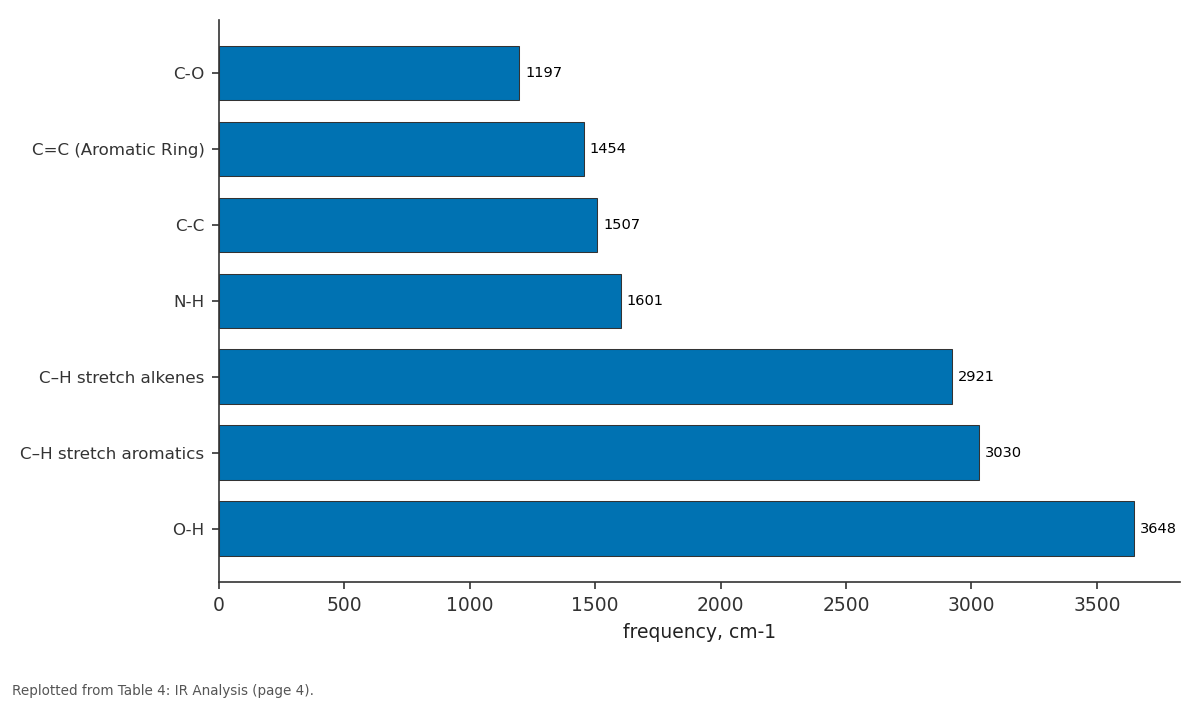
frequency, cm-1: C-O vs C=C (Aromatic Ring) vs C-C vs N-H vs C–H stretch alkenes
Replotted from Table 4 (page 4) of the original paper. Every bar is the paper's own table value.
View source evidence ↗Figures & tables
From the original paper Table 1
 Table 2
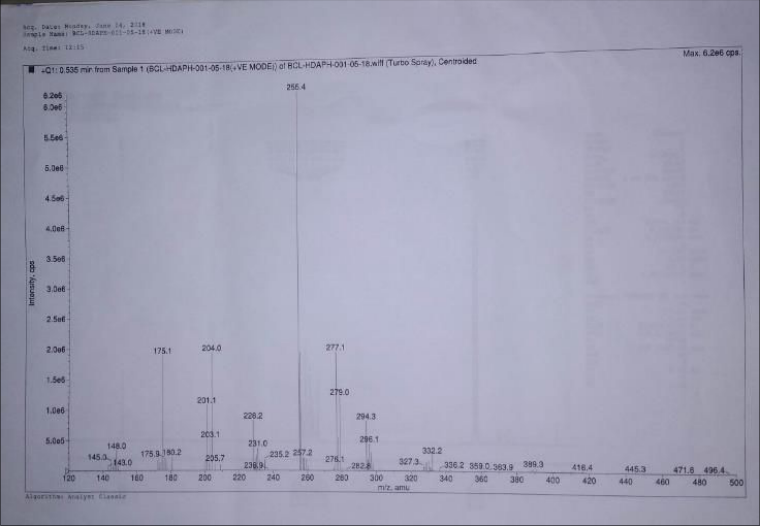 Figure 1
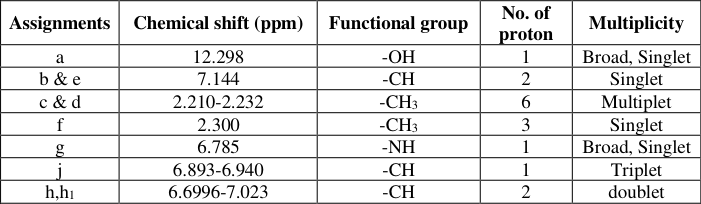 Table 3
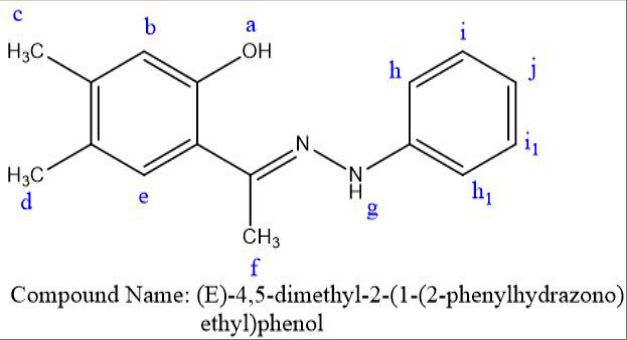 Figure 2
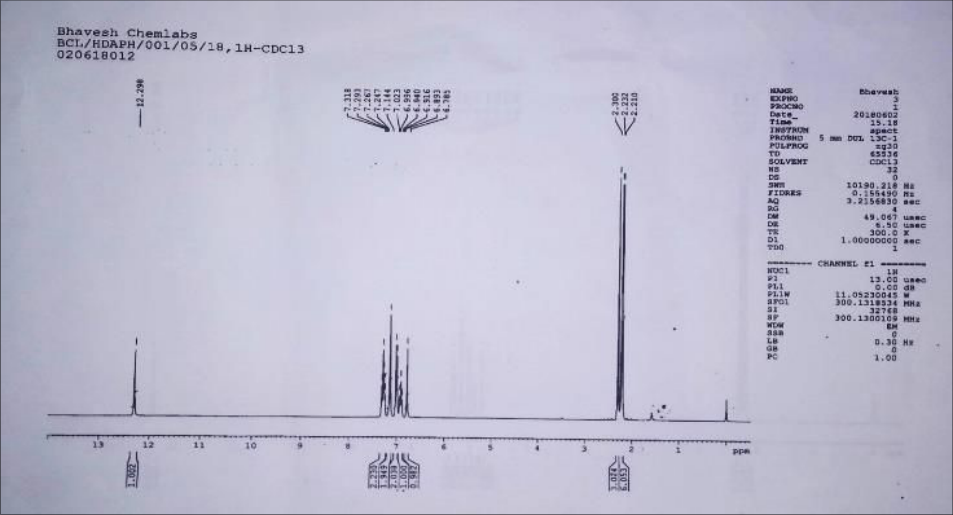 Figure 2
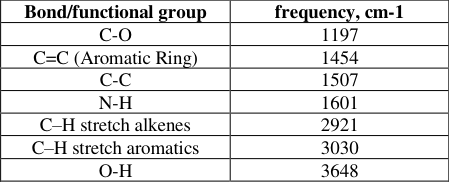 Table 4
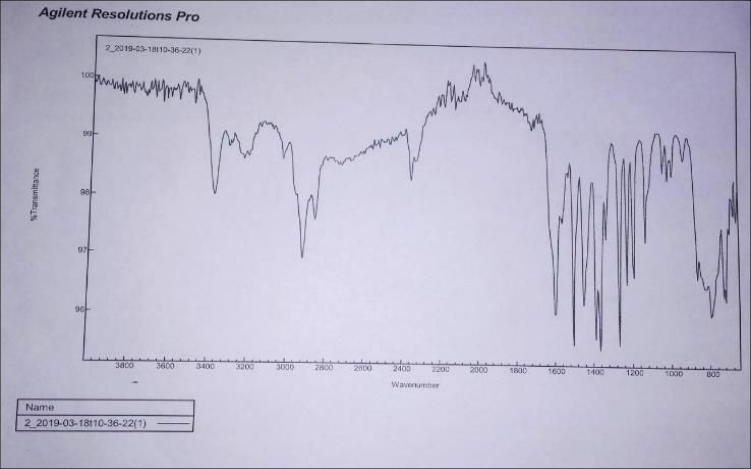 Figure 3
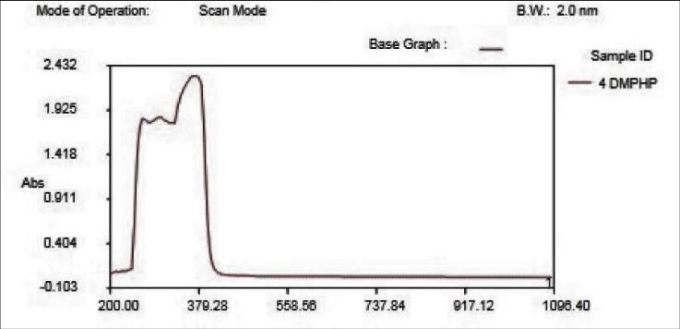 Figure 4
 Table 5
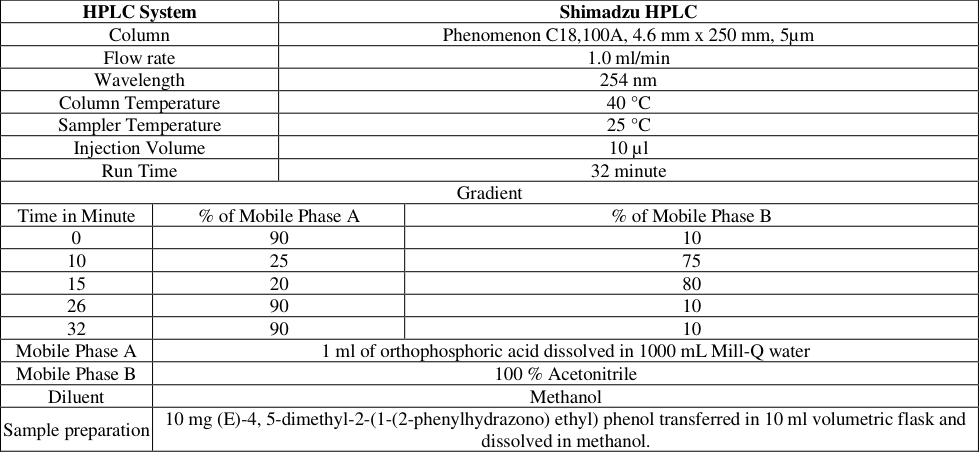 Table 6
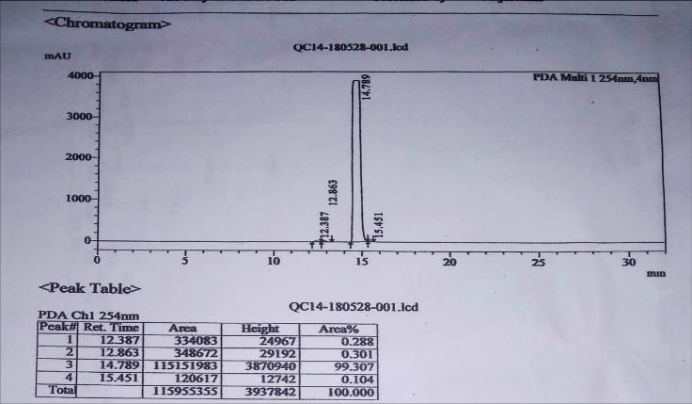 Figure 5
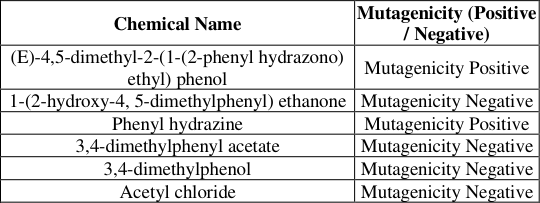 Table 7
Introduction
Hydrazones are a category of organic compounds with the structure R1R2C=NNH2 [1] . Hydrazones are containing with ketones and aldehydes by the replacement of the oxygen with the Nitrogen-Nitrogen-Hydrogen functional group. Hydrazones containing an azomethine -NHN=CH group and they are considered as derivatives of aldehydes and ketones during which the oxygen atom has been replaced by the Nitrogen-Nitrogen-Hydrogen functional group [2][3][4] . Hydrazone contains active center as carbon and nitrogen, both are major responsible for the physical and chemical properties of the hydrazones. Hydrazones shows reactivity toward electrophiles and nucleophiles due to the carbon and nitrogen. Hydrazones are heterocyclic compounds used for the synthesis of compound like with a spread of biological activities [5] . The IUPAC name of prepared hydrazone groups is (E)-4, 5-dimethyl-2-(1-(2-phenylhydrazono) ethyl) phenol, in this it possess conjugate double bond and a delocalized π electron on both the benzene ring. Hydrazones are related to ketones and aldehydes by the replacement of oxygen with the Nitrogen-Nitrogen-Hydrogen functional group [6] . The C-atom in hydrazone has both electrophilic and nucleophilic characters and in both the N-atoms are nucleophilic although the amino type nitrogen is more reactive. Due to the electrophilic and nucleophilic properties, hydrazones are widely used in organic synthesis [7,8] .
The hydrazones show wide range of pharmaceutical activities, such as antibacterial [9] , anti-malarial [10] , analgesic agents [11,12] , antifungal [13,14] , antimicrobial [15,19] , and anticonvulsant agents [19, 20] .
Experimental 2.1. Materials
This work were used following chemicals AR Grade and commercially available and used without further purification 2-Hydroxy-4, 5-dimethyl acetophenone, (2, 4-dinitrophenyl) hydrazine, methanol, hydrochloric acid, sodium hydroxide, ethyl alcohol, ethyl acetate, n-Hexane, chloroform, DMSO, etc.,
Preparation of Substituted Hydrazone: (E)-4, 5-dimethyl-2-(1-(2-phenylhydrazono) ethyl) phenol
1-(2-hydroxy-4, 5-dimethylphenyl) ethanone or 2-Hydroxy-4, 5dimethyl acetophenone were synthesized following published procedure [21] . The substituted hydrazones prepared by stirring the equimolar concentration mixture of 2-Hydroxy-4, 5-dimethyl acetophenone (1mole) and Phenyl Hydrazine (1mole) in 150 ml methanol, stirred for 25 min at room temperature and dissolved. The solution is refluxed for three hours in presence of hydrochloric acid at 65°C, then progress of reaction checked by TLC [10% Ethyl acetate : n-Hexane (10:90)]. After completion the mixture was cooled at room temperature. The off white color compound formed was filtered, washed with chilled methanol and dried at 50-55°C. The compound was re-crystallized in methanol for purification and improving description. Reaction scheme preparation of (E)-4, 1. 2 and the mass spectrum is shown in Figure 1. 3. The IR spectra of (E)-4, 5-dimethyl-2-(1-(2-phenylhydrazono) ethyl) phenol compound was recorded in the region of 4000-600 cm -1 using FTIR spectrometer of model Agilent Resolutions Pro by direct sampling method.
International Journal of Advanced Chemistry Research
The IR spectral data along with the possible assignments of (E)-4,5-dimethyl-2-(1-(2-phenylhydrazono)ethyl)phenol compound are provided in Table 4, followed by IR spectra performed by IR direct solid method, use of Agilent Resolutions Pro and IR spectrum are showed in Figure 3. 5.
| Bond/functional group | frequency, cm-1 |
|---|---|
| C-O | 1197 |
| C=C (Aromatic Ring) | 1454 |
| C-C | 1507 |
| N-H | 1601 |
| C–H stretch alkenes | 2921 |
| C–H stretch aromatics | 3030 |
| O-H | 3648 |
Table text extracted from the original PDF; superscript letters are shown inline. The original table image is below.
View original table image
Purity: (E)-4, 5-dimethyl-2-(1-(2-phenylhydrazono) ethyl) phenol
The purity of the (E)-4, 5-dimethyl-2-(1-(2-phenylhydrazono) ethyl) phenol compound was analyzed by Shimadzu highperformance liquid chromatography (HPLC) and purity was found to be 99.3% (99.307%) with retention time of 14.789 min using the parameters in Table 6. The Purity: HPLC chromatogram for (E)-4, 5-dimethyl-2-(1-(2-phenylhydrazono) ethyl) phenol is shown in Figure 5. TEST estimates the toxicity values using several different advanced quantitative structure-activity relationship models (QSAR). The following structure was evaluated using "consensus method" and predicted mutagenicity was estimated by taking an average of the predicted toxicities. Theoretical evaluation of mutagenicity by T.E.S.T. software is shown in Table 7.
| Chemical Name | Mutagenicity (Positive / Negative) |
|---|---|
| (E)-4,5-dimethyl-2-(1-(2-phenyl hydrazono) ethyl) phenol | Mutagenicity Positive |
| 1-(2-hydroxy-4, 5-dimethylphenyl) ethanone | Mutagenicity Negative |
| Phenyl hydrazine | Mutagenicity Positive |
| 3,4-dimethylphenyl acetate | Mutagenicity Negative |
| 3,4-dimethylphenol | Mutagenicity Negative |
| Acetyl chloride | Mutagenicity Negative |
Table text extracted from the original PDF; superscript letters are shown inline. The original table image is below.
View original table image
| HPLC System | — | Shimadzu HPLC | — |
|---|---|---|---|
| Column | Phenomenon C18,100A, 4.6 mm x 250 mm, 5µm | ||
| Flow rate | 1.0 ml/min | ||
| Wavelength | 254 nm | ||
| Column Temperature | 40 °C | ||
| Sampler Temperature | 25 °C | ||
| Injection Volume | 10 µl | ||
| Run Time | 32 minute | ||
| Gradient | |||
| Time in Minute | % of Mobile Phase A | % of Mobile Phase B | |
| 0 | 90 | 10 | |
| 10 | 25 | 75 | |
| 15 | 20 | 80 | |
| 26 | 90 | 10 | |
| 32 | 90 | 10 | |
| Mobile Phase A | 1 ml of orthophosphoric acid dissolved in 1000 mL Mill-Q water | ||
| Mobile Phase B | 100 % Acetonitrile | ||
| Diluent | Methanol | ||
| Sample preparation | 10 mg (E)-4, 5-dimethyl-2-(1-(2-phenylhydrazono) ethyl) phenol transferred in 10 ml volumetric flask and dissolved in methanol. |
Table text extracted from the original PDF; superscript letters are shown inline. The original table image is below.
View original table image
Conclusion:
This study describes the synthesis of (E)-4, 5-dimethyl-2-(1-(2phenylhydrazono) ethyl) phenol derivative from 2-hydroxy-4, 5dimethylacetophenone. The structure of the synthesized hydrazone compound was well characterized by melting point, elemental analyses (CHNS), IR, UV, HPLC, 1 H NMR and mass spectral studies.
Acknowledgement
AcknowledgementThe authors thank Mr.Pravin Daule, Post Graduate Department of Chemistry, New Arts, Commerce and Science College Parner, University of Pune, Mr. Sridhar Yerpal, Bhavesh Chem Labs, Hyderabad and Dr. Raj Thombal, School of Chemical Engineering, Yeungnam University, Gyeongsan 38541, Republic of Korea for their valuable guidance and providing necessary facilities.
Figures and tables from the paper
| Assignments | Chemical shift (ppm) | Functional group | No. of proton | Multiplicity |
|---|---|---|---|---|
| a | 12.298 | -OH | 1 | Broad, Singlet |
| b & e | 7.144 | -CH | 2 | Singlet |
| c & d | 2.210-2.232 | -CH3 | 6 | Multiplet |
| f | 2.300 | -CH3 | 3 | Singlet |
| g | 6.785 | -NH | 1 | Broad, Singlet |
| j | 6.893-6.940 | -CH | 1 | Triplet |
| h,h1 | 6.6996-7.023 | -CH | 2 | doublet |
Table text extracted from the original PDF; superscript letters are shown inline. The original table image is below.
View original table image
| Hydrazone | Molecular Formula | Molecular weight | Elemental data (Required/Found) | — | — |
|---|---|---|---|---|---|
| Carbon | Hydrogen | Nitrogen | |||
| (E)-4,5-dimethyl 2-(1-(2-phenyl hydrazono) ethyl) phenol | C16H18N2O | 254.33 | 75.68 (75.56) | 7.06 (7.15) | 11.08 (11.02) |
Table text extracted from the original PDF; superscript letters are shown inline. The original table image is below.
View original table image
References
21 in the original paper- Jyoti Hooda. Review of biological activities of hydrazones. Indonesian J. Pharm. 2012; 23(4):0126-1037
- Neha Singh, Ritu Ranjana, Manju Kumari, Birendra kumarm. A review on biological activities of hydrazone derivatives International. Journal of Pharmaceutical and Clinical Research. 2016; 8(3):162-166.
- Anu Kajal, Suman Bala, Neha Sharma, Sunil Kamboj, Vipin Saini. Therapeutic Potential of Hydrazones as AntiInflammatory Agents. International Journal of Medicinal Chemistry, 2014. Article ID 76103 11. http://dx.doi.org/10.1155/2014/761030
- Ghoneim AA, Assy MG. Synthesis and characterization of antimicrobial activity of azoles and azines derivatives from tertiary butyl carbazatel. Organic Chemistry Current Research. 2015; 4(3):148-152
- Corey EJ, Enders D. Applications of N, Ndimethylhydrazones to synthesis. Use in efficient, positionally and stereochemically selective C=C bond formation, oxidative hydrolysis of carbonyl compounds. Tetrahedron Lett. 1976; 17:3-6.
- Corey EJ, Enders D. Synthetic routes to polyfunctional molecules via metalated N, N-dimethylhydrazones. Tetrahedron Lett. 1976; 17:11-4.
- Lukasz Popiolek. Hydrazide-hydrazones as potential antimicrobial agents: overview of the literature since 2010. Medicinal Chemistry Research. 2017; 26:287-301.
- Souvik Sarkar, Asim A Siddiqui, Shubhra J Saha, Rudranil De, Somnath Mazumder, Chinmoy Banerjee, et al. Antimalarial activity of small-molecule benzothiazole hydrazones. American Society for Microbiology Antimicrobial Agents and Chemotherap. 2016; 60(7):42174228.
- Sondhi SM, Dinodia M, Kumar A. Synthesis, antiinflammatory and analgesic activity evaluation of some amidine and hydrazone derivatives. Bioorganic & Medicinal Chemistry. 2006; 14:4657-4663.
- Adriane R Todeschini, Ana Luisa P de Miranda, Kelly Christine M da Silva, Sergio C Parrini, Eliezer J Barreiro. Synthesis and evaluation of analgesic, antiinflammatory and antiplatelet properties of new 2-pyridylarylhydrazone derivatives. European Journal of Medicinal Chemistry. 1998; 33(3):189-199.
- Ahmet Özdemir, Gulhan Turan-zitouni, Zafer Asim kaplancikli, Fatih Demirci, Gokalp Iscan. Studies on hydrazone derivatives as antifungal agents. Journal of Enzyme Inhibition and Medicinal Chemistry. 2008; 23(4):470-475.
- Lukasz Popiołek, Anna Biernasiuk. Synthesis and investigation of antimicrobial activities of nitrofurazone analogues containing hydrazide-hydrazone moiety. Saudi Pharmaceutical Journal. 2018; 25(7):1097-1102.
- Zakeyah AA, Whitt J, Duke C, Gilmore DF, Meeker DG, Smeltzer MS, et al. Synthesis and antimicrobial studies of hydrazone derivatives of 4-[3-(2, 4-difluorophenyl)-4formyl-1H-pyrazol-1-yl] benzoic acid and 4-[3-(3, 4difluorophenyl)-4-formyl-1 H-pyrazol-1-yl]benzoic acid. Bioorg Med Chem Lett. 2018; 28(17):2914-2919.
- Trong Duc Le, Ngoc Nam Pham and Tien Cong Nguyen. Preparation and antibacterial activity of some new 4-(2Heterylidenehydrazinyl)-7-chloroquinoline Derivatives. Journal of Chemistry, 2018, 4301847: 7.
- Leyla Yurttaş, Yusuf Özkay, Zafer Asim Kaplancıklı, Yağmur Tunalı, Hülya Karaca. Synthesis and antimicrobial activity of some new hydrazone-bridged thiazolepyrrole derivatives. Journal of Enzyme Inhibition and Medicinal Chemistry. 2013; 28(4):830-835.
- Neeraj Kumar, Lalit Singh Chauhan. Antimicrobial potential of hydrazide-hydrazone derivatives: a review. International Journal of Pharmaceutical and Clinical Research. 2015; 7(2):154-161.
- Violina Angelova, Valentin Karabeliov, Pavlina A, Andreeva-Gateva, Jana Tchekalarova. Recent developments of hydrazide / hydrazone derivatives and their analogs as anticonvulsant agents in Animal Models. Drug Development Research. 2016; 77:379-392.
- Neeraj Kumar, Lalit Singh Chauhan, Nipun Dashora, Chandra Shekhar Sharma. Anticonvulant potential of hydrazone derivatives: a review. Scholars Academic Journal of Pharmacy. 2014; 3(5):366-373.
- Saurabh Agrawal, Jainendra Jain, Ankit Kumar, Pratibha Gupta, Vikas Garg. Synthesis molecular modeling and anticonvulsant activity of some hydrazone, semicarbazone, and thiosemicarbazone derivatives of benzylidene camphor. Research and Reports in Medicinal Chemistry. 2020; 49(33):237-252.
- Shaquiquzzaman, Mymoona Akhtar, Mohammad Rahmat Ali, Mohammad Mumtaz Alam, et al. A review exploring biological activities of hydrazones. Journal of Pharmacy and Bioallied Sciences. 2014; 6(2):69-80.
- Dinkar Gagare, Raju Patil Rama Lokhande, Poonam Dwivedi, Ajay Deshmukh. Synthesis and characterization of (E)-2-(1-hydrazonoethyl)-4, 5-dimethylphenol from 2hydroxy-4, 5-dimethylacetophenone. J Chem. Sci. 2020; 132(88):2-8. https://doi.org/10.1007/s12039-020-01802-4.
Cited by 1
From OpenAlex, OpenCitations and reference lists read by Scinovex
- Synthesis and characterization of iron (iii) complexes of some 2-hydroxy-4, 5-dimethylacetophenone substituted hydrazones
Dinkar Gagare, Raju M. Patil, R. S. Lokhande, Poonam Dwivedi, Ajay Deshmukh · International Journal of Advanced Chemistry Research · 2021
The present paper deals with synthesis and characterization of metal complex of some novel 2-hydroxy-4,5-dimethylacetophenone substituted hydrazones. The substituted hydrazones were prepared by reacting 2-hydroxy-4,5-dimethyl acetophenone with corresponding hydrazine, Phenyl hydrazine and (2,4-dinitrophenyl)hydrazine. The Iron (III) metal complexes of general formula ML3 with newly prepared hydrazone synthesized and characterized by several physiochemical techniques like UV, Infrared, 1HNMR, decomposition temperature/ melting point, elemental analysis, molar conductance and magnetic susceptibi