
Research article · 2021 · Full text
International Journal of Advanced Chemistry ResearchSeasonal variation in trace metal concentrations in water and sediment samples from selected mining ponds in Jos south and Barkin Ladi, LGA, Plateau state
Volume 3(2) · Pages 20–24 · DOI: 10.33545/26646781.2021.v3.i2a.38 ↗
Research areasHeavy metals in environmentWater Quality and Pollution Assessment
Abstract
Author-writtenTrace metals contamination of surface water and sediments remain a global threat to biodiversity and humans. The study was carried out to assess the variation pattern in trace metals concentration in water and sediments samples from selected mining ponds in Jos South and Barkin Ladi for the period of February and March (Dry season) and July and August (Wet season), 2019. Metal concentrations were analysed using the PG-990 model atomic absorption spectrophotometer after HNO3-HCl digestion in the ratio of 1:3 (aqua rigia). Results of the analysis showed that higher metal concentrations of Pb (0.06 mg/kg), Cd (0.02 mg/kg), As (0.31 mg/kg) and Ni (0.19 mg/kg) were recorded in dry season than wet season for water samples. The concentration of toxic metals Pb, Cd, As and Ni were higher than the recommended values reported by WHO/USEPA (2000) for water samples. Mean relative abundance of trace metals in water occurred in the order Zn>Cu>As>Ni>Cu>Pb>Cd for dry season and Zn>Ni>As>Pb>Co>Cu>Cd for wet season. For sediments, the mean relative abundance of trace metals occurred in the range Zn>Ni>Cu>As>Ab>Co>Cd for dry season and Zn>Ni>Pb>As>Co>Cu>Cd for wet season. Generally, the concentrations of Pb (14.78 mg/kg), Cd (4.23 mg/kg), As (16.73 mg/kg) and Ni (26.48 mg/kg) in the sediments exceeded the International Sediment Quality Guidelines, ISQG (2000) and could have adverse effect on aquatic organisms.
Summary
Source-checkedPlain-language reading of the full paper, prepared with AI and checked against the text. Each point links to the authors' own words.
Why it matters
- Contamination of surface water and sediments by trace metals is a worldwide issue that threatens both human health and biodiversity. View evidence ↗
- Trace metals are particularly dangerous because they are toxic, persist in the environment, and tend to bioaccumulate. View evidence ↗
- Sediments often act as sinks for trace metals, which can later release these contaminants back into the water and affect aquatic life. View evidence ↗
The question
- The study aimed to assess trace metal contamination in mining ponds in Jos South and Barkin Ladi, investigate how these levels vary by season, and evaluate the resulting ecological risks. View evidence ↗
What they did
- Water and sediment samples were collected from selected mining ponds in Jos South and Barkin Ladi during the dry season (February and March) and wet season (July and August) of 2019. View evidence ↗
- Water samples were collected using a hydrobios sampler into 1000cm³ acid-washed polyethylene containers, with sampling sites spaced 50m apart. View evidence ↗
- Surface sediment samples (0-5cm depth) were collected using a stainless steel trowel and mixed into composite samples from three different points on the river bank. View evidence ↗
- Trace metal concentrations were measured using a PG-990 model atomic absorption spectrophotometer. View evidence ↗
What they found
- In water samples, the dry season showed higher concentrations of lead (0.06 mg/kg), cadmium (0.02 mg/kg), arsenic (0.31 mg/kg), and nickel (0.19 mg/kg) compared to the wet season. View evidence ↗
- The mean concentration of copper in water was significantly higher in the dry season (0.44±0.03 mg/l) than in the wet season (0.04±0.01 mg/l). View evidence ↗
- Unlike some other metals, the mean concentration of cadmium in water was higher in the wet season (0.04±0.01 mg/l) than in the dry season (0.01±0.00 mg/l). View evidence ↗
- In sediments, lead reached its highest mean concentration during the wet season (16.69±1.35 mg/kg) compared to the dry season (14.78±1.24 mg/kg). View evidence ↗
- Sediment cadmium concentrations were higher in the dry season (4.23±0.40 mg/kg) than in the wet season (1.62±0.25 mg/kg). View evidence ↗
- Arsenic in sediments was more concentrated during the dry season (16.73±1.40 mg/kg) than the wet season (15.98±1.35 mg/kg). View evidence ↗
- Nickel concentrations in sediments were significantly higher in the dry season (26.48±1.30 mg/kg) than in the wet season (17.25±1.30 mg/kg). View evidence ↗
- Metal concentrations in both water and sediments were higher in mining ponds than in non-mining ponds, indicating that mining activities significantly impact metal levels. View evidence ↗
What it means
- The authors concluded that concentrations of lead, cadmium, and arsenic in water and sediments exceeded the permissible levels recommended by WHO/USEPA (2000). View evidence ↗
- The authors state that these elevated trace metal levels could pose serious health risks to both humans and aquatic organisms. View evidence ↗
Visual summary
1 visualsIllustrations explain the paper; they do not show study data.
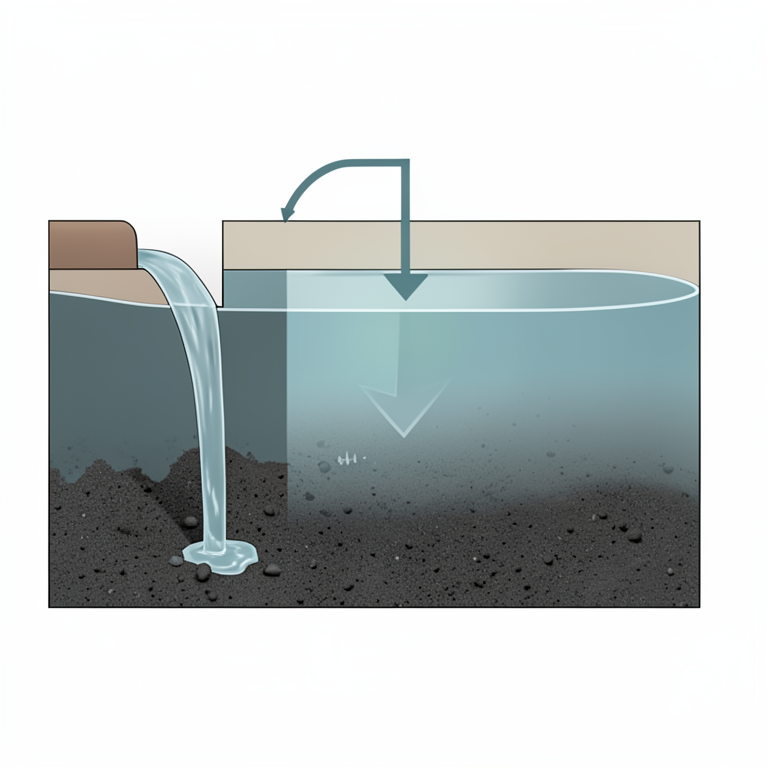
Metal Cycle in Mining Ponds
AI-generated conceptual illustration (mining ponds with water and sediment layers). It explains the idea and does not show study data.
View source evidence ↗Figures & tables
From the original paper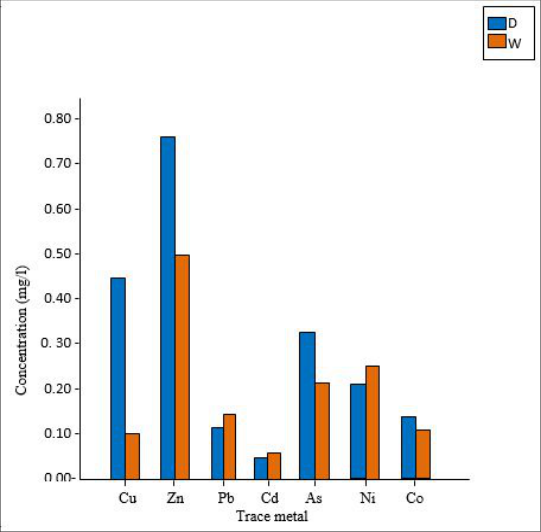 Figure 1
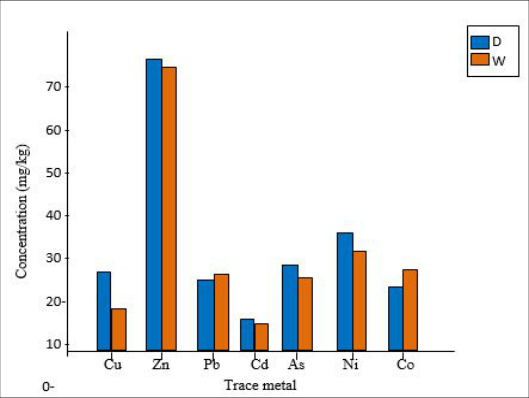 Figure 2
Introduction
Seasonal variation in quality of water and sediments generally refer to the change in components of water and sediments which are to be present at the optimum level for suitable growth of plants and animals. These components play an important role for the growth of plants and animals in the water body. In natural aquatic system, various chemical parameters occur in low concentration. This concentration increases as a result of rapid growth in population, increased in urbanization, industrial activities and exploitation of natural resources (Raji et al., 2016) [10] . Contamination of surface water courses and their sediments by trace metals is a global problem which has attracted policy makers and researchers because of the toxicity associated with them, as well as their bioaccumulation potentials (Edoknayi et al., 2017; Cevik, 2009) [1] . This has led to the formulation of several sediments quality guidelines (SQGs) which have been useful in identifying pollution of consensus (Ki, 2014). The concentration of trace metals, exposure route, duration of exposure age, genetic, chemical species as well as the nutritional status of the exposed individuals are part of the various factors that influence the potential toxicity of trace metals to humans (Jchounwou et al., 2012). Trace metals are known to be toxic, persistent and have bioaccumulation tendencies in the environmental media (Tersach and Okpokwasili, 2016) [13] . Once released, they can stay for exceptionally long period time, resisting degradation and undergoing various chemical processes in water (Xu et al., 2015). Trace metals are easily adsorbed to sediments which can act as a sink and secondary sources of these contamination in water and aquatic biota (Varol and Sen, 2012). Such accumulation of metals is dependent on a number of factors which include pH of the surface water, concentration of metals, anthropogenic inputs and other chemical parameters of water itself. Under favorable conditions, metals can solubilize back to the aqueous phase. Contaminated sediments do have adverse effect on the aquatic ecosystem, therefore, monitoring of sediments is important (Edokpayi et al., 2016) [3] . Trace metals contamination in surface water and sediments have been linked to several human activities that occur both far and close to the natural resource such as settlement, mining and industrial activities, farms game reserves, car wash, storm water run-off and waste water treatment facilities (Chaves et al., 2016). Edokpayi et al (2017) [4] reported that anthropogenic activities performed very close to surface water poses threat to the aquatic ecosystems and humans, as contaminated water becomes a chemical pathway through which several diseases are spread to people living around the water resources.
The objectives of this study is to 1. Assess trace metals contamination of mining ponds from Jos South and Barkin Ladi, which is often used by people for various purposes. 2. Investigate the effect of seasonal variation on the level of trace metals determined and, 3. To evaluate the possible ecological risk of the metal levels found.
International Journal of Advanced Chemistry Research
International Journal of Advanced Chemistry Research
Materials and Methods
Materials and Methods
Sampling and Sample Preparation Water Samples
A 1000cm 3 acid washed clean polyethylene containers were used for collection of water samples. A hydrobios water sampler was used to transfer water into 1000cm 3 polyethylene containers with screw caps. The samples were collected 50m distance between sampling sites. The samples were transported to the laboratory and stored in the refrigerator.
Sediment samples
About 10g of sediment samples (surface sediments) were collected at a 0-5cm depths using a clean stainless steel trowel into an acid washed plastic containers. Three sediment samples were taken at different points on the river bank and mixed to form a composite sample procedure in order to obtain a representative sample (USEPA, 2001). The sediment samples were air-dried and then crushed using a porcelain mortar and a pestle after which, it was mixed thoroughly and sieved through a 2mm mesh sieve. The powdered samples were stored in polyethylene sample bottle prior to analysis (Wushuang et al., 2017).
Method Extraction of trace metals in water
To a 50m 3 aliquot of the water sample, 30cm 3 of Conc. HCl and 10cm 3 of Conc. HNO3 were added. The solution was placed on a hot plate and heated at a temperature of 100 o C for 1 hour. After the solution was allowed to cool, it was filtered and then adjusted to 100cm 3 volume with deionized water and stored for determination of trace metals (David and Minati, 2018).
Preparation of soil and sediment samples for the determination of trace metals
A 1.0g of the sieved soil or sediment samples were digested with a mixture of 15cm 3 Conc. HCl and 25cm 3 Conc. HNO3 and heated for 2 hours at 100 o C. After cooling, the mixture was filtered and made up to 50cm 3 volume with deionized water and stored for determination of trace metals (Joseph et al., 2013).
Determination of trace metals in the samples
The concentration of trace metals in water and sediment samples were determined using the PG-990 model atomic absorption spectrophotometer. The filtrates were aspirated into the flame of the atomic absorption spectrophotometer and the absorbance were taken. From the calibration curve, the corresponding concentrations were obtained and reported in mg/l and mg/kg dry matter.
Results and Discussions Trace Metal Concentration in Water Samples
The results revealed the concentration of copper from the mining ponds as ranging from 0.38±0.04-0.52±0.03 mg/l in dry season and 0.03±0.01-0.05±0.02 mg/l in wet season. The mean concentration of copper (0.44±0.03mg/l) in dry season was higher than the mean values of copper (0.04±0.01 mg/l in wet season (Figure 1). Copper recorded higher concentrations in the dry season than the wet season. These values are above the maximum permissible limit of 0.01 mg/l recommended by WHO (2004), WHO/USEPA (2000), EPA (2000) and SON (2007). The concentration of copper from the mining ponds were higher than its concentration from the non-mining pond. The higher values of this metals can be attributed to anthropogenic activities such as mining, biosolids, refining, smelting and electroplating (Liu et al., 2005). Copper is highly toxic to fish, invertebrates and amphibians. It can damage gill and kidney and reduce the growth of aquatic organism such as fish. Copper is an essential trace element for humans. It is essential for the activity of enzymes associated with iron and also important pigment. However, elevated level of copper or copper poisoning may result in cirrhosis of the liver (liver disease) and in extreme cases the death to humans (Golam, 2014). The concentration of zinc recorded for the two seasons ranged from 0.74±0.04-0.82±0.02 mg/l in dry season and 0.21±0.01-0.69±0.03 mg/l in wet season. The mining ponds recorded the mean concentration of zinc as 0.78±0.05 mg/l in dry season and 0.47±0.02 mg/l in wet season (Figure 1). Zinc had its high concentration in dry season than in wet but did not exceeded the maximum permissible limits of 3.0mg/l recommended by the WHO/USEPA (2000) and SON (2007). Zinc concentrations at the mining ponds were higher than the values from the non-mining pond. 2014). The results recorded the concentration of lead ranging from BDL-0.5±0.01 mg/l in dry season and 0.08±0.01-0.17±0.02 mg/l in wet season. The mean concentration of lead in dry and wet seasons was 0.06±0.00 mg/l and 0.12± 0.05 mg/l respectively, with higher values in wet season (Figure 1). These results were significantly above the maximum permissible limits of 0.05mg/l recommended by the EPA (2000) and WHO/USEPA (2000). The concentrations of Pb in the mining ponds were found to be above the value from the non-mining pond. High levels of Pb could be accounted for by natural deposit, mining activities, discharge from lead acid batteries used as power sources by the inhabitants, burning of leaded gasoline, municipal sewage, industrial waters enriched in Pb, (Gisbert et al., 2003) [5] . Lead can adversely affect aquatic organisms including algae and fish. Cultivation of crops and vegetables for human or animal consumption on lead contaminated soil/water can potentially lead to uptake and contamination in edible plant parts with a potential risk to human and animal health (Golam, 2004). Lead is considered as a potential carcinogen and can damage cardiovascular kidney, nervous system, circulatory system in human (Yilmaz, 2007;Nsi, 2007). The concentration of arsenic from this work ranged from BDL-0.39±0.05 mg/l in dry season and BDL -0.35±0.02 mg/l in wet season. The mean concentration of arsenic from the mining ponds also varied significantly as 0.31±0.04 mg/l in dry season and 0.16±0.02mg/l in wet season (Figure 1). Arsenic had higher concentrations in dry season than wet season. The result obtained for dry and wet seasons were above the maximum permissible limits of 0.03mg/l recommended by the WHO/USEPA (2000). Arsenic is one of the contaminants found in the environment, which is notoriously toxic to human and other living organisms (Chutia et al., 2009). It is a highly toxic elements that exist in various species, and the toxicity of arsenic depends on its species. The trivalent methylated arsenic species have been found to be more toxic than inorganic arsenic because they are more efficient at causing DNA breakdown (Chutia et al., 2009). Arsenate which is in pentavalent state is also considered to be toxic and carcinogenic to human (Yusuf and Malek, 2009).High concentration of arsenic could be attributed to its discharge into the body of water from mining and smelting, herbicides, pesticides, organic arsenic compounds used as wood preservatives (Nriagu, 1994) [8] . The concentration of nickel significantly varied from 0.04±0.01-0.30±0.06 mg/l in dry season and 0.13±0.00-0.28±0.03 mg/l mg/l in wet season. The mean concentrations of nickel in dry and wet seasons were 0.19±0.02 mg/l and 0.22±0.03 mg/l respectively (Figure 1). Furthermore, the seasonal concentrations of nickel in water during the wet season differ significantly from that of in the dry season. Higher concentrations above the recommended limits of 0.02 mg/l as reported by WHO/USEPA (2000) and (SON, 2007) were observed for nickel in the dry and wet seasons. The higher concentration of nickel in the environment could be due to weathering of soils and geological materials, land fill, forest fire (Knox et al., 1999). Nickel is moderately toxic to fresh water organisms and poisoning may cause gill damage and even death in fish. International Agency for Research on cancer (IARC) has classified nickel compounds as human carcinogens. Though small quantities of nickel are essential for human but higher uptake could be a health hazard and may cause lung cancer, nose cancer, larynx cancer and prostate cancer, respiratory failure, birth defect and heart disorders etc. (EL-Shafie 2011; Chervona, et al., 2012). The water samples exhibited higher concentration of cobalt in the dry season compared to the wet season. The values ranged from BDL-0.24±0.03 mg/l in dry season and 0.07±0.00-0.12±0.01 mg/l in wet season, with mean concentrations of 0.12±0.00 mg/l and 0.08±0.00 mg/l in dry and wet season respectively. (Figure 1). These values were above the maximum permissible limits of 0.05 mg/l recommended by WHO (2004).The higher values of this metal could be attributed to the natural factors which include weathering of rocks, soil as well as anthropogenic activities such as mining, application of phosphate fertilizer on farm lands, pesticide in fishing, plants metal leachates from solid mine dumps as well as domestic effluent (Okorie, 2011). Cobalt is an essential trace metal known as a constituent of vitamins, B12 in the body. It plays a major role in the process of erythropoiesis-the process wherein erythrocyte or red blood cells are produced (Taqveem, 2011). In summary the mean seasonal variation of trace metals in the water occurred in the sequence, Zn>Cu>As>Ni>Co>Pb>Cd> in dry season and Zn>Ni>As>Pb>Co>Cu>Cd in wet season (Figure 1). The concentrations of copper, zinc, arsenic and cobalt were higher in the dry season, while lead, cadmium and nickel recorded high concentrations in wet season. The concentrations of the metals generally decreased in wet season compared to dry season due to increase in volume of water in wet season as a result of rainfall and also metal dissolution (Rajiet al., 2016) [10] .
Mondol et al (2011) reported that many bodies of water in Nigeria experience seasonal fluctuations leading to a higher concentration of pollutants during dry season when effluents are least diluted. Generally, all the metals were observed to have concentrations above the standard acceptable guidelines of SON (2007) and WHO/USEPA (2000), except for Cu and Zn. This can adversely affect aquatic organism which man depends on for food. Fish can bioaccumulate these metals which is passed to man through the food chain. The high values of these metals could be attributed to natural factors which include weathering of rocks, soils, flood as well as anthropogenic activities as mining, use of phosphate fertilizer on farm lands, pesticides in fishing, metal leachates from solid waste dumps and domestic effluents (Okorie, 2011). The results from the mining ponds when compared was found to be higher than the values from the nonmining ponds which signifies that mining activities had significant impact on metal concentration.
Trace Metal Concentration in Sediment Samples
The concentration of copper recorded for the two seasons ranged from 15.78±1.30-23.09±1.45 mg/kg in dry season and 1.63±0.12-7.40±0.14 mg/kg in wet season. The mean seasonal variation showed that copper had the concentration of 19.21±0.52 mg /kg in dry season and 4.00±0.12 mg/kg in wet season (Figure 2). However, these values are below the safety limits of trace metals in sediments, 65 mg/kg, 25 mg/kg and 20 mg/kg recommended by ISQG (2000), WHO/USEPA (2002) [15] and CEPA (2005) respectively. Sediments are important sink for various pollutants such as heavy metals and also play a useful role in assessment of heavy metal concentration. Sediments may serve as a metal pool that can release metals to the overlaying water via natural and anthropogenic processes, causing potential adverse health effects to the ecosystem because of their serious toxicity and persistence (Abdolah 3). The results for both seasons were lower than the safety limits of trace metal in sediments, 200 mg/kg, 123 mg/kg and 100 mg/kg reported by ISQG (2000), WHO/USEPA (2002) [15] and CEPA (2005) respectively. From the analysis, the concentration of lead in the sediments ranged from 2). Lead recorded it highest values in wet season compared to dry season. Higher concentrations above the safety limits of 10 mg/kg (WHO/USEPA, 2002) [15] and 9mg/kg (SEPA, 2005) were recorded for lead in dry and wet season. High levels of lead in sediments could be attributed to natural deposit, mining activities, discharge from lead acid from batteries used, municipal sewage, industrial wastes enriched in lead (Gilbert et al., 2003).
The experimental results revealed the range of concentration of cadmium as 3.23±0.02-5.04±0.10 mg/kg in dry and 1.10±0. 12-2. 41±0. 30 mg/kg in wet season. Mean concentration of cadmium for dry and wet seasons were 4.23±0.40 mg/kg and 1.62±0.25 mg/kg respectively, with higher values in dry season than wet season (Figure 2) These values are above the safety limit of 1.30 mg/kg, 1.50 mg/kg and 0.20 mg/kg recommended by ISQG (2000), WHO/USEPA (2002) [15] and SEPA (2005) respectively. The presence of Cd in sediments may be connected with mining activities, application of phosphate fertilizer which is washed in to the body of water, sewage sludge (Mohammad et al., 2008) [7] . 2). The concentration of arsenic in sediments is above the value of 3.0 mg/kg recommended by WHO/USEPA (2002). The high concentration of As in sediments could be attributed to mining and smelling, herbicides, pesticide application which could he washed into the body of water, organic arsenic compounds used as wood preservatives, animal feed additives (Nriagu,1994) [8] . 2). The concentration of nickel was significantly higher in dry season than in wet season. The values in dry season are above the safety limits of 20 mg/kg recommended by ISQG (2000) and WHO/USEPA (2002) [15] . In wet season, the concentration of Ni was below the recommended values of 2). These values are below the safety limits of 50 mg/kg recommended by the WHO/USEPA (2002) [15] . [4] , Suwalee (2018), Ebahet et al (2016) and Sancer and Tekin-ozan (2016) reported that metal concentrations in sediments increase in dry season than wet season due to reduced water volume and flow less dilution effect and increase evaporation from water bodies. The concentration of the toxic metals, arsenic, lead, cadmium and nickel were observed to be above the safety limits for sediment quality recommended by WHO/USEPA (2002) [15] , SEPA (2005) and ISQG (2002). Possible sources of these metals are from weathering of soil parent materials, use of phosphate fertilizers, pesticides, animal feed additives and metal leachable from soil, waste dumps and effluents (Okorie, 2011). Generally, the concentrations of the metals from the mining areas were higher than the non-mining area (control). This shows that mining activities had greatly impacted the concentration of trace metals in sediments.
Conclusion
The concentration of toxic metals Pb, Cd, As and in water and sediments were higher than the permissible level recommended by the WHO/USEPA (2000) guidelines. Trace metals concentrations were generally higher in dry season compared to wet season. Mining activities were found to impact trace metal concentration in water and sediments samples. Higher concentrations of trace metals in water and sediments could pose serious health risk to the aquatic organisms and humans.
References
17 in the original paper- Cevik F, Guksu MZI, Derici OB, Findik O. Assessments of metal pollution in sueface sediments of Seythan Dam by using enrichment factor, geo-accumulation index and statistical analysis. Environ. Monit. Assess,2009:152:309310.
- Chaves LCC, Navoni JA, Morals FD, Batistuzzo MS, Ferrira CT, Petta RA. Water mutagenic potential assessment on a semiarid aquatic ecosystem under the influence of heavy metals and natural radioactivity using micronuclei test. Environ. Sci. Pollut. Res. Int.,2016:23:7572-7581.
- Edokpayi JN, Odiyo JO, Popoola OE, Msagati TAM. Assessment of trace metals contamination of surface water and sediments: A case study of Mvudi River, South Africa Sustainability,2016:8:135
- Edokpayi JN, Odiyo, Popoola EO, Msaqati TAM. Evaluation of temporary seasonal variation of heavy metals and their potential ecological risk in Nzhele River, South Africa. Open Chemistry,2017:15:272-282.
- Gisbert C, Ros R, De Haro A, Walker DJ, Pilar BM, Serrano R et al. A plant genetically modified that accumulates Pb is especially promising for phytoremediation. Biochem: Biopsy's Res. commun,2003:303(2):440-445.
- Li J. Risk assessment of heavy metals in surface sediments from the Yanghe River, China. Int. J. Environ. Res. Public Health,2014:11:12441-12453.
- Mohammad II, Zhen-li H, Peter JS, Xiao-e Y. Phytoremediation of heavy metals polluted soils and water: Progresses and Perspective. Journal of Zhejiang University Science,2008:9(3):210-220.
- Nriagu JO. Arsenic in the environment. Cydic and characterization. New York: John Wiley and Sons, 1994, 14.
- Okorie EO, Egila JN. Distribution of metals in an abandoned coal mine overburden soil from Kaba Kogi State, Nigeria. Journal of Chemical Society, Nigeria,2012:37(2):41-53.
- Raji MIO, Ibrahim YKE, Tytler BA, Ehinmi JO. Assessment and seasonal variation of heavy metals and mineral elements in river Sokoto North West Nigeria. Nigerian. Journal of Basic and Applied Science,2016:24(2):5-14.
- Standard Organization of Nigeria, SON. Standard for drinking water quality available www.unicef.org//nigeria/ng publication, Nigeria standard for drinking water quality. Pdf Retrieved on 04.07.2017.
- Tchounwou PB, Yedjou GG, Patiolla AK, Sulton DJ. Heavy metal toxicity & the environment. Open Chemistry,2012:101:133-164.
- Tersagh EEI, Okpokwasili GC. Studies on seasonal variation and effect of heavy metal pollution on microbial load of marine sediments. American Journal of marine science,2016:4(1):4-10.
- Varol M, Sen B. Assessment of nutrient and heavy metal contamination in surface water and sediments of the upper Tigris River Turkey. Catena,2012:92:1-12. [Cross Ref.].
- World Health Organization/United States Environmental Protection Agency, WHO/USEPA. Guidelines on choosing a sampling design for environmental data for the protection of aquatic life summary tables, Canada, Ottawa, 2002, 2425.
- Xu F, Tian X, Yin X, Yan H, Yin F, Liu Z. Trace metals in the surface sediment of the eastern continental shelf of Harian Island; Sources and contamination. Marine Pollut. Bull,2015:99:276-283.
- International Sediment Quality Guidelines for Australia and New Zealand Environmental and Conservation, ISQG. An evaluation of Australia sediment quality guidelines archives of environmental contamination toxicology,2000:50(3):305315.
Cited by 7
From OpenAlex, OpenCitations and reference lists read by Scinovex
- Investigating seasonal fluctuations of heavy metals in aquatic ecosystems of mining areas ↗
Evgeniy K Egorov, Alfia M Prokofyeva · Acta Entomology and Zoology · 2023
This research article focuses on the seasonal fluctuations of heavy metal concentrations in aquatic ecosystems adjacent to mining areas. Due to the ecological and public health risks posed by heavy metals, understanding their temporal dynamics is crucial for environmental management and policy development. We conducted a year-long study, sampling water and sediment from various aquatic systems near mining sites, to…
❝ 1PDF - An experimental study of cumin and it’s dilutions
Kshama Sanjaybhai Rathod, Monimala Pramanick, Naresh Bhusara, Suraj Singh Bhadoria, Poorav Desai · International Journal of Advanced Biochemistry Research · 2026
Background: Cuminum cyminum (cumin) has been used for medicinal purposes since ancient times, particularly in the management of digestive disorders. Despite its long-standing therapeutic use, limited attention has been given to the identification of nanoparticles in its higher homoeopathic dilutions using modern analytical techniques. Objective: The present study aimed to synthesize and identify nanoparticles from Cuminum cyminum primary tincture and its higher dilutions (1X, 2X, and 3X) using chemical methods and dynamization, followed by spectroscopic characterization. Methodology: Nanoparti
- Assessment of heavy metals in fresh water fishes of river son at Diyapipar village in Shahdol district (M.P.) India ↗
Saroj Vishwakarma, Bramhanand Shukla · International Journal of Advanced Academic Studies · 2023
This study was conducted during season of March to May to determine the metal pollution in water and Bioaccumulation into freshwater fishes of Catla catla, Labeo rohita, Notopterus notopterus and Cirrhinus mrigala were collected from the two different places within the river Son. The gill and muscle tissues of fish were analyzed for Cd, Cr, Cu, Pb, Ni and Zn…
❝ 0PDF - Evaluation of physico-chemical parameters and heavy metal concentrations in muscles of Synodontis courteti and Mormyrus macrophthalmus from lower River Benue, Ibi, Taraba, Nigeria ↗
Efe Gideon Ikponmwen, Asuelimen Steve Osagie · International Journal of Fisheries and Aquatic Studies · 2023
Heavy metals concentrations in muscles of Synodontis courteti and Mormyrus macrophthalmus from lower River Benue, Ibi, Taraba state was examined. The heavy metals concentration in the species under consideration was studied with atomic absorption spectrophotometer (AAS). Bulk Model 210VGP scientific equipment. Results obtained confirmed the occurrence and levels of the following heavy metals (lead (Pb), cadmium (Cd), chromium (Cr), copper…
❝ 0PDF - Quality control of Thuja occidentalis sesame oil by UV- VIS Spectrophotometer ↗
Vaghasiya Dhruvi Keshubhai, Pramanick Monimala, Makwana Kosmika, Singh Suraj, Bibhu Prasad Panda, Chakraborthy GS · International Journal of Molecular Biology and Biochemistry · 2023
Background: Through this research work prepared homoeopathic medicated hair oil by mixing the Thuja occidentalis in sesame oil as drug and vehicle ratio of 1:9 drug and vehicle ratio, which undergoes into indirect hating under the hot water bath. Methodology: Homoeopathic medicated hair oil were prepared by taking Thuja occidentalis as a 1 part, which mixed in a 9 parts
- Evaluation of heavy metals in herbal plants growing in region of Madhya Pradesh ↗
Sarita Patel, Manisha Pradhan, Ashish D. Patel · International Journal of Chemical and Biological Sciences · 2023
Popularity of herbal drugs is increasing all over the world because of lesser side effects as compared to synthetic drugs. Besides, it costs less and easily available to poor people particularly in developing countries. But quality assurance of herbal drugs is very necessary prior to its use. Because in today polluted environment, even herbal drugs are not safe. The quality…
❝ 0PDF - Evaluation of functional groups and phytochemical composition of selected medicinal plants
Nwanekwu Ken, Obiukwu CE, Anumihe OC · International Journal of Agriculture Extension and Social Development · 2021
Plants contain several active ingredients which are medicinal and can be therapeutic in nature. Phytochemicals present in plant helps prevent diseases in organisms by triggering host defense against disease. Phytochemicals belong to different functional groups which are known to have anti-oxidant and antimicrobial activities which are capable of medicinal effects in human beings. The present medicinal plants selected for the study include leaves of pawpaw (Carica papaya), guava (Psidium gujava) and orange (Citrus cinensis). The Fourier Transform Infrared spectrophotometer analysis (FT-IR) was