
Research article · 2022 · Full text
International Journal of Advanced Chemistry ResearchStubble burning in the north-west of India: Problems and potential solutions
Volume 4(1) · Pages 110–113 · DOI: 10.33545/26646781.2022.v4.i1a.134 ↗
Research areasHealthcare and Environmental Waste ManagementEnergy and Environment ImpactsCOVID-19 impact on air quality
Abstract
Author-writtenIndia, being an agriculture-based economy, generates a significant amount of agricultural waste every year. In the absence of sustainable waste management methods, a common way for the farmers to get rid of the crop residue is simply burning it on the fields; leading to air pollution especially suspended particulate matter. The annual issue of Smog over large parts of North India are attributable in large parts to these emissions. Due to the severity of the issue, in 2015, NGT (National Green Tribunal) banned the practice in Haryana, Punjab, Rajasthan and Uttar Pradesh. The process of burning residue is also classified as a crime under IPC and the Air and Pollution Control Act of 1981, but the implementation of the same hasn’t been very strong. This has been due to socio-political reasons as well as the practicality of thoroughly checking large and small farms especially those with sustenance agriculture practices. This paper highlights the environmental and health risks associated with stubble burning. It further discusses the steps taken by governments; and the policy and technical issues that have prevented these from being successful. The paper then presents few recommendations: both technical and policy related, that could help check the problem.
Summary
Source-checkedPlain-language reading of the full paper, prepared with AI and checked against the text. Each point links to the authors' own words.
Why it matters
- India's economy is based on agriculture, which results in the generation of large quantities of agricultural waste annually. View evidence ↗
- Due to a lack of sustainable management options, farmers often burn crop residue in the fields, which causes air pollution through suspended particulate matter. View evidence ↗
- Emissions from stubble burning are a primary cause of the annual smog affecting large regions of North India. View evidence ↗
The question
- The paper aims to highlight the health and environmental risks of stubble burning and analyze why previous government policy and technical interventions have failed. View evidence ↗
What they did
- The author provides a set of technical and policy-based recommendations to address the issue of crop residue burning. View evidence ↗
What they found
- According to MNRE data, approximately 92 million tons of the 500 million tons of annual crop residue generated in India are burned. View evidence ↗
- Burning residue removes essential nutrients from the soil, as one ton of residue typically contains 4-6 kg of nitrogen, 15-20 kg of potassium, and 1-2 kg of phosphorus. View evidence ↗
- Residue burning is estimated to release significant pollutants, including 149.24 million tonnes of CO2, 9 million tonnes of CO, 0.25 million tonnes of SOX, and 0.07 million tonnes of carbon black. View evidence ↗
- A 2016 study found that 84.5% of respondents experienced health issues from stubble burning, with the most common being eye irritation (76.8%), followed by throat (45.5%), nasal (44.8%), and coughing (41.6%). View evidence ↗
- Burning increases soil temperature to between 33.8 and 42.2 °C at a depth of 1 cm, which destroys beneficial soil bacteria and fungi. View evidence ↗
- The use of Happy Seeders for sowing in standing stubble has been shown by CIMMYT to increase agricultural productivity by 10-15%. View evidence ↗
What it means
- The author concludes that success requires a government-run residue collection service, better farmer awareness of economic benefits, and the involvement of private industry in utilizing the waste. View evidence ↗
- A significant limitation to adopting in-situ management is the high capital cost of required machinery, which is prohibitive for farmers already burdened by debt. View evidence ↗
Visual summary
1 visualsIllustrations explain the paper; they do not show study data.
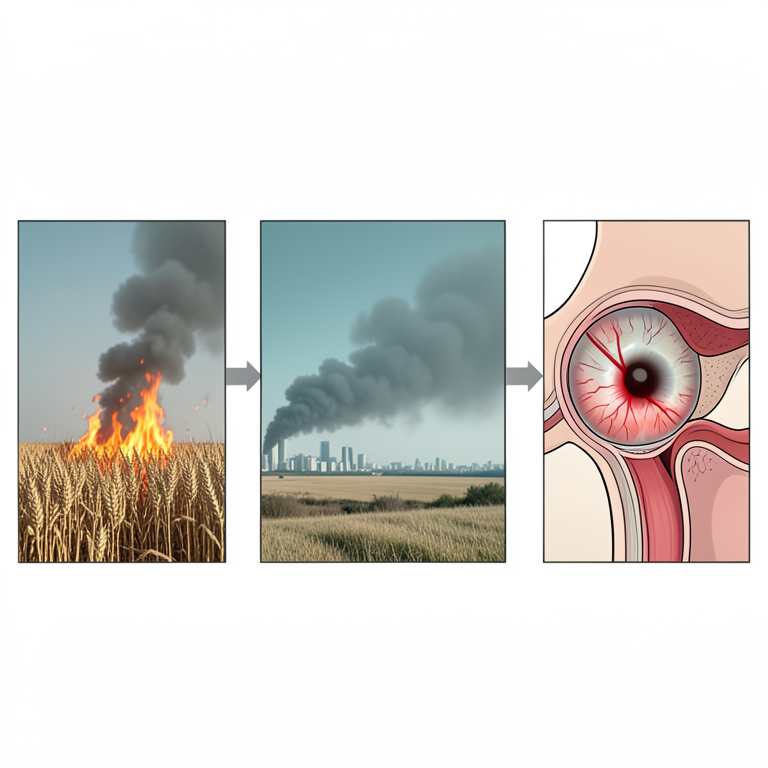
The Cycle of Stubble Burning Impacts
AI-generated conceptual illustration (wheat stubble fields and a distant city skyline). It explains the idea and does not show study data.
View source evidence ↗Figures & tables
From the original paper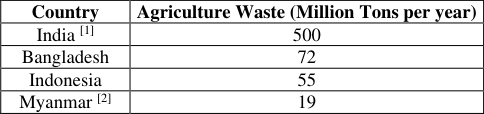 Table 1
Introduction
After the green revolution, farmers across large parts of India realized the benefits of using machines for agricultureboosting yield, and productivity. At the same time, it also had a very significant negative impactmore yield resulted in more waste, and mechanized paddy farming resulted in higher amounts of rice stubble on these fields. With large areas of states such as Punjab and Haryana under agriculture, and very short gap between the rice harvesting and wheat sowing season, burning this stubble remains the most practical method of clearing these fields for most farmers. The farmers seem to have some understanding of the negative impacts of the practice, but faced with the practicality of the methods known to them resort to simply burning the residue on their farm land itself. "To hire laborers in a 5 million hectare area at one time within 10 days is not possible," explains Dr. ML Jat, Principal Scientist at the International Maize and Wheat Improvement Centre (CIMMYT), which has a research center in Karnal, Haryana [3] . Data from Indian Ministry of New and Renewable Energy (MNRE), says that out of the total of 500 million tons of crop residue generated in India every year, around 92 million tons are burned every year. The above data reflects the seriousness of the issue for India. The total Agricultural waste burned in India each year is more than the total agricultural waste generated in our neighboring countries placing a huge strain on our environment. It also highlights the importance of farm residue management for India in the face of the potential global warming crisis. Traditionally, this residue would have been ploughed into the field but the large scale of production and economic and practical limitations make it impossible in today's time. 1 Ton of the residue, on an average, contains 4-6 kilo grams of nitrogen, 15-20 kilo grams of potassium, and 1-2 kilo grams of phosphorus. Burning these residues on the field results in toxic gases and deprives the soil of these nutrients. Thus, in addition to causing air pollution, it also negatively affects the soil's fertility [3] .
Country
Agriculture Waste (Million Tons per year) India [1] 500 Bangladesh 72 Indonesia 55 Myanmar [2] 19
Impacts of Residue Burning
As is evident from the composition of the residue, the major effect is the production of greenhouse gases, particulate matter and smog, while draining the soil of its nutrients and killing off local soil biodiversity. The major air pollutants released by drop burning are CO2, CO, NH3, NOX, SOX, non-methane hydrocarbons, VOCS, SVOCS, and Particulate matter. While the gases contribute significantly to the total emissions from India, the particulate matter, especially lightweight, can stay suspended in air for a long time and travel with the wind. These combine with the north India fogresulting in smog. With reduced wind movement over large parts of north India in the winter season, the dispersal of this smog slows down, resulting in prolonged adverse conditions in the affected areas.
The practice of residue burning has been estimated to release up to 149.24 million tonnes of CO2, 0.25 million tonnes of SOX, 9 million tonnes of CO, and 0.07 million tonnes of carbon black into the atmosphere [4] . The effects of these gases have been well documented on humans living in the regions affected by the smog. A study conducted in 2016 by Dr. Vitull K. Gupta, professor of Medicine in Bathinda reveals that 84.5% of respondents suffered from health problems related to stubble burning. Of these 76.8% reported eye irritation, 44.8% nasal irritation, 45.5% throat irritation, 41.6% coughing, and 18.0% wheezing [5] .
The heat from the burning also elevates the soil's temperature to 33.8 -42.2 °C up to a depth of 1 cm; destroying the fungal and bacterial species of the soil. Besides generally reducing this bio-diversity, the impact of the same on the agriculture is also seriousthe reduction in useful, farming friendly species allows pests to increase in the soil leading to crops being highly prone to diseases.
Steps taken by the Government
Due to the high impact of the problem, the government of India has been trying to take steps to check the same; including laws, forums, promotion of alternative uses of the residue such as biogas. In addition to the above mentioned laws, the Delhi High Court had passed an order banning residue burning, while Punjab government had levied fines worth INR 73.2 lakhs in 2016 on farmers [4] . Another step of the Government towards reducing burning of residue was the promotion of bio-gas plants across India. This had been mentioned in the Ministry of New and Renewable Energy, Government of India's annual report as a means to reduce residue burning and promote utilization of the waste [6] . Latest technology allows using paddy residues in these units allowing states such as Punjab and Haryana address the major source of their crop residue being currently burnt. There have been a few reported cases of such units coming up in Punjab and producing energy from rice residue [7] . The Government of India has also directed NTPC (National Thermal Power Corporation) to induct crop residue pellets in coal power generation plants. The method seems feasible given the pilot programs that have tried to include crop residue pellets with their regular coal fuel. The Ministry of Agriculture has also come up with a National Policy for Management of Crop Residues (NPMCR) with the following objectives: Promotion of technology to optimize utilization and management of crop residue Promotion of crop machinery to improve grain recovery and reduce requirement of residue burning Monitoring crop residue management through remote sensing technologies Promotion of innovative ideas and projects through financial support.
Additionally, Punjab and Haryana governments have implemented state-level initiatives such as vigilant remote satellite-based tracking of crop residue burning for imposing fines, initiatives, rewards and subsidies to check the problem. They've also introduced an incentive of INR 2500 per acre for small and marginal farmers who're yet to start this practice. Punjab reported 38% reduction and Haryana 25%. [8 9] Uttar Pradesh has planned to set-up bio-fuel plants in each district to give farmers an alternative to residue burning. CM Yogi Adityanath has said that 2 units are already operational in Sitapur and Gorakhpur, and would soon be extended to other districts.
Methods to manage crop residue
Many alternatives have been proposed over the years by policy-makers, agriculturalists and scientists to counter the problem, but somehow these haven't percolated down to the level of the farmers. The labor-intensive process of collection and then proper disposal of this waste makes a lot of these alternatives unviable.
The first approach has been to levy fines on farmers who are still engaging in the practice of crop residue burning for managing their agricultural waste. Fines become difficult to implement owing to Indian farms being subsistence farms for families which aren't large enough to allow full-time monitoring and enforcement. It is also an impractical approach given that it simply adds to the costs of farm operations adding directly to the debts that a large number of our farmers are ridden with.
The second type of alternatives incentivize selling the residue to non-farm industries but that still leaves the burden of residue collection and transportation to these processing centers on the individual farmers. The additional costs and effort involved in this process make it unsuitable for small farmers living in far-flung areas. The additional income that they may receive from selling their waste is almost completely offset by these additional costs. A third kind of alternative is to come up with ways to make this residue usable in the farm itself.
These methods are summarized as below One way to manage the residue without having to remove it from the farms is to compost it. The high nutrient content in the residue has already been discussed earlier. The compost used from this waste would also reduce the requirement for application of fertilizers thus saving these costs for these farmers.
Compost added to the soil makes it higher yielding and helps boost resistance to disease, toxicity, and drought. Making bio-char from the residue is another alternative.
It requires the pyrolysis of the residue in an oxygen free environment into a fine-grained porous material. This material when applied to the soil helps boost water retention, nutrient retention, earthworm population, and increased pH. [10] Bio-char finds its application in various fields, such as construction, water treatment, cosmetics industry, metallurgy, food processing industry, chemical industries and waste water treatment plants. Given these wide variety of applications, biochar can be a very lucrative product extracted from the agricultural residue produced in India. In-situ management of the waste is an approach which makes it very easy for the farmer to implement. It simply involves the farmer leaving the residue on the field before planting the next season of crops [11] . This can be done either without tillage of the residue or by tilling the residue into the soil before planting. The only drawback is that it requires special machinery to either till the residue into the soil or to enable seeding without residue removal. The National Policy for Management of Crop Residue also has a mention of in-situ waste management for handling farm waste. In-situ methods such as mulching, and incorporation of the residue directly into the soil have been mentioned. There hasn't been any follow-up documented in research literature by the government since the announcement of this policy, and any intervention would go a long way in giving impetus to this waste management method.
The technology of trying the third method already exists and is already being used on some farms.
Some of these technologies are as follows
Happy Seeder (used for sowing of crop in standing stubble) Rotavator (used for land preparation and incorporation of crop stubble in the soil) Zero till seed drill (used for land preparations directly sowing of seeds in the previous crop stubble) Baler (used for collection of straw and making bales of the paddy stubble) Paddy Straw Chopper (cutting of paddy stubble for easily mixing with the soil) Reaper Binder (used for harvesting paddy stubble and making into bundles) [4] .
Studies by International Maize and Wheat Improvement Centre (CIMMYT) show that Happy Seeders improve agricultural productivity by 10-15%. The problem with implementation of these technologies is that it requires capital investment by the already debt-ridden farmers. This makes the role of the government, of subsidizing these machines, even more important in the fight against residue burning.
Policy changes required for managing crop residue
While we have seen that the government has been taking measures to check the problem of farm residue burning for some time, and that there exist technologies which can help with the issue; the annual problem of smog in North-west India still remains and reflects poorly on the outcome of these measures. This raises the issue of the modifications required in the approach to make these technology interventions successful in controlling the problem.
The following changes in the approach can be useful Setting-up a service similar to the household waste collection and management already running in urban areas. The stark contrast in the ability of our country to collect and manage the large quantities of household waste and that of managing farm waste points to the obvious advantage of having a government-run collection and management system. This service would be of use especially to the small and marginal farmers who do not produce enough waste to make it economically viable for them to implement any of the technologies mentioned in the section above. It would also make the implementation of alternative use-based management practices lucrative since the optimization of collection costs from various farms would lend economies of scale to the system and make it an attractive option for the farmers. Awareness raising initiatives of the government need to ensure that the entirety of the impact of the issue and the benefits of the proposed solutions are realized by the farmers. While just conveying that residue burning causes smog in some areas and that there are technologies which can replace the practice would be well received by the farmers but when they actually have to spend money on buying these technologies they may not adapt these, rendering the entire exercise useless. Hence the messaging needs to convey the secondary economic benefits such as reduced fertilizer requirement, improved soil quality, etc. Also, if services such as a systematic farm waste collection system are set-up, they will need to be marketed and conveyed to the farmers to ensure enough subscription to these services are done by the targeted farmers. Involving other currently unrelated industries in the process by identifying and incentivizing utilization of farm-waste as inputs. The example of the National Thermal Power Corporation mentioned earlier is an ideal example for this approach; wherein the government directed them to incorporate up to 10% of crop residue with coal as the fuel being used in their power plants. This goes in line with the agricultural waste collection service. If such a large scale collection of the farm waste is carried out, we will be collecting 92 to 500 million tons of agricultural waste every year. This huge quantity of waste would need to be optimally used across industries to ensure that it is properly processed and handled, otherwise we will end up with these collection agencies having huge quantities of waste at one place which they might also finally resort to burning to disposing off incorrectly.
Conclusion
As discussed in this paper, the practice of crop residue burning in large parts of rural India is a major concern for
International Journal of Advanced Chemistry Research https://www.chemistryjournals.net our environment. The negative impact of the same isn't just felt by the resident of the areas experiencing smog, but also by the flora and fauna of the farm areas. It also leads to reduction in the nutrient content of the soil since the biomass burnt converts the nutrients which would have been absorbed by the crops from the soil into green-house gases.
There are multiple technological approaches to managing this residue such as (1) conversion of the residue into useful inputs into other industries, (2) composting, (3) bio-char production, and (4) in-situ management of the residue. The governments, both at the center and the states have tried various legal and policy initiatives to counter the problem but have largely been unsuccessful at the larger scale, and need to introduce certain changes in their approach to make it successful. These are setting-up a service to collect and manage the residue, imparting proper awareness of the solutions to the farmers, and involving private players in the management and utilization of the residue for their use.
If and when, both these conditions (uptake of waste management practices, and government policies supporting and encouraging these technologies) are met we can expect to have a significantly reduced quantity of harmful smog over the cities of north and north-west India, leading to a significantly improved standard of living for our citizens.
Figures and tables from the paper
| Country | Agriculture Waste (Million Tons per year) |
|---|---|
| India [1] | 500 |
| Bangladesh | 72 |
| Indonesia | 55 |
| Myanmar [2] | 19 |
Table text extracted from the original PDF; superscript letters are shown inline. The original table image is below.
View original table image
References
1 in the original paper- Ministry of New and Renewable Energy, Government of India. Annual Report, 2015-16; c2016. Available from: https://mnre.gov.in/knowledge-center/publication
Cited by 2
From OpenAlex, OpenCitations and reference lists read by Scinovex
- Digital Twin Applications for Air Pollution-Resilient Rice Agriculture ↗
R. S. RANA, Naveen Kumar, Rakesh Kumar, Girdhar Gopal · Springer eBooks · 2026
❝ 1 - Stubble to Resource: A Digital Platform to Reduce Stubble Burning ↗
Seema Jogad, Arpit Kumar Gupta, Akshat Gaba · SSRN Electronic Journal · 2025
❝ 0PDF