
Research article · 2022 · Full text
International Journal of Advanced Chemistry ResearchPhytochemical, anti-sickling and polymerization inhibition studies of the crude methanol leaf recipe extracts of three medicinal plants
Volume 4(1) · Pages 42–47 · DOI: 10.33545/26646781.2022.v4.i1a.46 ↗
Research areasPapaya Research and ApplicationsPhytochemistry and biological activities of Ficus speciesFood Science and Nutritional Studies
Abstract
Author-writtenThis research focuses on the evaluation of herbal recipe made from Carica papaya linn, Psidum guajava linn. and Terminalia catappa linn which are used individually and as a recipe for the treatment of Sickled cell disease (SCD) in northern Nigeria. The research seek to validate the traditional application of the recipe in the management of sickle cell disease and to further identify its phytoconstituents (qualitatively), anti-sickling and polymerization inhibition potential in an in-vitro system. The results of the phyto-evaluation revealed the presence of alkaloids, cardiac glycosides, flavonoids, tannins, terpenoids, phenolics, and saponins, while the sickling inhibition studies showed a significantly higher inhibition level in dose dependent manner of up to 71.32% and 85.71%. The results for sickling reversal studies showed a similar trend with reversal levels of up to 92.03% and 94.51% and a polymerization inhibition effect of 79.84% to 99.18% respectively. Thus, the recipe formulated from the three commonly used plants may Served as an excellent candidate for the development of plant drug for the management of SCD, may Served as a prophylactic agent that will reduced the frequency of crisis in sickle cell patients.
Summary
Source-checkedPlain-language reading of the full paper, prepared with AI and checked against the text. Each point links to the authors' own words.
Why it matters
- Sickle cell anemia is a severe hereditary condition where mutated hemoglobin causes red blood cells to become crescent-shaped during low oxygen levels, contributing significantly to deaths in developing nations. View evidence ↗
- The global burden of the disorder is high, with approximately 300,000 neonates born with it worldwide, half of whom (150,000) are born in Nigeria. View evidence ↗
- Hemoglobin polymerization is considered the primary physiological event that leads to the sickling of red blood cells, making its inhibition a key therapeutic target. View evidence ↗
The question
- The study aims to validate a traditional herbal recipe used in northern Nigeria for sickle cell disease by identifying its chemical constituents and testing its ability to inhibit sickling and polymerization in vitro. View evidence ↗
What they did
- The researchers created a recipe by mixing equal ratios of air-dried, pulverized leaves from Carica papaya, Psidium guajava, and Terminalia catappa, which were then extracted using 80% methanol. View evidence ↗
- Blood samples were obtained from stable adolescent sickle cell disease patients at State Specialist Hospital Maiduguri who had not received Hb AA blood transfusions in the previous three months. View evidence ↗
- Polymerization inhibition was measured by monitoring the turbidity of red blood cell solutions at 700 nm and 26°C. View evidence ↗
What they found
- Qualitative analysis confirmed that the herbal recipe contains several bioactive compounds, including alkaloids, cardiac glycosides, flavonoids, tannins, terpenoids, phenolics, and saponins. View evidence ↗
- The recipe inhibited red blood cell sickling in a dose-dependent manner, achieving 71.32% inhibition at 12.5 mg/ml and 85.71% inhibition at 25 mg/ml. View evidence ↗
- In sickling reversal tests, the recipe significantly restored cells to normal shapes, with reversal rates of 92.03% at 12.5 mg/ml and 94.51% at 25 mg/ml, compared to 71.49% sickled cells in the control. View evidence ↗
- The recipe demonstrated a strong dose-dependent effect on inhibiting hemoglobin polymerization, ranging from 79.84% to 99.18% inhibition. View evidence ↗
What it means
- The authors conclude that this three-plant recipe is a promising candidate for developing a plant-based drug or prophylactic agent to reduce the frequency of crises in sickle cell patients. View evidence ↗
Visual summary
1 visualsIllustrations explain the paper; they do not show study data.
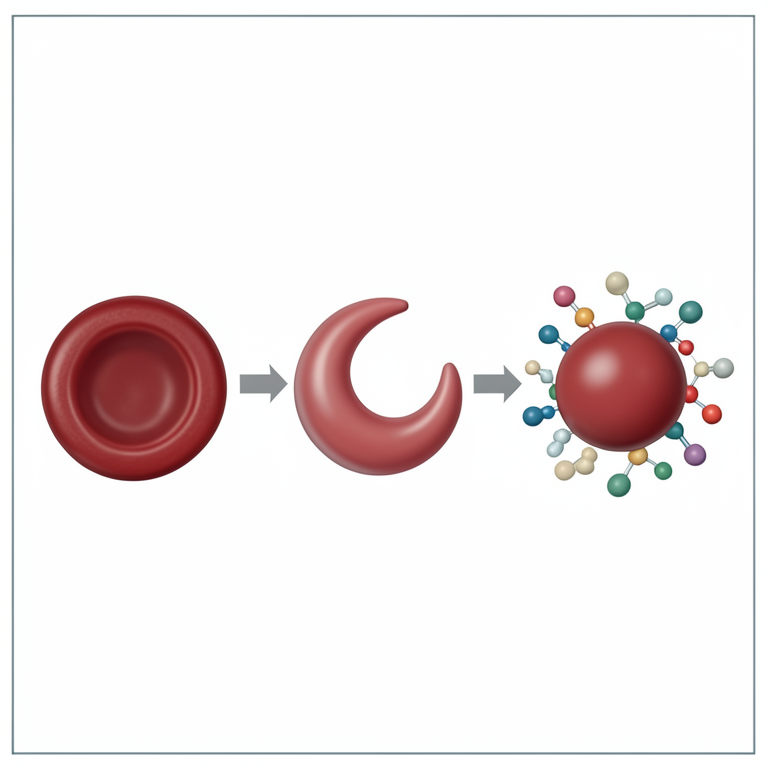
Mechanism of Action of the Herbal Recipe
AI-generated conceptual illustration (human red blood cells and plant-derived bioactive molecules). It explains the idea and does not show study data.
View source evidence ↗Figures & tables
From the original paper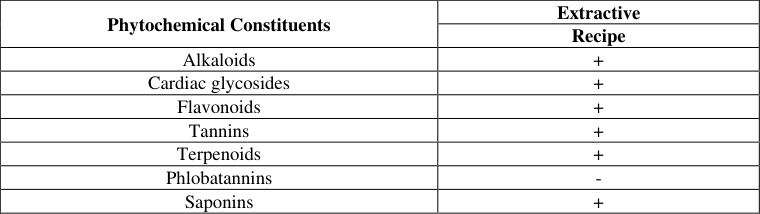 Table 1
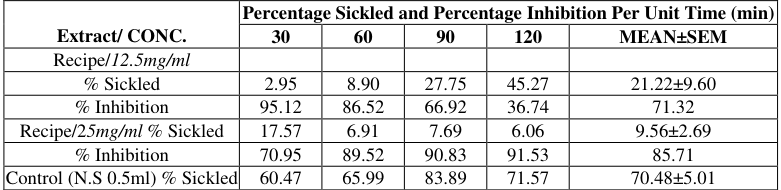 Table 2
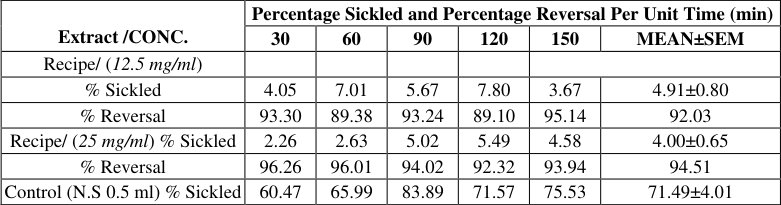 Table 3
 Table 4
Introduction
Sickle cell anemia is a severe hereditary form of anemia in which a mutated form of hemoglobin distorts the red blood cells into a crescent shape at low oxygen levels [1] . The disease is among the leading cause of deaths in developing countries. According to the world health organization about three hundred thousand (300,000) neonates are born with this disorder globally, and about hundred fifty thousand (150,000) of these births are recorded in Nigeria [2] . There is still no permanent solution to this disorder, however, several therapeutic options (orthodox and traditional) are in used but the successes in the management of the disorder is still challenging due to the difference in the manifestation of symptoms among patients. Various therapeutics approaches that have been employed to inhibit against polymerization of haemoglobin (Hb) which is believed to be the primary patho-physiological events that leads to the sickling of the red blood cells [1] . Currently hydroxyurea and erythropoietin are the most prescribed orthodox options for the prevention of the occurrence of crisis in SCD by inducing the production of fetal haemaglobin [3] . The above approaches did not give the much-needed beneficial effects based on the reduction of painful crisis as the criterion for successful treatment [3] . Other option though not feasible in development countries such ours is the bone marrow transplantation which has been found to be an efficient for controlling the scourge of the disease by completely changing the genotype of the patient to either HbAS or HbAA depending on the genotype of the donor. However, the cost implications, expertise and the problems of finding suitable donors are the major obstacle associated this approach [4][5] . Furthermore, there has been a tremendous increase in research towards finding natural products capable of ameliorating the frequencies of crisis and painful episodes, preventing the loss of water from red blood cells (RBCs) and inducing the level of fetal haemoglobin in the patients [6] . The successes of such effort lead to the discovery of Ciklavit (a herbal recipe made from plants and potash) which was champion by Nigerian pharmaceutical research and development NIPRID [7] . Several current research activities are focused on identifying new drugs that are capable of preventing the loss of water from red blood cells (RBCs) or increasing the level of fetal haemoglobin, a variety of haemoglobin that prevents the sickling of red blood cells (RBC). Clotrimazole, hydroxyurea and erythropoietin (a genetically engineered hormone that stimulates fetal haemoglobin and RBC production) were proposed in this regard [8][9][10][11] . Furthermore, plant formulations and recipes currently in circulations for the treatment of sickle cell disease in Nigeria are Jobelin (jubi), Ajawaron HF, etc [12][13] .
The three medicinal plants (Carica papaya, Psidium guajava and Terminalia catappa) selected for study were carefully picked after a painstaking review of their ethnomedicinal, ethnopharmacological efficacies, availability and application in the management and treatment of sickle cell disease from sources such as: West African Herbal Pharmacopoeiae, Anti-sickling Herbs, An Inventory of Ethnobotanicals Used in the Management of Sickle Cell Disease in Nigeria, Useful Medicinal Plants of West Africa, Medicinal Plants of Ghana among others [14][15][16][17][18][19] . Thus, this research will focus on the evaluation of herbal recipe made from Carica papaya linn, Psidum guajava linn. and Terminalia catappa linn which are used individually and as a traditional recipe for the treatment of SCD in northern Nigeria with a view to validate its traditional application, further identify its phytoconstituents qualitatively and quantitatively.
Methodology Plant Collection
The three plants specimens were collected at the State Low Cost Area in Maiduguri, Borno State. The sampling area is located on 11051'40"N1309'39"E, while the samples collected was identified by a Taxonomist at the Department of Biological Sciences, University of Maiduguri, Nigeria and a voucher number 09903 allocated to it.
Sample Preparation, Extraction and Partitioning
The three plant samples (leaves) collected was air dried under shade and pulverized using wooden mortar and pestle. The pulverized plant materials were mixed in equal ratio and extracted with 80% methanol using maceration technique. The extracts was concentrated at low temperature to minimize the degradation of thermolabile components [20] . The resulting mass was then weighed and kept in a desiccator until required for analysis. The concentrated recipe was subjected evaluated quantitative, qualitative phyto-evaluation and was further subject to Invitro antisickling assays and in vivo toxicity study pharmacologically
Phytochemical Evaluation
Preliminary phytochemical screening will be carried out to confirm the secondary metabolites using standard procedures as described by [21][22][23][24][25] for the presence of Alkaloids, Flavonoids, Anthraquinones, Saponins, Tannins and Cardiac Glycosides
Anti-Sickling Assay Sample Collection (Blood)
The blood samples used in this study was collected with the informed consent of stable adolescent SCD patients attending State Specialist Hospital Maiduguri, which had not been transfused in the last three months with Hb AA blood as described earlier by [26] .
Sickling Reversal Test
The ability of the recipe to reverse the sickling state of the RBCs was performed in accordance with the previously described by procedure [27] . The blood sample was washed twice in five volumes of phosphate buffered saline (1 mL of blood in 5 mL of PBS) with pH 7.4 by centrifugation at 1200g. Into a clean Eppendorf tube, 100 μL of the washed red blood cells and 100 μL of freshly prepared 2% sodium metabisulfite (Na2S2O3) was added and incubated for 2 h at 37 °C. Then 100 μL of anti-sickling agent (1% w/v) was added and incubated for another 2 h at 37 °C. Ten micro liters (10 μL) of the incubated cells was taken and transferred to a hemocytometer or Neubauer's counting chamber, and the cells will be viewed and counted using a microscope at 40× magnification. A control test will be performed by replacing 100 μL of drug/extract with 100 μL of PBS. The cells were classified as normal or sickled by observing their shapes. A biconcave or disk-like shape was taken to be normal while the elongated, star-like, or wrinkled shape was considered sickled. The percentage sickled cells was calculated using the following formula [26] :
Sickling Inhibition Test 0.2 ml of homozygous sickle cell anaemia whole blood was placed in a test tube (in duplicates). Then, 0.2ml phosphate buffered solution plus 0.2 ml of the aqueous extracts was added and the mixture immediately covered with 1 ml liquid paraffin and incubated in a thermostat water bath at 370C for four hours. After the 4-hour incubation period, 0.6 ml of freshly prepared 2% sodium metabisulphite solution was carefully added under the liquid paraffin to the incubation mixture and the final mixture was thoroughly but carefully mixed by rolling the test tube between the palms. The mixture was incubated for another 11/2 hours at 37 o C in the water bath. At the end of the incubation period, the liquid paraffin was carefully removed by the use of a Pasteur pipette and the remaining mixture is fixed in 3 ml of 95% methanol solution and reserved until ready for counting. The control experiments consisted of 0.2 ml saline solution to replace the extract. The percentage inhibitory activity for each sample is then calculated from the results and presented as duplicate means for all the samples, including the experimental control [28] . The fixed cell mixtures were each centrifuged and the supernatant decanted. With a capillary tube, one or two drops was applied on a microscope slide, carefully covered with a cover slip and viewed with a high power microscope (x100), 400 cells will be counted and the percentage sickled cells calculated.
Polymerization Inhibition Test
The polymerization inhibition test was carried out following the method of [29] . This procedure involves the measurement of the turbidity of the polymerizing solution of RBCs at a wavelength of 700 nm at 26 °C. Freshly prepared 2% sodium metabisulfite (0.88 mL) was transferred into a cuvette followed by 0.1 mL of PBS and 0.02 mL of SS blood. Absorbance was be read at 700 nm immediately and at every 2 min for 30 min. This serves as control test. For the inhibition test, 0.1 mL of phosphate buffered saline polymerization in percentage was calculated using the earlier method of [26] as presented below:
Results and Discussions
Results and Discussions
Discussion
The results of the qualitative phytochemical study of the methanol crude extract of the formulated recipe revealed that the recipe formulated from the three medicinal plants Carica papaya, Psidum guajava and Terminalia catappa contained some valuable bioactive principle such as; alkaloids, cardiac glycosides, flavonoids, tannins, terpenoids, phenolics, and saponins as presented in the Table 1. According to Akakpo-Akue [30] and Kiefmann [31] reported that Flavonoid (quercetin) has shown to provide protection against haemoglobin oxidation and other cellular modifications promoted by peroxides. Likewise, Kplé, [32] and Akojie and Fung [33] revealed that the anti-sickling effects of cajanus cajan, J. secunda, P. nigrescens and J. gossypiifolia were as a result of additive and synergestic effects of some of these plants metabolites. Thus, the effects manifested by the recipe could be due the possible effects of these phyto-constituents. Similarly, Railson [34] reported that variety of plants metabolites elicits some physiological activities and medicinal properties. These include among others; promotion of tissue regeneration, decreasing the permeability of blood capillaries, anti-sickling and strengthening their resistance to hemolysis. Moreover, Moody [54] attributed the anti-sickling potential of Cissus populnea to the presences of flavonoids, cardiac glycosides, Saponins and steroids which are all inherent in the recipe
| Phytochemical Constituents | Extractive |
|---|---|
| Recipe | |
| Alkaloids | + |
| Cardiac glycosides | + |
| Flavonoids | + |
| Tannins | + |
| Terpenoids | + |
| Phlobatannins | - |
| Saponins | + |
Table text extracted from the original PDF; superscript letters are shown inline. The original table image is below.
View original table image
under study. Hence, their presence could be the probable reason for their efficacies as plant antisickling drug. The result of the pharmacological investigation revealed that the recipe is indeed a promising agent for mitigating the sickling crises in an in vitro system as presented in Table 2 and 3 for the two concentrations of the recipe and the control group. The results indicated a significant (P<0.05) potential of the recipe in inhibiting the sickling of RBCs viewed under microscope. The cells with elongated or spike-like shapes were considered sickled while normal RBCs appeared biconcave or disk-like. To quantitatively compare the anti-sickling properties of the crude recipe extract, the cells counting method of [26] Nurain et al. (2017) [26] was adopted. The number of sickled cells in the control group was significantly higher (P<0.01) corresponding to 70.84% percentage sickled, while in the presence of the crude recipe, the extract acted in dose dependent manner thus reducing the percentage sickled cells to 21.22% at 12.5 mg/ml and 9.56% at 25 mg/ml corresponding to 71.32% and 85.71% inhibition as presented in Table 2. Similarly, these findings are inline with the earlier work of Samuel [36] who investigated the potential of powdered dried fallen leaves of Terminalia catappa and confirmed that the plant had highest antisickling activity as it drastically reduced the rate of erythrocyte sickling to very significant level (P<0.001). Likewise, in the work of Oduola et al. [37][38][39][40][41]26] corroborated the efficacies of plants and their potentials in inhibiting the sickling of RBC and also suggested that their administration during crisis could probably re-oxygenates red cells, restore their shape and deformability due to the high level of phytochemicals inherent in plants. The reversal potentials of the crude recipe extracts was evaluated following the assertion of Poillon and Kim [43] had earlier reported that the primary cause of the clinical symptomatology of sickle cell anaemia is the intracellular polymerization of sickle haemoglobin (HbS) that occur when sickle erythrocytes are partially deoxygenated under hypoxic conditions of the microcirculation. This was corroborated by Mojisola et al. [44] in her work on the sickling reversal and polymerisation inhibition potential of Moringa oleifera and had also affirmed that the polymerisation will in turn make HbSS red blood cells deformed resulting in microvascular occlusions and haemolytic anaemia. However, according to Oder [45] , sickled cell could be reversed to their normal biconcave shape upon re-oxygenation. The results obtained from the sickling reversal assay in Table 3, shows that the crude recipe extract was able to significantly reversed the percentage sickled cells to their normal biconcave shape in a dose-dependent manner. Consequently, it could be suggested that the observed effects of the extracts may be as a result of the secondary plants metabolites bounding allosterically to the HbSS red blood cells under hypoxic condition to give a more stable conformer as earlier suggested by Olomola et al. [46] Thus, restoring red blood cells (RBC) shape, flexibility, longevity and smooth movement through micro human blood vessels. From the experimental results, the extract exhibited different percentage of sickled cells; thus, corresponding to different percentage reversal. The number of percentage sickled cells in the control group was 71.49% after 150 minutes, while the treatment at the dose of 12.5 mg/ml Recipe was 92.03% and 94.51%, 25 mg/ml respectively. These results were obtained from the average of five repeated experiments for each antisickling agent and the control. Similarly, the findings of this study is similar to the earlier findings of Cyril-Olutayo et al. [47] which established both antisickling and reversal of sickling activities of the extract of an unripe pawpaw. Likewise in another publication Cyril-Olutayo, and co-workers [42] affirmed that the combination of two plants could have synergistic effect since one or more components of each have antisickling properties, hence, the higher values observed with the recipe for both reversal and inhibitory activities could be due to the synergy of its components. Furthermore, Table 4 shows the presentation of the effect of the crude recipe extract in preventing RBC polymerization. The results of the recipe had significantly inhibited the RBC polymerization in dose dependant manner from 79.84% to 99.18% respectively. From the data analysed, it is clear that the crude recipe extract possesses a very significant haemoglobin polymerization inhibition effects. This finding is in conformity with earlier reports of Oyewole et al. [48] in whose work, the measure of inhibition of deoxyHbS polymerization inhibition of some plant extracts that was found to be in dose dependent. More so, Chikezie; Okpuzor et al; Imaga et al. [49][50][51] had reported and proposed the suitability of the use of herbal preparations as candidate for management of sickle cell disease. In conclusion, the recipe formulated from the three commonly used plants may serve as an excellent candidate for the development of plant drug for the management of SCD, may serve as a prophylactic agent that will reduced the frequency of crisis in sickle cell patients.
| Extract/Concentration | ROP | RPP | RPI |
|---|---|---|---|
| Recipe | |||
| 12.5 mg/ml | 0.74 | 20.16 | 79.84 |
| 25 mg/ml | 0.03 | 0.82 | 99.18 |
| Control | |||
| Control (N.S 0.5ml) | 3.67 | 100 | 0.00 |
Table text extracted from the original PDF; superscript letters are shown inline. The original table image is below.
View original table image
| Extract /CONC. | Percentage Sickled and Percentage Reversal Per Unit Time (min) | — | — | — | — | — |
|---|---|---|---|---|---|---|
| 30 | 60 | 90 | 120 | 150 | MEAN±SEM | |
| Recipe/ (12.5 mg/ml) | ||||||
| % Sickled | 4.05 | 7.01 | 5.67 | 7.80 | 3.67 | 4.91±0.80 |
| % Reversal | 93.30 | 89.38 | 93.24 | 89.10 | 95.14 | 92.03 |
| Recipe/ (25 mg/ml) % Sickled | 2.26 | 2.63 | 5.02 | 5.49 | 4.58 | 4.00±0.65 |
| % Reversal | 96.26 | 96.01 | 94.02 | 92.32 | 93.94 | 94.51 |
| Control (N.S 0.5 ml) % Sickled | 60.47 | 65.99 | 83.89 | 71.57 | 75.53 | 71.49±4.01 |
Table text extracted from the original PDF; superscript letters are shown inline. The original table image is below.
View original table image
| Extract/ CONC. | Percentage Sickled and Percentage Inhibition Per Unit Time (min) | — | — | — | — |
|---|---|---|---|---|---|
| 30 | 60 | 90 | 120 | MEAN±SEM | |
| Recipe/12.5mg/ml | |||||
| % Sickled | 2.95 | 8.90 | 27.75 | 45.27 | 21.22±9.60 |
| % Inhibition | 95.12 | 86.52 | 66.92 | 36.74 | 71.32 |
| Recipe/25mg/ml % Sickled | 17.57 | 6.91 | 7.69 | 6.06 | 9.56±2.69 |
| % Inhibition | 70.95 | 89.52 | 90.83 | 91.53 | 85.71 |
| Control (N.S 0.5ml) % Sickled | 60.47 | 65.99 | 83.89 | 71.57 | 70.48±5.01 |
Table text extracted from the original PDF; superscript letters are shown inline. The original table image is below.
View original table image
Acknowledgement
AcknowledgementThe authors wish to acknowledge support from the Tetfund (IBR grant), Ramat Polytechnic Maiduguri, Nigeria, State Specialist Hospital Maiduguri and the Department of Medical Laboratory Science (Haematology Department) University of Maiduguri for an opportunity to do part of this research in their facilities.
References
50 in the original paper- Rees DC, Gibson JS. Biomarkers in sickle cell disease. British Journal of Haematology,2012:156:433-45.
- World Health Organization. Sickle cell disease prevention and control, 2012. Retrieved from http://www.afro.who.int/en/clusters-aprogrammes/dpc/non-communicablediseases managementndm/programme-components/sickle-celldisease.html
- Moody JO, Segun FI, Aderounmu O, Omolade OO. Anti-sickling activity of Terminalia Catappa leaves harvested at different stages of growth. Nigerian Journal Natural Product and Medicine,2003:7:30-32.
- Akinsulie AO, Temiye EO, Akanmu AS, Lesi FE, Whyte CO. Clinical evaluation of extract of Cajanus cajan (Ciklavit) in sickle cell anaemia. Journal of Tropical Pediatrics,2005:51(4):200-205.
- Okpuzor J, Adebesin O. Membrane stabilizing effect and antisickling activity of Senna podocarpa and Senna International Journal of Advanced Chemistry Research https://www.chemistryjournals.net alata. 31st congress for European biochemical societies, Instanbul, Turkey, 2006, 25-29.
- Ekeke GI, Shode FO. Phenylalanine is the predominant anti-sickling agent in Cajanus cajan seed extract. Planta. Medica,1990:56:41-43.
- Rifai Z, Welle S, Kamp C, Thornton CA. Ragged red fibers in normal aging and inflammatory myopathy. Annals of Neurology,1995:37:24-29.
- Mehanna AS. Sickle Cell Anemia and Antisickling Agents Then and Now. Current Medicinal Chemistry,2001:8:79-88.
- Elliott G, Liu X-H, Cusick JL, Menze MA, Vincent J, Witt T et al. Trehalose uptake through P2X7 purinergic channels provides dehydration protection. Cryobiology,2006:52:114-127.
- Iyamu EW, Turner EA, Asakura T. Niprisan (Nix - 0699) improves thesurvival rates of transgenic sickle cell mice under acute severe hypoxic conditions. British Journal of Hematology,2003:122:1001-1008.
- Okochi VI, Okpuzor J, Alli L. A comparison of an African herbal formula with commercially available haematinics. African Journal of Biotechnology,2003:2(8):237-240.
- Okochi VI, Okpuzor J, Alli L. A comparison of an African herbal formula with commercially available haematinics. African Journal of Biotechnology,2003:2(8):237-240.
- Amujoyegbe OO. Idu M, Agbedahunsi JM, Erhabor JO. Ethnomedicinal Survey of medicinal plants used in the management of sickle cell disorder in Southern Nigeria, Journal of Ethnopharmacology,2016:49:1-35.
- Shweta J, Ankur V, Kamal S, Durgesh NC. Nagendra SC. Anti-sickling Herbs. Springer Nature Switzerland AG. M. Ozturk, K. R. Hakeem (eds.), Plant and Human Health,2019:3:255-283.
- WAHO West African Health Organisation (WAHO). West African herbal phamacopeaoe, KS Printcraft Gh. Ltd. Nust Junction, Kumasi, Ghana, 2013, 1-260. ISBN:978-9988-1-8015-7.
- Gbadamosi IT. An Inventory of Ethnobotanicals Used in the Management of Sickle Cell Disease in Oyo State, Nigeria. Botany Research International,2015:8(4):6572.
- Burkil HM. The useful plants of West Tropical Africa, Royal Botanical Gardens families, kew, U.K,1997:4:969.
- Press Taylor & Francis Group 6000 Broken Sound Parkway NW, Suite 300, Boca Raton, USA,2012:6:221-245.
- Seidel V. Initial and Bulk Extraction. In: Sarker, S. D., Latif, Z. and Gray, A. I. (eds.) Natural Products Isolation. New Jersey: Humana Press, 2006, 27-46.
- Harbone JB. Phytochemical methods. Champman and Hull Ltd, London, 1973, 49-188.
- Trease GE, Evans WC. Pharmacognosy, 11th editon. Brailliar Tridel Can. Macmillian Publishers London, 1989, 45-50.
- Sofowora A. Medicinal plants and traditional medicine in Africa. Spectrum BooksLtd, Ibadan, Nigeria, 1993, 191-289.
- Bruneton J. Pharmacognosie, Phytochimie des Plantes Médicinales. 3rd Edition, Revue et Augmentée, Tec and Doc, Paris, 1999, 534-544.
- Silva O, Duarte A, Cabrita J, Pimentel M, Diniz A, Gomes E. Antimicrobial activity of Guinea-Bissau Traditional Remedies. Journal of Ethnopharmacology,1998:50:55-59.
- Nurain IO, Bewaji CO, Johnson JS, Robertson DD, Zhang Y. Potential of Three Ethnomedicinal Plants as Anti-sickling Agents. Molecular Pharmaceutics,2017:14:172-182.
- Pauline N, Cabral BNP, Anatole PC, Jocelyne AMV, Bruno M, Jeanne NY. The in vitro anti-sickling and antioxidant effects of aqueous extracts Zanthoxyllum heitzii on sickle cell disorder. BMC Complementary Alternative Medicine,2013:13(1):162.
- Cyril-Olutayo MC, Temitope AA, Ayodeji OO, Joseph MA. Bioactivity-directed isolation of anti-sickling compounds from Cnidoscolus acontifolius (Mill.) I.M. Johnst leaf extract. Journal of Pharmacy and Pharmacognosy Research,2020:8(6):580-590.
- Nwaoguikpe RN, Ujowundu CO, Okwu GN. The Antisickling Potentials of Four Curcubits (T. Occidentalis, C. Maxima; C. Sativus and C. Lonatus). Scholars Journal of Applied Medical Science,2013:1(3):191-198.
- Akakpo-Akue J, Ahon Gnamien M, Kplé Tatiana KM, Fofié Y, Ibrahime S, Yapo-Crezoit ACC et al. Cuarentena por COVID-19, factor asociado al consumo dedrogas legales en estudiantes de enfermería. European Scientific Journal, ESJ,2021:17(10):121.
- Kiefmann R, Rifkind JM, Nagababu EB. Red blood cells induce hypoxic lung inflammation J. Blood,2008:111(10):5205-5214.
- Kplé TKM, Akakpo-Akue J, Golly JK, Fofie Y, Ahon MG, Kra MA et al. Phytochemical Characterization of Three Plants and Their Antisickling Activity in the Management of Sickle Cell -*Disease. Journal of Biosciences and Medicines,2020:8:100-112.
- Akojie FO, Fung LW. "Antisickling activity of hydroxybenzoic acids in Cajanus cajan." Planta Med,1992:58:317-20.
- Wafaa Kamal Taia, Abdelbasit Musa Asker, Fatma M Alwashish, Salem Ahmed Mohamed. Research Title: Ethnobotanical survey of medicinal plant Teucrium L. (Lamiaceae) in eastern Libya. Int. J Agric. Extension. Social Dev.2021;4(1):176-181.
- Moody JO, Ojo O, Omotade O, deyemo AA. "Antisickling potential of a Nigerian herbal formula (ajawaron HF) and the major plant component (Cissus populnea L. CPK)." Phytother Res,2003:17:1173-6.
- Samuel BB, Olaniyi AA, Olakunle ID, Dambrosio M, Okogun JI. Phytochemical and Anti-sickling Activities of Terminalia catappa Linn. JOPAT,2009:14:31-36.
- Oduola T, Adeniyi FAA, Ogunyemi EO, Bello IS, Idowu TO. Antisickling agent in an extract of unripe pawpaw (Carica papaya): Is it real? Short Communication African Journal of Biotechnology,2009:5(20):1947-1949.
- Imaga NO, Gbenle GO, Okochi VI. Anti-sickling property of Carica papaya leaf extract. African Journal of Biochemistry Research,2009:3(4):102-106.
- Olomola TO, Kelani TO, Cyril-Olutayo MC, Joseph MA. Evaluation of Some Salicylaldehyde-derived Baylis-Hillman Adducts and Coumarin Derivatives as Potential Antisickling Compounds. Annals of Science and Technology -B,2018:3(1):35-42.
- Naiho AO, Okonkwor BC, Okoukwu C. Anti-Sickling and Membrane Stabilizing Effects of Carica papaya Leaf Extract. British Journal of Medicine & Medical Research,2015:6(5):484-49.
- Olomola TO, Kelani TO, Cyril-Olutayo MC, Joseph MA. Evaluation of Some Salicylaldehyde-derived Baylis-Hillman Adducts and Coumarin Derivatives as Potential Antisickling Compounds. Annals of Science and Technology -B,2018:3(1):35-42.
- Cyril-Olutayo MC, Agbedahunsi JM, Akinola NO. In vitro Evaluation of Moringa oleifera Leaf Extracts Used in Managing Sickle Cell Patients in South West Nigeria. Nigerian Journal of Pharmaceutical Research,2018:14(1):69-79.
- Poillon WN, Kim BC. 2, 3-Diphosphoglycerate and intracellular pH as interdependent determinants of the physiologic solubility of deoxyhemoglobin S. Blood,1990:76:1028-36.
- I.M. Johnst. on Hb S Red Blood Cells In Vitro. Niger. J. Nat. Prod. Med,2015:19:115-121.
- Oder E, Safo MK, Abdulmalik O, Kato GJ. New Developments in Anti-Sickling Agents: Can Drugs Directly Prevent the Polymerization of Sickle Haemoglobin In Vivo? British Journal of Haematology,2016:175(1):24-30.
- Olomola TO, Kelani TO, Cyril-Olutayo MC, Joseph MA. Evaluation of Some Salicylaldehyde-derived Baylis-Hillman Adducts and Coumarin Derivatives as Potential Antisickling Compounds. Annals of Science and Technology -B,2018:3(1):35-42.
- Cyril-Olutayo MC, Agbedahunsi JM, Akinola NO. In vitro Evaluation of Moringa oleifera Leaf Extracts Used in Managing Sickle Cell Patients in South West Nigeria. Nigerian Journal of Pharmaceutical Research,2018:14(1):69-79.
- Chikezie PC, Uwakwe AA. Membrane stability of sickle erythrocytes incubated in extracts of three medicinal plants: Anacardium occidentale, Psidium guajava,and Terminalia catappa. Pharmacognosy Magazine,2011:7(26):121-125.
- Okpuzor J, Olumide A, Henriatta O, Ifeanyi A. The potential of medicinal plants in sickle cell disease control: A review International Journal of Biomedical and Health Sciences,2008:4(2):47-55.
- Imaga NOA, Gbenle GO, Okochi VI, Adenekan SO, Edeoghon SO, Kehinde MO et al. Antisickling property of Carica papaya leaf extract. African Journal of Biochemical Research,2010:3(4):102-106.
- Railson H, Michel FO, Aline EFF, Priscila H, Aguinaldo JDN, Maria SSL. Protective effect of flavonoids against reactive oxygen species production in sickle cell anaemia patients treated with hydroxyurea. Revista Brasileira Hematolgia Hemoterterapia,2013:35(1):52-55.