
Research article · 2022 · Full text
International Journal of Advanced Chemistry ResearchField evaluation of new molecules against sheath rot disease of rice caused by Sarocladium oryzae
Volume 4(2) · Pages 87–89 · DOI: 10.33545/26646781.2022.v4.i2b.84 ↗
Research areasPlant Disease Resistance and Genetics
Abstract
Author-writtenSheath rot disease of rice caused by Sarocladium oryzae. In this study, the 7 fungicides were tested against S. oryzae. The efficacy of fungicides on sheath rot was tested under field conditions. The Kresoxim- Methyl 40% + Hexaconazole 8% WG (Ayaan) found superior for reducing sheath rot disease intensity (18.15), gave highest grain yield (8840.00 kg ha-1), highest test weight of grain (19.06 gm), and also increase the healthy grain (84.80%) and reduced the discoloured (9.20 %) and chaffy grain (6 %).
Summary
Source-checkedPlain-language reading of the full paper, prepared with AI and checked against the text. Each point links to the authors' own words.
Why it matters
- Rice is a critical global crop, providing food for over half of the world's population. View evidence ↗
- Sheath rot, caused by the fungus Sarocladium oryzae, is a major disease found in nearly every rice-growing region globally, including India. View evidence ↗
- Depending on environmental conditions, sheath rot can cause significant yield losses ranging from 9.6% to 85%. View evidence ↗
The question
- The study aimed to identify effective chemical treatments to control sheath rot disease in rice. View evidence ↗
What they did
- Field experiments were conducted during the 2020-21 kharif season in Raipur, Chhattisgarh, India, using the susceptible rice cultivar Swarna. View evidence ↗
- Plants were artificially infected at the early booting stage by inserting half-cooked rice grains covered with S. oryzae spores and mycelium into 20 healthy boots. View evidence ↗
- The treatment protocol consisted of two sprays: the first applied six days after inoculation and the second applied ten days after the first spray. View evidence ↗
- At maturity, the researchers measured disease intensity, percent disease reduction over the control, grain yield (kg/ha), and 1000-seed weight. View evidence ↗
What they found
- All tested fungicides significantly reduced the intensity of sheath rot compared to the untreated control. View evidence ↗
- Kresoxim-Methyl 40% + Hexaconazole 8% WG (Ayaan) was the most effective treatment, resulting in a disease intensity of 18.15% and a 75.61% reduction compared to the control. View evidence ↗
- Rallis-Ril 243/CF (50% WG) was the second most effective, with a disease intensity of 25.00% and a 66.58% reduction over the control. View evidence ↗
- Thifluzamide 24% SC (Pulsar) was the least effective fungicide, showing a disease intensity of 48.89% and only a 34.30% reduction over the control. View evidence ↗
What it means
- The authors conclude that Kresoxim-Methyl 40% + Hexaconazole 8% WG (Ayaan) is the superior molecule for reducing disease intensity and maximizing yield and grain weight. View evidence ↗
Visual summary
2 visualsIllustrations explain the paper; charts are replotted from the paper's own table values.
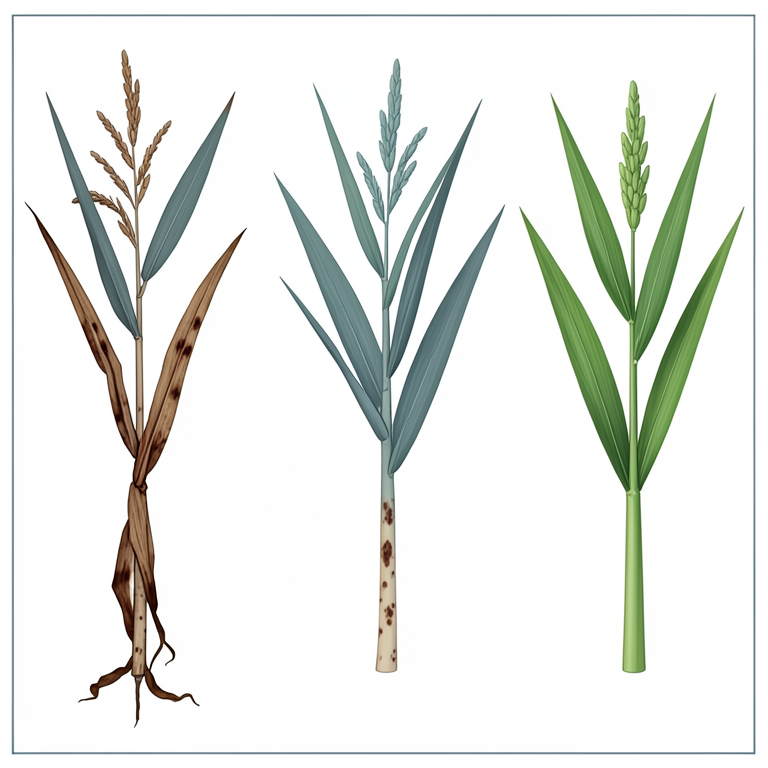
Fungicide Efficacy Comparison
AI-generated conceptual illustration (rice plants). It explains the idea and does not show study data.
View source evidence ↗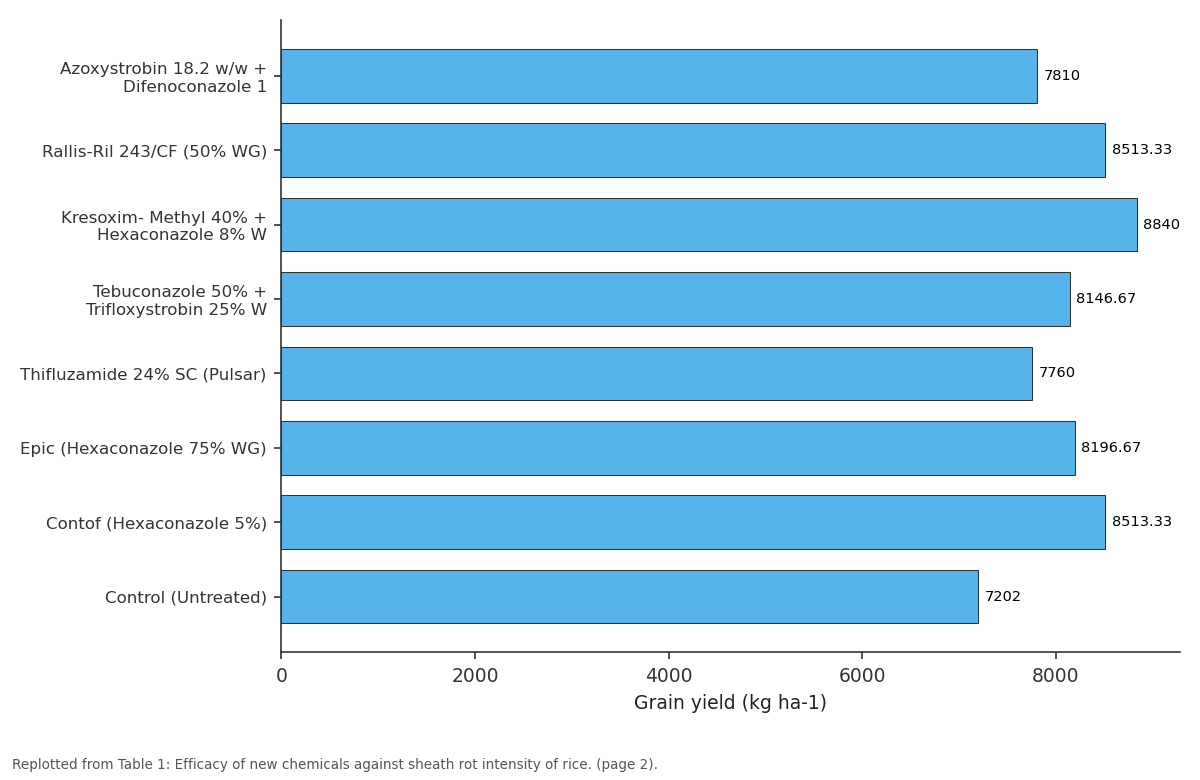
Grain yield (kg ha-1): Azoxystrobin 18.2 w/w +... vs Rallis-Ril 243/CF (50%... vs Kresoxim- Methyl 40% +... vs Tebuconazole 50% +... vs Thifluzamide 24% SC...
Replotted from Table 1 (page 2) of the original paper. Every bar is the paper's own table value.
View source evidence ↗Figures & tables
From the original paper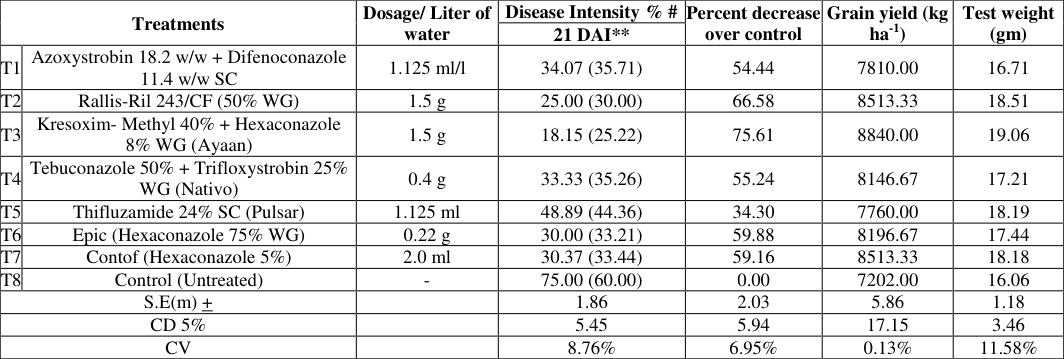 Table 1
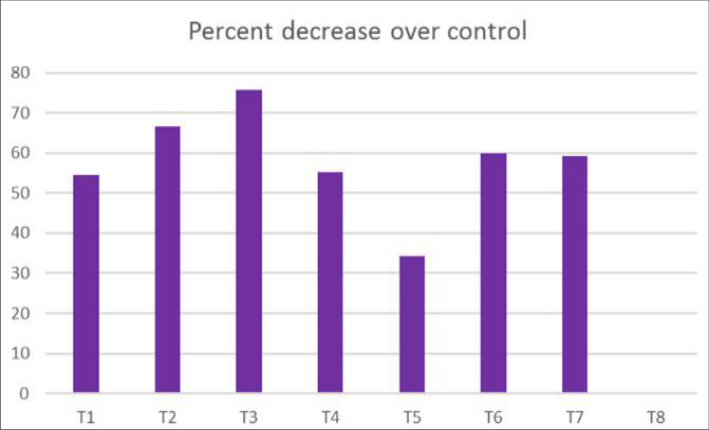 Figure 1
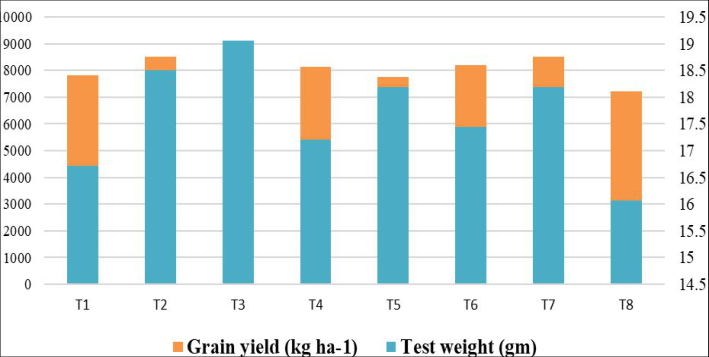 Figure 2
Introduction
Rice (Oryza Sativa L.) is the most important crop and feeding more than half of the world's population. More than 90% of the world's rice is cultivated and eaten in Asia and more than 60% of the world's populations were depend on rice for their half of the calories intake. Rice is cultivated in over a hundred countries, covering a total area of 167 million hectares land and yielding over 755.47 million tones (FAO 2021) [3] . In India West Bengal, Uttar Pradesh, Punjab, Bihar, Tamil Nadu, Madhya Pradesh and Chhattisgarh are the major rice growing states. The Chhattisgarh state is known as "Rice bowl of India" because maximum area covered under rice during kharif and contribute major share in national rice production. Rice is widely cultivated as a primary food crop in the plane, hill, and plateau regions of Chhattisgarh. From Chhattisgarh region several diseases have been reported on rice, including bacterial blight, blast, sheath blight, and sheath rot, which are the most serious for this state, resulting in significant economic output losses. Sheath rot of rice, caused by sarocladium oryzae, is becoming a major disease due to its widespread occurrence in almost every rice-growing region of the world, including India (Ready and Gosh, 1985) [9] . The yield reduction ranged from 9.6% to 85% depending on the environmental conditions during the growing season of the crop (Phookan and Hazarika, 1992) [7] . For the first time, Agnihotrudu (1973) [1] reported this sickness for the 1 st time in India, and other after, several workers reported this from different section of the country (Ghuffran et. al, 1980) [5] . The sheath rot infected plant exhibits a variety of symptoms, i.e. sheath rot, grain discoloration, unfilled grain, sterile or unfilled all grains in the panicles, and even panicle abortion. Among these; grain discoloration is major one. It is resulted in a decrease in 1000 grain weight, and low grain filling, seed germination and causes yield losses hence, the present study was undertaken to find out the effective available against the desease.
Materials and Methods
Materials and Methods
Field evaluation of new molecules against sheath rot disease of rice caused by
Field evaluation of new molecules against sheath rot disease of rice caused by
Sarocladium oryzea.
Field experiment were carried out (during kharif season 2020-21) at the Plant Pathological Experimental Site, IGKV, Raipur (Chhattisgarh), India. Susceptible rice cultivar Swarna was used. There were 8 treatments i.e Azoxystrobin 18.2 w/w + Difenoconazole 11.4 w/w SC, Rallis-Ril 243/CF (50% WG), Kresoxim-Methyl 40% + Hexaconazole 8% WG (Ayaan), Tebuconazole 50% + Trifloxystrobin 25% WG (Nativo), Thifluzamide 24% SC, Epic (Hexaconazole 75% WG), Contof (Hexaconazole 5%) including untreated (Control) for each replication. At the early booting stage, 20 healthy boots were inoculated with half cooked rice grains covered with spore and vegetative mycelium of the test fungus using the insertion placement method. After six days of inoculation the 1 st spray of each treatment was given, on the tenth day after the 1 st spray, second spray was applied. The disease severity was recorded at twenty one days after the inoculation of the disease, crop in 0 to 9 scales by following the procedure of Standard Evolution System of International Rice Testing Program (IRRI, 1988). For the observation, 20 panicles were chosen at random from each treatment plot. At crop maturity, observation for disease intensity, percent disease over control, yield kg/ ha, and 1000 seed weight were also recorded for each treatment at maturity of the crop. The numerical values were further used for calculating the PDI (Percent Disease Index) using the formula:
Result and Discussion
Data revealed (Table no. 4.13) that all fungicidal sprays significantly reduced sheath rot intensity, percent healthy, discolored and chaffy grain and increased yield in comparison to untreated control. At 21 th day of inoculation and after second spray, all fungicides significantly reduced the disease intensity over control. Among the tested fungicides, the Kresoxim-Methyl 40% + Hexaconazole 8% WG (Ayaan) treatment was highly effective in reducing the disease intensity of sheath rot (18.15%) and recorded 75.61 percent decrease of the disease over control followed by Rallis-Ril 243/CF (50% WG) treatment was effective in reducing the disease intensity of sheath rot (25.00%) and recorded 66.58 percent decrease of the disease over control, Epic (Hexaconazole 75% WG) treatment was effective in reducing the disease intensity of sheath rot 30.00 and recorded 59.88 percent decrease of the disease over control, Contof (Hexaconazole 5%), Tebuconazole 50% + Trifloxystrobin 25% WG (Nativo) (Azoxystrobin 18.2 w/w + Difenoconazole 11.4 w/w SC, treatment was effective in reducing the disease intensity of sheath rot 30.37, 33.33 and 34.07and recorded 59.16, 55.24 and 54.44 percent decrease of the disease over control). While Thifluzamide 24% SC (Pulsar) was recorded least effective in comparison to other fungicides with 48.89 percent disease intensity and recorded 34.30 percent decrease of the disease over untreated control.
Conclusion
In the field, study the evaluation of new molecules for sheath rot and yield of rice. The Kresoxim-Methyl 40% + Hexaconazole 8% WG (Ayaan) found superior for reducing sheath rot disease intensity (18.15), gave highest grain yield (8840.00 kg ha -1 ) and test weight of grain (19.06 gm) whereas, Thifluzamide 24% SC (Pulsar) was recorded least effective in comparison to other molecules with disease intensity over untreated control.
Figures and tables from the paper
| Treatments | — | Dosage/ Liter of water | Disease Intensity % # | Percent decrease over control | Grain yield (kg ha-1) | Test weight (gm) |
|---|---|---|---|---|---|---|
| 21 DAI** | ||||||
| T1 | Azoxystrobin 18.2 w/w + Difenoconazole 11.4 w/w SC | 1.125 ml/l | 34.07 (35.71) | 54.44 | 7810.00 | 16.71 |
| T2 | Rallis-Ril 243/CF (50% WG) | 1.5 g | 25.00 (30.00) | 66.58 | 8513.33 | 18.51 |
| T3 | Kresoxim- Methyl 40% + Hexaconazole 8% WG (Ayaan) | 1.5 g | 18.15 (25.22) | 75.61 | 8840.00 | 19.06 |
| T4 | Tebuconazole 50% + Trifloxystrobin 25% WG (Nativo) | 0.4 g | 33.33 (35.26) | 55.24 | 8146.67 | 17.21 |
| T5 | Thifluzamide 24% SC (Pulsar) | 1.125 ml | 48.89 (44.36) | 34.30 | 7760.00 | 18.19 |
| T6 | Epic (Hexaconazole 75% WG) | 0.22 g | 30.00 (33.21) | 59.88 | 8196.67 | 17.44 |
| T7 | Contof (Hexaconazole 5%) | 2.0 ml | 30.37 (33.44) | 59.16 | 8513.33 | 18.18 |
| T8 | Control (Untreated) | - | 75.00 (60.00) | 0.00 | 7202.00 | 16.06 |
| S.E(m) + | 1.86 | 2.03 | 5.86 | 1.18 | ||
| CD 5% | 5.45 | 5.94 | 17.15 | 3.46 | ||
| CV | 8.76% | 6.95% | 0.13% | 11.58% |
Table text extracted from the original PDF; superscript letters are shown inline. The original table image is below.
View original table image
References
9 in the original paper- Agnihothrudu V. Acrocylindrium oryzae Sawada sheath rot on paddy. Kavaka. 1973;1:69-71.
- Anonymus, 2021. www.fao.org,
- Balgude YS, Kshirsagar CR, Gaikwad AP. Evaluation on the efficacy of modern fungicides against blast and sheath rot of rice. International Journal of Current Microbiology and Applied Science. 2019;8(3):83-88.
- Guffran SM, Asghar SMA, Singh AP. Sheath rot spread in Bihar, India. IRRN. 1980;5(5):11.
- Kindo, Tiwari. Efficacy of fungicides for the management of sheath rot in rice under field. Plant achives. 2015;15(1):119-120.
- Phookan AK, Hazarika DK. Distributions of sheath rot (ShR) in six agroclimatic zones of Assam, India. IRRN. 1992;17(5):16.
- Pramesh D, Alse S, Muniraju KM, Kumara MK. A combination fungicide for the management of sheath blight, sheath rot and stem rot diseases of paddy. International Journal of Current Microbiology and Applied Science. 2017;6(9):3500-3509.
- Reddy CS, Ghosh A. Sheath rot incidence and yield losses in rice due to the joint atic zones of Assam, India. IRRN. 1985;17:16.
- Sharma L, Nagrale DT, Sing SK, Sharma KK, Sinha AP. A study on fungicides potential and incidence of sheath rot of rice caused by Sarocladium oryzae (Sawada). Journal of Applied and Natural Science. 2013;5(1):24-29.
Cited by 1
From OpenAlex, OpenCitations and reference lists read by Scinovex
- Field evaluation of some novel fungicides for the management of sheath rot disease in rice
Dipankar Mandal, Rini Pal, Sanjukta Mohapatra · International Journal of Advanced Biochemistry Research · 2024
Sheath rot caused by Sarocladium oryzae (Sawada) is one of the most important diseases of the major high-yielding rice varieties. The use of same fungicide continuously year after year can cause fungicidal resistance to the pathogen. Keeping this in view, a field experiment was conducted at Regional Research and Technology Transfer Station, Chiplima, Sambalpur, Odisha during kharif seasons of 2022-23 and 2023-24 to assess the effect of nine novel and commercially available fungicides for the management of sheath rot disease in rice. They were sprayed twice at 15 days interval starting from the