
Research article · 2022 · Full text
International Journal of Advanced Chemistry ResearchEvaluation of different strains and substrates for cultivation of oyster (Pleurotus spp.) Mushroom
Volume 4(1) · Pages 86–91 · DOI: 10.33545/26646781.2022.v4.i1a.125 ↗
Research areasFungal Biology and ApplicationsChemical synthesis and alkaloids
Abstract
Author-writtenThe present study was conducted in different substrates for Cultivation of Oyster (Pleurotus spp.) Five substrates viz., straw, sorghum straw, mustard straw. pearl millet straw and wheat + sorghum straw were tested alone and in combination with supplements to compare their efficacy in the growth pattern, yield and yield related pattern of fruiting bodies of Pleurotus spp. The results indicated that S-01 strain observed minimum days (16.00) for complete spawn run, and minimum days (21.00) for pin head formation, (26.00) days of fruit initiation in wheat straw. In case strain S-02 recorded in minimum days (15.00) for complete spawn run, (19.00) for pin head formation and (24.00) days of fruit initiation in wheat straw, respectively. In S-03 observed minimum days (17.00) for complete spawn run and minimum days (22.00) for pin head formation, (27.00) days of fruit initiation in wheat straw, respectively. S-01 strain recorded maximum number of fruit bodies (30.00) on wheat straw whereas maximum average weight of fruit body (28.00) were observed in sorghum straw while minimum number of fruit bodies (22.00) was recorded on pearl millet straw. S-02 strain observed by maximum number of fruit bodies (94.33) on wheat straw whereas maximum average weight of fruit body (20.00) were observed in wheat straw followed by Minimum number of fruit bodies (77.67), and Average weight of fruit body (15.00g) was recorded on pearl millet straw. In case S-03 strain recorded by maximum number of fruit bodies (56.67) on wheat straw+ sorghum straw whereas maximum average weight of fruit body (18.00) were observed in wheat straw followed by minimum number of fruit bodies (42.00) in sorghum straw, while Average weight of fruit body (12.00g) was recorded on pearl millet straw respectively. In S-01 strain, wheat straw substrate gave highest total yield of 698.33g /1000g of dry substrate with corresponding 69.83 per cent biological efficiency while the least effective substrate was pearl millet substrate which produced a total yield of 576.69g/1000g of dry substrate. In case of S-02 strain recorded by maximum total yield of 787.12g/1000g of dry substrate with corresponding 78.71 per cent biological efficiency in wheat straw followed by minimum substrate was pearl millet which produced a total yield of 593.12 g/1000g dry substrate. In strain -03 observed by maximum total yield of 546.99g/1000g of dry substrate with corresponding 54.69 per cent biological efficiency in wheat straw+ sorghum straw followed by minimum substrate was sorghum straw which produced a total yield of398.45 g/1000g dry substrate with 39.84 per cent biological efficiency.
Summary
Source-checkedPlain-language reading of the full paper, prepared with AI and checked against the text. Each point links to the authors' own words.
Why it matters
- Oyster mushrooms are globally recognized as commercially significant edible fungi. View evidence ↗
- These mushrooms are nutritionally valuable, providing proteins, fibers, vitamins, and amino acids while remaining low in fat. View evidence ↗
- While wheat straw is typically the best for yield, there is a need for affordable alternative substrates due to the cost and availability of traditional options. View evidence ↗
The question
- The study aimed to compare the efficacy of five different substrates (wheat, sorghum, mustard, pearl millet, and a wheat-sorghum mix) on the growth and yield of Pleurotus species. View evidence ↗
What they did
- The research was carried out at the Instructional Farm of the College of Agriculture in Jodhpur, Rajasthan, India, during 2021-22. View evidence ↗
- Substrates were mixed with spawn and packed into 5000 ml sterile plastic bags, which were then kept in a dark room. View evidence ↗
- Growth parameters including colonization period, pinhead formation, and biological efficiency (BE) were analyzed using ANOVA and Tukey's multiple comparisons via SPSS version 20. View evidence ↗
What they found
- Wheat straw resulted in the fastest spawn run across species, with P. Sajor-caju reaching completion in 15.00 days. View evidence ↗
- Pearl millet straw generally led to the longest spawn run periods, reaching up to 25.00 days for some species. View evidence ↗
- The highest number of fruit bodies for P. Sajor-caju (94.33) was recorded on wheat straw. View evidence ↗
- For P. Sapidus, the maximum number of fruit bodies (56.67 per 1000g dry substrate) was achieved using a wheat and sorghum straw mixture. View evidence ↗
- The maximum total yield was 787.12 g per 1000g of dry substrate, observed in P. Sajor-caju grown on wheat straw. View evidence ↗
- Pearl millet straw was consistently the least effective substrate, producing the lowest total yields across the species. View evidence ↗
What it means
- The authors suggest that most tested substrates are suitable for cultivation as they exceeded the 40% biological efficiency threshold. View evidence ↗
Visual summary
3 visualsIllustrations explain the paper; charts are replotted from the paper's own table values.
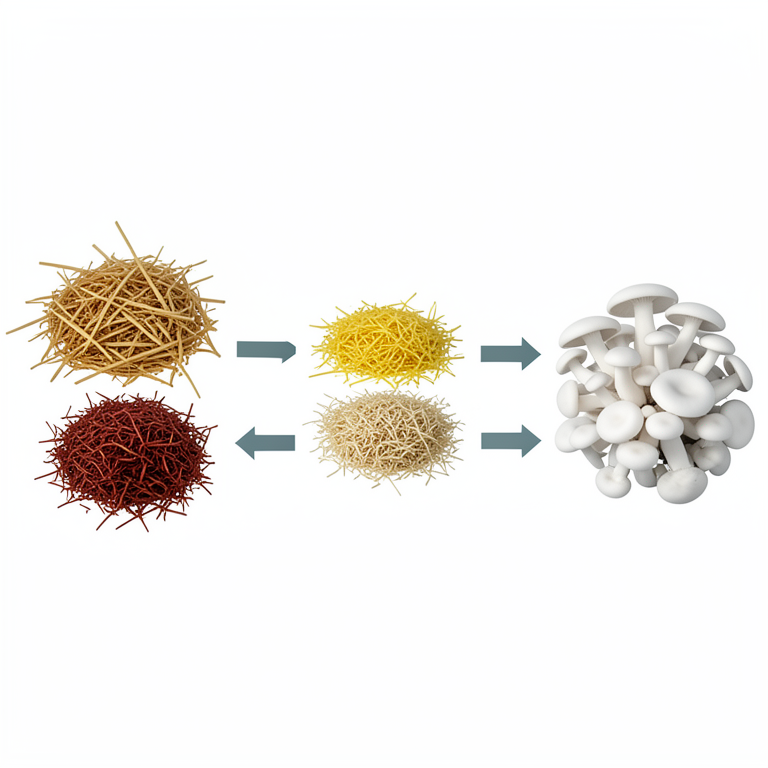
Substrate Comparison Framework
AI-generated conceptual illustration (Oyster mushrooms (Pleurotus spp.) and agricultural waste substrates). It explains the idea and does not show study data.
View source evidence ↗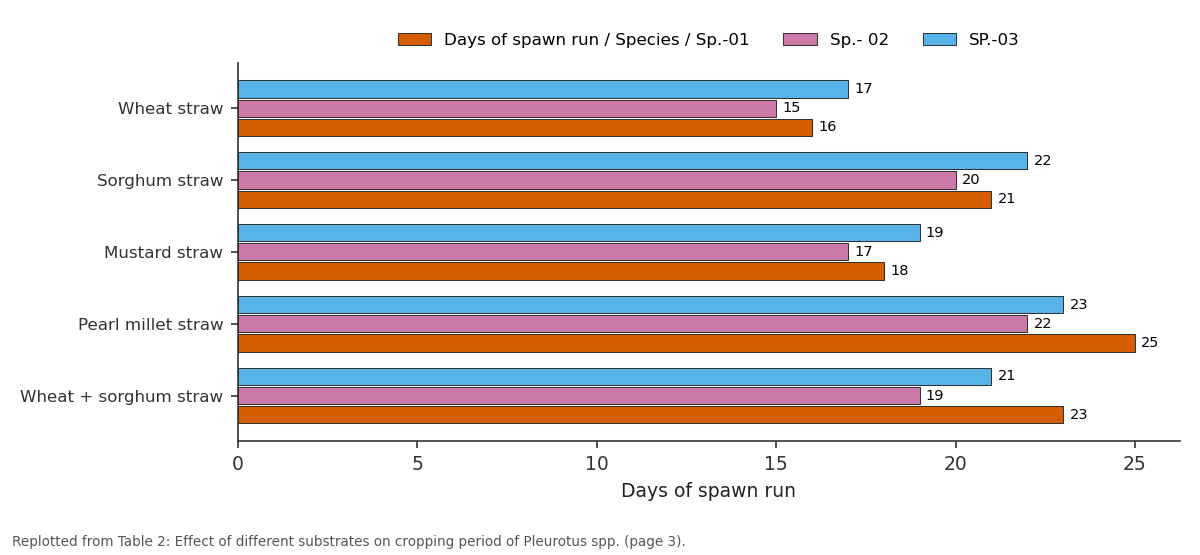
Days of spawn run / Species / Sp.-01 and Sp.- 02 and more: Wheat straw vs Sorghum straw vs Mustard straw vs Pearl millet straw vs Wheat + sorghum straw
Replotted from Table 2 (page 3) of the original paper. Every bar is the paper's own table value.
View source evidence ↗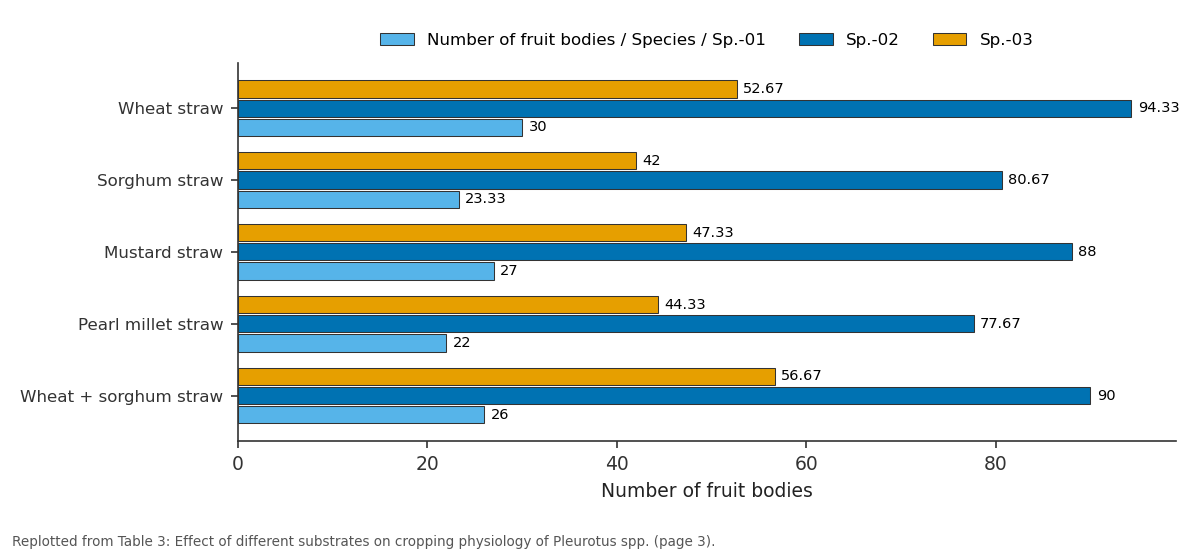
Number of fruit bodies / Species / Sp.-01 and Sp.-02 and more: Wheat straw vs Sorghum straw vs Mustard straw vs Pearl millet straw vs Wheat + sorghum straw
Replotted from Table 3 (page 3) of the original paper. Every bar is the paper's own table value.
View source evidence ↗Figures & tables
From the original paper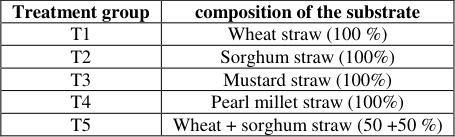 Table 1
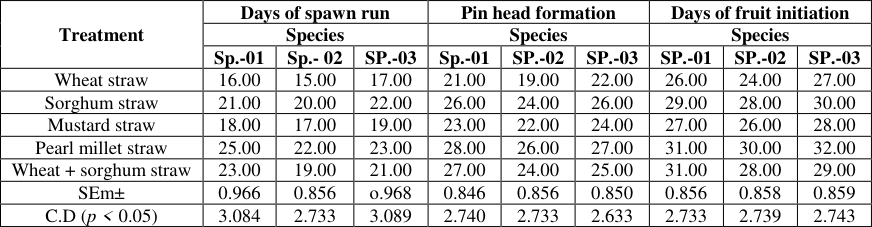 Table 2
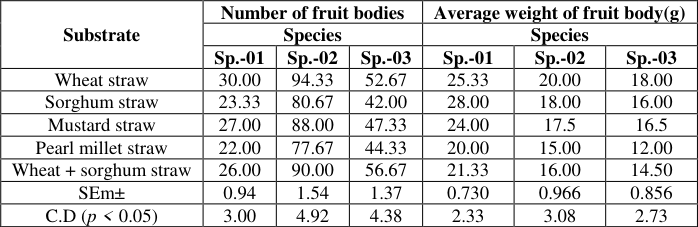 Table 3
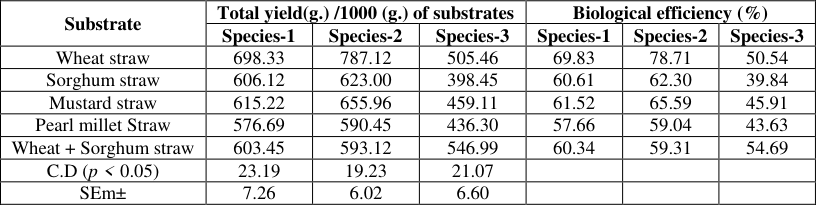 Table 4
Introduction
Mushroom cultivation is followed due to their delicious flavour and low calorific value. It has been determined that more than 3000 mushroom species are edible, but only 10 of those are on an industrial scale. The most cultivated mushroom worldwide is Agaricus bisporus, followed by Pleurotus species. Oyster mushroom is regarded as one of the commercially important edible mushrooms throughout the world. It consists of a number of different species, those including P. Sajor-caju, P. Eryengii, P. Sapedus, P. Ostreatus, P. Cystidiosus, P. Cornucopiae, P. Pulmonarius, P. Tuber-regium, P. Citrinopiliatus and P. Flabellatus and the most commonly cultivating Pleurotus spp. in India is P. Sajor-caju, P. eryengii, P. sapedus, P. Djamor, P. Citrinopileatus, P. Flabellatus, and P. Florida. The potential of oyster mushrooms which possess the appropriate enzymatic mechanisms for the transformation of lignocellulosic wastes into simple compounds, have been exploited as the means for biodegradation of a wide range of litter due to their particular ability for selective delignification. Many species of Pleurotus possess pleasant flavour and are considered as delicacy by the connoisseurs of food. Pleurotus spp. contains various types of vitamins and amino acids, high content of fibre and protein and low-fat content. It has been reported with protein (17-42%), carbohydrate (37-48%), minerals (potassium, phosphorous, calcium, sodium) of about 4-10%, lipids (0.5-5%) and fibres (24-31%).
Besides nutritional attributes of Pleurotus spp. the health benefitting effects like anticancer, antihyperlipidemic, antioxidant, hepatoprotective, antiflamentary, and antimicrobial activities makes them a health food. The production of mushroom in India has been estimated as 200,000 tonnes per annum and Haryana is the leading state followed by Punjab, Himachal Pradesh and other states. In India, the mushroom industry recorded an average growth rate of 4.3 % per annum. From the total mushroom produced, white Button mushroom shares 73 per cent followed by oyster mushroom 16 per cent, paddy straw mushroom 7 per cent and milky mushroom 4 percent. Indian mushroom industry generated revenue of Rs. 7,282.26 lacs by exporting 1,054 quintals of white button mushroom in canned and frozen in the year 2016-2017. Oyster is the second most popular mushroom after button all over the world (Banik and Nandi, 2004) [1] . Presently, in Rajasthan, the tropical and subtropical varieties of mushroom like oyster and milky are gaining popularity. The most important mushroom growing districts of Rajasthan are Udaipur, Jaipur, Ajmer, Bikaner, Bhilwara, Kota, Banswara, Sri Ganganagar, Jodhpur and Sirohi. Success of oyster mushroom cultivation in any locality depends on the substrates which are cheap and easily available as well as viable technology suitable for a particular agro-climatic region. Various agricultural by-products are being used as substrates for the cultivation of oyster mushroom. Though wheat straw is considered as the best substrate in terms of yield, it has become necessary to find cheap and alternate substrates due to the higher cost of paddy straw and its nonavailability in certain situations. Oyster mushrooms grow on agricultural wastes which are rich in cellulose, hemicellulose and lignin. These residues are low in nitrogen content (0.5 to 0.8 per cent), which is an essential element for cellular functions. At the time of fructification, most of the nitrogen is utilized for mycelial growth, the depleted nitrogen in the substrate becomes inadequate and limits mushroom yield. Several workers have reported that addition of organic amendments could enhance the yield of mushrooms and supplementing the growth substrate with oil seed cakes greatly influenced the production of mushroom, to double the yield. This technology has a great impact on mushroom production, since, per unit area, without significant prolongation of spawn run period, the bioconversion efficiency of the species could increase twofold.
Martial and Methods Description of the study area
The study was conducted in Instructional Farm, College of Agriculture, Jodhpur (Rajasthan), India. During the year 2021-22. Geographically, it is located between 26o 33' N to 26o 35' North latitude and 73o 00' E to 73o 10' East longitude at an altitude of 231 meter above mean sea level. This region falls under agro-climatic zone IA (Arid Western Plains Zone) of Rajasthan.
Oyster mushroom cultivation techniques
Oyster mushroom cultivation was done according to (Randive 2012) [18] . Table 1 shows the compositions of substrates used as a treatment groups for the cultivation of oyster mushroom. Initially, wheat straw, sorghum straw, mustard straw and pearl millet straw were chopped using edge tool into small pieces (2 -2.5 cm long). The substrates were soaked in water for 24 h to moisten it thoroughly and pasteurized using clean steel drums. First the water was heated at 60 °C. Then the substrate was added and allowed to remain in the water for 30 min. Finally, once pasteurized, it was stalked in sterile plastic sheet (2 m × 4 m) laying on the steep cemented floor so as to remove the excessive moisture from the substrates to get 65-75% moisture level. Then, the spawn prepared was mixed with substrate in the sterile plastic sheet (2 m × 4 m) laying on the floor. The mixture was filled into 5000 ml sterile plastic bags and placed in dark room. Holes were prepared for aeration in the plastic bag. Once the mycelia colonized substrates in plastic bags, the bags were transferred to the cropping room. The cropping room had a limited light with average temperature of 25 °C. The growing mycelia were watered twice a day (morning and afternoon) using watering pot to maintain water activity of the substrates in the plastic bags and humidity of cropping room.
| Treatment group | composition of the substrate |
|---|---|
| T1 | Wheat straw (100 %) |
| T2 | Sorghum straw (100%) |
| T3 | Mustard straw (100%) |
| T4 | Pearl millet straw (100%) |
| T5 | Wheat + sorghum straw (50 +50 %) |
Table text extracted from the original PDF; superscript letters are shown inline. The original table image is below.
View original table image
Harvesting and yield measures
Mature mushrooms were picked by clean hand without harming the substrate when they started to wrinkle-ripe. This was done for three subsequent flushes. Following the method of Iqbal et al. (2005) [9] , the yield parameters were recorded with respect to time (days) taken for completion of spawn running, time taken for the first appearance of pinhead formation, time taken for maturity of fruit bodies, number of flushes, and yield of flushes on the treatment substrates (total weight of all the fruiting bodies harvested from all the three pickings were measured and considered as total yield of mushroom). The pileus diameter and the stipe length were measured with graduated transparent ruler. Mature mushrooms were weighed with analytical balance to determine the biological efficiency (BE) of mushrooms produced from substrates. The average Biological efficiency (BE) of harvests was computed (Peng et al. 2000) [25] .
Mycelium running-time required from inoculation to completion of mycelium running were recorded (days). Pileus diameter was measured by using a string passing from one end of the pileus to the other through the center of the pileus. It was obtained on three randomly picked mushrooms and then the average was calculated in millimeters (mm). Stipe length was measured by placing the string from one end, where it was attached to the substrate, to the point where the gills on the pileus start. The string was placed along a ruler to get the length in millimeters (mm). Yield of mushroom= total weight of all the fruiting bodies harvested from all the three pickings were measured as total yield of mushroom. The data on spawn running was recorded after complete colonization of substrate and pin head and fruit body formation were observed.
Data collection and data analysis
Data on the mycelium colonization period, pin head formation period, stalk length, BE, step length, pileus diameter were recorded and analyzed using SPSS version 20. Analysis of variance (ANOVA) was used to indicate significant mean differences at 95% confidence interval using tukes multiple comparisons method.
Results
The number of days taken for complete mycelial growth differs significantly (p < 0.05) Among the three different species (P. Eryngii, P. Sajor-caju, and P. Sapidus), one P. Sajor-caju based on their fast and vigorous mycelial growth were selected and consequently evaluated for the cultivation parameters of Pleurotus spp. Table (4.5). The minimum (earliest) days for spawn run (15.00 days) were observed with P. Sajor-caju on wheat straw substrate followed by mustard straw(17.00 days), However, maximum spawn run period of 22.00 days was observed in pearl millet substrate alone. In P. Eryngii the minimum earliest days for spawn run (16.00 days) was observed with wheat straw followed by mustard straw 18.00 days, Maximum spawn run period of 25.00 days in pearl millet alone. In P. Sapidus, the earliest mean spawn run was observed with wheat straw in 17.00 days followed by mustard straw (19.00 days).
Maximum spawn run period of 23.00 days was observed with pearl millet straw alone. were observed with P. Sajor-caju on wheat straw substrate followed by mustard straw (22.00 days). However, maximum pinhead formation period of 26.00 days was observed in pearl millet substrate alone. In P. Eryngii, the minimum earliest days for pinhead formation (21 days) was observed with wheat straw followed by mustard straw 23.00 days. Maximum pinhead formation period of 28.00 days was observed on pearl millet straw alone. In P. Sapidus, the earliest mean pinhead formation was observed with wheat straw in 22 days followed by mustard straw (24.00 days). Maximum pinhead formation period of 27.00 days was observed with pearl millet straw alone.
A number of investigators have reported different timing period for fruiting bodies (maturity). Similar results in table 2. Minimum number of days recorded for fruit initiation by P. Sajor-caju, were (24.00 days) with wheat straw followed by 26.00 days in mustard straw. However, maximum days for fruit initiation (30.00 days) were observed with pearl millet substrate with P. Sajor-caju. In P. Eryngii, minimum days for fruit initiation (26.00 days) was recorded in wheat straw followed by 27.00 days in mustard straw. Maximum days for fruit initiation (32.00 days) were observed on pearl millet straw. It was noticed of P. Sapidus, Minimum number of days recorded for fruit initiation by (27.00 days) wheat straw followed by 28.00 days in mustard straw alone. However, maximum days for fruit initiation (32.00 days) were observed with pearl millet substrate with P. Sapidus 3 indicates the effect of substrate on mushroom average fruit body weight on P. Eryngii., the maximum average weight of fruit bodies 28.00g was recorded in sorghum straw followed by 25.33g in wheat straw, 24.00g and 21.33g in mustard straw and wheat + sorghum straw respectively. Minimum average weight of fruit bodies 20.00g per 1000g of dry substrate was recorded in pearl millet straw. In case of P. Sajor-caju, maximum average weight of fruit bodies (20.00g per 1000g of dry substrates) was recorded in wheat straw followed by 18.00g in sorghum straw whereas 17.5g and 16.00g in mustard straw and wheat + sorghum straw respectively. Minimum average weight of fruit bodies 15.00g per 1000g of dry substrates was recorded in pearl millet straw. In P. Sapidus maximum average weight of fruit bodies (18.00g per 1000g of dry substrates) was recorded in wheat straw followed by 16.5g in mustard straw whereas 16.00g and 14.50g in sorghum straw and wheat + sorghum straw respectively. Minimum average weight of fruit bodies 12.00g per 1000g of dry substrates was recorded in pearl millet straw. 4 indicates the effect of the treatment groups with varying substrate composition on yield (g). The highest total yield of 787.12 g /1000g of dry substrates in P. Sajor-caju, followed by mustard straw total yield of 655.96g, sorghum straw (623.00g), and pearl millet straw giving fruit body yield of 593.12g, The least effective substrate proved to be pearl millet straw with minimum total yield of 590.45 g/1000g of dry substrates. Similar trend was observed in case of P. Eryngii in which wheat straw proved to be best with maximum total yield of 698.33g/1000g of dry substrates whereas total yield of 615.22g, 606.12g, g and 603.45g were recorded in sorghum straw, mustard straw, and wheat + sorghum straw, respectively. The least effective substrate was pearl millet straw with minimum total yield of 576.69g/1000g of dry substrates. In P. Sapidus, maximum total yield of 546.99g /1000g of dry substrates was recorded in wheat + sorghum straw followed by 505.46g in wheat straw, 459.11g in mustard straw and 436.30g in pearl millet Straw respectively. Minimum yield of 398.45g per 1000g of dry substrate was recorded in pearl millet straw alone. Table 4 indicates the effect of the treatment groups with varying substrate composition on biological efficiency of Pleurotus spp. was significantly affected by the selected substrates. In P. Sajor-caju, maximum biological efficiency of 78.71 per cent was recorded on wheat straw, followed by 65.59, respectively. Minimum biological efficiency of 59.04 percent was recorded in pearl millet Straw. In case of P. Eryngii, maximum biological efficiency of 69.83 per-cent was recorded in wheat straw which was followed by 65.59 per-cent in mustard straw. Minimum biological efficiency of 57.66 percent was recorded in pearl millet straw. In P. Sapidus, maximum biological efficiency of 50.54 was recorded in wheat straw followed by 45.91in mustard straw, respectively. Minimum biological efficiency of 43.63 was recorded in pearl millet straw alone.
| Substrate | Total yield(g.) /1000 (g.) of substrates | — | — | Biological efficiency (%) | — | — |
|---|---|---|---|---|---|---|
| Species-1 | Species-2 | Species-3 | Species-1 | Species-2 | Species-3 | |
| Wheat straw | 698.33 | 787.12 | 505.46 | 69.83 | 78.71 | 50.54 |
| Sorghum straw | 606.12 | 623.00 | 398.45 | 60.61 | 62.30 | 39.84 |
| Mustard straw | 615.22 | 655.96 | 459.11 | 61.52 | 65.59 | 45.91 |
| Pearl millet Straw | 576.69 | 590.45 | 436.30 | 57.66 | 59.04 | 43.63 |
| Wheat + Sorghum straw | 603.45 | 593.12 | 546.99 | 60.34 | 59.31 | 54.69 |
| C.D (p < 0.05) | 23.19 | 19.23 | 21.07 | |||
| SEm± | 7.26 | 6.02 | 6.60 |
Table text extracted from the original PDF; superscript letters are shown inline. The original table image is below.
View original table image
| Treatment | Days of spawn run | — | — | Pin head formation | — | — | Days of fruit initiation | — | — |
|---|---|---|---|---|---|---|---|---|---|
| Species | Species | Species | |||||||
| Sp.-01 | Sp.- 02 | SP.-03 | Sp.-01 | SP.-02 | SP.-03 | SP.-01 | SP.-02 | SP.-03 | |
| Wheat straw | 16.00 | 15.00 | 17.00 | 21.00 | 19.00 | 22.00 | 26.00 | 24.00 | 27.00 |
| Sorghum straw | 21.00 | 20.00 | 22.00 | 26.00 | 24.00 | 26.00 | 29.00 | 28.00 | 30.00 |
| Mustard straw | 18.00 | 17.00 | 19.00 | 23.00 | 22.00 | 24.00 | 27.00 | 26.00 | 28.00 |
| Pearl millet straw | 25.00 | 22.00 | 23.00 | 28.00 | 26.00 | 27.00 | 31.00 | 30.00 | 32.00 |
| Wheat + sorghum straw | 23.00 | 19.00 | 21.00 | 27.00 | 24.00 | 25.00 | 31.00 | 28.00 | 29.00 |
| SEm± | 0.966 | 0.856 | o.968 | 0.846 | 0.856 | 0.850 | 0.856 | 0.858 | 0.859 |
| C.D (p < 0.05) | 3.084 | 2.733 | 3.089 | 2.740 | 2.733 | 2.633 | 2.733 | 2.739 | 2.743 |
Table text extracted from the original PDF; superscript letters are shown inline. The original table image is below.
View original table image
Discussion
Mycelial growth provides suitable internal conditions for fruiting table 2. In this study, the fastest mycelia extension was observed in T1 (16 days), T3, and T5 equally. Thus, outstanding growth of mycelium is a vital factor in mushroom cultivation (Pokhrel et al. 2009) [17] . In this study, wheat straw, sorghum straw, mustered straw, wheat straw+ sorghum straw and pearl millet produced mycelium extension within short period of time which is similar with the control except the T2. This variance could be due to the variation in nutrient content, lignin and cellulose composition and moisture holding capacity of the substrate. Similar results were reported by Shah et al. (2004) [21] who the growth of Pleurotus species on wheat straw, rice husk as well as saw dust took 2-3 weeks for mycelial growth after inoculation. Moreover, Kumari and Achal (2008) [13] noted that colonization of the substrate with P. Ostreatus was completed within 20 days of inoculation. Conversely, the current study contradicts with the results of (Girmay et al. 2016) [6] who reported that mycelia running on wheat straw took 16 days. The variation in mycelia extension might be due to the difference in condition of the environment and the nature of the substrate. P. Ostreatus grew quickly at 30 °C (Marino et al. 2003) [14] and oyster yield decreases when the temperature decreases in different climatic zones (Zervakis et al. 2001) [24] . Shah et al. (2004) [21] indicated that relatively higher room temperature resulted primordial initiation ranged 27 to 34 days of incubation. Moreover Sharma et al. (2013) [22] reported shorter pining period (26.40-31.60 days of incubation) on various substrates. In the present study, all the treatments initiated the pin head within few days (ranged 9-16 ± 4). This study reveals that as the amount of waste paper increases the time taken for pinning increases (Table 3). Thus, the longer time taken for pinning might be due to the cellulose and lignin content of wheat straw. Different scholars (Shah et al. 2004; Sharma et al. 2013) [21,22] reported different pinning days. The variation in pin head formation might be due to the difference in room temperature of the cultivation room and nutrient availability of the substrate ( [15,21,22] . A number of investigators have reported different timing period for fruiting bodies (maturity). Similar results (4 ± 0.7 days) for the maturation of fruit bodies were reported by Gume et al.
| Substrate | Number of fruit bodies | — | — | Average weight of fruit body(g) | — | — |
|---|---|---|---|---|---|---|
| Species | Species | |||||
| Sp.-01 | Sp.-02 | Sp.-03 | Sp.-01 | Sp.-02 | Sp.-03 | |
| Wheat straw | 30.00 | 94.33 | 52.67 | 25.33 | 20.00 | 18.00 |
| Sorghum straw | 23.33 | 80.67 | 42.00 | 28.00 | 18.00 | 16.00 |
| Mustard straw | 27.00 | 88.00 | 47.33 | 24.00 | 17.5 | 16.5 |
| Pearl millet straw | 22.00 | 77.67 | 44.33 | 20.00 | 15.00 | 12.00 |
| Wheat + sorghum straw | 26.00 | 90.00 | 56.67 | 21.33 | 16.00 | 14.50 |
| SEm± | 0.94 | 1.54 | 1.37 | 0.730 | 0.966 | 0.856 |
| C.D (p < 0.05) | 3.00 | 4.92 | 4.38 | 2.33 | 3.08 | 2.73 |
Table text extracted from the original PDF; superscript letters are shown inline. The original table image is below.
View original table image
(2013) [7] . Appendix 2 exhibits cultivated fruiting body of oyster mushroom in the present study. The current result is also comparable with Islam et al. (2009) [10] who reported that maturation period of Pleurotus species ranging from 3.29 to 4.33 growing on saw dusts of Mango, Shiris, Jackfruit, Kadom, Jam and Coconut. Moreover, higher (27-40) number of maturation days of P. Ostreatus mushroom cultivated on waste paper has been reported (Girmay et al. 2016) [6] . This variation in maturity of fruiting bodies could be owing to the difference in physiological requirements and the nature of the substrate (Girmay et al. 2016) [6] . Yield among the flushes of each treatment varied significantly (p < 0.05) for some of the treatments (Table 4). Besides, the yield of all the treatments did not varied significantly (p > 0.05). This indicates that wheat straw, sorghum straw, mustared straw, wheat straw and sorghum straw and pearl melt straw for cultivation of mushroom. In this research, higher yield was obtained compared to Sharma et al. (2013) [22] with 381.85 g yield of Pleurotus ostreatus growing on rice straw, rice straw + wheat straw, rice straw + paper, sugarcane bagasse and sawdust of alder Biological efficiencies (BE), the conversion efficiency of substrate in mushroom cultivation, was computed as the ratio of the fresh mushroom harvested per bag to the dry weight of each substrate. The maximum biological efficiency (64.64 ± 273.1) was recorded on T3, while the lowest (17.92 ± 81.95%) BE was obtained from T4. This is in line with the works of Holkar and Chandra (2016) [8] who reported that the biological efficiencies of P. Ostreatus growing on wheat straw ranged from 63.4 to 74. As per Gume et al. (2013) [7] , substrates that gave over 40% BE could be recommended for oyster mushrooms cultivation. Thus, the current study reveals that all the treatments except 100% wheat straw (T4) gave higher BE (Table 4).
References
23 in the original paper- Banik S, Nandi R. Effect of supplementation of rice straw with biogas residual slurry manure on the yield, protein and mineral contents of oyster mushroom. Ind Crops Prod. 2004 Nov 1;20(3):311-319.
- Baysal E, Peker H, Yalinkilic MK, Temiz A. Cultivation of oyster mushroom on waste paper with some added supplementary material. Biores Technol. 2003 Aug 1;89(1):95-97.
- Deepalakshmi K, Mirunalini S. Pleurotus ostreatus: An oyster mushroom with nutritional and medicinal properties. J Biochem Technol. 2014;5:718-726.
- Fan L, Pandey A, Mohan R, Soccol CR. Use of various coffee industry residues for cultivation of Pleurotus ostreatus in solid state fermentation. Acta Biotechnol 2000;20:41-52.
- Girmay Z, Gorems W, Birhanu B, Zewdie S. Growth and yield performance of Pleurotus ostreatus (Jacq. Fr.) Kumm (oyster mushroom) on different substrates. AMB Expr. 2016;6:87.
- Gume B, Muleta D, Abate D. Evaluation of locally available substrates for cultivation of oyster mushroom (Pleurotus ostreatus) in Jimma, Ethiopia. Afr J Microbiol Res. 2013 May 14;7(20):2228-2237.
- Holkar KS, Chandra R. Comparative evaluation of five pleurotus species for their growth behavior and yield performance using wheat straw as a substrate. J Environ Biol. 2016;37:7-12.
- Iqbal SM, Rauf CA, Sheikh MI. Yield performance of oyster mushroom ondifferent substrate. Int J Agric Biol. 2005;7:900-903.
- Islam MZ, Rahman MH, Hafiz F. Cultivation of oyster mushroom (Pleurotus flabellatus) on different substrates. Int J Sustain Crop Prod. 2009 Feb;4(1):4548.
- Khare KB, Mutuku JM, Achwania OS, Otaye DO. Production of two oyster mushrooms, Pleurotus sajorcaju and P. Florida on supplemented and unsupplemented substrates. Int J Agric Appl Sci. 2010;6:4-11.
- Kivaisi K, Magingo FSS, Mamiro B. Performance of P. flabellatus on water hyacinth shoots at two different temperature and relative humidity regimes. Tanzan J Sci. 2003;29:11-18.
- Kumari D, Achal V. Effect of different substrates on the production and nonenzymatic antioxidant activity of Pleurotus ostreatus. Life Sci J. 2008;5:73-76.
- Marino RH, da Eira AF, Kuramae EE, Queiroz EC. Morphomolecular characterization of Pleurotus ostreatus (Jacq. Fr.) kummer strains in relation to luminosity and temperature of frutification. Scientia Agricola. 2003;60:531-535.
- Biya M. Sorghum [Sorghum bicolor (L.) Moench] Varieties response to nitrogen fertilizer rates on growth yield and yield components in Omonada Jimma zone, South Western Ethiopia. Int. J Agric. Nutr. 2021;3(2):75-81. DOI: 10.33545/26646064.2021.v3.i2a.97
- Pokhrel CP, Yadav RKP, Ohga S. Effects of physical factors and synthetic media on mycelial growth of Lyophyllum decastes. J Ecobiotech. 2009;1:46-50.
- Randive SD. Cultivation and study of growth of oyster mushroom on different agricultural waste substrate and its nutrient analysis. Adv Appl Sci Res. 2012;3:19381949.
- Sánchez C. Cultivation of Pleurotus ostreatus and other edible mushrooms. Appl Microbiol Biotechnol. 2010 Feb;85(5):1321-1337.
- Sarker NC, Hossain MM, Sultana N, Mian H, Karim AJMS, et al. Performance of different substrates on the growth and yield of Pleurotus ostreatus (Jacquin ex Fr.) Kummer. Bangladesh J Mush. 2007;1(2):9-20.
- Shah ZA, Ashraf M, Ishtiaq MC. Comparative study on cultivation and yield performance of oyster mushroom (Pleurotus ostreatus) on different substrates (wheat straw, leaves and sawdust). Pakistan J Nutr. 2004;3:158-160.
- Sharma S, Yadav PR, Pokhrel PC. Growth and yield of oyster Mushroom (Pleurotus ostreatus) on different substrates. J New Biol Rep. 2013;2(1):3-8.
- Synytsya A, Mickova K, Jablonsky I, Slukova M, Copikova J. Mushrooms of genus Pleurotus as a source International Journal of Advanced Chemistry Research https://www.chemistryjournals.net of dietary fibers and glucans for food supplements. Czech J Food Sci. 2008 Jan 1;26(6):441-446.
- Zervakis G, Philippoussis A, Ioannidou S, Diamantopoulos P. Mycelium growth kinetics and optimal temperature conditions for the cultivation of edible mushroom species on lignocellulosic substrates. Folia Microbiol. 2001 Jun;46(3):231-234.
- Peng JT, Lee CM, Tsai YF. Effect of rice bran on the production of different king oyster mushroom strains during bottle cultivation. J Agric Res. 2000 Sep 7;49:60-67.