
Research article · 2022 · Full text
International Journal of Advanced Chemistry ResearchDetermination of trace metals and phytochemical analysis of some selected vegetables grown within jos north and jos south local government area, jos, Plateau state, Nigeria
Volume 4(1) · Pages 10–15 · DOI: 10.33545/26646781.2022.v4.i1a.41 ↗
Research areasHeavy Metals in Plants
Abstract
Author-writtenTrace metals concentration and photochemical analysis were investigated in some selected vegetables grown in Jos South and Jos North Local Government Areas of Plateau State. The levels of trace metals were determined using the atomic absorption spectrophotometer. The phytochemical properties were carried out using standard analytical procedures. The concentrations of trace metals were found to be higher in Brassica oleracea; Fe (4.04 ± 0.5mg/kg), Cu (4.45 ± 0.02 mg/kg) and Zn (1.57 ± 0.02 mg/kg). However, low metal concentrations were observed in Curcuma longa; Fe (2.99 ± 0.01 mg/kg), Cu (2.20 ± 0.02 mg/kg) and Zn (1.45 ± 0.03 mg/kg). Cadmium and Chromium were not detected in all the vegetable samples. Phytochemical screening of the methanolic extracts of the vegetables revealed the presence of alkaloids, saponins, tannins, flavonoids, phenols and terpenoids.
Summary
Source-checkedPlain-language reading of the full paper, prepared with AI and checked against the text. Each point links to the authors' own words.
Why it matters
- Vegetables are essential components of the human diet, providing critical nutrients including vitamins, minerals, fiber, and carbohydrates. View evidence ↗
- Vegetable roots can easily absorb trace metals, which may then accumulate in the parts of the plant that humans eat. View evidence ↗
- Analyzing trace metals in vegetables is a key method for monitoring environmental pollution because improper levels of these elements can cause toxic, physiological, or metabolic growth effects. View evidence ↗
- Phytochemicals are biologically active plant compounds that offer both nutritional and medicinal benefits. View evidence ↗
The question
- The study aimed to determine the levels of phytochemicals and specific trace metals (Cadmium, Chromium, Copper, Iron, and Zinc) in the edible portions of beetroot, broccoli, turmeric, and carrot grown in Jos North and Jos South, Nigeria. View evidence ↗
What they did
- Fresh samples of beetroot, broccoli, carrot, and turmeric were collected from markets in the Jos South and Jos North Local Government Areas. View evidence ↗
- Trace metal concentrations were measured in triplicate using an atomic absorption spectrophotometer. View evidence ↗
- Active ingredients for phytochemical analysis were extracted by suspending 50 g of samples in 500 cm³ of 70% methanol. View evidence ↗
What they found
- Chromium and Cadmium were not detected in any of the four vegetable species studied. View evidence ↗
- Zinc concentrations were found to be 1.47±0.12 mg/kg in beetroot, 1.57±0.02 mg/kg in broccoli, 1.45±0.03 mg/kg in turmeric, and 2.09±0.05 mg/kg in carrot. View evidence ↗
- Iron concentrations were measured at 3.26±0.01 mg/kg (beetroot), 4.04±0.15 mg/kg (broccoli), 2.99±0.01 mg/kg (turmeric), and 2.26±0.03 mg/kg (carrot). View evidence ↗
- Copper concentrations were 3.88±0.01 mg/kg in beetroot, 4.45±0.02 mg/kg in broccoli, 2.59±0.02 mg/kg in turmeric, and 2.79±0.04 mg/kg in carrot. View evidence ↗
- Qualitative screening confirmed that tannins, alkaloids, saponins, terpenoids, flavonoids, and phenolics were present in the vegetables at varying levels. View evidence ↗
- The measured zinc concentrations were within the WHO international safety standard of 5.00-10.00 mg/kg. View evidence ↗
- Iron levels in all tested vegetables were below the FAO/WHO safety limit of 4.55 mg/kg. View evidence ↗
What it means
- The authors concluded that trace metal levels in the studied vegetables were within WHO/FAO safety guidelines, noting that Chromium and Cadmium were entirely absent. View evidence ↗
- The authors state that the variety of phytochemicals found in these vegetables helps improve the human immune system and other hematological parameters. View evidence ↗
Visual summary
3 visualsIllustrations explain the paper; charts are replotted from the paper's own table values.
Study Scope Map
AI-generated conceptual illustration (beetroot, broccoli, carrot, and turmeric vegetables). It explains the idea and does not show study data.
View source evidence ↗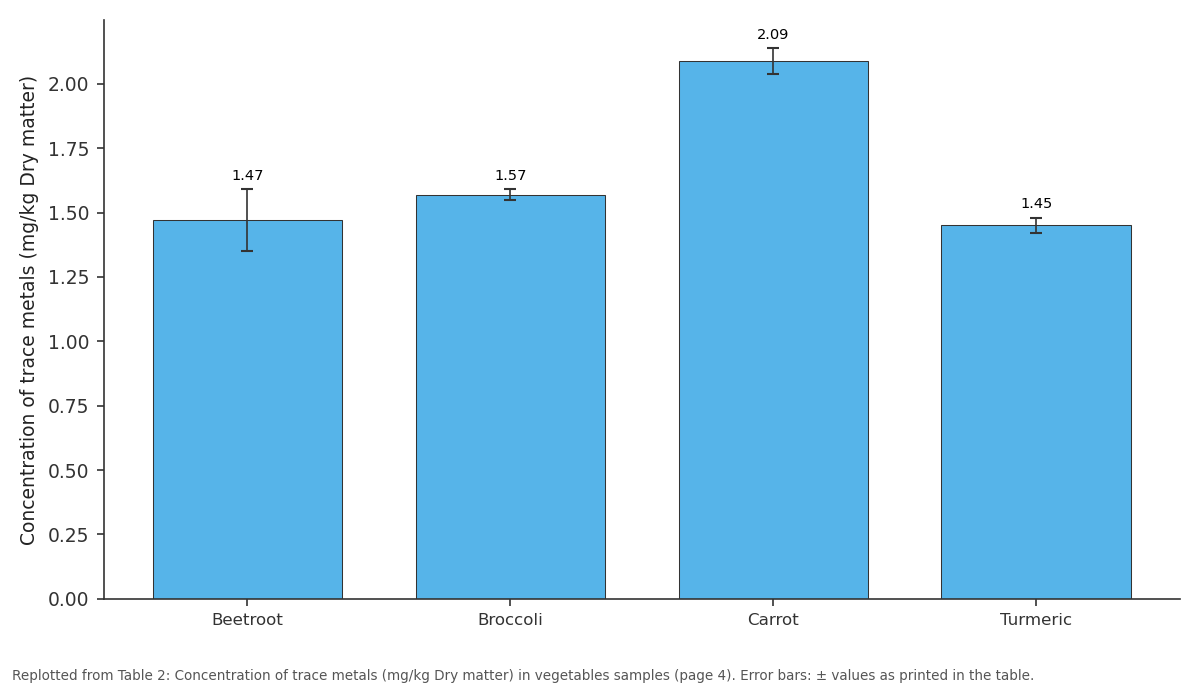
Zn: Beetroot vs Broccoli vs Carrot vs Turmeric
Replotted from Table 2 (page 4) of the original paper. Every bar is the paper's own table value.
View source evidence ↗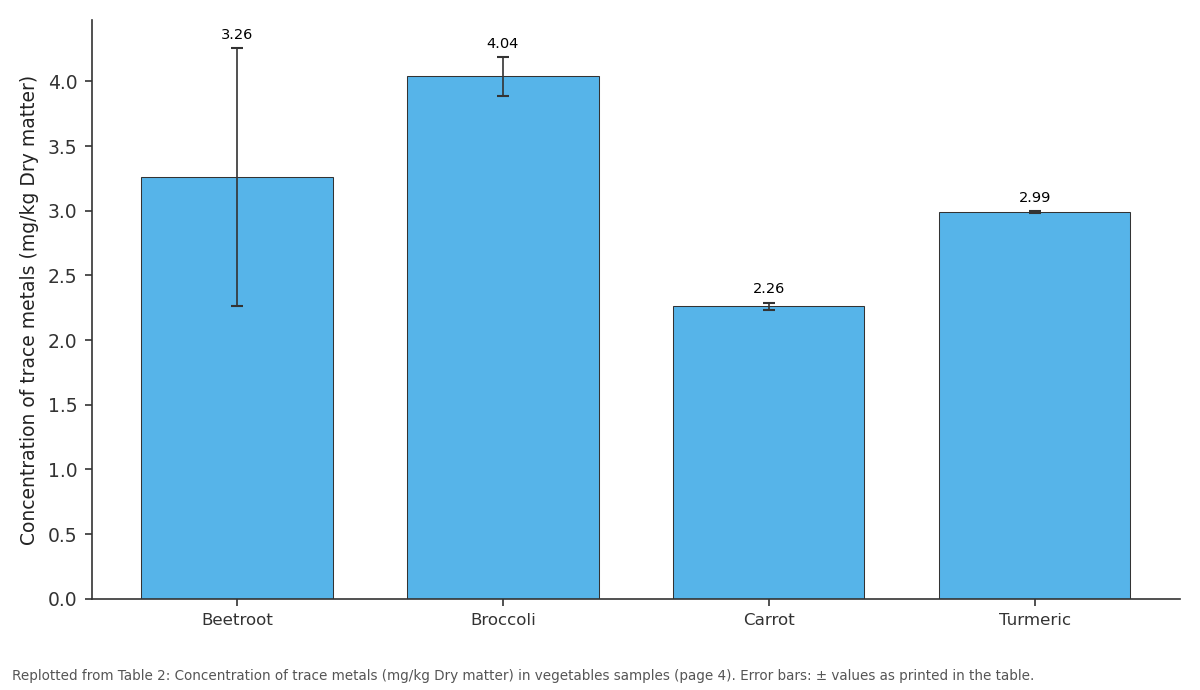
Fe: Beetroot vs Broccoli vs Carrot vs Turmeric
Replotted from Table 2 (page 4) of the original paper. Every bar is the paper's own table value.
View source evidence ↗Figures & tables
From the original paper Table 1
 Table 2
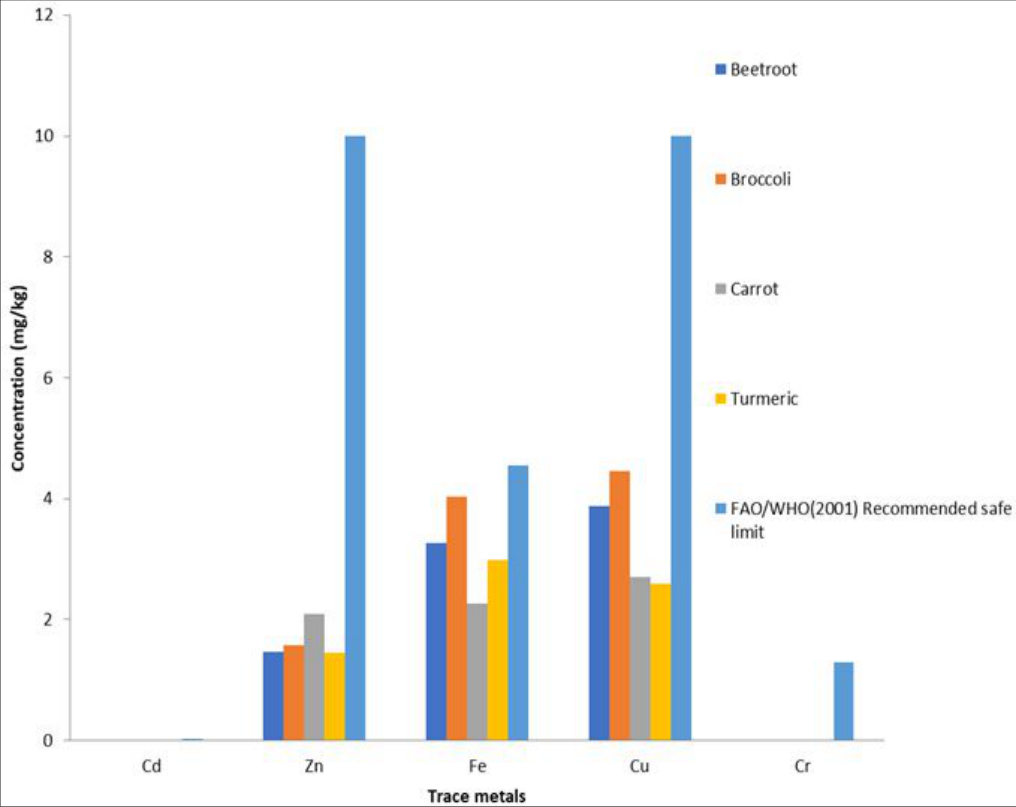 Figure 1
Introduction
Trace metals contamination of vegetables cannot be under estimated [1] . Vegetables are important edible crops and are essential part of the human diet. They are rich in nutrients required for human health, and are an important source of carbohydrates, vitamins, minerals and fibre [2][3] . Trace metals can be readily taken up by vegetable roots and can be accumulated at high levels in the edible parts of the vegetables. In many countries of the world of the regions, vegetables are exposed to trace metals by various means such as harvesting techniques, lack of storage facilities, inadequate processing facilities and improper packaging and pests protecting management procedures. These factors can lead to the contamination of the vegetables and fruits with the trace metals [4][5] . Anthropogenic activities can cause elevated levels of trace metals in various parts of the ecosystem and thus environmental pollution by trace metals may occur via diffused and point sources. Assessment of trace metal compositions of vegetables is one of the most important methods used for monitoring environment pollution, as deficiency of excess of these elements are known to cause a number of serious metabolic growth, physiological and well as toxic effect [6][7] . Phytochemicals are biologically active chemicals compounds in plants which yield both medicinal and nutritional potentials [8] . Phytochemicals help the plants by protecting them from diseases and damage caused by environmental hazards like pollution, UV stress and drought [9] . A report by the World Health Organization [10] , shows that 80 % of the people of developing countries are relaying on the traditional medicines that are extracted from the plants for their primary health needs. The use of these traditional medicines for the preparation of modern medical preparations is indispensable and thus, 'phytochemicals' are a link between the traditional and the modern medicine [11] . Phytochemicals can also be used to protect humans from many diseases like cancer, diabetes, cardiovascular diseases, arthritis and aging [12][13] . The present study aims at investigating the levels of trace metals (Cd, Cr, Cu, Fe and Zn) and phytochemicals in edible portion of Beta vulgaris, Brassica oleracea, Curcuma longa and Daucus carota grown in Jos North and Jos South Local Government Areas of Plateau State.
Materials and Methods
Materials and Methods
Sampling and Preparation of Sample
Four species of fresh vegetable samples, Beetroot (Beta vulgaris), Broccoli (Brassica oleracea), Carrot (Daucus carota) and Tumeric (Curcuma longa) were collected in pre-cleaned plastic bags from Building materials market (Jos South) and Farin Gada market (Jos North) Local Government Areas of Plateau State. The samples were washed separately under running tap water before it was sliced into smaller pieces using knife. The samples were airdried at room temperature for two weeks and maintained at constant weight. The samples were grounded into a fine powder and sieved through 2 mm sieve and stored.
Methods
Methods
Digestion of Vegetable Samples
A 2.0 g of the samples were weighed into Pyrex beaker mixed with 20 cm3 of concentrated sulphuric acid, concentrated perchloric acid and concentrated nitric acid in the ratio 1:4:40 by volume respectively and left to stand overnight. Thereafter, the Pyrex beaker containing the mixture was heated at 70 °C for about 40 min and then, the heat was increase to 120 °C. The mixture turned to black after some time [14] . The digestion was completed after the solution became clear and white fumes appeared. The digest was diluted with 20 cm3 of distilled water and boiled for 15 min. The solution was then allowed to cool, it was transferred into 100 cm3 volumetric flasks and diluted to the mark with distilled water. The sample solution was then filtered through a Whatman filter paper No.1 (110 mm) into a screw capped polyethylene bottle, the procedure was repeated for all the samples.
Determination of trace metals in samples
The concentrations of trace metals in the vegetable samples were determined using the atomic absorption spectrophotometer. Triplicate determinations were carried out on sample.
Extraction of sample solution for phytochemical analysis
Extraction by evaporation using 70% methanol was used for the extraction of the active ingredients from the plant parts in this research. This was done by suspending 50 g of the samples in 500cm3 of 70% methanol. The extraction was allowed for 72 hours at room temperature (25-27 °C). Each sample was separated using Whatman filter paper No. 1 (110 mm), the filtered liquid was then dried in evaporator at 35 °C in other to get methanolic extract [15] .
Phytochemical screening Alkaloids
The presence of alkaloids in each sample was investigated using the methods described by Wagner's. 1 cm3 of each extract was treated with 2 drops of Wagner's reagent (2 g of iodine and 3 g of potassium iodine were dissolved in 20 cm3 of distilled water and made up to 100 cm3 with distilled water). Formation of brown precipitate indicates the presence of alkaloids in the extracts.
Flavonoids
The determination of the presence of flavonoids in the samples was done using alkaline reagent test by Okerulu et al. [16] . 3 cm 3 of each extract were treated with 1 cm 3 of 10% NaOH solution. Formation of intense yellow color, which becomes colorless on addition of dilute acid, indicates the presence of flavonoids in the extracts [17] .
Flavonoids
The determination of the presence of flavonoids in the samples was done using alkaline reagent test by Okerulu et al. [16] . 3 cm3 of each extract were treated with 1 cm3 of 10% NaOH solution. Formation of intense yellow color, which becomes colorless on addition of dilute acid, indicates the presence of flavonoids in the extracts [17] .
Phenolics
The presence of phenolic in the samples was carried out using Ferric chloride test as reported by Mercy [18] . 2.0 cm 3 of each extract were treated with 3-4 drops of 10% ferric chloride, formation of bluish blue color indicates the presence of phenolics compound in the extract.
Tannins
The determination of the presence of tannins in the test sample was carried out using Ferric chloride test described by Irene [19] . 2 drops of 5% FeCl3 was added to 1 cm3 of each extract. A greenish precipitate indicated the presence of tannins in the extracts.
Terpenoids
The presence of terpenoid in the samples was carried out according to method described by Williams and Suergey [20] . 1 cm3 of each extract was treated with 2 cm3 of chloroform and few drops of sulphuric acid, it was shaken and allowed to stand for few minutes and appearance of reddish-brown color at the lower layer indicates the presence of terpenoids in the extracts.
Results and Discussion Phytochemical screening
The qualitative phytochemical screening of the vegetables samples is presented in Table1. Phytochemicals are biologically active occurring chemical compounds found in plants which provide health benefits for human further than those attributed to macronutrients and micronutrients [16] . The results of qualitative phytochemical screening of this research revealed the presence of biologically active compounds such as Tannins, Alkaloids, Saponins, Terpenoids, Flavonoids and Phenolic at different levels.
| — | Beetroot | Broccoli | Carrot | Turmeric |
|---|---|---|---|---|
| Alkaloids | ++ | + | + | ++ |
| Flavonoids | ++ | + | +++ | + |
| Phenolics | ++ | +++ | +++ | + |
| Saponins | ++ | + | + | ++ |
| Tannins | + | +++ | +++ | + |
| Terpenoids | - | +++ | +++ | - |
Table text extracted from the original PDF; superscript letters are shown inline. The original table image is below.
View original table image
Alkaloids
The phytochemical screening showed the presence of alkaloids in Beta vulgaris, Brassica oleracea, Daucus carota and Curcuma longa (Table 1). The presence of alkaloids in these vegetables indicated that their leaves can be used in the treatment of malaria, cold, cough, diabetes, and hypertension [2] . Alkaloids have been of great interest because of their pronounced physiological and medicinal properties (for examples, caffeine, nicotine, morphine, atropine and quinine). Several studies have reported the analgesic, antispasmodic and antibacterial properties of alkaloids [21] .
Flavonoids
Flavonoids were found to be present in Beta vulgaris, Brassica oleracea, Daucus carota and Curcuma longa.
Flavonoids plays an important role in protecting biological system on macromolecules such as lipids, carbohydrates and proteins. Extracts of Flavonoids are known to have antiinflammatory, anti-allergic, anti-viral anti-spasmodic and diuretic effect [18] .
Saponins
Saponins were found to be present in Beta vulgaris, Daucus carota, Brassica oleracea but absent in Curcuma longa. Saponins are known to be immune boosters. Extracts of plants rich in saponins are said to demonstrate antiinflammatory, hemolytic, allelopathic, cholesterol lowering and anti-cancer properties [18] . Saponins has the property of precipitating and coagulating red blood cells. Some of the characteristics of saponins include formation of foams in aqueous solutions, hemolytic activity, cholesterol binding properties and bitterness.
Tannins
Tannins were found to be present in all the vegetables under study. Tannins are chelating agents for metals and can form complexes with macromolecules through the process, essential substrates and enzymes of microorganisms are depleted leading to cell death. Tannins are good antimicrobial agent with precipitate protein thereby providing water proof layer on the skin when used externally or protect the underlying layers of the skin and limit the loss of fluid. They are also known to be good anti-viral agents [16] .
Phenolic
Phenolic compounds are famous group of secondary metabolites with wide pharmacological activities. The phytochemical screening revealed the present of phenolic compound in Beta vulgaris, Brassica oleracea, Daucus carota and Curcuma longa. Extract of plants rich with phenolic compounds plays an important role in biological activities such as antiulcer, antidepressant, antioxidant, cytotoxic and antitumor [22] .
Terpenoids
Phytochemical screening also revealed the present of terpenoids in Daucus carota, Brassica oleracea and Curcuma longa but absent in Beta vulgaris. Plant extracts with terpenoids have been associated with protection from and treatment of chronic disease such as heart disease.
They are also effective antioxidant and show strong anticancer activities [21] .
The results of trace metals concentration present in the studied vegetables samples are presented in Table 2 and Figure 1.
| Element Sample | Cd | Zn | Fe | Cu | Cr |
|---|---|---|---|---|---|
| Beetroot | ND | 1.47±0.12 | 3.26±0,01 | 3.88±0.01 | ND |
| Broccoli | ND | 1.57±0.02 | 4.04±0.15 | 4.45±0.02 | ND |
| Carrot | ND | 2.09±0.05 | 2.26±0.03 | 2.71±0.04 | ND |
| Turmeric | ND | 1.45±0.03 | 2.99±0.01 | 2.60±0.02 | ND |
| FAO/WHO (2001) | 0.02 | 5.00-10.00 | 4.55 | 10.00 | 1.30 |
Table text extracted from the original PDF; superscript letters are shown inline. The original table image is below.
View original table image
The concentration of trace metals (Cd, Fe, Cr, Cu and Zn) were investigated in Beta vulgaris, Brassica oleracea, Daucus carota and Curcuma longa, grown within Jos North and Jos South Local Government Areas, Jos. The results obtained (Table 2 and figure 1) revealed that Chromium (Cr) and Cadmium (Cd) were not detected in Beta vulgaris, Brassica oleracea, Daucus carota and Curcuma longa.
Cadmium is a non-essential trace metal with high poisonous ability. It accumulates principally in the kidney and liver [23] . This result was in agreement with those obtained in related studies; like low level of cadmium in vegetables reported by Alloway [24] . This would be attributed to the metal being non-essential for plants growth and metabolism. The concentration of Zinc in the four vegetable samples (Beta vulgaris, Brassica oleracea, Curcuma longa and Daucus carota) were 1.47±0.12 mg/kg, 1.57±0.02 mg/kg, 1.45±0.03 mg/kg and 2.09±0.05mg/kg respectively. Zinc is the least toxic element among all the trace elements and essential element in diet. It is needed for energy production and protein synthesis as well as keeping the structural integrity of biological membranes. In contrast, deficiency of zinc in the diet maybe highly detrimental to human health, but high concentration of zinc in vegetables may cause vomiting. The result showed that the concentration of zinc was comparatively low in all the vegetable samples. This may be attributed to the pollution of the environment possibly by air or wind when the vegetables are left open in the market for long. In some related studies; Demirezen and Ahmet [25] analyzed various vegetables (cucumber, tomato, green pepper, lettuce, parsley, onion, bean, eggplant, pepper mint, pumpkin and okra) and reported that Zn concentration (3.56-4.59 mg/kg) was within the recommended international standard. The result of this analysis show that the concentration of zinc was within the safe limit of international standard (5.00-10.00mg/kg) reported by WHO
International Journal of Advanced Chemistry Research https://www.chemistryjournals.net [26] . The concentration (mg/kg) of iron in vegetables were These values were far below the mean value of 12.873mg/kg in the leaves of lettuce as reported by Agrawal [6] . The Fe content of these vegetables were lower than the FAO/WHO [26] safe limit of 4.55mg/kg in vegetables.
Copper (Cu) is a component of other protein associated with the processing of oxygen. It is also an enzymatic element necessary for normal biological activities of amino oxides and tyrosinase enzymes. Tyrosinase is needed for catalytic conversion of tyrosine to melanin and is a vital pigment present within the skin which protects the skin from hazardous radiation [6] . From the result (Table 2), the concentration of Copper (mg/kg) found in the four vegetables (Beta vulgaris, Brassica oleracea, Curcuma longa and Daucus carota) were 3.88±0.01mg/kg, 4.45±0.02mg/kg, 2.59±0.02 mg/kg and 2.79±0.04 mg/kg respectively. From the result, the concentration of copper was higher in betal vulgaris (4.45±0.02 mg/kg) and low in Brassica oleracea (2.59±0.02 mg/kg)
Conclusion
Assessment of trace metal composition in vegetable is one of the most important methods used for monitoring environmental pollution, as the deficiency or excess of the element is known to cause a number of serious metabolic growth, physiological and as well as toxic effect [6]. The present study confirmed the presence of trace metals (Cd, Fe, Cr, Cu and Zn) in vegetables (Beta vulgaris, Brassica oleracea, Curcuma longa and Daucus carota) grown at Jos North and Jos South Local Government Areas. However, the levels of trace metal were within the WHO/FAO safety limits guidelines with the exception of Cr and Cd which were not detected at all in all the vegetables. Phytochemical screening confirmed the presence of alkaloids, flavonoids, tannins, phenolic and saponins in all the vegetables. The presence of many phytochemicals in the vegetables helps to enrich the immune system and other hematological parameters in human body.
References
26 in the original paper- Abdulmojeed OL, Abdulrahman A.A. Analysis of Heavy Metals Found In Vegetables from Some Cultivated Irrigated Gardens in the Kano Metropolis, Nigeria. Journal of Environmental Chemistry and Ecotoxicology,2011:3(6):142-148.
- Dike MC. Proximate and Nutrient Composition of Some Fruits, Seeds and Leaves of Some Plant Species at Umudike, Nigeria. ARPN-Journal of Agricultural and Biological Sciences,2010:5:7-16.
- Surukite O, Olubunmi MSC, Kafeelah A, Yusuf Olusegun O, Fajana Ayobami O Odumosu. Determination of Heavy Metal Contamination in Leafy Vegetables Cultivated by the Road Side. International Journal of Engineering Research and Development,2013:7(3):1-5.
- Aquino CW, Comas-Haezebrouck PH, Feder WA. Influence of Varying Soil Lead Levels on Uptake of Leafy and Root Vegetables. Journal of American Society, Holticultural Science,1983:10(8):193-195.
- Mshelia ZB. Determination of Some Heavy Metals in Vegetable Garden Soil and Waste Dump Site Soil in Mubi North, Adamawa State, Nigeria. Agricultural Science and Technology,2019:11(3):236-239.
- Agrawal B. Effect of Heavy Metals Contaminated Vegetables. Indian Journal of Pharmacology,2011:5:46.
- Irfan M, Hayat S, Ahmad A, Alyemeni MN. Soil Cadmium Enrichment: Allocation and Plant Physiological Manifestations. Saudi Journal of Biological Sciences,2013:20(1):1-10.
- Govindaraj S, Rajangam U. GC-MS Analysis of Methanolic Leaf Extracts and Stem of Marsile aminuta (Linn.). Journal of Complementary and Alternative Medicine,2017:3(1):1-13.
- Abideen AA, Uthman TA, Adeniyi SA, Hidayat AO. Assessment of Proximate Composition and Phytochemical Properties of Bitter Leaf (Vernonia amygdalina) and Water Leaf (Talinum triangulare). United International Journal for Research and Technology,2020:1(11):23-26.
- World Health Organization. Impact of Blending Re-use and Lake Water on Treated Water Quality. Journal of Environmental Engineering and Science,2006:5(4):359363.
- Ezekwe AS, Rizwan AA, Karimah MR, Ewa O. Qualitative Phytochemical and GC-MS Analysis of Some Commonly Consumed Vegetables. GSC Biological and Pharmaceutical Sciences,2020:12(03):208-214.
- Sivanandham V. Phytochemical Techniques - A Review. World Journal of Science and Research, 2015:1:80-91.
- Zulkallaini S. Determination of Heavy Metals and Phytochemical Analysis of Some Selected Vegetables Grown at Kalambaina Area Sokoto. Asian Journal of Soil Science and Plant Nutrition. 2017;2(2):1-7.
- Erwin JM, Ivo N. Determination of Lead in Tissues: A Pitfall Due To Wet digestion Procedures in The Presence of Sulphuric Acid,1992:1(7):23-26.
- Sofowora EA. Medicinal Plants and Traditional Medicine in Africa. Spectrum Books Limited, Ibadan, Nigeria, 2016, 134-155.
- Okerulu IO, Onyema CT, Onwukeme VI, Ezeh CM. Assessment of Phytochemicals, Proximate and Elemental Composition of Pterocarpus Soyauxii (Oha) Leaves. American Journal of Analytical Chemistry,2017:80:406-415.
- Atmani D, Nassima C, Dina A, Meriem B, Nadjet D, Hania B. Flavonoids in Human Health: From Structure to Biological Activity. Current Nutrition and Food Science,2009:5:225-237.
- Mercy TA. Qualitative and Quantitative Analysis of The Phytochemicals in Some Selected Species of The Genus Phyllanthus in Zaria, Nigeria, 2015.
- Irene MH. Analysis of Hydrolysable Tannins. Animal Feed Science and Technology,2001:91(1-2):3-20.
- William P, Sergey V. New Methods and Strategies in Synthesis of Terpenoids Natural Products. Account of Chemical Research,2021:54(6):1347-1359.
- Okwu DE, Okwu ME. Chemical Composition of Spondias mombin linn. Plant Parts. Journal of Sustainable Agricultural Environment,2004:6(2):140147.
- Ghasemzadeh A, Jaafar HZE, Rahmat A. Antioxidant Activities, Total Phenolics and Flavonoids Content in Two Varieties of Malaysia Young Ginger (Zingibe rofficinale Roscoe). Molecules,2010:15:4324-4333.
- Divrinkli U, Horzum N, Soylak M, Elci L. Trace Metal Contents of Some Spices and Herbal Plant From Western Anatolia, Turkey. International Journal of Food Science and Technology,2006:41:712-716.
- Alloway BJ. Heavy metals in soil. Blackie Academic and Professional, London, 1995, 2-39.
- Demirezen D, Ahmet A. Heavy Metal Levels in Vegetables in Turkey. Journal for Food Quality,2006:29:252-265.
- World Health Organization/Food and Agricultural Organization. Food and Nutrition, 5th edition, 2001, 5465.