
Research article · 2023 · Full text
International Journal of Advanced Chemistry ResearchReview on the study of potential health hazards caused by blue light due to Melanopsin activity
Volume 5(1) · Pages 85–88 · DOI: 10.33545/26646781.2023.v5.i1b.146 ↗
Research areasImpact of Light on Environment and Health
Abstract
Author-writtenHumans live in a 24-hour environment, in which light and darkness follow a diurnal pattern. In humans, the known effects of light on circadian rhythms and sleep are all, without exception, mediated by the retina. The retina is a fine layer of nerve tissue at the back of our eyes, containing specialized photoreceptors. Melanopsin RGCs are extremely sensitive to blue light and even exposure to light levels as low as the one from a smart-phone or light emitting e-readers are associated with disruptions of circadian rhythm. Melanopsin absorbs light in the short-wavelength range of the visible spectrum, with λmax at or near 480 nm. High-intensity blue light from any source is potentially hazardous to the eye. Industry sources of blue light are purposely filtered or shielded to protect users. However, it may be harmful to look directly at many high-power consumer LEDs simply because they are very bright. When Melanopsin is activated by the short wavelength component of light, it suppresses Melatonin synthesis. This action is controlled mainly by light could affect several functions including the regulation of intraocular pressure. Blue light or blue-violet light can be damaging to delicate retinal cells deep in the eye. No one knows exactly what causes dry macular degeneration. Research indicates that it may be a combination of family genes and environmental factors, including smoking, obesity and diet. The condition develops as the eye ages. Additionally, our studies have shown blue light is a risk factor for the onset of age-related macular degeneration, which is a progressive condition that can lead to vision loss over.
Summary
Source-checkedPlain-language reading of the full paper, prepared with AI and checked against the text. Each point links to the authors' own words.
Why it matters
- Melanopsin retinal ganglion cells (RGCs) are highly sensitive to blue light, and even low levels from devices like smartphones can disrupt circadian rhythms. View evidence ↗
- The activation of melanopsin by short-wavelength light leads to the suppression of melatonin synthesis. View evidence ↗
- Short-wave blue light between 415 and 455 nm is considered the most harmful, as it can cause irreversible photochemical damage to the retina. View evidence ↗
The question
- The authors aim to review the specific mechanisms by which blue light causes damage to the cornea, lens, and retina to better understand ocular injuries. View evidence ↗
What they did
- The study measured light intensity between 420 and 490 nm for various devices using a spectroradiometer placed 20 cm from the screen (except for cell phones) and compared these to the sun's intensity. View evidence ↗
- The research evaluated the effectiveness of a specific screen protector in blocking blue light compared to devices without one. View evidence ↗
What they found
- Blue light can penetrate the human skin dermis to a depth of up to 1 mm. View evidence ↗
- Direct effects of blue light on the skin include hyperpigmentation and the excessive generation of reactive nitrogen and oxygen species. View evidence ↗
- Exposure to typical blue light levels from consumer electronics is negligible regarding the risk of blindness or macular degeneration when compared to risks from smoking, aging, or obesity. View evidence ↗
- The tested screen protector reduced blue light intensity by 30% to 60%, depending on the device and settings used. View evidence ↗
- With an average daily use of 10.5 hours on digital devices, approximately 70% of people experience symptoms of digital eye strain. View evidence ↗
What it means
- The authors recommend preferring LEDs with an emission peak around 470-480 nm over those with a peak below 450 nm to minimize danger. View evidence ↗
- The authors conclude that short-to-medium term exposure (days to weeks) to LEDs in the 470-480 nm range likely does not increase ocular pathology risk, but this does not apply to long-term exposure. View evidence ↗
- Although screen protectors reduce blue light intensity, the actual effect of this reduction on general or ocular health remains unknown. View evidence ↗
- The authors state that more studies are needed to determine the effects of long-term exposure to low levels of blue light on the eye. View evidence ↗
Visual summary
1 visualsIllustrations explain the paper; they do not show study data.
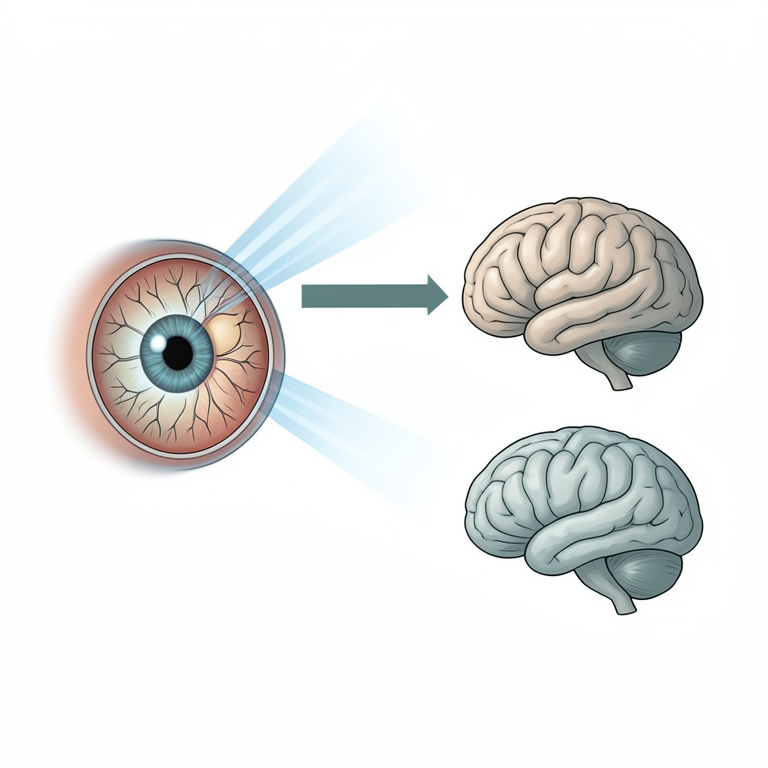
Melanopsin Pathway
AI-generated conceptual illustration (human eye and brain). It explains the idea and does not show study data.
View source evidence ↗Figures & tables
From the original paper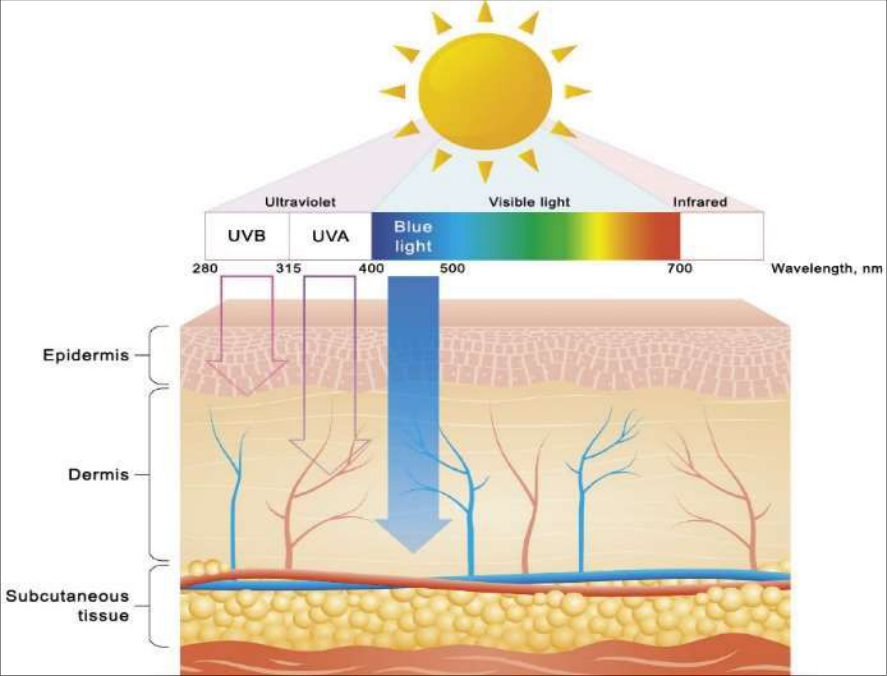 Figure 1
 Table 1
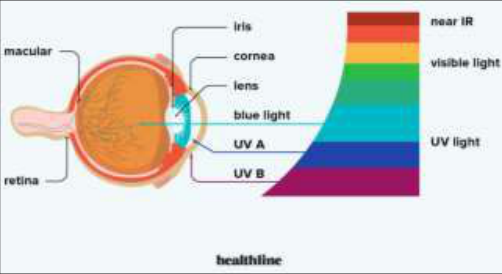 Figure 2
Introduction
With the improvement in working and living conditions and the changes in people's life styles, more and more exposure to blue light has occurred. The prevention and control of blue light damage is becoming more and more important, and the anti-blue light products are constantly emerging. The refractive medium of the human eye's different tissue characteristics have different permeation effects on light when the wavelength is <300 nm. A wavelength between 300 and 400 nm can penetrate the cornea and be absorbed by the iris or the pupil. High energy short wave blue light between 415 and 455 nm is the most harmful. Direct penetration of crystals into the retina causes irreversible photochemical retinal damage [1] . As the harmful effects of blue light are gradually realized by the public, eye discomfort related to blue light is becoming a more prevalent concern. Because of blue light's short wavelength, the focus is not located in the center of the retina but rather in the front of the retina, so that the long exposure time to blue light causes a worsening of visual fatigue and nearsightedness. Symptoms such as diplopia and inability to concentrate can affect people's learning and working efficiency [2] . What is the specific damage mechanism of Blu-ray? This article will review the mechanisms causing damage to the cornea, lens, and retina by Blu-ray light in order to have a better understanding of Blu-ray-induced ocular injury. Some research has shown blue light may increase the risk of macular degeneration, a disease of the retina. Research shows blue light exposure may lead to age-related macular degeneration, or AMD. One study found blue light triggered the release of toxic molecules in photoreceptor cells. Lighting sources and technology have experienced a revolution in the last 15-20 years. Lighting sources and technology, especially in non-commercial or industrial illumination applications, have traditionally been slow to change [3] . In most homes, the incandescent bulb and Edison socket have been omnipresent. In the past 10 years, we have seen significant use of other technologies, such as compact fluorescent lamps (CFLs), replacing incandescent sources.
However, this transition has often been driven by legislation, which has focused on energy-efficient sources instead of consumer desire for different light sources. The general user quickly noted the difference in the quality of CFL source but not necessarily in the specifics of its power spectrum.
Simultaneously, the development and performance of high brightness light-emitting diodes (LEDs) have experienced tremendous advances [4] . The coupling of a blue-light LED with a phosphor has also been used to produce a white light source, the white-light LED. This solid-state fluorescent analog has become known as solid-state lighting (SSL). This approach is now considered the next generation of illumination due to the many inherent and potential advantages over current technologies. Blue light is defined as light within the wavelength range of 400 nm (violet) to 500 nm (cyan) (Fig. 1) [5] . Blue light has lower energy than ultraviolet (UV) radiation (280-400 nm) and can reach further into the dermis, up to the depth of 1 mm [5][6] . However, while the effects of UV radiation on skin have been widely studied, less is understood regarding the effects of blue light [7] .
Direct and Indirect Effects of Blue Light Exposure on Skin
Blue light is visible light with a wave length between 400 and 450 nanometers (nm). As the name suggests, this type of light is perceived as blue in color. However, blue light may be present even when light is perceived as white or another color. Blue light is of concern because it has more energy per photon of light than other colors in the visible spectrum, i.e. green or red light. Blue light, at high enough doses, is therefore more likely to cause damage when absorbed by various cells in our body. The results of in vitro, in vivo, and clinical studies show that blue light produces direct and indirect effects on the skin. The most significant direct effects are the excessive generation of re-active oxygen and nitrogen species, and hyper pigmentation. Reactive oxygen and nitrogen species cause DNA dam-age and modulate the immune response. Indirect effects of blue light include disruption of the central circadian rhythm regulation via melatonin signaling and local circadian rhythm regulation via direct effects on skin cells. Antioxidants and sunscreens containing titanium dioxide, iron ox-ides, and zinc oxide can be used to protect against the detrimental effects of blue light as part of a strategy that combines daytime protection and night-time repair.
Effect of blue light on eyes
The amount of blue light from electronic devices, including smart phones, tablets, LCD TVs, and laptop computers, is not harmful to the retina or any other part of the eye. It all comes down to this: consumer electronics are not harmful to the retina because of the amount of light emitted. For example, recent iPhones have a maximum brightness of around 625 candelas per square meter (cd/m 2 ). Brighter still, many retail stores have an ambient illumination twice as great. However, these sources pale in comparison to the sun, which yields an ambient illumination more than 10 times greater! High-intensity blue light from any source is potentially hazardous to the eye. Industry sources of blue light are purposely filtered or shielded to protect users. However, it may be harmful to look directly at many highpower consumer LEDs simply because they are very bright. These include "military grade" flashlights and other handheld lights.
Furthermore, although an LED bulb and an incandescent lamp might both be rated at the same brightness, the light energy from the LED might come from a source the size of the head of a pin compared to the significantly larger surface of the incandescent source. Looking directly at the point of the LED is dangerous for the very same reason it is unwise to look directly at the sun in the sky. Compared to the risk from aging, smoking, cardiovascular disease, high blood pressure, and being overweight, exposure to typical levels of blue light from consumer electronics is negligible in terms of increased risk of macular degeneration or blindness. Furthermore, the current evidence does not support the use of blue light-blocking lenses to protect the health of the retina, and advertisers have even been fined for miss. It all comes down to this: consumer electronics are not harmful to the retina because of the amount of light emitted. For example, recent iPhones have a maximum brightness of around 625 candelas per square meter (cd/m 2 ). Brighter still, many retail stores have an ambient illumination twice as great. However, these sources pale in comparison to the sun, which yields an ambient illumination more than 10 times greater.
Fig 2: How blue light affects the eyes
High-intensity blue light from any source is potentially hazardous to the eye. Industry sources of blue light are purposely filtered or shielded to protect users. However, it may be harmful to look directly at many high-power consumer LEDs simply because they are very bright. These include "military grade" flashlights and other handheld lights. With near-ubiquitous use of high-intensity lightemitting diodes in artificial lighting and backlit displays of smart phones, tablets, and computers, the human eye is becoming increasingly exposed to blue light beyond what is found in ambient daylight. Photo toxicity of shortwavelength light (400-500 nm) to the retina of animal models, such as rats and monkeys, has been well established for many years [8][9][10][11] . Cultured human retinal pigment epithelial (RPE) cells are also susceptible to photo toxicity from visible light in a wavelength-dependent manner [12][13] . Furthermore, although an LED bulb and an incandescent lamp might both be rated at the same brightness, the light energy from the LED might come from a source the size of the head of a pin compared to the significantly larger surface of the incandescent source. Looking directly at the point of the LED is dangerous for the very same reason it is unwise to look directly at the sun in the sky. Compared to the risk from aging, smoking, cardiovascular disease, high blood pressure, and being overweight, exposure to typical levels of blue light from consumer electronics is negligible in terms of increased risk of macular degeneration or blindness. Furthermore, the current evidence does not support the use of blue light-blocking lenses to protect the health of the retina, and advertisers have even been fined for misleading claims about these types of lenses. Blue light from electronic devices is not going to increase the risk of macular degeneration or harm any other part of the eye. However, the use of these devices may disrupt sleep or disturb other aspects of your health or circadian rhythm. If you are one of the large numbers of people who fall into this category, talk to your doctor and take steps to limit your use of devices at night, when blue light is most likely to impact your biological clock. Intensity of light between 420 and 490nm measured for several devices and compared to sun intensity in the same wavelengths. The sensor of the spectror a diometer was placed at 20 cm of the screen (Excepted for the cell phone).
Table 1:
Comparison of intensity of light emitted by devices and by the sun at wavelengths between 420 and 490 nm [8]
Source
Source
Protect our Eyes 20-20-20 Rule:
The 20-20-20 rule is a reminder to take breaks from screen time. For every 20 minutes of screen time, you should take a 20-second break and look at an object 20 feet away (approximately 6 metres).
The screen protector decreased the intensity of blue light from 30% to 60% depending on the setting and the device. This was accomplished without changing the appearance of the screen. This study evaluated the ability of this specific screen protector to block blue light in comparison to a device without a screen protector. Future research can focus on comparing the screen protector to other screen protectors that claim to block blue light. In addition, future research could delineate the health benefits from using screen protectors. However, comparing the screen protector against other screen protectors that do and do not claim to block blue light would also be prudent. Future research should focus on comparing these screen protectors to other screen protectors in their ability to block blue light. While the screen protector consistently provided a percent reduction in blue light intensity, the effect this has on ocular or general health is unknown. Reducing blue light intensity may provide benefits of better sleep and protection against retinal diseases such as macular degeneration, but further research is needed to investigate this potential health risk [14][15][16][17] .
Conclusion
1. The objectives of this review were to describe the evidence on the impact of blue light on the skin, understand the quality of evidence provided by existing medical re-search, and consider options for how the skin might be protected from the detrimental effects of blue light. 2. The use of blue light is becoming increasingly prominent in our society, and a large segment of the world population is now subjected to daily exposure (from a few minutes to several hours) of artificial light at an unusual time of the day (night). Because light has a cumulative effect and many different characteristics (e.g., wavelength, intensity, duration of the exposure, time of day), it is important to consider the spectral output of the light source to minimize the danger that may be associated with blue light exposure. Thus, LEDs with an emission peak of around 470-480 nm should be preferred to LEDs that have an emission peak below 450 nm. Although we are convinced that exposure to blue light from LEDs in the range 470-480 nm for a short to medium period (days to a few weeks) should not significantly increase the risk of development of ocular pathologies, this conclusion cannot be generalized to a long-term exposure (months to years). Finally, we believe that additional studies on the safety of long-term exposure to low levels of blue light are needed to determine the effects of blue light on the eye. 3. The screen protector decreased the intensity at 450 nm for every setting other than those at 0% brightness. Decreasing brightness and applying NS mode were more effective in reducing blue light. More research is needed to determine the benefits of decreasing blue light exposure from electronic devices. 4. Digital devices and smartphones aren't going away, but you can protect our vision with better eye health habits.
Figures and tables from the paper
| Source | Intensity µ W/cm2 | Intensity mW/cm2 | Ration intensity sun/device |
|---|---|---|---|
| Sun | 7700 | 7.7 | - |
| TV LED (Philips 55POS9002) | 78 | 0.078 | 99 |
| Laptop LED N°1 Inspiron 17 (DELL) | 7.2 | 0.0072 | 1069 |
| Laptop LED N°2 Inspiron 24 (DELL) | 15 | 0.015 | 513 |
| Computer screen Samsung P2270H | 22 | 0.022 | 350 |
| Cell phone (at 10cm) Samsung SG7 | 11 | 0.011 | 700 |
Table text extracted from the original PDF; superscript letters are shown inline. The original table image is below.
View original table image
References
15 in the original paper- Bi WM, Sun K. Light-induced retinal damage and potential benefits and side effects of blue light-filtering intraocular lens. Recent Advances in Ophthalmology. 2014;34(3):289-293.
- Zhao HL, Jiang J, Yu J, Xu HM. Role of shortwavelength filtering lenses in delaying myopia progression and amelioration of Asthenopia in juveniles. International Journal of Ophthalmology. 2017;10(8):1261-1267.
- Pimputkar S, Speck J, DenBaars S, Nakamura S. Prospects for LED lighting. Nat Photonics. 2009;3:180182.
- Coats JG, Maktabi B, Abou-Dahech MS, Baki G. Blue light protection, part I: effects of blue light on the skin. Journal of Cosmetic Dermatology. 2021;20(3):714-717.
- Ash C, Dubec M, Donne K, Bashford T. Effect of wavelength and beam width on penetration in lighttissue interaction using computational methods. Lasers in Medical Science. 2017;32(8):1909-1918.
- Cohen L, Brodsky MA, Zubair R, Kohli I, Hamzavi IH, Sadeghpour M. Cutaneous interaction with visible light: what do we know. Journal of the American Academy of Dermatology. 2023;89(3):560-568.
- Noell WK, Walker VS, Kang BS, Berman S. Retinal damage by light in rats. Investigative Ophthalmology. 1966;5:450-473.
- Ham Jr WT, Mueller HA, Sliney DH. Retinal sensitivity to damage from short wavelength light. Nature. 1976;260(5547):153-155.
- Ham WT, Ruffolo JJ, Mueller HA, Clarke AM, Moon ME. Histologic analysis of photochemical lesions produced in rhesus retina by short-wavelength light. Investigative Ophthalmology & Visual Science. 1978;17(10):1029-1035.
- Ham Jr WT, Mueller HA, Ruffolo Jr JJ, Guerry III D, Guerry RK. Action spectrum for retinal injury from near-ultraviolet radiation in the aphakic monkey. American Journal of Ophthalmology. 1982;93(3):299306.
- Davies S, Elliott MH, Floor E, Truscott TG, Zareba M, Sarna T, et al. Photocytotoxicity of lipofuscin in human retinal pigment epithelial cells. Free Radical Biology and Medicine. 2001 Jul 15;31(2):256-65.
- Sparrow JR, Miller AS, Zhou J. Blue light-absorbing intraocular lens and retinal pigment epithelium protection in vitro. Journal of Cataract & Refractive Surgery. 2004;30(4):873-878.
- Algvere PV, Marshall J, Seregard S. Age-related maculopathy and the impact of blue light hazard. Acta Ophthalmologica Scandinavica. 2006;84(1):04-15.
- Bauer M, Glenn T, Monteith S, Gottlieb JF, Ritter PS, Geddes J, et al. The potential influence of LED lighting on mental illness. The World Journal of Biological Psychiatry. 2018;19(1):59-73.
- Taylor HR, West S, Muñoz B, Rosenthal FS, Bressler SB, Bressler NM. The Long-term effects of visible light on the eye. Archives of Ophthalmology. 1992;110(1):99-104.
Cited by 10
From OpenAlex, OpenCitations and reference lists read by Scinovex
- The impact of circadian rhythms on retinal immunity ↗
He Ren, Yilin Yuan, Danlei Zhang, Yiqiao Xing, Zhen Chen · Chronobiology International · 2025
The eye is an immune-protected organ, which is driven by factors such as cytokines, chemicals, light, and mechanical stimuli. The circadian clock is an intrinsic timing mechanism that influences the immune activities, such as immune cell count and activity, as well as inflammatory responses. Recent studies have demonstrated that the eye also possesses an intrinsic circadian rhythm, and this rhythmic…
❝ 1 - Multiple factors influence skin cancer development: A comprehensive review ↗
Tisha Punjabi, Vikas Singh, Jyoti Rani, Prabhjot Kaur · Journal of Current Research in Food Science · 2024
Any human malignancies have mutations in the tumor suppressor gene p53. They are typically prevalent in actinic keratoses (AKs) and over 90% of squamous cell carcinomas (SCCs) have them. In the US and many other nations, skin cancer is becoming more common and killing more people. Many groups are considering public and professional health programs as a potential solution due
- Medicinal plants and bioactive phytochemicals in neuroprotection ↗
V. Sandhiya, N. Deepa, Praveen Raja, Anamika PK, V Hemapriya, V Jenanee · International Journal of Pharmacognosy and Clinical Research · 2025
Since ancient times, medicinal plants have been used to treat a variety of illnesses, and their potential for neuroprotection is receiving more and more attention. The bioactive substances called phytochemicals, which are present in these plants, have shown great promise in the treatment of neurodegenerative illnesses such as Parkinson's, Alzheimer's, and stroke-related brain damage. Through a variety of methods, such
- Light pollution: Overview ↗
Kumari Archana · International Journal of Physics and Applications · 2025
Light pollution is a human-made consequence of contemporary civilization and significant economic activity, originating from artificial illumination. Literature acknowledges that light pollution is a significant issue for astronomers, since it directly interferes with nocturnal celestial observations, hence obstructing studies of astronomical significance. Light pollution not only damages astronomy but also disrupts the biological balance of animals and significantly influences human
- Digital dependency and youth insomnia: A homeopathic insight into sleep disturbance in the smartphone era ↗
Anuradha Roy · International Journal of Homoeopathic Sciences · 2025
The rise of smartphones has reshaped daily routines, particularly among young people. While these devices provide opportunities for learning, networking, and entertainment, excessive reliance on them has created a serious health burden: disturbed sleep. Many adolescents today spend late-night hours scrolling social media, gaming, or studying online, which interferes with their natural sleep cycle. Over time, this leads to insomnia—difficulty
- Oxidative stress modulation by Punica granatum: A biochemical perspective ↗
Henrik Johansen, Ingrid Nilsen · International Journal of Molecular Biology and Biochemistry · 2025
Punica granatum (pomegranate) is traditionally recognized for its health benefits, particularly in managing oxidative stress-related conditions. This study investigates the oxidative stress-modulating effects of Punica granatum extracts, focusing on its antioxidant activity, cytoprotective potential, and the enhancement of antioxidant enzyme expression. Both ethanolic and aqueous extracts of Punica granatum were evaluated for their ability to reduce reactive oxygen species (ROS)
- Opthalmic diseases and it’s types ↗
kumar raja.Jayavarapu Dr. kumar raja.Jayavarapu, D Praveen Kumar, B. Srinivasa Rao, B. Sangeetha, K Indravathi, K Sahithi et al. · International Journal of Pharmacology and Clinical Research · 2024
As we know that the eye plays a huge role in daily life. Many factors may cause the eye diseases either by contact with many exposures. It may include environmental factors and diseases may occur by the genetics (DNA mutations) and by previous eye injuries. After age 40, your eye tear production tends to decrease, causing dry eyes. Based on
- Advances in circadian rhythm research: Unraveling the molecular mechanisms and health implications ↗
Oly Banerjee · International Journal of Applied Research · 2024
Circadian rhythms, the natural 24-hour cycles that govern physiological and behavioral processes, have gained significant attention in recent years due to advances in our understanding of their molecular and genetic underpinnings. These rhythms are orchestrated by a master clock located in the suprachiasmatic nucleus (SCN) of the hypothalamus, which synchronizes peripheral clocks throughout the body to environmental cues such as
- The role of the immune system in aging: Mechanisms and implications for health
Oly Banerjee · International Journal of Biology Sciences · 2024
The immune system plays a crucial role in the aging process, influencing both the onset and progression of age-related diseases. As individuals age, the immune system undergoes significant changes, a phenomenon known as immunosenescence. This involves a decline in immune function characterized by reduced efficacy of immune responses, increased susceptibility to infections, and a higher incidence of chronic inflammatory conditions. Key aspects of immunosenescence include diminished production and function of lymphocytes, such as T and B cells, altered cytokine profiles, and an increase in syste
- Health care follow up using WBAN ↗
Abdullah Majid Ghafl, Mohammed Farid · International Journal of Research in Medical Science · 2024
Human body motions can have a significant impact on on-body electromagnetic (EM) wave propagations and affect wireless body area network (WBAN) applications. To help understand the body motion effects, an arm-swinging phantom model of the human upper body is developed in both measurement and simulation. The phantom model performance is compared to human volunteer results and shows similar time-varying behaviors.