
Research article · 2022 · Full text
International Journal of Agriculture and NutritionRauvolfia serpentine (Linn) an herb with health benefits and pharmacological therapeutic effects
Volume 4(2) · Pages 98–101 · DOI: 10.33545/26646064.2022.v4.i2b.85 ↗
Research areasPharmacological Effects of Natural CompoundsPhytochemistry and Biological ActivitiesPhytochemistry and Bioactive Compounds
Abstract
Author-writtenAyurvedic literature and contemporary science both describe the medicinal herb sarpagandha, Rauwolfia serpentina. The presence of alkaloids, carbohydrates, flavonoids, glycosides, phlobatannins, phenols, resins, saponins, sterols, tannins, and terpenes in the plant is recognised for its ability to treat a variety of illnesses. With particular emphasis on the plant's role in treating high blood pressure and hypertension, this review focuses on the use of Rauwolfia as a treatment for many diseases, as well as its botany, chemistry, and mode of action. We also critically examine its unfavourable side effects, toxicology, and carcinogenicity. The objective of the current review is to assess the numerous pharmacological, phytochemical, and therapeutic qualities of R. serpentine as a result of all these characteristics. When negative side effects including cancer and depression were linked to it, its popularity declined. Let used to be deemed the greatest treatment for hypertension. Its root contains an alkaloid whose pharmacological activity is thought to be anti-hypertensive.
Summary
Source-checkedPlain-language reading of the full paper, prepared with AI and checked against the text. Each point links to the authors' own words.
Why it matters
- There is a growing global demand for medicine, but many existing pharmacological formulations are considered unreliable or cause adverse effects. View evidence ↗
- Because of the issues with synthetic drugs, there is a need to explore natural herbal products as alternative medications. View evidence ↗
- Rauvolfia serpentina, known as sarpagandha, is recognized in both Ayurvedic and modern science for its ability to treat various illnesses due to its diverse chemical constituents. View evidence ↗
The question
- The objective of this review is to evaluate the phytochemical, pharmacological, and therapeutic properties of Rauvolfia serpentina. View evidence ↗
What they did
- The authors conducted a review focusing on the plant's botany, chemistry, mechanism of action, therapeutic uses, and potential toxic side effects. View evidence ↗
What they found
- Reserpine is the primary alkaloid in the plant (1.7% to 3.0% concentration), with over 90% of total alkaloids located in the root bark. View evidence ↗
- Alkaloid content is influenced by geography and timing, with Assam samples typically containing 2.50% and December being the optimal harvest month. View evidence ↗
- Reserpine acts by binding almost irreversibly to VMAT2 receptors, showing an affinity 2-3 times stronger for VMAT2 than for VMAT1. View evidence ↗
- Taking a half dose of the plant's powder three times daily is reported to effectively lower blood pressure. View evidence ↗
- Plant extracts show anti-prostate cancer activity in vitro and in vivo by affecting DNA damage and cell cycle regulation signaling pathways. View evidence ↗
- For the treatment of hysteria, the review notes a dosage of one gram of powdered root taken three times daily with milk. View evidence ↗
- One gram of powdered root consumed with water is used to reduce itching associated with urticaria. View evidence ↗
- The plant is used as an antidote for venomous reptile bites and to treat dysentery and other severe intestinal conditions. View evidence ↗
What it means
- The authors note that the plant was once considered the most effective treatment for hypertension. View evidence ↗
- The popularity of the plant declined due to linked negative side effects, specifically depression and cancer. View evidence ↗
Visual summary
1 visualsIllustrations explain the paper; they do not show study data.
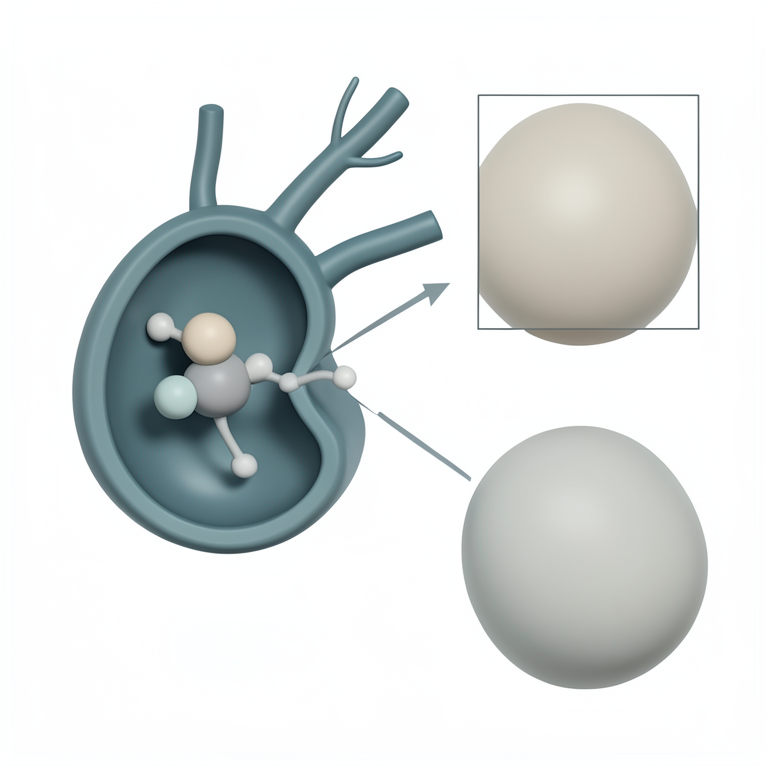
Reserpine Mechanism of Action
AI-generated conceptual illustration (presynaptic neuron secretory vesicle). It explains the idea and does not show study data.
View source evidence ↗Figures & tables
From the original paper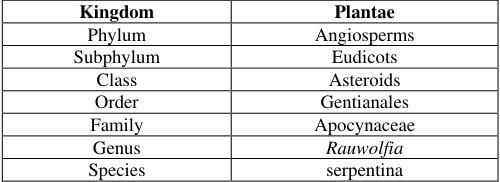 Table 1
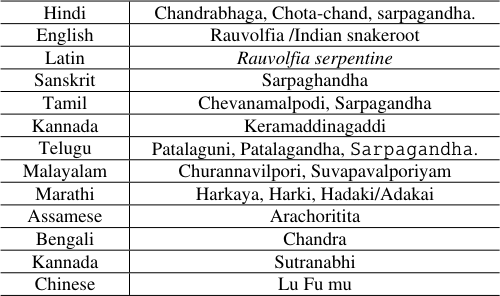 Table 2
Introduction
Global population growth creates significant challenges in providing the need for food, shelter, and clothing. The demand for medicine has increased as millions of People are effected with common ailments globally. For the treatment of diseases, there are a number of pharmacological formulations available in the market, but they are complicated, insufficient, and unreliablea variety of adverse effects [1] . Accordingly, it is necessary that we utilize alternative, naturally occurring medications or herbal products that do not show any adverse effects. The presence of various chemical compounds in medicinal plants, including alkaloids, hydrogen, carbon, nitrogen, glycosides, volatile oils, fatty acids, resins, and gums, is visible. And tannins are responsible for treat many different types of diseases [2] . Recently, the pharmacological, agricultural, cosmetics, and fragrance industries more than 150 different of aromatic and medicinal plants globally [3] . Rauwolfia fiaserpentina, also known as Rauwolfiaserpentina (Linne) Bentham ex Kurz, is the dried root. Belongs to the Apocynaceae family. It is an elongated shrub with cylindric stems that can reach a height of 3 feet. These stems are made of viscous light-colored latex and have pale bark. Alternatively to being simple and parallel, Rauwolfia serpentina leaves are typically grouped in whorls of 4 to 6.In apical and lateral cymes, white or pale rose flowers are arranged. A solitary, 2-lobed drupe, the fruit matures to a purplish-black colour. Muller Schiltter and Bein isolated reserpine for the first time in 1952 using the formula 33 H40 O9 N2 [4] . As per the inscription, Sarpgandha and Chandra, two Ayurvedic medications, are how Rauwolfiaserpentina is described in Sanskrit. The term "antidote for snake-bite" refers to using sarpgandha, a snakes smell or repellent [5] .
Distribution
The family has 50 species, which are spread out. Globally in the Hilly region, Indian peninsula, Sri Lanka, the Indochina, Burma, and is Belongs to Bangladesh, India, and other regions of Asia. A traditional medicinal plant, sarpagandha, grows up to an altitudes of 1300-1400 metres in the Himalayan Mountains. It can be found primarily in moist deciduous forests between sea level-1,200 metres above sea level. It is in the Deccan, Linked to bamboo groves [36] .
Morphological features
The Rauwolfia plant grows to a maximum height of 60 cm, is a perennial shrub, and is glabrous. Tuberous roots with light brown cork are present. The slender, three-whorled leaves are oblong to rectangular to obvate, below brilliant green, and above dark green. It has white blooms in irregular corymbose cymes that are commonly stained with violet. According to Indian conditions, the blossoming period runs between Marchs to May. The fruits are requirement, single or did ymous, gorgeous black, with red pedicles, a calyx, and a white corolla on the flowering [8] .
Chemical constituents
Reserpine, which ranges in concentration from 1.7 to 3.0%, is the main alkaloid found in the plant's root, stem, and leaves. More than 90% of the total alkaloids are found in the root bark [10] . The Rauwolfiaserpentina plant has three different types of alkaloids. 1. Weakly basic in dole Alkaloids: The main alkaloids are tertiary Indo le Alkaloids like despiridine, reserpine, and rescinnamine.
Indo line Alkaloids of Intermediate Basicity: Tertiary
Indo line Alkaloids include Reserpiline, Ajmaline, Iso-Ajmaline, and Rauwolfinine. 3. Strong Anhydronium Bases: The anhydronium alkaloids serpentine, serpentinine, and also to nine are all very basic [11] .
Reserpine was first isolated in 1952 and its chemical Formula was found to be C33 H40 O9 N2. [12]Reserpine has a yield that ranges between 1.5 to 2.8%.The roots barks contain about 90% of the alkaloid found in the root [13] .
The geographical location from which the plant is harvested, as well as the time of year, affect the percentage of alkaloid. Assam samples usually include more alkaloid (2.50%) than samples from other regions, and December is the ideal month for collecting samples to obtain more alkaloid [14] . Various species in Instead of, the Rauwolfia genus has been utilised. Rauwolfia vomitoria, a type of R serpentina, and Rauwolfia African cocoa, Rauwolfia heterophyllus la, and South and Central American Rauwolfia tetraphylla. Woodson and co [15] .
Cultivation
Land preparation: The plant needs medium to deep, fertile, slightly acidic to neutral soils for richer, better growth. Rich in organic material are appropriate for commercial farming. Planting: The most effective way to grow commercial plantations is by seed propagation. Seeds, stem cuttings, and root cuttings can all be used to spread the plant. By stem cutting: In the nursery beds during the month of June, hard wooden stem cuttings measuring 14 to 20 cm are closely planted. Moisture is preserved continuously. By root cutting: During the spring, carefully spaced nursery beds are planted with root cuttings that are nearly 6 cm long.
Watering is used to maintain the moisture in the beds [16] .
Mechanism of Action
Reserpine's mechanism of action has been extensively studied and recorded. Reserpine binds to vesicular monoamine transporters, which have been protein receptors.
(VMATs) in specific organelle membranes Presynaptic neuron secretory vesicles [17] . Reserpine blocks the binding of cytoplasmic neurotransmitters to VMAT proteins and the absorption of neurotransmitters by secretory vesicles [18] . Vesicular transport proteins come in two isoforms, VMAT1 and VMAT2. VMAT1 is mostly present in peripheral nervous system neuroendocrine cells, especially in sympathetic nervous system, thrombocytes, and chromaffin granules in the adrenal medulla.VMAT2 is mostly present in the brain, sympathetic nervous system, mast cells, and histamine containing cells in the pancreas and genitourinary tract. Reserpine has a 2-3 times stronger affinity for VMAT2 than it does for VMAT1 [19,20] . It has a high affinity for some VMAT receptors and binds to them practically irreversibly, specifically VMAT2 [21] .
Medicinal Uses of Rauvolfia
The following pharmacologic effects of Rauwolfia serpentine have been observed [22] . 1. By exerting a depressive effect on the cerebral canters, it calms the entire nervous system. 2. By acting on the vasomotor centre, it causes broad vasodilatation and lowers blood pressure [23] .
High blood pressure
The Rauwolfia plant is the greatest medication for high blood pressure, and most nations' medical communities have adopted it. It contains isolated alkaloids that have a direct impact on hypertension and are frequently employed by current medical professionals. However, they have several undesirable side effects that the medicine does not have when taken in its unadulterated form. Its powder, when taken three times daily, at a ½ dose, effectively lowers blood pressure [24] . [25] Reserpine has traditionally been used to treat tardive dyskinesia and mental illness. An ascending plant with a smooth stem is called Rauwolfia. It is used as a medication to reduce fever or as a febrifuge [26] .
Antipsychotic
Antipsychotic
In insanity
The Rauwolfia herb is very helpful in treating of schizophrenia. Take 240 ml of sweetened goat's milk 2 times day with one gram me of powdered root. Using sweet candies. Low blood sugar levels should not use it. People with high blood pressure, depression, and hypotension [27] .
Anti-hypertensive
It has been adopted by the medical community in the majority of nations and is also utilised in the treatment of high blood pressure. Practitioners of contemporary medicine frequently employ these isolated alkaloids, which have a major effect on hypertension. It decreases urticaria itching [28] .
Prostate cancer
One of the leading causes of cancer-related fatalities in males is thought to be prostate cancer. Patients with prostate cancer have not had any appreciable survival advantages from contemporary treatments like radiation or chemotherapy [29] . Compared to chemotherapy and radiation, natural products have shown to be a significant source for the identification of bioactive substances used in the treatment of a range of illnesses and disorders, including cancer. Traditional Chinese medicine has employed various components of this plant for thousands of years to cure a wide range of illnesses, including fever, general weakness, digestive infections, liver issues, and mental difficulties [30] . According to investigations of the gene expression patterns of prostate cancer cells treated with the plant extract, the extract's anti-prostate cancer action in both in vitro and in vivo model systems may be influenced by its effects on signalling pathways for cell cycle regulation and DNA damage [31] .
In Hysteria
Hysteria can be helped by Rauwolfia. Three times, one gramme of the powdered root can be taken with milk. The course of treatment should be followed until a full recovery is achieved [32] .
In itching skin
It reduces urticaria itching. You can consume one gramme of powdered root with water [33] .
Other uses
It is employed as an antidote to snake and other venomous reptile bites. Dysentery and other excruciating intestinal conditions are also treated with it. Serpentine's root also has antibacterial qualities. The roots' infusion, decoction, and extract are used to treat fever, colic, diarrhoea, dysentery, cholera, and painful bowel disorders as well as to increase uterine contractions for the expulsion of the foetus. The root was advised for usage in difficult childbirth situations because it was thought to induce uterine contraction. The juice of the leaves has been employed as a treatment for corneal capacity (Wealth of India) [34] .
Figures and tables from the paper
| Kingdom | Plantae |
|---|---|
| Phylum | Angiosperms |
| Subphylum | Eudicots |
| Class | Asteroids |
| Order | Gentianales |
| Family | Apocynaceae |
| Genus | Rauwolfia |
| Species | serpentina |
Table text extracted from the original PDF; superscript letters are shown inline. The original table image is below.
View original table image
| Hindi | Chandrabhaga, Chota-chand, sarpagandha. |
|---|---|
| English | Rauvolfia /Indian snakeroot |
| Latin | Rauvolfia serpentine |
| Sanskrit | Sarpaghandha |
| Tamil | Chevanamalpodi, Sarpagandha |
| Kannada | Keramaddinagaddi |
| Telugu | Patalaguni, Patalagandha, 𝚂𝚊𝚛𝚙𝚊𝚐𝚊𝚗𝚍𝚑𝚊. |
| Malayalam | Churannavilpori, Suvapavalporiyam |
| Marathi | Harkaya, Harki, Hadaki/Adakai |
| Assamese | Arachoritita |
| Bengali | Chandra |
| Kannada | Sutranabhi |
| Chinese | Lu Fu mu |
Table text extracted from the original PDF; superscript letters are shown inline. The original table image is below.
View original table image
References
4 in the original paper- Monachino J. Rauvolfia serpentina-its history, botany and medical use. Economic botany. 1954 Oct;8(4):34965.
- Shahi P, Mandal RA, Mathema AB. Assessing the impact of climate change on medicinal herbs in Humla district. Int. J Geogr. Geol. Environ 2020;2(2):11-17.
- CJGPKABR. Bemis DL. Antiprostate cancer activity of a beta-Carboline alkaloid enriched extract from Rauvolfia Vomitoria, International Journal of Oncology. 2009. p.1065-1073.
- BK Sen G. Rauwolfia Serpentina, a New. Indian drug for insanity and Hypertension, Indian M. World, 1931.