
Research article · 2019 · Full text
International Journal of Agriculture and NutritionLily bulbs (Bai He), A super food and A herbal remedy
Volume 1(2) · Pages 21–23 · DOI: 10.33545/26646064.2019.v1.i2a.10 ↗
Research areasBiological and pharmacological studies of plantsMedicinal Plants and NeuroprotectionPhytochemistry and Biological Activities
Abstract
Author-writtenTraditional Chinese medicine (TCM) which is an essential part of the health care system in most Asian countries, relies on natural products and has been playing a very important role in health protection and disease control for many years. Chinese medicine classifies the lily plant as bitter in taste, mild in nature, and beneficial to our hearts and lungs. The flowers are dried and used in cooking stews or soups. The healing properties of lily include moisturizing the lungs, relieving cough from lung-dryness, clears heart-fire and tranquilizes the mind. Dried lily bulbs are commonly used in herbal formulas for promoting lung health, treating yin-deficiency of the heart which manifests as irritability, insomnia, dreaminess, palpitation and absent-mindedness, and promotes vital fluid and improves skin complexion. Lily bulbs have numerous important pharmacological activities and it can be considered as a valuable source of nutraceuticals.
Summary
Source-checkedPlain-language reading of the full paper, prepared with AI and checked against the text. Each point links to the authors' own words.
Why it matters
- Traditional Chinese medicine (TCM) is a critical component of healthcare in most Asian countries, utilizing natural products for disease control and health protection. View evidence ↗
- Ensuring healthy diets is a primary concern given the rapid growth of the global population. View evidence ↗
The question
- The objective of this paper is to review the key pharmaceutical properties of the lily bulb within the contexts of modern industry and traditional Chinese medicine. View evidence ↗
What they did
- The authors conducted a review of the pharmaceutical properties of the lily bulb. View evidence ↗
What they found
- The lily (Hemerocalis) has served as both a food source and a medicinal plant in China for over 2,000 years. View evidence ↗
- Lily bulbs contain three main types of active components: phenols (primarily flavonoids), steroidal saponins, and alkaloids (including steroidal alkaloids like etioline and small pyrrolines like jatrophine/lilidine). View evidence ↗
- Lily bulbs are reported to contain potassium, folate, iron, calcium, phosphorus, and vitamins B1, B2, and C. View evidence ↗
- The treatment of various nervous system disorders is likely attributed to the combination of steroidal saponins and steroidal alkaloids found in the bulb. View evidence ↗
- In TCM, the healing properties of lily include tranquilizing the mind, clearing heart-fire, relieving coughs caused by lung-dryness, and moisturizing the lungs. View evidence ↗
- According to traditional Chinese herbology, individuals suffering from diarrhea or wind-cold should avoid using lily bulbs. View evidence ↗
- The most important health benefits of lily bulb include improving concentration and focus, preventing and stopping diarrhea, stopping heart palpitations, alleviating irritable bowel syndrome symptoms, treating low-grade fever, and improving sleep quality. View evidence ↗
What it means
- The authors conclude that lily bulbs are a valuable source of nutraceuticals due to their numerous important pharmacological activities. View evidence ↗
Visual summary
1 visualsIllustrations explain the paper; they do not show study data.
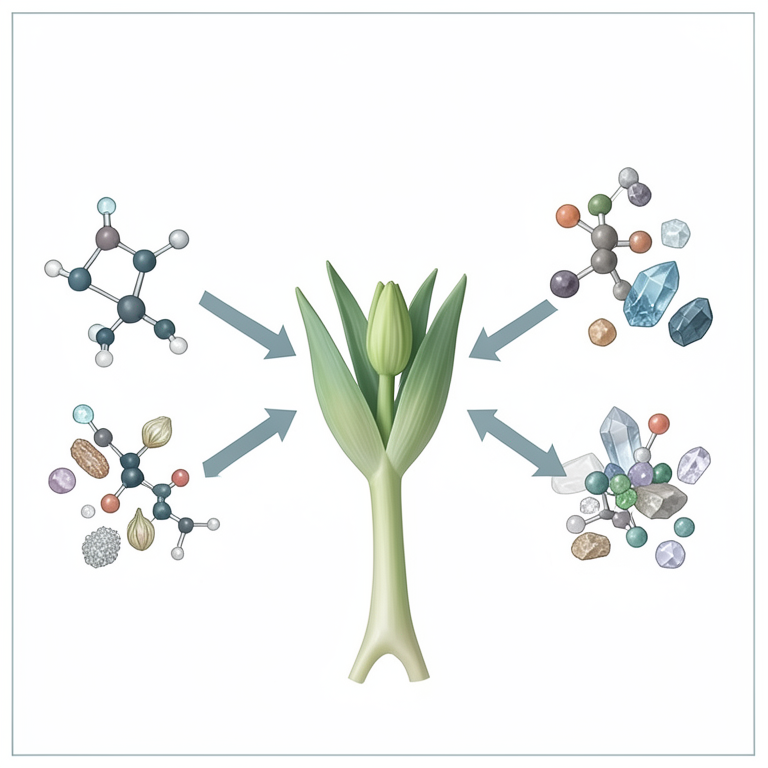
Chemical and Nutritional Profile of Lily Bulb
AI-generated conceptual illustration (Lily bulbs (Lilium brownii)). It explains the idea and does not show study data.
View source evidence ↗Figures & tables
From the original paper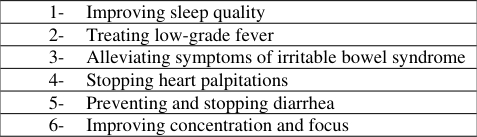 Table 1
Introduction
Traditional Chinese medicine (TCM) has played a positive role in the management of so many diseases (Ogbaji et al., 2018;Shahrajabian et al., 2018;Shahrajabian et al., 2019a,b,c;Sun et al., 2019). TCM is an empirical healthcare system based on human experience dating back several thousand years ago and stands out as the only one with long history among the world , s traditional medical system (Ogbaji et al., 2013; Soleymani and Shahrajabian, 2018; Shahrajabian et al., 2019e,f,g,h) [6, 7, 8, 9, 10] . The most important parameter is providing healthy diets for the decades to come in a world with rapid population growth (Soleymani and Shahrajanian, 2012;Shahrajabian et al., 2019i,j,k;Shahrajabian et al., 2020, Sun et al., 2020). The goal of this short paper is review on the most important pharmaceutical properties of lily bulb in both traditional Chinese medicine and modern industry.
Dry Lili Bulb Origin, health benefits and constitution of Lili bulb
Lilies are attractive economic flowering plants grown in pots or as cut flowers (Pobudikiewicz et al., 2006;Younis et al., 2014). Lili flower has long been used by many cultures as a symbol of tranquility, peace and prosperity. The Roman Catholic Church used lily flowers to symbolize the Virgin Mary and to represent its own state of independence and prosperity. The Chinese culture uses lily bulb to make desserts for festivities and weddings to symbolize good luck and longevity of marriages. Lilium is recognized as a valuable cut flower and many breeding companies are working on the development of new cultivars of the species belonging to different sections of genus (Lucidos et al., 2017). Lilies grow best in well-drained soil. Add organic matter to heavy clay or sandy soils before planting. Dry lili buds (huang hua) also known as golden needles and tiger lilies. Dired lily buds are among the most notable of edible flowers in Chinese cuisine. The lily or Hemerocalis to refer to it by its scientific name, has been used in China as both a food and medicinal plant for more than 2000 years. Dried lili buds are typically yellowgold in color and are generally two or three inches long. They are also known to have a delicate flower, often described as musky, earthy and sometimes even sweet or slightly tart. Dried lily buds are used for their unique aroma which is fruity and flowery. Dried Lily flowers are used in Chinese cooking as a flavor enhancer, primarily in vegetarian dishes, but also in various stews and soups. They are also very important ingredient in Buddha , s Delight (Jai cuisine), moo shu vegetables and Beijing style noodle sauce. The best quality lily buds are produced in the Qu country in the Southwestern Sichuan province which contain 7 stigma and filaments and are always covered by 6-8 petals. In Chinese traditional medicine, lily buds aid the brain functions and help blood clots, and also help to cool your blood and aid urination. Lily-Bulb has three primary sets of active components: alkaloids (steroidal alkaloids, such as etioline as well as small pyrrolines like jatrophine, also called lilidine); steroidal saponins; and phenols (mainly flavonoids). The combination of steroidal alkaloids and steroidal saponins are likely responsible for the treatment of various nervous system disorders. Lilies are good source of starch and protein. Lili bulbs are said to have calcium, iron, phosphorus, folate, potassium and vitamins B1, B2 and C. According to the principles of traditional Chinese medicine, lily bulbs have sweet and slightly cold properties, and are associated with the Lung and Heart meridians. Lily bulbs are used to relieve coughs, dry throats and other respiratory conditions, to clear away heat, and to treat insomnia and heart palpitations. Its tonic properties make it a good herb for promoting restful sleep and treating restlessness and irritability. Lily bulb is often combined with other herbs, such as scrophularia, rehmannia root and anemarrhena. The health benefits of lily bulb are 1) lily bulb provides protein and starch. Additionally, they contain small amounts of calcium, iron, phosphorus and vitamins B1, B2 and C, 2) In traditional Chinese medicine, lily bulb is considered sweet and cooling in properties. The herb is also associated to the lung and heart meridians and help to relieve coughs, dry throats, clear heat, and moisten the lung. Dried lily bulb is also used as an herb to calm the spirit, promote restful sleep and lessen irritability, 3) Fresh and dried lily bulb can be used in both sweet dessert soups and savory soups in Chinese cooking. Side effects of lily bulbs are 1) as with all herbs, use in moderation and consult with a physician first, 2) according to traditional Chinese herbology, those with wind-cold or diarrehea should avoid using lily bulb. Common TCM forumals in which lily bulbs are used, 1) for lung and kidney Yin deficiency associated with chronic bronchitis, asthma or chronic pharyngitis combine lily bulbs with prepared rehmannia (Shu Di huang), unprepared rehmannia (Di Huang), dwarf lilyturf roots (Mai Dong), white peony roots (Bai Shao), dong quai (Dang Gui), ningpo figwort roots (Xuan Shen), platycodon roots (Jie Geng), fritillary bulbs (Chuan Bei Mu), and liquorice (Gan Cao), 2) for irritability, restlessness, nervous anxiety and insomnia combine lily bulbs with lotus seeds (Lian Zi), glehnia roots (Bei Sha Shen), jujube seeds (Suan Zao Ren), biota seeds (Bo Zi Ren), and poria-cocos mushrooms (Fu Ling), 3) for lung abscesses combine lily bulbs with snow ear mushrooms (Bai Mu Er) and glehnia roots (Bei Sha Shen), 4) for Yin deficiency with dry cough and bloody sputum combine lily bulbs with coltsfoot flowers (Kuan Dong Hua), 5) for mild cases of insomnia and anxiety combine lily bulbs with longans (Long Yan Rou). The most important health benefits of lily bulb is shown in Table 1.
Conclusion
Lili flower has long been used by many cultures as a symbol of tranquility, peace and prosperity. In Chinese traditional medicine, lily buds aid the brain functions and help blood clots, and also help to cool your blood and aid urination. Lily-Bulb has three primary sets of active components: alkaloids (steroidal alkaloids, such as etioline as well as small pyrrolines like jatrophine, also called lilidine); steroidal saponins; and phenols (mainly flavonoids). The combination of steroidal alkaloids and steroidal saponins are likely responsible for the treatment of various nervous system disorders. Lilies are good source of starch and protein. Lili bulbs are said to have calcium, iron, phosphorus, folate, potassium and vitamins B1, B2 and C. According to the principles of traditional Chinese medicine, lily bulbs have sweet and slightly cold properties, and are associated with the Lung and Heart meridians. Lily bulbs are used to relieve coughs, dry throats and other respiratory conditions, to clear away heat, and to treat insomnia and heart palpitations. Its tonic properties make it a good herb for promoting restful sleep and treating restlessness and irritability. Lily bulb is often combined with other herbs, such as scrophularia, rehmannia root and anemarrhena. The health benefits of lily bulb are 1) lily bulb provides protein and starch. Additionally, they contain small amounts of calcium, iron, phosphorus and vitamins B1, B2 and C, 2) In traditional Chinese medicine, lily bulb is considered sweet and cooling in properties. The herb is also associated to the lung and heart meridians and help to relieve coughs, dry throats, clear heat, and moisten the lung.Tremella use dates back as far as 200 A.D. when it was including in one of the earliest TCM classics-the material by Shen Nong ben Cao Jing, the father of Chinese medicine
References
12 in the original paper- Lucidos JG, Younis A, Lim KB. Determination of flower bud initiation oriental hybrid lilies Siberia and Sorbonne. Pakistan Journal of Agricultural Sciences. 2017; 54(1):1520.
- Ogbaji PO, Shahrajabian MH, Xue X. Changes in germination and primarily growth of three cultivars of tomato under diatomite and soil materials in auto-irrigation system. International Journal of Biology. 2013; 5(3):80-84.
- Ogbaji PO, Li J, Xue X, Shahrajabian MH, Egrinya EA. Impact of bio-fertilizer or nutrient solution on spinach (Spinacea Oleracea) growth and yield in some province soils of P.R. China. Cecetari Agronomice in Moldova. 2018; 2(174):43-52.
- Pobudikiewicz A, Treder K. Effects of flurprimidol and daminozide on growth and flowering of oriental lily Mona Lisa. Sci. Hortic. 2006; 110:328-333.
- Shahrajabian MH, Sun W, Cheng Q. A review of goji berry (Lycium barbarum) in traditional Chinese medicine as a promising organic superfood and superfruit in modern industry. Academia Journal of Medicinal Plants. 2018; 6(12):437-445.
- Shahrajabian MH, Sun W, Cheng Q. Clinical aspects and health benefits of ginger (Zingiber officinale) in both traditional Chinese medicine and modern industry. Acta Agriculturae Scandinavica, Section B-Soil & Plant Science.2019b. DOI: 10.1080/09064710.2019.1606930
- Shahrajabian MH, Khoshkharam M, Zandi P, Sun W, Cheng Q. The influence of temperatures on germination and seedling growth of Pyrethrum (Tanacetum Cineraiifolium) under drought stress. International Journal of Advanced Biological and Biomedical Research. 2020; 8(1):29-39.
- Soleymani A, Shahrajabian MH. Response of different cultivars of fennel (Foeniculum vulgare) to irrigation and planting dates in Isfahan, Iran. Research on Crops. 2012; 13(2):656-660.
- Soleymani A, Shahrajabian MH. Changes in germination and seedling growth of different cultivars of cumin to drought stress. Cercetari Agronomice in Moldova. 2018; 51(1):91-100.
- Sun W, Shahrajabian MH, Cheng Q. Anise (Pimpinella anisum L.), a dominant spice and traditional medicinal herb for both food and medicinal purposes. Cogent Biology. 2019; 5:1-25.
- Sun W, Shahrajabian MH, Huang Q. Soybean seeds treated with single walled carbon naotubes (SwCNTs) showed enhanced drought tolerance during germination. International Journal of Advanced Biological and Biomedical Research. 2020; 8(1):9-16.
- Younis A, Hwang YJ, Lim KB. Classical vs. modern genetic and breeding approaches for lily (Lilium) crop improvement: a review. Flower Res. J. 2014; 22:39-47.
Cited by 1
From OpenAlex, OpenCitations and reference lists read by Scinovex
- Evaluation of bacteriostatic and antioxidant screening of secondary metabolites of endophytic fungi in Lanzhou lily ↗
Xinlan Wang, Bolu Sun, Ying Hui Lv, Miao Zhou, Xuanxiu Da, Jiali Kang et al. · Bioresource Technology Reports · 2025
❝ 0