
Research article · 2020 · Full text
International Journal of Biology SciencesLength-weight relationship, length-length relationship and feeding habits of Clarotes laticeps from lower river Benue, Makurdi, Benue state, Nigeria
Volume 2(2) · Pages 23–29 · DOI: 10.33545/26649926.2020.v2.i2a.49 ↗
Research areasFish Biology and Ecology StudiesAquatic Ecosystems and Biodiversity
Abstract
Author-writtenOne hundred and fifty seven (157) Clarotes laticeps were sampled from Lower River Benue. Regression analysis was used to determine the length-weight and length-length relationships while frequency of occurrence and numerical methods of analysis were used to examine the food and feeding habits. Strong length-weight relationships were observed in the female, male and the combined sexes of Clarotes laticeps from Lower River Benue with R2 values of 0.864, 0.905, and 0.882 respectively while a negative allometric growth pattern was observed in the sampled fish with “b” factor less than 3 in the regression equation. However, a weak relationship was observed between the gut length and total length as well as in the gut length and the standard length with R2 values of 0.295 and 0.270 respectively. Clarotes laticeps from Lower River Benue was observed to be an omnivorous fish with fish, insect parts, plant materials, mollusks and detritus constituting their food materials. However, the fish appeared to be feeding more on insect parts as these were found in 69.43% of the total number of sampled stomachs and constituting 56.66% of the total food items observed. This is followed by plant materials and the least food item consumed is mollusk with 3.82% and 1.98% for frequency of occurrence and numerical analysis respectively. 21.02% of the sampled stomachs were observed to be empty. It was concluded that Clarotes laticeps from Lower River Benue is an omnivorous fish and getting appropriate feed for them in culture will not be a challenge. Good broodstocks of the fish for domestication can also be gotten from Lower River Benue.
Summary
Source-checkedPlain-language reading of the full paper, prepared with AI and checked against the text. Each point links to the authors' own words.
Why it matters
- Declines in the robustness of fish in tropical inland waters are often linked to challenges like inadequate food availability. View evidence ↗
- Length-weight regression data is a useful tool for evaluating the relative condition and health of fish populations. View evidence ↗
- Understanding the feeding habits of fish is essential for fish biology and the development of sustainable aquaculture and management programs. View evidence ↗
The question
- The study aimed to determine the relationships between total length, body weight, and gut length, and to examine the feeding habits of Clarotes laticeps in the Lower River Benue. View evidence ↗
What they did
- The researchers sampled 157 Clarotes laticeps from the Wadata landing site and the Abinsi-Wadata axis of the Lower River Benue. View evidence ↗
- Samples were collected monthly from August 2014 to January 2015 using traps, cast nets, and hooks and lines. View evidence ↗
- Fish weights were measured with an HC-D electronic balance and lengths were measured using a graded meter rule. View evidence ↗
- Stomach contents were analyzed using a light microscope at 5X and 10X magnification after dissection. View evidence ↗
What they found
- Strong length-weight relationships were found for females (R² = 0.864), males (R² = 0.905), and combined sexes (R² = 0.882). View evidence ↗
- The sampled fish exhibited a negative allometric growth pattern, indicated by a 'b' factor of less than 3. View evidence ↗
- There was a weak positive relationship between gut length and total length (R² = 0.295) and between gut length and standard length (R² = 0.270). View evidence ↗
- Numerical analysis of diet showed insect parts were the most common (56.66%), followed by plant materials (36.03%), with whole fish being the least (1.81%). View evidence ↗
- By frequency of occurrence, insect parts were found in 69.43% of stomachs, plant parts in 66.88%, and mollusks in 3.82%. View evidence ↗
- Approximately 21.02% of the sampled stomachs were empty. View evidence ↗
What it means
- The authors concluded that Clarotes laticeps is an omnivore, suggesting that providing appropriate feed for them in aquaculture will be easy. View evidence ↗
- The authors state that the Lower River Benue is a viable source for obtaining high-quality broodstock for the domestication of this species. View evidence ↗
- The authors suggest that the high percentage of empty stomachs may have been caused by an inability to immediately stop digestion after collection. View evidence ↗
Visual summary
2 visualsIllustrations explain the paper; charts are replotted from the paper's own table values.
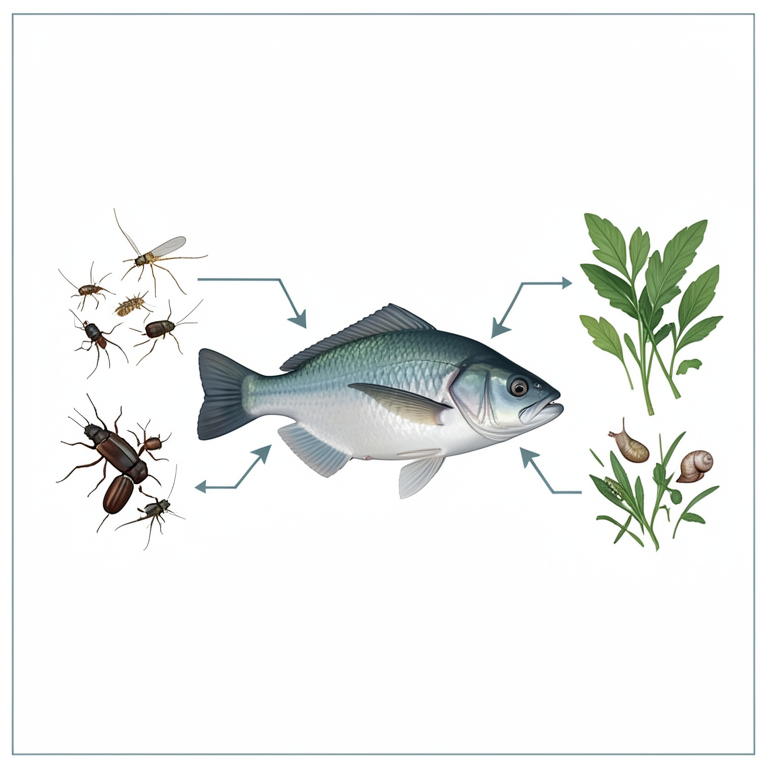
Dietary Composition of Clarotes laticeps
AI-generated conceptual illustration (Clarotes laticeps (African elephantfish)). It explains the idea and does not show study data.
View source evidence ↗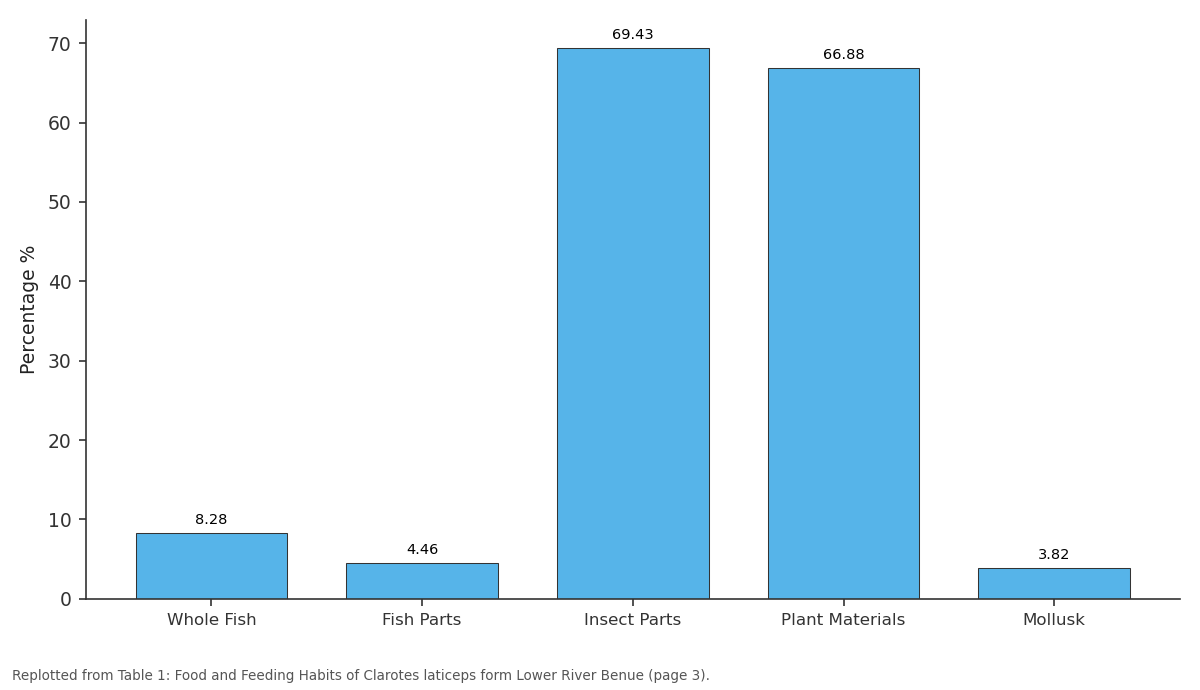
Percentage %: Whole Fish vs Fish Parts vs Insect Parts vs Plant Materials vs Mollusk
Replotted from Table 1 (page 3) of the original paper. Every bar is the paper's own table value.
View source evidence ↗Figures & tables
From the original paper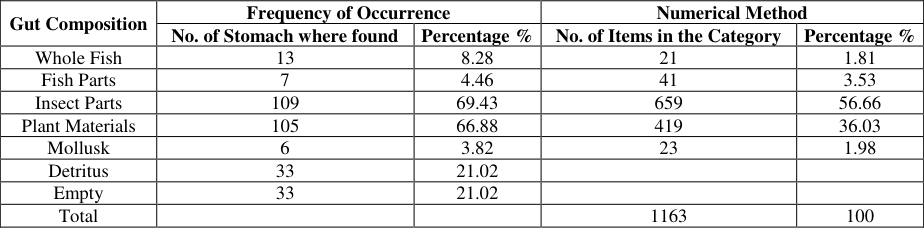 Table 1
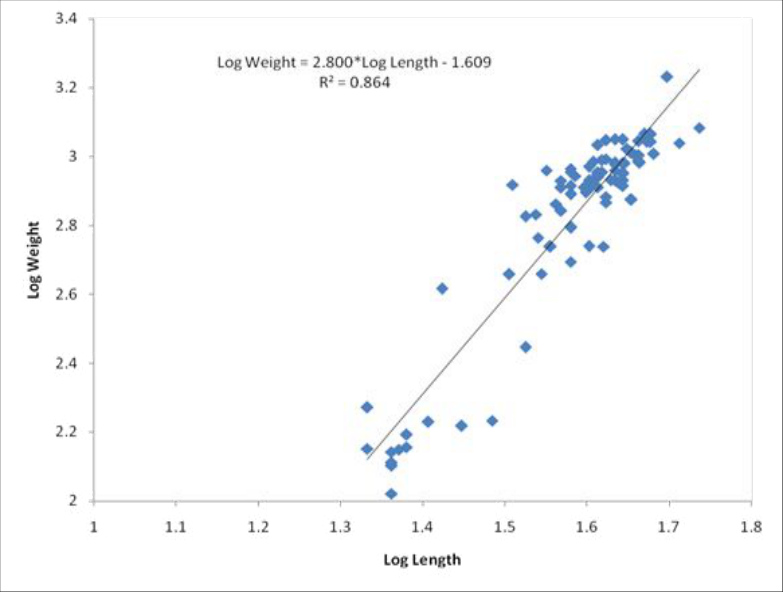 Figure 1
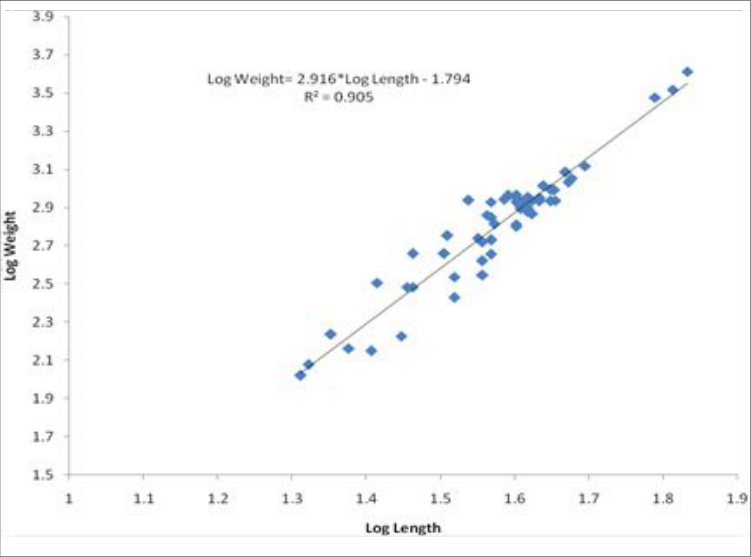 Figure 2
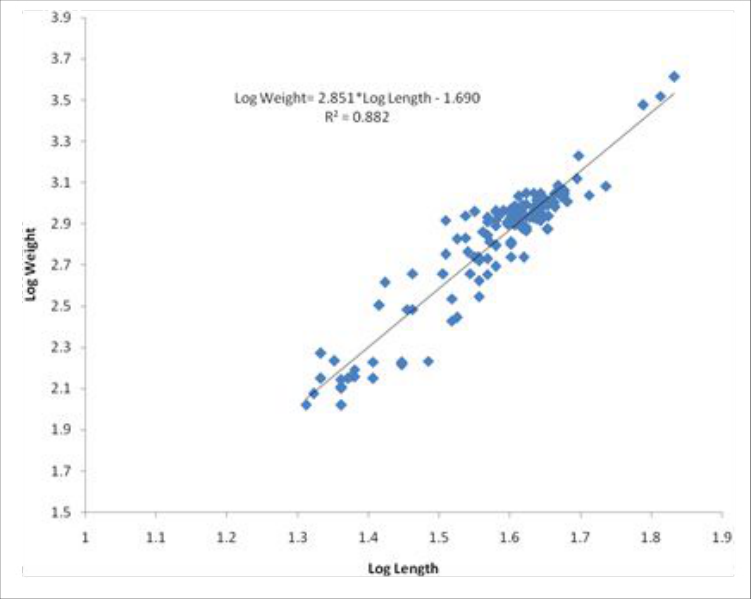 Figure 3
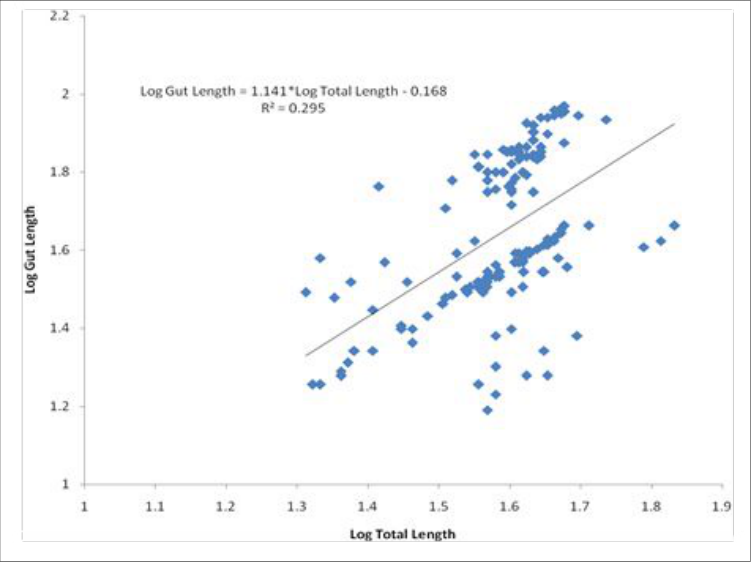 Figure 4
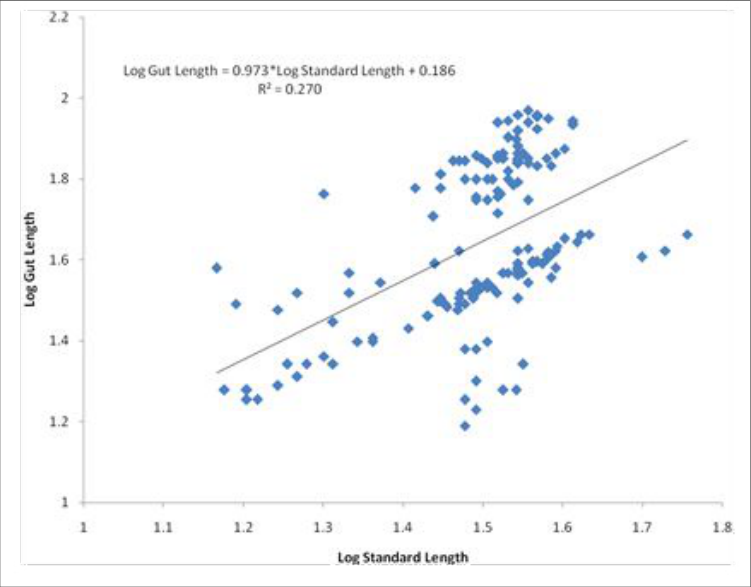 Figure 5
Introduction
Over the years, there have been declines in the robustness of the fish species caught in the tropical inland water bodies. This has been attributed to the challenges faced by the aquatic flora and fauna such as inadequate food availability in the water bodies. This therefore brings to the fore, the significance of various levels of research into the biology of the various species of fish such as Clarotes laticeps which form the object of this research. Among the methods of research into the biology of fish is the length-weight relationship, length-length relationship and the feeding habits (Slnovcic et al., 2004) [30] which are to be determined in this research. Even for routine population surveys it is both practical and worthwhile to collect lengthweight data on individual fish. Data on length-weight regressions may also be used to evaluate the relative condition of populations. If a population has a length-weight curve which is below the average curve, then its fish are relatively skinny. Conversely, if a population's curve is above the average curve, then its fish are relatively plump. The curves may cross, possibly indicating a change in condition caused by a change in diet as fish grow (Schneider et al., 2000) [29] . The resulting length-weight regressions are useful for (a) calculating total weight of fish caught from length-frequency data (thereby eliminating the need for bulk weighing of groups of fish while at the lake or stream), (b) measuring changes in robustness/health of this population (relative to past or future samples at the same place and season), (c) determining the relative condition of small fish compared to large fish (from the slope of the regression), and (d) comparing condition of this population to the state-wide standards discussed below (Akpan and Isangedihi, 2005) [2] .
Studies of the food and feed habits of fish species in different water bodies is critical to fish biology and sustainable aquaculture. This knowledge provides one of the basis for the development of a successful management programme for both capture and culture fisheries. Fish living in the wild must exploit the available food in aquatic environment and according to their preferences. Adaptations for these is source of some morphological Variations, especially in the mouth region, related to feeding. Knowledge of the relationship between body structures and fish diet could be important for predicting the diet of, how they feed and the mechanics of feeding (Wooten, 1992) [31] . Studies on stomach composition could provide useful information in positioning of the fishes in a food web in their environment and in formulating management strategy options in multi species fishery (Joseph and Djama, 1994) [14] . Pius and Benedicta (2002) [27] reported the use of stomach content results to reduce intra and inter specific competition for ecological niche. The data on stomach composition of fish is vital in providing straight forward models of stomach content dynamics (Palmores et al, 1997) [26] . Clarotes laticeps is a freshwater, ray-finned (Actinopterygii) fish and a member of the family Claroteidae that inhabits water column and bottom (demersal) waters of swamps, streams, rivers and lakes (Idodo-Umeh, 2003) [10] . It is a seasonal fish but found in abundance in the rainy season, feeding on crustaceans, insects, mollusks and small fish (Idodo-Umeh, 2003; Azeroual et al., 2010) [10,3] . A specimen of Clarotes laticeps weighing up to 10kg and having up to 80cm standard length has been reported by Ita (1984) [12] and Lewis (1974) [16] . Despite been a commercial fish, Clarotes laticeps has a status of Least Concerned (LC) and Harmless to human on the International Union of Conservation of Nature (IUCN) Red List (Azeroual et al., 2010 [3] ; IUCN, 2014). It has a phylogenetic Diversity Index (PD50) of 0.7500 of which the normal range is usually from 0.5 (low) to 2.0 (high) (Faith et al., 2004) [7] . Thus, this research aims at determining the relationships between the total length and the total body weight, total length and the gut length, standard length and the gut length and to examine the food and feeding habits of Clarotes laticeps from Lower River Benue.
Materials and Methods Study Locations, Sample Collection and Identification
One hundred and fifty seven (157) Samples of Clarotes laticeps were collected from Wadata landing site in Makurdi, Benue state as well as from the catches of the fishermen operating between Abinsi and Wadata axis of Lower River Benue in Makurdi, Benue State. Samples were collected on monthly basis from August, 2014 to January, 2015 from the catches of fishermen using Traps, Cast Nets as well as Hooks and Line in River Benue. The samples were transported to the laboratory in plastic containers with open tops. Identification of fish samples was carried out using fish identification guides by Froese and Pauly (2015) [8] , Babatunde and Raji (2014) [4] and Idodo Umeh (2003) [10] . Laboratory analysis were carried out at the General Purpose Laboratory of the Department of Fisheries and Aquaculture, University of Agriculture, Makurdi, Benue State.
Experimental Procedures
The various weights and length measurements involved were taken using Electronic balance (Model HC-D) and graded meter rule respectively while the experiments involved in the research were carried out according to the procedures stated below:
Determination of Length-Weight Relationship
Calculations were done using the conventional formula described by Le-Cren (1951) as follows:
The above equation ( 1) and data were then transformed into logarithms before the calculations are made. Therefore equation ( 1) becomes:
Where W = weight of fish in (g), L = Total length of fish in (cm), a = constant and b = an exponent. The 95% confidence interval, CI of 'b' was computed using the equation:
Where SE is the standard error of 'b'.
Examination of Food and Feeding Habits
Just after collection of samples, 10% formalin solution was injected into the gut of all the fishes in order to stop digestion of food items. The stomachs of the fishes were dissected using the appropriate tools of dissecting kit and the stomach contents were taken into a Petri dish and analyzed under light microscope at Magnification 5X and 10X. Each food category within the content was identified using a guide provided by Needham and Needham (1962) [20] , Quigley (1972) [28] and Mellanby (1975) [18] . The Data obtained were subjected to frequency of occurrence analysis and numerical analysis as described by Hynes, (1950) [9] and Baganel and Tesch (1978) [5] . The diet components from each gut were enumerated and the total number noted for each diet group to determine the relative percentage occurrence of each diet components from all the guts examined. The method showed the proportion of individuals eating a particular food item in a species. The relative percentage occurrence of each diet components was calculated from the formula: %RA = n x 100 N (Marioghae, 1982) [17] Where: %RA = Relative Percentage Occurrence, n = number of individuals diet components and N = total number of all diet components identified from the guts.
The relationship between Total Length and the Gut Length was computed using a linear regression model Y = a + bX Where,
Y = Gut Length (GL), X = Total length (TL), 'a' is constant (intercept) and 'b' is Exponent (the regression co-efficient).
Statistical Analysis
Microsoft excel was used construct the regression lines, determine the regression equations and calculate the percentages.
Results
Table 1 shows the composition of the gut of Clarotes laticeps from Lower River Benue. Based on the frequency of occurrence, insect parts were highest, present in 109 (69.43%) of the total number of 157 stomachs sampled, followed by various components of plant parts, having 105 (66.88%), and the least number of stomachs, 6 (3.82%) containing mollusks. Also, whole fish and fish parts were found in 13 (8.28%) and 7 (4.46%) of the sampled stomachs.
| Gut Composition | Frequency of Occurrence | — | Numerical Method | — |
|---|---|---|---|---|
| No. of Stomach where found | Percentage % | No. of Items in the Category | Percentage % | |
| Whole Fish | 13 | 8.28 | 21 | 1.81 |
| Fish Parts | 7 | 4.46 | 41 | 3.53 |
| Insect Parts | 109 | 69.43 | 659 | 56.66 |
| Plant Materials | 105 | 66.88 | 419 | 36.03 |
| Mollusk | 6 | 3.82 | 23 | 1.98 |
| Detritus | 33 | 21.02 | ||
| Empty | 33 | 21.02 | ||
| Total | 1163 | 100 |
Table text extracted from the original PDF; superscript letters are shown inline. The original table image is below.
View original table image
Numerically, the food category with the highest number in the guts was insect parts, numbering 659 (56.66%), followed by plant materials with 419 (36.03%) and the least was whole fish with 21 numbers (1.81%).
Out of the 157 stomachs sampled, 33 each were with unidentified particles (detritus) and no food.
Discussion
As shown in the results presented in Table 1, Clarotes laticeps can be described as a voracious eater (omnivore) that eats divers of food materials ranging from plant materials, insect, fish to mollusk as stated by Azeroual et al., (2010) [3] . This broad spectrum of food items in the gut of Clarotes laticeps can therefore suggest that the prey captured as food depends largely on what is available in the water as prescribed by Mhlanga (2003) [19] . This pattern of feeding habit was also seen in Synodontis schall from Lower River Benue that feed on insect, mud, fish and bivalves as well as anything that is available as discovered by Akombo et al., (2014) [1] and Nnaji et al., (2007) [21] . Insect parts is seen as the dominant food item in the diet of Clarotes laticeps, followed by plant materials according to the frequency of occurrence and the numerical methods used for the analysis of the food items. This is in line with the work of Ikongbeh et al. (2012) [11] who found that insects and crusteceans are the dominant food items in the diet of Clarotes laticeps from Lake Akata in Benue State as well as that of Baileys (1994). The feeding habits of Clarotes laticeps can therefore be likened to the feeding habits of Hydrocynus forskalis and Alestes nurse form River Benue as reported by Ogbe et al., (2008) [25] that these species of fish feed more on plant materials, insect and fish. Also, Clarotes laticeps can be seen to be a predatory species as it swallows different species of fish, even mollusks whole in their diet which has also been confirmed in the work of Ikongbeh et al. (2012) [11] . This therefore serves as a great advantage for the introduction of Clarotes laticeps into aquaculture which will eventually make their feeding a easy task. Also, their relative long gut portrays them as omnivorous species which can even feed on plant materials. The high percentage of empty stomach and stomach with detritus could be due to the inability to immediately arrest digestion in some of the stomach which eventually lead to the digestion and absorption of the food items contained in them.
The exact relationship between length and weight differs among species of fish according to their inherited body shape, and within a species according to the condition (robustness) of individual fish (Schneider et al., 2000) [29] which sometimes reflects food availability, Sex and gonad development, type of habitat, and growth within the weeks prior to sampling.
A critical look at the linear relationship between the Total Length and the Total Body Weight tells of a strong relationship between these two parameters. This can be shown by their R 2 value that is very close to unity, as presented in figures 1, 2, 3, 4 and 5. However, the male Clarotes laticeps has a stronger Length-Weight Relationship than the female. Also, going by the slope of the regression line ("b"), both the male and female as well as the combined sexes of Clarotes laticeps from Lower River Benue exhibit negative allometric growth as their "b" values are less than 3. These results are similar to the observations of Ikongbeh et al. (2012) [11] who determined the "b" value of the Length-Weight Relationship of Bagrus docmac (a close relative of Clarotes laticeps) from Lake Akata in Benue State to be 2.8367 and 2.6093 as well as the R 2 values to be 0.9686 and 0.9375 for male and female respectively. This shows that the rate of length increase in the fish is more than the weight increase rate. Fortunately, the results are in agreement with the work of Schneider et al. (2000) [29] who stated that the "b" is normally close to 3 for all species of fish. However, Ogbe et al. (2006) [24] has reported a positive allometric growth for Bagrus docmac while Ogbe and Ataguba (2008) [25] and Offem et al. (2009) reported isometric growth of Melapterurus electricus from Lower River Benue and Cross Rivers Inland Wetlands respectively. This shows that various fish species can assume different growth pattern based on their body shapes as prescribed by Schneider et al. (2000) [29] even if they have access to food and other growth conditions equally. Also, in his study of the Length-Weight Relationship of some important fish species of Cross River Inland Wetlands, Offem et al. (2009) [22] discovered variation in the growth patterns from negative allometric through isometric to positive allometric, with "b" values ranging from 2.4 to 3.4 and R 2 value from 0.82 to 0.96 for the different species of families Clariidae and Bagriidae sampled.
Figures and tables from the paper
References
32 in the original paper- Akombo PM, Akange ET, Adikwu IA, Araoye PA. Length-weight relationship, condition factor and feeding habits of Synodontis schall (Bloch and Shneider, 1801) in river Benue at Makurdi, Nigeria. International journal of Fisheries and Aquatic Studies. 2014;1(3):42-48.
- Akpan AW, Isangedihi IA. Dynamics in the lengthweight relationship and condition factor of three species of Pseudotolithus in three tropical river estuaries. Living System Development Journal. 2005;2(5):33-43.
- Azeroual A, Entsua-Mensah M, Getahun A, Lalèyè P. Clarotes laticeps. In: IUCN 2013. IUCN Red List of Threatened Species. 2010. Version 2013.1. <http://www.iucnredlist.org/>
- Babatunde DO, Raji A. Field guides to Nigerian Freshwater Fishes. Revised Edition. 2014. ISBN 97834760-0-9.
- Baganel TB, Tesch FW. Age and Growth In: Baganel T.B. (Ed). Method for assessment of fish production in fresh waters. London Blackwell Scientific Publications. 1978, 136.
- Bailey RG. Guide to the fishes of the River Nile in the Republic of the Sudan. Journal of National History 1994;28:937-970.
- Faith DP, Reid CAM, Hunter J. Integrating phylogenetic diversity, complementarity, and endemism for conservation assessment, Conservation Biology. 2004;18(1):255-261.
- Froese R, Pauly D. Editors. FishBase. World Wide Web electronic publication. 2015. www.fishbase.org, (02/2015 )
- Hynes HBN. The food of freshwater Stickle backs (Gasterosteus acculeatus and Pygoteus pungistis) with review of methods used in studies of the food of fishes. Journal of Animal Ecology. 1950;19:36-58.
- Idodo-Umeh G. Freshwater Fishes of Nigeria: Taxonomy, Ecological Notes, Diet and Utilization. Idodo Umeh Publisher, Benin, Nigeria, 2003. ISBN-13: 9789788052012, Pp 232.
- Ikongbeh OA, Ogbe FG, Solomon SG. Length-Weight relationship and condition factor of Bagrus docmac from Lake Akata, Benue State, Nigeria. Journal of Animal and Plant Sciences. 2012;15(3):2267-2274.
- Ita EO. Lake Kainji (Nigeria) In: Kapersky, J.M. and Petr, T. (Eds) Status of Africa Reservoir Fisheries, FAO, CIFA Tech. Paper. 1984;10:44-104.
- IUCN. IUCN Red List of Threatened Species. Version 2014.1. IUCN 2014. IUCN Red List of Threatened Species. 2014. Downloaded in June 2014.
- Joseph YJ, Djama T. Food habits of two sciaenid fish species Pseudotolithus and Pseudotolithus senegalensis off Cameroon. NAGA ICLARM Quaterly. 1994, 40-41.
- Le Cren ED. The length-weight relationship and seasonal cycle in gonad weight and condition in the perch (Perca fluviatilis). Journal of Animal Ecology. 1951;20:201-209.
- Lake Kainji, Nigeria. Journal Fish Biology. 1974;6:349363.
- Marioghae IE. Notes on the biology and distribution of M. vollenhovenii, M. macrobrachion in the Lagos Lagoon. Rev. Zool. Afr. 1982;96(3):493-508.
- Mellanby H. A guide to Freshwater Invertebrates. Chapman and Hall, London. Animal Life in Freshwater 6th ed. 1975, 323.
- Mhlanga W. Food and feeding habits of Tigerfish, Hydrocynus vittatus, in lake Kariba, Zimbabwe. Palomares MLD, Samb B, Diouf T, Vakily JM, Pauly D. (eds.) Fish biodiversity: local studies as basis for global inferences. ACP-EU Fish. Res. Rep. 2003;14:281.
- Needham PR, Needham JG. A guide to the study of freshwater biology. 5th Ed. Holden Day Inc. 1962, 108.
- Nnaji JC, Uzairu A, Harrison GFS, Balarabe ML. Evaluation of Cadmium, Chromium, Copper, Lead and Zinc concentrations in the fish head/viscera of Oreochromis niloticus and Synodontis schall in River Galma, Zaria, Nigeria. EJEAF Ch. 2007;6:2420-2426.
- Offem BO, Samsons YA, Omoniyi IT. Trophic ecology of commercially important fishes in the Cross River, Nigeria. The Journal of Animal and Plant Sciences; 2009;19(1):37-44.
- Ogbe FG, Ataguba GA. Studies on the feeding habits and growth patterns and reproductive biology of Malaptererus electricus, (Gmelin, 1789) in Lower Benue River, Nigeria. Biological and Environmental Sciences Journal for the Tropics. 2008;5(1):169-176
- Ogbe FG, Obande RA, Okayi RG. Age growth and mortality of Bagrus bayad, Macropterus (Forkalis, 1775) from Lower Benue River. Biological and Environmental Sciences Journal for the Tropics. 2006;3(2):103-109.
- Ogbe FG, Ataguba GA, Okosuwe EH. Feeding habits and growth parameters of Hydrocynus forskalii and Alestes nurse in River Benue, Makurdi, Nigeria. Journal Of Applied Biosciences(jabs). 2008;6:576-583.
- Palmores MLD, Garces LR, Sia II QP, Vega MJM. Diet composition and daily ration estimates of selected trawl caught fishes in San Miguel bay, Philippines. Naga, the ICLARM Quarterly. 1997, 35-40.
- Pius MO, Benedicta OO. Food and feeding interrelationship. A preliminary indicator to the formulation of the feed of some Tilapiine fishes. Tropical Journal of Animal Science. 2002;5(1):35-41.
- Quigley M. (. Invertebrates of Streams and Rivers. A key to identification. Edward Arnold publishers Ltd. London. 1972, p. 79.
- Schneider JC, Laarman PW, Gowing H. Length-weight relationships. Chapter 17 in Schneider, James C. (ed.). Manual of fisheries survey methods II: with periodic updates. Michigan Department of Natural Resources, Fisheries Special Report. 2000, 25, Ann Arbor.
- Slnovcic G, Franicevic M, Zorica B, Clles-Kee V. Length-weight and length length relationship of 10 pelagic fish species from Adriatic Sea (Croatia). Journal of Applied Ichthyology. 2004;20:156-167.
- Wooten RJ. Fish ecology. Blackies and Sons Ltd. New York Schneider, 1992.
- James C, Laarman PW, Gowing H. Length-weight relationships. Chapter 17 in Schneider, James C. (ed.) 2000. Manual of fisheries survey methods II: with periodic updates. Michigan Department of Natural Resources, Fisheries Special, 2000. Report 25, Ann Arbor.