
Research article · 2021 · Full text
International Journal of Biology SciencesAntibacterial activity of Ganoderma lucidum extracts against MDR pathogens
Volume 3(1) · Pages 25–28 · DOI: 10.33545/26649926.2021.v3.i1a.24 ↗
Research areasFungal Biology and ApplicationsComplementary and Alternative Medicine Studies
Abstract
Author-writtenGanoderma lucidum provides multiple benefits to human in terms of nutrient and medicine. Antibacterial potentials of this medicinal mushroom were assessed by making use of well diffusion and drug dilution methods on MDR bacterial isolates. Results revealed that all five extracts produced effective zone of inhibition with best by methanol extract against Escherichia coli and Pseudomonas aeruginosa (19.3±0.4mm respectively) and also with 266±23.6 MBC. Ganoderma lucidum extracts could be considered as an effective antibacterial agent.
Summary
Source-checkedPlain-language reading of the full paper, prepared with AI and checked against the text. Each point links to the authors' own words.
Why it matters
- The rise of drug-resistant bacterial strains is causing significant challenges in medical treatment. View evidence ↗
- Basidiomycetes (a group of fungi) are being reconsidered as potential sources for new antibiotics due to advancements in purification and fermentation technologies. View evidence ↗
- The mushroom Ganoderma lucidum is known to offer various nutritional and medicinal benefits to humans. View evidence ↗
The question
- The study aimed to evaluate how extracts from Ganoderma lucidum fruit bodies (using water, hexane, chloroform, methanol, and ethanol) affect five selected multidrug-resistant (MDR) bacterial species. View evidence ↗
What they did
- The test organisms used were clinical isolates of Escherichia coli, Salmonella typhimurium, Pseudomonas aeruginosa, Staphylococcus aureus, and Streptococcus pyogenes. View evidence ↗
- Antibacterial activity was measured using a well diffusion assay with 5mm wells, 50µl of extract, and incubation at 37°C for 24 hours. View evidence ↗
What they found
- All tested isolates were confirmed as multidrug-resistant (MDR) because they were all resistant to Gentamycin, Ampicillin, Cephalosporin, and Novobiocin. View evidence ↗
- The methanol extract showed the highest antibacterial activity, producing the largest zones of inhibition against Pseudomonas aeruginosa (19.5±2.6mm) and Escherichia coli (19.3±0.4mm). View evidence ↗
- The lowest antibacterial effect was observed with the chloroform extract against Pseudomonas aeruginosa, with a zone of inhibition of 09.8±2.7mm. View evidence ↗
- The methanol extract was most effective at killing bacteria, with a Minimum Bactericidal Concentration (MBC) of 266±23.5 mg/ml for E. coli and 266±62.3 mg/ml for S. typhimurium. View evidence ↗
- The highest concentration required to kill bacteria was 733±62.3 mg/ml against Escherichia coli. View evidence ↗
What it means
- The authors conclude that extracts from Ganoderma lucidum can be considered effective antibacterial agents. View evidence ↗
- Based on the MBC results, the authors state that the extracts can be considered bactericidal agents. View evidence ↗
Visual summary
3 visualsIllustrations explain the paper; charts are replotted from the paper's own table values.
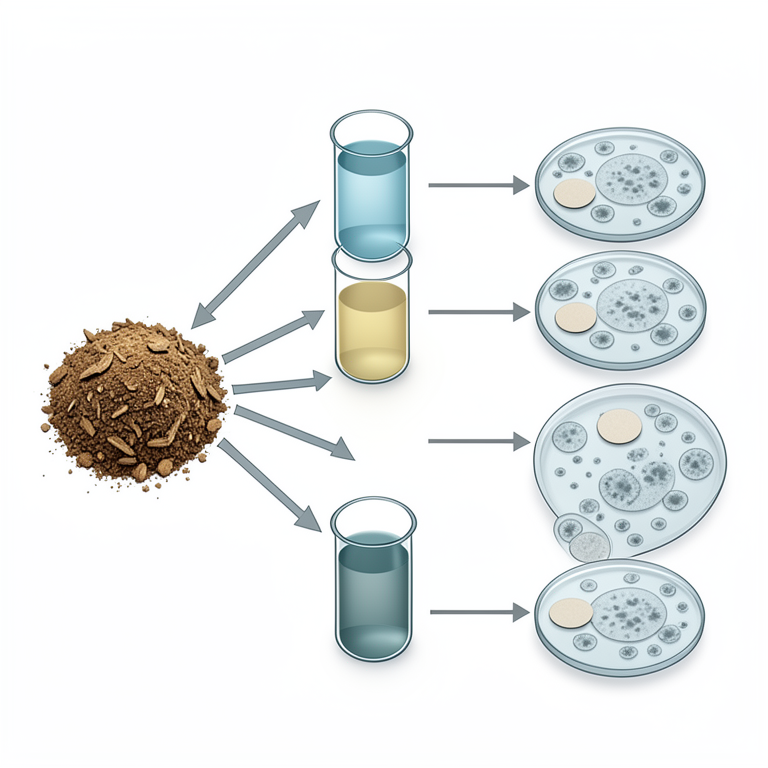
Extraction Process Flow
AI-generated conceptual illustration (Ganoderma lucidum mushrooms and bacterial colonies in petri dishes). It explains the idea and does not show study data.
View source evidence ↗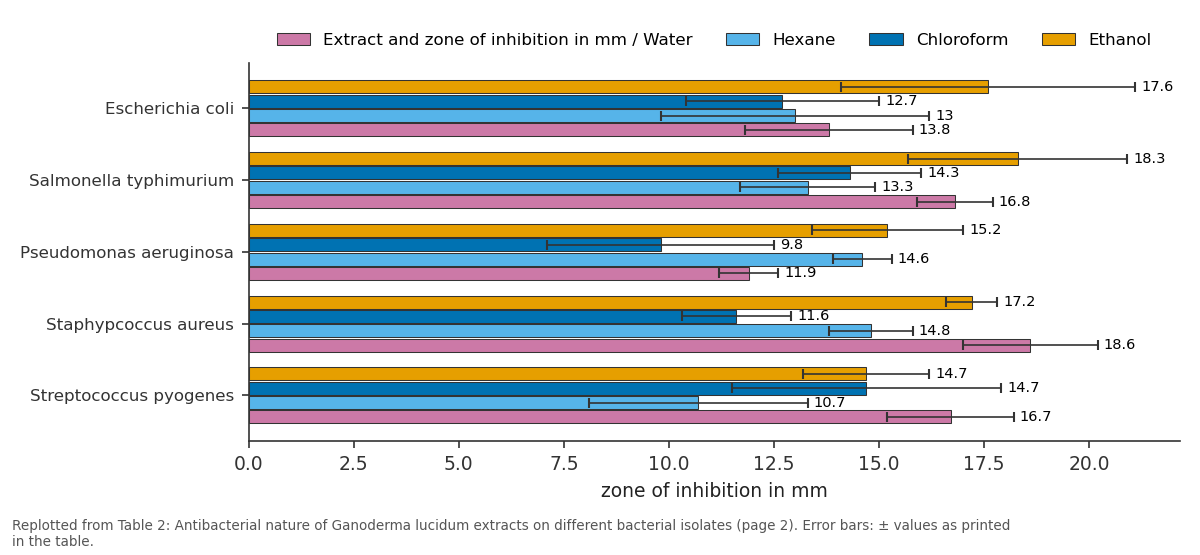
Extract and zone of inhibition in mm / Water and Hexane and more: Escherichia coli vs Salmonella typhimurium vs Pseudomonas aeruginosa vs Staphypcoccus aureus vs Streptococcus pyogenes
Replotted from Table 2 (page 2) of the original paper. Every bar is the paper's own table value.
View source evidence ↗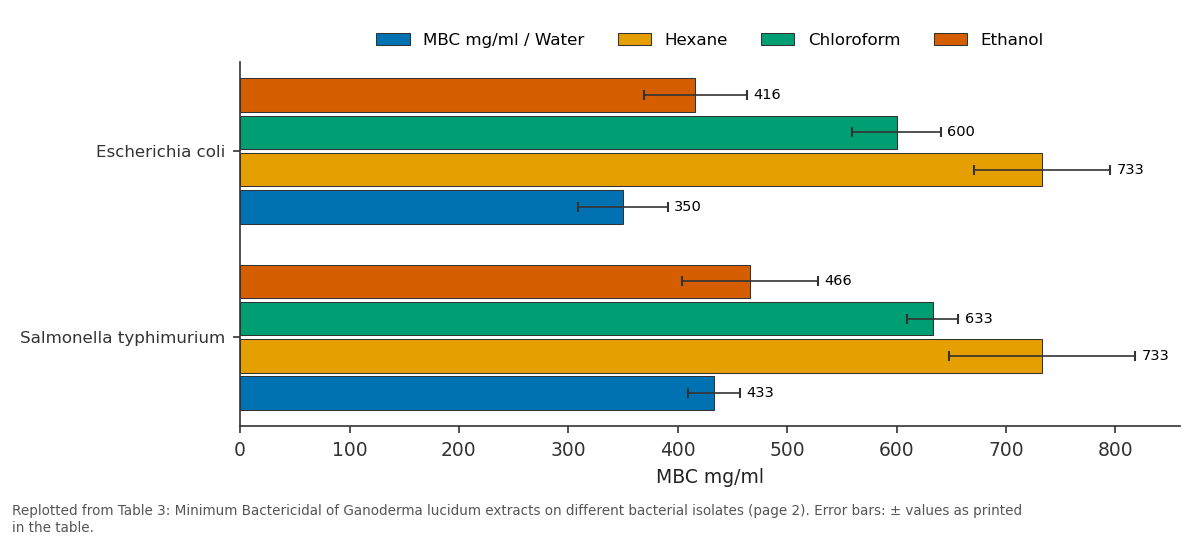
MBC mg/ml / Water and Hexane and more: Escherichia coli vs Salmonella typhimurium
Replotted from Table 3 (page 2) of the original paper. Every bar is the paper's own table value.
View source evidence ↗Figures & tables
From the original paper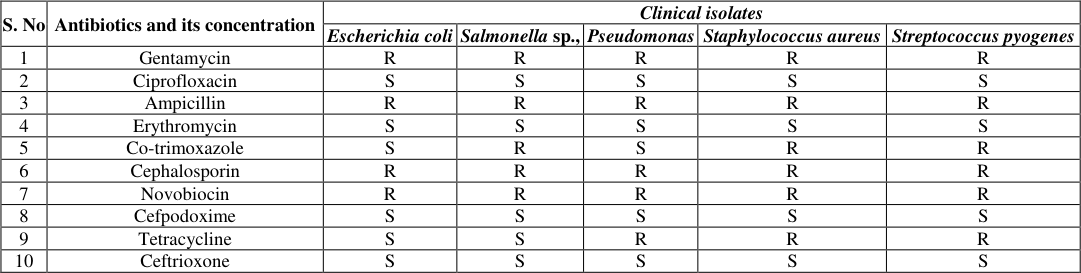 Table 1
 Table 2
 Table 3
Introduction
Mushroom fungi are known for its natural bioactive compounds (Ho et al., 2007) [6] . Antimicrobial drugs have long been used for prophylactic and therapeutic purposes. Unfortunately, the recent increase in the occurrences of drugresistant bacterial strains is creating serious treatment problems.
The antimicrobial activity of various polysaccharides from medicinal mushrooms is being reevaluated in terms of their clinical efficacy. Such compounds would be expected to function by mobilising the body's humoral immunity to ward off viral, bacterial, fungal and protozoal infections resistant to current antibiotics. They succeeded in the isolation and identification of Pleuromutilin (Kavanagh et al., 1950) [8] , a diterpene that is especially useful for the treatment of Mycoplasma infections in animals (Brizuela et al., 1998) [2] and served for the development of the first commercial antibiotic of basidiomycete origin. With the development of new fermentation and purification technologies, basidiomycetes are again receiving attention as potential sources of new classes of antibiotics (Maziero et al., 1999, Suay et al., 2000) [15,28] . In fact, several compounds that inhibit the growth of a large spectrum of saprophytic and phytopathogenic fungi were isolated from basidiomycetes (Anke, 1997). Despite their potential and enormous diversity in tropical ecosystems (Hawksworth, 1991) [4] , few studies aiming at the discovery of bioactive compounds from basidiomycetes are directed to edible mushrooms (Ishikawa et al., 2001, Paccola et al., 2001, Oliveira et al., 2002) [7,20,18] or common, easily recognized species (Smânia et al., 1999). This work was carried out to evaluate the antibacterial activity of aqueous, hexane, chloroform, methanol and ethanol extract of fruit bodies from Ganoderma lucidum on selected Multidrug resistant five bacterial Species.
Materials and methods
Materials and methods
Collection of Ganoderma lucidum
Ganoderma lucidum was collected as wild from the paddy fields of Thiruvarur (Dt), Tamil Nadu and identified and authenticated in the Department of Plant Pathology, Tamil Nadu Agricultural University, Coimbatore. The selected strains were multiplied on potato dextrose agar (PDA) petriplates and slant culture was also maintained for further analysis.
Processing and Extraction
Ganoderma lucidum is dried completely, powdered using mechanical grinder and extracted using water and ethanol.
Assessment of Antibacterial activity Test Organisms
Escherichia coli, Salmonella typhimurium, Pseudomonas aeruginosa, Staphylococcus aureus and Streptococcus pyogenes were isolated from clinical cases and identified by making use of microscopic methods, cultivation of selective cum differential agar and biochemical tests.
Antibiotic sensitivity assay
All isolates were subjected into antibiotic sensitivity test according to Bauer et al., (1966). The susceptibility of isolates were examined by a disc diffusion assay. Antibiotics like Gentamycin (Gen) -30µg/disc, Ciprofloxacin (CF)µg/disc, Ampicillin (A) -10 µg/disc, Erythromycin (E)µg/disc, Co-trimoxazole (Co) -30 µg/disc, Cephalosporins (CE) -10 µg/disc, Novobiocin (NV) -05 µg/disc, Cefpodoxime (CPD) -30 µg/disc, Tetracycline (T)µg/disc, Ceftrioxone (CEF) -30 µg/disc.
Preparation for Mushroom Extract
Ten grams mushroom powder was mixed with 50 ml of water, hexane, chloroform, methanol and ethanol separately in a beaker and it was placed on a shaker for 24 hrs. The aqueous solutions were filtered through Whatman (No.1) filter paper and then it was placed on the rotary evaporator vacuum, for minutes at 37 o C. Then the residue was dissolved with 10 ml of dimethyl sulfoxide and stored at 40 o C for further analysis. DOI: https://doi.org/10.33545/26649926.2021.v3.i1a.24
Antibacterial activity-Well diffusion method
A 24 hr culture of bacteria (Bacillus subtilis, Escherichia coli, Klebsiella pneumoniae and Pseudomonas aeruginosa) was prepared prior to the methods of Well diffusion assay. It was inoculated in sterile Brain Heart Infusion broth with the turbidity 1.5×10 8 CFU/mL. A volume of the inoculum was swabbed on Mueller-Hinton agar plate using a sterile cotton swab within 15 minutes after standardization. The well was prepared in the medium using sterile 5mm cork borer. The prepared extracts were loaded in different concentration of 50µl in each well separately. Later the plates were incubated at 37 o C for 24 hours. After 16-24 hours, the zone of inhibition was measured in mm. 30 μg Tetracycline was used as the positive control while 1ml DMSO were used as negative controls (Balouiri et al., 2015).
Results
Antibacterial activity of various solvent extracts of Ganoderma lucidum were done with well diffusion method against MDR strains of five different bacterial isolates. Antibiotic susceptibility patterns of the test isolates were assessed against standard antimicrobials before performing antibacterial activity of the mushroom extracts. It was determined that all the isolates were completely resistant to Gentamycin (GEN), Ampicillin (A), Cephalosporin (cef) and Novobiocin (NV); all were susceptible to Ciprofloxacin (CF), Cefpodoxime (CPD) and Ceftrioxone (Table 1) and hence were multidrug resistant strains (MDR).Tetracycline susceptibility was noted only with E. coli, and Salmonella only, which could cause gastrointestinal infections. Similarly, tetracycline only inhibited Escherichia coli and Salmonella typhimurium. As multidrug resistance was confirmed with all the test isolates, the clinical significance of the five test pathogens was very obvious. The MBC values of the different extracts against the tested bacteria are represented in terms of microgram per ml concentration (Table 3). Escherichia coli was effectively killed by methanol extract at 266±23.5mg/ml concentration. It was followed by Salmonella typhimurium (266±62.3) mg/ml concentrations. Highest concentration of extracts required to kill bacteria were 733±62.3mg/ml against Escherichia coli. This study also indicated almost all the extracts inhibited the growth of all tested bacteria. The extracts of Ganoderma lucidum could be considered as a bactericidal agent.
| S. No | Test Organism | MBC mg/ml | — | — | — | — |
|---|---|---|---|---|---|---|
| Water | Hexane | Chloroform | Ethanol | Methanol | ||
| 01 | Escherichia coli | 350±40.8 | 733±62.3 | 600±40.8 | 416±47.1 | 266±23.5 |
| 02 | Salmonella typhimurium | 433±23.5 | 733±84.9 | 633±23.5 | 466±62.3 | 266±62.3 |
Table text extracted from the original PDF; superscript letters are shown inline. The original table image is below.
View original table image
| S. No | Antibiotics and its concentration | Clinical isolates | — | — | — | — |
|---|---|---|---|---|---|---|
| Escherichia coli | Salmonella sp., | Pseudomonas | Staphylococcus aureus | Streptococcus pyogenes | ||
| 1 | Gentamycin | R | R | R | R | R |
| 2 | Ciprofloxacin | S | S | S | S | S |
| 3 | Ampicillin | R | R | R | R | R |
| 4 | Erythromycin | S | S | S | S | S |
| 5 | Co-trimoxazole | S | R | S | R | R |
| 6 | Cephalosporin | R | R | R | R | R |
| 7 | Novobiocin | R | R | R | R | R |
| 8 | Cefpodoxime | S | S | S | S | S |
| 9 | Tetracycline | S | S | R | R | R |
| 10 | Ceftrioxone | S | S | S | S | S |
Table text extracted from the original PDF; superscript letters are shown inline. The original table image is below.
View original table image
S. No Antibiotics and its concentration
S. No Antibiotics and its concentration
Clinical isolates Escherichia coli Salmonella sp., Pseudomonas Staphylococcus aureus Streptococcus pyogenes
Clinical isolates Escherichia coli Salmonella sp., Pseudomonas Staphylococcus aureus Streptococcus pyogenes
Discussions
Fungi, with an estimated 1.5 million species (Hawksworth, 2001) [5] , are the source of approximately one quarter of known natural bioactive compounds (Ho et al., 2007) [6] . Antimicrobial drugs have long been used for prophylactic and therapeutic purposes. Unfortunately the recent increase in the occurrences of drug-resistant bacterial strains is creating serious treatment problems. Consequently, the antimicrobial activity of various anti-tumour polysaccharides from medicinal mushrooms is being re-evaluated in terms of their clinical efficacy. Such compounds would be expected to function by mobilising the body's humoral immunity to ward off viral, bacterial, fungal and protozoal infections resistant to current antibiotics. Polysaccharide Krestin has been shown to induce potent antimicrobial activity against Escherichia coli, Listeria monocytogenes and Candida (Sakagami et al., 1991) [24] . Brizuela et al., (1998) [2] succeeded in the isolation and identification of Pleuromutilin, a diterpene that is especially useful for the treatment of mycoplasma infections in animals and served for the development of the first commercial antibiotic of basidiomycete origin. Moreover, interest in the metabolites produced by basidiomycetes declined as streptomycetes were considered to be a more prolific and easier to manipulate source of antibiotics (Anke, 1989) [1] . However, over 6000 metabolites were already identified from these imperfect fungi, making it more and more difficult to isolate novel bioactive metabolites from them. With the development of new fermentation and purification technologies, basidiomycetes are again receiving attention as potential sources of new classes of antibiotics (Anke, 1989, Maziero et al., 1999, Suay et al., 2000) [1,15,28] . In fact, several compounds that inhibit the growth of a large spectrum of saprophytic and phytopathogenic fungi were isolated from basidiomycetes. Furthermore, these organisms are able to inhibit the development of bacteria, actinomycetes and other fungi from their microhabitat, indicating that the antimicrobial substances produced by them have important ecological implications (Sidorova and Velikanov, 2000) [26] . Despite their potential and enormous diversity in tropical ecosystems (Hawksworth, 1991) [4] , few studies aiming at the discovery of bioactive compounds from basidiomycetes are directed to edible mushrooms ( [7,20,18] or common, easily recognized species (Smânia et al., 1999). The antimicrobial activity of aqueous, methanol, hexane, and ethyl acetate extracts from edible wild and cultivated mushrooms against nine food borne pathogenic bacterial strains was screened with a disk diffusion assay. Methanol, ethyl acetate, and aqueous extracts accounted for 92.8% of the positive assays, whereas the hexane extracts accounted for only 7.2%. Gram-positive bacteria were more sensitive than gram-negative bacteria to fungal extracts, and C. perfringens was the most sensitive microorganism. Aqueous extracts from Clitocybe geotropa and Lentinula edodes had the highest antimicrobial activity against all the bacterial strains tested (Venturini et al., 2008) [29] . This study also confirms antibacterial efficiency of Ganoderma lucidum extracts on MDR isolates. This study also incurred insights from the reports of Lakshmi Priya and Srinivasan, (2013) [11] ; Kumiko et al., (2015) [10] ; Mustafa et al., (2017) and Gebreselema et al., (2019). They also stated antimicrobial potentials of mushroom fungi against different microbial species.
Figures and tables from the paper
| S. No | Test Organism | Extract and zone of inhibition in mm | — | — | — | — |
|---|---|---|---|---|---|---|
| Water | Hexane | Chloroform | Ethanol | Methanol | ||
| 01 | Escherichia coli | 13.8±2.0 | 13.0±3.2 | 12.7±2.3 | 17.6±3.5 | 19.3±0.4 |
| 02 | Salmonella typhimurium | 16.8±0.9 | 13.3±1.6 | 14.3±1.7 | 18.3±2.6 | 17.6±1.2 |
| 03 | Pseudomonas aeruginosa | 11.9±0.7 | 14.6±0.7 | 09.8±2.7 | 15.2±1.8 | 19.3±0.4 |
| 04 | Staphypcoccus aureus | 18.6±1.6 | 14.8±1.0 | 11.6±1.3 | 17.2±0.6 | 16.4±1.3 |
| 05 | Streptococcus pyogenes | 16.7±1.5 | 10.7±2.6 | 14.7±3.2 | 14.7±1.5 | 16.8±0.9 |
| 06 | Negative Control | Nil | Nil | Nil | Nil | Nil |
Table text extracted from the original PDF; superscript letters are shown inline. The original table image is below.
View original table image
References
28 in the original paper- Anke T. Basidiomycetes: a source for new bioactive secondary metabolites. In: Bioactive metabolites from microorganisms. Progress in Industrial Microbiology,1989:27:51-57.
- Brizuela MA, Garcíam L, Pérez L, Mansur M. Basidiomicetos: nueva fuente de metabolites secundários. Rev. Iberoam Micol.,1998:15:69-74.
- Chelladurai G, Uma V. Screening for bioactive potential of edible mushroom extracts against tooth decay bacteria. World Journal of Pharmaceutical Research,2017:6(8).
- Hawksworth DL. The fungal dimension of biodiversity: magnitude, significance, and conservation. Mycological Research,1991:95:641-655.
- Hawksworth DL. Mushrooms: The extent of the unexplored potential. Int. J. Med. Mushrooms, 2001:3:333-337.
- Ho YW, Yeung JS, Chiu PK, Tang WM, Lin ZB, Man RY et al. Ganoderma lucidum polysaccharide peptide reduced the production of proinflammatory cytokines in activated rheumatoid synovial fibroblast. Mol. Cell Biochem,2007:301:173-179.
- Ishikawa NK, Kasuya MCM, Vanetti MCD. Antibacterial activity of Lentinula edodes grown in liquid medium. Brazilian Journal of Microbiology,2001:32:206-210.
- Kavanagh F, Hervey A, Robibins WJ. Antibiotic substances from basidiomycetes. VI. Agrocybe dura. Proc. Natl. Acad. Sci., USA,1950:36:102-106.
- Khajuria R, Batra P. Supplementation of nitrogen source in wheat straw for improving cellulolytic potential of Ganoderma lucidum. International Journal of Pharma. and Bio Science,2014:5:90-99.
- Kumiko Oka, Atsushi Ishihara, Nanase Sakaguchi, Shigeki Nishino, Roxana Y Parada, Akira Nakagiri et al. Antifungal Activity of Volatile Compounds Produced by an Edible Mushroom Hypsizygus marmoreus against Phytopathogenic Fungi. Journal of Phytopathology, 2015:163(11-12):987-996.
- Lakshmi Priya J, Srinivasan V. Studies on the antibacterial activities of mushroom. nt. J. Curr. Microbiol. App. Sci.,2013:2(6):184-189.
- Maafi RI, Omar M, Moyen Uddin PK, Md. Rubel, Kamrunnahar M. Phytochemical and antibacterial activity screening of three edible mushrooms, Pleurotus ostreatus, Ganoderma lucidum and Lentinus edodes accessible in Bangladesh. American Journal of Biomedicine and Life Science,2015:3(2):31-35.
- Matuszewska A, Jaszek M, Stefaniuk D, Ciszewski T, Matuszewski Ł, Anticancer, antioxidant, and antibacterial activities of low molecular weight bioactive subfractions isolated from cultures of wood degrading fungus Cerrena unicolor. PLoS ONE,2018:13(6):e0197044.
- Maziero R, Cavazzoni V, Bononi VLR. Screening of basidiomycetes for the production of exopolysaccharide and biomass in submerged culture. Rev Microbiol,1999:30:77-84.
- Muhammad Ezzudin R, Rabeta MS, Shaida Fariza S, Leong Ooi K, Nuru Shafiqah H. Primary and secondary antioxidant activities of nine edible mushrooms species. Food Research,2019:31:14-20.
- Najeeb Khatian, Muhammad Aslam. Effect of Ganoderma lucidum on memory and learningin mice. Clinical Phytoscience,2019:5:4.
- Oliveira JM, Jordão BQ, Ribeiro LR, Eira AF, Mantovani MS. Antigenotoxic effect of aqueous extracts of sun mushroom (Agaricus blazei Murill lineage 99/26) in mammalian cells in vitro. Food Chem Toxicol,2002:40:1775-1780.
- Ooi VEC, Liu F. Immunomodulation and anti-cancer activity of polysaccharideprotein complexes. Curr. Med. Chem,2000:7:715-728.
- Paccola AS, Maki CS, Nobrega GMA, Meirelles LDP. Antagonistic effect of edible mushrooms extract on Candida albicans growth. Braz. J. Microbiol,2001:32:176-178.
- Rakrudee Sarnthima, Saranyu Khammaung, Piyawan Saard. Culture broth of Ganoderma lucidum exhibited antioxidant, antibacterial and a-amylase inhibitory activities. J. Food Sci. Technol.,2017:54(11):3724-3730.
- Ramalingam Balakumar, Elumalai Sivaprakasam, Devendiran Kavitha, Sekaran Sridhar, Jebamalai Suresh Kumar. Antibacterial and antifungal activity of fruit bodies of Phellinus mushroom extract. International Journal of Biosciences,2011:3(1):72-77.
- Romi Singh. A Review on Different Benefits of Mushroom. IOSR Journal of Pharmacy and Biological Sciences (IOSR-JPBS),2017:12(1):107-111.
- Shon YH, Nam KS. Cancer chemoprevention inhibitory effect of soybeans fermented with basidiomycetes on 7, 12-dimethylbenz[a] anthracene/12Otetradecanoylphorbol-13-acetate-induced mouse skin carcinogenesis. Biotechnol. Lett.,2002:24:1005-1010.
- Sidorova II, Velikanov LL. Bioactive substances of agaricoid basidiomycetes and their possible role in regulation of myco-and microbiota structure in soils of forest ecosystems. I. Antibiotic activity of water extracts from basidioms of several dominant agaricoid basidiomycetes. Mikol Fitopatol.,2000:34:11-17.
- Pat. (Aphyllophoromycetideae) fruit body. Int. J. Med. Mushrooms,1999:1:325-330.
- Suay I, Arenal F, Asensio FJ, Basilio A, Cabello MA, Díez MT et al. Screening of basidiomycetes for antimicrobial activities. Antonie Van Leeuwenhoek.,2000:78:129-139.
- Venturini ME, Rivera CS, Gonzalez C. Blanco antimicrobial Activity of Extracts of Edible Wild and Cultivated Mushrooms against Foodborne Bacterial Strains. Journal of Food Protection,2008:71(8):17011706.
- Vishwakarma P, Singh P, Tripathi NN. In-vitro antioxidant activity and nutritional value of four wild oyster mushroom collected from North-Eastern Part of Uttar Pradesh. Mycosphere,2017:8(4):592-602.
Cited by 7
From OpenAlex, OpenCitations and reference lists read by Scinovex
- Antioxidant, antibacterial, antitumor, antifungal, antiviral, anti-inflammatory, and nevro-protective activity of Ganoderma lucidum: An overview ↗
Darija Cör, Željko Knez, Maša Knez Marevci · Frontiers in Pharmacology · 2022
Ganoderma lucidum is a very medicinal mushroom that has been utilized in Oriental medicine for many years. It has a wide range of pharmacological and therapeutic properties, and has been used for many years as a health promoter. It contains various biologically active compounds that improve the immune system and have antioxidant, antitumor, anti-inflammatory, antifungal, and antimicrobial properties. Active compounds…
❝ 131PDF - Ganoderma lucidum: Insight into antimicrobial and antioxidant properties with development of secondary metabolites ↗
Md Faruque Ahmad, Md Faruque Ahmad, Abdulrahman Ahmed Alsayegh, Fakhruddin Ali Ahmad, Fakhruddin Ali Ahmad, Md Sayeed Akhtar et al. · Heliyon · 2024
Ganoderma lucidum is a versatile mushroom. Polysaccharides and triterpenoids are the major bioactive compounds and have been used as traditional medicinal mushrooms since ancient times. They are currently used as nutraceuticals and functional foods. G. lucidum extracts and their bioactive compounds have been used as an alternative to antioxidants and antimicrobial agents. Secondary metabolites with many medicinal properties make it…
❝ 73PDF - Ganoderma lucidum triterpenoids investigating their role in medicinal applications and genomic protection ↗
Sayed Haidar Abbas Raza, Ruimin Zhong, Xiangmei Li, Sameer D. Pant, Xing Shen, Mona N. BinMowyna et al. · Journal of Pharmacy and Pharmacology · 2024
OBJECTIVES: Ganoderma lucidum (GL) is a white rot fungus widely used for its pharmacological properties and health benefits. GL consists of several biological components, including polysaccharides, sterols, and triterpenoids. Triterpenoids are often found in GL in the form of lanostane-type triterpenoids with quadrilateral carbon structures. KEY FINDINGS: The study revealed that triterpenoids have diverse biological properties and can be categorized…
❝ 24 - Exploring the health benefits of Ganoderma: antimicrobial properties and mechanisms of action ↗
Samantha C. Karunarathna, Nimesha M. Patabendige, Kalani Kanchana Hapuarachchi, Itthayakorn Promputtha · Frontiers in Cellular and Infection Microbiology · 2025
Ganoderma, a well-known medicinal mushroom, has garnered attention for its broad therapeutic properties, particularly its potent antimicrobial activities. This review focuses on the mechanisms of action and bioactive compounds responsible for the ability of Ganoderma to inhibit various pathogenic microorganisms. The polysaccharides, triterpenoids, proteins, and phenolic compounds in Ganoderma exhibit strong antimicrobial effects by targeting bacterial cell walls, disrupting membrane…
❝ 14PDF - Antioxidant and Antimicrobial Activity of a Medicinal Mushroom, Ganoderma lucidum ↗
Şükrü Canpolat, Elif Yürümez Canpolat · Journal of Advances in Biology & Biotechnology · 2023
This study aimed to evaluate the antioxidant and antimicrobial activity, along with the determination of major fatty acids by GC-MS and the content of total phenolic compounds of Ganoderma lucidum naturally grown in Türkiye. The antioxidant activity was determined by widely used DPPH radical scavenging method. G. lucidum methanol extract exhibited a 90.81% scavenging activity of DPPH. The content of…
❝ 12PDF - Chemical Constituents and Antimicrobial Activity of a Ganoderma lucidum (Curtis.) P. Karst. Aqueous Ammonia Extract ↗
Eva Sánchez‐Hernández, Ana Teixeira, Catarina Pereira, Adriana Cruz, Jesús Martín‐Gil, Rui Pedro Soares de Oliveira et al. · Plants · 2023
Mushroom extracts have shown potential as a source of new antimicrobial agents. This study investigates the chemical profile of an aqueous ammonia extract obtained from the carpophores of Ganoderma lucidum, which grows on Quercus ilex trees, and explores its valorization as a biorational. The major chemical constituents of the extract, identified through gas chromatography–mass spectrometry, include acetamide, oleic acid, 1,2,3,4-butanetetrol,…
❝ 11PDF - Nghiên cứu chiết xuất polysaccharide tổng số từ một số loại nấm Linh chi Ganoderma lucidum và đánh giá hoạt tính sinh học của cao chiết ↗
Nguyễn Như Ngọc, Nguyễn Thị Hồng Nhung, Kiều Trà My, Nguyễn Hồng Phấn, Vũ Cao Tuyết Ngân · Tạp chí Khoa học và Công nghệ Lâm nghiệp · 2024
Linh chi là loại nấm dược liệu quý được sử dụng phổ biến ở nhiều quốc gia do tác dụng chống ung thư, chống oxy hóa, kháng viêm, và tăng cường miễn dịch… Trong nấm Linh chi có chứa hàng loạt các chất chuyển hóa có hoạt tính trong đó polysaccharide (PS) được chứng minh là một nhóm chất có…
❝ 2PDF