
Research article · 2021 · Full text
International Journal of Agriculture and NutritionInstant of tinutuan (Manado porridge) for pregnant women in north sulawesi and gorontalo province
Volume 3(2) · Pages 10–13 · DOI: 10.33545/26646064.2021.v3.i2a.44 ↗
Research areasFood and Agricultural SciencesPublic Health and Nutrition
Abstract
Author-writtenPrevious research, researchers have examined the guideline formulation for pregnant women in areas prone to the Lokon and Soputan volcanoes, however, the procurement of foodstuffs has experienced difficulties even though it is minimally used. Therefore, the researchers felt it was necessary to conduct instant reports on pregnant women from local ingredients using food technology. The research objective was to determine instant tinutuan as a local food to overcome nutritional problems in pregnant women. This type of research is experimental with a one shot case study design. The results and outcomes of this research that have been achieved are five instant follow-up models for pregnant women through simple drying methods. In this study, it can be concluded that to produce an instant follow-up model that can be consumed by pregnant women through five processes with five models with the standard of adequacy of the review menu not changing or constant. It is suggested that researchers should continue to innovate to produce appropriate technology for instant reports from local food ingredients that are useful for the general public.
Summary
Source-checkedPlain-language reading of the full paper, prepared with AI and checked against the text. Each point links to the authors' own words.
Why it matters
- Pregnant women require double the food intake compared to before pregnancy to support both their own health and the development of the fetus. View evidence ↗
- In areas prone to volcanic activity, such as near the Lokon and Soputan volcanoes, procuring necessary foodstuffs for pregnant women has been difficult. View evidence ↗
The question
- The study aimed to determine if instant tinutuan could serve as a local food source to address nutritional problems in pregnant women. View evidence ↗
- The researchers sought to produce instant tinutuan and evaluate the level of preference for these products among users. View evidence ↗
What they did
- The study employed a pre-experimental one-shot case study design. View evidence ↗
- The researchers used nine local ingredients: rice, gedi, pumpkin, sweet potato, spinach, kale, young corn, lemongrass, and basil leaves. View evidence ↗
- The research took place between March and October 2020 at the Health Polytechnic Laboratories in Manado and Gorontalo. View evidence ↗
- Organoleptic (sensory) tests were conducted by a mix of trained nutrition lecturers, semi-trained students, and untrained pregnant women. View evidence ↗
- Nutritional content, including energy, protein, fat, vitamins A, B, C, iron, zinc, and fiber, was measured using proximate tests. View evidence ↗
What they found
- Regarding color, Model D was most liked (16 people), Model C was least liked (6 people), and Model E was rated as 'quite like' by the most panelists (48 people). View evidence ↗
- For taste, Model D was most liked (16 people), Model C was most disliked (12 people), and Model E was rated as 'quite like' by 48 people. View evidence ↗
- In terms of aroma, Model D was most liked (10 people), Model C was least liked (15 people), and Model E was rated as 'quite like' by 50 people. View evidence ↗
- For texture, Model E was most liked (24 people), Model C was most disliked (22 people), and Model B was rated as 'quite like' by 29 people. View evidence ↗
- The modified instant models increased nutritional value and met or exceeded WHO recommendations for post-disaster nutrition, specifically one-third of the Recommended Dietary Allowance (RDA). View evidence ↗
What it means
- The authors concluded that Model E was the preferred version due to its processing, taste, and texture. View evidence ↗
- The authors recommend continued innovation in food technology to create useful instant products from local ingredients for the general public. View evidence ↗
- The study was limited to only one of three possible methods for making instant food ingredients due to constraints in time, effort, and cost. View evidence ↗
Visual summary
1 visualsIllustrations explain the paper; they do not show study data.
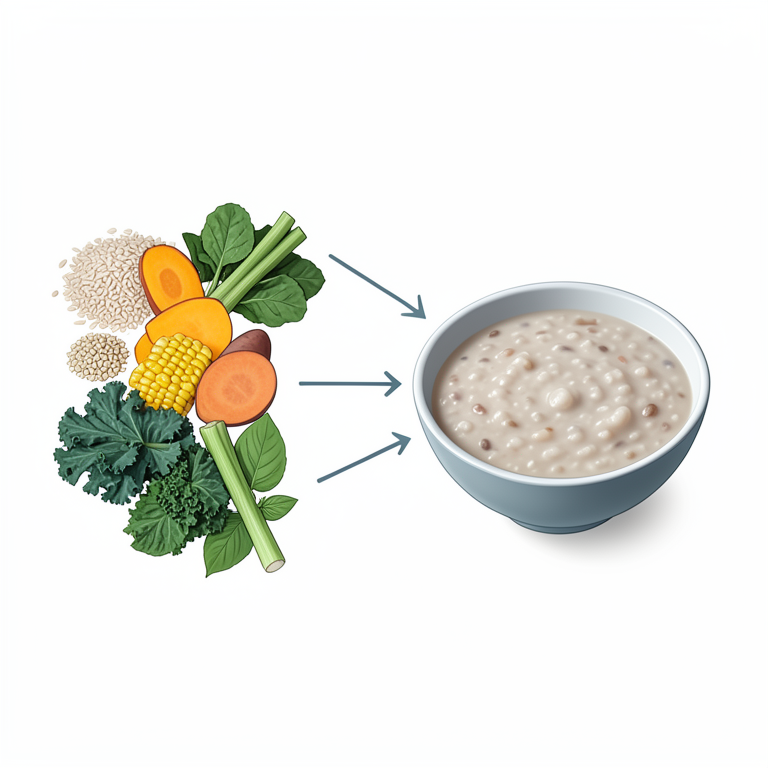
Instant Tinutuan Composition
AI-generated conceptual illustration (Manado porridge ingredients (rice, pumpkin, corn, spinach, kale, sweet potato, gedi, lemongrass, and basil leaves) and a). It explains the idea and does not show study data.
View source evidence ↗Figures & tables
From the original paper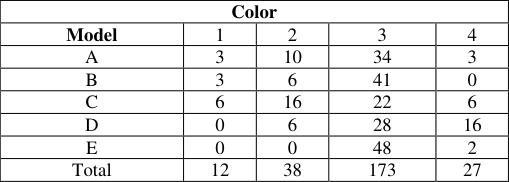 Table 1
Introduction
Mother is part of the family who also plays an important role in improving community nutrition. Mother is one of the right educational targets for efforts to improve community nutrition, including increasing coverage of exclusive breastfeeding. The psychological preparation of the mother for breastfeeding during pregnancy is very meaningful, because a positive mother's decision or attitude must have occurred at the time of pregnancy or even long before. The attitudes of mothers are influenced by various factors, including customs/habits and beliefs of breastfeeding in their respective regions, previous breastfeeding experience, knowledge of the benefits of breastfeeding and whether or not pregnancy is wanted. Support from doctors / health workers, friends or close relatives is needed, especially for mothers who are pregnant for the first time. Tinutuan which is popularly known as "porridge manado" is not just a food consisting of porridge and various types of vegetables as the main human need, but also a nutritious food. In addition, it is a characteristic of the regional identity of Manado City. In the current social reality, tinutuan culinary is generally a mixture of vegetable ingredients, including pumpkin, kale, spinach, and vegetable leaves, which are obligatory gedi. However, at first the tinutuan culinary delights only consisted of one type of vegetable, with various versions of the naming according to the language of the area where they lived in the Minahasa area. Likewise, the nutrients contained in this guide are needed by pregnant women. During pregnancy, the need for food intake is twice that of before. What is consumed by pregnant women does not only affect their own health. However, also the growth and development of the fetus or baby. Like those who are sick and elderly, the contribution of the use of nutrients in the diet is needed by pregnant women. Even by consuming tinutuan which contains lots of green vegetables, it makes breast milk production run smoothly.
Diet is a behavior related to food, the frequency of eating a person, the distribution of food in the family and how to choose food. Therefore diet is the most important behavior influencing the state of nutrition, because the health of individuals and communities can be improved. Arisman (2008) [3] states that the eating habits of a family will be separated from the eating habits that exist in the community where the family interacts. According to Soetardjo, Susirah, Sunita Almatsier, & Moesijanti Soekarti (2011) [17] that eating habits are related to the act of consuming food and considering a more open basis in relation to what people usually eat, also related to possible conditions. Changes in food pattern habits arising from inside and outside. A person's diet is formed from their cultural background with various socio-cultural changes that occur (lifestyle, bio-technology engineering, symbolic expression, entry of ideology), and will not easily change even in conditions of natural disasters. Previous research, researchers have examined the guideline formulations for pregnant women in areas prone to volcanic disasters, but the procurement of foodstuffs has experienced difficulties even though it is minimally used. Therefore, the researchers felt it was necessary to do an instant follow-up formula for pregnant women from ingredients that had been made of flour using food technology. To see the instant follow-up formula for pregnant women with food technology methods for this first stage, the authors limit one method from three methods of making instant food ingredients. This is due to limited time, effort and cost to carry out this research. The author intends to use all methods of processing instant food ingredients to find out which method is the best result of the best instant results for pregnant women until the packaging / packaging so that it becomes an ongoing research (multi years).
The purpose of this study was to produce instant tinutuan products as local food to overcome nutritional problems in pregnant women and to determine the level of preference for tinutuan instant products as local foods to overcome nutritional problems in pregnant women.
Material and Methods
This type of research is pre experimental design with One -Shoot Case Study (One Shot Case Study). The population in this study were local foodstuffs from North Sulawesi and Gorontalo. The samples of this study were nine local foodstuffs used for tinutuan production, namely rice, gedi, pumpkin, sweet potato, spinach, kale, young corn, lemongrass and basil leaves. In this study, researchers used the technique of "purposive sampling" because in taking the sample, consideration is needed based on certain characteristics, including: samples have the same color, the same shape to obtain results that match the criteria or approach the criteria.
Discussion
Tinutuan is one of the locally labeled food products from ethnic rural areas in North Sulawesi Province, but it has also become a eating habit in urban areas from North Sulawesi Province and even Gorontalo Province. This is because the people of Gorontalo Province before splitting into a province were part of the people of North Sulawesi Province. Tinutuan is not only from local food, but is a nutritious traditional food from ancestral heritage. The irresistible influence of globalization on the culinary world to all urban and rural areas in North Sulawesi Province. However, according to research conducted by Langi Grace (2018) there is no difference in the use of local food in rural and urban areas in North Sulawesi Province. The difference in the use of local foodstuffs in villages prone to volcanic locations does not reduce the liking for tinutuan. The principle that can be put forward, namely diet and eating habits have in common. This means that both actions are carried out every day, and continuously for a relatively long time. The difference in general is that diet has three important components, namely type, frequency and quantity. The conclusion is that the diet is more formal in nature, applies in general, and serves as a guide. Meanwhile, eating habits are more personal, formed based on taste and availability of food at the household level. In this study, the concept studied is based on a combination of diet and habits for an instant follow-up model for pregnant women in locations prone to volcanic disasters. The production process of the post-disaster follow-up model begins with the selection of the main ingredient, namely using local food. The research team attempted to create a post-disaster assessment model using very cheap but good quality food ingredients that were easy to process. In the process of modifying the instant follow-up model, the research team conducted several trials using variations in the percentage of the use of the main ingredients to get the right taste through organoleptic analysis using trained panelists, namely lecturers and students of the Department of Nutrition.
Recipe modification is to change the basic recipe into a new recipe without changing the nutritional value contained in the initial recipe, namely the nine basic ingredients of food (Langi Grace, 2017) [9] because only the addition of the size or dose of spices is also one of the keys that will determine variations in taste and type. Cook. Recipe modification is the process of creating a recipe by making changes from an existing recipe. As is known the purpose of cooking, namely; changing the shape, the appearance of the food changes the nutritional value of the food, changes the digestibility value for the better, besides cooking it changes the aroma, taste, texture, so that in modifying a recipe it is also categorized in the case mentioned above. There are 3 kinds of recipe modifications; intended for food administration and culinary development, namely: 1) Modification in terms of food ingredients (adding, subtracting, replacing with a food ingredient, seasoning and food additive); 2) Modification in terms of cooking techniques (wet heat, dry heat); 3) Modification in terms of changing the number of portions made. In the modification of types 1 and 2, it is more focused on the culinary aspect, from these two modifications will be obtained the results of changes in nutritional value, changing the shape of food, changing the appearance of food, and changing the taste of food. Apart from these modifications, it can also make modifications in terms of presentation, for example a modern menu is served traditionally or vice versa. Or the presentation of Indonesian menu patterns into a Continental Menu Pattern is also the opposite, so that culinary development is the result of modifying recipes in terms of using food ingredients, Seasonings and additives, cooking techniques used and how to serve food. BPPSDMK (2017) states that the purpose of culinary development by modifying recipes is: 1) Making variations from an old recipe to a new recipe. For the purposes of arranging food to suit the purpose of setting the food, 2) To improve taste, shape and appearance (the result is modified taste, the form of food changes the appearance of the food presentation changed. In order to increase the degree of acceptance (acceptability) of the food ingredients it is necessary to create modern recipes. Thus, the food is favored by the community. Healthy pregnant and nursing mothers are one of the determinants of the sustainability of the Indonesian nation. One of the important factors that determine this is the amount of nutritional intake that can meet nutritional adequacy. Nutritional intake can come from food provided in households, packaged processed food that is commercially traded, ready-to-eat food, including snack food for pregnant and lactating mothers (PJAS), and snack food sold for immediate consumption.
The results of the organoleptic analysis were sensory assessments for instant review models ranging from model 1 to model 5 in general, the subjects had the same values of dislike and great liking as shown in the results of the study. Sensory assessment, also called organoleptic assessment or sensory assessment, is the most primitive way of assessment. Sensory assessment becomes a field of science after assessment procedures are standardized, rationalized, linked to objective assessments, data analysis becomes more systematic, and statistical methods are used in analysis and decision making. Organoleptic assessment is widely used to assess quality in the food industry and other agricultural product industries. Sometimes these assessments can yield very careful assessment results. In some terms of assessment with the senses exceeding the precision of even the most sensitive instrument. For quality assessment or analysis of the sensory properties of a commodity panel acts as an instrument or tool. A panel is one or a group of people whose job is to assess the nature or quality of objects based on subjective impressions. So the assessment of food in a panel is based on the subjective impression of the panelists with a certain sensory orientation that must be followed. In organoleptic assessment, there are several kinds of panels. The use of these panels may differ depending on their purpose. There are 6 types of panels that are commonly used, namely: 1) Individual taster. 2) A small expert panel. 3) A trained panel. 4) Untrained panels. 5) Panel is somewhat trained. 6) Consumer panels (R. Gonçalves et al., 2014) [2] . The results of the modification of the post-disaster assessment model using local food generally increase better nutritional value, seen from the quality of vitamins in the main ingredients and the content of other nutrients, including fiber, good carbohydrate intake for children's intelligence, in other words, the modified instant follow-up model. can increase nutritional value and meet or even exceed WHO recommendations regarding the fulfillment of nutrition in the post-disaster assessment model, namely onethird of the RDA. The post-disaster instant assessment model plays an important role in providing energy and other nutrients for pregnant women. The initial model is generally known for only three local food ingredients, even though there are many kinds and quantities of vegetables in Indonesia. Apart from being a source of vitamins, minerals, green and colored vegetables are also a source of fiber and bioactive compounds which are classified as antioxidants. There are many advantages when consuming vegetables and fruits for your health. Eating vegetables and fruits should be varied so that you get a variety of sources of vitamins or minerals and fiber.
Conclusion
The instant review model E was preferred by panelists in this study compared to other models. Model E is preferred because of the instant processing as well as the taste and texture of the instant reports. To get the preferred instant follow-up model, you must undergo several repetitions of the treatment. The results of this research need to be disseminated both at the village level and related government agencies to work together in an effort to improve the health quality of Post-Disaster pregnant women in locations prone to volcanic eruptions and researchers should continue to innovate to produce appropriate technology for instant reports from local food ingredients that are useful for the general public
Figures and tables from the paper
| Color | — | — | — | — |
|---|---|---|---|---|
| Model | 1 | 2 | 3 | 4 |
| A | 3 | 10 | 34 | 3 |
| B | 3 | 6 | 41 | 0 |
| C | 6 | 16 | 22 | 6 |
| D | 0 | 6 | 28 | 16 |
| E | 0 | 0 | 48 | 2 |
| Total | 12 | 38 | 173 | 27 |
Table text extracted from the original PDF; superscript letters are shown inline. The original table image is below.
View original table image
References
18 in the original paper- Andriani Parastiwi, Cahya Rahmad, Eko Hendri S, Ekojono. Bubuk Ekstrak Sari Buah Dan Sayur: Teknologi Produksi Menggunakan Metode Spray Drying. Prosiding SENTIA-Politeknik Negeri Malang, 2015;7:2085-2347.
- Andriyani M, dan Bambang, W. Pengantar Gizi Masyarakat. Jakarta: Kencana Prenada Media Group, 2014.
- Arisman. Gizi dalam Daur Kehidupan. Penerbit Buku Kedokteran EGC: Jakarta, 2008.
- Giri NA, Taur AT, Kshirsagar RB, Yadav GB, Studies on formulation and evaluation of fiber rich food bars. Indian J. Nutr. Dietet,2012:49:243-247.
- Omorodion Nnenna JP, Ogonna Amara J. Sanitary quality of food ingredients displayed for sale in the local markets in rivers state, Nigeria. Int. J. Biol. Sci. 2020;2(2):62-67. DOI: 10.33545/26649926.2020.v2.i2a.66
- Hafzan, Y, Wan Nudri, W D, Zulkifli, A. Effectiveness of Nutrition Education vs. Non-Nutrition Education Intervention in Improving Awareness Pertaining Iron Deficiency among Anemic Adolescents; Iran J Public Health,2013:42(5):467-471.
- Hakim VR dan Fitriyono. Analisis Aktivitas Antioksidan, Kandungan Zat Gizi Makro dan Mikro Tinutuan instan Beras Warna Sebagai Makanan Selingan Penderita Nefropati Diabetik. Journal of Nutrition College [Online], 2013.
- Kandou D Grace. Makanan Etnik Minahasa dan Kejadian Penyakit Jantung Koroner. (disertasi). Jakarta: Program Pasca Sarjana Universitas Indonesia, 2015.
- Langi Grace. Different Pattern Eating Habits Tinutuan As Local Food In Pineleng Health Center Of Rural Area And Bahu Health Center Of Urban Area From North Sulawesi Province. Published at proceedings ISSN 1512353939, 2017.
- Langi Grace. Factors Affecting the Existence Culinary Tinutuan in Pattern Food, 2017.
- Habit of the Manado City. The International Conference on Public Health, Published at proceedings ISBN 978-602-61231-0-7. Best Western Primier Hotel, Solo, 2017, 6-7.
- Langi Grace. Style of Consumption of Traditional Food Tinutuan in the Community Manado. The International Conference, Published at proceedings ISBN 978-602294-237-5. Universitas Udayana, Denpasar Bali, 2017.
- Langi Grace. Style of Consumption of Traditional Food Tinutuan in the Community Manado. Published at proceedings ISBN 978-602-294-237-5, 2017.
- Langi Grace. The Existence Culinary Tinutuan in SMAN 9 Manado North Sulawesi. Published at proceedings ISSN 1512353939, 2017.
- Langi Grace. The Impact of the Tinutuan Eating Habits on Community in Manado City. The International Health Symposium, Published at proceedings E-ISBN 977-2598-8557, 2017.
- Yogyakarta. Pamantung RP. Taksonomi Nomina Aspek Makanan dan Minuman Khas Minahasa dalam Bahasa Melayu Manado" (disertasi). Denpasar: Universitas Udayana, 2013.
- Soetardjo, Susirah, Sunita Almatsier, & Moesijanti Soekarti. Gizi Seimbang Dalam Daur Kehidupan. PT Gramedia: Jakarta, 2011.
- Guidelines for Control of Iron Deficiency Anemia, Adolescent Division, Ministry of Health and Family Welfare Government of India, 2013.
Cited by 2
From OpenAlex, OpenCitations and reference lists read by Scinovex
- Pemberdayaan Kader dan Pemberian Tinu Key bagi Ibu Hamil untuk Mencegah Stunting Didesa Likupang Satu ↗
Sesca Diana Solang, Freike Sofie Nonce Lumy, Grace K.L. Langi · JURNAL KREATIVITAS PENGABDIAN KEPADA MASYARAKAT (PKM) · 2025
ABSTRAK Likupang Timur merupakan salah satu kecamatan yang ada di Kabupaten Minahasa Utara yang terdiri dari 18 desa. Minahasa Utara merupakan kabupaten yang memiliki prevalensi ibu hamil dengan Kekurangan Energi Kronik (KEK) sebanyak 8.76%. Berdasarkan data (SKI) tahun 2023 di Provinsi Sulawesi Utara prevelensi angka balita stunting mencapai 21.3%. Khusus di Kabupaten Minahasa Utara, prevalesi stunting sebesar 10.9%. Tujuan kegiatan…
❝ 0PDF - MEDIA CONVERGENCE USING LOCAL FOOD (TINUTUAN) TO IMPROVE MOTHERS’ KNOWLEDGE, ATTITUDES, AND BEHAVIORS FOR STUNTING PREVENTION IN KEMA, NORTH MINAHASA ↗
Mutiara Wahyuni Manoppo, Ellen Padaunan · Klabat Journal of Nursing · 2025
Stunting is a health issue in children that can be avoided by providing appropriate nutrition intervention and improving nutritious locally sourced meals. Manado porridge, known as tinutuan, is a nourishing traditional cuisine from North Sulawesi, Indonesia. It can be used as a supplementary diet to reduce stunting in children under the age of five. However, due to a lack of…
❝ 0PDF