
Research article · 2021 · Full text
International Journal of Biology SciencesLarvicidal effects of methanol, acetone and hexane dried leaves extracts of Azadirachta indica against Anopheles gambiae sensu stricto (Diptera: Anophelinae) Giles, 1902
Volume 3(2) · Pages 64–69 · DOI: 10.33545/26649926.2021.v3.i2a.138 ↗
Research areasInsect Pest Control StrategiesAgricultural pest management studiesAgricultural Practices and Plant Genetics
Abstract
Author-writtenInsecticidal effects of methanol, acetone and hexane extracts from dried leaves of Azadirachta indica have been assessed on stage 4 larvae of Anopheles gambiae s.s Giles, 1902 at the laboratory of Zoology of the University of Ngaoundere. Biological tests carried out according to the WHO protocol revealed that the extracts obtained from the various organic solvents have larvicidal activities. The acetone extract was the most effective. The LC50 values were 51.34 ppm, 56.54 ppm and 65.37 ppm for acetone, methanol and hexane extract respectively. The LH50 values were 4 h 06 min 36 sec, 3h 34 min 59 sec and 4 h 29 min 34 sec respectively for the three extracts. Phytochemical screening revealed the presence of terpenoids, sterols, saponins, flavonoids, and tannins; secondary metabolites responsible for the insecticidal activity. Each of these extracts showed low toxicity compared to Temephos (positive control) at the WHO Recommended concentration of 0,012 mg/L.
Summary
Source-checkedPlain-language reading of the full paper, prepared with AI and checked against the text. Each point links to the authors' own words.
Why it matters
- Malaria has a severe impact in Africa, which accounts for 93% of cases and 94% of global mortality, totaling 394,460 deaths. View evidence ↗
- The effectiveness of synthetic insecticides and impregnated mosquito nets is being compromised by resistance and behavioral changes in Anopheles mosquitoes. View evidence ↗
- Azadirachta indica (neem) is already commonly used in northern Cameroon for its insecticidal and repellent properties. View evidence ↗
The question
- The study aims to help fight malaria by reducing the populations of Plasmodium vectors. View evidence ↗
What they did
- Dried leaves of Azadirachta indica collected in February 2021 were sieved to 0.1mm and soaked in methanol, acetone, or hexane for three days to create extracts. View evidence ↗
- The tests used 25 stage 4 Anopheles gambiae larvae per cup in 100mL of spring water, exposed to concentrations of 50, 100, 150, 200, and 250 ppm. View evidence ↗
- Spring water served as the negative control, and Temephos at 0.012 mg/L served as the positive control. View evidence ↗
What they found
- Polar solvents produced higher extraction yields, with methanol at 11.14% and acetone at 10%, compared to hexane at 8.2%. View evidence ↗
- The acetone extract was highly effective, with concentrations from 100 to 250 ppm causing 100% larval mortality within 24 hours. View evidence ↗
- The methanolic extract caused mortality up to 93.33% at 250 ppm after 24 hours, but failed to reach 100% mortality at any tested concentration. View evidence ↗
- The hexane extract achieved 100% mortality within 24 hours at concentrations of 150, 200, and 250 ppm. View evidence ↗
- Acetone and methanol extracts were more potent than hexane, with lower LC50 values of 51.34 ppm and 56.54 ppm, respectively, compared to 65.37 ppm for hexane. View evidence ↗
- The methanolic extract had the fastest lethal hour 50 (3h 34min 59sec), followed by acetone (4h 06min 36sec) and hexane (4h 29min 34sec). View evidence ↗
- Phytochemical screening showed that terpenoids were abundant in all three extracts, along with varying levels of sterols, saponins, tannins, and flavonoids. View evidence ↗
What it means
- The authors conclude that all three extracts of Azadirachta indica are larvicidal and recommend the plant for vector control due to its azadirachtin content. View evidence ↗
Visual summary
2 visualsIllustrations explain the paper; charts are replotted from the paper's own table values.
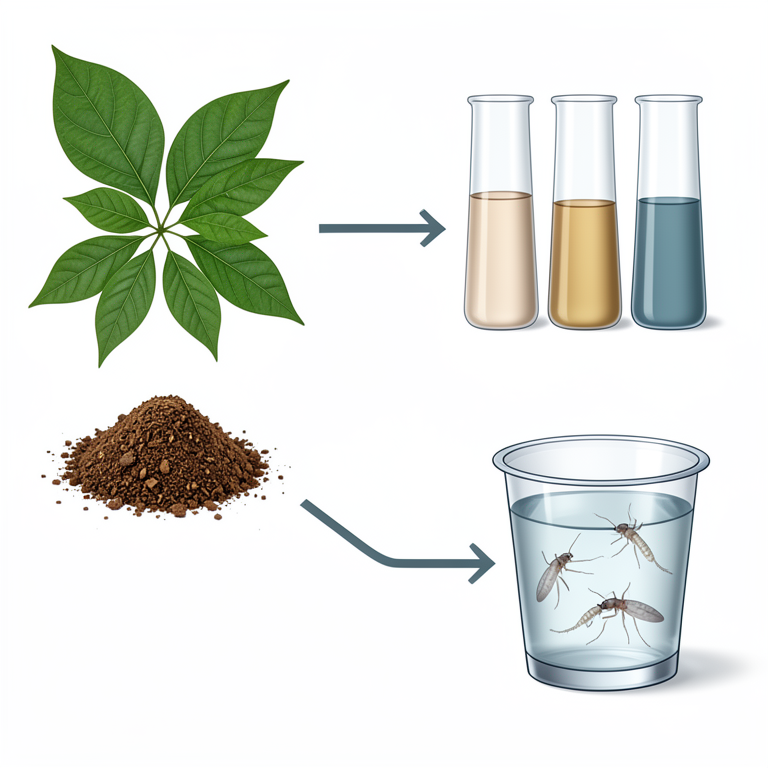
Experimental Workflow
AI-generated conceptual illustration (Azadirachta indica leaves and Anopheles gambiae larvae). It explains the idea and does not show study data.
View source evidence ↗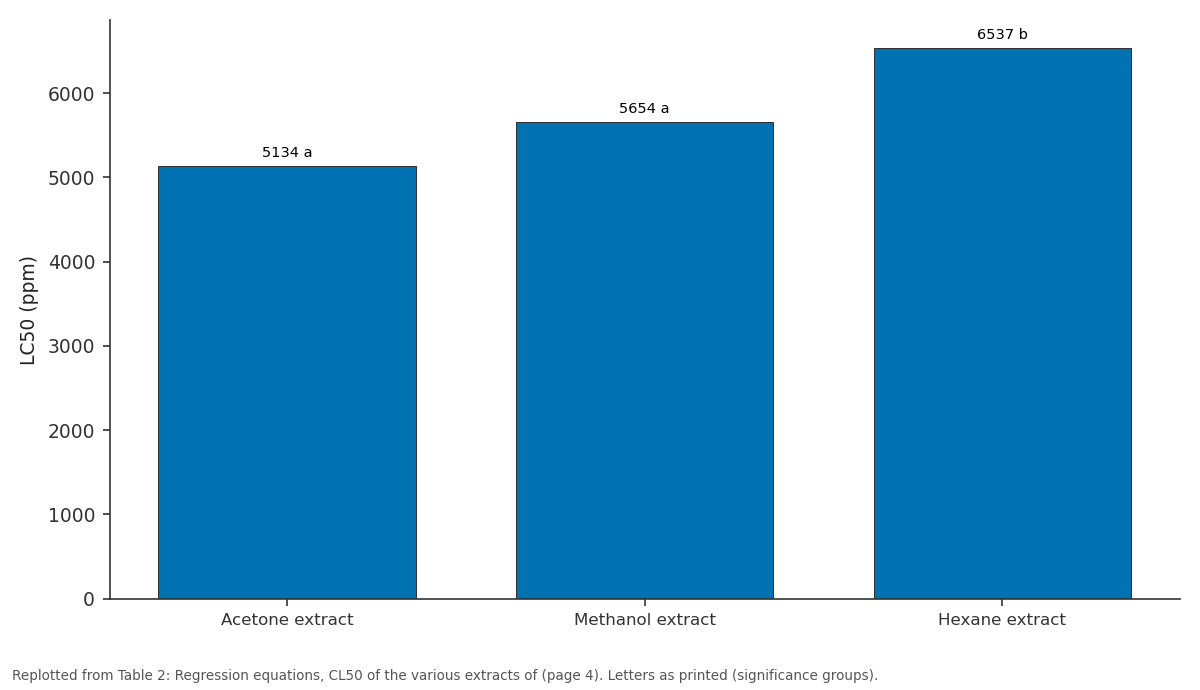
LC50 (ppm): Acetone extract vs Methanol extract vs Hexane extract
Replotted from Table 2 (page 4) of the original paper. Every bar is the paper's own table value.
View source evidence ↗Figures & tables
From the original paper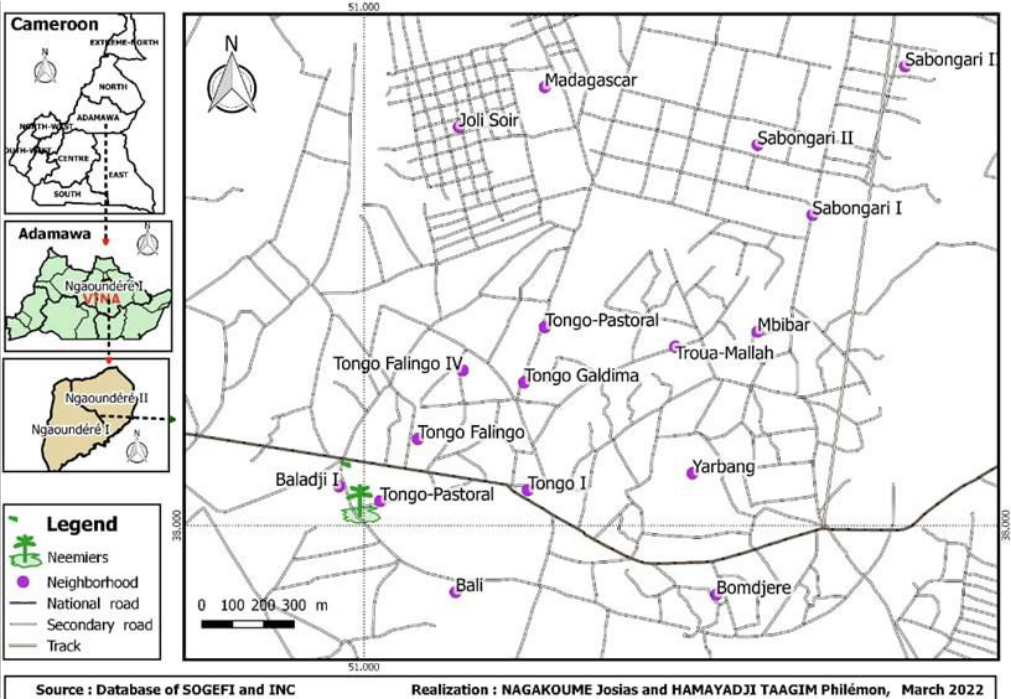 Figure 1
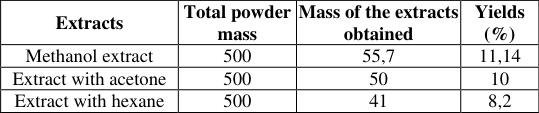 Table 1
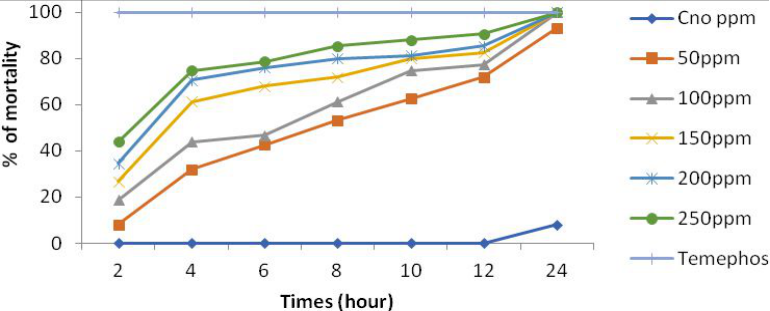 Figure 2
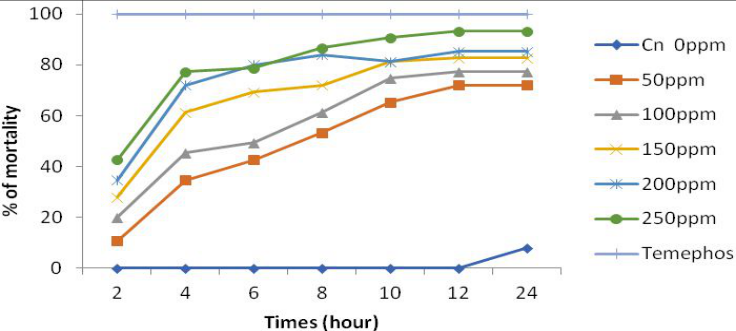 Figure 3
 Table 2
 Table 3
 Table 4
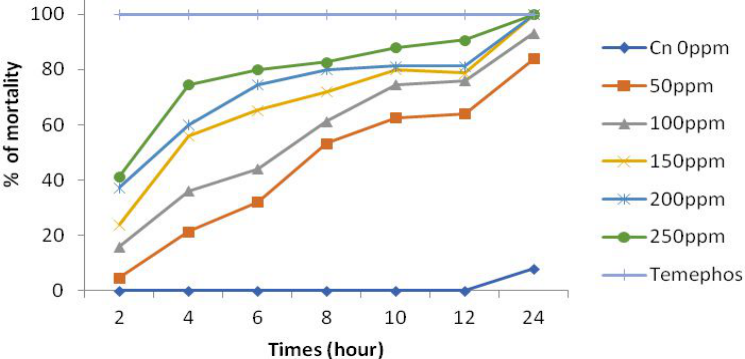 Figure 4
Introduction
In sub-Saharan Africa, malaria caused more damage than natural disasters and wars [2] . If it is true that since the years 2000 to 2016, there have been remarkable efforts or advances both in its prevention and its treatment; it remains also true that since 2017, we are witnessing the progression and the resurgence of the disease [3] . Today, Africa remains undeniably the continent most affected by this scourge, with 213 million victims, 93% of cases and 394,460 deaths, 94% of global mortality [2] . Children under five years and pregnant women are the most affected by malaria [2] . This heavy human toll is added the considerable socio-economic impact due to the expenses related to the treatment of the sick, the loss of income in productivity and the prevention of the disease in the most affected areas [3] . To reverse this trend, the World Health Organization recommends vector control through the use of mosquito nets impregnated with synthetic insecticides and indoor spraying. Unfortunately, this action is currently coming up against the phenomena of resistance and behavioral change in certain species of anopheles following the massive deployment of long-acting impregnated mosquito nets (MILDA) which are jeopardizing the overall strategy for controlling vectors of malaria. Faced with these obstacles, it is urgent to overlook vector control by redirecting not only the strategy towards the evolutionary stages of the vector, namely the larval stage, but also and above all by making use of available local plants in order to overcome the use of synthetic insecticides and significantly reduce mortality attributable to malaria [4] . Good management of breeding sites kills mosquito larvae before they reach the adult stage. This control technique offers a great advantage in that the larval stage is immobile and requires less effort to apply the control method. The techniques for managing breeding sites concern in particular the drainage or drying of sites, the application of larvicides in to the water or the introduction of animals that prey on mosquito larvae in aquatic environments. Several studies have been carried out on the insecticidal effects of local plants. However, the larvicidal activity of the extracts of these plants remains one of the important pillars of the plan adopted by the WHO to reduce the resurgence of malaria [5] . Azadirachta indica is a plant widely used in the northern regions of Cameroon for its repellent and insecticidal activity [6] . Economically, the leaves of Azadirachta indica are accessible to all for the prevention as well as the fight against malaria pathogen. The general objective of this work is to contribute to the fight against malaria by reducing the populations of vectors of Plasmodium spp. The specific objectives consisted in: Evaluate the mortality of the larvae in the different extract; Evaluate the effectiveness of extracts by determining CL 50 and HL 50 ; Determine the chemical composition of extracts.
Materials and Methods
Materials and Methods
Study site and plant collection
The leaves of Azadirachta indica used in this work were collected from Baladji I, (figure 1) a district of the town of Ngaoundere, Adamawa Region of Cameroon, in February 2021, a period during which the plant retains all its foliage in a Sahelian zone with a dry climate (MINEF, 1994). The leaves were harvested in the morning between 7 a.m. and 10 a.m. and dried in the laboratory for 7 days. Then leaves were crushed using a traditional mortar and the ground material was sieved using a sieve with tight mesh of 0.1mm caliber in order to obtain a very fine powder [4] . Powders were soaked in methanol, acetone and hexane during three days. Crude extracts were condensed in rotavapor apparentus. The study area is presented in figure 1.
Eggs providing and breeding of larvae of Anopheles gambiae
To eliminate any slant that would have occurred with the wild strain and supplant the hypothesis of a possible resistance that would result from a permanent contact of the strains with Azadirachta indica, the strains domesticated at the malaria research laboratory for the Coordination and Organization of the Fight against Endemics in Central Africa (OCEAC) were used. The eggs of Anopheles gambiae s.s placed in petri dishes were soaked in trays 30 cm in diameter, containing spring water. As soon as they hatched, the larvae obtained were reared according to the WHO protocol [1] under laboratory conditions (27±2 °C; 76±4% RH).The stage 4 larvae were collected using a bulb pipette in batches of 25 and transferred to the 160 mL capacity bottles containing spring water for carrying out the biological tests. The biological tests are carried out on the larvae of stage 4 because of their maturity and their resistance compared to the other previous stages.
Preparation of the different extracts
The working method used was that proposed by the protocol of Gueye [8] . For each type of extract 500 g of Azadirachta indica powder were weighed using a GM-300P brand electronic scale and macerated in 2.5L of acetone for the acetone extract, in 2.5 L of methanol for the methanolic extract and in 2.5 L of hexane for the hexane extract for 72 hours. The mixtures were then filtered using Whatman N o 1 paper placed in a funnel. The filtrates obtained were concentrated under a rotary evaporator set at temperatures of 65 °C, 68 °C and 69 °C respectively for the extract with acetone, methanol and hexane. The pastylooking extracts thus obtained were used to carry out the larviciding tests. These different crude extracts were stored at -4°C in a refrigerator till they were used. After condensation, yield of extract was calculated using the following formula [7] :
Larviciding test
These tests consisted in assessing the mortality of young stage 4 larvae of Anopheles gambiae in the presence of dilute solutions of acetone, methanol and hexane extract of Azadirachta indica according to by the standard WHO protocol [1] . Thus, 25 young stage 4 larvae were collected using a Pasteur pipette and placed in 160 mL cups each containing 100mL of spring water. Preliminary experiments made it possible to select a range of concentrations for the actual tests. Concentrations of 50, 100, 150, 200 and 250 ppm were retained. Three repetitions were performed for each dilution. Two control cups were also made up under the same conditions as the test cups. The negative control contained only spring water while the positive control contained Temephos, a larvicide registered at the WHO [5] with a recommended concentration of 0.012 mg/L. The observations were made every two hours, for 12 hours of exposure with the different concentrations of the extracts and the device was maintained for up to 24 hours for the evaluation of the mortality of larvae. The larvae were declared dead if they do not make any movement even when touched or pinched with an entomological needle [4] . The determination of lethal concentration 50 (LC 50 ) and lethal hours 50 (HL 50 ) of the various extracts of Azadirachta indica on the larvae of Anopheles gambiae was carried out according to the method of Finney [9] from the regression lines obtained by transformation of the percentages of mortality into probit after 24 hours of exposure in relation to the decimal logarithm of concentrations and hours.
Photochemical screening
Phytochemical screening which is a qualitative analysis based on reactions of precipitation and/or staining made it possible to highlight the presence or absence of secondary metabolites such as polyphenols, flavonoids, saponins, tannins, alcaloids and terpenoids in the different organs of the plant according to Singleton's method [10] .
Data analysis
Data analysis was done using descriptive statistics to calculate averages and percentages. Finney's formula (1971) was used for the determination of LC 50 and LH 50 values. Excel 2007 was used to create curves and regression lines. The Mann-Whitney U test was used for comparing independent variables.
Results
Results
Yields
The extraction results showed that the yields of the extracts obtained (Table 1) vary from one organic solvent to another. The best yields were obtained with polar solvents, namely methanol (11.14%) and acetone (10%). The hexane extract showed the lowest yield that is 8.2%.
| Extracts | Total powder mass | Mass of the extracts obtained | Yields (%) |
|---|---|---|---|
| Methanol extract | 500 | 55,7 | 11,14 |
| Extract with acetone | 500 | 50 | 10 |
| Extract with hexane | 500 | 41 | 8,2 |
Table text extracted from the original PDF; superscript letters are shown inline. The original table image is below.
View original table image
Mortality rate of Anopheles gambiae larvae exposed to the different Azadirachta indica extracts
The data obtained made it possible to produce the curves of the mortality rates of the larvae of Anopheles gambiae exposed to the different concentrations of the different extracts of Azadirachta indica (Figures 3, 4 and5). These three figures show that the mortality rate changes in function of the exposure time and the increase in extract concentration. For the acetone extract (Figure 3), the smallest concentration (50ppm) which became active after 2h where it induces 8% mortality, caused in 24h, 93.33% mortality. Concentrations 100, 150, 200 and 250 ppm caused 100% mortality in 24 hours of exposure.
Determination of lethal concentrations (LC50) of the various extracts of Azadirachta indica
The LC 50 were calculated and recorded in Table 2. In the light of the data presented in Table 2, the acetone extract (LC 50 = 51.34 ppm) and the methanol extract (LC 50 = 56.54 ppm) have low LC 50 compared to the hexane extract (LC 50 = 65.37 ppm); this could explains its low biological activity on the larvae.
| Type of extracts | Regression equations | DF | R2 | LC50 (ppm) |
|---|---|---|---|---|
| Acetone extract | 1,1412x + 3,048 | 4 | 0,98*** | 51,34a |
| Methanol extract | 1,1973x + 2,9016 | 4 | 0,97*** | 56,54a |
| Hexane extract | 1,3098x + 2,6222 | 4 | 0,99*** | 65,37b |
Table text extracted from the original PDF; superscript letters are shown inline. The original table image is below.
View original table image
Determination of the lethal hours (HL50) of the various extracts of Azadirachta indica
The LH 50 were calculated and recorded in Table 3. The lethal hours 50 determined follow the same order of reactivity with 4h 06min 36sec for the acetone extract, 3h 34min 59sec for the methanolic extract and 4h 29min 34sec for the hexane extract. Although no concentration with methanolic extracts has reached 100% mortality, however, its extract has the lowest lethal hour 50, thus reflecting its effectiveness compared to other solvents. Also, this solvent has the greatest capacity to extract in sufficient quantity the various secondary metabolites [4] .
| Type of extracts | Regression equation | DF | R2 | LH50 (ppm) |
|---|---|---|---|---|
| Acetone extract | y = 2,2868x + 3,5962 | 6 | 0,97*** | 4h 06min 36sec b |
| methanolic extract | y =1,4626x + 4,1893 | 6 | 0,93** | 3h 34min 59sec a |
| Hexane extract | y = 2,1273x + 3,6119 | 6 | 0,99*** | 4h 29min 34sec b |
Table text extracted from the original PDF; superscript letters are shown inline. The original table image is below.
View original table image
Phytochemical screening
The results of phytochemical screening of the various extracts of Azadirachta indica are presented in Table 4.
| Type of extract | Terpenoids | Sterols | Saponins | Tanins | Flavonoids |
|---|---|---|---|---|---|
| Acetone extract | +++ | ++ | +++ | +++ | ++ |
| methanolic extract | +++ | +++ | +++ | ++ | +++ |
| Hexane extract | +++ | ++ | ++ | ++ | + |
Table text extracted from the original PDF; superscript letters are shown inline. The original table image is below.
View original table image
Discussion
Extracts of the dried leaves of Azadirachta indica based on acetone, methanol and hexane showed larvicidal effects from the second hour of exposure. This mortality evolved over time and with the increase in extract concentrations. Moreover, the results of the work of Saotoing et al. [11] on the insecticidal effect of vegetable oils extracted from mature seeds of Azadirachta indica and Khaya senegalensis on Anopheles gambiae sl and Saotoing [12] on, Calotropis procera and Boswellia dalzielii, extracts with insecticidal effects revealed that the extraction yields vary from one plant to another and that the efficacy and/or the degree of toxicity of the extracts do not depend on the extraction yield. These variations can be linked to the genetic properties of the plants, their geographical origin, the conditions and duration of their storage, the period of harvest and the extraction methods applied. In Burkina Faso, Azevodo et al. [13] observed that extracts from different parts of the same plant or from different plants subjected to the same solvent give different yields. The insecticidal activity of Azadirachta indica extracts has been proved by several studies. Farou et al. (2006) [14] conducted a study on the effect of essential oils of Azadirachta indica in the pre-imaginal stages of Culex quinquefasciatus and confirmed that these oils have larvicidal and pupicidal effects. The present results corroborate those of Ndione [15] in Senegal who showed that with low doses and for a short duration (2-3 g/L in 24 hours), extracts from the leaves of Azadirachta indica induced 100% mortality in Culex quinquefasciatus larvae. This same observation was made during the work of Wandscheer and Duquel [16] in Brazil which showed that Aedes aegypti, vector of the dengue virus, was sensitive to essential oils of A. indica of a dose of 0.05g/L. The mortality of the larvae could be explained by the presence of the azadirachtin contained in the neem extracts. Secondary metabolites such as terpenoids, sterols, saponins, tanins and flavonoids were found in the leaves of Azadirachta indica in varying amounts depending on the organic solvent used. Kalaivani [17] showed that the bioactivity of neem is due to azadirachtin (limenoid complex) which acts very effectively on mosquito larvae by targeting growth hormone. In addition, Kalaivani [17] revealed a strong larvicidal, pupicidal and adulticidal activity of azadirachtin on Anopheles stephensi, potential vector of malaria. Beyond the larvicidal effect, the metamorphosis and viability of adult mosquitoes were also affected. Phytochemical screening revealed that the three solvents used extracted equal amounts of the terpenoids contained in the leaves of Azadirachta indica. Furthermore, previous work has revealed that terpenoids are harmful to insects. For example, Park et al. [18] proved that hydrocarbon monoterpenes are very toxic molecules on mosquitoes in a closed environment in South Korea. These authors have also showed that terpenoids (bornyl acetate and terpenolene) are adulticidal for insects. Ngassoum et al. [19] showed that hydrocarbon monoterpenes and oxygenated sesquiterpenes have an insecticidal effect. Likewise, Seye et al. [20] in Senegal showed that neem leaf powder was more toxic at the larval stage (mortality between 86.1 and 100%) than at the pupal stage (between 14.5 and 95.9% of fledged adults). Azadirachtin was tested by Lundh [21] on a mite, the red poultry louse Dermanyssus gallinae and at different concentrations. On average, the treatment reduced the number of mites by 92%. Siriwattanarungsee et al. [22] also obtained with a concentration of 0.2% azadiractin, respective mortalities of 16.67% and 21.11% in larvae of Chrysomya megacephala F. and Musca domestica L. at stage 3. The same observation was made by Seljasen and Meadow [23] on the cabbage parasite Mamestra brassicae L where egg hatch is not affected, but the larvae do not survive and reach the second instar. Similar results were also obtained by Singh [24] in Indian on other insects such as Lepidoptera, Hemiptera, and ticks of the genus Hyalomma Chougourou et al. [25] also proved the larvicidal power of this plant on the house fly of Musca domestica L in Benin. The positive control (Temephos) induced a very high mortality rate reaching 100% mortality from the second hour of exposure. The work of Gusti et al. [26] showed that Temephos inhibits the growth of pre-imaginal stages, thus preventing them from becoming adults. Saotoing et al. [12] carried out a study in Cameroon with the vegetable oil of Azadirachta indica in the larvae of Anopheles gambiae ss and showed that this oil has a very significant biological activity on the larvae.
Conclusion
The present work has shown that the methanolic, acetonic and hexanoic extracts of Azadirachta indica have a larvicidal activity on Anopheles gambiae ss. The extracts from acetone and methanol were the most toxic and they contained terpenoids, sterols, saponins, flavonoids, and tannins in large quantities. Azadirachta indica contains azadirachtin and can therefore be highly recommended for its insecticidal effects in vector control. Methanolic extracts has the lowest lethal hour 50, thus reflecting its effectiveness compared to other solvents.
The present study will be quite helpful in developing plant based anti-malarial vector and others borne diseases.
Acknowledgement
AcknowledgementsThe authors would like to thank, the Organization for the Coordination of the Fight Against Endemics in Central Africa (OCEAC) for the provision of biological material, in particular the Anopheles gambiae eggs. They also thank the Technicians of the Yaounde Herbarium Institute for their contribution to the identification of the plant.
Figures and tables from the paper
References
19 in the original paper- WHO. Rapport sur le paludisme dans le monde. 2020.
- Dansou K, Kossou P, Atachi, Tohouédé E. Zannou et Soulémane B. Évaluation de l'Activité Insecticide de deux Plantes Hyptis suaveolens (Linn) et Khaya senegalensis (A. Juss) sur les insectes ravageurs du niébé (Vigna unguiculata L. Walp.) Sciences & Nature 2007;4 N°1:1726.
- Malebo HM, Imeda C, Kitufe NA, Katani SJ, Sunguruma R, Magogo F. Repellence effectiveness of essential oils from some Tanzanian Ocimum and Hyptis plant species against afro-tropical vectors. Journal of Medicinal Plants Research. 2013;7(11):653-660, 17 March, 2013.DOI:10.5897/JMPR012.732. ISSN 1996-0875.
- Gueye S, Diop MT, Seck D, Sembene M. Biochimical fractions activity of Annona senegalensis pers. Extract leaves to protect grounnut against the seed-beetle Caryedon serratus OL. (Caleoptera, Chrysomelidea, Bruchinae) International of plant, animal and environmental science. 2011;1(2):122-130.
- Singleton LV, Orthofer R, Lamuelaraventos RR. Analysis of total phenol and other oxidation substances and antioxidants by mean of Folin-Ciocalteu Reagent. Method in Enzymology, 1999, 547-551.
- Saotoing P, Tchuenguem Fohouo FN, Febal HA, Amba AHB, Amadou H, Nawe TUS. Evaluation of insecticidal effect of vegetable oils extracted from the ripe seeds of Azadirachta indica and Khaya senegalensis in adult Anopheles gambiae s.l. in Maroua, Far North Region Cameroon. Global J Res. Med. Plants & Indigen. Med. 2014;3(8):312-322.
- Azevodo N, Campos I, Ferreira H, Portes D, Seraphin J, Realino de Paula J, et al. Essential oil chemotype in Hyptis suaveolens from brasilian cerado, Biochimical systematics and Ecology. 2002;30:205-216.
- Fawrou S, Demba NR. et Mady N. Étude comparative de deux produits de neem (huile et poudre) sur les stades préimaginaux du moustique Culex quinquefasciatus (Diptera: Culicidae) Afrique Science. 2006;2(2):212-225.
- Ndione Raymond D. « Biocontrôle des larves de moustiques Culex quinquefasciatus Say, Aedes aegypti Linnaeus, Anopheles gambiae s.l. Giles par des produits de neem: études de la sensibilité et de l'histopathologie ». African Journal of biotechnology. 2006;6(24):2846-2854.
- Wandscheer CB, et Duque JE. Larvicidal action of ethanolic extracts from fruit endocarps of Azadirachta indica against the dengue mosquito Aedes aegypti. Toxicon. 2004;44:829-835.
- Nathan S, Kalaivani K. Effects of neem limonoids on the malaria vector Anopheles stephensi Liston (Diptera: Culicidae). Acta Tropica. 2005;96:47-55.
- Park IK, Lee SG, Choi DH. Insecticidal activities of constituents indentified in the essential oil from leaves of Chamaecyparis obtuse against Callosobruchus chinensis (L.) and Sitophilus oryzae (L.). Journal of Stored Products Research. 2002;2:115-137.
- Ngassom MB, Tatsadjeu L, Mapongmetsem PM, Jirovetz L, Buchbauer G, Shahabi M. Comparative aroma compound analysis of different essential oils of Lippia rugosa from Cameroon. Journal of Essential Oil Research. 2002;2:125-141.
- Seye F, Ndione RD et Ndiaye M. Effets Larvicides des produits de neem (Huile de neem pure et Neemix) comparés à deux insecticides chimiques de synthèse (la deltaméthrine et le Fénitrothion) sur les larves du moustique Culex quinquefasciatus (Diptera: Culicidae). Journal des Sciences et Technologies. 2006;4(1):27-36.
- Siriwattanarungsee S, Kabkaew L, Olson K, Chailapakul O, Sukontason K. Efficacy of neem extract against the blowfly and housefly. Parasitology Research. 2008;103:535-544.
- Seljasen R, et Meadow R. Effect of neem on oviposition and egg and larval development of Mamestra brassicae L: Dose response, residual activity, repellent effect and systemic activity in cabbage plants. Crop Protection. 2006;25:338-345.
- Singh G. Bio efficacy and mode-of-action of some limonoids of salannin group Veterinary Parasitology. 1996;130:337-342.
- Chougourou H, Daniel Dellouh P, Lesline, Agbaka A, N'guessan K, Gbenou R et Joachim D. « Toxicité et effets répulsifs de certaines huiles extraites des plantes locales béninoises sur la mouche domestique, Musca domestica L. (Diptera Muscidae) ». Journal of Applied Biosciences; c2012. ISSN 1997 5902.
- Gusti Fatimah, Resti Rahayu and Hasmiwati, Lethal concentration (LC 50 , 90, and 98) and lethal time (LT 50 , 90, and 98) at various temephos concentrations of Aedes aegypti L. larvae. International Journal of Mosquito Research. 2020;7(1):01-03.