
Research article · 2022 · Full text
International Journal of Biology SciencesExternal morphology of antennae sensilla on silver leaf whitefly, Bemisia Tabaci, (Hemiptera: Aleyrodidae)
Volume 4(1) · Pages 110–114 · DOI: 10.33545/26649926.2022.v4.i1b.97 ↗
Research areasNeurobiology and Insect Physiology ResearchInsect and Arachnid Ecology and BehaviorPlant and animal studies
Abstract
Author-writtenThe silverleaf whitefly, Bemisia tabaci, (Gennadius), is an invasive pest causing significant damages to a wide range of crops around the world. In this study, the external morphology and distribution of sensilla on the antennal flagella of adult male and female B. tabaci, was studied using scanning electron microscopy (SEM). Five types of sensory organs were recognized in both sexes, of B. tabaci; microtrichia sensilla, basiconic sensilla, grooved surface trichodea sensilla, chaetae sensilla, coeloconic sensilla, and finger-like sensilla. Four coeloconic sensilla, were observed on the antenna sub-segments, two in the first sub-segment, one in the third sub-segment, and one in the fifth sub-segment. basiconic sensilla (BS) were present on the antenna sub-segments of both sexes as single BS in the first, fourth, and fifth sub-segments with deep lengthwise grooves. In contrast, chaetae sensilla were found exclusively on the pedicel in both sexes. Although the types, and the distribution numbers of sensilla antennae of males and female were basically similar, major differences were recorded between the sexes in length of the antennae, whereas females have greater longer of the antennae than males. These results would be helpful for further studies on detailed in the host location behavior of B. tabaci.
Summary
Source-checkedPlain-language reading of the full paper, prepared with AI and checked against the text. Each point links to the authors' own words.
Why it matters
- The silverleaf whitefly (Bemisia tabaci) is an invasive pest that causes significant damage to various crops globally. View evidence ↗
- This pest damages plants directly by feeding on phloem sap, leading to yellowing and leaf drop, and indirectly by excreting honeydew that promotes fungal growth and virus transmission. View evidence ↗
- Antennal sensilla act as olfactory receptor systems that allow insects to communicate chemically and respond to environmental stimuli. View evidence ↗
The question
- The study aimed to use scanning electron microscopy (SEM) to investigate the types and distribution of antennal sensilla in male and female B. tabaci to better understand how they locate hosts. View evidence ↗
What they did
- The researchers used ten adult male and ten adult female B. tabaci, which were anesthetized at 4°C before their heads were removed for analysis. View evidence ↗
- Antennae were excised, fixed in 5% glutaraldehyde for 24 hours, and dehydrated through a graded ethanol series (30% to 100%). View evidence ↗
- Specimens were gold-coated and observed using a JEOL-JSM 636 scanning electron microscope. View evidence ↗
- Antennal measurements were compared between sexes using Student's t-test (P < 0.05) and analyzed with Minitab v.16. View evidence ↗
What they found
- Female antennae were significantly longer on average (272.71 ± 5.89 μm) than male antennae (244.18 ± 6.04 μm). View evidence ↗
- Significant length differences between sexes were found in the pedicel and flagellum sub-segments S1 and S4, all of which were longer in females. View evidence ↗
- Six types of sensilla were identified in both sexes: microtrichia, basiconic, grooved surface trichodea, chaetae, coeloconic, and finger-like sensilla. View evidence ↗
- Microtrichia sensilla were the most numerous and widespread, covering all regions of the antennae in both sexes. View evidence ↗
- Males had a higher number of chaetae sensilla on the pedicel region (8) compared to females (5). View evidence ↗
- Both sexes possessed four coeloconic sensilla on the ventral flagellum: two in the first sub-segment, one in the third, and one in the fifth. View evidence ↗
- The study reports for the first time that coeloconic sensilla in both sexes feature deep lengthwise grooves on their surface. View evidence ↗
What it means
- The authors suggest that longer antennae in females may provide a larger surface area, increasing their sensitivity to plant volatiles compared to males. View evidence ↗
- The authors conclude that these morphological findings may assist in identifying kairomones for use in integrated pest management of whiteflies. View evidence ↗
- The authors state that further studies using transmission electron microscopy (TEM) and electrophysiological investigations are necessary to clarify the specific functions of each sensilla type. View evidence ↗
Visual summary
2 visualsIllustrations explain the paper; charts are replotted from the paper's own table values.
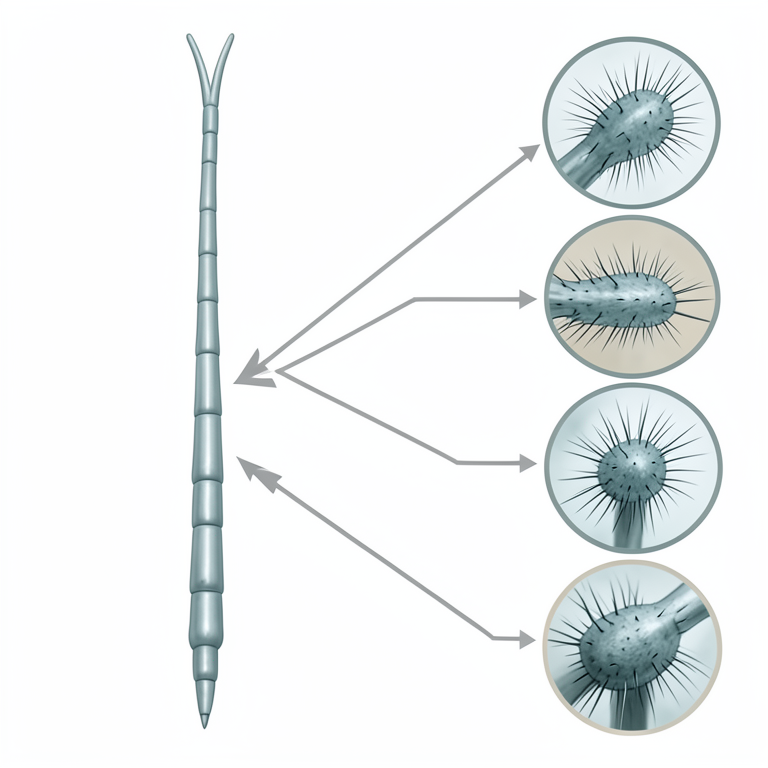
Types of Antennal Sensilla
AI-generated conceptual illustration (Silver leaf whitefly (Bemisia tabaci) antennae). It explains the idea and does not show study data.
View source evidence ↗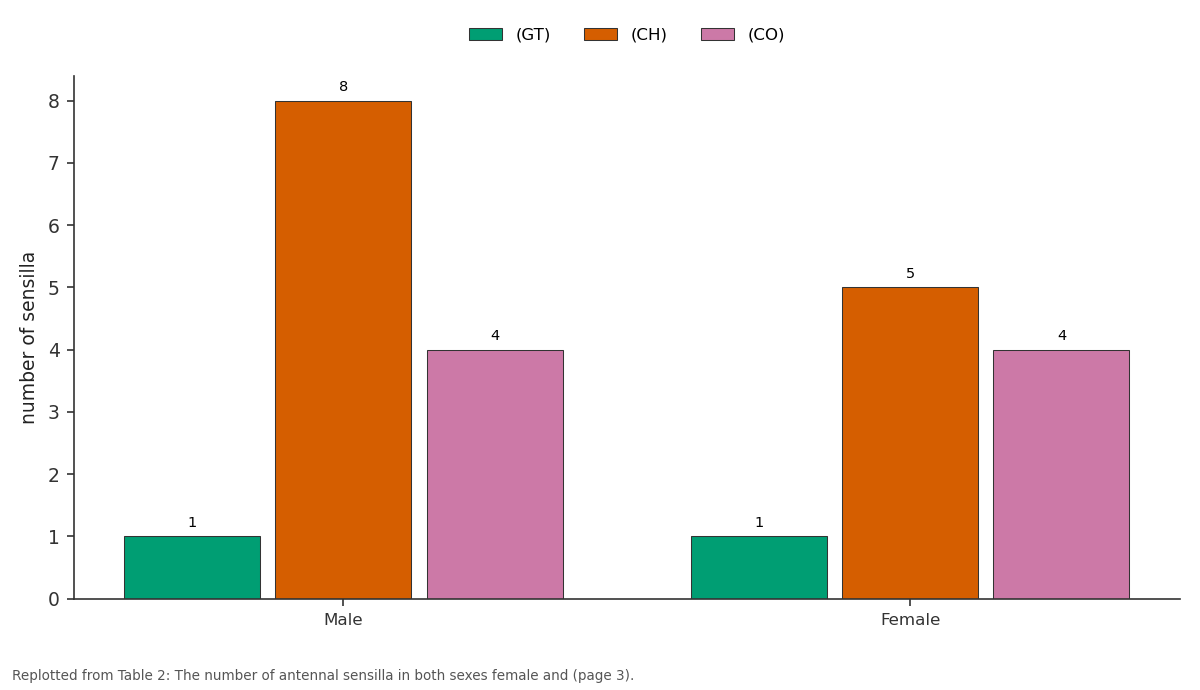
(GT) and (CH) and more: Male vs Female
Replotted from Table 2 (page 3) of the original paper. Every bar is the paper's own table value.
View source evidence ↗Figures & tables
From the original paper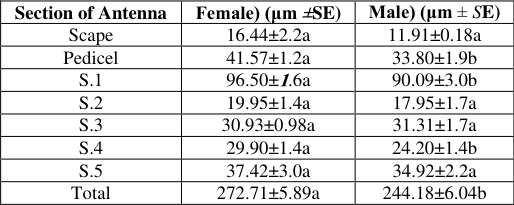 Table 1
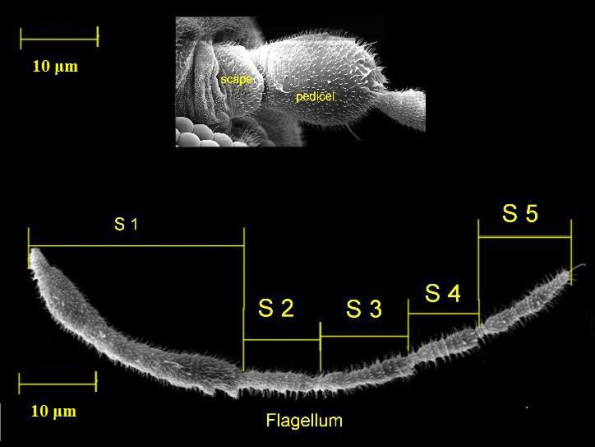 Figure 1
 Table 2
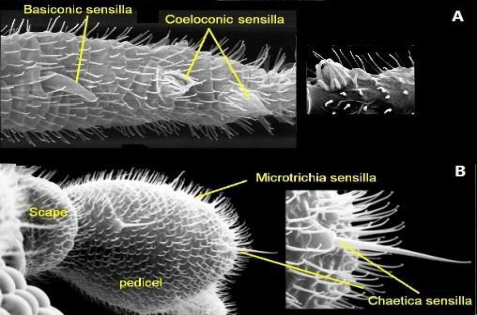 Figure 2
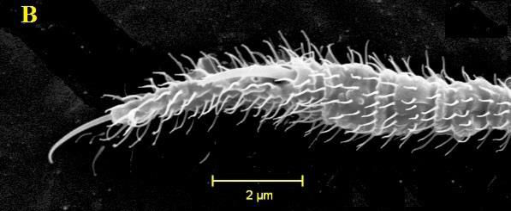 Figure 4
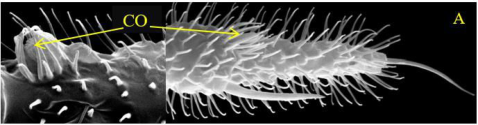 Figure 3
Introduction
The silver leaf, whitefly, Bemisia tabaci, (Gennadius), was investigated as major pests on several vegetable and ornamental crops around the world [1] . Both nymphs and adults feed on the sap of the phloem of hundreds of plant species, causing direct damages as staining, yellowing and leaf drop, reducing plant vigor, and Indirect damage, due to the excretion of 'honeydew' favor development of the fungi, and the transmission of virus. However, Studies on how chemical signals are detected between insects and host plant volatiles have shown the critical role of an insect's olfactory system in such as host-seeking behaviour, oviposition site selection, and predator avoidance. Furthermore, insect antennae have sensory receptors called sensilla [2] , these sensilla types have been reported in a variety of insect [3,4], and described as olfactory receptor systems tools of insect chemical communications and offer many functional advantages to an insect's ability to perceive and respond to environmental signals by facilitating the detection of sensory stimuli [5] . The importance of olfactory cues involved in the behaviour of B. tabaci, has increased in the recent years, and shown that whitefly preference is affected by plant-emitted volatile organic compounds (VOCs) among host plant varieties [6,7] . Therefore, better understanding the insect antennae morphology, would contribute to the elucidation of a comprehensive model of olfactory systems [8] , for orientation behaviour of the individuals, e.g., toward food sources or mates [9] . Moreover, Several published studies describe the external morphology antennal sensilla of whitefly species Bemisia tabaci using electron microscopy techniques [10][11][12] . However, despite the crucial functions of antennae, little is known about their morphology, and distribution of antennal sensilla of B. tabaci. Therefore, to better understand the host location mechanism the present study was used scanning electron microscopy (SEM), to investigate the external morphological antennal sensilla types and distributions of male and female B. tabaci, in order to evaluate their current systematic position, and provide a morphological basis for future behavioural and electrophysiological studies.
Materials and Methods
Materials and Methods
Preparation of Antenna for Scanning Electron Microscopy (SEM)
Newly emerged whiteflies adults were collected, and were sexed under a stereomicroscope (50X). Insects were placed in small vials before the start the experiment. For scanning electron microscopy (SEM), ten adult B. tabaci females and males of insects for each were first anaesthetized in a freezer (4°C) for 2 min and their heads were removed. Antennae were carefully excised from the antennal sockets with a fine forceps at 10X under a dissecting stereomicroscope, and immediately were fixed for 24 h in 5% glutaraldehyde and then specimens were then dehydrated in a graded alcohol series of (30%, 50%, 70%, 90%, and 100%) ethanol for 10 min each. Each individual antenna was immersed in 1-2 ml of hexametgyldisilazane (HMDS) for 10 min. Then, HMDS was decanted from the specimen vials and was allowed to dry at room temperature. Finally, the dried specimens were mounted on aluminium stubs with double-sided sticky tapes to stabilize the antennae in one place for viewing in the SEM chamber and were coated with gold in a highresolution sputter coater (Hitachi E-1010), to be observed under SEM (JEOL -JSM 636, Japan). Micrographs were taken of the antennae; flagellar segments and distribution of the sensilla on the antennae for both sex's males and females, at electron microscope unit / National University of Malaysia.
Data Analysis
All antennal length, sensilla number, distribution for each antennae segment, were measured directly from the printed SEM images. Data on antenna measurements (segments) were compared between both sexes male and female and tested for significance (P < 0.05) using Student's t-test. All data were analysed using the Minitab Statistical Package (v. 16).
Results
Results
General Structure of Antennae
General description of antennae in both sexes, were similar and consisted three segments, which were attached to the head via a cup-shaped basal scape (Sc), pedicel (Pd), with flagellum (Fl) with five flagellum sub-segments (S5), from the base to the tip respectively in both sexes (Fig. 1). No significantly differences were found in the scape length between sexes (p< 0.05). While, the pedicel in female shown to be significantly (p<0.05), longer than male. Moreover, among the five flagellum sub-segments, (S5), no significant differences in the lengths for all were found between sexes, except (S1, S4), were significantly (p< 0.05) longer in female than in male. The length average of the whole antennae of female was significantly (p< 0.05) greater than male antenna (Table 1). The male antenna is similar in shape and morphology.
| Section of Antenna | Female) (μm ±SE) | Male) (μm ± SE) |
|---|---|---|
| Scape | 16.44±2.2a | 11.91±0.18a |
| Pedicel | 41.57±1.2a | 33.80±1.9b |
| S.1 | 96.50±1.6a | 90.09±3.0b |
| S.2 | 19.95±1.4a | 17.95±1.7a |
| S.3 | 30.93±0.98a | 31.31±1.7a |
| S.4 | 29.90±1.4a | 24.20±1.4b |
| S.5 | 37.42±3.0a | 34.92±2.2a |
| Total | 272.71±5.89a | 244.18±6.04b |
Table text extracted from the original PDF; superscript letters are shown inline. The original table image is below.
View original table image
Distribution and Abundance of Antennal Sensilla
Based on observations under the SEM, there were, six major morphological types of sensilla were identified on the antennae of both male and female B. tabaci; microtrichia sensilla (MT), basiconic sensilla (BA), grooved surface trichodea sensilla (GT), chaetae sensilla (CH), coeloconic sensilla (CO), and finger-like sensilla (FS) (Fig 2,3). The dorsal and ventral surfaces of the scape, pedicel, and flagellum of the antennae of both sexes were found to be uniformly covered with the minute, hair-like microtrichia sensilla (MT). These sensilla were the most widespread and numerous sensilla on the antennae. They were short and straight hairs with smooth surface, with no socket at the basal part of each MT, and the sharp tip was slightly curved toward the antennal shaft (Fig. 2A). The basiconic sensilla (BA), three types of (BA) were observed on the ventral region of the flagellum sub-segments, in both sexes as single BS in the first, fourth, and fifth sub-segments. This type of sensilla was had the peg in the centre of the pit but were without the spines. Moreover, the surface of these sensilla was smooth, but some cuticular ridges were found at the base (Fig. 2A). In addition to basiconic sensilla (BA), there were only one grooved surface trichodea sensilla (GT), with a smooth cuticle, sat upright from sockets on the antenna surface, whereas were observed only on the dorsal region of the scape in both sexes male and female (Fig. 2). Differences were detected in the abundance of the chaetae sensilla (CH), over the ventral and dorsal sides surface on pedicel region antennal between both sexes, in the females, 5 CH were found and in the males 8 were present, (Fig. 2B). Coeloconic sensilla (CO), were identified only on the ventral surface of the flagellum sub-segments 2 in the first, 1 in the third, and 1 in the fifth sub-segments flagellum in both sexes, had a flower-like shape with a peg in the centre, which was surrounded by approximately 11-14 inwardsfacing spines that resembled petals (Table 2 and Fig. 2A). The surface of CO was with deep lengthwise grooves (Fig. 3) and finger-like sensilla (FS), this sensilla was found on the terminal of the fourth flagellum sub-segments as a small peg, with needle -like in both sexes (Fig. 4).
| Type of sensilla | (MT) | (BA) | (GT) | (CH) | (CO) | (FS) |
|---|---|---|---|---|---|---|
| Male | More | 3 | 1 | 8 | 4 | 1 |
| Female | More | 3 | 1 | 5 | 4 | 1 |
Table text extracted from the original PDF; superscript letters are shown inline. The original table image is below.
View original table image
Table 2:
The number of antennal sensilla in both sexes female and male of B. tabaci.
Type of sensilla (MT) (BA) (GT) (CH) (CO) (FS)
Type of sensilla (MT) (BA) (GT) (CH) (CO) (FS)
Discussion
To our knowledge, the insect antenna is a complex sensory structure, they are involved in important role in the recognition of various stimuli for e.g., finding suitable habitats and food and for locating mates [13] . Sensory organs, basiconic, coeloconic, and chaetae sensilla on the insect's antenna are described as olfactory receptor systems for locating mates, hosts, habitats, and oviposition sites [14,15] . In the current study, despite the morphological similarities, of the general structure, and distribution patterns of sensilla were found in both sexes. and similar to other species of whitefly i.e., Trialeurodes vaporariorum and Aleyrodes proletella [27] . Our results demonstrated some degree of variability in the length of the antennae segment in female are significantly longer than those in male. This difference was mainly due to subtle differences in the sizes of a few of the antennal segments. For instance, the size of the first and fourth flagellum (sub-segment) as well as the pedicle in female are significantly different from other in male, which results in a great increase in the length of their antennae compared to male antennae. The longer female antennae can be correlated, to their function by providing greater surface area to help translate into an increased sensitive attraction to plant volatiles, which detect many kinds of chemical stimuli, than male's antenna. Moreover, it is generally reported that females of B. tabaci was showing a greater response than males to plant volatile compounds in olfactometer bioassays [6, 17] . More work is necessary to support this hypothesis.
In the current study morphological types of sensilla were identified into six types; microtrichia sensilla (MT), basiconic sensilla (BA), grooved surface trichodea sensilla (GT), chaetae sensilla (CH), coeloconic sensilla (CO), and finger-like sensilla (FS). The types, abundance, and distribution of these sensilla are similar between male and female, except for the number of CH, which was classified into olfactory sensilla on the ventral surface of the pedicel region antennal 8 in the males and 5 females were present.
In contrast, to our study by Zhang et al. (2015), only found 7 sensilla chaetica in males and 5 females on pedicel region in B. tabaci biotype (B and Q). Also, [18] et al. (1994), noted the presence only of 5 sensilla chaetica on the pedicel, in both sexes. Some studies suggested that even species within the same genus may considerably differ in the types, distribution, numbers, and function of antennal sensilla, [1820] . In addition, (CH) appeared most numerous on the ventral and dorsal sides surface on the pedicel region in both sexes. The finding was differing from previous study by [11] (1995) who, found that (CH), are more common only on the ventral surface of the antennae in of three species of whitefly. several studies strongly indicate that these sensilla are mechanoreceptors [21][22] . However, microtrichia sensilla (MT), found in this study resembles those found in Trialeurodes vaporariorum and Aleyrodes proletella [11] . densely distributed on all regions of the scape, pedicel, and flagellum segments, surface of antennae in both sexes male and female. The present results indicate that, four Coeloconic sensilla (CO), are commonly called pitted pegs because they are borne in a cup-like depression of the antennal wall. 2 in first sub-segments, 1 in the third and 1 in the fifth sub-segments flagellum were are observed on both sexes, antennae. This result is consistent with that for three species of whitefly, whose antennae are covered with same number of CO [27] .
For first report, our results show that the morphology of CO surface was deep lengthwise grooves on both sexes male and female. In contrast to our study, deep lengthwise grooves on Coeloconic sensilla (CO) are not reported in Mellor and Anderson, (1995). Based on these characteristics and the previous reports, (CO) may function as olfactory receptors as feeling the vapour, CO 2 and plant smell [23][24][25][26].
In gender-specific olfactory receptor and responses to volatile compounds during host selection are relatively poorly studied. Therefore, further verification of the function of the sensilla needs to be studies, including transmission electron microscopy (TEM) of antennae of both male and female B. tabaci, with electrophysiological investigations on each type of olfactory cell present in the antenna, are necessary to clarify the specific role of each olfactory receptor in both sexes. This may aid in providing necessary background information for our on-going studies on host location mechanisms in B. tabaci, including behavioural studies on olfaction. In addition, these results may help in identifying WF kairomones that can be used in the integrated pest management of WF.
Acknowledgement
AcknowledgmentsWe thank the staff of the Electron Microscope centre at the National University of Malaysia, especially Ahmad Zaki zaini for his assistance during the SEM procedures.
References
25 in the original paper- Simmons AM, Harrison HF, Ling KS. Forty-nine new host plant species for Bemisia tabaci (Hemiptera: Aleyrodidae). Entomol. Sci. 2008;11:385-390.
- Dong Z, Dou F, Yang Y, Wickham Jd, Tang R, Zhang Y, et al. First description and comparison of the morphological and ultramicro characteristics of the antennal sensilla of two fir longhorn beetles. PLoS ONE, 2020, 15(10).
- Antonella DP, Marco P, Raffaele G, Antonio PG, Giacinto SG. Scanning electron microscopy of the antennal sensilla and their secretion analysis in adults of aromia bungii (Faldermann, (Coleoptera, Cerambycidae). Insects. 2019;10(4):22.
- reveals feeding specialization. Insects. 2020;11(3):145.
- Debry CD, Steullet P. Why do animals have many receptors? The role of multiple chemosensors in anima perception. Biol. Bull. 2001;200:211-215.
- Islam MN, Hasanuzzaman AT, Zhang ZF, Zhang Y, Liu TX. High Level of Nitrogen Makes Tomato Plants Releasing Less Volatiles and Attracting More Bemisia tabaci (Hemiptera: Aleyrodidae). Frontiers in plant science. 2017;8:466.
- Saad, Khalid AMN, Roff MA, Shukri, Razali Mirad SAA, Mansour I, Abuzid MY, et al. Behavioral responses of whitefly, Bemisia tabaci (Hemiptera: Aleyrodidae), in relation to sex and infestation status of their host plants. Academic Journal of Entomology. 2013;6:95.
- Zacharuk RY. Ultrastructure and function of insect chemosensilla. Annu. Rev. Entomol. 1980;25:27-47.
- Zhang X-M, Wang S, Li S, Luo C, Li Y-X, Zhang F. Comparison of the Antennal Sensilla Ultrastructure of Two Cryptic Species in Bemisia tabaci. PLoS ONE, 2015, 10(3).
- Mellor He, Anderson M. Antennal sensilla of whiteflies: Trialeurodes vaporariorum (Westwood), the glasshouse whitefly, and Aleyrodes proletella (Linnaeus), the cabbage whitefly, (Homoptera: Aleyrodidae). Part 2: Ultrastructure. Int J Insect Morphol Embryol. 1995;24(2):145-160.
- Domenichini G. Structure di Trialeurodes vaporariorum (Westw) e loro funzioni (Homoptera: Aleyrodidae). Mem Sot Entomol Ltaliana. 1982;60:169-76.
- Bin BF, Strand MR, The role of the antennae and host factors in host selection behaviour of Trissolcus basalis (Wall.) (Hymenoptera: Scelionidae). Les Colloques de I'INRA. 1986;43:267-273.
- Suliman AI, Ali Mory, Diakite M, Saqib Ali, Man-Qun Wang. Effects of the antennal sensilla distribution pattern on the behavioral responses of Tribolium castaneum (Coleoptera: Tenebrionidae). Florida Entomologist, 2016, 99,
- Shahjahan, Javed Khan, Ahmad-Ur-Rahman Saljoqi, Ehsan Ul Haq, Hussain Shah, Imtiaz Khan, et al. Biological parameters and feeding efficiency of Chrysoperla carnea stephens (Neuroptera: Chrysopidae) feed on Citrus mealy bug Planococcus Citri (Risso) (Hemiptera: Pseudococcidae) under controlled conditions. Int. J Agric. Extension Social Dev. 2020;3(1):46-51.
- Saad KA, Roff M, Shukri M, Mirad R, Mansour S, Abuzid I, et al. Artificial damage induction in the leaves of chilli plants leads to the release of volatiles that alter the host plant selection behaviour of Bemisia International Journal of Agriculture and Nutrition https://www.biologyjournal.net/ tabaci (Hemiptera: Aleyrodidae). Journal of Entomology. 2014;11:273-282.
- Lee A Calvert, Maritza Cuervo, Jose A Arroyave, Luis M Constantino, Antony Bellotti, Donald Frohlich. Morphological and Mitochondrial DNA Marker Analyses of Whiteflies (Homoptera: Aleyrodidae) Colonizing Cassava and Beans in Colombia, Annals of the Entomological Society of America. 2001;4(1):512519.
- Crook DJ, Kerr LM, Mastro VC. Distribution and fine structure of antennal sensilla in emerald ash borer (Coleoptera: Buprestidae). Ann. Entomol. Soc. Am. 2008;101:1103-1111.
- Yi Z, Liu D, Cui X, Shang Z. Morphology and ultrastructure of antennal sensilla in male and female Agrilus mali (Coleoptera: Buprestidae). J. Insect Sci. 2016;16:86-95.
- Saïd I, Tauban D, Renou M, Mori K, Rochat D. Structure a. nd function of the antennal sensilla of the palm weevil Rhynchophorus palmarum (Coleoptera, Curculionidae). J. Insect Physiol. 2003;49:857-872.
- Ren LL, Shi J, Zhang YN, Luo YQ. Antennal morphology and sensillar ultrastructure of Dastarcus helophoroides (Fairmaire) (Coleoptera: Bothrideridae). Micron. 2012;43:921-928.
- Park KC, Hardie J. Functional specialisation and polyphenism in aphid olfactory sensilla. Journal of Insect Physiology. 2011;48:527-535.
- Bruce TJ, Cork A. Electrophysiological and behavioral responses of female Helicoverpa armigera to compounds identified in flowers of African marigold, Tagetes erecta. Journal of Chemical Ecology. 2011;27:1119-1131. pmid:11504018
- Zhu W, Zhou S, Wang S, Han D, Chen J, Fu Y. Ultrastructure and distribution of antennal sensilla of the chilli thrips Scirtothrips dorsalis hood (Thysanoptera: Thripidae). Microsc. Res. Techniq. 2017;80:1283-1296.
- De Facci M, Wallén R, Hallberg E, Anderbrant O. Flagellar sensilla of the eusocial gall-inducing thrips Kladothrips intermedius and its kleptoparasite, Koptothrips dyskritus (Thysanoptera: Phlaeothripinae). Arthropod Struct. Dev. 2011;40:495-508.
- Isidoro N, Bin F, Colazza S, Vinson SB. Morphology of antennal gustatory sensilla and glands in some parasitoid hymenoptera with hypothesis on their role in sex and host recognition. Journal of Hymenoptera Research. 1996;5:206-239.