
Research article · 2022 · Full text
International Journal of Biology SciencesPre-scaling up of integrated fish-poultry-horticulture-production system in east Wollega zone and Buno Bedele zone, Oromia region, Ethiopia
Volume 4(1) · Pages 59–67 · DOI: 10.33545/26649926.2022.v4.i1a.67 ↗
Research areasAgricultural Systems and PracticesLivestock and Poultry ManagementRangeland Management and Livestock Ecology
Abstract
Author-writtenIntegrated poultry-fish-horticulture farming system is rarely practiced in Ethiopia but potential method of food production to mitigate problems facing vulnerable farmers in the country. The current research activities were aimed to pre-scaling up and test the feasibility of the integrated farming system in East Wollega and Buno Badele Zone of Oromia region at a small-scale farmers level. The farm was implemented at selected site based on basic research information. Productivity of the farm was compared against productivity reported in the basic research and the farmers practice. Potential to produce diversified food and generate income at small scale farmers’ level was evaluated. Productivity of the three components was found to be comparable to or better than the productivity obtained at basic research and farmers practice. Moreover, diversified products were produced on small area at a lower input cost in sustainable base. The local community accepted the practice as a technology. Government and other stakeholders have to support extension of the practice at applicable areas. Since the integrated technology have positive feedback from farmers we recommend to Livestock and Fishery Offices at district and zonal level in collaboration with other stakeholder should work on the wider scaling up of this technology.
Summary
Source-checkedPlain-language reading of the full paper, prepared with AI and checked against the text. Each point links to the authors' own words.
Why it matters
- Integrated poultry-fish-horticulture farming is a potential way to address food production challenges for vulnerable farmers in Ethiopia, although it is currently rarely used. View evidence ↗
- There is a growing need for aquaculture in Ethiopia because the expected fish demand for 2025 (118,000 tonnes) is projected to exceed what can be captured from the wild. View evidence ↗
- A significant barrier to fish farming in Ethiopia is the limited supply of fish feed. View evidence ↗
The question
- The study aimed to test the feasibility and pre-scale up an integrated fish-poultry-horticulture farming system for small-scale farmers in the East Wollega and Buno Badele zones of the Oromia region. View evidence ↗
What they did
- The researchers constructed one rectangular earthen pond at each site, measuring 150m² in East Wollega and 225m² in Buno Bedele. View evidence ↗
- The ponds were stocked with three species, Nile tilapia, common carp, and African catfish, with 290 fingerlings in East Wollega and 463 in Buno Bedele. View evidence ↗
- The poultry component consisted of 30 Lohmann Brown pullets purchased from a commercial supplier. View evidence ↗
- Horticulture plots were prepared on 260m² of land in East Wollega and 150m² in Buno Bedele. View evidence ↗
- The system relied on waste recycling; no supplementary fish feed was provided, as fish fed on plankton and organisms supported by poultry waste. View evidence ↗
What they found
- Nile Tilapia reached a mean weight of 275.3g (DGR 0.65g/day) after 381 days in Wayu Tuka, and 176.61g (DGR 0.55g/day) after 305 days in Chora. View evidence ↗
- Total fish production was 123 kg in Wayu Tuka and 112.5 kg in Chora, corresponding to calculated annual yields of 8 and 12.84 tonnes per hectare, respectively. View evidence ↗
- Over a 12-month period, 30 layers produced 7,005 eggs in Wayu Tuka and 2,811 eggs in Chora. View evidence ↗
- In Wayu Tuka, Adama red onions produced 281 kg from a 260m² plot, which extrapolates to 10,800 kg/ha. View evidence ↗
- The integrated system generated a total profit of 12,984 ETB per season in Wayu Tuka and 20,392 ETB in Chora. View evidence ↗
What it means
- The authors conclude that the integrated system is economically feasible and well-received by farmers, and they recommend that district and zonal livestock and fishery offices work to scale up the technology. View evidence ↗
Visual summary
3 visualsIllustrations explain the paper; charts are replotted from the paper's own table values.
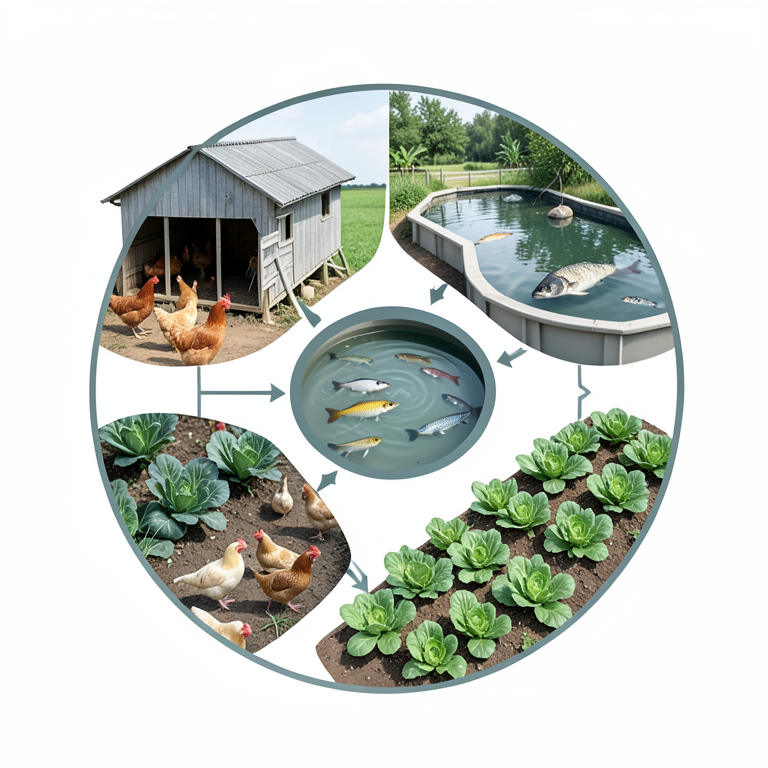
Integrated Nutrient Loop
AI-generated conceptual illustration (integrated fish pond, poultry house, and vegetable garden). It explains the idea and does not show study data.
View source evidence ↗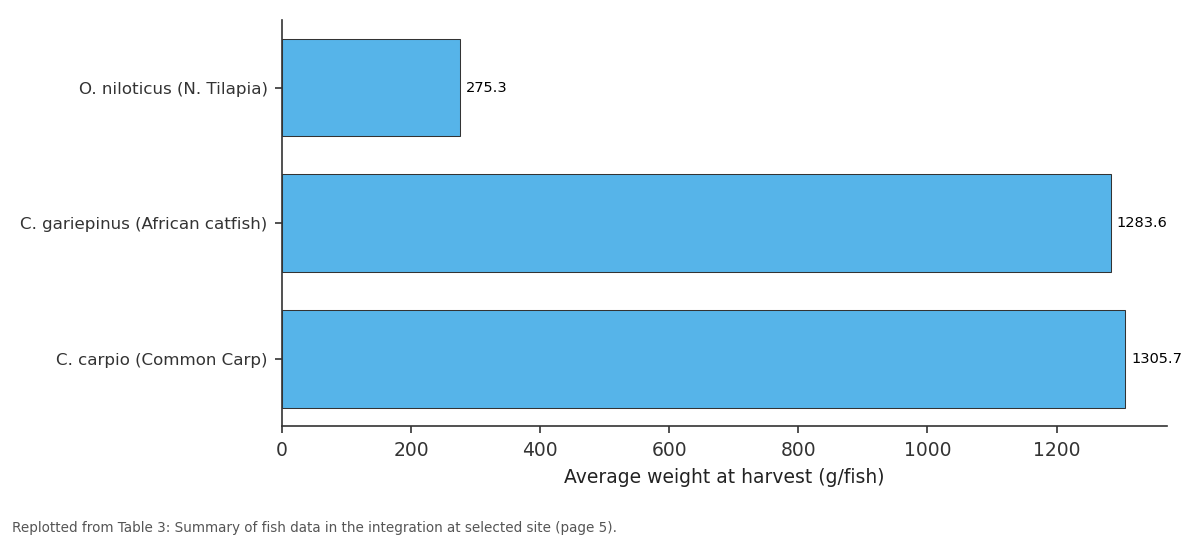
Average weight at harvest (g/fish): O. niloticus (N.... vs C. gariepinus (African... vs C. carpio (Common Carp)
Replotted from Table 3 (page 5) of the original paper. Every bar is the paper's own table value.
View source evidence ↗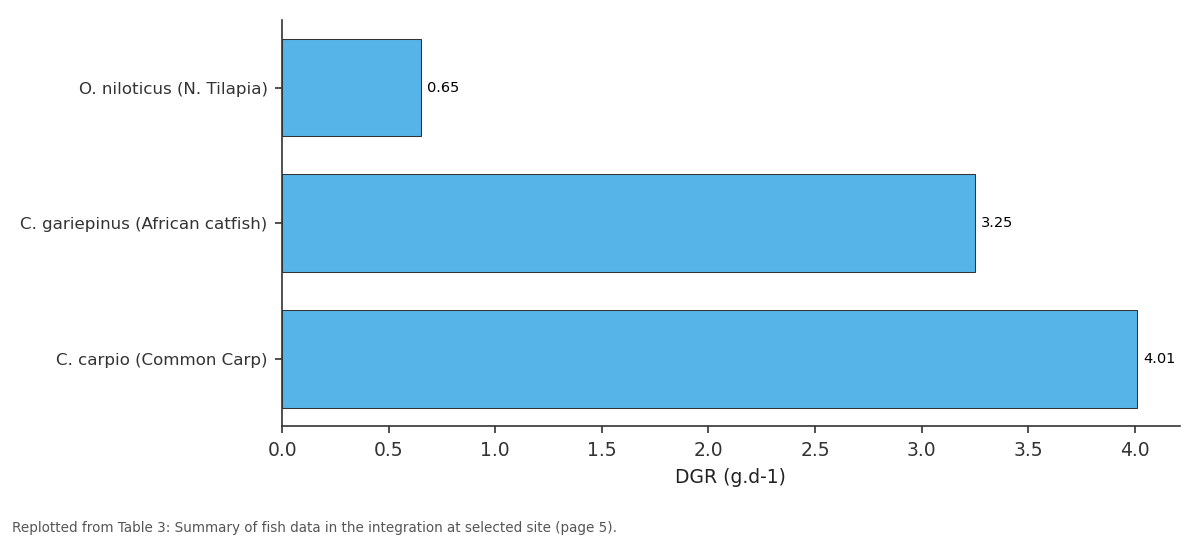
DGR (g.d-1): O. niloticus (N.... vs C. gariepinus (African... vs C. carpio (Common Carp)
Replotted from Table 3 (page 5) of the original paper. Every bar is the paper's own table value.
View source evidence ↗Figures & tables
From the original paper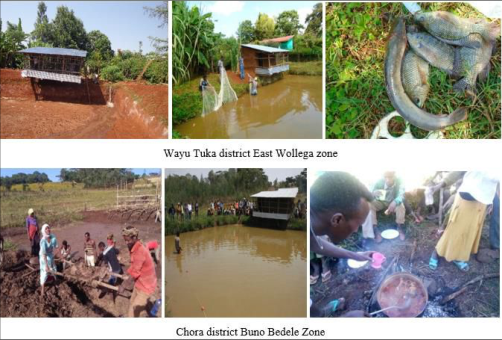 Figure 1
 Table 1
 Table 2
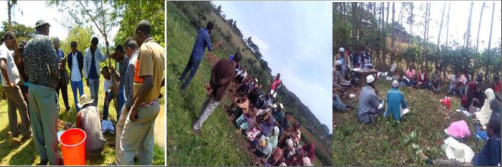 Figure 2
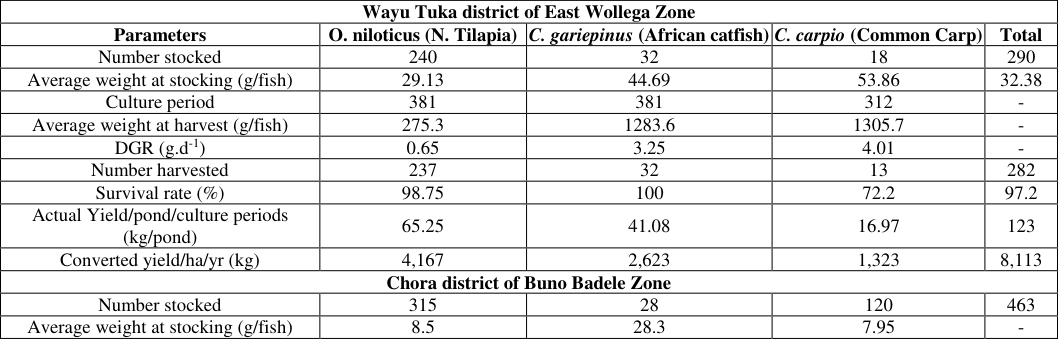 Table 3
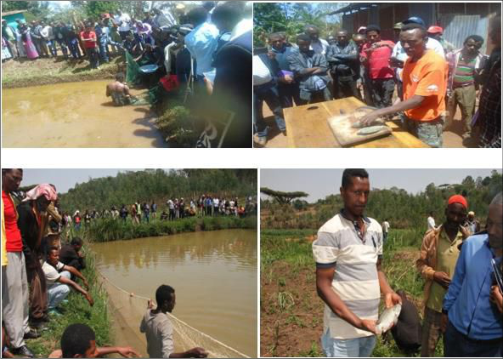 Figure 3
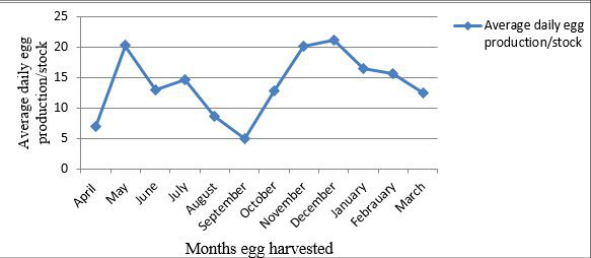 Figure 3
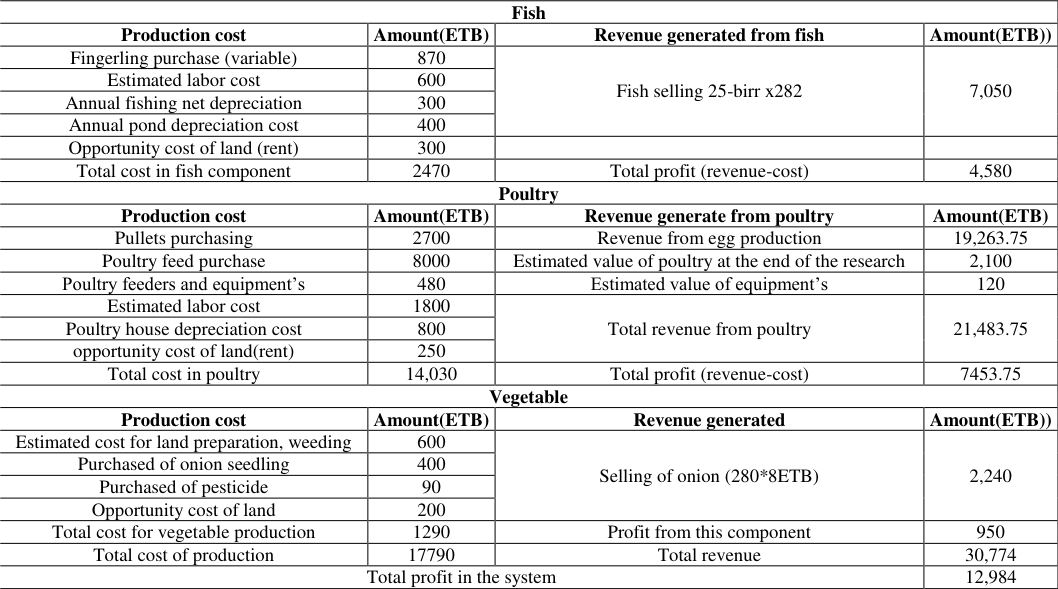 Table 4
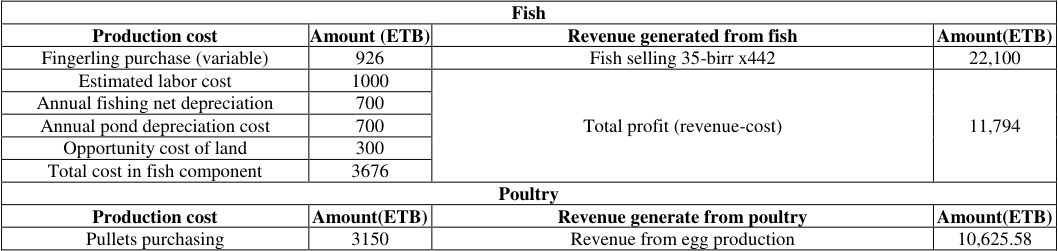 Table 5
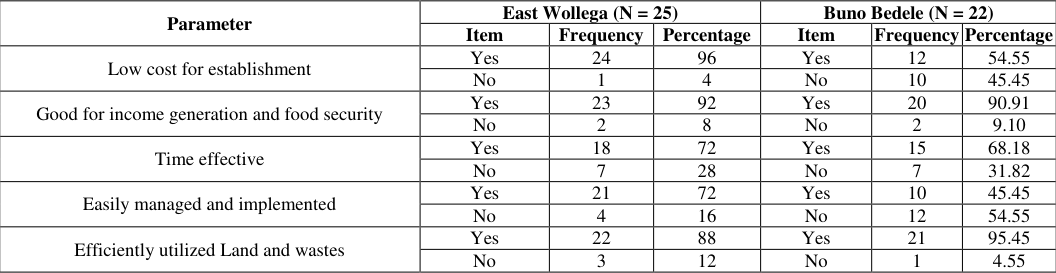 Table 6
Introduction 1.1 Background and Justification
Fish raised in semi-intensive, freshwater systems provide the major proportion of farmed, global production (FAO, 1995) [11] . Global fish production peaked at about 171 million tonnes in 2016, with aquaculture representing 47 percent of the total and 53 percent if nonfood uses (including reduction to fishmeal and fish oil) are excluded. The African aquaculture production has only contributed less than 2 million tonnes, around 2.5 percent of the global aquaculture (98.7% from inland aquaculture and 1.3% from marine and coastal aquaculture (excluding aquatic plants). The per capita aquaculture production (excluding aquatic plants) in Africa is still inferior the global standards with the highest figure in northern Africa was 5.3 kg/capita, 0.5 -1.0 kg/capita in western and southern Africa with the minimum figure 0.2 kg/capita in middle Fish production is mainly by wild capture of tilapia (Oreochromis niloticus), followed by catfish (Clarias. gariepinus), Nile perch (Lates niloticus) and Barbus species. The total fish production potential is estimated to be 51,481tonnes/year. Of these, approximately, 50% of this is currently exploited annually. Stock depletion in some lakes has been reported. The demand for fish has increased recently. The total expected demand for fish in 2025 is estimated to be 118,000 tonnes, which is greater than the capture production potential. This calls for an increased focus on stocking and enhancement of water bodies based on sound genetic principles and development of aquaculture to produce fish to meet future demand (Gopalakrishnan, 2019) [13] . Fish-poultry-horticulture integrated productions plays an important role in the diet of the people of developing nations. When fish farm integrated with other agricultural sectors it diversifies farmers' income, create job opportunity, contributes for household food security and meeting future diets like protein, carbohydrate, vitamins and minerals demand. Integrated horticulture-fish production system is maximizing productivity and economic efficiency of smallholders' fish farmers through enhancing the productivity per acreage of land where fish production remained as the most important activity (Mukherjee, 1995) [16] . This type of integration can increase overall production intensity and economies on land, labor and water requirements for poultry, fish and horticulture. For example, one hectare of static water fish ponds can 'process' the wastes of up to 1500 poultry, producing fish in quantities of up to 10 MT/ha without other feeds or fertilizers. Also, since effluents are few, environmental impacts are minimal. The importance of poultry wastes in aquaculture is relatively recent. In areas of traditional fish culture, ruminant and pig manure have predominated as pond fertilizers in some part of the country. Poultry manure was not used to any extent probably because small flock size and extensive management precluded collection. Vertical integration of the poultry industry by agribusiness has been stimulated by the biology and widespread acceptability of poultry, particularly chickens. Global trends in livestock production indicate that poultry, particularly layer and broiler chickens, are increasing faster than any other (FAO, 1989, 1990, 1991, 1993) [7][8][9][10] . Poultry production wastes have inherent qualities that make them particularly valuable for fish production compared to other livestock wastes. The small individual size of poultry also allows their confinement and production directly over fish ponds that implementing production boosting waste recycling technology which replaces fish feed and chemical fertilizer for fish ponds and vegetables. Most published data concern integration of fish culture with modern poultry systems which are typically inappropriate for resource-poor farmers. Village or backyard poultry systems predominate in areas where modern breeds and systems are absent, or coexist in competition with them. Recent research indicates that integration of such poultry and backyard fish culture can also bring benefits at little extra cost. Farmers in Oromia regional state practiced extensive fish farming in small ponds using Nile tilapia since 2008 and fish farms were interested but not supported with a package to attain the potential production level (Tugie, 2010) [19] . One of the many major constraints of fish farming in Ethiopia is feed supply whereas many farmers rearing depending on grazing native pasture and use crop residues, animals like cattle, sheep, poultry, goat and equines (Endabu et al., 2016) [6] . Integrated pond management with poultry, fish and vegetables was proofed to be excellent approach for sustainable production, income generation and employment opportunity of the resource poor rural households (Alam et al., 2009) [2] . As previous study confirmed that fish integration farming system is profitable, it needs to more demonstrate as one strategy that can be adopted by small farmers in the country to increase farm returns from per unit area of land (Lemma, 2017) [15] . Therefore, this integrated farming was conducted for further scaling up at East Wollega and Buno Bedele Zone.
Objective
To scaling up integrated Fish-poultry-horticulture farming systems in the study area. To create awareness and enhance knowledge of farmers in integrated farm technologies To enhance better linkage with Farmers, Researcher, Development Agent and others stakeholder.
Materials and Methods
Materials and Methods
Descriptions of the study area
The pre-scale up of integrated Fish-poultry-horticulture farming systems were conducted in Wayou Tuka district of ). The farming system of Chora district was characterized by mixed farming system, comprising both cropping and livestock production. It is mostly known for its vegetation coverage, suitability for coffee, crop livestock and bee production (CSA.2015) [4] .
Site selection for the technology
The major factors considered in site selection were availability of year-round water with the quality required by fish (optimum temperature and pH), site suitability for pond construction, horticulture and poultry management and accessibility of the site for majority of farmers to share knowledge for the communities. After checking the site to qualify the required criteria for the technology, discussions were made with government officials, community administrative, experts and farmers. In East Wollega Zone the site within Farmers Training Center (FTC) was selected for the technology transfer based on the interest of local community to learn the management of integrated fish-poultry-horticulture farming. In other case from Buno Bedele Zone, Tulu Mute Passant Association was selected for the technology transfer based on the interest of local community to learn the management of integrated fish-poultry-horticulture farming. As the technology is aimed to solve nutritional insecurity, the selected site was accessible for women, vulnerable households, youth and other local societies to easily learn the technology.
Fish pond construction and fish production
The three farming components, fish, poultry and vegetable were conducted in integration simultaneously by communities' participation. To establish the integrated farm one rectangular shaped earthen pond was constructed in each selected research areas with water inlet, outlet and overflow was excavated on a gentle slope land near to water source to secure the permanent water supply through gravity flow. The pond has an area of 150m 2 (15m X 10m) and 225m 2 (15m X 15m) in East Wollega Zone and Buno Bedele Zone, respectively.
In both research site before stocking the pond with the fishes, the bottom and the walls of the pond was treated with lime to kill potentially harmful microorganisms especially parasites. The lime also helps to increase the alkaline reserve in water and mud which prevents extreme changes in pH, neutralizes the harmful action of certain substances like sulfides and acids and promote biological productivity. Two weeks after liming, the pond was filled with water from the irrigation system via the supply canal. Poultry house in each the integration were also stocked with pullets. A total of 290 fish's fingerlings Stocked in East Wollega Zone and a total of 463 was stocked in Buno Bedele zone with three fish species (Oreochromis niloticus, Cyprinus carpio and Claries gariepinus) were collected from Batu Fishery and other Aquatic Life Research Center and Koka reservoir using beach seine hauls and stocked in to the pond under integration. In East Wollega Zone the fishes were composed of 240 O. niloticus, 18 C. carpio and 32 C. gariepinus fingerlings.
In other case in Buno Bedele Zone the fishes were composed of 315 Oreochromis niloticus (68.03% stocking density), 120 Cyprinus carpio (25.92% stocking density) and 28 Clariesgariepinus (6.05% stocking density). Tilapias were considered as the major product in the fish component of the integration whereby mixed sex tilapias of the best performing Chamo among the local strains were used in these pre-scaling activities. The fishes were managed properly by exchanging water regularly, removing impurities, protecting fish from predators and maintaining inlet and outlet pipes up to the end of harvesting period.
Poultry house construction and production
Poultry farming is one of the three major components of the integration. Poultry house construction is one of the main activities for establishing this integrated farm. In both research areas the house having an area of 4 m X 3 m (12 m 2 ), partitioned into two classes were constructed using locally prepared raw materials. The first class, half part of the house, 4 m X 1.50 m, was open to air enclosed by mesh wire around the poles and hanging over the pond while the second half part with sealed wall footing on the ground (Figure 1). The hanging class was used for the poultry to stay during day time where they eat and drink from hanged feeders and watering containers. Bottom of this class supporting the chicken was covered by stronger mesh wire protecting chicken against predators and competitors, allows poultry droppings passing down to the underneath pond water.
The second class of the house footing on the ground serves for resting, night time stay and has nests for egg laying. In this integrated farm 30 pullets of Lohmann Brown breed were purchased from a commercial poultry producing company called Alema and stocked into the house and managed according to the company's recommendation.
Commercial feed was provided to the chicken depending on their age, 80-110 g pullets feed per day for 9-20 weeks pullet and 110-120 g layers feed per day for the layers above 20 weeks of age. All management including regular provision of feed and water, egg collection and health care were accomplished according to the recommendation of the company.
Vegetable production
Horticulture is the third component of the integrated farm.
The plot selected for onion plantation was unfortunately degraded fallow plot. An area of 260m 2 and 150m 2 were cleared, ploughed. And prepared for plantation in East Wollega and Buno Badele zone respectively. Before transplanting the seedlings of vegetable to the site, the plots were flood irrigated twice by water coming out of the fish pond in order to enhance the fertility of the plot. Onion (Allium cepa) variety called "Adama red" was used in the integration based on its higher market demand, higher yielding performance and better adaptation to the site was planted at wayu Tuka East Wollega Zone. Whereas improved varieties of onion, cabbage and Tomato were planted at Chora district of Buno Bedele Zone with size of 5x10 m for each crop. Seedlings of the onion, cabbage and tomato were transplanted to the plot according to the local farmers' practice, with the recommended spacing. However, chemical fertilizers were not applied to the vegetable at all. Instead, the vegetable plots were irrigated regularly every 5-7 days by the fertile water coming out of the fish pond under the integration. Weed removing and hoeing and all agronomic practice were carried out every 2 weeks at earlier stages and by observing the weed appearance and intensity in later age.
Management of the integrated farm (poultry, fish and horticulture) were carried out by selected individuals from the local farmers after they received training on the component management. Local farmers participated in pond preparation; poultry house construction, land preparation for horticulture, and also attended the theoretical trainings. Besides, farmers attended fish harvesting practice and food preparation from fish on the final demonstration at both selected site.
Method of data collection
Both primary and secondary data were collected. The primary data was collected from the research site during the implementation of the technology. In addition to this, the primary data was collected by oral interview and product record sheet. The secondary data was collected from agricultural offices, related research results, books, journals and CSA.
Method of data analysis
Both qualitative and quantitative methods of data analysis were used. The qualitative data were presented by organized Tables and narrations. The quantitative data were analyzed by using appropriate descriptive statistics like mean and percentages. Financial analysis was also carried out. Data generated from the various sources were presented as tables, figures or graphs. Fish data for the parameters such as fish growth rate and survival rate (%) are calculated from initial number and weight (g) of stocked fishes, and final number and liveweight (g) of fish using the following formulas.
The survival rate of the O. niloticus, C. carpio and C. gariepinus was analyzed from the date of stocking to harvesting, during 381 culturing period at Wayou Tuka district East Wollega and 305 Chora district of Buno Badele Zone. Generally, subsequent trainings were given for the beneficiaries at each stage of production starting from the farm preparation up to the harvest and consumption of the products.
Results and
Results and
Field day
Field day was jointly organized in collaboration with Zone and Districts level Livestock and Fishery offices. Farmers, experts and development Agents participated on field day to create opportunities for stakeholders to see and learn from the demonstration promotions and evaluation the performance of technology and to get farmers feedback for better improvement. In two research site a total of 249 participants participated on field day. At each site one FREG having a members from 12-18 farmers and a total of two FREGs were established to popularize the technology.
Fish Production
In both research areas there were three fish species, the Nile tilapia (Oreochromis niloticus), African catfish (Clarias gariepinus) and common carp (Cyprinus carpio) stocked into one pond as a poly culture under the integration system. In Wayu Tuka district the number at stocking were 240 tilapia, 32 catfish and 18 carps into a pond area of 150m 2 making a total fish density of 1.93fish/m2. The sizes of the fish at stocking were 29.13g, 44.69g and 53.86g for the tilapia, catfish and carp, respectively (Table 3). At Chora district of Buno Badele Zone the number at stocking were 315 tilapia, 120 catfish and 28 carps into a pond area of 225m 2 making a total fish density of 2.06fish/m 2 . The sizes of the fish at stocking were 8.5g, 7.95g and 28.3g for the tilapia, catfish and carp, respectively (Table 3). In pond there is no supplementary feed was provided to the fish under integration throughout the culturing period. The fish was feeding upon the planktons and other organisms harbored in the integrated pond by the aid of poultry waste (Endabu et al., 2016) [6] . Waste recycling in the integration system was the nobel idea concept. Poultry waste is either eaten directly by fish or fertilizes pond water to support the plankton community used by fish as natural organic feed (Endabu et al., 2016) [6] . Nutrient rich water from fish pond is used to grow horticulture being an organic fertilizer (Hirpo, 2017) [14] and by-products from horticulture and fish offal being used as poultry feed to complete the loop in recycling. At the end of the trial in 381 days, the Nile Tilapia -attained a mean body weight of 275.3 with mean daily growth rate of (DGR) 0.65g.day-1 in case of Wayu Tuka district. While in case of Chora district at the end of 305 days average body weight and daily growth rate (DGR) were 176.61g and 0.55g/day, respectively (Table 3). Different results on tilapia growth performance were reported by many authors. Negisho et al. [10] reported DGR of 0.57±0.01g with supplementary feed, which was less than the present study. In our current trial, the fish were depending on the recycling waste in the integration with minimal cost without providing any supplementary feed and chemical fertilizer. The fish growth rate in this trial (0.65g/day) and (0.55g/day) is close to the previous result of DGR 0. [6] in fish-poultry integrated farm. The difference was attributed perhaps due to higher initial weight and longer culture period in the current trial. The current result recorded for the DGR of carp is comparable with 4.04g.d-1 reported by Abdelghany and Ahmad (2002) [1] . Integration of poultry with fish farm enhances plankton's production and productivity in the ponds for the fish feed thereby increased fish productivity in ponds. Supplementary feed was not provided for the fishes cultured in the pond integrated with poultry throughout the culture period. The fishes used the phytoplankton, zooplankton, direct feeding of poultry manure and spilled off poultry feed. The survival rates of the fishes, O. niloticus, C. gariepinus and C. carpio were 98.75%, 100% and 72.22%, respectively in case of Wayu Tuka district. Whereas in case of Chora district survival rates of the fishes, O. niloticus, C. gariepinus and C. carpio were 95.24, 92.85 and 96.67, respectively. Generally, a total of 123 and 112.5 kg fish were produced in the trial pond during the culture period at calculated yield rate of 8 and 12.84 tonnes of fish per hector per year in case of Wayu Tuka and Chora districts, respectively. The contribution of fish as a protein source in securing nutritional balance of small-scale farmers is valued.
| Wayu Tuka district of East Wollega Zone | — | — | — | — |
|---|---|---|---|---|
| Parameters | O. niloticus (N. Tilapia) | C. gariepinus (African catfish) | C. carpio (Common Carp) | Total |
| Number stocked | 240 | 32 | 18 | 290 |
| Average weight at stocking (g/fish) | 29.13 | 44.69 | 53.86 | 32.38 |
| Culture period | 381 | 381 | 312 | - |
| Average weight at harvest (g/fish) | 275.3 | 1283.6 | 1305.7 | - |
| DGR (g.d-1) | 0.65 | 3.25 | 4.01 | - |
| Number harvested | 237 | 32 | 13 | 282 |
| Survival rate (%) | 98.75 | 100 | 72.2 | 97.2 |
| Actual Yield/pond/culture periods (kg/pond) | 65.25 | 41.08 | 16.97 | 123 |
| Converted yield/ha/yr (kg) | 4,167 | 2,623 | 1,323 | 8,113 |
| Chora district of Buno Badele Zone | ||||
| Number stocked | 315 | 28 | 120 | 463 |
| Average weight at stocking (g/fish) | 8.5 | 28.3 | 7.95 | - |
Table text extracted from the original PDF; superscript letters are shown inline. The original table image is below.
View original table image
Egg production
The Lohmann brown pullets in the integrated farm started laying eggs two months after stocking in June 2016, at age of 22 weeks at Wayu Tuka district. After the egg production reached the peak in August 2016, it gradually decreased associated with age factor (Fig. 4a). This result was similar to the result reported by (Hirpo, 2017) [14] . The production of egg decreases in later ages and becomes uneconomical after chickens reach the age of 18 months due to change in their physiology. Some irregularities and decline in egg production observed when the chicken was fed with homemade cracked grains during shortage of commercial feed supply. Availability of commercial feed for poultry at rural areas was limited that the government has to support feed producers to avail the feed at all areas demanding the feed. Generally, 7,005 eggs were collected from the 30 layers in 12 months (Fig. 4a). The collected eggs were sold by the beneficiary farmers to the local people at price rate of 2.75 Birr per egg. The contribution of eggs as a protein source for the local people and the income from the selling to the beneficiary farmers are also valued. In case of Chora district Lohmann brown pullets in the integrated farm started laying eggs after eleven week after stocking in January 2018. As indicated Figure 4b, the production of egg fluctuation was observed when the chicken was fed different source of commercial feed. Commercial feed supplied by Genesis L.P.C so poor compared to Alema poultry fed supplier. During August and September 2018 egg production were decreased due to usage of homemade cracked grains as a chicken fed during those months due to budget shortage to purchase of commercial feed supply. Generally, 2,811 eggs were collected from the 30 layers in 12 months (Figure 4b). The collected eggs were sold by the beneficiary farmers to the local people at price rate of 3.78 ETB per egg at Chora district.
Vegetable production
Adama red onion (Allium cepa) was grown in the plot (260m 2 ) and obtain 281kg from plot, estimated to 10,800kg/ha when extrapolated to hectare base at Wayu Tuka district. The obtained yield was ranked to a better production level when compared to the yield obtained using chemical fertilizers in some previous trials in Ethiopia (Desaleng and Aklilu, 2003) [5] In case of Chora district Adama red onion, tomato and cabbage were grown in the plot of each (50m 2 ) and yield obtained were 52, 29.5 and 10 kg, respectively. When converted to hectare yield obtained from onion, tomato and cabbage were 10,400, 5,900 and 2,000 kg respectively. The advantage of having horticulture component in the integration can be seen as alternative way of vegetable production for home consumption and also as a source of income, minimizing input cost and environmental pollution. The vegetable crops yield were obtained by using waste water from fish pond without purchasing the chemical fertilizer, which minimized input cost in the production system. The system also minimized environmental pollution caused by waste from poultry farm and fish pond, rather recycled the waste to produce food.
Partial budget analysis
Simple calculation was made to know the economic feasibility of the integrated farm comparing input costs against outputs in money value. Labor costs were estimated depending on local wage payment to workers. The poultry house and fish pond construction works were done by beneficiary farmers while they participate in all stages of the technology implementation, but the value was estimated in terms of money (Table 4). Depreciation values of the poultry house and fish pond were considered in production costs. The products from the integration were used for local consumption after they were estimated in terms of money.
| Fish | — | — | — |
|---|---|---|---|
| Production cost | Amount(ETB) | Revenue generated from fish | Amount(ETB)) |
| Fingerling purchase (variable) | 870 | Fish selling 25-birr x282 | 7,050 |
| Estimated labor cost | 600 | ||
| Annual fishing net depreciation | 300 | ||
| Annual pond depreciation cost | 400 | ||
| Opportunity cost of land (rent) | 300 | ||
| Total cost in fish component | 2470 | Total profit (revenue-cost) | 4,580 |
| Poultry | |||
| Production cost | Amount(ETB) | Revenue generate from poultry | Amount(ETB) |
| Pullets purchasing | 2700 | Revenue from egg production | 19,263.75 |
| Poultry feed purchase | 8000 | Estimated value of poultry at the end of the research | 2,100 |
| Poultry feeders and equipment’s | 480 | Estimated value of equipment’s | 120 |
| Estimated labor cost | 1800 | Total revenue from poultry | 21,483.75 |
| Poultry house depreciation cost | 800 | ||
| opportunity cost of land(rent) | 250 | ||
| Total cost in poultry | 14,030 | Total profit (revenue-cost) | 7453.75 |
| Vegetable | |||
| Production cost | Amount(ETB) | Revenue generated | Amount(ETB)) |
| Estimated cost for land preparation, weeding | 600 | Selling of onion (280*8ETB) | 2,240 |
| Purchased of onion seedling | 400 | ||
| Purchased of pesticide | 90 | ||
| Opportunity cost of land | 200 | ||
| Total cost for vegetable production | 1290 | Profit from this component | 950 |
| Total cost of production | 17790 | Total revenue | 30,774 |
| Total profit in the system | 12,984 |
Table text extracted from the original PDF; superscript letters are shown inline. The original table image is below.
View original table image
Revenue generated from the selling of eggs, fish and Vegetable (Table 4) was used. The hens and equipment's were also estimated for their current value in terms of money at the end of the trial for financial analysis. As depicted in Table 4, integrated farming system, the total estimated cost of production in the fish, poultry and vegetable components were 2,470ETB, 14,030ETB and 1,290ETB, respectively with a total estimated production cost of 17,794ETB at Wayu Tuka district. The revenue obtained from all harvested fish was estimated to 7,050ETB while the revenue generated from poultry and onion production was 21,483.75 and 2,240ETB, respectively. A total of 30,774 ETB was generated as revenue. The profit obtained from the three components sum up to 12,984 ETB per season (Table 3). Similarly, in Buno Badele Zone, Chora district, Tulu Mute Peasant Association the economic feasibility of the integrated farm was calculated by comparing input costs against outputs in money value. The total estimated cost of production in the fish, poultry and vegetable components was 3,676ETB, 16,650ETB and 1,350ETB, respectively with a total estimated production cost of 21,376ETB. The revenue obtained from all harvested fish was estimated to 11,794ETB while the revenue generated from poultry and vegetable production was 18,245.58 and 1,422.5ETB, respectively. A total of 42,228ETB was generated as revenue. The highest profit was obtained from fish and egg production. The profit obtained from the three components sum up to 20,392 ETB (Table 5). In both research areas total land area occupied by the integration system was less than 500m 2 (0.05ha). This plot, according to information from the local farmers on their practice, can yield 250-500kg maize per year, which is estimated to a total amount in money of 1250-2,500ETB at current price. Though the farmers do not consider the labor of land preparation, cultivation, weeding and harvesting as a cost, it can be estimated to 1200ETB to produce maize in the plot. The profit farmers expect from that small plot of land according to their traditional practice do not exceed 1,300ETB per year under conducive weather conditions. This traditional way of production is efficient (about 52% return on their initial investment) but produce little product per unit area and risky as it depends on natural rain. The integration of fish, poultry and horticulture farming is also promising technology to generate income for household on a small plot of land having access to water source. The technology was finally demonstrated to the local community and government officials at different administrative levels. The beneficiary farmers, local communities and administrative bodies understood the benefits of the integrated farming system in terms of its sustainability, contribution to income generation, poverty reduction, easiness of the farm to be managed by women, children, handicapped and old people. It was finally accepted as a technology to be scale out in all potential areas.
| Fish | — | — | — |
|---|---|---|---|
| Production cost | Amount (ETB) | Revenue generated from fish | Amount(ETB) |
| Fingerling purchase (variable) | 926 | Fish selling 35-birr x442 | 22,100 |
| Estimated labor cost | 1000 | Total profit (revenue-cost) | 11,794 |
| Annual fishing net depreciation | 700 | ||
| Annual pond depreciation cost | 700 | ||
| Opportunity cost of land | 300 | ||
| Total cost in fish component | 3676 | ||
| Poultry | |||
| Production cost | Amount(ETB) | Revenue generate from poultry | Amount(ETB) |
| Pullets purchasing | 3150 | Revenue from egg production | 10,625.58 |
Table text extracted from the original PDF; superscript letters are shown inline. The original table image is below.
View original table image
Farmers' feedback
Among 25 farmers respondents interviewed at Wa you Tuka district 96%, 92%, 72%, 72% and 88% had respond that integrated farm is effective due to need low cost, good for income generation and food security, time effective, easily managed and implemented and allow to utilize land and wastes efficiently, respectively(Table 6). In case of Chora district from total 22 farmers interviewed 54.55%, 90.91%, 68.18%, 45.45% and 95.45% had respond that integrated farm is effective due to need low cost, good for income generation and food security, time effective, easily managed and implemented and allow to utilize land and wastes efficiently, respectively. In general, the result of assessment feedback revealed that integrated technology was highly preferred by farmers in the study area as the technology is not complicated, use locally available raw material and easy to implement. After prescaling up, the wider scaling up/out activities will be owned and huddled by respective Zones and districts office of livestock development in collaboration with different key actors in the area with close supervision by Batu Fish and Other Aquatic Life Research center.
| Parameter | East Wollega (N = 25) | — | — | Buno Bedele (N = 22) | — | — |
|---|---|---|---|---|---|---|
| Item | Frequency | Percentage | Item | Frequency | Percentage | |
| Low cost for establishment | Yes | 24 | 96 | Yes | 12 | 54.55 |
| No | 1 | 4 | No | 10 | 45.45 | |
| Good for income generation and food security | Yes | 23 | 92 | Yes | 20 | 90.91 |
| No | 2 | 8 | No | 2 | 9.10 | |
| Time effective | Yes | 18 | 72 | Yes | 15 | 68.18 |
| No | 7 | 28 | No | 7 | 31.82 | |
| Easily managed and implemented | Yes | 21 | 72 | Yes | 10 | 45.45 |
| No | 4 | 16 | No | 12 | 54.55 | |
| Efficiently utilized Land and wastes | Yes | 22 | 88 | Yes | 21 | 95.45 |
| No | 3 | 12 | No | 1 | 4.55 |
Table text extracted from the original PDF; superscript letters are shown inline. The original table image is below.
View original table image
Conclusions and Recommendations
In the integrated poultry-fish-vegetable farming system, waste from one component is used as input for the other component in the system to produce income and food for people. The system worked at the around the same site with all the components (poultry, fish and vegetable) delivering the expected products at lower costs of inputs on relatively small plot of land as compared to the traditional farming system. Products obtained from the integration diversified the farmers' that help to generate income and used for consumption. Moreover, the system is cost effective and efficient enough to make money at small scale farmers' level on relatively small plot of land. The technology is also a very good resilience approach to produce sustainable food for victimized farmers of climate change in areas having access to water sources. As the fish culture in general and the integration system in particular is new practice in Ethiopia, attention should be given by local administrative bodies, regional and federal governments and concerned institutions to extend the technology into potential areas. Generally, since integrated farm technology have positive feedback from farmers and economically feasible in the study area, we recommend to Livestock and fishery offices at Districts and Zonal level in collaboration with other stakeholder should work on the wider scaling up of this technology.
Acknowledgment
We would like to thank Oromia Agricultural Research Institute (IQQO) for financing the research and Batu Fishery and Other Aquatic Life Research Center (BFALRC) for logistics support and coordination of the activities. Administrative and Experts of Livestock and Fishery Development Offices and Local Development Agents of East Wollega Zone, Wayou Tuka district, Buno Badele Zone and Chora district experts and administration for deserve gratitude for their facilitation in the implementation of the activities.
Figures and tables from the paper
| Year G.C | Site | Farmers | — | Development Agent | — | Experts | — | Total |
|---|---|---|---|---|---|---|---|---|
| Male | Female | Male | Female | Male | Female | |||
| 2016-2017 | Wayou Tuka District of East Wollega Zone | 40 | 18 | 6 | 2 | 4 | 0 | 70 |
| 2017-2018 | Chora District of Buno Badele Zone | 44 | 9 | 6 | 2 | 15 | 2 | 78 |
| Total | 84 | 27 | 12 | 4 | 19 | 2 | 148 |
Table text extracted from the original PDF; superscript letters are shown inline. The original table image is below.
View original table image
| Year | Site | Farmers | Das | Experts | Researcher | Total participant |
|---|---|---|---|---|---|---|
| 2015 | Wayu Tuka district of East Wollega | 49 | 2 | 8 | 2 | 61 |
| 2018 | Chora district of Buno Badele | 112 | 20 | 53 | 3 | 188 |
| Total | 161 | 22 | 61 | 5 | 249 |
Table text extracted from the original PDF; superscript letters are shown inline. The original table image is below.
View original table image
References
9 in the original paper- Abdelghany ABE, Ahmad MH. Effect of feeding rates on growth and production of Nile tilapia, Common carp and Silver carp polycultured in fertilized ponds. Aquac. res. 2002;33(6):415-423.
- Alam MR, Ali MA, Hossain MA, Molla MSH, Islam F. Integrated approach of pond based farming systems for sustainable production and income generation, Bangladesh J Agril. Res. 2009;34(4):577-584.
- CSA (Central Statistical Agency). Agricultural Sample Survery. Volume V, Report On Area And Production of Belg Season Crops For Private Peasant Holdings September 2015. CSA, Addis Ababa, Ethiopia; c2015.
- Endabu M, Tugie D, Negisho T. Fish growth performance in ponds integrated with poultry farm and fertilized with goat manure: a case in Ethiopian Rift Valley, Int. J Fishery Sc. & Aqua. 2016;3(2):040-045.
- FAO. Food and Agriculture Organization of the United Nations Rome, yearbook: Production Vol.42:1988. FAO Statistics Series No.88; c1989. p. 241-252, 266268.
- FAO. Food and Agriculture of the United Nations Rome, yearbook: Production Vol.44:1990. 1991. p. 189-198, 212-214.
- Hirpo LA. Evaluation of integrated Poultry-FishHorticulture production in Arsi Zone, Ethiopia, Int. J Fish. And Aq. Studies. 2017;5(2):562-565.
- Lemma AH. Fisheries production system scenario in Ethiopia; International Journal of Fisheries and Aquatic Studies. 2017;5(1):79-84.
- Negisho T, Tugie D, Barnabas J. Integrated Fish horticulture Fish horticulture Farm Production System at Shalad Arsi, Oromia, Ethiopia. J Chem, Biol. & Physical Sci. 2017;7(2):467-474.
Cited by 1
From OpenAlex, OpenCitations and reference lists read by Scinovex
- Assessing Yield Performances and Economic Profitability of Integrated Nile Tilapia ( Oreochromis Niloticus Linnaeus, 1758) With Bombay Red Onion ( Allium cepa ) Farming Systems in Northwest Ethiopia ↗
Negese Kebtieneh, Akewake Geremew, Belay Abdissa, Alayu Yalew, Gashaw Tilahun · Aquaculture Fish and Fisheries · 2026
ABSTRACT Integrated fish–vegetable is a sustainable food production strategy that synergistically combines fish culture and vegetable cultivation within a single farming system. The objective of this study was to assess integrated Nile tilapia–onion (Bombay red variety) production in northwest Ethiopia, as both fish and onion are commonly practiced by smallholder farmers. The experiment was designed with three fish stocking density…
❝ 0PDF