
Research article · 2022 · Full text
International Journal of Agriculture and NutritionEvaluation of the effect of arbuscular mycorrhizal fungi on the growth of tomato (Lycopersicum esculentum Mill.) grown in Bangui (Central African Republic) under controlled conditions
Volume 4(1) · Pages 21–27 · DOI: 10.33545/26646064.2022.v4.i1a.49 ↗
Research areasMycorrhizal Fungi and Plant InteractionsFungal Biology and Applications
Abstract
Author-writtenValuing mycorrhizae is a potential alternative to the use of fertilizers and phytosanitary products. This study aimed at evaluating the effect of Arbuscular Mycorrhizal Fungi (AMF) on the growth of tomato (Lycopersicum esculentum Mill.). The trial was conducted in a greenhouse for 4 months. Inoculation of tomato with the four AMF strains was compared to the control (non-inoculated plant) in a simple randomized design. Height growth of inoculated tomato plants varied among treatments with different strains of AMF. Glomus intraradices resulted in high stem growth (59.12±2.12 cm). The effect of AMF inoculation was significant on the growth of neck diameter of tomato plants. The Glomus fasciculatum strain showed a larger value (13.66±0.82 mm) followed by Glomus mosseae; (12.46±0.20 mm) and Glomus intraradices (11.99±0.42 mm) in diameter. The number of leaves produced per plant differed significantly between plants inoculated with the different strains of AMF and those not inoculated. The average number of leaves (32.2 and 30 leaves/plant) respectively with the plants inoculated with Glomus mosseae and Glomus intraradices. The best average number of branches (4.33±1.25) was obtained with the Glomus fasciculatum strain. The highest values were obtained with the Glomus aggregatum strain (149.57 g) for total fresh biomass and 36.56 g for total dry biomass.
Summary
Source-checkedPlain-language reading of the full paper, prepared with AI and checked against the text. Each point links to the authors' own words.
Why it matters
- Tomato is a globally significant crop due to its nutritional and economic importance. View evidence ↗
- In the Central African Republic, tomato yields are very low (0.5 t/ha) compared to African (39 t/ha) and global leading (56 t/ha) averages. View evidence ↗
- Low tomato yields in the region are partly caused by soil poverty in mineral and organic matter. View evidence ↗
The question
- The study aimed to compare how different strains of arbuscular mycorrhizal fungi (AMF) affect the growth of tomato plants under controlled conditions. View evidence ↗
What they did
- The researchers used Roma VF variety tomato seeds (F1 generation) with a 97% germination rate. View evidence ↗
- Four AMF strains were tested: Glomus mosseae (G1), Glomus aggregatum (G2), Glomus fasciculatum (G3), and Glomus intraradices (G4). View evidence ↗
- The experiment used a simple randomized design with four inoculated treatments and one non-inoculated control, each repeated four times over four months in a greenhouse. View evidence ↗
- Growth was evaluated by measuring height, crown diameter, leaf number, and branch number every 30 days after transplanting (DAT), with biomass measured at 90 days. View evidence ↗
What they found
- Glomus intraradices (G4) produced the highest stem growth, reaching 59.12±2.12 cm. View evidence ↗
- Plants inoculated with Glomus aggregatum and Glomus fasciculatum had the highest average leaf counts at 32.2 and 30 leaves per plant, respectively. View evidence ↗
- The highest average number of branches (4.33±1.25) was achieved by the Glomus fasciculatum (G3) strain at 90 days after transplanting. View evidence ↗
- Glomus aggregatum (G2) produced the highest total fresh biomass (149.57 g) and total dry biomass (36.56 g). View evidence ↗
- Glomus intraradices (G4) resulted in the lowest total biomass (19.62 g) among all treatments. View evidence ↗
What it means
- The authors suggest encouraging the use of Glomus aggregatum in tomato cultivation to potentially increase fruit production. View evidence ↗
- The authors conclude that AMF act as efficient bio-fertilizers by providing water, mineral salts, and fixing atmospheric nitrogen. View evidence ↗
- The study did not evaluate soil chemical fertility after the experiment, which the authors note would have provided a better understanding of the AMF-plant symbiosis. View evidence ↗
Visual summary
3 visualsIllustrations explain the paper; charts are replotted from the paper's own table values.
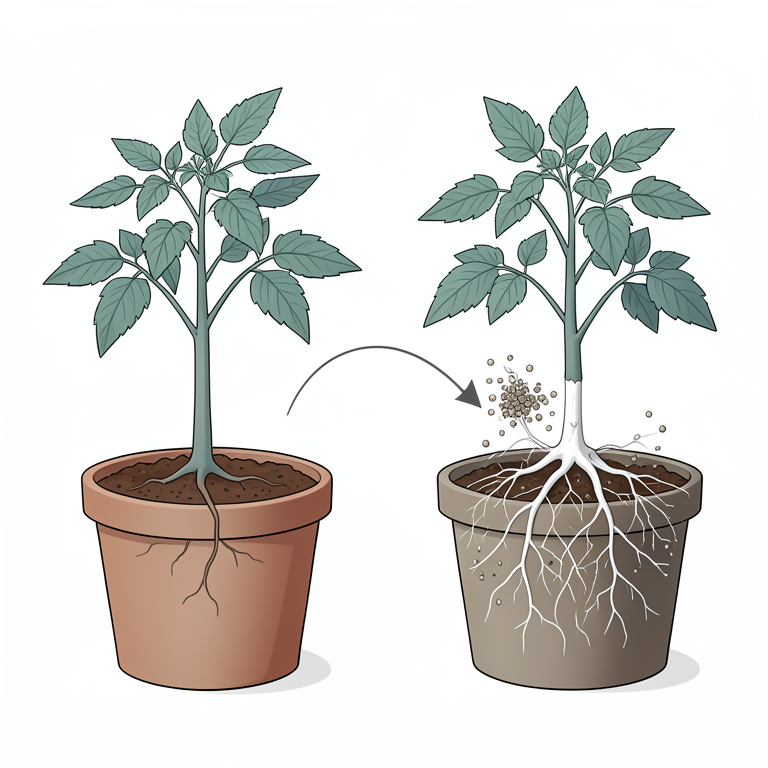
Experimental Setup Concept
AI-generated conceptual illustration (tomato plants (Lycopersicum esculentum) in pots). It explains the idea and does not show study data.
View source evidence ↗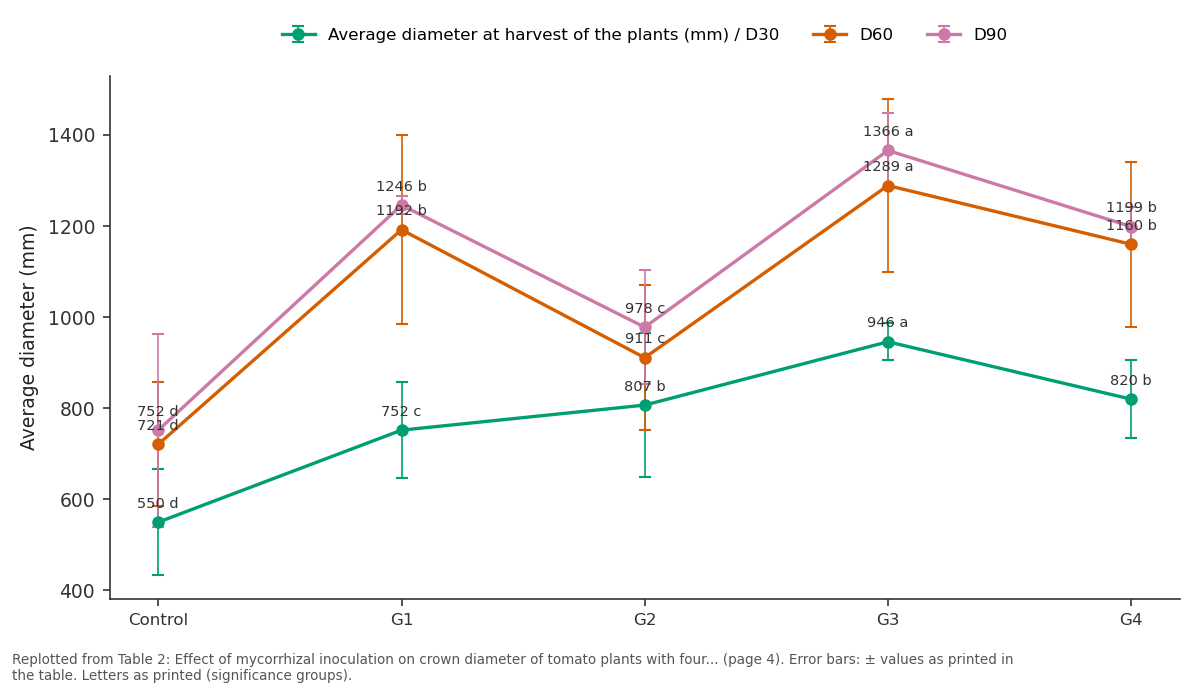
Average diameter at harvest of the plants... and D60 and more: Control vs G1 vs G2 vs G3 vs G4
Replotted from Table 2 (page 4) of the original paper. Every bar is the paper's own table value.
View source evidence ↗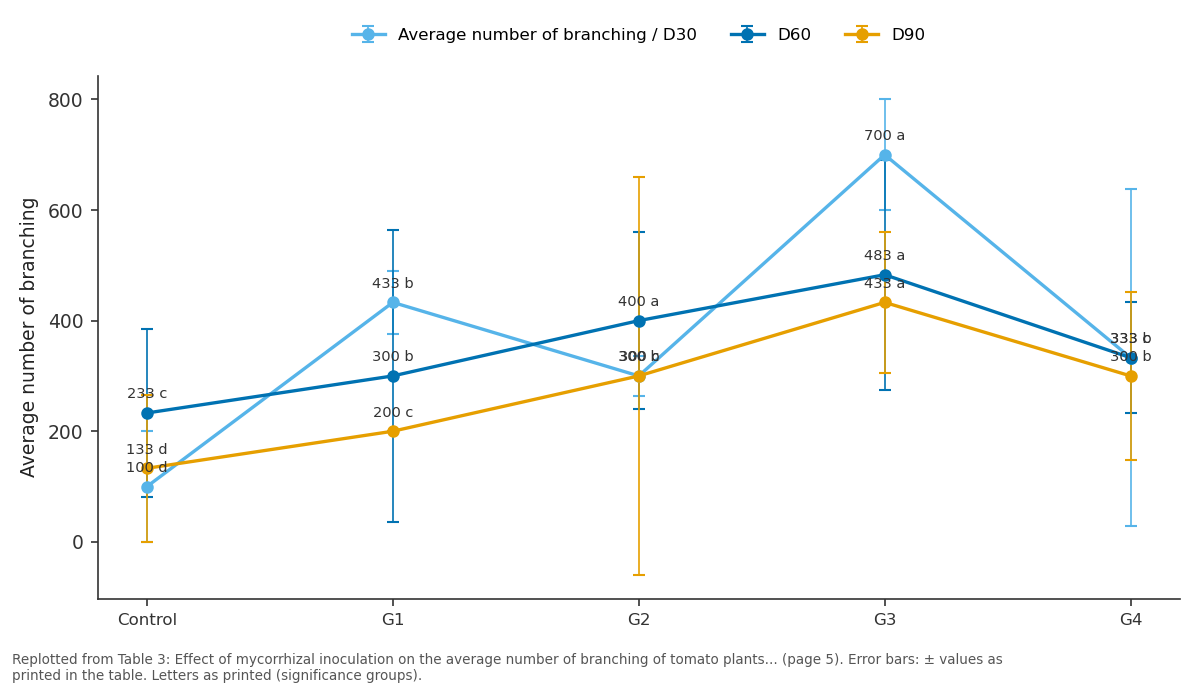
Average number of branching / D30 and D60 and more: Control vs G1 vs G2 vs G3 vs G4
Replotted from Table 3 (page 5) of the original paper. Every bar is the paper's own table value.
View source evidence ↗Figures & tables
From the original paper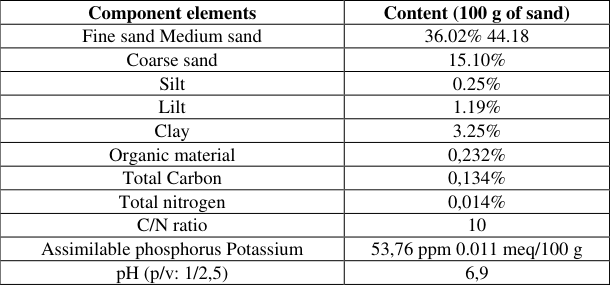 Table 1
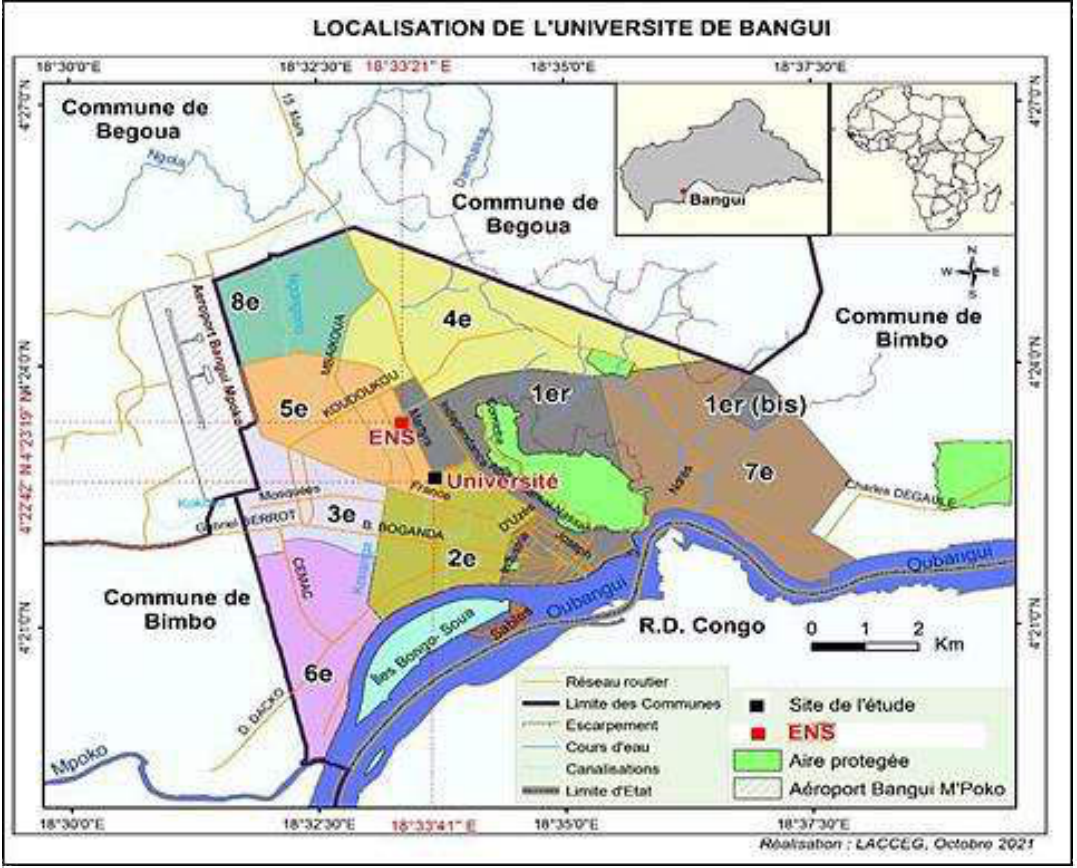 Figure 1
 Table 2
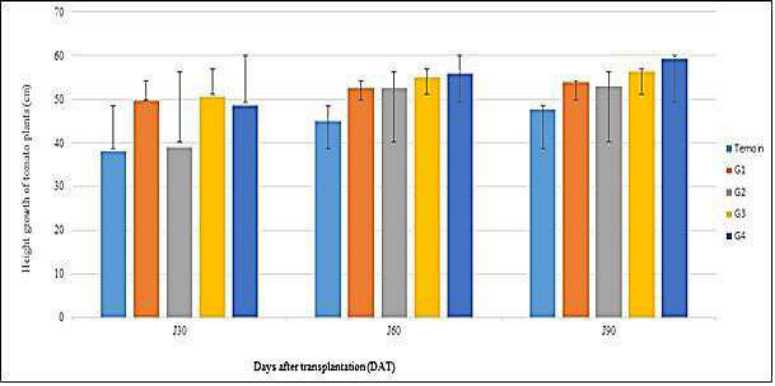 Figure 2
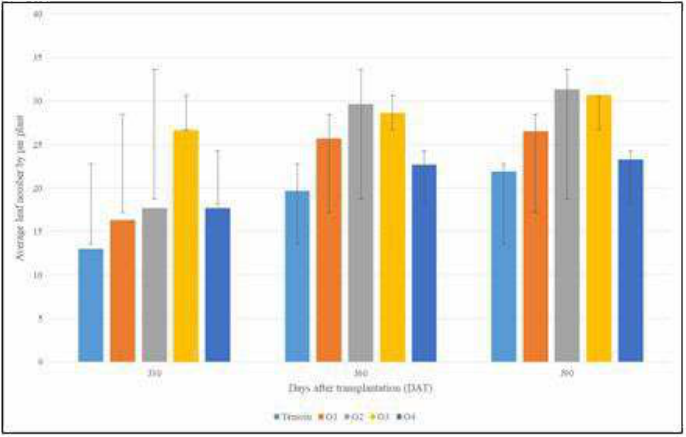 Figure 3
 Table 3
 Table 4
Introduction
Today, conventional agriculture no longer inspires consumer confidence, largely due to various scandals related to the use of pesticides in agriculture (Philipp et al., 2019) [24] . In the Central African Republic (CAR), agriculture is practiced by more than 80% of the rural, urban and peri-urban population. In this agriculture, market gardening occupies an important place 23% in the Central African economy. Among the vegetable crops: tomato, cucumber, eggplant, cabbage, amaranth, okra, carrot, spinach, etc. Tomato (Lycopersicon esculentum Mill.) is one of the most important crops from an economic and nutritional point of view. It is one of the most consumed vegetables in the world (FAO, 2012) [13] . It is considered the main crop capable of influencing the future of many farmers in the world (Peet et al., 2004) [25] . Despite the importance of tomato in the country, its yield (0.5 t/ha) remains very low compared to the world's leading producer 56 t/ha and African 39 t/ha. One of the causes of this low yield is the poverty of the soil in organic and mineral matter and the intensification of production (Lompo et al., 2009) [21] . Faced with this situation, market gardening must move towards sustainable and more productive cropping systems. The integrated soil fertility management (ISFM) approach is a solution to this decline in soil fertility. According to Bationo et al (2012) [4] , it allows for the sustainability of production systems and can guarantee better product competitiveness. This approach can be carried out through the use of bio fertilizers such as arbuscular mycorrhizal fungi (AMF). The use of bio-fertilizers contributes to the balance of ecosystems, guarantees the environment and human and animal health, admitting that the products of the market gardening are consumed raw without minimum hygiene. They do not leave any pest in the soil and can be used on all crops including vegetables and fruit trees.
The AMF live in symbiosis with the roots of plants, they provide the plant with water and mineral salt and also allow the fixation of atmospheric nitrogen, in return the plant provides the AMF with sugar, product of photosynthesis (Bationo et al., 2012) [4] . Tomato is particularly susceptible to inoculation by AMF (Edathil et al., 1996) [11] . Its growth and quality are positively affected by this symbiosis; whether under salinity and drought stress (Al Karaki, 2000; Subramanian et al., 2006) [1,29] , interaction with pathogens (Fakhro et al., 2010; Steinkellner et al., 2012) [28] , or in combination with NPK fertilizer or different P levels (Poulton et al., 2002; Mujica Perez et al., 2010; Conversa et al., 2013, Ziane, 2018) [23,7] . In CAR, the application of AMF in agriculture is non-existent and little known. It is limited to few studies that have shown the beneficial potential of inoculation in certain crops. Therefore, the objective of this work is to evaluate the comparative effects of arbuscular mycorrhizal fungi (AMF) on the growth of tomato grown under controlled conditions.
Material and Methods
Plant Material: The plant material used for the experimentation was a tomato seed of variety Roma VF, a F1 generation with 97% germination power.
Fungal material:
The fungal material was composed of inocula of AMF strains and a mycorrhized root obtained from the Laboratory of Fungi Biotechnology of the Check Anta Diop University of Dakar (Senegal). These are the following strains: G1: Glomus mosseae, (Nicholson, Gerd, Trappe DAOM 227 131); G2: Glomus aggregatum (Schenke, Smith, Emend, Koske) (DAOM 227 128); G3: Glomus fasciculatum (Thaxter, Sensu, Gere-mann, gerd) (DAOM 227 130); G4: Glomus intraradices (Schenker, Smith) (DAOM 127 198).
Growing medium:
The culture substrate was a sterilized soil (1 h at 120°C) from Boukoko whose physico-chemical characteristics were recorded in Table 2 below. [10] .
| Treatments | Average diameter at harvest of the plants (mm) | — | — |
|---|---|---|---|
| D30 | D60 | D90 | |
| Control | 5,50±1,16d | 7,21±1,36d | 7,52±2,12d |
| G1 | 7,52±1,06c | 11,92±2,08b | 12,46±0,20b |
| G2 | 8,07±1,58b | 9,11±1,59c | 9,78±1,25c |
| G3 | 9,46±0,41a | 12,89±1,89a | 13,66±0,82a |
| G4 | 8,20±0,86b | 11,60±1,81b | 11,99±0,42b |
Table text extracted from the original PDF; superscript letters are shown inline. The original table image is below.
View original table image
Methods
Setting up the trial: The trial was conducted in a greenhouse for 4 months in the experimental field of the liaison office of the Higher Institute of Rural Development Rural (HURD) of Mbaïki located in the Faculty of Health Sciences (FACSS) of the University of Bangui (altitude: 436m, latitude: 4° 22'38'' N and longitude: 18°33'37'' E). The plants were grown under the following conditions: average temperature 30/ 25.9 ± 2°C and relative humidity above 50%. (Figure 1). The experimental setup used was the one described by Haro and Sanon (2020) [15] modified. The experimental set-up used was a simple randomized design. This setup consisted of 4 treatments [four inoculated treatments (G1, G2, G3, and G4mix) and one noninoculated control)] and each treatment was repeated 4 times.
Setting up a nursery:
The nursery was planted in the open ground on a 5 m long and 1 m wide bed, i.e. an area of 5m². The ground was amended with a wheelbarrow of sawdust associated with 15 kg of manure. Three days before sowing, the soil was regularly watered, the soil was loosened, a furrow of 1cm deep was traced spaced between them of 10 cm, traced in the direction of the length of the board. The seeds were placed in the furrow by small pinches at a rate of 5g/m² then the soil was mulched to keep the soil moist. The straw was removed after 4 days of sowing. The soil preparation and maintenance work was done manually.
Transplanting of tomato plants:
The plants were transplanted 4 weeks after sowing in the nursery, when the plants reached an average height of 24 cm and an average diameter of 5 mm (pencil size). The nursery bed was copiously watered before the transplanting operation. The roots of the plants removed from nurseries were washed with tap water and dressed. The plants were transplanted bare-rooted in individual holes dug in each of the pots, sunk to the level of the collar. At the end of the operation, the plants were sufficiently watered to promote recovery. Maintenance was done every day until harvest.
Inoculation of tomato plants:
The inoculation was done on the same day as the transplanting of the tomato seedlings. Each plant received 10g of inoculum. The inoculum was buried in the growing medium at a depth of 2 to 3 cm in contact with the root system of the tomato plant. The mycorrhizal inoculum was composed of a mixture of spores, fungal propagules, fragments of mycorrhizal roots and soil.
Parameter measurements: To evaluate the effect of AMF on tomato growth, height, crown diameter, average number of leaves, average number of branches were measured and counted every 30 DAT. Above-ground and root biomass were measured at 90 days. The experimental design used was totally randomized with two factors: inoculum and variety. The inoculum factor included uninoculated controls and plants inoculated with G1, G2, G3 and G4. The variety factor had only one level: variety 1.
Height measurements: Plant height measurements were taken in each experimental unit at 30, 60 and 90 days after transplanting (DAT) using a tape measure.
Measurement of crown diameter:
Neck diameter was measured using an electronic caliper at the separation zone between the root system and the aerial part at 30, 60 and 90 days after transplanting.
Number of leaves:
The number of leaves (NL) was counted on each plant of the experimental units every 30, 60 and 90 days after transplanting, the leaves of the main stem as well as the leaves of the branching stem were all counted.
Number of branches:
The number of branching (NB), on each plant, the number of branching, primary, secondary, tertiary every 30, 60 and 90 days after transplanting was counted.
Measurement of aerial, root and total biomass: The method used for the measurement of aerial, root and total biomass was that described by Haro et al. (2020) [15] modified. At 90 days after transplanting, each seedling was carefully stripped to recover the aerial part and all roots of the seedlings. All these parts were oven-dried at 70 °C for 72 hours until a constant weight was obtained for measurement of above-ground, root, and total biomass. After the biomass measurement, the roots were used for the study of mycorrhizal infection.
Statistical analysis: All data obtained were analyzed by ANOVA using SPSS 20 software for Windows. Tukey's test was used to determine any significant difference between the different varieties at the threshold of p<0.05. Results were expressed as means ± standard deviation. All experiments were performed in four replicates.
Results
Results
Effect of inoculation on height growth of tomato plants
Height growth of inoculated tomato plants varied among treatments by strains of mycorrhizal fungi used (Figure 2). Glomus intraradices (G4) resulted in high stem growth (59.12±2.12 cm). The other strains on the other hand showed significantly higher height growth compared to noninoculated plants (Figure 2).
Effect of AMF inoculation on neck diameter of tomato plants
Table 2 shows the values of neck diameter at harvest of the plants of the different at 90 DAT. The results showed that the effect of AMF inoculation was significant on the growth of neck diameter of tomato plants. The Glomus fasciculatum strain showed higher value (13.66±0.82 mm) followed by Glomus mosseae; (12.46±0.20 mm) and Glomus intraradices (11.99±0.42 mm) strains. It was noted that all the plants inoculated with the different strains showed a significant increase compared to the uninoculated plants (controls).
Effect of inoculation on the average number of leaves of tomato plants
The number of leaves produced per plant differed significantly between plants inoculated with the different strains of AMF and those not inoculated. It was recorded that plants inoculated with Glomus aggregatum and Glomus fasciculatum produced a higher average number of leaves (32.2 and 30 leaves/plant) than plants inoculated with Glomus mosseae, Glomus intraradices and the control, respectively (Figure 4).
Effect of inoculation on the average number of branching of tomato plants
The average number of branching varied among the different treatments. Statistical analyses showed significant differences between the different treatments. The best average number of branching (4.33±1.25) was obtained with the Glomus fasciculatum (G3) strain at 90 DAR. The other treatments gave lower results (Table 3).
| Treatments | Average number of branching | — | — |
|---|---|---|---|
| D30 | D60 | D90 | |
| Control | 1,00±1,00d | 2,33±1,52c | 1,33±1,33d |
| G1 | 4,33±0,57b | 3,00±2,64b | 2,00±0,00c |
| G2 | 3,00±3,6c | 4,00±1,60a | 3,00±3,60b |
| G3 | 7,00±1,00a | 4,83±2,08a | 4,33±1,28a |
| G4 | 3,33±3,05c | 3,33±1,00b | 3,00±1,52b |
Table text extracted from the original PDF; superscript letters are shown inline. The original table image is below.
View original table image
Evaluation of aerial, root and total biomass:
The results on the fresh or dry biomass areal, root and total showed variability according to the different treatments (Table 4).
| Treatments | Root biomass (g) | — | Areal biomass (g) | — | Total biomass (g) | — |
|---|---|---|---|---|---|---|
| Fresh | Dry | Fresh | Dry | Fresh | Dry | |
| Control | 15,58c | 4,448b | 85,41c | 17,9d | 100,99d | 22,34c |
| G1 | 18,818b | 4,13b | 114,99b | 25,11b | 133,81b | 29,2b |
| G2 | 26,21a | 6,71a | 123,36a | 29,84a | 149,57a | 36,56a |
| G3 | 16,548c | 3,09c | 96,70b | 20,62c | 113,25c | 23,72c |
| G4 | 9,76d | 2,16d | 95,67b | 17,45d | 105,44d | 19,62d |
Table text extracted from the original PDF; superscript letters are shown inline. The original table image is below.
View original table image
The results showed significant differences between the different treatments. The highest values were obtained with the Glomus aggregatum (G2) strain (149.57 g for total fresh biomass and 36.56 g for total dry biomass). It is noted that the Glomus intraradices strain (G4) presented a low total biomass (19.62 g) compared to the other treatments (Table 4).
Discussion
The evaluation of the effects of arbuscular mycorrhizal fungi on the growth and development of tomato was carried out using the five quantitative parameters: height, diameter, average number of leaves, average number of branches and biomass. From the present comparison, it was found that there is variability among the different parameters to distinguish the effects of the strains on the tomato plant. Tomato plant growth throughout the vegetative cycle is an intrinsic characteristic of the plant species. The tomato plant was sensitive to the effect of Glomus intraradices, it marked a positive effect on height growth and diameter at the crown of the plant. Inoculation with AMF significantly improved plant height and crown diameter. This is in agreement with the results of Chen et al, (2013) [6] . On cucumber, Baslam et al, (2013b) [3] on lettuce, Kaya et al, (2009) [17] on bell pepper, Copetta et al, (2011) and Ziane (2018) [8,28] on tomato and M'pika et al, (2015) [20] . Who reported a significant effect on diameter growth and fruit yield of three tomato varieties (Roma, Mongol and Locale de Senegal) with Glomus strains. Inoculation significantly increased the number of leaves in inoculated plants compared to non-inoculated plants. This increase was much more observed in Glomus aggregatum and Glomus afasciculatum which had 36 and 34 leaves/plant, respectively. These results are similar to the results of several authors including Daft and El-Giahmi (1976), Parvathi et al. (1985) [9,22] . Who reported that inoculation of plants with CMA resulted in improved nutrition and a more significant increase in leaf number. The number of branching was significantly higher in inoculated plants compared to non-inoculated plants, as the number of branching increases, more branches will bear fruits which is in agreement with the results of Caris et al. (2009) [5] On sesame. In Senegal, Glomus aggregatum increases the number of branches and buds that produce flowers and fruits (Bâ et al., 2001) [2] . However, tomato cultivation with Glomus aggregatum can be encouraged because it can increase its fruit production. The biomass obtained with Glomus aggregatum is significantly different from other inoculated and noninoculated plants. These results are lower than those of Kitabala et al. (2015) in Congo. These results are also contradictory to those of Cornel (2009) who reported that Glomus aggregatum inoculum significantly increased above-ground and root biomass. Similarly, Haro et al. (2015) [17] . Showed that inoculation of cowpea plants with the genus Glomus significantly improved growth and total biomass.
Conclusion
One of the challenges that the CAR and the rest of the world will have to face is to increase agricultural yields in order to satisfy the ever increasing food demand of the population, while lowering the dependence on chemical fertilizers. The objective of this work was to evaluate the comparative effects of arbuscular mycorrhizal fungi (AMF) on the growth of tomato grown under controlled conditions. Four strains of Glomus (Glomus mosseae, Glomus aggregatum, Glomus fasciculatum, Glomus intraradices) were tested on a tomato variety. The results showed that in terms of fertilizer value, AMF are more efficient in fixing atmospheric nitrogen (nitrogen element of plant growth) and provide the plant with water and mineral salt necessary for photosynthetic mechanisms. This work did not evaluate the chemical fertility of the soil after the experiment. It would have allowed a better understanding of the effect of AMF on the symbiosis and the growth of the plant.
Figures and tables from the paper
| Component elements | Content (100 g of sand) |
|---|---|
| Fine sand Medium sand | 36.02% 44.18 |
| Coarse sand | 15.10% |
| Silt | 0.25% |
| Lilt | 1.19% |
| Clay | 3.25% |
| Organic material | 0,232% |
| Total Carbon | 0,134% |
| Total nitrogen | 0,014% |
| C/N ratio | 10 |
| Assimilable phosphorus Potassium | 53,76 ppm 0.011 meq/100 g |
| pH (p/v: 1/2,5) | 6,9 |
Table text extracted from the original PDF; superscript letters are shown inline. The original table image is below.
View original table image
References
28 in the original paper- Al-Karaki GN. Growth of mycorrhizal tomato and mineral acquisition under salt stress. Mycorrhiza. 2000;10(1):51-4.
- Bâ AM, Duponnois R, Plenchette C, Sacko O, Sidibé D, Kondé S, et al. Mycorhization contrôlée et fertilisation phosphatée: applications à la domestication du jujubier. Fruits. 2001;56(4):261-9.
- Baslam M, Garmendia I, Goicoechea N. The arbuscular mycorrhizal symbiosis can overcome reductions in yield and nutritional quality in greenhouse lettuces cultivated at inappropriate growing seasons. Sci Hortic. 2013;164:145-54.
- Bationo A, Waswa B, Abdou A, Bado BV, Bonzi M, Iwuafor E, et al. Overview of long term experiments in Africa. In: Bationo A, Waswa B, Kihara J, Adolwa I, Vanlauwe B, Koala S, editors. Lessons learned from long-term soil fertility management experiments in Africa. New York: Springer; 2012. p. 1-26.
- Caris C, Hordt W, Hawkins HJ, Romheld V, George E. Studies of iron transport by arbuscular mycorrhizal hyphae from soil to peanut and sorghum plants. Mycorrhiza. 1998;8(1):35-9.
- Chen S, Jin W, Liu A, Zhang S, Liu D, Wang F, et al. Arbuscular Mycorrhizal fungi (AMF) increase growth and secondary metabolism in cucumber subjected to low temperature stress. Sci Hortic. 2013;160:222-9.
- Conversa G, Lazzizera C, Bonasia A, Elia A. Yield and phosphorus uptake of a processing tomato crop grown at different phosphorus levels in a calcareous soil as affected by mycorrhizal inoculation under field conditions. Biol Fertil Soils. 2013;49(6):691-703.
- Copetta A, Bardi L, Bertolone E, Berta G. Fruit production and quality of tomato plants (Solanum lycopersicum L.) are affected by green compost and arbuscular mycorrhizal fungi. Plant Biosyst. 2011;145(1):106-15.
- Daft M, El-Giahmi AA. Studies on nodulated and mycorrhizal peanuts. Ann Appl Biol. 1976;83(3):405-6.
- Djamndo DM, Elian HDB, Diop A, Omokolo ND. Diversity of arbuscular mycorrhizal fungi in the three agroecological zones of the Central African Republic. Afr J Biotechnol. 2021; accepted, in press.
- Edathil TT, Manian S, Udaiyan K. Interaction of multiple VAM fungal species on root colonization, plant growth and nutrient status of tomato seedlings (Lycopersicon esculentum Mill.). Agric Ecosyst Environ. 1996;59(1-2):63-8.
- Fakhro A, Rocio Andrade-Linares D, Von Bargen S, Bandte M, Buttner C, Grosch R, et al. Impact of Piriformospora indica on tomato growth and on interaction with fungal and viral pathogens. Mycorrhiza. 2010;20(3):191-200.
- Food and Agriculture Organization of the United Nations (FAO). [Internet]. Rome: FAO; c2024 [cited 2016 Jul 27]. Available from: http://www.fao.org/docrep/T1696E/tl696e07.htm.
- Giovanetti M, Avio L, Barale R, Ceccarelli N, Cristofani R, Iezzi A, et al. Nutraceutical value and safety of tomato fruits produced by mycorrhizal plants. Br J Nutr. 2012;107(2):242-51.
- Haro H, Sanon KB. Réponse du sésame (Sesamum indicum L.) à l'inoculation mycorhyzienne avec des souches des champignons mycorhyziens arbusculaires indigènes du Burkina Faso. Int J Biol Chem Sci. 2020;14(2):417-23. DOI: 10.4314/ijbcs.v14i2.9.
- Haro H, Sanon KB, Krasova-Wade T, Kane A, N'Doye I, Traoré AS. Réponse à la double inoculation mycorhizienne et rhizobienne du niébé (variété, KVX396-4-5-2D) cultivé au Burkina Faso. Int J Biol Chem Sci. 2015;9(3):1485-93.
- Kaya C, Ashraf M, Sonmez O, Aydemir S, Tuna AL, Cullu MA. The influence of arbuscular mycorrhizal colonisation on key growth parameters and fruit yield of pepper plants grown at high salinity. Sci Hortic. 2009;121(1):1-6.
- Kitabala MA, Tshala U, Kalenda MA, Tsbijika IM, Mufind KM. Effets de Différentes doses de compost sur la production et la rentabilité de la tomate (Lycopersicon esculentum. Mill) dans la ville de Kolwezi, Province du Lualaba (RD Congo). J Appl Biosci. 2016;102:9669-79.
- Lompo F, Segda Z, Gnankambary Z, Ouandaogo N. Influence des phosphates naturels sur la qualité et la biodégradation d'un compost de pailles de maïs. Tropicultura. 2009;27(2):105-9.
- M'pika J, Makollodou AA, Minant D. Influence d'un du Congo. J Appl Biosci. 2015;94:8789-800.
- Mujica Perez Y, De la Noval B, Dell'Amico JR. Respuesta del cultivo de tomate a la aplicacion de dos inoculantes de hongos micorrizicos arbusculares porvias diferentes de inoculacion. Agron Trop. 2010;60(4):381-7.
- Parvathi KR, Venkateswarlu K, Rao AS. Studies on phosphate mobilization by arbuscular mycorrhiza in finger millet (Eleusine coracana Gaertn). Proc Indian Acad Sci Plant Sci. 1985;95(1):35-43.
- Peet MM, Harlow CD, Larrea ES. Fruit quality and yield in five small-fruited greenhouse tomato cultivars under high fertilization regime. Acta Hortic. 2004;659:811-8.
- Philippe J, Perrin B, Chave M. Des tomates mycorhizées dès la pépinière pour favoriser la nutrition et la protection des plantes: développement d'un dispositif-pilote. Cah Tech INRA. 2019;7.
- Poulton JL, Bryla D, Koide RT, Stephenson AG. Mycorrhizal infection and high soil phosphorus improve vegetative growth and the female and male functions in tomato. New Phytol. 2002;154(1):255-64.
- Steinkellner S, Hage-Ahmed K, García-Garrido JM, Illana A, Ocampo JA, Vierheilig H. A comparison of wild-type, old and modern tomato cultivars in the interaction with the arbuscular mycorrhizal fungus Glomus mosseae and the tomato pathogen Fusarium oxysporum f. sp. lycopersici. Mycorrhiza. 2012;22(3):189-94.
- Subramanian KS, Santhanakrishnan P, Balasubramanian P. Responses of field grown tomato plants to arbuscular mycorrhizal fungal colonization under varying intensities of drought stress. Sci Hortic. 2006;107(3):245-53.
- Ziane H. Application des champignons mycorhiziens à arbuscules dans la culture de la tomate industrielle [thesis]. Annaba: Université Badji Mokhtar Annaba; 2018. 132 p.
Cited by 1
From OpenAlex, OpenCitations and reference lists read by Scinovex
- Rendimiento del tomate y resistencia a Meloidogyne incognita (Kofoid and White) Chitwood mediante uso de micorrizas ↗
Sofía Gutiérrez-Durón, Irma Guadalupe López-Muraira, Héctor Flores-Martínez, Arturo Moisés Chávez-Rodríguez, Mayra Itzcalotzin Montero-Cortés, Luis Lorenzo Valera-Montero · Revista Mexicana de Ciencias Agrícolas · 2026
Se evaluó el impacto de cinco dosis diferentes de un consorcio micorrízico comercial sobre el rendimiento del tomate (Solanum lycopersicum L.) y su efecto en la resistencia de la planta frente a nemátodos del género Meloidogyne incognita. Se valoraron quincenalmente las siguientes variables vegetativas: altura de la planta, número, longitud y ancho de las hojas; reproductivas: número y espaciado de…
❝ 0PDF