
Research article · 2022 · Full text
International Journal of Biology SciencesStudies on Escherichia coli LPS and Neem oil intra-uterine therapy in infectious repeat breeder cows
Volume 4(1) · Pages 220–223 · DOI: 10.33545/26649926.2022.v4.i1c.112 ↗
Research areasAnimal Disease Management and EpidemiologyCavitation Phenomena in PumpsVector-Borne Animal Diseases
Abstract
Author-writtenThe study was undertaken to evaluate the therapeutic efficacy of Escherichia coli LPS and Neem oil in 40 infectious repeat breeder cows. The animals were divided in 2 different groups viz. Group-I 20 and Group-II 20 treated with E. coli LPS @ 100 mcg/ml activity in 30 ml sterile PBS and neem oil @10 mcg/ml in 30 ml distilled water in intrauterine route, respectively. The diagnosis was confirmed by estimation of pH, PMN cell count, White Side Test and Spinnbarkeit test, which indicated 93.00% cows having alkaline pH, PMN cell count >5% and all cases positive for White Side Test. Recovery rate after treatment were found as 16 (80.00%) and 15 (75.00%), respectively. The conception rate was found as 14 (73.68%) and 12 (63.15%) in cows in Group-I and II, respectively. On conclusion, cows treated with E. coli LPS showed higher recovery rate.
Summary
Source-checkedPlain-language reading of the full paper, prepared with AI and checked against the text. Each point links to the authors' own words.
Why it matters
- Maintaining high fertility in dairy cows is essential for the economic viability of dairy farming. View evidence ↗
- Repeat breeding is considered one of the most severe reproductive issues affecting cattle. View evidence ↗
- Endometritis occurs when the uterine defense mechanism is weakened, allowing bacteria to colonize the uterus. View evidence ↗
The question
- The study aimed to evaluate how effective Escherichia coli LPS and Neem oil are as intrauterine therapies for 40 infectious repeat breeder cows. View evidence ↗
What they did
- Forty cows were split into two groups of 20: Group I received 100 mcg/ml of E. coli LPS in 30 ml sterile PBS, and Group II received 10 mcg/ml of neem oil in 30 ml distilled water, both administered intra-uterinely. View evidence ↗
- Diagnosis of endometritis was performed during the estrous phase using gynaeco-clinical analysis, including pH estimation, the White side test (WST), PMN cell counts, and the Spinnbarkeit test. View evidence ↗
- Both treatment groups received their respective therapies twice at 24-hour intervals on the day of oestrus. View evidence ↗
What they found
- In Group I (E. coli LPS), the pH decreased from 7.72±0.10 to 7.26±0.04, PMN count dropped from 08±0.46 to 3.18±0.27, and Spinnbarkeit increased from 9.2±0.27 cm to 16.93±0.33 cm. View evidence ↗
- In Group II (Neem oil), the pH decreased from 8.13±0.14 to 7.30±0.03, PMN count dropped from 9.6±0.44 to 3.50±0.24, and Spinnbarkeit increased from 9.50±0.56 cm to 16.14±0.40 cm. View evidence ↗
- The E. coli LPS group (ECO) achieved a recovery rate of 80.00%, a conception rate of 73.68%, and a pregnancy rate of 70.00%. View evidence ↗
- The Neem oil group (NO) achieved a recovery rate of 75.00%, a conception rate of 63.00%, and a pregnancy rate of 60.00%. View evidence ↗
What it means
- The authors concluded that E. coli LPS therapy is superior to Neem oil therapy for improving recovery, conception, and pregnancy rates in infectious repeat breeder cows. View evidence ↗
Visual summary
3 visualsIllustrations explain the paper; charts are replotted from the paper's own table values.
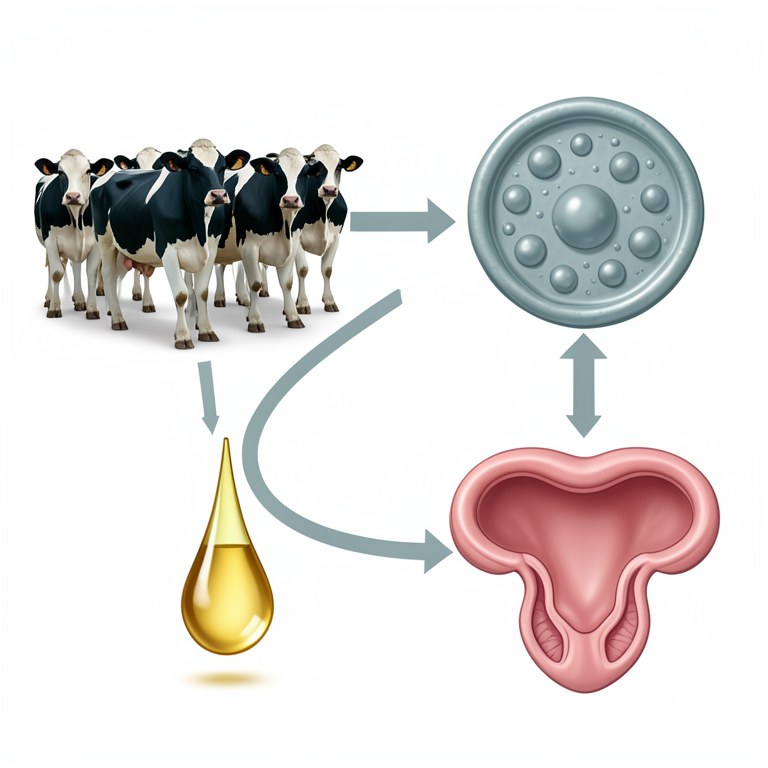
Study Group Allocation
AI-generated conceptual illustration (dairy cows). It explains the idea and does not show study data.
View source evidence ↗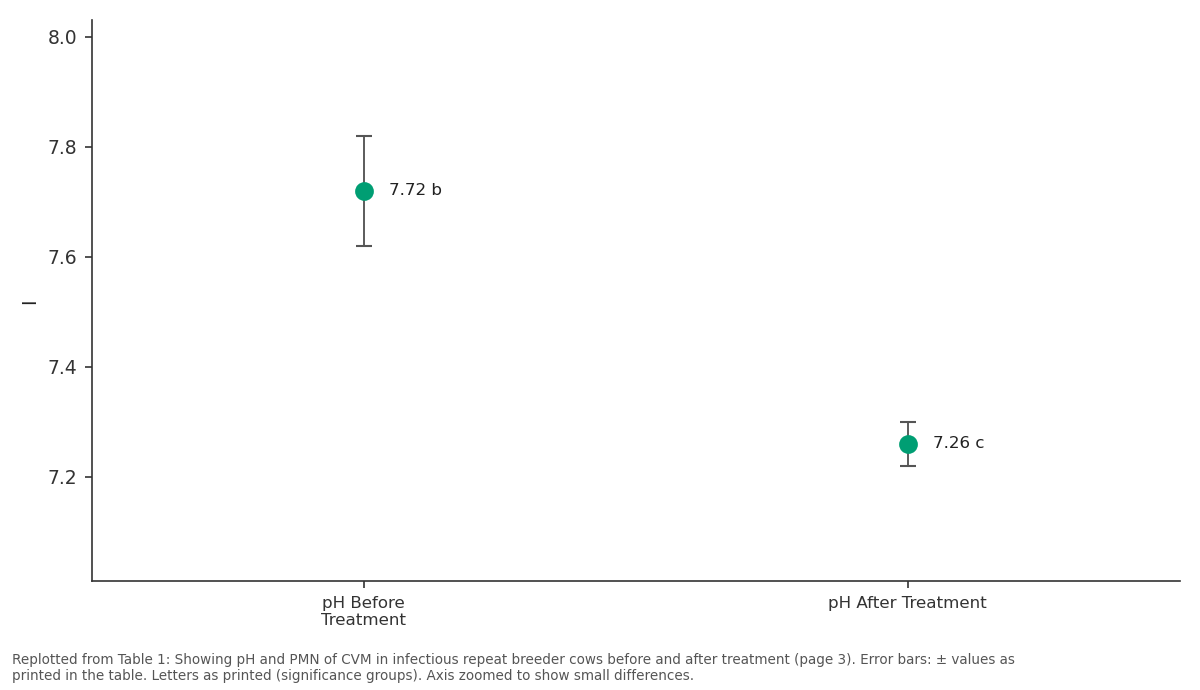
I: pH Before Treatment vs pH After Treatment
Replotted from Table 1 (page 3) of the original paper. Every bar is the paper's own table value.
View source evidence ↗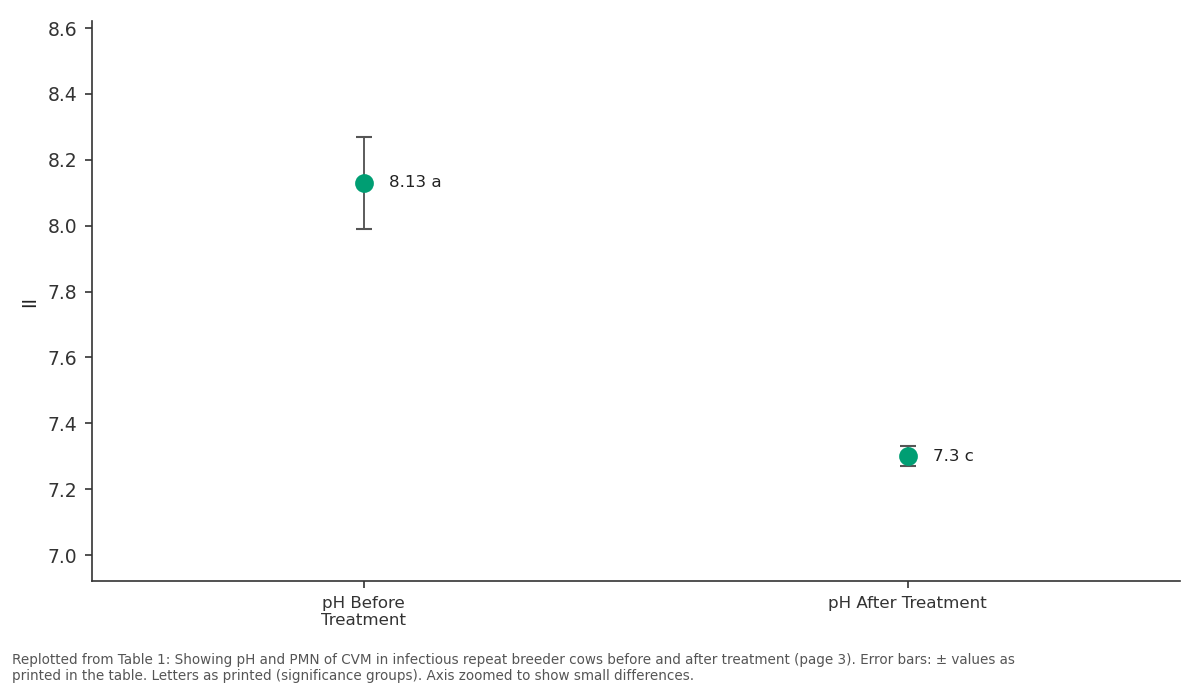
II: pH Before Treatment vs pH After Treatment
Replotted from Table 1 (page 3) of the original paper. Every bar is the paper's own table value.
View source evidence ↗Figures & tables
From the original paper Table 1
 Table 2
Introduction
A repeat breeder is usually defined as a female cow or buffalo that has not conceived after three or more successful services or artificial insemination, showing normal oestrus cycle with apparently healthy genitalia. The key to economically effective dairy farming is good dairy cow fertility [1] . Puerperal diseases are thought to have a deleterious impact on postpartum reproductive success. Repeat breeding is also regarded as one of the most serious reproductive problems in cattle [2] . Diagnosis of uterine infection in infectious repeat breeder cows is based on clinical testing and turbid vaginal discharge observation including pH evaluation, White Side test, PMNL cell count and antibiotic sensitivity test. In animals without signs of clinical endometritis, subclinical endometritis is diagnosed by measuring the proportion of neutrophils present in a sample collected by a small volume lavage of the uterine lumen or by means of cytobrush [3] . The uterine defence mechanism (UDM) stops invading organisms from colonising the uterus under normal circumstances, but when this mechanism is disrupted or weakened, bacteria can colonise the uterus and cause endometritis. The physico-chemical properties of cervical mucus are disturbed by endometritis. Examining the appearance, consistency and pH of cervical mucus may be helpful in determining its cause. Antibiotics and antiseptics as well as hormonal therapy are used to treat endometritic cows [4] . Immunomodulation to improve innate immune status is a new clinical approach for treating infectious repeat breeding animals, and a variety of immuno modulators such as autologous plasma, oyster glycogen, E. coli lipopolysaccharides, colostrum, colostral whey, levamisole, interleukin-8 human recombinant, Bacteria Free Filtrate (BFF), and leucotriene B4 can be used. Their dosages and administration regimens vary depending on the severity of the infection. Neem has been termed "the miracle tree" and "nature's pharmacy." All parts of this tree, especially the leaves, bark, seed oil, and refined products, are frequently utilised to cure a variety of diseases. It is also known as "Sarvaroganivarini," which means "all-curer". Despite the fact that many chemicals have been extracted from various components, only a handful have been tested for biological function. Nimbidin, a significant crude bitter component isolated from the oil of A. indica seed kernels, has a variety of biological functions. Tetranortriterpenes such as nimbin, nimbinin, nimbidinin, nimbolide, and nimbidic acid have been isolated using this basic concept [5] . Hence, the present study was aimed to determine the effect of therapies with Ozone and autologous plasma in Repeat breeding cows in association with the recovery, conception rate and pregnancy rate.
Material Method Selection of animals
In this research work, a total of 40 repeat breeder cows were selected. Cows were attended with a history of at least 100 days of calving and daily cyclicity but failure of conception within three inseminations or natural services. Endometritis, also considered to be the main cause of bovine repeat breeding, most frequently occurs during the postpartum period [6] . Animals reported as repeat breeders were examined at field level and laboratory investigation was attempted with data interpretation.
Diagnosis
Repeat breeder animals having turbid, cloudy discharges or admixtures of reddish, yellowish, greenish estrual discharges, altered feel of horns were evaluated on estrous phase for endometritis by Gynaeco-clinical analysis with pH estimation, White side test (WST), PMN cell count and Spinnbarkeit test. Thus, on diagnosis, 40 cows were found to be suffering from infectious endometritis. The white side test is the best field test for diagnosing the severity of non-specific bacterial infection of genitalia of repeat breeding cows and reported that 30.75%, 55.50%, 8.50% and 5.25% of cases showed no colour, light yellow, yellow to dark yellow, respectively, resulting absence, mild, moderate and severe endometritis [7] .
Collection of uterine swabs
A good indicator of sterile genitalia is clear cervical mucus. Cervical mucus shows many specific characteristics, such as colour, consistency, viscosity, odour, appearance, through which female reproductive health can be evaluated. The cervical mucus must be clear, transparent, viscous, odourless and uniform for higher conception rates. Cervical mucus of each infectious repeat breeder cow was collected aseptically on the day of estrus from cervix directly by aspiration with sterile AI sheath and 20 ml syringe. The aspirated cervical mucus was transferred into sterile glass tube for further evaluation.
Clinical evaluation pH of cervico-vaginal discharge was studied immediately after collection of the sample, with digital pH meter. Data was recorded and interpreted. The pH value in inflammatory conditions alters its normal range. Revealed that in infectious conditions, the pH of cervical mucus is higher than average as he found a mean pH value of 8.027 ± 0.11 and 7.458 ± 0.11, before and after treatment, respectively [8] . In the reproductive environment, altered cervical pH is an indication of changes. Therefore, in repeat breeder endometritic cases, cervical pH should be raised to normal to improve the rate of conception by appropriate treatment. The simplest method, which describes the degree of endometritis, is the white side test. White side test (WST) was carried out to analysis the grades of nonspecific bacterial infection of reproductive tract of repeat breeding cows by simple and rapid test under field condition. Each sample collected aseptically was mixed with equivalent volume of 5% NaOH in a test tube and mixture was heated up to the boiling point. Result of the test was noted with change in color of mixture, where yellow coloring indicates as positive for endometritis and no change in color was confirmation of no uterine infection.
Grouping of Animals and Treatment protocols
Total 40 animals were divided equally in 2 different groups viz. Group-I (20 cow) and Group-II (20 cow) treated with E. coli LPS @ 100 mcg/ml activity in 30 ml sterile PBS and neem oil @10 mcg/ml in 30 ml distilled water in intrauterine route, respectively.
Drugs used
In the present study, as an immunomodulator, powdered Escherichia coli lipopolysaccharides (SIGMA, USA) were utilised. Lipopolysaccharides isolated through phenol extraction contain 10,000 endotoxin units per mg in the 10 mg serotype 026: B6. At the period of estrus, 100g of E. coli LPS was dissolved in 30 ml of PBS and delivered intrauterine. For preparation of methanolic fraction the neem oil was obtained from local market. It was subjected to fractionation by mixing equal volume of methanol to the equal volume of neem oil. There was strongly shaken the mixture upto for 10 minutes and poured in a separating funnel. It was allowed to stand for another 10 minutes. The supernatant, methanol miscible fraction was collected and kept in a vacuum desiccator for complete evaporation of solvent and stored till use.
Result and Discussion
The pH observations in selected infectious repeat breeder cows were recorded as per normal value i.e. mildly acidic (6.5-6.9), normal (7.0-7.5), mildly alkaline (7.6-8.0), moderately alkaline (8.1-8.5) and highly alkaline (8.6 and above). It was noted that 13 (32.50%), 22 (55.00%) and 5 (12.50%) cows showed slightly, moderately and highly alkaline pH, respectively. In present research work (Group I) use of E. coli LPS @ 100 mcg/ml activity in 30 ml sterile PBS was utilised for intrauterine therapy two times at 24 hr interval on the day of oestrus. The average pH, PMN cell count, Spinnbarkeit value and white side test of repeat breeder cows was 7.72±0.10, 08±0.46, 9.2±0.27 cm and all positive for white side test, respectively. After treatment the (Group I) pH, PMN cells count and Spinnbarkeit value were found to be 7.26±0.04, 3.18±0.27, and 16.93±0.33 cm (table no 1). This finding was in agreement with [9] and [10] they were observed that pH of CVM in infectious repeat breeder cows before treatment was 8.50±0.07 and 8.24±0.09 in both treatment groups, which was reduced after treatment to 7.22±0.04 and 7.27±0.03 in recovered cases under these groups, respectively. Average PMN cell counts in before treatment was 8.58±0.38 and after treatment 3.42±0.24, respectively [11] . Thus, reduced number of PMN cells were confirmed the recovery of cases. The average spinnbarkeit value of estrual mucus from natural cyclic and repeat breeder cows studied was 14.40±0.30 cm and 11.81±0.45 cm, respectively [12] . The decrease in CVM pH and bacterial load after E. coli LPS treatment could be attributable to an increase in phagocytosis, which would lead to infection clearance by boosting the uterine defence system. The bacteria were eliminated from the uterus by phagocytosis after E. coli LPS stimulated macrophages, which released interleukin-1 and interleukin-8, which boosted the production of granulocyte macrophage-colony stimulating factor (GMCSF) enabling rapid recruitment of PMN cells into the uterus [13] . E coli LPS also induced lymphocyte proliferation and local antibody synthesis, resulting in improved opsonization and phagocytosis [14] . White side test was shown to be negative in 16 (80.00%) recovery in (groups I) cow. Over all recovered cases next estrous artificial insemination was done. There was 14 (73.68%) cow concived and 14 (70.00%) was pregnant in (table no 2), respectively. This finding is in agreement with [15] observed that following E. coli LPS infusion, 80.00% animals were recovered [26,17] , 78.00 per cent recovery observed [18] .
The economically important uterine diseases in cattle are commonly associated with bacterial infection by E. coli, Trueperella pyogenes, Fusobacterium necrophorum or Prevotella species [19] . The most significant pathogenic bacteria responsible for uterine infection are E. coli, which produce an endotoxin lipopolysaccharide (LPS) that is present in their cell wall. Establishment of uterine bacterial infection may also depend on metabolic disease, although the specific mechanisms are still not clear or by endocrine environment, that affects the likelihood of bacteria elimination. Infectious repeat breeding cases in Group-II were treated with neem oil @10 mcg/ml in 30 ml distilled water was utilised for intrauterine therapy two times at 24 hr interval on the day of oestrus. The average pH, PMN cell count, Spinnbarkeit value showed 8.13±0.14, 9.6±0.44, 9.50±0.56 cm and all tested positive for white side test, respectively. After treatment the (groups II) pH, PMN cells count and Spinnbarkeit value were found to be 7.30±0.03, 3.50±0.24 and 16.14±0.40 cm (table no 1). These finding was agreement with [20] reported that the mean pH ranged from 7.75±0.11 to 8.05±0.11 in pretreatment oestrus and it declined considerably in succeeding oestrus in treated animals and [21] reported that substantially higher pH of estrual mucus in normal crossbred cows than in repeat breeder cows. Reduction in bacterial load in our animals might have occurred, due to antibacterial activity of methanol fractionated neem oil [22] . The Neem oil and herbal ecbolic tablets therapy was very effective in cows to minimise the PMN cell value. The average PMN cell value of before treatment was (9.45±0.34) and after treatment (2.92±0.22), respectively [23] . The mean spinnbarkeit value of cervical mucus was determined to be 14.59 ± 0.57 cm for fertile cows and 9.83 ± 0.30 cm for nonfertile cows [21] . White side test was shown to be negative in (groups II) 15 (75.00%) recovery was observed, respectively. The recovered cases in next estrous artificial insemination was done. There was 12 (63.00%) conception and 12 (60.00%) pregnancy rate observed in (table no 2), respectively. These finding was in agreement with [24] was studied the efficacy of Neem in cases of endometritis but the extracts or oil form of Neem can be employed. He had a (70.73) per cent success rate. [25] found that Neem oil had a success rate of (87.50) per cent. Similarly, a (75.00) and (50.00) per cent conception rate has been found, respectively. [23] reported that the conception rate was (66.66) per cent, and [11] reported that the recovery rate was (75.00) per cent, these findings was similar with present study.
Figures and tables from the paper
| Treatment Groups | No. of Obs. | pH Before Treatment | pH After Treatment | PMN Before Treatment | PMN After Treatment | Spinnbarkeit Before Treatment | Spinnbarkeit After Treatment |
|---|---|---|---|---|---|---|---|
| I | 20 | 7.72±0.10b | 7.26±0.04c | 08±0.46b | 3.18±0.27c | 9.2±0.27c | 16.93±0.33a |
| II | 20 | 8.13±0.14a | 7.30±0.03c | 9.6±0.44a | 3.50±0.24c | 9.50±0.56c | 16.14±0.40ab |
Table text extracted from the original PDF; superscript letters are shown inline. The original table image is below.
View original table image
| Sr | Treatment groups | Recovery rate % | Conception rate % | Pregnancy rate % |
|---|---|---|---|---|
| 1. | ECO | 80.00 | 73.68 | 70.00 |
| 2. | NO | 75.00 | 63.00 | 60.00 |
Table text extracted from the original PDF; superscript letters are shown inline. The original table image is below.
View original table image
References
26 in the original paper- Amiridis GS, Tsiligianni TH, Dovolou E, Rekkas C, Vouzaras D, Menegatos I. Combined administration of gonadotropinreleasing hormone, progesterone, and meloxicam is an effective treatment for the repeatbreeder cow. Theriogenology. 2009;72(4):542-548.
- Yusuf M, Nakao T, Ranasinghe RBK, Gautam GST, Yoshida C, Hayashi A. Reproductive performance of repeat breeders in dairyherds. Theriogenology. 2010;73(9):1220-1229.
- Gilbert R, Shin S, Guard C, Erb H, Frazblat M. Prevalence of Endometritis and its Effects on Reproductive Performance of Dairy Cows. Theriogenology. 2005;64:1879-1888.
- Vijayaranjan A, Chandrahasn C, Ezakial Nepolean RZ. Effect of Pre and post insemination substitution of GnRH in repeat breeding cows. Indian Vet. J. 2007;84:940-943.
- Chhibber S, Sharma N. Medicinal and Therapeutical Potential of Neem (Azadirachta indica): A Review. International Journal of Scientific and Research Publications, 2014, 4(5).
- Arthur G, Noakes D, Pearson H. Veterinary Reproduction and Obstetrics (Theriogenology). 6th edn., ELBS., Bailliere Tindalle, London, UK, 1989.
- Bhat FA, Bhattacharyya HK, Hussain SA. White side test: A simple and rapid test for evaluation of nonspecific bacterial genital infections of repeat breeding cattle. Veterinary research forum: an international quarterly journal. 2014;5(3):177-180.
- Kumar R, Kumar D, Roy B. Studies on repeat breeding of cows. Buffalo Bulletin, 2011, 30(3).
- Puro NA. Efficacy of E. coli LPS and Lugol's iodine in endometritis treatment of dairy animals. M.V.Sc. thesis International Journal of Biology Sciences https://www.biologyjournal.net/ submitted to College of Veterinary and Animal Sciences, Parbhani, 2016.
- Lawange SR. Efficacy of garlic extract, lugol's iodine and e.coli lps therapies in cases of infectious repeat breeder cows, M.V.Sc. thesis submitted to College of Veterinary and Animal Sciences, Parbhani, 2018.
- Pupalwad SB. Studies on herbal ecbolic tablets along with garlic extract, neem oil, lugol's iodine and E. Coli LPS for intra-uterine therapy in infectious repeatbreeder buffaloes, M.V.Sc. thesis submitted to College of Veterinary and Animal Sciences, Parbhani, 2021.
- Gohel MM, Kavani FS, Hadiya KK. Physical properties of estrual mucus in gir cows with reference to their body condition score and fertility. The Indian Journal of Field Veterinarians. 2012;8(2):9-13.
- Methai A, Rajasundaram RC. Histomorphological studies on uterine endometrium in crossbred cows with endometritis pre and post treatment with intrauterine lipopolysachharides. In: Proceedings of XIX Annual convention of ISSAR and National symposium on Current Reproductive Technologies for improvement of Livestock production in India, 22-24th August 2003, Kolkotta, India. 2003, pp. 54.
- Vegad JL, Katiyar AK. "Text Book of Veterinay Special Pathology". International Book Distributors Co. Lucknow, 2001, pp. 229.
- Desai SP, Sharma VK, Chauhan PM, Sutaria TV, Suthar BN, Mody SK. Gynaeco-clinical and physical properties of cervical mucus in repeat breeding crossbred cows following e. coli lps therapy, Ruminant Science, 2018, 7(1).
- Sa'Ayinzat F, Bawa E, Ogwu D, Ayo J. HesperidinSources, chemistry, extraction, measurement and biologic effects on reproduction in animals: A review. Int J Vet Sci Anim Husb. 2021;6(4):1-8.
- Sarma D. 'Efficacy of certain immunomodulators in the treatment of endometritis in cattle'. Ph.D. Thesis, Birsa Agricultural University, Ranchi, Jharkhand, India, 2007.
- Singh J, Nanda AS, Dhaliwa lGS, Pangaokar GR. Treatment of bacterial endometritis in crossbred cows using intrauterine oyster glycogen, a non-specific immuno modulators. Indian J Anim Sci. 2003;73:84447p.
- Mordaknd R, Stewart PA. Periparturient stress and immune suppression as a potential cause of retained placenta in highly productive dairy cows: examples of prevention. Acta Vet Scand. 2015;57:84.
- Neeru B, Barman P, Yadav MC. Administration of herbal antimicrobials recovers the endometritis in buffaloes. Indian Journal of Animal Sciences. 2009;79(7):679-680.
- Rangnekar MN, Dhoble RL, Gaccihe MG, Ingawale MV, Sawale AG, Jadhav JM. Studied physical properties of oestrual cervical mucus in repeat breeder crossbred (HF) with reference to fertility. Indian Journal of Animals Science. 2002;72(12):1122-1124.
- Barman P, Yadav MC, Kumar H, Meur SK, Rawat M. Antibacterial efficacy of neem oil fractions on clinical isolates of endometritic cows. Indian Journal of Animal Science. 2009;79(7):665-668.
- Chavhan GU. Comparative efficacy of herbal ecbolic tablets along with different intrauterine therapies in infectious repeat breeder cows, M.V.Sc. thesis submitted to College of Veterinary and Animal Sciences, Parbhani, 2021.
- Kumar AMIT, Gupta HP, Prasad SHIV. Studies on the immunomodulatory and therapeutic efficacy of neem (Azadirachta indica) on endometritis in repeat breeding crossbred cows. Indian J. Anim. Reprod. 2013;34(2):15.
- Kumar H, Singh B, Goswami TK, Rawat M. Use of neem preparations for the treatment of endometritis in cows. Adv. Anim. Vet. Sci. 2013;1(6):194-196.
- Saini PS, Nanda AS, Grewal AS, Singh J. Uterine defence modulation for the treatment of repeat breeding due to infectious endometritis in bovines. Indian Journal Animal Sciences. 1999;69:307-309.