
Research article · 2020 · Full text
International Journal of Biology SciencesLevel of disease risk knowledge among abattoir workers in Mukono and neighbouring districts, Uganda
Volume 2(2) · Pages 08–17 · DOI: 10.33545/26649926.2020.v2.i2a.47 ↗
Research areasViral Infections and Vectors
Abstract
Author-writtenA participatory disease search was conducted among abattoir workers in Lugazi abattoir in Buikwe District, Bombo abattoir in Luwero District, Kame Valley abattoir in Mukono District, and Kyengera cattle abattoir and Nakasozi-Buddo Pig Slaughterhouse in Wakiso District with the aim of assessing the level of disease risk knowledge among abattoir workers. Data collection employed PDS tools, including, key informant interviews, focus group discussions, simple ranking, proportional piling, observations, and transect walk through abattoir facilities. In addition questionnaires were administered to a selected number of abattoir workers. Five abattoirs visited were small to medium size in terms of slaughter capacity: Lugazi abattoir (20 heads of cattle and 5 shoats per day); Bombo abattoir (10 heads of cattle and 6 shoats per day); Kame Valley abattoir (20 heads of cattle and 6 shoats); Kyengera Cattle abattoir (20 heads of cattle and 10 shoats per day and Nakasozi-Buddo pig slaughterhouse (30 pigs per day). Many had poor infrastructure, poor sanitation and poor drainage. Of the 52 abattoir workers interviewed, a substantial proportion (67.3%) was aware of zoonoses. However, a reasonable proportion (32.7%) did not know zoonoses. Awareness was on a wide range of diseases and conditions, including, Brucellosis, Tuberculosis, Tetanus, Cysticercosis, Mange, Foot and Mouth Disease, Swine Influenza, Hepatitis B, Lumpy Skin Disease, African Swine fever, Lice, Tunga penetrans, Anthrax, Rift Valley fever, Fasciolosis, Tick-borne infections and Salmonellosis. A reasonable proportion of abattoir workers (40.4%) were aware of consumption of meat from diseased animals, drinking of raw milk, contact, open cuts, aerosols, skin cuts, and tick bites as the mode of infection for disease. Utilization of personal protective equipment, especially boots (98%) and coveralls (90%) was highly observed and practised in the abattoirs visited. A high proportion of abattoir workers (95%) stated they normally observe hand washing in the abattoirs, with 88% practising hand washing during every task but only 40% of the respondents utilized the soap hand wash. In conclusion, improved abattoir facilities, sanitation, drainage and improved biosafety of workers could be achieved through development support towards facilities and an awareness program for abattoir workers on health hazards, zoonotic diseases and protective clothing.
Summary
Source-checkedPlain-language reading of the full paper, prepared with AI and checked against the text. Each point links to the authors' own words.
Why it matters
- Abattoir workers are highly susceptible to occupational and zoonotic diseases because their work involves close contact with animals and infectious materials. View evidence ↗
- The risks in abattoirs include viral and bacterial infections, parasitic zoonoses, and carcinogens. View evidence ↗
The question
- The study aimed to assess the level of knowledge regarding disease risks among abattoir workers in Uganda. View evidence ↗
What they did
- The research was conducted across five facilities: Lugazi, Bombo, Kame Valley, Kyengera cattle abattoir, and Nakasozi-Buddo pig slaughterhouse. View evidence ↗
- The study used a Participatory Disease Search (PDS) approach, combining qualitative tools like interviews and focus groups with quantitative questionnaires and observations. View evidence ↗
- The study interviewed a total of 52 abattoir workers. View evidence ↗
What they found
- While 67.3% of the interviewed workers were aware of zoonoses, 32.7% were not. View evidence ↗
- Among the diseases known to workers, brucellosis was the most recognized (26.9%), followed by tuberculosis (7.7%). View evidence ↗
- Only 40.4% of workers were aware of the various modes of infection, such as consuming diseased meat, drinking raw milk, or skin cuts. View evidence ↗
- The use of basic personal protective equipment was high, with 98% using boots and 90% using coveralls. View evidence ↗
- Although 95% of workers reported hand washing and 88% did so during every task, only 40% used soap. View evidence ↗
- About 63% of respondents confirmed their facilities had necessary infrastructure like roofs and toilets, while 37% reported they did not. View evidence ↗
- Despite recommendations against it, 60% of workers reported eating and drinking within the abattoir. View evidence ↗
What it means
- The authors conclude that worker biosafety and facility sanitation can be improved through development support and targeted awareness programs on health hazards and zoonoses. View evidence ↗
Visual summary
3 visualsIllustrations explain the paper; charts are replotted from the paper's own table values.
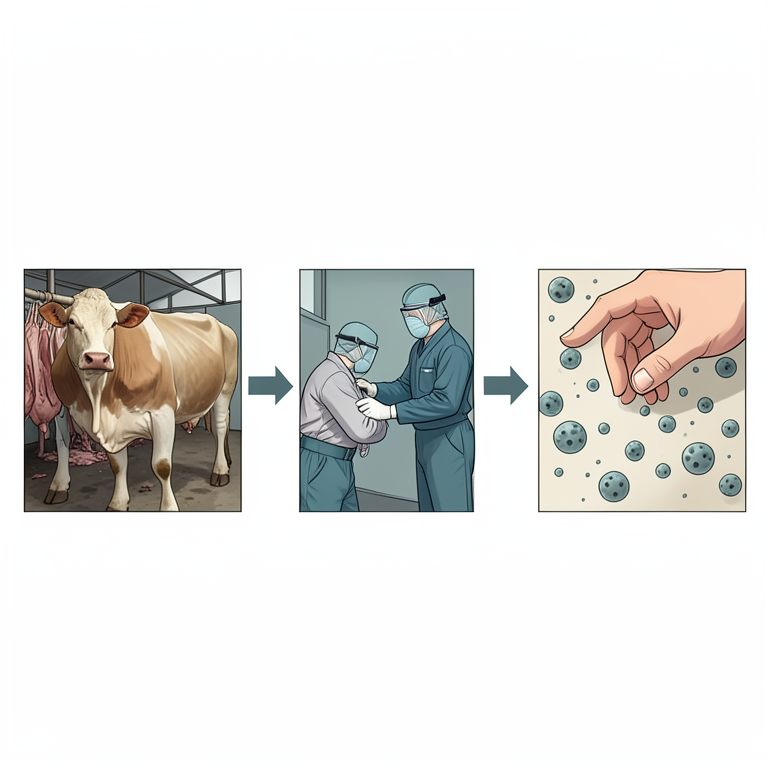
Zoonotic Risk Cycle in Abattoirs
AI-generated conceptual illustration (abattoir workers and cattle in a slaughterhouse setting). It explains the idea and does not show study data.
View source evidence ↗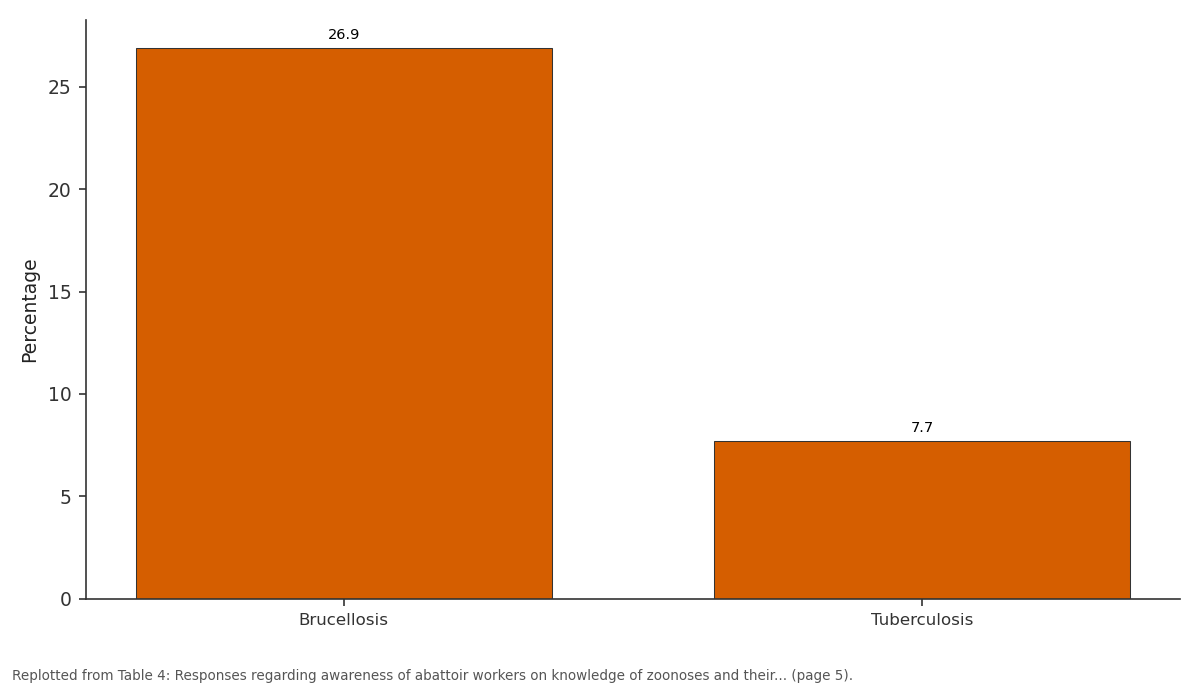
Percentage: Brucellosis vs Tuberculosis
Replotted from Table 4 (page 5) of the original paper. Every bar is the paper's own table value.
View source evidence ↗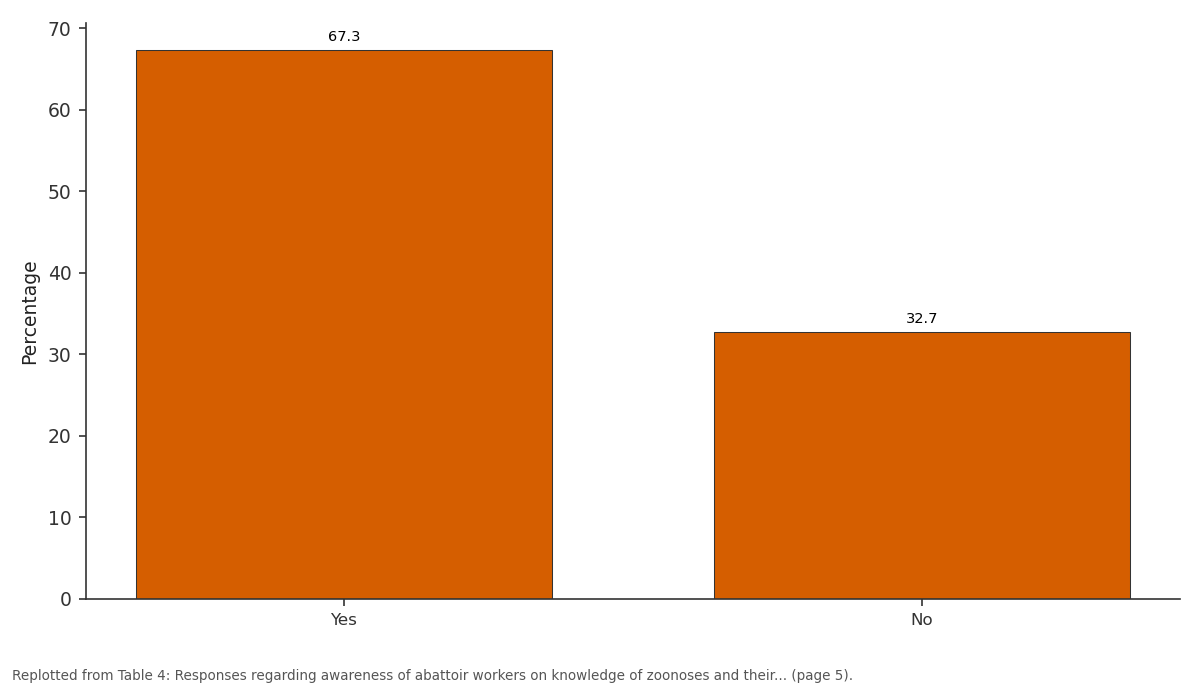
Percentage: Yes vs No
Replotted from Table 4 (page 5) of the original paper. Every bar is the paper's own table value.
View source evidence ↗Figures & tables
From the original paper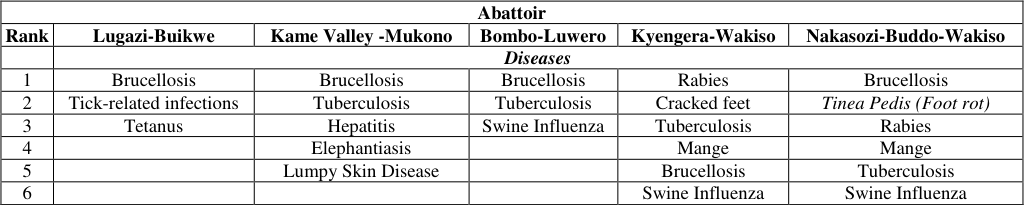 Table 1
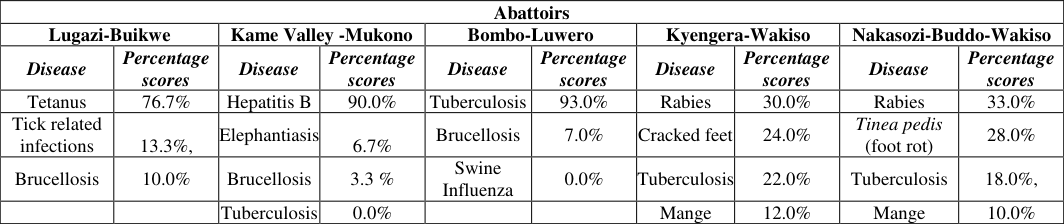 Table 2
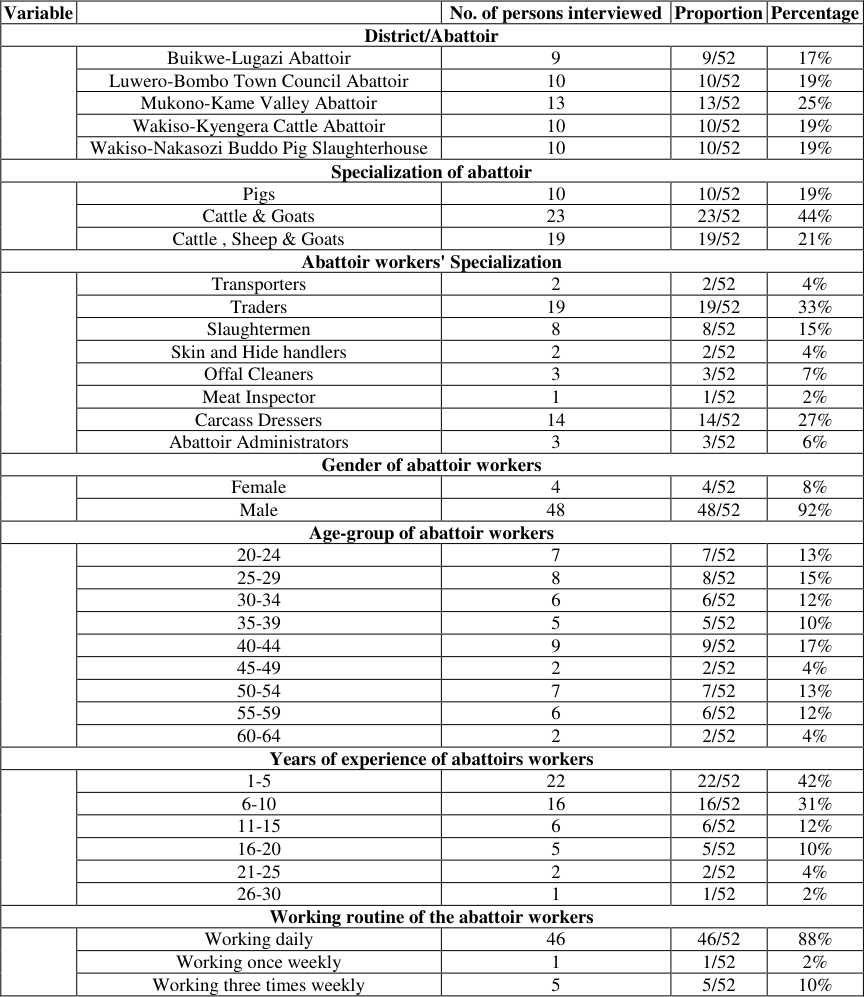 Table 3
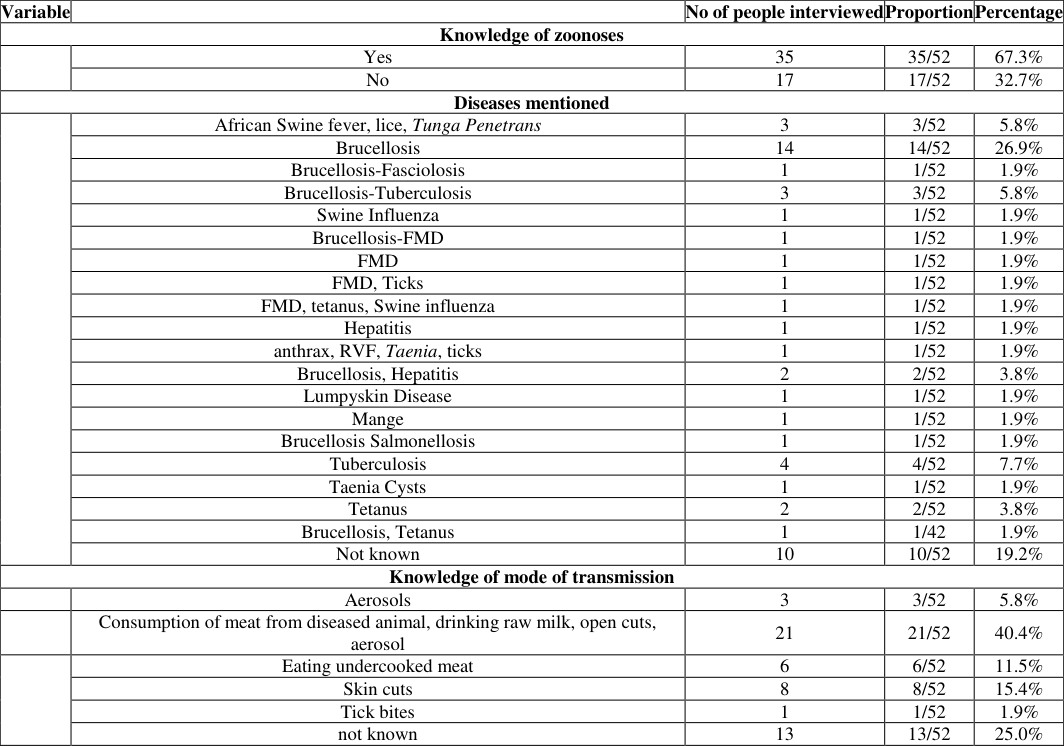 Table 4
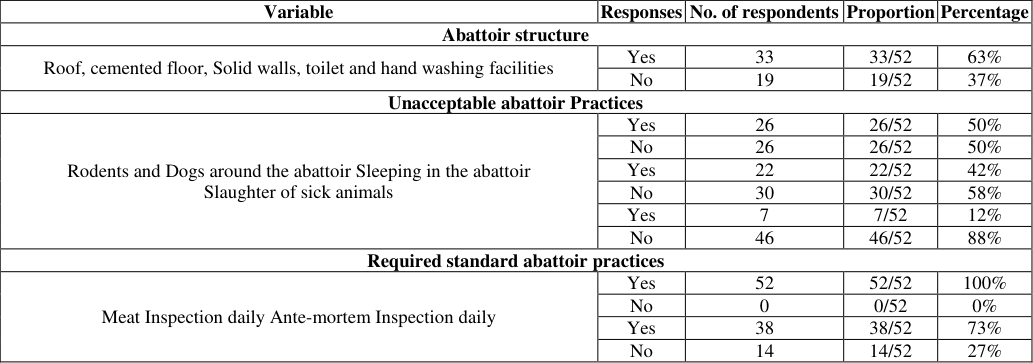 Table 5
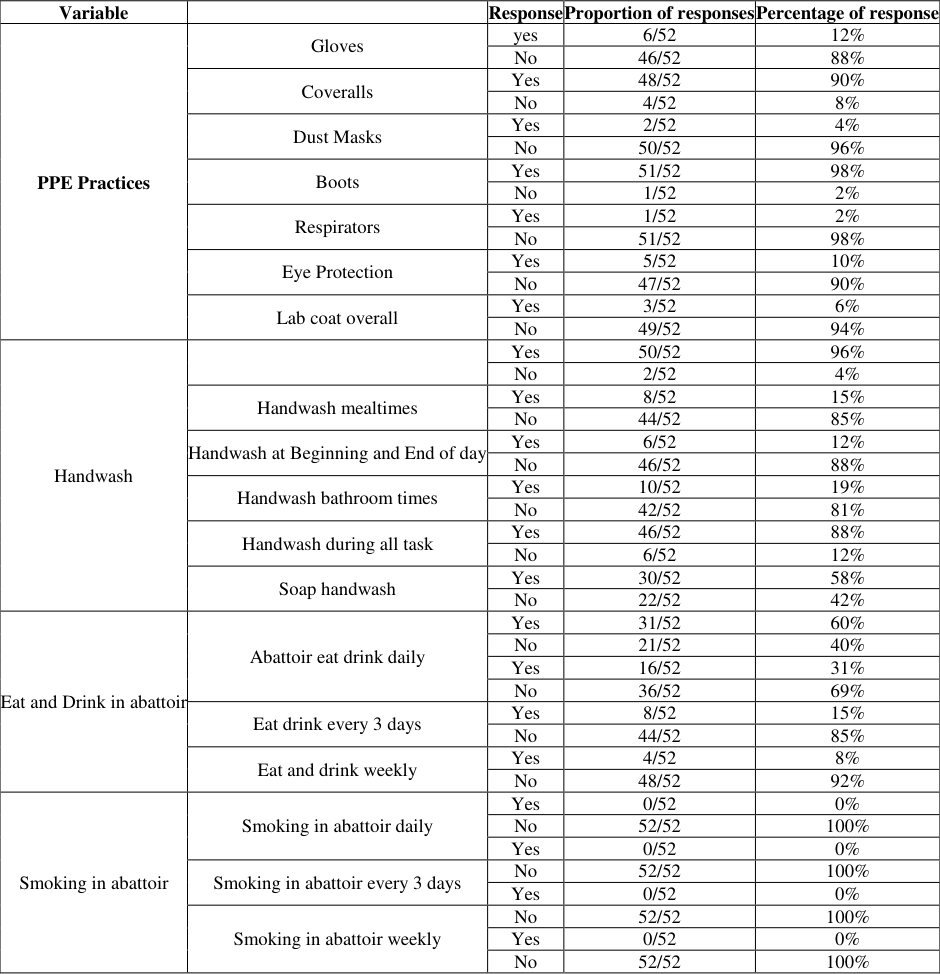 Table 6
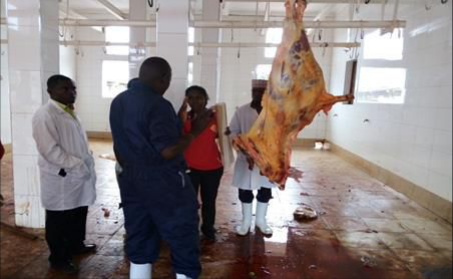 Figure 1
Introduction
Abattoir workers can be categorized into transporters, slaughtermen, carcass dressers, offal cleaners, skins and hides handlers, cleaners, meat inspectors and abattoir administrators. Abattoir workers constitute a major group of people at risk of occupational and zoonotic disease due to their working environment where they come into close contact with animals or their related infectious materials at slaughter. The abattoir risks include parasitic zoonoses, infectious bacterial and viral infections, carcinogens and other potential pathogenic materials. Many studies have been conducted in many parts of the world on abattoir workers. For example, in South Sudan, a large proportion of high-risk groups such as abattoir workers have been reported to have broad knowledge of brucellosis (Madut et al., 2017) [1] . Living in close proximity with the animals, sharing water source with animals and poor hygiene in their environment were identified as possible transmission routes for the disease (Madut et al., 2017) [1] . In a study conducted in slaughterhouses in Western Kenya, found knowledge on zoonotic disease among abattoir workers to be low. Only 31% of workers were aware of disease being transmitted from animals to people (Cook et al, 2017) [2] . Elsewhere in Pakistan, brucellosis seropositivity among abattoir workers was 5.1 times higher than among livestock farmers (Ali et al., 2013) [3] . Furthermore, in a study conducted in Malaysia, the majority of the workers (38.8%) had a low level of knowledge, though 91.7% had a positive attitude and 77.7% had a good practice of compliance (Abdullah et al., 2016) [4] . In addition, 263 abattoir workers across five North Central (NC) states in Nigeria were evaluated on their knowledge of leptospirosis, workplace attitudinal practices and other risks that could favor spread of Leptospira among them. Findings showed that most workers 252 (95.8%) were ignorant of leptospirosis. Other identified risk factors for infection included age of workers, occupation, illiteracy and risks within, such as inadequate protective gear and outside the workplace, such as rodents in homes. All these factors gave a prevalence of 226 (89.7%) Leptospira antibodies in the abattoir workers which they probably contracted through un-mindful handling of infected animal fluids and tissues (Abiayi et al., 2015) [5] . A recent study conducted in Kampala and Mbarara districts among abattoir workers, revealed 10% brucellosis seropositivity with no-use of protective gear being the main factor that increased risk (Nabukenya et al, 2013) [6] . Due to the ever-increasing risk of zoonotic diseases such as brucellosis, leptospirosis, bovine tuberculosis, and Rift Valley fever among abattoir workers, increased awareness about occupational disease hazards and a high level of disease risk knowledge among abattoir workers is paramount in improving their biosafety. To allow for better understanding of the level of disease risk knowledge among abattoir workers in order to improve their biosafety, a study using participatory epidemiology was conducted in abattoirs in Mukono, Buikwe, Luwero and Wakiso districts.
Materials and Method 2.1 Study area
The study was conducted in Lugazi abattoir in Buikwe District, Bombo Town Council abattoir in Luwero District, Kame Valley Slaughterhouse in Mukono District, and Kyengera Cattle abattoir and Nakasozi-Buddo Pig Slaughterhouse in Wakiso District. The abattoirs were specialized in the slaughter of cattle, sheep, goats and pigs.
Selection of study sites
Abattoirs were selected following prior consultations with the District Veterinary Officers in Mukono, Buikwe, Kampala, Luwero and Wakiso and Proprietors of private abattoirs. Upon securing permission to access abattoir facilities, the team then went ahead and undertook the study.
Study design
The study design employed a Participatory Disease Search/Participatory Epidemiology (PDS/PE) approach (Catley & Berhanu, 2003; CAHO, 2011) [7,8] . A team of from the Ministry of Agriculture, Animal Industry and Fisheries employed a combination of a qualitative and quantitative study design. Qualitative aspects involved informal interviews of key informants that consisted of the District Veterinary Officers, Proprietors of private abattoirs and abattoir administrators and focus group discussions with abattoir workers. Quantitative aspects involved administering questionnaires to 9-10 abattoir workers of different specialization per abattoir to assess the level of awareness regarding their knowledge on zoonoses and health hazards that could be contracted during their work in the abattoirs. Questionnaires were administered to people working as transporters, traders, slaughtermen, carcass dressers, offal cleaners, skins and hides handlers, meat inspectors and abattoir administrators. In addition, available secondary data was collected. The team made observations on the environment around abattoirs and made transect walks across abattoir facilities during data collection.
Participatory Disease Search tools
PDS tools used included semi-structured key informant interviews guided by checklists. In addition, focus group discussions were conducted among abattoir workers. Simple ranking and proportional piling was conducted to demonstrate the level of knowledge among abattoir workers on zoonoses. Questionnaires intended to assess the level of awareness of abattoir workers on the level of disease risk knowledge were also administered to various cadres of abattoir workers in Lugazi abattoir in Buikwe District, Bombo Town Council abattoir in Luwero District, Kame Valley Slaughterhouse in Mukono District, Kyengera Cattle Abattoir and Nakasozi-Buddo Pig Slaughterhouse in Wakiso District. Observations were also made around the environment of the abattoirs and transect walks were made across abattoir facilities.
Data storage and analysis
The data obtained from the participatory methods was entered and stored in Microsoft Excel software. For data analysis, descriptive statistics was performed.
Results
Results
General findings 3.1.1 Lugazi abattoir, Buikwe district
According to key informant interviews, Lugazi abattoir has been operational since 2016. Operations begin at 6:00am and end at about 8:30am daily. Average daily slaughter is 20 heads of cattle per day and 5 shoats per day. Meat inspection is done daily. Commonest lesions encountered included Taenia cysts, liverfluke (Fasciola sp), gastrointestinal nematodes, and bruises. Most abattoir workers were exposed to cysticercosis and brucellosis. Previously anthrax had been encountered by abattoir workers exposed to animals outside the slaughterhouse, especially on farms while securing animals for slaughter. Stray dogs and rodents were a common nuisance around the abattoir given its close proximity to the sugar cane plantation. Major challenges abattoir workers faced included, lack of shelter from rain, lack of a toilet, workers not fully certified even after training, lack of separate places for goats and sheep slaughters, poor drainage system, and congestion.
Bombo Town Council abattoir
According to key informant interviews, Bombo Town Council abattoir has an average throughput of 10 heads of cattle and 6 shoats per day. Operations begin at 5:00 am and end at about 8:15 am daily. General challenges faced at the abattoir included, lack of shelter from rain, congestion, limited numbers of taps and water tanks, rough floor which wears out cleaning brushes, a small septic tank that sometimes overflows, inadequate training on abattoir issues and exposure to animal diseases. See abattoir workers going with their day-to-day activities in the photo below.
Kame Valley slaughterhouse in Mukono district
According to key informant interviews, Kame Valley Slaughterhouse in Mukono district conducts an average slaughter of 20 heads of cattle and 6 shoats per day. The structure has a wooden wall but has a cemented floor and good drainage system. Mukono municipal council invested 33 million Uganda shillings to improve the abattoir floor and drainage. The abattoir shares toilet facilities with the market. The main source of water is borehole water. Cases of slaughter of sick or dead animals are rare and on many occasions are intercepted. Political interference, cases of stolen animals and issues of cattle trading licenses are the commonest challenges encounter at the Kame Valley Slaughterhouse.
Kyengera Cattle abattoir, Wakiso district
According to key informant interviews, Kyengera Cattle abattoir has an average throughput of 20 heads of cattle and 10 shoats per day. Operations begin at 5:00 am and end at about 8:00 am daily. It has well established infrastructure, good sanitation and better drainage. See abattoir workers going with their day-to-day activities in the photo above.
Nakasozi-Buddo pig slaughterhouse
Key informant interviews on Nakasozi-Buddo Pig Slaughterhouse revealed that the facility started in 2016. Average daily slaughter is 30 pigs. The slaughterhouse mainly supplies pork to Kampala, Kyengera, Nansana, Buddo, Seeta and Mukono. Fortunately, it had never registered any incidents of zoonosis. Hot water treatment of pork was the common practice to deal with health hazards. General challenges faced by abattoir workers included Injuries through instruments, feet cracks, workers infused with smell from pork, infestation of workers by parasites from pigs, and workers contract Tinea pedis (foot rot). See abattoir activities in the photos below.
Participatory Epidemiology process and findings
At each of the abattoirs visited, abattoir workers were asked to mention the likely infections they were at risk of acquiring considering their daily routines at the abattoir. Using simple ranking, the abattoir workers were asked to rank diseases according to relative frequencies and their finding are shown in Table 1. According to the findings, Brucellosis, Rabies and Tuberculosis were the zoonoses abattoir workers had the highest likelihood of acquiring during their daily routines. The highest number of abattoir workers interviewed (33%) were traders, followed by carcass dressers (27%), then slaughtermen (15%), offal cleaners (7%), abattoir administrators (6%), transporters (4%), skin and hides handlers (4%) and lastly meat inspectors (2%). Regarding their gender, most of them were males (92%) with few females (8%).
| Abattoir | — | — | — | — | — |
|---|---|---|---|---|---|
| Rank | Lugazi-Buikwe | Kame Valley -Mukono | Bombo-Luwero | Kyengera-Wakiso | Nakasozi-Buddo-Wakiso |
| Diseases | |||||
| 1 | Brucellosis | Brucellosis | Brucellosis | Rabies | Brucellosis |
| 2 | Tick-related infections | Tuberculosis | Tuberculosis | Cracked feet | Tinea Pedis (Foot rot) |
| 3 | Tetanus | Hepatitis | Swine Influenza | Tuberculosis | Rabies |
| 4 | Elephantiasis | Mange | Mange | ||
| 5 | Lumpy Skin Disease | Brucellosis | Tuberculosis | ||
| 6 | Swine Influenza | Swine Influenza |
Table text extracted from the original PDF; superscript letters are shown inline. The original table image is below.
View original table image
Regarding ages, the highest proportion of abattoir workers interviewed lay within the age-group of 40-44 years (17%), followed by 25-29 years (15%), 20-24 years (13%), 50-54 years (13%), 55-59 years (12%), then 35-39 years (10%), 45-49 years (4%) and lastly 60-64 years (4%). According to their years of experience, the highest proportion of abattoir workers interviewed (42%) had worked for 1-5 years, followed by 6-10 years (31%), 11-15 years (12%), 16-20 years (10%), 21-25 years (4%) and lastly 26-30 years (2%).
Regarding their working routine, the majority of the abattoir workers interviewed worked daily (88%) but few worked three times per week (10%) and once per week (2%). Regarding standard practices of meat inspection and antemortem inspection, 100% of the respondents revealed meat inspection was performed in the abattoirs daily. In addition, 73% of respondents stated ante-mortem inspection was conducted daily in the abattoirs. Regarding handwash, 96% of the respondents stated they normally observe hand wash in the abattoirs, with 88% practising hand wash during every task. Unfortunately, only 58% of the respondents utilized the soap hand wash, and19% of the respondents observed hand wash only at bathroom times, while 15% of the respondents observed hand wash only at meal times, and 12% of the respondents observed hand wash only at the beginning and end of the day.
Normally eating and drinking in the abattoir is not recommended. However, 60% of the respondents stated that they usually eat and drink in the abattoir with 31% of the respondents eating and drinking daily, while 15% do eat and drink every three days per week and 8% do eat and drink once a week in the abattoir. Smoking in the abattoir is never recommended. Accordingly, 100% of the respondents stated they did not smoke in the abattoir at all. [2] . Studies conducted elsewhere found these facilities to be privately owned and normally rented to butchers who employ their own team of slaughter workers (Clottey, 1985, FAO, 2010) [9,10] . [10,11,2] . It is recommended that the floor of the slaughterhouse should be hard concrete and impervious, to reduce dirt in the slaughterhouse and allow drainage and ease of cleaning (Herenda et al., 1994) [11] . Equally important, a roof is important to protect the carcass from the weather and to reduce the temperature in the slaughterhouse (Mann, 1984, Bengtssom & Whittaker, 1988) [12,13] . Lugazi abattoir did not have good toilet facilities. Moreover, lack of toilets often leads workers to regularly defecate in the open, a behaviour that may promote the persistence of zoonotic diseases such as cysticercosis (Cook et al., 2017) [2] . As a result of noncompliance such slaughterhouses with poor sanitation, poor drainage, lack of toilets and handwash facilities normal face closure by the Veterinary Regulatory Authorities (Cook et al., 2017) [2]. [6] . Elsewhere in South Sudan, a large proportion of high-risk groups such as abattoir workers have been reported to have broad knowledge of brucellosis (Madut et al., 2017) [1] . In a study conducted in Nigeria, 90.3% (102/113) of abattoir workers were aware of bovine tuberculosis being contracted from cattle (Sa'idu et al., 2015) [14]. In addition, cysticercosis prevalence in pigs at slaughter in this region has been reported to be 37.6% (Thomas, 2016) [15] . Moreover, hepatitis E is considered a potential emerging zoonotic disease risk to pig slaughterhouse et al [16,17,2] . At regional level, brucellosis, rabies and tuberculosis are considered important zoonoses, given their human health impact (Magona et al., 2016) [18] . There was rather a balanced representation of views from the five abattoirs visited during the questionnaire interviews given similar proportions of abattoir workers sampled from the various abattoirs. The proportions among the 52 abattoir workers ranged from 17% to 25% per abattoir. In each abattoir visited, people were selected for the questionnaire interview by the Abattoir Administrators and Abattoir Chairperson in compliance to the objectives of the study. In a similar study conducted in Nigeria, personnel selection from each abattoir included in the study was based on compliance with the interviewer and punctuality in daily abattoir activities (Sa'idu et al., 2015) [14] .
In [2] . According to different job groups among abattoir wor kers interviewed, 33% were traders, then 27% carcass dresser, 15% slaughtermen, 7% offal cleaners, 6% abattoir administrators, 4% transporters, 4% skin and hides handlers and 2% meat inspectors. Other studies have reported different proportions of different job groups among abattoir workers. Cook et al. (2017) [2] reported 11% slaughtermen, 75% flayers, 4% Cleaners, 8% offal cleaners and 2% forepersons or owners in a study conducted in Western Kenya. In terms of responsibility, traders supplied the animals for slaughter and distributed and sold meat to consumers. Carcass dressers were responsible for skinning and sectioning the carcass. Slaughtermen were responsible for cutting the animals throats. They were practising Muslims in the mixed ruminant or cattle slaughterhouse to allow all meat products be sold as Halal. Offal cleaners were responsible of cleaning offals, often ensuring minimal contamination of meat. Abattoir administrators were responsible for overall management of the slaughterhouse and its daily activities. Transporters were responsible for providing transport for delivery of animals to the slaughterhouse. Skins and hides handlers were responsible for cleaning, drying and sorting out skins and hides. Meat inspectors were professionals that conducted meat inspection, ante-mortem inspection and ensured meat complied to required standards, including prevention of slaughter of sick animals. The abattoir workers ranged in age from 20 to 64 years with a highest proportion (24%) lying within the age-group 50-54 years and highest proportion (38%) having worked for 1 to 5 years. Other studies have reported older workers up to 82 years and more experienced workers (mean experience 9.35 years) (Cook et al., 2017) [2] . Most abattoir workers interviewed worked daily (86%) and were males (92%) with few females (8%). Elsewhere studies have reported males constituting 97% and females 3% of the slaughterhouse workers (Cook et al., 2017) [2] .
Regarding awareness of abattoir workers on knowledge of zoonoses, a substantial proportion of abattoir workers interviewed (67.3%) were aware of zoonoses but with a reasonable proportion of abattoir workers (32.7%) not knowing zoonoses. Poor awareness and knowledge of zoonosis combined with food consumption habits and poor animal husbandry are likely to expose abattoir workers to an increased risk of contracting zoonosis. Low knowledge regarding zoonotic infection was also reported in a KAP survey among the abattoir workers in Malaysia (Abdulahi et al., 2016) [4] . It was interesting to note that the substantial proportion of abattoir workers that were aware of zoonoses, knew a wide range of diseases, including, brucellosis, tuberculosis, tetanus, teania cyst, mange, foot and mouth disease, swine influenza, hepatitis, lumpy skin disease, African swine fever, lice, Tunga penetrans, anthrax, Rift Valley fever, fasciolosis, tick-borne infections and salmonellosis. In line with this, 61% of the respondents reported awareness on brucellosis, with being aware of its mode of transmission in a study conducted among abattoir workers in Kampala and Mbarara (Nabukenya et al, 2013) [6] . Elsewhere in a study conducted in western Kenya 42% of the abattoir workers knew that meat could be a source of disease (Cook et al., 2017) [2] . Unfortunately, a reasonable proportion (23.8%) of the abattoir workers interviewed did not know any mode of transmission of disease from animals and their materials to man. Other studies have also shown a proportion of abattoir workers not having awareness on zoonoses (Cook et al, 2017) [2] . In addition, a lack of knowledge regarding the process of meat contamination is considered the biggest hindrance to improving conditions in the meat industry (Mann, 1984) [12] . Training personnel in meat hygiene has been recommended for improving conditions in slaughterhouses and to reduce bacterial contamination of meat and disease exposure in workers [FAO, 2010; Wamalwa et al., 2012] [10,19] . A substantial proportion (57%) of the respondents confirmed abattoir structures had roofs though a fairly large proportion (43%) of respondents stated the abattoir structures did not have roofs. Other studies in region reported only 65% of slaughterhouses to have good infrastructure: roof, cement floor, and solid walls (Cook et al, 2017) [2] . Sixty percent of the abattoir workers reported observing rodents and dogs around abattoirs. Close proximity of the abattoir to sugar cane plantations was cited by abattoir workers as a likely risk factor. Presence of pests and roaming animals in the slaughterhouse has been reported as a factor contributing to transmission of infectious disease, either through contamination of meat or eating of meat scraps by dogs or rats, which lead to persistence and spread of diseases such as echinococcosis and leptospirosis (Mann, 1984; Bengtssom et al., 1988; Brown et al., 2011; Cook et al., 2017) [12,13,20,2] . In a study conducted in western Kenya, a large number of slaughterhouses (78%) reported seeing dogs around the facility with a smaller percentage seeing rats (12%) (Cook et al., 2017) [2] .
A high proportion of respondents revealed sleeping in the abattoir (60%) and slaughtering of sick animals (86%) was a prohibited practice. Sleeping in the abattoir facilitates disease transmission to abattoir workers. Slaughtering infected animals has been shown to be a risk factor for direct infection with zoonotic diseases such as anthrax, brucellosis, and leptospirosis [Cook et al., 2017] [2]. All abattoir workers interviewed (100%) revealed meat inspection was performed in the abattoirs daily. This was desirable since all abattoirs supplied meat sold to consumers. Other studies have reported 90% of slaughterhouses having daily meat inspections, with meat inspector at times visiting butcheries to inspect the meat if they were too late to perform meat inspection at the slaughterhouses (Cook et al., 2017) [2] . A substantial proportion (67%) of abattoir workers revealed that antemortem inspection was conducted daily in the abattoirs. This was much higher than 7% reported in other studies in region (Cook et al., 2017) [2] . It has been observed that where meat inspection is commonly performed at the butchery, ante mortem inspection, which is essential for preventing the slaughter of sick animals, and detailed carcass and organ examination for signs of disease is hindered (Cook et al., 2017) [2] . Utilization of personal protective equipment was highly observed and practised in the abattoirs visited. Boots (98%) and Coveralls (90%) were personal protective equipment commonly used while Gloves (5%), Dust Musks (0%), Respirators (2%), Eye protection (5%) and lab coat overalls (2%) were rarely used by abattoir workers. On the contrary, limited utilization of protective equipment has been reported in slaughterhouses in studies elsewhere, with only 27% of the slaughterhouses using PPE (Cook et al., 2017) [2] . It is likely that abattoirs visited normally provide workers with basic protective equipment such as rubber boots and coverall, while in other regions very few slaughterhouses do provide protective equipment for workers, with workers having to provide their own protective coats in 78% of slaughterhouses and workers providing their own rubber boots in 84% of slaughterhouses (Cook et al, 2017) [2] . Under such an arrangement, cost of protective equipment limits its utilization by abattoir workers. Protective clothing is necessary within the slaughterhouse to primarily protect the meat product from contamination but has also been shown to protect meat handlers against directly transmitted zoonoses such as leptospirosis and brucellosis [Nabukenya et al., 2013; FAO, 2004; Brown et al., 2011; Cook et al., 2017) [6,21,20,2] . A high proportion of abattoir workers (95%) stated they normally observe hand washing in the abattoirs, with 88% practising hand washing during every task. Unfortunately, only 40% of the respondents utilized the soap hand wash.
Hand washing is predominantly used to protect meat from contamination, but also protects workers against directly transmitted bacterial pathogens such as Salmonella sp [Brown et al., 2011; Gomes-Neves et al., 2012) [20,22] . The lack of soap for hand washing contravenes international guidelines (Codex-Alimentarius-Commission, 2005; FAO 2004) [23,21] and may lead to public health implications to abattoir workers and a wider consumer community (Cook et al., 2017) [2] . Sixty-two percent of the abattoir workers interviewed consumed food and drank alcohol in the abattoir while none smoked. Normally smoking, eating and drinking in the
International Journal of Biology Sciences https://www.biologyjournal.net/ abattoir is not recommended. Smoking and consuming food at the slaughterhouse have been associated with increased risk of zoonotic diseases such as leptospirosis [Campagnolo et al., 2000; Cook et al., 2017) [24,2] . In addition, alcohol consumption has been reported to be a risk factor for injury at work (Stallones L, Xiang H. 2003; Cook et al., 2017) [25,2] . In conclusion, improved abattoir facilities, sanitation and drainage and improved biosafety of workers could be achieved through development support towards facilities and an awareness program for abattoir workers on health hazards, zoonotic disease and protective clothing.
Acknowledgement
We are grateful for the cooperation of the District Veterinary Officers of Buikwe, Luwero, Mukono and Wakiso districts for allowing the study to be conducted. In the same vein, we appreciate the cooperation of Proprietors and abattoir workers from Lugazi Abattoir, Bombo Abattoir, Kame Valley Slaughterhouse, Kyengera Cattle Abattoir and Nakasozi-Buddo Pig Slaughterhouse in providing valuable information and for their willingness to participate in the case study. We thank Dr Anna Rose Ademun Okurut, The Commissioner Animal Health, in the Ministry of Agriculture, Animal Industry and Fisheries allowing the study to be conducted. We appreciate the guidance and input offered by Dr Joseph W. Magona, the FAO PDS/PE Consultant Mentor. Finally, we are grateful to Dr Sam Okuthe, the Uganda Country Team Leader, ECTAD for his technical guidance. The technical and financial support provided by the Food and Agriculture Organization of the United Nations in Uganda is highly appreciated.
Competing interests
Authors of this manuscript declare that they have no competing interests.
Figures and tables from the paper
| Abattoirs | — | — | — | — | — | — | — | — | — |
|---|---|---|---|---|---|---|---|---|---|
| Lugazi-Buikwe | Kame Valley -Mukono | Bombo-Luwero | Kyengera-Wakiso | Nakasozi-Buddo-Wakiso | |||||
| Disease | Percentage scores | Disease | Percentage scores | Disease | Percentage scores | Disease | Percentage scores | Disease | Percentage scores |
| Tetanus | 76.7% | Hepatitis B | 90.0% | Tuberculosis | 93.0% | Rabies | 30.0% | Rabies | 33.0% |
| Tick related infections | 13.3%, | Elephantiasis | 6.7% | Brucellosis | 7.0% | Cracked feet | 24.0% | Tinea pedis (foot rot) | 28.0% |
| Brucellosis | 10.0% | Brucellosis | 3.3 % | Swine Influenza | 0.0% | Tuberculosis | 22.0% | Tuberculosis | 18.0%, |
| Tuberculosis | 0.0% | Mange | 12.0% | Mange | 10.0% |
Table text extracted from the original PDF; superscript letters are shown inline. The original table image is below.
View original table image
| Variable | — | No. of persons interviewed | Proportion | Percentage |
|---|---|---|---|---|
| District/Abattoir | ||||
| Buikwe-Lugazi Abattoir | 9 | 9/52 | 17% | |
| Luwero-Bombo Town Council Abattoir | 10 | 10/52 | 19% | |
| Mukono-Kame Valley Abattoir | 13 | 13/52 | 25% | |
| Wakiso-Kyengera Cattle Abattoir | 10 | 10/52 | 19% | |
| Wakiso-Nakasozi Buddo Pig Slaughterhouse | 10 | 10/52 | 19% | |
| Specialization of abattoir | ||||
| Pigs | 10 | 10/52 | 19% | |
| Cattle & Goats | 23 | 23/52 | 44% | |
| Cattle , Sheep & Goats | 19 | 19/52 | 21% | |
| Abattoir workers' Specialization | ||||
| Transporters | 2 | 2/52 | 4% | |
| Traders | 19 | 19/52 | 33% | |
| Slaughtermen | 8 | 8/52 | 15% | |
| Skin and Hide handlers | 2 | 2/52 | 4% | |
| Offal Cleaners | 3 | 3/52 | 7% | |
| Meat Inspector | 1 | 1/52 | 2% | |
| Carcass Dressers | 14 | 14/52 | 27% | |
| Abattoir Administrators | 3 | 3/52 | 6% | |
| Gender of abattoir workers | ||||
| Female | 4 | 4/52 | 8% | |
| Male | 48 | 48/52 | 92% | |
| Age-group of abattoir workers | ||||
| 20-24 | 7 | 7/52 | 13% | |
| 25-29 | 8 | 8/52 | 15% | |
| 30-34 | 6 | 6/52 | 12% | |
| 35-39 | 5 | 5/52 | 10% | |
| 40-44 | 9 | 9/52 | 17% | |
| 45-49 | 2 | 2/52 | 4% | |
| 50-54 | 7 | 7/52 | 13% | |
| 55-59 | 6 | 6/52 | 12% | |
| 60-64 | 2 | 2/52 | 4% | |
| Years of experience of abattoirs workers | ||||
| 1-5 | 22 | 22/52 | 42% | |
| 6-10 | 16 | 16/52 | 31% | |
| 11-15 | 6 | 6/52 | 12% | |
| 16-20 | 5 | 5/52 | 10% | |
| 21-25 | 2 | 2/52 | 4% | |
| 26-30 | 1 | 1/52 | 2% | |
| Working routine of the abattoir workers | ||||
| Working daily | 46 | 46/52 | 88% | |
| Working once weekly | 1 | 1/52 | 2% | |
| Working three times weekly | 5 | 5/52 | 10% |
Table text extracted from the original PDF; superscript letters are shown inline. The original table image is below.
View original table image
| Variable | — | No of people interviewed | Proportion | Percentage |
|---|---|---|---|---|
| Knowledge of zoonoses | ||||
| Yes | 35 | 35/52 | 67.3% | |
| No | 17 | 17/52 | 32.7% | |
| Diseases mentioned | ||||
| African Swine fever, lice, Tunga Penetrans | 3 | 3/52 | 5.8% | |
| Brucellosis | 14 | 14/52 | 26.9% | |
| Brucellosis-Fasciolosis | 1 | 1/52 | 1.9% | |
| Brucellosis-Tuberculosis | 3 | 3/52 | 5.8% | |
| Swine Influenza | 1 | 1/52 | 1.9% | |
| Brucellosis-FMD | 1 | 1/52 | 1.9% | |
| FMD | 1 | 1/52 | 1.9% | |
| FMD, Ticks | 1 | 1/52 | 1.9% | |
| FMD, tetanus, Swine influenza | 1 | 1/52 | 1.9% | |
| Hepatitis | 1 | 1/52 | 1.9% | |
| anthrax, RVF, Taenia, ticks | 1 | 1/52 | 1.9% | |
| Brucellosis, Hepatitis | 2 | 2/52 | 3.8% | |
| Lumpyskin Disease | 1 | 1/52 | 1.9% | |
| Mange | 1 | 1/52 | 1.9% | |
| Brucellosis Salmonellosis | 1 | 1/52 | 1.9% | |
| Tuberculosis | 4 | 4/52 | 7.7% | |
| Taenia Cysts | 1 | 1/52 | 1.9% | |
| Tetanus | 2 | 2/52 | 3.8% | |
| Brucellosis, Tetanus | 1 | 1/42 | 1.9% | |
| Not known | 10 | 10/52 | 19.2% | |
| Knowledge of mode of transmission | ||||
| Aerosols | 3 | 3/52 | 5.8% | |
| Consumption of meat from diseased animal, drinking raw milk, open cuts, aerosol | 21 | 21/52 | 40.4% | |
| Eating undercooked meat | 6 | 6/52 | 11.5% | |
| Skin cuts | 8 | 8/52 | 15.4% | |
| Tick bites | 1 | 1/52 | 1.9% | |
| not known | 13 | 13/52 | 25.0% |
Table text extracted from the original PDF; superscript letters are shown inline. The original table image is below.
View original table image
| Variable | Responses | No. of respondents | Proportion | Percentage |
|---|---|---|---|---|
| Abattoir structure | ||||
| Roof, cemented floor, Solid walls, toilet and hand washing facilities | Yes | 33 | 33/52 | 63% |
| No | 19 | 19/52 | 37% | |
| Unacceptable abattoir Practices | ||||
| Rodents and Dogs around the abattoir Sleeping in the abattoir Slaughter of sick animals | Yes | 26 | 26/52 | 50% |
| No | 26 | 26/52 | 50% | |
| Yes | 22 | 22/52 | 42% | |
| No | 30 | 30/52 | 58% | |
| Yes | 7 | 7/52 | 12% | |
| No | 46 | 46/52 | 88% | |
| Required standard abattoir practices | ||||
| Meat Inspection daily Ante-mortem Inspection daily | Yes | 52 | 52/52 | 100% |
| No | 0 | 0/52 | 0% | |
| Yes | 38 | 38/52 | 73% | |
| No | 14 | 14/52 | 27% |
Table text extracted from the original PDF; superscript letters are shown inline. The original table image is below.
View original table image
| Variable | — | Response | Proportion of responses | Percentage of response |
|---|---|---|---|---|
| PPE Practices | Gloves | yes | 6/52 | 12% |
| No | 46/52 | 88% | ||
| Coveralls | Yes | 48/52 | 90% | |
| No | 4/52 | 8% | ||
| Dust Masks | Yes | 2/52 | 4% | |
| No | 50/52 | 96% | ||
| Boots | Yes | 51/52 | 98% | |
| No | 1/52 | 2% | ||
| Respirators | Yes | 1/52 | 2% | |
| No | 51/52 | 98% | ||
| Eye Protection | Yes | 5/52 | 10% | |
| No | 47/52 | 90% | ||
| Lab coat overall | Yes | 3/52 | 6% | |
| No | 49/52 | 94% | ||
| Handwash | Yes | 50/52 | 96% | |
| No | 2/52 | 4% | ||
| Handwash mealtimes | Yes | 8/52 | 15% | |
| No | 44/52 | 85% | ||
| Handwash at Beginning and End of day | Yes | 6/52 | 12% | |
| No | 46/52 | 88% | ||
| Handwash bathroom times | Yes | 10/52 | 19% | |
| No | 42/52 | 81% | ||
| Handwash during all task | Yes | 46/52 | 88% | |
| No | 6/52 | 12% | ||
| Soap handwash | Yes | 30/52 | 58% | |
| No | 22/52 | 42% | ||
| Eat and Drink in abattoir | Abattoir eat drink daily | Yes | 31/52 | 60% |
| No | 21/52 | 40% | ||
| Yes | 16/52 | 31% | ||
| No | 36/52 | 69% | ||
| Eat drink every 3 days | Yes | 8/52 | 15% | |
| No | 44/52 | 85% | ||
| Eat and drink weekly | Yes | 4/52 | 8% | |
| No | 48/52 | 92% | ||
| Smoking in abattoir | Smoking in abattoir daily | Yes | 0/52 | 0% |
| No | 52/52 | 100% | ||
| Yes | 0/52 | 0% | ||
| Smoking in abattoir every 3 days | No | 52/52 | 100% | |
| Yes | 0/52 | 0% | ||
| Smoking in abattoir weekly | No | 52/52 | 100% | |
| Yes | 0/52 | 0% | ||
| No | 52/52 | 100% |
Table text extracted from the original PDF; superscript letters are shown inline. The original table image is below.
View original table image
References
25 in the original paper- Madut NA, Nasinyama GW, Muma JB, Muwonge A, Muleme J, Godfroid J. Knowledge and practices of brucellosis among high-risk groups in Bahr El Ghazal Region, South Sudan. Clinical Research and Trials. 2017;3(5):1-7.
- Cook EAJ, de Glanville WA, Thomas LF, Kariuki S, Bronsvoort BMC, Fèvre EM. Working conditions and public health risks in slaughterhouses in western Kenya. BMC Public Health. 2017;17:14. DOI 10.1186/s12889016-3923-y.
- Ali S, Ali Q, Neubauer H, Melzer F, Elschner, M, Khan I. Seroprevalence and Risk Factors Associated with Brucellosis as a Professional Hazard in Pakistan. Foodborne Pathogens and disease. 2013;10(6):1-6. DOI: 10.1089/fpd.2012.1360.
- Abdullahi A, Hassanw A, Kadarman N, Saleh A, Baraya YS, Pei Lin Lua PL. Food safety knowledge, attitude, and practice toward compliance with abattoir laws among the abattoir workers in Malaysia. International Journal of General Medicine. 2016; 9:7987.
- Abiayi EA, Inabo HI, Jatau ED, Makinde AA, Sar TT, Ugbe DA. Knowledge, Attitudes, Risk Factors and Practices (KARP) that Favor Leptospira infection among Abattoir Workers in North Central Nigeria. Asian Journal of Epidemiology. 2015; 8:104-113. DOI: 10.3923/aje.2015.104.113. URL: https://scialert.net/abstract/?doi=aje.2015.104.113.
- Nabukenya I, Kaddu-Mulindwa D, Nasinyama GW. Survey of Brucella infection and malaria amomg abattoir workers in Kampala and Mbarara districts, Uganda. BMC Public Health. 2013;13:901. http://www.biomedcentral.com/1471-2458/13/901.
- Catley A, Berhanu A. Using Participatory Epidemiology to Assess the Impact of Livestock Diseases. FAO-OIE-AU/IBAR-IAEA Consultative Group Meeting on Contagious Bovine Pleuropneumonia in Africa 12-14 November 2003, FAO Headquarters, Rome, Italy, 2003. http:www.Catley-Admassu-FAO-CBPP.pdf.
- CAHO. A manual for practitioners in community - based animal health outreach (CAHO) for highly pathogenic avian influenza, 2011. http: Error! Hyperlink reference not valid..
- Clottey SJA. Manual for the slaughter of small ruminants in developing countries. Rome: Food and Agriculture Organization of the United Nations, 1985.
- FAO. Abattoir Development. In: Options and designs for hygienic basic and medium sized abattoirs. Rome: Food and Agriculture Organization of the United Nations, 2010.
- Herenda D, Chambers PG, Ettriqui A, Seneviratna P, da Silva TJP. Manual on meat inspection for developing countries. Rome: Food and Agriculture Organization of the United Nations, 1994.
- Mann I. Guidelines on small slaughterhouses and meat hygiene in developing countries. Edited by Koulikovskii A, and Matyas, Z. Geneva: World Health Organization, 1984.
- Bengtssom LP, Whittaker JH, Editors. Farm structures in tropical climates. Rome: Food and Agriculture Organization of the United Nations, 1988.
- Sa'idu AS, Okolocha EC, Dzikwi AA, Gamawa AA, Ibrahim S, Kwaga JKP. Public Health Implications and Risk Factors Assessment of Mycobacterium bovis Infections among Abattoir Personnel in Bauchi State, Nigeria. Journal of Veterinary Medicine. 2015. Article ID 718193, 5 pages. http://dx.doi.org/10.1155/2015/718193.
- Thomas LF, Harrison LJ, Toye P, de Glanville WA, Cook EA, Wamae CN, Fevre EM. Prevalence of Taenia solium cysticercosis in pigs entering the food chain in western Kenya. Tropical Animal Health and Production. 2016;48(1):233-8.
- Wertheim HF, Nghia HD, Taylor W, Schultsz C. Streptococcus suis: an emerging human pathogen. Clinical Infectious Diseases. 2009;48(5):617-25.
- Holt HR, Inthavong P, Khamlome B, Blaszak K, Keokamphe C, Somoulay V, Phongmany A, Durr PA, Graham K, Allen J. Endemicity of Zoonotic Diseases in Pigs and Humans in Lowland and Upland Lao PDR: Identification of Socio-cultural Risk Factors. PLoS Neglected Tropical Diseases. 2016;10(4):e0003913.
- Magona JW, Kwai AM, Olaho-Mukani W, Aziz AA, Boussini H, Wakhusama SW. Target priority transboundary animal diseases and zoonoses in the IGAD region for control interventions. Bulletin of Animal Health and Production in Africa. 2016;64(4):371-386.
- Wamalwa K, Castiello M, Ombui JN, Gathuma J. Capacity building: benchmark for production of meat with low levels of bacterial contamination in local slaughterhouses in Somaliland. Tropical Animal Health Production. 2012;44(3):427-33.
- Brown PD, McKenzie M, Pinnock M, McGrowder D. Environmental risk factors associated with leptospirosis among butchers and their associates in Jamaica. International Journal of Occupational and Environmental Medicine. 2011;2(1):47-57.
- FAO. Animal Production and Health. Rome: Food and Agriculture Organization of the United Nations, 2004.
- Gomes-Neves E, Antunes P, Tavares A, Themudo P, Cardoso MF, Gartner F. Salmonella crosscontamination in swine abattoirs in Portugal: Carcasses, meat and meat handlers. International Journal of Food Microbiology. 2012;57(1):82-7.
- Codex-Alimentarius-Commission. Code of Hygienic Practice for Meat. Rome: Food and Agriculture Organization of the United Nations, 2005.
- Campagnolo ER, Warwick MC, Marx Jr HL, Cowart RP, Donnell Jr HD, Bajani MD. Analysis of the 1998 outbreak of leptospirosis in Missouri in humans exposed to infected swine. Journal American Veterinary Medical Association. 2000;216(5):676-82.
- Stallones L, Xiang H. Alcohol consumption patterns and work-related injuries among Colorado farm residents. American Journal of Preventive Medicine. 2003;25(1):25-30.
Cited by 2
From OpenAlex, OpenCitations and reference lists read by Scinovex
- Knowledge, attitudes, and practices of abattoir workers about Taenia solium cysticercosis in the Eastern Cape Province, South Africa ↗
Siziwe Sibutha, Charles Byaruhanga, Ishmael Festus Jaja · Natural sciences education · 2026
Abstract The tapeworm, Taenia solium , is the cause of cysticercosis, a neglected zoonotic disease that poses a significant global threat to animal and public health. Data were collected between May and June 2024 using a structured, interviewer‐administered questionnaire ( n = 152) comprising demographic items and sections on knowledge, attitudes, and practices. The knowledge section included basic conceptual questions…
❝ 0PDF - Perceived Threat of Zoonotic Infections in Abattoir Workers in the Tamale Metropolis of Ghana: An Assessment of Knowledge, Attitudes and Practices ↗
Benjamin Nuhu Tingbani, Ezekiel Kofi Vicar, Stephen Apanga, Elijah Bisuman Sambian, Samuel Tamanyian Suuk, Edmond Nakinpaak Biibantib et al. · Public Health Challenges · 2025
ABSTRACT Background Abattoir workers are more prone to acquiring zoonotic diseases. Despite this fact, there is often a lack of adequate knowledge and awareness among abattoir workers regarding zoonoses. This study aimed to assess the knowledge, attitude and practices of abattoir workers in the Tamale Metropolis of Ghana on zoonotic infections. Methods A cross‐sectional study design was used to capture…
❝ 0PDF