
Research article · 2022 · Full text
International Journal of Agriculture and Food ScienceComparative study between two types of fertilizers: biological (Termite mound powders) and chemical (N15P15K15) on the growth and development of tomato in the nursery
Volume 4(1) · Pages 53–58 · DOI: 10.33545/2664844x.2022.v4.i1a.65 ↗
Research areasGreenhouse Technology and Climate ControlComposting and Vermicomposting Techniques
Abstract
Author-writtenTo ensure the optimum yield of cultivated land, farmers often use chemicals (fertilizers, pesticides, herbicides). However, these chemicals are not without adverse effects on the environment and on the health of humans and all other living beings. The fact remains that palliative solutions to chemical fertilizers exist in natural fertilizers, namely manure, slurry, compost, comfrey, chicken droppings, bat droppings (guano), powder termite mounds. For the latter, some studies have been conducted with sometimes contradictory results, and above all, they do not mention the type of termite mound used. Thus, in this work, the fertilizing effects of three types of termite mounds encountered in the savannahs and forests of Africa (epigeal termite mound, arboreal termite mound and hypogeal termite mound), were highlighted then their fertilizing powers to that of N15P15K15 on the growth and development of tomato in the nursery were compared. The results obtained showed that termite mound powders like N15P15K15 have a fertilizing power on tomato cultivation in the nursery. But N15P15K15 and tree termite mound powder seem to perform better. However, when we consider the action of the different termite mound powders between them, another gradient of fertility appears according to its origin. The fertilizing power is high for the arboreal termite mound, medium for the hypogeal termite mound and low for the epigeal termite mound.
Summary
Source-checkedPlain-language reading of the full paper, prepared with AI and checked against the text. Each point links to the authors' own words.
Why it matters
- Farmers frequently use chemical fertilizers to maximize crop yields, but these substances can negatively impact human health and the environment. View evidence ↗
- Natural alternatives to chemical fertilizers include options such as compost, manure, and powder from termite mounds. View evidence ↗
- Previous research on termite mound powders as fertilizers has yielded contradictory results, partly because the specific type of termite mound was often not identified. View evidence ↗
The question
- The study aimed to determine if termite mound powder could serve as an alternative to N15P15K15 chemical fertilizer and which specific type of mound (arboreal, hypogeal, or epigeal) is most effective. View evidence ↗
What they did
- The experiment used 50 pots divided into five blocks of 10: a control (T0), chemical fertilizer N15P15K15 (T1), and three types of termite mound powders: epigeal (T2), arboreal (T3), and hypogeal (T4). View evidence ↗
- The experimental period spanned five weeks starting from the application of the chemical fertilizer. View evidence ↗
- The study measured plant height, the number of flower buds, and the dry weight (in mg) of vegetative parts. View evidence ↗
What they found
- By the end of the study, plants treated with arboreal powder reached the greatest height (43.77 cm), followed by N15P15K15 (39.65 cm), hypogeal powder (38.21 cm), epigeal powder (27.15 cm), and the control (19.77 cm). View evidence ↗
- Arboreal powder produced the highest average number of flower buds (7.3), compared to N15P15K15 (6.1) and hypogeal powder (4.1), while epigeal powder and the control produced none. View evidence ↗
- The highest average dry biomass for aerial parts was found in plants treated with arboreal powder (161 mg), followed by those treated with N15P15K15 (129 mg). View evidence ↗
- Chemical fertilizer N15P15K15 resulted in the heaviest root dry biomass (47 mg), followed by hypogeal powder (41 mg), arboreal powder (21 mg), epigeal powder (17 mg), and the control (1.7 mg). View evidence ↗
What it means
- The authors conclude that arboreal and hypogeal powders are more effective than epigeal powder, with arboreal powder being the most recommended for organic farming in the sub-Saharan zone, specifically Gabon. View evidence ↗
- The authors suggest that future work should test termite mound powder in actual field conditions and determine the optimal application amounts. View evidence ↗
Visual summary
1 visualsIllustrations explain the paper; they do not show study data.
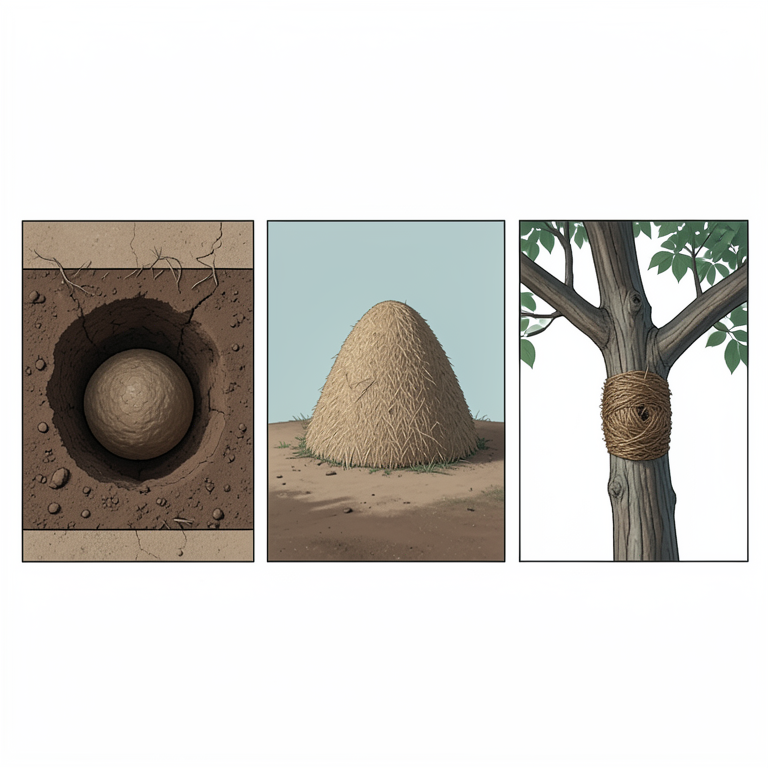
Types of Termite Mounds
AI-generated conceptual illustration (termite mounds in three distinct natural settings). It explains the idea and does not show study data.
View source evidence ↗Figures & tables
From the original paper Table 1
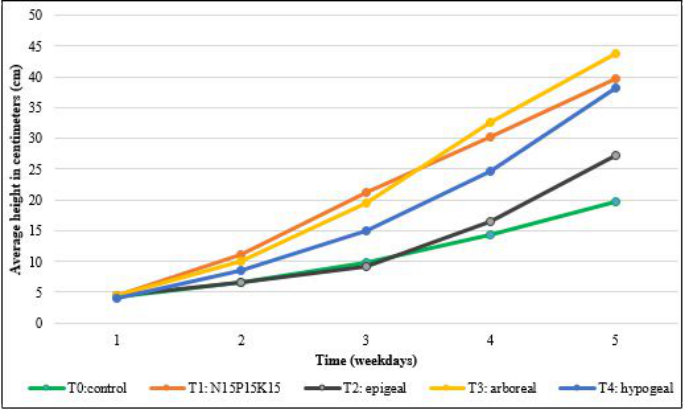 Figure 1
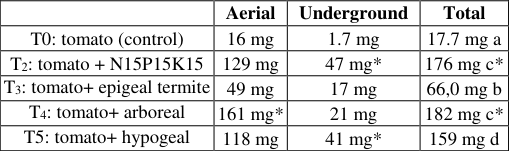 Table 2
Introduction
The ever-growing world population of seven billion inhabitants raises a number of challenges, including that of food provided by agriculture, livestock and fishing. (United Nations, 2017) [20] . In terms of agriculture, to meet the ever-increasing demand, adaptations are needed. The fields are increasingly large which leads to a scarcity of arable land. Today the acquisition of arable land is becoming a worrying subject because it is responsible for slippages that can lead to conflicts. (Black & Okwakol, 1997) [4] . Thus, the profitability of the productivity of the available land is essential. The use of chemical products (fertilizers, pesticides, herbicides) is justified above all for intensive agriculture where the soils are depleted in mineral salts after removal. However, the use of these chemical products which make it possible to maintain a high productivity of the cultivated lands to respond consequently to the demand of the current world demography is not without consequences. They manifest themselves at the level of the environment and on human health without excluding all other living beings. In view of the inconveniences linked to the use of chemical products, voices are raised against the practices of the agro-industry and propose the practice of an agriculture which wants to be concerned about our environment, the health of the populations, in short of the sustainability of the common well-being. This agriculture that meets these conditions is organic farming. Moreover, the use of fertilizers does not date from modern times because they have been used since Antiquity, following the example of the Greeks. It is clear from this fact that fertilizers are essential in agriculture.
However, if today it is undeniable (more than in the past) that to satisfy humanity's demand for agricultural products, the use of fertilizers is essential to ensure the optimum yield of cultivated land, the fact remains no less than palliative solutions with chemical fertilizers are considered, such as the use of termite mound powder. Several summaries have been published on the use of termite mound powders in agriculture, often with contradictory results without however specifying the type of termite mound in question (Armagnac Bertrand, 2010) [1] . At the same time termite mound materials have been used in traditional cropping systems or in experimental plots in Africa (López-Hernández, 2001; Menea & Ngama Boloy, 1995) [13,14] . The latter underlined the important role of termites in traditional African agriculture. The apparently contradictory results obtained with regard to the action of termites on the fertility of soils come, in large part, from the absence of information on the species of termite concerned, on its biology, in particular the method of construction of its nest and food strategy (Arnaud, 2003) [2] . On the other hand, the action of termites on soils being multiple, it is important to be able to work under controlled conditions in order to specify the effect of each type of termite mound powder on plant growth (Holt & Lepage, 2000) [12] . In view of the above, we propose to use termite mound powder as a fertilizer for young tomato seedlings in the nursery instead of a simple physical destruction of termite mounds as a means of controlling the ravages caused by termites. We hypothesize that termite mound powder would be an alternative to the chemical fertilizer N15P15K15. We also wanted to know what type of termite mound (hypogeum, i.e. underground, epigeal above ground, or arboreal suspended, attached to tree trunks or forming a bead on large branches), which would be the most fertilizer? Our study is experimental and has the interest not only of presenting and proposing to family farming and market gardeners a natural fertilizer (powders from termite mounds) which preserves our environment and therefore our health while guaranteeing appreciable productivity, but also to offer a tool to the school community in order to achieve the objectives of the curricula related to the theme of this work.
Materials and methods plant material
The "Roma variety" tomato seeds were purchased at the "Green Point" store located in the Oloumi district in the fifth arrondissement of Libreville. For their pre-germination, these seeds were spread on blotting paper and constantly soaked in water for 14 days, under a continuous light of 60 W in the laboratory. After the pre-germination, the seedlings, having their first two leaves, were transplanted into sheaths each containing 0.4 kg of potting soil sterilized by heating at 100 ºC for twenty minutes which followed the hissing of the pressure cooker.
Organic Manure
Three types of termite mound powder were used in this study, namely: hypogeal termite mounds, epigeal termite mounds and arboreal termite mounds.
Experimental Device and Experimentation
The experiment was carried out under cover, at room temperature within the premises of the Ecole Normale Supérieure (ENS) in Libreville, to minimize the effects of sunshine and rainfall. The tomato plants were planted in pots containing sterilized soil. Fifty (50) pots were prepared for this purpose, arranged in five (5) randomized single blocks of 10 pots each on a 2m by 1m table. Block 1 (T0) is the control block, it has not undergone any amendment. The second block (T1) is the block having undergone an amendment to N15P15K15. The third block (T2) is the block having undergone an amendment by the epigeal termite mound powder. The fourth block (T3) constitutes the block having undergone an amendment by the arboreal termite mound powder. The very last block (T4) is the block having undergone an amendment by the hypogeum termite mound powder. Pre-germination of tomato seeds was carried out in a germination tray with a bottom of absorbent paper and under permanent lighting with regular watering. At the two (2) leaf stage, the seedlings were transplanted at the rate of two (2) per batch. Thinning (a plant is removed) was done seven (7) days later after transplanting to keep only one per pot. The soil amendment with termite mound powder was done before transplanting while that with N15P15K15 happened on the day of thinning at the rate of three (3) pellets per pot. During transplanting, the amount of water was 25 ml at the rate of two (2) waterings per day, then it increased to 30 ml a week later, while maintaining the frequency. The water used comes from a borehole located within the ENS premises. Once a week, on a fixed day, measurements were taken at each tomato plant using a graduated ruler and a meter. The first dose was taken one week after the wedding. An average per block was obtained after each measurement. At the end of the fifth week, and after taking the last measurements, the tomato plants were unpotted, the roots rinsed to remove the remaining soil. The aerial part of each plant was separated from the root part by cutting at the collar. Each part obtained was wrapped in newspaper and then the two parts of each batch were combined and wrapped in newspaper. Everything was dried in the oven for a period of seven (7) days. The biomass of each batch was then determined and an average per batch was determined. The experiment lasted five (5) weeks from the day of the amendment to N15P15K15.
Parameters to study
This study compares the fertilizing aspect between termite mound powders and N15P15K15 on tomato plants. For this, the speed of growth as well as the level of growth without omitting the stored biomass and the moment of the appearance of flower buds are perfect indicators of wellnourished plants thanks to fertile soil. Thus, the following parameters were selected for the study: Growth in height of tomato plants; The number of flower buds and the dry weights (In milligrams) of the vegetative parts.
Statistical analyzes
XLSTAT software version 7.5.3 was used for all statistical analyses. For the growth variables, analyzes of variance incorporating the separation of means according to Newman-Keuls at the 5% risk threshold were applied. The normality of the residuals and the homogeneity of the variances were checked.
Results
Until the first week, the average height of tomato seedlings is practically confused and is around 4.4 cm. In the second week, the tomato plants amended with N15P15K15 show a slight growth (11.18 cm) compared to the plants amended respectively with arboreal (9.98 cm), hypogeal (8.51 cm) and epigeal (6. 56 cm), the latter is identical to the control batch. The average height differences between the following batches are: N15P15K15 and arboreal powder, i.e. 1.2 cm; the arboreal and hypogeal powder is 1.47 cm; hypogeal and epigeal powder is 1.95cm; epigeal and control powder is 0 cm. Between the second and the third week, the plants almondized with N15P15K15 have a greater height (21.24 cm) than all the other tomato plants; followed respectively by those amended with powders: arboreal (17.24 cm), hypogeal (14.9 cm), epigeal (9.28 cm) and finally the control batch (9.28 cm). Tomatoes from batch T1 experienced much greater growth than those from batches T3, T4 and T2; only the plants of this last batch showed weak growth. The average growth differences between these batches are: T1 and T3 (4 cm); T3 and T4 (2.23 cm); T4 and T2 (5.62 cm).
Fig 1: Average growth of tomato plants
Between the third and fourth week, the plants amended with tree powder experience strong growth (32.72 cm) which slightly exceeds that of the plants amended with N15P15K15 (30.36 cm) whose average height is 2.36 cm between these two batches. And those amended with hypogeal and epigeal powder show a slight growth. The average height between these last two batches is 8.01 cm. At the end of the experiment, all the tomato plants experienced a growth evolution. But this growth is much greater for plants amended with arboreal powder which reach a height of (43.77 cm) respectively surpassing that of tomatoes amended with N15P15K15 (39.65 cm), with powders: hypogeum (38.21 cm), epigeal (27.15 cm) and the control batch (19.77 cm). The differences in average heights between these batches are: tree powder and N15P15K15 (4.12 cm), hypogeal and epigeal powder (11.06 cm), epigeal and control powder (7.38 cm). Throughout the duration of the experiment, the flower buds only appeared at the fifth week. On average, their number is much higher on batches of tomatoes amended with tree termite mound powder (7.3) than on those amended with N15P15K15 (6.1) and hypogeal termite mound powder (4.1). While the plants of the control batches and those almondized with epigeal termite mound powder did not have flower buds. At the end of this experiment, the average dry biomass of the aerial parts of the tomato plants amended with tree termite mound powder is the highest of all the batches of tomatoes (161 mg); it is followed by those of tomatoes amended with N15P15K15 (129 mg). The average difference in dry biomass between these two batches is (32 mg). The average dry biomass of tomato plants amended with hypogeal termite mound powder (118 mg) following the first two is much higher than that of plants amended with epigeal termite mound (49 mg) and the control batch (16 mg), biomass lowest dry average of all tomato lots. For the underground parts, in the last week of the experiment, the average dry biomass of the root parts of the tomato plants amended with N15P15K15 (47 mg) is the heaviest followed respectively by those amended by the powders: hypogeum (41 mg), arboreal (21 mg), epigeal (17 mg) and finally those of the control tomatoes (1.7 mg). The average biomass differences between these batches are: N15P15K15 and hypogeal powder (6mg), hypogeal powder and arboreal powder (20 mg), arboreal and epigeal powder (4mg) and finally epigeal and control powder (15.3 mg).
Table 1: Average number of flower buds formed on tomato plants
Table 1: Average number of flower buds formed on tomato plants
Average number of flower buds per plant
Average number of flower buds per plant
Discussion
Two weeks after transplanting, the evolution of growth was practically identical regardless of the treatment. In the third week, only the tomato plants amended with mineral fertilizer N15P15K15 experienced an acceleration in growth (21.24 cm). This could be justified by the fact that this fertilizer, like any mineral fertilizer, has the role of very quickly providing the essential minerals (nitrogen, phosphate and potassium) that can be directly assimilated for plant growth. Some work has shown that potassium (K) increases plant height (Siene et al., 2020; Tam et al., 2005) [19, 20] . However, from the fourth week and until the end of the experiment, the plants amended with arboreal termite mound powder (organic fertilizer) are the only ones whose growth greatly surpasses those amended with N15P15K15 and the other termite mound powders. Recent studies claim that termites accumulate fine particles, cations, high levels of carbon and nitrogen essential for plant productivity, large amounts of organic matter that are stored in small volumes of soil that constitute termite mounds (Saran, 2008). Thus, the time taken to mineralize the organic matter into nitrogen (nitrates NO3-et ammonia NH4+), could justify the late growth acceleration of these tomato plants. A study found that excess nitrogen stimulates exuberant height growth in tomato plants (Mpika et al., 2015) [15] . Also, the growth induced by the other termite mound powders remains appreciable but less important than that induced by the arboreal termite mound powder. This could be explained not only by the less diversified diet of termites with hypogeal and epigeal construction but also by the type of clay brought up by the latter from the soil horizons. Indeed, Boyer indicates that the hypogeal and epigeal termite mounds are only rich in clay minerals and iron and aluminum hydroxides, from the horizons of accumulation and rock (Boyer, 1971) [5] . The results of the present experiment are somewhat different from a previous study conducted by Endubu in 1992 [8] (Endubu et al., 1992) [8] . These have shown that N15P15K15 is more fertilizing than termite mound soil. This contradiction would be due to the fact that the quantity of the amended N15P15K15 pellet (block 1) which may have been leached during successive waterings, or to the fact that the experimental conditions were favorable to an acceleration of the mineralization of the organic matter in nitrogen by the bacteria present in the arboreal powder since this powder has not been sterilized. As for flower buds, their average number observed is greater on tomatoes amended with tree powder (7.3) compared to those amended with N15P15K15 (6.1) or hypogeal termite mound powder (4. 1). According to Schvartz, phosphate (P) is an element that stimulates the earliness of flower buds (Schvartz et al., 2005) [17] . In addition, the average dry biomass of the aerial parts of the tomato plants amended with tree termite mound powder is the highest of all the tomato lots (161 mg). Indeed, organic nitrogen, a fundamental constituent of many proteins and chlorophyll, also plays a role in the height growth of young plants and could have favored the development of the aerial organs of these tomato plants (Falisse & Lambert, 1994) [9] . This supports our previous observations on growth (Figure 1) and flower bud formation (Table I). Indeed, the synthesis of the constituent elements of tomato stems (proteins, carbohydrates, lipids, vitamins and hormones) would be the basis of this increase. The average dry biomass of the root parts of tomato plants amended with N15P15K15 (47 mg) is heavier than all the others. Indeed, phosphorus (P) would have played an important role in root growth. Also, the role of secondary minerals can lead to radial root growth (Ca, B, Zn). For Fayle, the roots of certain dicotyledons present an activity of the secondary meristems, this process leads to the increase in the diameter of the roots (Fayle, 1968) [10] . The results of the present study are consistent with those obtained by other studies (López-Hernández, 2001; Menea & Ngama Boloy, 1995) [13,14] . The difference in the degree of fertility that we observed would be due to the origin of the construction materials of the termite mounds. Indeed, for the hypogeal termite mound, the nest is built from a clayey cement made of fine earthy particles crushed and moistened containing inert materials, sandy in variable proportions (Georges Bachelier, 1978) [11] . In the epigeal termite mound, the materials used for construction concrete are grains of quartz, various minerals, essentially coming from the lower horizons: accumulation horizon, starting horizon or even bedrock. As for arboreal termite mounds, they have the particularity of being able to digest the cellulose of the dead wood on which they feed. The stored excrement allows them to cultivate a fungus called Termitomyces which is interested in the remains of cellulose which it degrades helped by other micro-organisms in the soil. The paste thus obtained is associated with the diet of termites (Deligne, 1999) [6] . This new material, very rich in organic matter, is added to saliva and other materials from the surrounding environment that have not passed through the digestive tract (Deligne & de Coninck, 2010) [7] . The complexity of the process of building the nest of the tree termite mound is at the origin of its greater fertility.
Conclusion and Suggestion
Feeding humanity should generate, in view of the population growth on earth, a systemic understanding of environmental and health issues. The need to produce more can be understood and this justifies the use of chemicals for the followers of intensive or conventional agriculture. But this must not be done at the expense of common well-being because these chemicals have a negative impact on the environment and the health of living beings. The practice of agriculture is inconceivable without the use of fertilizers. Organic farming therefore seems to be the alternative to this problem. This is how the present work is carried out to understand the mechanisms behind the fertilization of the soil by termites, the final goal being to provide farmers in general and market gardeners in particular with a natural fertilizer that wants organic. If we consider the reaction of tomato plants to different treatments, our results show the strong fertilizing power of tree termite mound powder on other types of termite mound powder as well as on the chemical fertilizer N15P15K15. However, for each powder tested, there appears a fertility gradient depending on the type of termite mound. Ultimately, this study allowed us to show that from the fertilization point of view, among the termite mound powders used in the humid tropics, the arboreal and hypogeal termite mound powder perform better than the epigeum. Of the two high-performance types, tree termite mound powder is better indicated in organic farming and in fertilization programs in the sub-Saharan zone, particularly in Gabon. We make no claim to have exhausted the subject of this study. The suggestions below could be new leads for those who want to pursue it. Use termite mound powder in the field to truly test its effectiveness. Determine the proper amounts of termite mound powder to use in the field. Determine the correct amounts to use between tree powders and N15P15K15 to know which has the best fertilizing power in the field. Study the biochemical and chemical phenomena that take place within termite mounds that modify soil properties.
Acknowledgement
AcknowledgementsWe would like to thank the Service Edition Publication for correcting and proofreading this document.
Figures and tables from the paper
| — | Average number of flower buds per plant |
|---|---|
| T0: tomato (control) | 0.0 a |
| T2: tomato + N15P15K15 | 6.1 c* |
| T3: tomato+ epigeal termite mound powder | 0.0 a |
| T4: tomato+ arboreal termite mound powder | 7.3 c* |
| T5: tomato+ hypogeal termite mound powder | 4.1 b |
Table text extracted from the original PDF; superscript letters are shown inline. The original table image is below.
View original table image
| — | Aerial | Underground | Total |
|---|---|---|---|
| T0: tomato (control) | 16 mg | 1.7 mg | 17.7 mg a |
| T2: tomato + N15P15K15 | 129 mg | 47 mg* | 176 mg c* |
| T3: tomato+ epigeal termite | 49 mg | 17 mg | 66,0 mg b |
| T4: tomato+ arboreal | 161 mg* | 21 mg | 182 mg c* |
| T5: tomato+ hypogeal | 118 mg | 41 mg* | 159 mg d |
Table text extracted from the original PDF; superscript letters are shown inline. The original table image is below.
View original table image
References
11 in the original paper- Armagnac Bertrand. La course aux terres arables deviant préoccupante; c2010. http://www.lemonde.fr/planete/article/2010/04/22/lacou rse-aux-terres-arables-devientpréoccupante_1341086_3244.html
- Black HIJ, Okwakol MJN. Agricultural intensification, soil biodiversity and agroecosystem function in the tropics: the role of termites. Applied Soil Ecology. 1997:6(1):37-53. https://doi.org/https://doi.org/10.1016/ S09291393(96)00153-9
- Deligne J, de Coninck E. Les collections de nids de Termites (Isoptera) du Musée royal de l'Afrique centrale. Bulletin SRBE/KBVE. 2010:146:139-150.
- Endubu M, Kombele BM, Litucha BM, Mambani B. Perspective d'utilisation des termitières dans l'amélioration de la fertilité des sols tropicaux: cas d'une expérimentation en pots de végétation. Tropicultura. 1992:10(2):51-54.
- Falisse A, Lambert J. La fertilisation minérale et organique. Agronomie Moderne, Bases Physiologiques et Agronomiques de La Production Végétale (EL Hassani, TA et al., Eds.), Hatier, Aupelf-Uref, Paris. 1994. p. 377-398.
- López-Hernández D. Nutrient dynamics (C, N and P) in termite mounds of Nasutitermes ephratae from savannas of the Orinoco Llanos (Venezuela). Soil Biology and Biochemistry. 2001:33(6):747-753. https://doi.org/https://doi.org/10.1016/S00380717(00)00220-0
- Menea KB, Ngama Boloy. Utilisation des sols de termitières et de paille sèche d'arachide comme fertilisants en cultures maraîchères à Yangambi (Zaïre). Cahiers Agricultures. 1995:4(2):125-128.
- Mpika J, Attibayeba AM, Minani D. Influence d'un apport fractionné en potassium et en azote sur la croissance et le rendement de trois variétés de tomate de la zone périurbaine de Brazzaville en République du Congo. Journal of Applied Biosciences. 2015:94(1):8789. https://doi.org/10.4314/jab.v94i1.1
- Saran T. Impact des termitières épigées sur la régénération et la dynamique des écosystèmes de savane: cas de la forêt classée de Tiogo, Burkina Faso [Université d'Ouagadougou.]; c2008. https://beep.ird. fr/collect/upb/index/assoc/SVT-2008-TRA-IMP/SVT2008-TRA-IMP.pdf
- Siene LAC, Doumbouya M, Traore MS, Conde M, N'guettia TVF, Kone M. Effet de quatre types de fertilisants sur la croissance et la productivité de deux génotypes de maïs (Zea mays L.) en cas d'un semis tardif à Korhogo au Centre-Nord de la Côte d'Ivoire. International Journal of Agriculture and Food Science https://www.agriculturaljournals.com International Journal of Biological and Chemical Sciences. 2020:14(1):55-68. https://doi.org/10.4314/ijbcs.v14i1.6
- United Nations. World Population Prospects: The 2017 Revision; c2017.