
Research article · 2021 · Full text
International Journal of Agriculture and Food ScienceStudies on development of process technology for preparation of burfi using ragi flour
Volume 3(1) · Pages 29–32 · DOI: 10.33545/2664844x.2021.v3.i1a.48 ↗
Research areasFood Science and Nutritional StudiesNatural Antidiabetic Agents Studies
Abstract
Author-writtenThe main aim to prepare Ragi Burfi was to provide a nutrient rich confection to the consumers. The main ingredient used for preparation of Burfi were Ragi flour, Milk and Jaggery. All ingredients are the good source of vitamins and minerals such as Vitamin B1 (Thiamin), Vitamin B2 (Riboflavin), Vitamin B3 (Niacin), Vitamin B6 (pyridoxine), Vitamin K, Minerals such as Ca, Fe, K, Zn, P, Mg,Mn etc. Burfi is a good typically made from khoa. The formulation was made by varying levels of Ragi flour, Milk, Jaggery etc. For preparation of Burfi, firstly khoa prepared than mix all Ragi flour, Jaggery to make a good consistency through heating. For Sensory evaluation three treatments T1, T2, T3 were taken and from these three trials T2 was selected. Proximate analysis of Burfi was Moisture content (16.22%), Ash (2.54%), Fat (19.6%), and Protein (14.48%), Carbohydrate (47.16%), Energy (367 kcal) were best among all the levels of Burfi prepared recorded highest score in all the quality attributes and good storage ability. Storage study concluded that the Burfi made from Ragi flour can be stored for two months in High density polyethylene pouches at room temperature and three months at cold temperature. So the Burfi made from Ragi flour can be satisfy the consumer in accepts and quality.
Summary
Source-checkedPlain-language reading of the full paper, prepared with AI and checked against the text. Each point links to the authors' own words.
Why it matters
- Burfi is a popular Indian confection typically made from khoa (concentrated milk), sugar, and various nuts or dry fruits. View evidence ↗
- Finger millet (ragi) is a widely grown cereal crop that provides more proteins and minerals than other cereals like rice or wheat. View evidence ↗
- Jaggery serves as a traditional, unrefined natural sweetener produced from concentrated sugarcane juice. View evidence ↗
The question
- The study aimed to develop a nutrient-rich version of burfi using ragi flour to provide a healthier confection for consumers. View evidence ↗
What they did
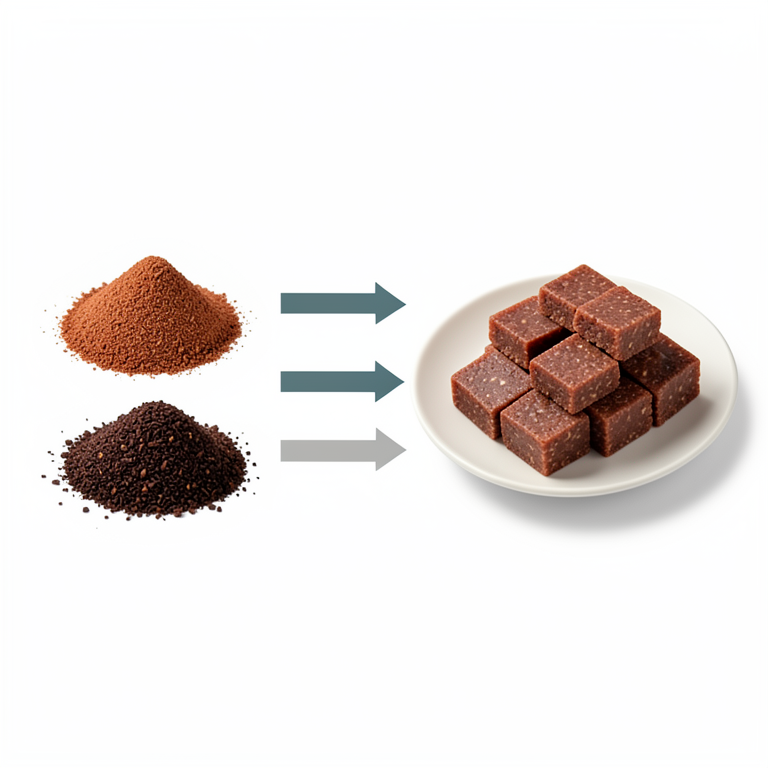
- The burfi was prepared using ragi flour, milk, and jaggery, with the millet and jaggery added at 30% by weight relative to the khoa. View evidence ↗
- Ten semi-trained academic staff members evaluated the product's sensory attributes using a 9-point Hedonic scale. View evidence ↗
- The storage stability of the ragi burfi was tested over two months at both ambient temperature (30 °C) and cold storage (4 °C). View evidence ↗
What they found
- Among the tested formulations, sample T2 was the most acceptable, receiving the highest overall sensory score of 8.5. View evidence ↗
- The chemical analysis of the burfi showed a protein content of 14.48±0.08%, carbohydrates of 47.16±0.024%, and an energy value of 367 Kcal. View evidence ↗
- The physical dimensions of the produced burfi were 5 cm in length and 7 mm in thickness. View evidence ↗
- Ragi burfi stored at 4 °C remained sensorially acceptable for up to 60 days. View evidence ↗
- The study concluded that ragi burfi packed in HDPE pouches can be stored for two months at room temperature and three months under cold storage. View evidence ↗
What it means
- The authors conclude that ragi-based burfi is a high-nutrition confection rich in proteins, carbohydrates, and essential minerals like iron, zinc, and calcium. View evidence ↗
Visual summary
3 visualsIllustrations explain the paper; charts are replotted from the paper's own table values.
Ragi Burfi Composition
AI-generated conceptual illustration (ragi flour, khoa, and jaggery). It explains the idea and does not show study data.
View source evidence ↗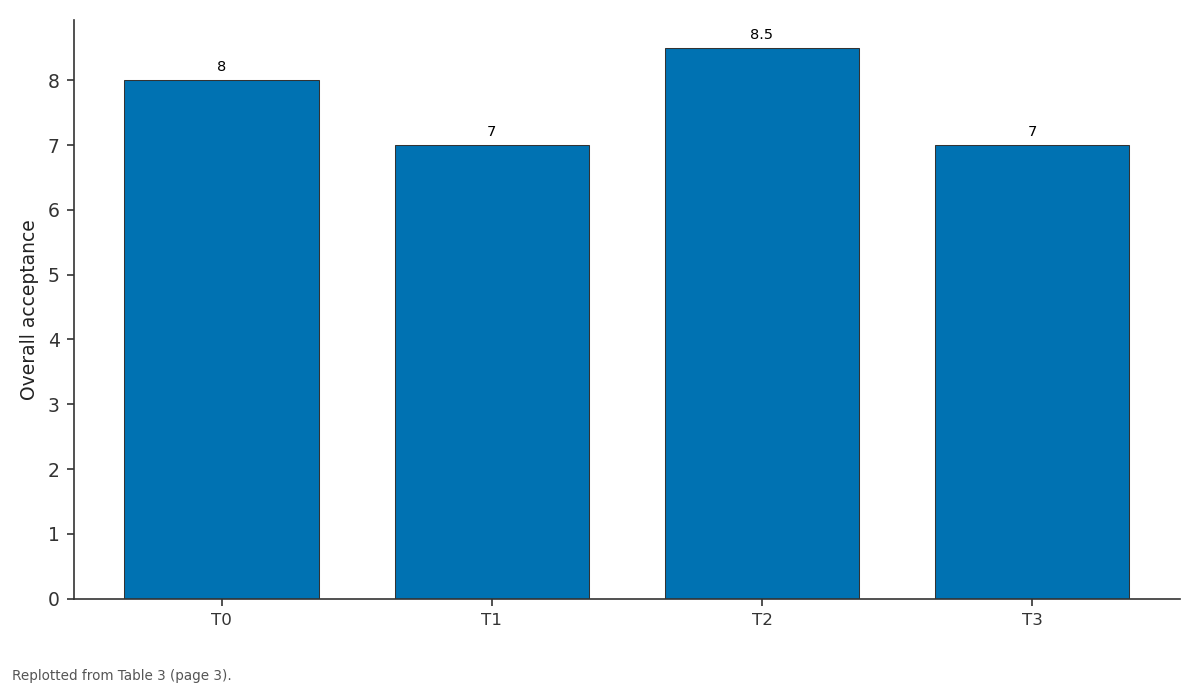
Overall acceptance: T0 vs T1 vs T2 vs T3
Replotted from Table 3 (page 3) of the original paper. Every bar is the paper's own table value.
View source evidence ↗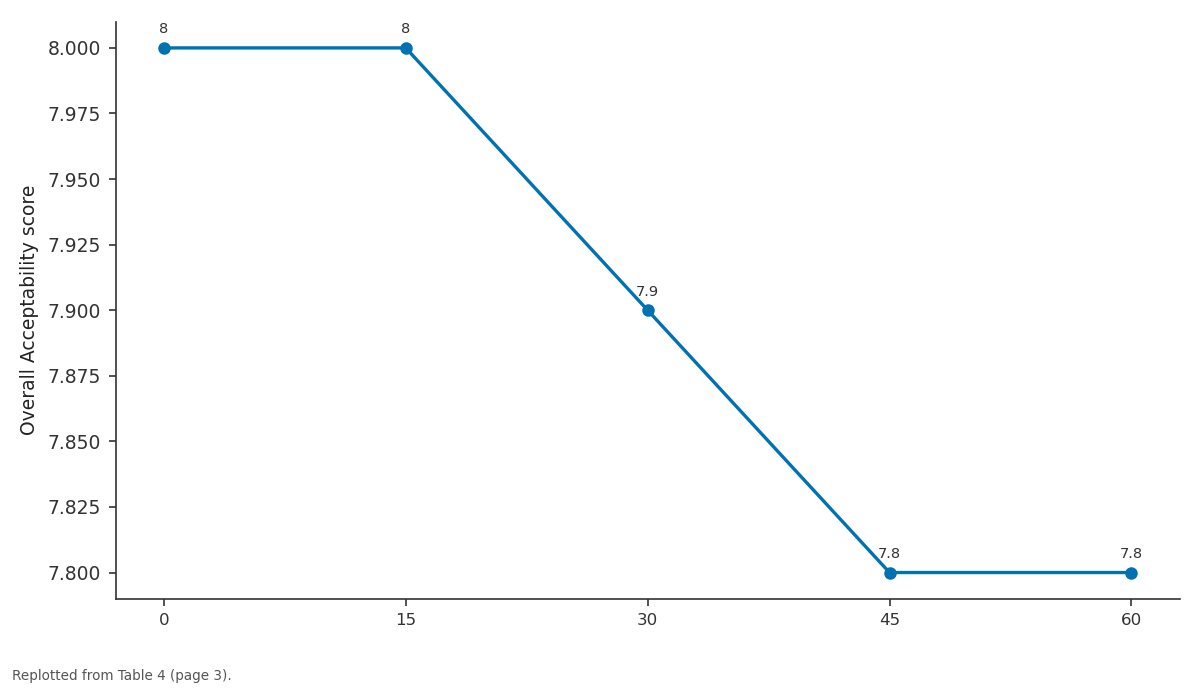
Appearance: 0 vs 15 vs 30 vs 45 vs 60
Replotted from Table 4 (page 3) of the original paper. Every bar is the paper's own table value.
View source evidence ↗Figures & tables
From the original paper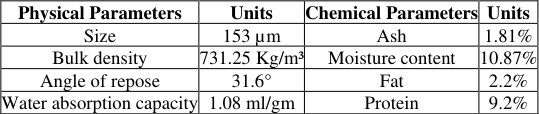 Table 1
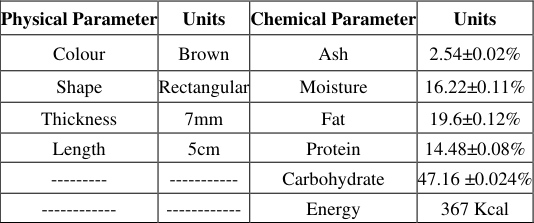 Table 2
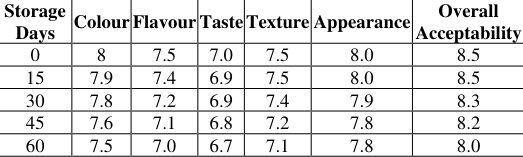 Table 4
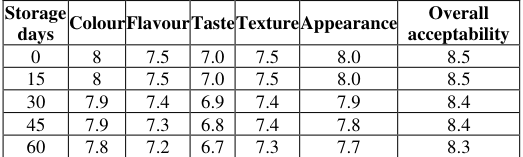 Table 5
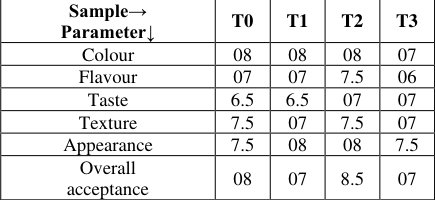 Table 3
Introduction
Burfi is one of the popular confection made in India. It is generally made from milk in the form of khoa, sugar and other ingredients such as nuts and other dry fruits like almond, cashews and pista. Which predominantly used for flavouring purposes. The base material for burfi is khoa, as khoa can blend with different foods easily various preparations of burfi can be made. In Indian market several varieties of burfi on the basis of the additives present in them such as cashew burfi, coconut burfi, mango burfi, chocolate burfi, mawa burfi, orange burfi etc. are sold. Good quality of burfi is characterised by moderately sweet taste, slightly greasy body, smooth texture and fine grains. It can be made into square and rectangular form. Burfi has great importance during festivals, anniversaries, marriages and other important occasions. The demand for burfi is ever increasing. (P.B. Kapare 2017). India is one of the highest milk producing country in the world with an annual growth rate of 4.53% and annual milk production is 187.7 million metric tons in the previous year 2019 with a per capita availability 394 gm/day (NDDB statistics 2019). Most of the milk that is produced in India is utilized for the preparation of variety of dairy products i.e. ghee, khoa, milk powder, paneer, cheese, butter etc. Around 6.5 per cent of total milk produced in India is utilized for making khoa. (P.B. Kapare 2017). Dairy by-products have high nutritive value. A number of by-products like whey, buttermilk, skim milk and derived by-products like caseins, caseinates, lactose, whey proteins etc. are produced by the dairy industry. (Syed Mansha Rafiq et al. 2019). Buffalo milk contains water (82.98%), total solids (17.02%), fats (7.06%), SNF (9.96%), proteins (3.90%), ash (0.78%). (Khedkar et al).
Ragi scientifically known as Eleusine coracanais L. is a cereal rich in many nutrients. Millets is the common name given to the group of crops that are from grass family that is graminae/paniceae. It is widely grown around the world for food and feed. They have general adaptations and can resist poor irrigation and low rainfall. (ICAR, 1987) [10] . Finger millet is an annual herbaceous cereal crop which is grown widely and is rich in proteins, minerals and other nutrients as compared with the other cereal crops such as wheat, rice, sorghum etc. (Gupta et al., 2017; Sharma et al., 2017) [27,21] . Studies on Finger millets composition revealed the presence of moisture (6.99%), ash (2.37%), crude protein (10.28%), crude fibre (3.10%), crude lipid (0.83%) and carbohydrate (76.43%). The mineral composition were potassium (14.19 mg/g), sodium (6.86 mg/g), copper (0.10 mg/g), calcium (1.13 mg/g), magnesium (6.25 mg/g), zinc (0.22 mg/g), manganese (0.32 mg/g), Iron (0.11 mg/g). The phytochemical constituents present were tannins, steroids, phenols, alkaloids, terpenoids, cardiac glycosides and balsams. (Bwai Macham David et al. 2014). Finger millets has several health benefits as it is rich in nutrients. Its main health beneficial effects includes anti-diabetic, anti-tumorigenic, atherosclerogenic effects, and antioxidant and antimicrobial properties. (Palanisamy Bruntha 2011) [18] . Jaggery is a natural sweetener, made by the concentration of sugarcane juice. It is a traditional unrefined non-centrifugal sugar consumed in continents such as Asia, Africa etc. India is the largest producer and consumer of Jaggery. Out of the total world production, more than 70% is produced in India. (Nath A e.t.al). Jaggery is rich source of micro nutrients it contains minerals like Calcium (40-100 mg), Magnesium (70-90 mg), Potassium (1056 mg), Phosphorus (20-90 mg), Sodium (19-30 mg), Iron (10-13 mg), Manganese (0.2-0.5 mg), Zinc (0.2-0.4 mg), and Chloride (5.3 mg) per 100 g of Jaggery, it contains vitamins such as Vitamin A (3.8 mg), Vitamin B1 (0.01 mg), Vitamin B2 (0.06 mg),Vitamin C (7.00 mg), Vitamin D2 (6.50 mg), Vitamin E (111.30 mg), and protein 280 mg per 100 g of Jaggery. The micronutrients present in the Jaggery has antitoxic and anti-carcinogenic properties. It contains various health benefits such as blood purification, cures bile disorder and jaundice. (Nath A e.t.al).
Materials and methods
Materials and methods
Procurement of materials for Burfi
Raw materials required during present investigation were procured from local markets such as Milk, Ragi flour, Cardamom, Dry Fruits, Jaggery, Ghee. Most of the equipments and machineries and chemicals were available in the College of Food Technology, Saralgaon, Thane (MH)
Physical properties of ingredients and burfi incorporated with Ragi flour
The colour of Rag burfi was determined by visual observations, the length, breadth and width was measured by vernier calliper. The weight of Ragi burfi was measured on analytical weighing balance.
Chemical properties of ingredients and burfi incorporated with Ragi flour
Proximate composition such as moisture, ash, crude fat, crude protein and crude fiber of all the Ingredients and Ragi burfi was determined according to the procedures given in AOAC (2000). For moisture determination samples were dried in oven at 130 ºC for 60 minutes. For ash determination samples were placed in muffled furnace at 550 ºC to burn out all carbon compounds leaving in organic part (ash). Fat was determined by fat extraction unit by using n. Hexane. For fiber determination, samples were treated with 1.25% Sulphuric acid and Sodium Hydroxide solution. After filtration of digested material it was washed with hot water and then ignited. By calculating loss of weight after ignition, crude fiber contents were determined. Protein contents were determined by using Kjeldahl's unit.
Sensory Evaluation
Prepared product were evaluated for sensory characteristics in terms of appearance, color, flavour, aftertaste, texture and overall acceptability by 10 semi-trained panel members comprised of academic staff members using 9-point Hedonic scale. Judgments were made through rating the product on a 9 point Hedonic scale with corresponding descriptive terms ranging from 9 'like extremely' to 1 'dislike extremely'. The obtained results were recorded in sensory score card.
Storage of Ragi burfi
Storage of Ragi burfi was done at two different conditions viz. ambient storage (30 o C) and cold storage (4 o C) for a period of two months.
Statistical Analysis
The analysis of variance of the data obtained was done by using completely randomized design (CRD) for different treatments as per the method given by Panse and Sukhatme (1967). The analysis of variance revealed at significance of p<0.005 level S.E and C.D. at 5 percent level is mentioned wherever required. [1] , Goswami et al. (2015) [4] . Chemical parameters of Ragi flour was found to be moisture content (10.857%), fat (2.2%), protein (9.2%)and ash (1.81%) were more or less similar accordingly Pwarpp et al., (2020), Chetan and malleshi et al., (2007) [26] , Venkatasatish (2017) respectively. Sensory evaluation of sample carried out by using 9 point Hedonic Scale. Prepared various formulations of Ragi Burfi concludes that sample T2 has highest score as compare to the other samples. The colour of T2 sample as per graph is 8 point while samples T0 (08), T1 (08), T3 (07). The flavour of sample T2 was acceptable with 7.5 while samples T0 (07), T1 (07), T3 (06). The taste of sample T2 was selected by 07 points while other sample are T0 (6.5), T1 (6.5), T3 (07). The texture of sample T2 was selected by 7.5 points while other samples points are T0 (7.5), T1 (07), T3 (07). The appearance of sample T2 was selected is 8 while other samples points are T0 (7.5), T1 (08), T3 (7.5).The overall acceptability of sample T2 was selected by 8.5 points while other samples points are T0 (08), T1 (07), T3 (07). The data in the above Table revealed that there was slight change in sensorial parameters of sample stored at refrigeration temperature (4 ºC) for 60days. Changes in organoleptic qualities were observed at 30 days interval. It was observed that fresh Ragi Burfi scored the highest score (8.5) as compared to stored Ragi Burfi. From the above Table it was clear that there was slight variations in taste of the Ragi Burfi (7.0 to 6.7) observed during the storage period of 60 days. During storage of Ragi Burfi from 0 to 60 days there was decrease in sensory score for overall acceptability was found from (8.5 to 8.3) on 60 th day of storage.
Process and method
Process and method
Physical and chemical Properties of Burfi from Ragi Flour
Physical and chemical Properties of Burfi from Ragi Flour
Sensory Evaluation of Ragi Burfi
Sensory Evaluation of Ragi Burfi
Storage study
There was significant decrease in sensory score for texture; taste and overall acceptability were reported by the panel members.
There was no significant evidence of microbial spoilage.It could be concluded from the table that Ragi Burfi can be stored for 60 days at refrigerated temperature (4 o C) without affecting sensorial parameters. However its acceptability score was slightly decreased and liked moderately. Similar results were reported during storage of increase shelf life of Ragi Burfi.
Conclusion
In the present study finally it is concluded that Burfi prepared from different Variations of Ragi flour has high Nutrition quality and rich in Protein, carbohydrates and some vital minerals such as calcium, zinc and iron in proper amount and has great health benefits. The present investigation carried out for information of Burfi in which T2 sample found more superior than sample T1 and T3 so, T2 sample is more acceptable on its sensory attributes.
Figures and tables from the paper
| Physical Parameters | Units | Chemical Parameters | Units |
|---|---|---|---|
| Size | 153 µm | Ash | 1.81% |
| Bulk density | 731.25 Kg/m³ | Moisture content | 10.87% |
| Angle of repose | 31.6° | Fat | 2.2% |
| Water absorption capacity | 1.08 ml/gm | Protein | 9.2% |
Table text extracted from the original PDF; superscript letters are shown inline. The original table image is below.
View original table image
| Physical Parameter | Units | Chemical Parameter | Units |
|---|---|---|---|
| Colour | Brown | Ash | 2.54±0.02% |
| Shape | Rectangular | Moisture | 16.22±0.11% |
| Thickness | 7mm | Fat | 19.6±0.12% |
| Length | 5cm | Protein | 14.48±0.08% |
| --------- | ----------- | Carbohydrate | 47.16 ±0.024% |
| ------------ | ------------ | Energy | 367 Kcal |
Table text extracted from the original PDF; superscript letters are shown inline. The original table image is below.
View original table image
| Storage Days | Colour | Flavour | Taste | Texture | Appearance | Overall Acceptability |
|---|---|---|---|---|---|---|
| 0 | 8 | 7.5 | 7.0 | 7.5 | 8.0 | 8.5 |
| 15 | 7.9 | 7.4 | 6.9 | 7.5 | 8.0 | 8.5 |
| 30 | 7.8 | 7.2 | 6.9 | 7.4 | 7.9 | 8.3 |
| 45 | 7.6 | 7.1 | 6.8 | 7.2 | 7.8 | 8.2 |
| 60 | 7.5 | 7.0 | 6.7 | 7.1 | 7.8 | 8.0 |
Table text extracted from the original PDF; superscript letters are shown inline. The original table image is below.
View original table image
| Storage days | Colour | Flavour | Taste | Texture | Appearance | Overall acceptability |
|---|---|---|---|---|---|---|
| 0 | 8 | 7.5 | 7.0 | 7.5 | 8.0 | 8.5 |
| 15 | 8 | 7.5 | 7.0 | 7.5 | 8.0 | 8.5 |
| 30 | 7.9 | 7.4 | 6.9 | 7.4 | 7.9 | 8.4 |
| 45 | 7.9 | 7.3 | 6.8 | 7.4 | 7.8 | 8.4 |
| 60 | 7.8 | 7.2 | 6.7 | 7.3 | 7.7 | 8.3 |
Table text extracted from the original PDF; superscript letters are shown inline. The original table image is below.
View original table image
| Sample→ Parameter↓ | T0 | T1 | T2 | T3 |
|---|---|---|---|---|
| Colour | 08 | 08 | 08 | 07 |
| Flavour | 07 | 07 | 7.5 | 06 |
| Taste | 6.5 | 6.5 | 07 | 07 |
| Texture | 7.5 | 07 | 7.5 | 07 |
| Appearance | 7.5 | 08 | 08 | 7.5 |
| Overall acceptance | 08 | 07 | 8.5 | 07 |
Table text extracted from the original PDF; superscript letters are shown inline. The original table image is below.
View original table image
References
24 in the original paper- AA Adebowale GO, Fetuga CB, Apata LO. Sannai Effect of variety and initial moisture content on physical properties of improved millet grains Nigerian Food Journal,2012:30(1):510
- Bwai, Macham, Afolayan, Michael, Odukomaiya, Doyinsola et al. Proximate composition, mineral and phytochemical constituent of Eleusine coracana (finger millet). International Journal of Advanced Chemistry, 2014. 2.171. 10.14419/ijac.v2i2.3496.
- Gaertn): A power house of health benefiting nutrients. Food Science and Human Wellness,2016:5(3):149-155.
- Goswami D, Manikantan MR, Gupta RK, Vishwakarma RK. Moisture dependent selected postharvest engineering properties of Ragi (Eleusine coracana) grown in Northern Hills of India, Journal of Postharvest Technology,2015:3(3):082-088
- Goyal SK. "Samsher Studies on quality attributes of herbal burfi." South Asian J Food Technol Envir,2015:1:46-51.
- Gupta, Vikas, Vijaya Lakshmi NS, Ashwini B, Kumar Anbarasu, Vijaya Lakshmi G, 2010.
- Gupta SM, Arora S, Mirza N, Pande A, Lata C, Puranik Set al. Finger Millet: a "certain" crop for an "uncertain" future and a solution to food insecurity and hidden hunger under stressful environments. Front. Plant Sci, 2017:8:643. doi: 10.3389/fpls.2017.00643.
- Gopalan C, Ramashastri BV, Balasubramanium SC. Nutritive value of Indian foods. Hyderabad: National Institute of Nutrition, ICMR, 2002.
- ICAR, Finger millets and other minor millets. ICAR krishia nusandhan bhuvan, New delhi, 1987, 7-12.
- Khedkar, Chandraprakash, Kalyankar, Shrikant, Deosarkar, Shital et al. Buffalo milk, 2016.
- Kadkol SB, Swaminathan M. Chemical composition of different varieties of ragi (Eleusine coracana). Bull Cent Food Technol Res Inst Mysore,1954:4:12-13.
- Kumar A, Metwal M, Kaur S, Gupta AK, Puranik S, Singh S et al. Nutraceutical value of finger millet [Eleusine coracana (L.)Gaertn.], and their improvement using omics approaches. Front. Plant Sci,2016:7:934. doi:10.3389/fpls.2016.00934
- Lahankar SV, Narwade SG, Kamble NS. "Preparation of Burfi Blended with Green Peas." Int. J. Curr. Microbiol. App. Sci, 2018, 2320-2325.
- Khan Ma, Semwal Ad, Sharma Gk, Yadav Dn, Srihari Ka. studies on the development and storage stability of groundnut (arachis hypogea) burfi, journal of food quality, 10.1111/j.1745-4557.2008.00224.x, 2008:315, (612-626).
- Nath A, Dutta D, Kumar P, Singh JP. Review on Recent Advances in Value Addition of Jaggery based Products. J Food Process Technol, 2015:6:440. doi:10.4172/21577110.1000440 18. Palanisamy, Bruntha, Vijayabharathi, Rajendran, Sathyabama, Sathyaseelan et al. Enhancement of nutritional value of finger millet-based food (Indian dosa) by cofermentation with horse gram flour. International journal of food sciences and nutrition, 2011:63:5-15.
- Pawar PP, Sawate AR, Kshirsagar RB, Agarkar BS. Studies on physicochemical properties of finger millet (Eleusine coracana) and pearl millet (Pennisetum glaucum) The Pharma Innovation Journal,2020:9(2):05-08
- Shelf life enhancement of coconut burfi -An Indian traditional sweet Journal of Food Quality. 10.1111/j.17454557.2010.00312.x.
- Sharma D, Jamra G, Singh UM, Sood S, Kumar A. Calcium bio fortification: three pronged molecular approaches for dissecting complex trait of calcium nutrition in finger millet (Eleusine coracana) for devising strategies of enrichment of food crops. Front. Plant Sci,2017:7:2028. doi: 10.3389/fpls.2016.02028.
- Syed Mansha Rafiq, Syed Insha Rafiq. Milk By-Products Utilization Current issues and challenges in the dairy industry, 2019.
- Shobana S, Krishnaswamy K, Sudha V, Malleshi NG. Finger millet (Ragi, Eleusine coracana L.): A review of its nutritional properties, processing, and plausible health benefits. Advances in Food and Nutrition Research, 2013:69:1-39.
- Singh P, Singh G, Srivastava S, Agarwal P. Functional characteristics of blend containing wheat flour and millet flour. Beverage Food World,2005:21:28-31.
- SWAMI SB. Physical properties of finger millet (Eleusine coracana) International Journal of Agricultural Engineering,2010:3(1):156-160
- Chethan S, Malleshi NG. Finger Millet Polyphenols: Characterization and their Nutraceutical Potential. American Journal of Food Technology,2007:2:582-592.
- Venkata Satish Kuchi J, Kabir FK, Bouri, Rajesh Gupta, Dhua RS. Influence of Packaging Materials on Quality of Banana Burfi during Storage, International Journal of Current Microbiology and Applied Sciences ISSN: 23197706, 2017:6(7):118-127.