
Research article · 2021 · Full text
International Journal of Agriculture and Food ScienceEffect of different growing media, Azotobacter and GA3 on growth and survivability of transplanted air layers in Guava (Psidium guajava L.) C.V. Gwalior-27
Volume 3(2) · Pages 54–59 · DOI: 10.33545/2664844x.2021.v3.i2a.75 ↗
Research areasPlant Physiology and Cultivation StudiesPlant and soil sciencesLeaf Properties and Growth Measurement
Abstract
Author-writtenThe present investigation entitled “Effect of different growing media, Azotobacter and GA3 on growth and survivability of transplanted air layers in Guava (Psidium guajava L.) C.V. Gwalior - 27” was conducted at Experimental block, College of Agriculture, R.V.S.K.V.V., and Gwalior (M.P.) during the year 2020-2021. The experiment was laid out in Completely Randomized Design (CRD) with three replications. Among different treatments Soil + Vermicompost (2:1) + GA3 200 ppm + Azotobacter (0.5 ml) resulted in maximum survival percentage of air layers at DAT 135 (87.33%) followed by the treatment with Soil + Leaf mould (2:1) + GA3 200 ppm + Azotobacter (0.5ml) (77.43%). This treatment also enhanced the growth as well as root parameters of air layers, No. of Sprouts at 15 DAT (8.67), No. of leaves (37.00), Stem length (28.33 cm), and Stem thickness (16.20 mm), Number of primary roots (10.00), Number of secondary roots (21.67), and Length of primary roots (11.97 cm), Length of secondary roots (8.73 cm), Diameter of primary roots (3.27mm), Diameter of secondary roots (2.00 mm), Fresh weight of primary roots (1.84 g), Fresh weight of secondary roots (0.79 g) at 135 DAT. It may be concluded that Soil +Vermicompost (2:1) + GA3 200 ppm + Azotobacter (0.5 ml) was found best for highest survivability percentage and enhanced root parameters followed by Soil + Leaf mould (2:1) + GA3 200 ppm + Azotobacter (0.5 ml).
Summary
Source-checkedPlain-language reading of the full paper, prepared with AI and checked against the text. Each point links to the authors' own words.
Why it matters
- Guava is a popular fruit crop in India, often referred to as the 'apple of tropics' or 'poor man's apple'. View evidence ↗
- Air layering is used for commercial guava propagation because it is considered an effortless and economical method. View evidence ↗
- Plant growth regulators like Gibberellin and bio-fertilizers are used to modify physiological processes and improve soil characteristics to enhance plant production. View evidence ↗
The question
- The study aimed to identify the optimal concentration of growth regulators and the most suitable bio-fertilizer and growing media to improve the survival of detached guava air layers. View evidence ↗
What they did
- The research used a Completely Randomized Design (CRD) with three replications, selecting 21 air layers of Guava cv. Gwalior-27 per treatment. View evidence ↗
- Treatments involved dipping air layers in GA3 solutions for two minutes and planting them in media consisting of soil mixed with either vermicompost or leaf mould (2:1 ratio) and Azotobacter (0.5 ml per bag). View evidence ↗
- Growth and root parameters, including stem length, stem thickness, and root fresh weight, were measured at 45, 90, and 135 days after planting (DAT). View evidence ↗
What they found
- The highest survival rate at 135 DAT was 87.33% for the Soil + Vermicompost (2:1) + GA3 200 ppm + Azotobacter (0.5 ml) treatment, followed by 77.43% for the Soil + Leaf mould (2:1) + GA3 200 ppm + Azotobacter (0.5 ml) treatment. View evidence ↗
What it means
- The authors conclude that the combination of Soil + Vermicompost (2:1), GA3 200 ppm, and Azotobacter (0.5 ml) is the most effective treatment for maximizing survivability and root growth in guava air layers. View evidence ↗
Visual summary
1 visualsIllustrations explain the paper; they do not show study data.
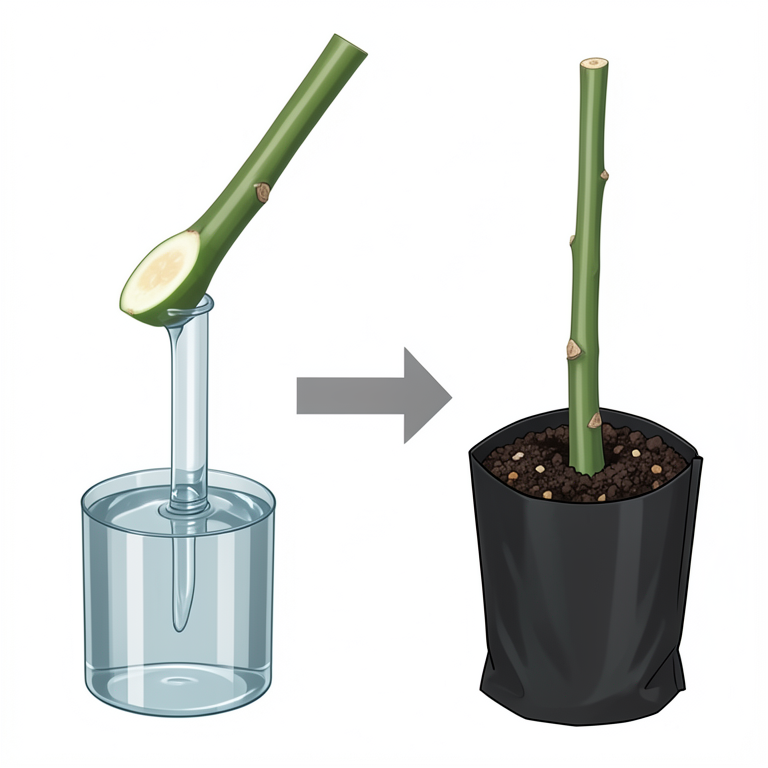
Treatment Setup
AI-generated conceptual illustration (Guava (Psidium guajava L.) air layer cuttings). It explains the idea and does not show study data.
View source evidence ↗Figures & tables
From the original paper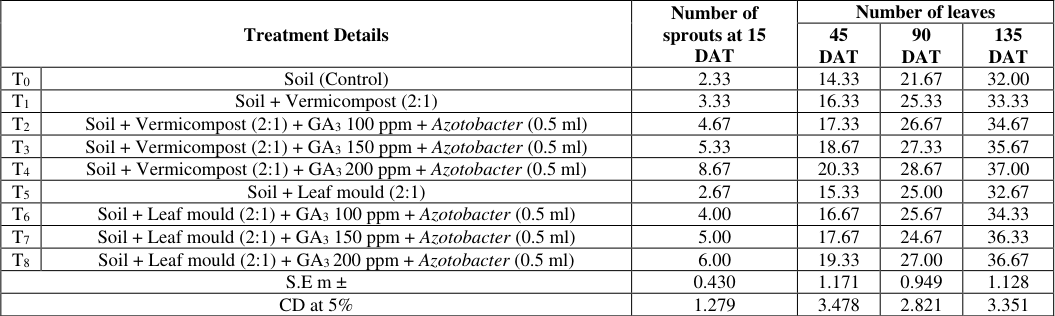 Table 1
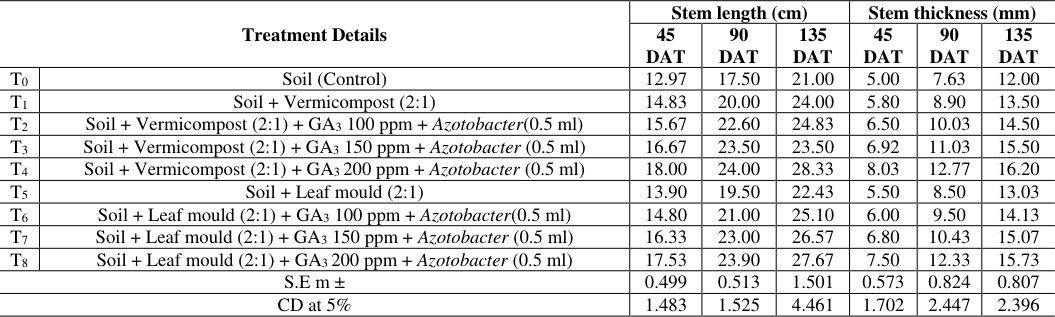 Table 2
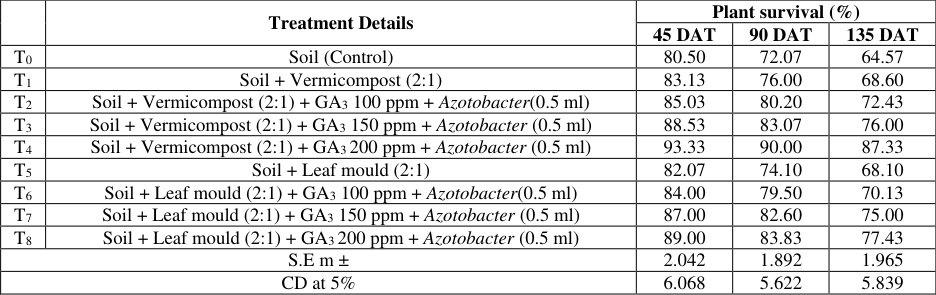 Table 3
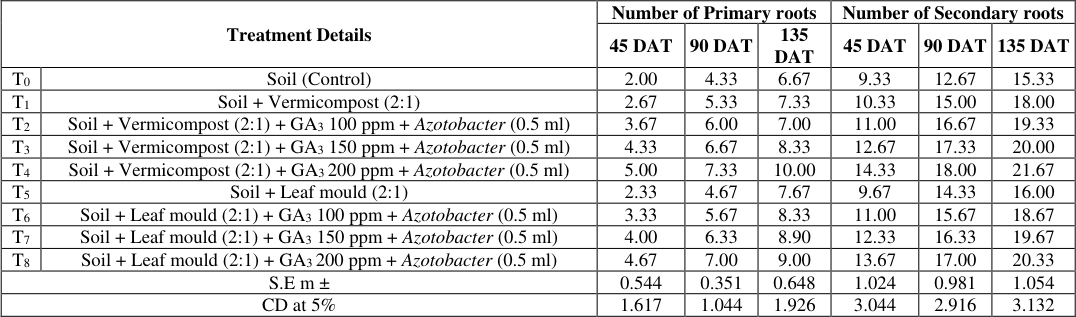 Table 4
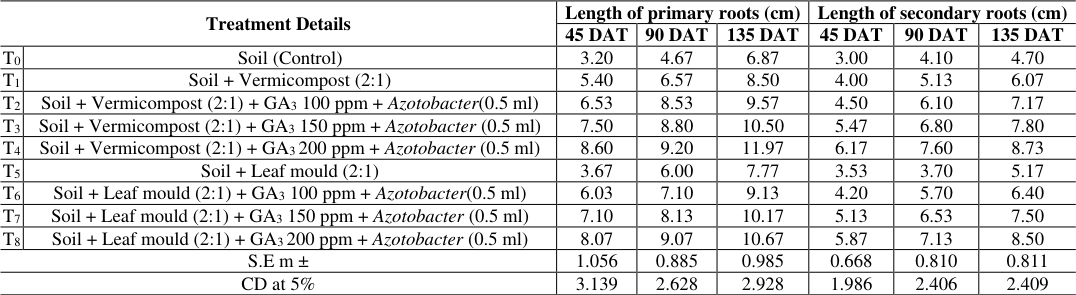 Table 5
 Table 6
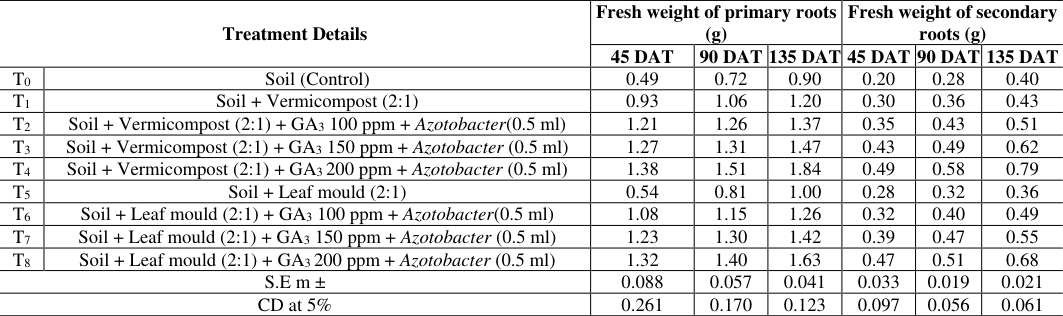 Table 7
Introduction
Guava (Psidium guajava L.), native to Mexico, Central America and belongs to the family Myrtaceae. It is also known as "apple of tropics" and "poor man's apple", is a popular fruit crop in India. It can be grown in tropical and subtropical climate and it is adopted for diverse soil and agro climatic conditions. It is relatively precocious and prolific in fruit bearing nature, could gives highly remunerative for crop production. The guava is highly nutritious, it has a rich source of vitamin 'C' and the content of Vitamin 'C' in fruits vary from 95.75 to 239.00 mg 100-1 g in cultivars of guava. Guava is the fifth important fruit crop of India after Banana, Mango, Citrus, and Papaya with an area of 276 thousand hectares contribute to total annual production of 4253 million tons and productivity of 14.96 MT/hac (Horticulture at a glance 2018). India is the leading producer of guava in the world. The total area, production and productivity of Guava in Madhya Pradesh is 139 Ha, 2920 MT, and19.58 MT/hac respectively (Anon.). It has been used in traditional medicine in many cultures throughout Central America, the Caribbean, Africa and Asia. It is used for inflammation, diabetes, hypertension, wounds, pain relief, fever, diarrhea, rheumatism, lung diseases and ulcers. In the state guava is commercially propagated through air layering as it is an economical and effortless method of propagation. The plant growth regulators are organic substances (other than nutrients), which in minute amount promote, inhibit or otherwise modify any physiological process in plants. Thus, the use of PGR s has resulted in some outstanding achievements in several fruit crops with respect to growth, yield and quality. Gibberellin is a very potent hormone whose natural occurrence in plants controls their development. Gibberellins are in the third place with 17% share among the most commonly used herbal hormones within the natural plant growth regulators. It regulates growth; application of very low concentrations can have profound effect. GA 3 is the most commonly used Gibberellin; it has number of effects on plant growth and development. It can stimulate rapid stem and root growth, induce mitotic division in the leaves of some plants and increase seed germination rates. Gibberellins are known to influence both cell division and cell enlargement (Adams et al., 1975) [1] . Biofertilizers are substances that contain living microorganisms. Biofertilizers also synthesizes some biologically active substances including some phytohormones such as auxin, thereby stimulating plant growth.Bio-fertilizers containing beneficial bacteria and fungi improve soil chemical and biological characteristics, phosphate solubility and agricultural production (El-Habbasha et al., 2007; Yosefi et al., 2011) [8,11] . Bio-fertilizers comprised of nitrogen fixers, phosphate and potash dissolvers. (Ezz et al., 2011) [7] . Because it is the most important for plant production and soil health in general as they play an important and complex role in plant growth components of crops by way of various biochemical activities in the soil such as increases the soil fertility naturally, add nutrients through the natural processes biological N fixation, solubilizing phosphorus, the availability of nutrients by their biological activity and uptake of nutrients. Hence, it is a matter of great interest to find out the best concentration of the growth regulators and suitable biofertilizer for growing media and treatment which can induce better survival of guava air layers after detachment.
Planting material
Eight years old plants of Guava cv. Gwalior-27 were selected for this research work.
Preparation of growing media
In the experiment, the layers were detached in November and subjected to various treatments after treating the growing media with nano-silver @ 35 ml/L of water. 120 kg sterilized Soil was taken by removing small stones and pebbles. Soil and Vermicompost were mixed in the ratio 2:1 by volume and Soil and Leaf mould were mixed in the ratio 2:1 by volume, after that biofertilizer i.e., Azotobacter @ 0.5 ml per poly bag is mixed.
Preparation of GA3 solution
Preparation of GA3 solution
Detachment of air layers
Air layers were detached by making a cut just below the lowest end of the ring surface with the help of sharp secateurs. The air layers were brought under shade after detachment and their polyethylene were removed gently without hurting the roots.
Preparation and planting of air layers in poly bags
The air layers were detached from eight year old mother plants and unwrapped from polyethylene thereafter. They were cut into equal length (15 cm) and made entirely leafless before planting. Initially leafless air layers were dipped into the solution of Copper oxychloride for fungus control after that the layers were dipped in different concentrations of GA 3 solution for about two minutes and then planted in the prearranged growing media filled poly bags thereafter. After the planting of detached air layers, the poly bags were placed in open conditions and individually irrigated. The sizes of the polybags were 15 x 10 cm.
Observations recorded
For the present study, 21 air layers of guava (Psidium guajava L.) cv. Gwalior-27 per treatment were randomly selected and replicated thrice. The observations were recorded from 5 air layers that were selected randomly and tagged in each replication. The observations were determined and their means were worked out for statistical analysis.
The stem length was measured with the help of meter scale at 45, 90 &135 days after their planting. The average of five selected air layers in each treatment were computed and presented in cm.
The stem diameter was measured with Digital Vernier Calipers at monthly intervals 45, 90 &135 days after planting and expressed in mm. The average of five selected layers in each treatment was recorded.
Plant survival percentage
The air layers were planted in the polyethylene bags and it was observed that whether the layers were established in the polyethylene bags after transplanting or not. The survival percentage of air layers was calculated by the following formula-Survival % = Total no. of survived layered plants x 100 Total no. of layered plants
Root Parameters Number of primary roots
Five rooted layers were randomly sampled from each treatment. The polythene sheet was removed carefully using forceps and care was taken to avoid damage to roots. Number of primary roots was counted in each layer, averaged and expressed in number.
Number of secondary roots
The same five roots were used for primary roots used for counting for secondary roots. The polythene sheet was removed carefully using forceps and care was taken to avoid damage to roots.
Five rooted transplanted layers were randomly sampled from each treatment. The polythene sheet was removed carefully using forceps and care was taken to avoid damage to roots.
With the help of scale length of primary roots was measured from the collar region to the tip of primary root in centimeters (cm).
The layers which were used for the measurement of length primary roots, the same were used for the length of secondary roots. The care was taken while measuring the length so that roots did not get hurt. The length was measured with the help of scale in centimeters (cm).
Five roots per layer were selected randomly and their diameter was taken with the help of Digital Vernier Calipers and average was calculated and expressed in mm.
The five roots per layer were selected randomly and their diameter was taken with the help of Digital Vernier Calipers and average was calculated and expressed in mm.
The fresh weight of primary roots was measured with the help of digital weighing balance from randomly selected five layers from each treatment and each replication, averaged and expressed in numbers.
The fresh weight of secondary roots was also measured with the help of digital weighing balance from randomly selected five layers from each treatment and each replication, averaged and expressed in numbers.
Results and discussion
Results and discussion
Growth parameters Number of sprouts
The data recorded for number of sprouts recorded at 15 DAT is presented in table1.It is perceptible from the observations recorded that, the maximum no. of sprouts (8.67) were recorded under treatment T 4 (Soil +Vermicompost (2:1) + GA 3 200 ppm + Azotobactor (0.5ml).The improvement in no. of days taken in number of sprouts with application of Vermicompost and leaf mould might be due to better moisture holding capacity and availability of major and micro nutrients due to favorable soil conditions. The present investigation findings are in accordance with earlier reports in recorded by Slakins et al., (1973) [21] , Tyagi and Patel (2004) [22] , Singh et al., (2007) [20] , Rolaniya et al., (2018) [13] , Dawar et al., (2020) [6] .
| Treatment Details | — | Number of sprouts at 15 DAT | Number of leaves | — | — |
|---|---|---|---|---|---|
| 45 DAT | 90 DAT | 135 DAT | |||
| T0 | Soil (Control) | 2.33 | 14.33 | 21.67 | 32.00 |
| T1 | Soil + Vermicompost (2:1) | 3.33 | 16.33 | 25.33 | 33.33 |
| T2 | Soil + Vermicompost (2:1) + GA3 100 ppm + Azotobacter (0.5 ml) | 4.67 | 17.33 | 26.67 | 34.67 |
| T3 | Soil + Vermicompost (2:1) + GA3 150 ppm + Azotobacter (0.5 ml) | 5.33 | 18.67 | 27.33 | 35.67 |
| T4 | Soil + Vermicompost (2:1) + GA3 200 ppm + Azotobacter (0.5 ml) | 8.67 | 20.33 | 28.67 | 37.00 |
| T5 | Soil + Leaf mould (2:1) | 2.67 | 15.33 | 25.00 | 32.67 |
| T6 | Soil + Leaf mould (2:1) + GA3 100 ppm + Azotobacter (0.5 ml) | 4.00 | 16.67 | 25.67 | 34.33 |
| T7 | Soil + Leaf mould (2:1) + GA3 150 ppm + Azotobacter (0.5 ml) | 5.00 | 17.67 | 24.67 | 36.33 |
| T8 | Soil + Leaf mould (2:1) + GA3 200 ppm + Azotobacter (0.5 ml) | 6.00 | 19.33 | 27.00 | 36.67 |
| S.E m ± | 0.430 | 1.171 | 0.949 | 1.128 | |
| CD at 5% | 1.279 | 3.478 | 2.821 | 3.351 |
Table text extracted from the original PDF; superscript letters are shown inline. The original table image is below.
View original table image
Number of leaves:
The data regarding number of leaves at 45, 90 and 135 DAT is presented in table1.The maximum number of leaves (20.33, 28.67 and 37.00) was found in treatment T 4 (Soil + Vermicompost (2:1)+ GA 3 200 ppm + Azotobacter (0.5 ml)) over control and other treatments. The similar findings were also reported by Bhandulkar et al., (2017) [3] results reported that Vermicompost with Azotobacter had significantly greater effect on no. of leaves, Singh et al., (2007) [20] , Rymbai et al., (2012) [15] , Damar et al., (2014) [5] and Muthia et al., (2015) [9] . [18] the results of study showed that GA 3 application has a considerable effect on stem height, Bhandulkar et al., (2017) [3] obtained highest plant height media containing Vermicompost (22.54cm), Kashyap et al., (2019) [11] , and recorded findings are significantly superiorthan Singh et al., (2007) [20] Rajpoot et al., (2012) [12] .
The data contemplated for stem thickness (mm [3] , Rajpoot et al., (2012) [12] , Canli et al., (2008) reported that overall stem thickness of pears seedlings significantly affected by GA 3 treatments.
The data inferred for plant survival (%) at 45, 90 and 135 DAT is presented in table3.It is observable from the experiment that, numerous treatments had significant effect on the plant survival (%). The table clearly shows that the maximum survival percentage of air layers (87.33%) was recorded under treatment T 4 (Soil +Vermicompost (2:1) + GA 3 200 ppm+ Azotobacter (0.5ml). This may be due to pre treatment of GA 3 in plant improved root and shoot growth. Furthermore, Wang et al., (1995) demonstrated that application of GA 3 can promote xylem and phloem production, provided and elevated IAA at cambial region. This results in reduced mortality of transplanted air layers and hence increased the survivability percentage, ultimately gave higher ceaselessness to layers. The equivalent results were also reported by Ramteke (1998) [14] , Singh et al., (2007) [20] , Rajpoot et al., (2012) [12] , Damar et al., (2014) [5] , Kashyap et al., (2016) [10] , Dawar et al., (2020) [6] .
| — | Treatment Details | Plant survival (%) | — | — |
|---|---|---|---|---|
| 45 DAT | 90 DAT | 135 DAT | ||
| T0 | Soil (Control) | 80.50 | 72.07 | 64.57 |
| T1 | Soil + Vermicompost (2:1) | 83.13 | 76.00 | 68.60 |
| T2 | Soil + Vermicompost (2:1) + GA3 100 ppm + Azotobacter(0.5 ml) | 85.03 | 80.20 | 72.43 |
| T3 | Soil + Vermicompost (2:1) + GA3 150 ppm + Azotobacter (0.5 ml) | 88.53 | 83.07 | 76.00 |
| T4 | Soil + Vermicompost (2:1) + GA3 200 ppm + Azotobacter (0.5 ml) | 93.33 | 90.00 | 87.33 |
| T5 | Soil + Leaf mould (2:1) | 82.07 | 74.10 | 68.10 |
| T6 | Soil + Leaf mould (2:1) + GA3 100 ppm + Azotobacter(0.5 ml) | 84.00 | 79.50 | 70.13 |
| T7 | Soil + Leaf mould (2:1) + GA3 150 ppm + Azotobacter (0.5 ml) | 87.00 | 82.60 | 75.00 |
| T8 | Soil + Leaf mould (2:1) + GA3 200 ppm + Azotobacter (0.5 ml) | 89.00 | 83.83 | 77.43 |
| S.E m ± | 2.042 | 1.892 | 1.965 | |
| CD at 5% | 6.068 | 5.622 | 5.839 |
Table text extracted from the original PDF; superscript letters are shown inline. The original table image is below.
View original table image
Root parameters Number of primary roots
The observations recorded for number of primary roots at 45, 90 and 135 DAT is presented in table 4. The higher number of primary roots in air layers (5.00, 7.33 and 10.00) was recorded under treatment T 4 (Soil + Vermicompost (2:1) + GA 3 200 ppm + Azotobacter (0.5ml).
| Treatment Details | — | Number of Primary roots | — | — | Number of Secondary roots | — | — |
|---|---|---|---|---|---|---|---|
| 45 DAT | 90 DAT | 135 DAT | 45 DAT | 90 DAT | 135 DAT | ||
| T0 | Soil (Control) | 2.00 | 4.33 | 6.67 | 9.33 | 12.67 | 15.33 |
| T1 | Soil + Vermicompost (2:1) | 2.67 | 5.33 | 7.33 | 10.33 | 15.00 | 18.00 |
| T2 | Soil + Vermicompost (2:1) + GA3 100 ppm + Azotobacter (0.5 ml) | 3.67 | 6.00 | 7.00 | 11.00 | 16.67 | 19.33 |
| T3 | Soil + Vermicompost (2:1) + GA3 150 ppm + Azotobacter (0.5 ml) | 4.33 | 6.67 | 8.33 | 12.67 | 17.33 | 20.00 |
| T4 | Soil + Vermicompost (2:1) + GA3 200 ppm + Azotobacter (0.5 ml) | 5.00 | 7.33 | 10.00 | 14.33 | 18.00 | 21.67 |
| T5 | Soil + Leaf mould (2:1) | 2.33 | 4.67 | 7.67 | 9.67 | 14.33 | 16.00 |
| T6 | Soil + Leaf mould (2:1) + GA3 100 ppm + Azotobacter (0.5 ml) | 3.33 | 5.67 | 8.33 | 11.00 | 15.67 | 18.67 |
| T7 | Soil + Leaf mould (2:1) + GA3 150 ppm + Azotobacter (0.5 ml) | 4.00 | 6.33 | 8.90 | 12.33 | 16.33 | 19.67 |
| T8 | Soil + Leaf mould (2:1) + GA3 200 ppm + Azotobacter (0.5 ml) | 4.67 | 7.00 | 9.00 | 13.67 | 17.00 | 20.33 |
| S.E m ± | 0.544 | 0.351 | 0.648 | 1.024 | 0.981 | 1.054 | |
| CD at 5% | 1.617 | 1.044 | 1.926 | 3.044 | 2.916 | 3.132 |
Table text extracted from the original PDF; superscript letters are shown inline. The original table image is below.
View original table image
Number of secondary roots
It is manifested from the present study that, the maximum number of secondary roots in air layers (14.33, 18.00 and 21.67) was recorded under treatment T 4 (Soil + Vermicompost (2:1) + GA 3 200 ppm + Azotobacter (0.5ml).
The data collected for length of primary roots (cm) at 45, 90 and 135 DAT is presented in table 5. The maximum length of primary roots (cm) (8.60, 9.20 and 11.97) was observed under treatment T 4 (Soil +Vermicompost (2:1) + GA 3 200 ppm+ Azotobacter (0.5ml). The above result is in accordance with earlier reports in Rolaniya et al., (2018) [13] with root length 28.24 cm in grape, Damar et al., (2014) [5] in pomegranate (10.36cm), Bhandulkar et al., (2017) [3] with root length of 2.77 cm.
| Treatment Details | — | Length of primary roots (cm) | — | — | Length of secondary roots (cm) | — | — |
|---|---|---|---|---|---|---|---|
| 45 DAT | 90 DAT | 135 DAT | 45 DAT | 90 DAT | 135 DAT | ||
| T0 | Soil (Control) | 3.20 | 4.67 | 6.87 | 3.00 | 4.10 | 4.70 |
| T1 | Soil + Vermicompost (2:1) | 5.40 | 6.57 | 8.50 | 4.00 | 5.13 | 6.07 |
| T2 | Soil + Vermicompost (2:1) + GA3 100 ppm + Azotobacter(0.5 ml) | 6.53 | 8.53 | 9.57 | 4.50 | 6.10 | 7.17 |
| T3 | Soil + Vermicompost (2:1) + GA3 150 ppm + Azotobacter (0.5 ml) | 7.50 | 8.80 | 10.50 | 5.47 | 6.80 | 7.80 |
| T4 | Soil + Vermicompost (2:1) + GA3 200 ppm + Azotobacter (0.5 ml) | 8.60 | 9.20 | 11.97 | 6.17 | 7.60 | 8.73 |
| T5 | Soil + Leaf mould (2:1) | 3.67 | 6.00 | 7.77 | 3.53 | 3.70 | 5.17 |
| T6 | Soil + Leaf mould (2:1) + GA3 100 ppm + Azotobacter(0.5 ml) | 6.03 | 7.10 | 9.13 | 4.20 | 5.70 | 6.40 |
| T7 | Soil + Leaf mould (2:1) + GA3 150 ppm + Azotobacter (0.5 ml) | 7.10 | 8.13 | 10.17 | 5.13 | 6.53 | 7.50 |
| T8 | Soil + Leaf mould (2:1) + GA3 200 ppm + Azotobacter (0.5 ml) | 8.07 | 9.07 | 10.67 | 5.87 | 7.13 | 8.50 |
| S.E m ± | 1.056 | 0.885 | 0.985 | 0.668 | 0.810 | 0.811 | |
| CD at 5% | 3.139 | 2.628 | 2.928 | 1.986 | 2.406 | 2.409 |
Table text extracted from the original PDF; superscript letters are shown inline. The original table image is below.
View original table image
The observed data for length of secondary roots (cm) at 45, 90 and 135 DAT is displayed in table 5.The maximum length of secondary roots (cm) (6.17, 7.60 and 8.73) was observed in treatment T 4 (Soil +Vermicompost (2:1) + GA 3 200 ppm+ Azotobacter (0.5ml). [13] , Damar et al., (2014) [5] , Bhandulkar et al., (2017) [3] , Dawar et al., (2020) [6] . [14] , Rymbai et al., (2012) [16] , Rolaniya et al., (2018) [13] , Damar et al., (2014) [5] , Muthia et al., (2015) [9] showed that GA 3 has significantly superior impact on fresh weight of primary roots in Ceriops decandra.
The observations for fresh weight of secondary roots (g) at 45, 90 and 135 DAT is presented in table 7.It is detectable from the research findings that, the maximum fresh weight of secondary roots (g) (0.49, 0.58 and 0.79) were recorded under treatment T 4 (Soil +Vermicompost (2:1) + GA 3 200 ppm+ Azotobacter (0.5ml).
| Treatment Details | — | Fresh weight of primary roots (g) | — | — | Fresh weight of secondary roots (g) | — | — |
|---|---|---|---|---|---|---|---|
| 45 DAT | 90 DAT | 135 DAT | 45 DAT | 90 DAT | 135 DAT | ||
| T0 | Soil (Control) | 0.49 | 0.72 | 0.90 | 0.20 | 0.28 | 0.40 |
| T1 | Soil + Vermicompost (2:1) | 0.93 | 1.06 | 1.20 | 0.30 | 0.36 | 0.43 |
| T2 | Soil + Vermicompost (2:1) + GA3 100 ppm + Azotobacter(0.5 ml) | 1.21 | 1.26 | 1.37 | 0.35 | 0.43 | 0.51 |
| T3 | Soil + Vermicompost (2:1) + GA3 150 ppm + Azotobacter (0.5 ml) | 1.27 | 1.31 | 1.47 | 0.43 | 0.49 | 0.62 |
| T4 | Soil + Vermicompost (2:1) + GA3 200 ppm + Azotobacter (0.5 ml) | 1.38 | 1.51 | 1.84 | 0.49 | 0.58 | 0.79 |
| T5 | Soil + Leaf mould (2:1) | 0.54 | 0.81 | 1.00 | 0.28 | 0.32 | 0.36 |
| T6 | Soil + Leaf mould (2:1) + GA3 100 ppm + Azotobacter(0.5 ml) | 1.08 | 1.15 | 1.26 | 0.32 | 0.40 | 0.49 |
| T7 | Soil + Leaf mould (2:1) + GA3 150 ppm + Azotobacter (0.5 ml) | 1.23 | 1.30 | 1.42 | 0.39 | 0.47 | 0.55 |
| T8 | Soil + Leaf mould (2:1) + GA3 200 ppm + Azotobacter (0.5 ml) | 1.32 | 1.40 | 1.63 | 0.47 | 0.51 | 0.68 |
| S.E m ± | 0.088 | 0.057 | 0.041 | 0.033 | 0.019 | 0.021 | |
| CD at 5% | 0.261 | 0.170 | 0.123 | 0.097 | 0.056 | 0.061 |
Table text extracted from the original PDF; superscript letters are shown inline. The original table image is below.
View original table image
Figures and tables from the paper
| Treatment Details | — | Stem length (cm) | — | — | Stem thickness (mm) | — | — |
|---|---|---|---|---|---|---|---|
| 45 DAT | 90 DAT | 135 DAT | 45 DAT | 90 DAT | 135 DAT | ||
| T0 | Soil (Control) | 12.97 | 17.50 | 21.00 | 5.00 | 7.63 | 12.00 |
| T1 | Soil + Vermicompost (2:1) | 14.83 | 20.00 | 24.00 | 5.80 | 8.90 | 13.50 |
| T2 | Soil + Vermicompost (2:1) + GA3 100 ppm + Azotobacter(0.5 ml) | 15.67 | 22.60 | 24.83 | 6.50 | 10.03 | 14.50 |
| T3 | Soil + Vermicompost (2:1) + GA3 150 ppm + Azotobacter (0.5 ml) | 16.67 | 23.50 | 23.50 | 6.92 | 11.03 | 15.50 |
| T4 | Soil + Vermicompost (2:1) + GA3 200 ppm + Azotobacter (0.5 ml) | 18.00 | 24.00 | 28.33 | 8.03 | 12.77 | 16.20 |
| T5 | Soil + Leaf mould (2:1) | 13.90 | 19.50 | 22.43 | 5.50 | 8.50 | 13.03 |
| T6 | Soil + Leaf mould (2:1) + GA3 100 ppm + Azotobacter(0.5 ml) | 14.80 | 21.00 | 25.10 | 6.00 | 9.50 | 14.13 |
| T7 | Soil + Leaf mould (2:1) + GA3 150 ppm + Azotobacter (0.5 ml) | 16.33 | 23.00 | 26.57 | 6.80 | 10.43 | 15.07 |
| T8 | Soil + Leaf mould (2:1) + GA3 200 ppm + Azotobacter (0.5 ml) | 17.53 | 23.90 | 27.67 | 7.50 | 12.33 | 15.73 |
| S.E m ± | 0.499 | 0.513 | 1.501 | 0.573 | 0.824 | 0.807 | |
| CD at 5% | 1.483 | 1.525 | 4.461 | 1.702 | 2.447 | 2.396 |
Table text extracted from the original PDF; superscript letters are shown inline. The original table image is below.
View original table image
| Treatment Details | — | Diameter of primary roots (mm) | — | — | Diameter of secondary roots (mm) | — | — |
|---|---|---|---|---|---|---|---|
| 45 DAT | 90 DAT | 135 DAT | 45 DAT | 90 DAT | 135 DAT | ||
| T0 | Soil (Control) | 0.30 | 1.20 | 1.37 | 0.57 | 0.83 | 1.32 |
| T1 | Soil + Vermicompost (2:1) | 1.30 | 1.53 | 1.73 | 0.83 | 1.03 | 1.40 |
| T2 | Soil + Vermicompost (2:1) + GA3 100 ppm + Azotobacter(0.5 ml) | 1.47 | 1.80 | 2.53 | 0.84 | 1.08 | 1.27 |
| T3 | Soil + Vermicompost (2:1) + GA3 150 ppm + Azotobacter (0.5 ml) | 1.80 | 2.17 | 2.90 | 1.00 | 1.10 | 1.44 |
| T4 | Soil + Vermicompost (2:1) + GA3 200 ppm + Azotobacter (0.5 ml) | 2.13 | 2.53 | 3.27 | 1.20 | 1.37 | 2.00 |
| T5 | Soil + Leaf mould (2:1) | 1.03 | 1.40 | 1.67 | 0.67 | 0.73 | 1.07 |
| T6 | Soil + Leaf mould (2:1) + GA3 100 ppm + Azotobacter(0.5 ml) | 1.40 | 1.73 | 2.40 | 0.93 | 0.94 | 1.20 |
| T7 | Soil + Leaf mould (2:1) + GA3 150 ppm + Azotobacter (0.5 ml) | 1.77 | 2.10 | 2.83 | 0.93 | 1.14 | 1.42 |
| T8 | Soil + Leaf mould (2:1) + GA3 200 ppm + Azotobacter (0.5 ml) | 1.90 | 2.30 | 3.10 | 1.07 | 1.21 | 1.80 |
| S.E m ± | 0.340 | 0.278 | 0.426 | 0.110 | 0.107 | 0.180 | |
| CD at 5% | 1.011 | 0.825 | 1.267 | 0.327 | 0.318 | 0.535 |
Table text extracted from the original PDF; superscript letters are shown inline. The original table image is below.
View original table image
References
24 in the original paper- Adams PA, Montague MJ, Tepfer M, Rayle DL, Ikuma H, Kaufman PB. Effect of gibberellic acid on the plasticity and elasticity of Avena stem segments. Plant Physiology. 1975;56(2):757-760.
- Anonymous. National Horticulture database. National Horticulture Board. Govt. of India, Gurgaon, India, 2018. http://www.nhb.gov.in
- Bhandulkar K. Impact of Indole butyric acid and bioinoculant on survivability of transplanted air layered plants of guava (Psidium guajava L.) M.Sc. thesis department of Horticulture, RVSKVV Gwalior, 2017.
- Canli FA, Orhan H. Effects of Foliar Gibberellic Acid Applications on Vegetative Growth of Pear, Apple and Cherry Seedlings International Journal of Natural and Engineering Sciences. 2009;3(1):95-98.
- Damar Dina, Barholia AK, Lekhi R, Haldar A. Effect of growth regulators and biofertilizers on survival of pomegranate (Punica granatum L.) stem cuttings. Plant Archives. 2014;14:347-350.
- Dawar IS, Sharma TR, Nagar OP, Pal S. Effect of Different Rooting Media for Rooting Success and Survivability of Marcottage in Pomegranate (Punica granatum L.) C.V. Bhagwa. Int. J Curr. Microbiol. App. Sci. 2020;9(12):18581867.
- Ezz TM, Aly MA, Saad MM, El-Shaieb F. Comparative study between bio-and phosphorus fertilization on growth, yield, and fruit quality of banana (Musa spp.) grown on sandy soil. J Saudi Soc. Agric. Sci. 2011.
- El-Habbasha SF, Hozayn M, Khalafallah MA. Integration effect between phosphorus levels and bio-fertilizers on quality and quantity yield of faba bean (vicia 180 fabal.) in newly cultivated sandy soils. Research journal of Agriculture and Biological Sciences. 2007;3(6):966-971.
- Muthia G, Arumugam, Arunprasath. Growth Performance of Ceriops decandra propagules as influenced by PGR and #8211; A conservation effort. Journal of Plant Stress Physiology. 2015;1(1-5):10.5455.
- Kashyap A, Lekhi R, Raghuwanshi KS, Jatav P, Agrawal S. Interaction effect of different rooting media and IBA concentration on growth and survivability of air layers in acid lime, Bhartiya Krishi Anushandhan Patrika. 2016;31(1):39-41.
- Kashyap A. Effect of Bio-fertilizer and IBA on photosynthesis efficiency and weight of leaf in air layered guava (Psidium guajava L.) cv. Gwalior-27. Ph.D Thesis, Rajmata VijayarajeScindia Krishi Vishwa Vidayalaya, Gwalior, Madhya Pradesh (India), 2019.
- Rajpoot M. Effect of IBA and bio fertilizers augmented growing media on air layered plant of guava (Psidium guajava L.) cv. Gwalior 27 M.Sc. thesis department of horticulture RVSKVV Gwalior, 2012.
- Thompson Seedless. Journal of Pharmacognosy and Phytochemistry. 2018;7:398-400.
- Ramteke NH, Verma RM, Damke MM, Patil VS, Panchbhai DM. Studies on propagation in guava (Psidium guajava L.) under Akola conditions. PKV Research Journal. 1998;22(2):180-182.
- Rymbai H, Reddy GS. Effect of IBA, time of layering and rooting media on air layers and plantlets survival under different growing nursery conditions in guava. Indian Journal of Horticulture. 2010;67:99-104.
- Rymbai H, Sathyanarayana Reddy G, Reddy KCS. Effect of cocopeat and sphagnum moss on guava air layers and plantlets survival under open and polyhouse nursery. Agric. Sci. Digest. 2012;32(3):241-243.
- Shaikh N, Ramteke SD, Mane AV, Pethe UB, Urkude V. Studies On Effect Of Different Propagation Media On Growth And Survival Of Clove (Syzygium aromaticum L. Meer) Seedlings. International Journal of Agriculture Sciences. 2018;10(19):7328-7330.
- Sevik H, Güney K. Effects of IAA, IBA, NAA, and GA3 on rooting and morphological features of Melissa officinalis L. Stem cuttings. The Scientific World Journal, 2013. 10.1155/2013/909507.
- Sharma A. Application of Chemical and Biofertilizers on Growth and Biomass Production of Madhuca latifolia (Mahua) Seedlings International Journal of Bio-Science and Bio-Technology. 2014;6(4):25-32.
- Singh P, Chandrakar J, Singh AK, Jain V, Agrawal S. Effect on rooting in guava cv. Lucknow-49 through PGR and organic media under Chhattisgarh condition. Acta Horticulturae. 2007;7(35):197-200.
- Slakins V. Hormonal relationship in mycorrhizal development. Academic Press, London, Orland. 1973, 231298.
- Tyagi SK, Patel RM. Effect of growth regulators on rooting of air layering of guava (Psidium guajava L.) cv. Sardar. Orissa J. Hort. 2004;32(1):58-62.
- Vessey JK. Plant growth promoting rhizobacteria as bio fertilizers. Plant and soil. 2003;255:571-586.
- Yosefi K, Galavi M, Ramrodi M, Mousavi SR. Effect of bio-phosphate and chemical phosphorus fertilizer accompanied with micronutrient foliar application on growth, yield and yield components of maize (Single Cross 704). Aust. J Crop Sci. 2011;5(2):175-180.
Cited by 11
From OpenAlex, OpenCitations and reference lists read by Scinovex
- Antibacterial plant extracts inhibit the beta-lactamase of Escherichia coli clinical isolates ↗
a . · Journal of Medicinal Plants Studies · 2023
Beta-lactamase production is the main resistance mechanism to beta-lactam antibiotics by Enterobacteriaceae including Escherichia coli. In this study, we selected Terminalia superba, Annona senegalensis, Ipomoea batatas and Psidium guajava, which antibacterial properties have been proved with the aim to evaluate their beta-lactamase inhibitory activity. Production of β-lactamase was determined by modified tube acidimetric method using benzyl penicillin as substrate and…
- Exploring the therapeutic potential of Psidium guajava and beta vulgaris extracts for peptic ulcers: A natural alternative to conventional medications ↗
Priyanka Keshari, Arvind K. Srivastava, Suman Jaiswal, Alok Mukerjee · Journal of Pharmacognosy and Phytochemistry · 2023
Peptic ulcers pose a significant challenge in modern medicine, necessitating the exploration of alternative treatments to conventional medications. This study investigates the potential of Psidium guajava and Beta vulgaris extracts as alternative treatments for peptic ulcers. Physicochemical analysis reveals that Psidium guajava extract is rich in flavonoids, while Beta vulgaris extract contains saponins. Fractionation followed by GC-MS analysis identifies beta-bisabolene
- Screening of phytochemicals and antioxidant activity of Psidium guajava fruit pulp ↗
Md Abdus Samad, Mithila Farzana, Abdur Rahim, Habibullah, Golam Azad · International Journal of Bioscience and Biochemistry · 2023
Psidium guajava or typically recognized as guava is useful to deal with gastroenteritis, dysentery, stomach pain and indigestion. In this study, the leaves of this species were screened for its phytochemical and antioxidant activity. The phytochemicals have been extracted by sequential maceration with the aid of the usage of n-hexane, chloroform and methanol, whilst phytochemical screening was once performed the
- Guava spread (Psidium guajava) and Matcha (Camellia sinensis) spread: A potential anti-inflammatory product ↗
Sagolsem Surlata Devi, Pruthvi Raj S, Shweatha HE · Journal of Sports Science and Nutrition · 2023
Background: Excessive amount of prolonged high-intensity exercise is characterised by an increase in pro-inflammatory markers resulting in decreased sports performance and recovery period. Dietary intervention like inclusion of antioxidant/anti-inflammatory foods is used in combating inflammation. Guava fruit and matcha tea are rich in in vitamin C, polyphenols and catechins which are potential candidates that can be explored for their anti-inflammatory…
- Alternative medicine for urinary tract infections (UTI) against E. coli and other bacterial population ↗
Rakhi Rakhi, Ajay Kumar Gupta · International Journal of Herbal Medicine · 2023
Urinary tract infection (UTI) is one of the major diseases faced by females. The main causative organism is E. coli. Though this bacterium is harmless and present in large intestine as symbiotic relationship but when it comes in contact with vagina it causes severe infection and warrants use antibiotics. As use of antibiotics leads to antibiotics resistant bacteria there is…
- Promoting and teaching endogenous black African therapeutic knowledge: A reflection through the case study of Gabon ↗
Armande Longo · International Journal of History · 2023
Indeed, the history of civilizations teaches us that one of the first needs felt by our ancestors was the need to ensure their survival, the purpose of life being to prolong it, to reproduce and to postpone the expiry of the dead. So-called traditional African medicine is as old as the African societies which, from the outset, constituted, developed and
- Assessment of bio diversity in home garden agroforestry system of Yeshu Darbar area in SHUATS campus, Prayagraj
Manguluri Gayathri, Antony Joseph Raj · International Journal of Advanced Biochemistry Research · 2023
Biodiversity assessment plays a crucial role in understanding the composition and distribution of plant species within a specific area. This research paper aims to assess the biodiversity in homegarden agroforestry system of the Yeshu Darbar area in SHUATS Campus, Prayagraj during the rainy season. Prayagraj is situated at an elevation of 78 meters above sea level at 25.87 North latitude and 81.15° E longitudes. This region has a sub-tropical climate prevailing in the South-East part of U.P. with both the extremes in temperature, i.e., the winter and the summer. In cold winters, the temperatur
- Influence of growing media varieties on rooting efficiency in guava air layering: A comparative study ↗
Chao Yun Chen, Cheung LI · International Journal of Pharmacology and Clinical Research · 2023
This study investigates the influence of various growing media on the rooting efficiency in air layering of Guava (Psidium guajava L.). The objective is to identify the media that most effectively promote root development, a crucial aspect for successful propagation. This research compares several common growing media, evaluating their impact on root initiation and development in guava air layers.
- Air layering method for vegetative propagation of Guava (Psidium guajava L.) ↗
T. Nagata, Yuki Yukita · International Journal of Pharmacognosy and Pharmaceutical Research · 2023
The research focuses on exploring the efficacy of the air layering technique for the vegetative propagation of Guava (Psidium guajava L.). This study aims to evaluate the potential of air layering as an alternative propagation method, offering a potential solution to the challenges faced in traditional propagation techniques. The experiment involved applying air layering procedures to guava plants under controlled
- Effect of Biofertilizers on growth and yield attributes of Guava (Psidium guajava L) cv. L-49
Monalisa Debbarma, BN Hazarika, L Wangchu, P Debnath, Chandra Deo, Amit Kumar Singh · International Journal of Horticulture and Food Science · 2022
Research was conducted on 4 years old guava trees var. L-49 during Nov-Dec at College of Horticulture and Forestry, Pasighat, Arunachal Pradesh. The result showed that Plant height (17.90%) and Plant girth (16.66%), Canopy spread (N-S) (21.90%), Canopy spread (E-W) (22.59%) was highest with the application of ½ RDF + Azotobacter 100 g + Azospirillum 100 g + VAM 100 g followed by ¼ RDF + Azotobacter 100 g + Azospirillum 100 g + PSB 100 g + VAM 100 g. Application of ½ RDF + Azotobacter 100 g + Azospirillum 100 g + VAM100 g showed maximum Fruit set (59.43%), Number of fruiting branches (26.40), N
- Evaluation of the effect of some medicinal plants against quorum sensing regulated virulence factors in Staphylococcus aureus
Nwanekwu Ken, Obiukwu CE, Anumihe OC · International Journal of Agriculture and Nutrition · 2022
The effect of some commonly used medicinal plants in Southeast Nigeria namely Carica papaya, Psidium guajava and Citrus sinensis against quorum sensing regulated virulence factor such as twitching motility, proteolytic activity and cell adhesion in Staphylococcus aureus was evaluated in this study using spectrophotometric methods. Result showed that Carica papaya and Psidium guajava plant extract revealed the best inhibition of Staphylococcus aureus for twitching motility. Psidium guajava plant extract showed greater inhibition on cell adhesion while the inhibition of proteolytic activity was