
Research article · 2019 · Full text
International Journal of Agriculture and Food ScienceDetection and analysis of rice quality characters in Southern Henan glutinous rice germplasm resources
Volume 1(1) · Pages 39–45 · DOI: 10.33545/2664844x.2019.v1.i1a.24 ↗
Research areasGABA and Rice Research
Abstract
Author-writtenSouthern Henan is rich in germplasm resources of glutinous rice, which is an important genetic resource bank for breeding new varieties of glutinous rice. The detection and analysis of rice quality characters in Southern Henan glutinous rice germplasm resources can provide scientific basis for the breeding and application of new high-quality glutinous rice varieties. In this study, 13 representative glutinous rice varieties in the south of Henan Province were selected as the experimental materials, and their main quality indexes, such as appearance quality, milling quality, cooking and eating quality, and nutritional quality, were detected and classified by using near-infrared grain analyzer combined with biochemical and physical-chemical analysis techniques and methods Analysis. The results showed that the chalkiness rate of 13 typical glutinous rice germplasm resources was not up to the national standard of high quality rice, except for the three glutinous rice varieties of Heixiangnuo 334, Xingengnuo 631 and Jugengnuo-GB-5; In terms of gelatinization temperature, the gelatinization temperature of Jugengnuo-GB-5 was the lowest, which belongs to the national first-class high-quality rice. Except that the alkali dissipation value of three glutinous rice varieties is less than 3 (high gelatinization temperature), other glutinous rice varieties are all of medium low gelatinization temperature; In terms of taste value, among the 13 glutinous rice varieties tested, Yanggengnuo 1 had the highest (92.23%) and Jugengnuo-GB-5 had the lowest (34.86%); Among the 13 glutinous rice varieties tested, except Yanggengnuo 1, the protein content was 9.09%, other glutinous rice varieties were less than 9.00%, and the variation range was between 6.32% to 9.09%; The content of free fatty acids was different among the varieties. The highest content was Heixiangnuo 1926, its free fatty acid content was 31.66%, the lowest content was Heixiangnuo 193, which was 17.30%; As for the milling quality, except the brown rice rate of Heixiangnuo 334 and the whole milled rice rate of Heixiangnuo 193, the processing quality of other glutinous rice varieties all reached the national standard of high quality rice. Among them, Yanggengnuo 1 has higher milled rice rate, whole milled rice rate and taste value, and the overall performance is better. There are abundant variations in appearance quality, milling quality, cooking and eating quality, nutritional quality and other main quality indexes of Southern Henan glutinous rice germplasm resources, which provide important information for the cultivation of new high-quality glutinous rice varieties in the later stage.
Summary
Source-checkedPlain-language reading of the full paper, prepared with AI and checked against the text. Each point links to the authors' own words.
Why it matters
- Rice is a critical global food crop, supporting approximately half of the world's population. View evidence ↗
- The Southern Henan region is the primary rice production hub in Henan province, representing 83% of its planting area. View evidence ↗
- Glutinous rice is distinguished from other rice types by its high amylopectin content (and low amylose, generally less than 2%), making it suitable for frozen foods. View evidence ↗
The question
- The study aimed to analyze the appearance, grinding, cooking, and nutritional quality of 13 representative glutinous rice varieties from Southern Henan to guide the breeding of high-quality varieties. View evidence ↗
What they did
- The researchers tested 13 representative glutinous rice varieties, consisting of 6 sweet and 5 black varieties. View evidence ↗
- Each variety was planted in two rows of 12 plants each, using a spacing of 16.5 cm by 26.4 cm. View evidence ↗
- Quality indexes were measured using a near-infrared grain analyzer along with biochemical and physical-chemical analysis techniques. View evidence ↗
What they found
- Grain length varied across varieties, with PBM16 being the longest (12.7 mm) and Jugengzhan-GB-6 the shortest (6.50 mm), averaging 8.11 mm. View evidence ↗
- Most of the 13 varieties failed to meet national high-quality rice standards for chalkiness, with the exception of Heixiangnuo 334, Xingengnuo 631, and Jugengnuo-GB-5. View evidence ↗
- Milling quality varied: Heixiangnuo 193 had the highest brown rice rate (82.07%), while Yanggengnuo 1 showed the highest milled rice rate (75.35%) and head milled rice rate (70.19%). View evidence ↗
- Free fatty acid content varied from a high of 31.66% in Heixiangnuo 1926 to a low of 17.30% in Heixiangnuo 193. View evidence ↗
- Protein content in milled rice ranged from 6.32% (Heixiangnuo) to 9.09% (Yanggengnuo 1). View evidence ↗
What it means
- The authors conclude that the significant variation in quality indexes among the tested varieties provides valuable genetic material for breeding new high-quality glutinous rice in Southern Henan. View evidence ↗
Visual summary
2 visualsIllustrations explain the paper; charts are replotted from the paper's own table values.
Rice Quality Analysis Framework
AI-generated conceptual illustration (glutinous rice grains). It explains the idea and does not show study data.
View source evidence ↗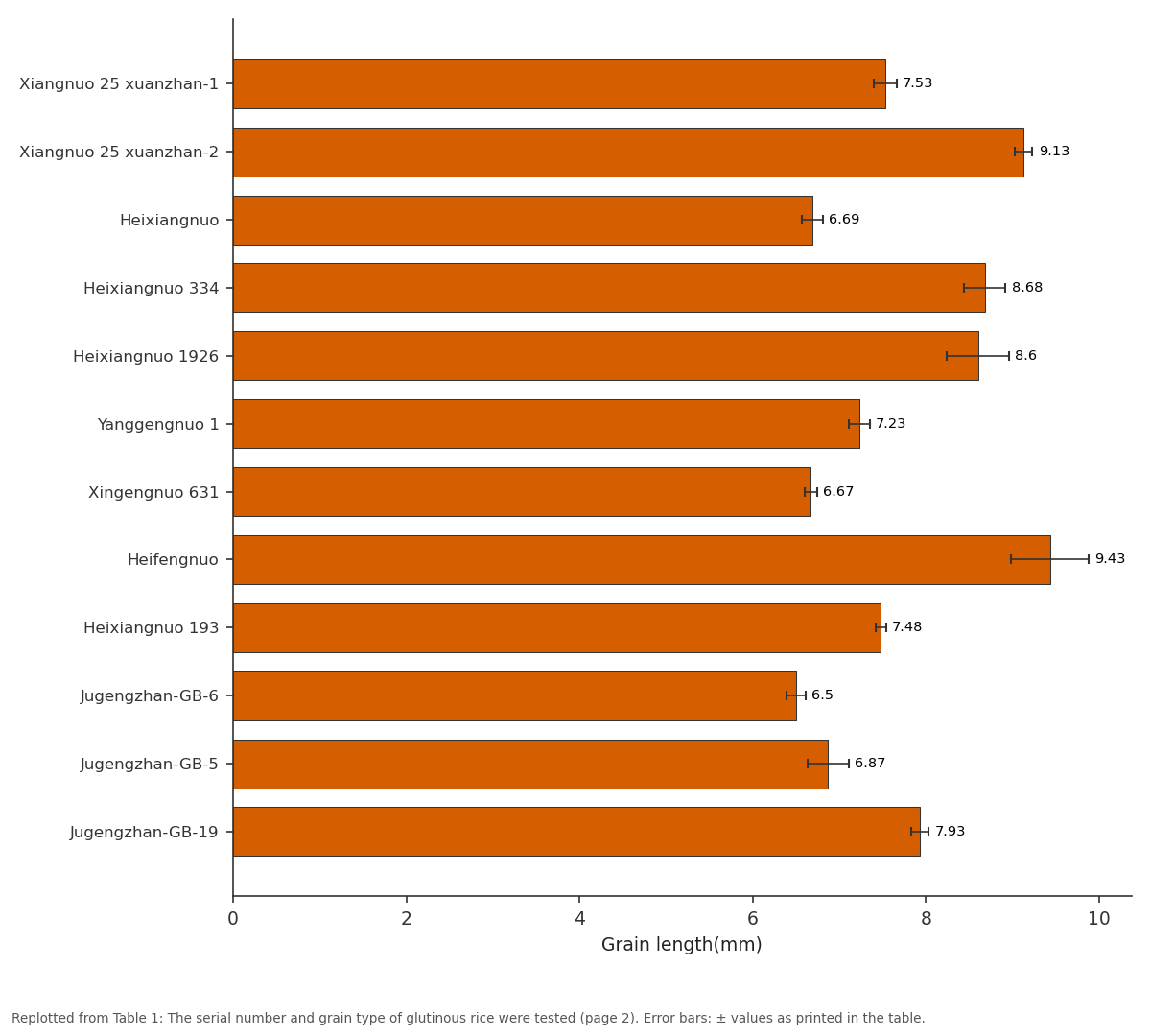
Grain length(mm): Xiangnuo 25 xuanzhan-1 vs Xiangnuo 25 xuanzhan-2 vs Heixiangnuo vs Heixiangnuo 334 vs Heixiangnuo 1926
Replotted from Table 1 (page 2) of the original paper. Every bar is the paper's own table value.
View source evidence ↗Figures & tables
From the original paper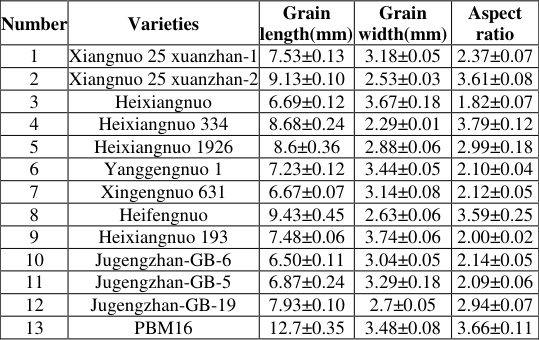 Table 1
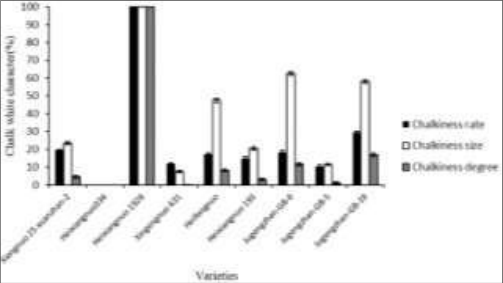 Figure 1
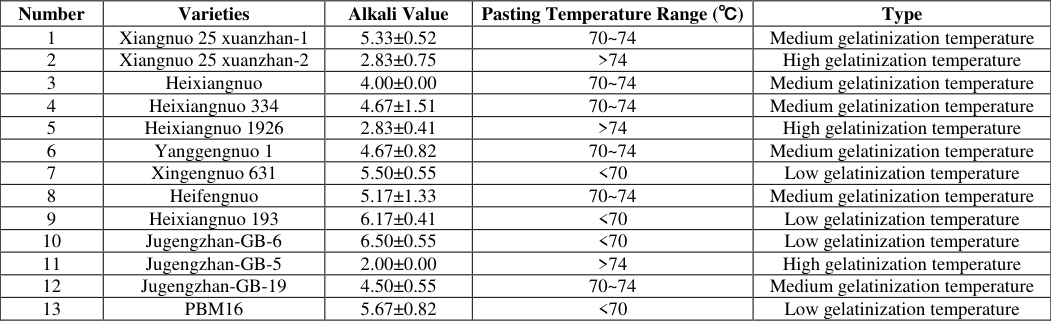 Table 2
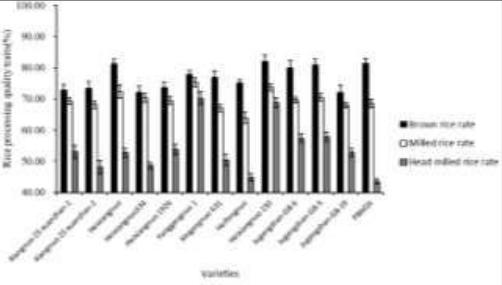 Figure 2
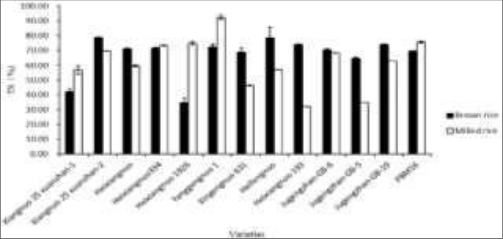 Figure 3
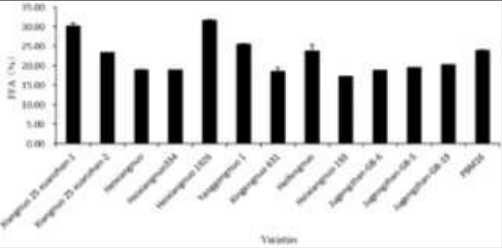 Figure 4
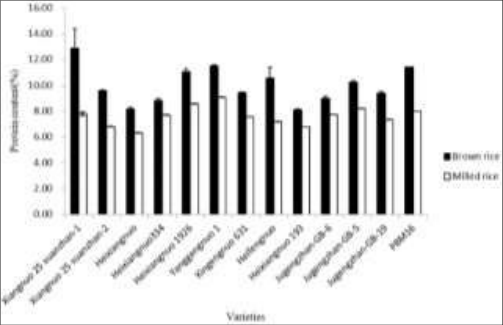 Figure 5
Introduction
Rice (Oryza sativa L.) is one of the most important food crops in the world, with half of the world's population living on rice [1] . China's rice planting area accounts for one quarter of the world's grain crop sown area, and Henan province is the main grain production base in China. The Southern Henan region is the main rice producing area in Henan, accounting for 83% of the province's rice planting area [2]. Although glutinous rice germplasm resources are abundant in Southern Henan, there are few studies on rice quality of glutinous rice in Southern Henan, and the formation mechanism of its key quality traits is still unclear. Glutinous rice contains protein, fat, sugar, calcium, zinc, iron, vitamin B1, vitamin B2, niacin, starch and other nutrients with high nutritional value [3] . The biggest difference between glutinous rice and other kinds of rice is that it contains high levels of amylopectin, which is generally less than 2%.The starch of glutinous rice has the characteristics of high viscosity, good freezing-thawing property and weak coagulability, so it is very suitable for making frozen food and has a broad market prospect [4] . With the steady improvement of people's living standards, people are not only satisfied with food and clothing, but also have higher and higher requirements on the quality of rice. In particular, high-quality glutinous rice is favored by consumers in the market [5] . Therefore, it is of great theoretical significance and broad market prospect to detect and analyze the rice quality traits of glutinous rice germplasm resources in Southern Henan province, and to explore the high-quality glutinous rice germplasm resources, so as to improve the rice quality of glutinous rice. At present, there are many classification methods for glutinous rice, but generally accepted classification methods are divided into two categories, namely indica glutinous rice and japonica glutinous rice. Japonica varieties have poor cold resistance and are mostly planted in areas with high altitude and low average temperature. Indica nuo likes high temperature and is often cultivated in subtropical plains or hilly areas [6] . The southern regions with low altitude, good light conditions, high temperature and abundant water resources are favorable for the cultivation of glutinous rice, and the southern regions mainly plant indica glutinous rice [7] . Located in the Qinling Huai river area, the Southern Henan region is in the transition zone from subtropical zone to warm temperate zone, which is suitable for the cultivation and production of rice and suitable for indica and japonica [8] . Different climate characteristics have different effects on the quality traits of glutinous rice, which are generally divided into four categories at home and abroad, namely appearance quality, milling quality, cooking quality and nutritional quality [9] . Appearance quality mainly includes chalkiness character and grain type, of which chalkiness is the most important appearance quality character [10,11] ; The milling quality of rice mainly analyzed the brown rice rate, milled rice rate and the whole milled rice rate; Cooking taste quality includes gelatinization temperature, amylose content, gum consistency and taste value; Nutritional quality mainly includes protein content, free fatty acid content, amino acid content and other character indexes of rice. The climate in different areas has different effects on the quality traits of rice. The correlation coefficient between daily average temperature and quality traits is large, while the correlation coefficient between daily average precipitation and daily average relative humidity and quality traits is small. The effect of different climate ecological factors on rice quality is significantly different [12] . Southern Henan is a major rice producing area in Henan province, where a large area of indica rice is cultivated all the year round. There have been a lot of studies on the yield, quality, disease resistance and lodging resistance of common cultivated rice [13,15] , but no reports on the rice quality of glutinous rice germplasm resources in Southern Henan. In this experiment, the appearance quality, grinding quality, cooking quality and nutritional quality of 13 representative glutinous rice varieties in Southern Henan were tested and analyzed, in order to provide reference for the cultivation of new glutinous rice varieties with high quality in Southern Henan.
Materials and methods
Materials and methods
Material 2.1.1. Test materials
There were 13 representative glutinous rice varieties in Southern Henan province, including 6 sweet glutinous rice varieties and 5 black glutinous rice varieties. The variety names and related information of glutinous rice are shown in table 1.
| Number | Varieties | Grain length(mm) | Grain width(mm) | Aspect ratio |
|---|---|---|---|---|
| 1 | Xiangnuo 25 xuanzhan-1 | 7.53±0.13 | 3.18±0.05 | 2.37±0.07 |
| 2 | Xiangnuo 25 xuanzhan-2 | 9.13±0.10 | 2.53±0.03 | 3.61±0.08 |
| 3 | Heixiangnuo | 6.69±0.12 | 3.67±0.18 | 1.82±0.07 |
| 4 | Heixiangnuo 334 | 8.68±0.24 | 2.29±0.01 | 3.79±0.12 |
| 5 | Heixiangnuo 1926 | 8.6±0.36 | 2.88±0.06 | 2.99±0.18 |
| 6 | Yanggengnuo 1 | 7.23±0.12 | 3.44±0.05 | 2.10±0.04 |
| 7 | Xingengnuo 631 | 6.67±0.07 | 3.14±0.08 | 2.12±0.05 |
| 8 | Heifengnuo | 9.43±0.45 | 2.63±0.06 | 3.59±0.25 |
| 9 | Heixiangnuo 193 | 7.48±0.06 | 3.74±0.06 | 2.00±0.02 |
| 10 | Jugengzhan-GB-6 | 6.50±0.11 | 3.04±0.05 | 2.14±0.05 |
| 11 | Jugengzhan-GB-5 | 6.87±0.24 | 3.29±0.18 | 2.09±0.06 |
| 12 | Jugengzhan-GB-19 | 7.93±0.10 | 2.7±0.05 | 2.94±0.07 |
| 13 | PBM16 | 12.7±0.35 | 3.48±0.08 | 3.66±0.11 |
Table text extracted from the original PDF; superscript letters are shown inline. The original table image is below.
View original table image
Preliminary treatment of test materials
After the glutinous rice germplasm resource material is mature, timely harvest, natural air drying, the use of a single plant thresher threshing processing, the glutinous rice germplasm resource material seeds placed at room temperature for 3 months, and then for the detection and analysis of quality traits.
Quality character determination 3.1. Determination of appearance quality
The traits measured for appearance quality included grain type (grain length, grain width and length-width ratio) and chalkiness (chalkiness rate, chalkiness size, chalkiness degree). Ten grains were randomly selected from the seeds of glutinous rice germplasm resources in Southern Henan province. The length of grains was measured with a scale after the first and the last were closely arranged. The width of grains was measured with a scale after the first and last were closely arranged. According to the data of grain length and grain width, the ratio of length to width of each glutinous rice germplasm resource in Southern Henan was calculated. According to the national standard GB/ t17891-1999, chalky characters were determined and analyzed: With ridge m machine (JLG -Ⅱ ) will be selected to brown rice, glutinous rice seeds after grinding polishing machine (LTJM -160 type) for milled rice. The fluorescent lamp was placed under the glass plate, and 200 full whole grains were randomly selected from the polished rice of each variety. The number of chalky grains was counted and repeated for 3 times. The average value was chalky rate; 10 grains of chalky rice were randomly selected from different waxy rice varieties and the percentage of chalky rice in the whole area was estimated. Chalkiness = chalkiness rate × chalkiness size. Finally, SPSS 20.0 was applied for statistical analysis of the measured data.
Determination of grinding quality
The processing quality of rice includes brown rice rate, milled rice rate and whole milled rice rate. Rice grinding and processing quality of glutinous rice germplasm resource was conducted in accordance with the standard NY 147-1988 issued by the ministry of agriculture [16] .
Determination of cooking taste quality characteristics
According to the cooking and eating quality of glutinous rice germplasm resources in Southern Henan, the gelatinization temperature and eating taste value were detected. The gelatinization temperature of 13 samples of glutinous rice germplasm resources in Southern Henan was determined according to the standard NY 147-1988 issued by the ministry of agriculture [16] . Taste value was detected by near-infrared grain analyzer [17,26] .
Results and discussion
The results of grain type detection are shown in Table 1. In this experiment, the longest variety is PBM16, the grain length is 12.7 mm, the shortest is Jugengzhan-GB-6, the grain length is 6.50 mm, the average grain length is 8.11 mm; the widest variety is Heixiangnuo, the grain width is 3.67 mm, the narrowest is Heixiangnuo 334, the grain width is 2.29 mm, the average grain width was 3.08 mm; the largest variety was Heixiangnuo 334, the ratio of length to width was 3.79, the smallest variety was Heixiangnuo, the ratio of length to width was 1.82, and the average ratio of length to width of all seeds was 2.71. According to the International Rice Research Institute's classification standard of grain length, all the rice samples in this experiment belong to a long level, including 7 super long level glutinous rice varieties and 6 long level glutinous rice varieties. According to the classification standards of grain types in China, among the 13 varieties of glutinous rice in this experiment, 4 belong to the slender level, 2 belong to the long level, 6 belong to the medium long level, and 1 belongs to the short level (Table 1).
Detection of Chalkiness in Southern Henan glutinous rice varieties
The chalkiness of rice is one of the important indexes reflecting the appearance quality of rice. It is mainly measured by two indexes: chalkiness rate and chalkiness degree [20] . According to the national standard GB/T 17891-1999 [20] , high quality rice is divided into three grades according to the difference of chalkiness rate and chalkiness degree: the first-class high-quality rice with the chalkiness rate not higher than 10.0% and the chalkiness degree not higher than 1.0%; the second-class high-quality rice with the chalkiness rate not higher than 20.0% and the chalkiness degree not higher than 3.0%; the third-class high-quality rice with the chalkiness rate not Higher than 30.0% and the chalkiness degree not higher than 5.0%. The smaller the chalkiness rate and chalkiness degree, the better the appearance quality of rice. Among the 13 waxy rice germplasm resources in Southern Henan, 4 were darker in color, so the chalkiness size could not be observed. The results of chalkiness character detection of the other 9 varieties are shown in Fig. 1
Inspection of grinding quality
The milling quality of rice mainly includes brown rice rate, milled rice rate and head milled rice rate. Brown rice rate is the percentage of brown rice weight to rice weight, milled rice rate is the percentage of milled rice weight to rice weight, head milled rice rate is the percentage of milled rice weight to rice weight. The processing quality of different varieties is different, in which the brown rice rate is generally 77%~84%, the milled rice rate is 67%~74%, and the head milled rice rate is 20%~70% [21] . In this experiment, 13 brown rice germplasm materials in Henan Province were selected, the brown rice rate was between 72%~83%, the milled rice rate was 63%~76%, and the head milled rice rate was between 43%~71% (Fig. 2). Among them, the highest brown rice rate is Heixiangnuo 193 (82.07%), the lowest is Heixiangnuo 334 (72.00%); the highest milled rice rate is Yanggengnuo 1 (75.35%), the lowest is Heixiangnuo 193 (63.94%); the highest head milled rice rate is Yanggengnuo 1 (70.19%), the lowest is PBM16 (43.55%). The above results showed that there were rich variations in the rice processing quality of waxy rice germplasm resources in Southern Henan, which provided important information for the selection of new varieties with good processing quality in later stage. Gelatinization temperature determines the physical cooking characteristics of rice. Because of the high correlation between alkali extinction value and gelatinization temperature, and the relatively easy determination method, alkali extinction value is usually used to indirectly express gelatinization temperature [22] . The alkali extinction value of grade 6-7 corresponds to low gelatinization temperature, grade 4-5 corresponds to medium gelatinization temperature, and grade 1-3 corresponds to high gelatinization temperature. Low gelatinization temperature is required for high-quality rice (the first-class high-quality rice alkali elimination value is 6-7) [21] . In the materials of waxy rice germplasm resources in the Southern of Henan, most of the alkali elimination values were higher than grade 4, and only three waxy rice varieties had alkali elimination values lower than grade 3 (Table 2). According to the classification standard of gelatinization temperature, it is concluded that: Xiangnuo 25 xuanzhan-2, Heixiangnuo 1926, Jugengzhan-GB-5, three varieties are high gelatinization temperature; Xingengnuo 631, Heixiangnuo 193, Jugengzhan-GB-6 and PBM16, four varieties are low gelatinization temperature; the rest are medium gelatinization temperature. Among them, Jugengzhan-GB-6 has the highest alkali dissipation value (grade 6.5), which belongs to grade I high-quality rice, Jugengzhan-GB-5 has the lowest alkali dissipation value (grade 2), which has higher gelatinization temperature. Therefore, the detection and analysis of gelatinization temperature in Southern Henan glutinous rice germplasm provides an important reference for the genetic breeding and quality improvement of cooking and eating quality of Southern Henan glutinous rice.
| Number | Varieties | Alkali Value | Pasting Temperature Range (℃) | Type |
|---|---|---|---|---|
| 1 | Xiangnuo 25 xuanzhan-1 | 5.33±0.52 | 70~74 | Medium gelatinization temperature |
| 2 | Xiangnuo 25 xuanzhan-2 | 2.83±0.75 | >74 | High gelatinization temperature |
| 3 | Heixiangnuo | 4.00±0.00 | 70~74 | Medium gelatinization temperature |
| 4 | Heixiangnuo 334 | 4.67±1.51 | 70~74 | Medium gelatinization temperature |
| 5 | Heixiangnuo 1926 | 2.83±0.41 | >74 | High gelatinization temperature |
| 6 | Yanggengnuo 1 | 4.67±0.82 | 70~74 | Medium gelatinization temperature |
| 7 | Xingengnuo 631 | 5.50±0.55 | <70 | Low gelatinization temperature |
| 8 | Heifengnuo | 5.17±1.33 | 70~74 | Medium gelatinization temperature |
| 9 | Heixiangnuo 193 | 6.17±0.41 | <70 | Low gelatinization temperature |
| 10 | Jugengzhan-GB-6 | 6.50±0.55 | <70 | Low gelatinization temperature |
| 11 | Jugengzhan-GB-5 | 2.00±0.00 | >74 | High gelatinization temperature |
| 12 | Jugengzhan-GB-19 | 4.50±0.55 | 70~74 | Medium gelatinization temperature |
| 13 | PBM16 | 5.67±0.82 | <70 | Low gelatinization temperature |
Table text extracted from the original PDF; superscript letters are shown inline. The original table image is below.
View original table image
Detection of taste value of glutinous rice varieties in Southern Henan
The taste value of rice is a comprehensive index, which is closely related to the appearance quality, cooking taste quality and physical and chemical properties [23] , it determines the cooking taste quality of rice, the higher the taste value, the better the taste of rice. By comparing 13 samples of glutinous rice germplasm resources in Southern Henan province, the food taste value of brown rice was detected, it was found that Xiangnuo 25 xuanzhan-2 had the highest taste value (78.77%), next is Heixiangnuo (78.53%), Heixiangnuo 1926 (34.56%) and Xiangnuo 25 xuanzhan-1 (12.48%) have low taste values (Fig. 3), so have poor taste. By comparing the taste value test results of glutinous rice germplasm resources in Southern Henan, it was found that Yanggengnuo 1 had the highest taste value (92.23%) and the best taste;
Heixiangnuo 193 (32.04%) and Jugengzhan-GB-5 (34.86%) with low taste value and poor taste. The fat content in rice is the main factor affecting the taste of rice. The higher the content of free fatty acid, the better the rice luster and the higher the nutritional value [24] . Among the glutinous rice germplasm resources in Southern Henan, Heixiangnuo 1926 (31.66%) had the highest free fatty acid content, followed by Xiangnuo 25 xuanzhan-1 (30.16%), and Heixiangnuo 193 (17.30%) had the lowest free fatty acid content, 14.36% difference with Heixiangnuo 1926 (Fig. 4). It can be seen that the content of free fatty acids in the glutinous rice germplasm resources in Southern Henan differs greatly, which provides an important reference for the selection of new glutinous rice varieties with high nutritional quality in the future.
Detection of protein content in brown rice and milled rice of glutinous rice in Southern Henan
The protein content of rice is an important shape of nutritional quality. Studies have shown that the variation range of rice protein content in brown rice and milled rice is 5.1%~15.4% and 4.5%~14.3%, respectively [22] . The results of near-infrared grain analyzer showed that Xiangnuo 25 xuanzhan-1 (12.88%) had the highest protein content in brown rice, Yanggengnuo 1 (11.51%) was the next highest in protein content, Heixiangnuo 193 (8.11%) had the lowest protein content, the protein content of 13 samples of glutinous rice in Southern Henan ranged from 8.11% to 12.88%, the difference between maximum and minimum content was 4.77%; Among the milled rice varieties of glutinous rice in Southern Henan, the protein content of Yanggengnuo 1 (9.09%) was the highest, followed by that of Heixiangnuo 1926 (8.56%), and that of Heixiangnuo (6.32%) was the lowest. The protein content of glutinous rice in Southern Henan varied from 6.32% to 9.09%, with a difference of 2.77% between the highest and lowest content. Compared with the protein content of brown rice, the protein content of glutinous rice in Southern Henan has a relatively small variation range, and milled rice tends to have a lower protein content than brown rice (Fig. 5), which has certain enlightenment for the selection and breeding of new glutinous rice varieties with high nutritional quality in the later period.
Discussion
Rice quality is mainly divided into appearance quality, milling quality, cooking and eating quality and nutritional quality. Chalkiness is the most important appearance quality character in rice, including chalkiness rate, chalkiness size and chalkiness degree. Chalkiness is not only the key factor to measure the appearance quality of rice, but also has an important impact on the cooking and eating quality, milling and processing quality of rice, and even leads to the reduction of rice yield [25][26][27] . Chalkiness is a typical quantitative trait, which is controlled by multiple quantitative trait loci and easily affected by the external environment. The chalkiness rate, chalkiness size and chalkiness degree of 13 waxy rice germplasm resources in Southern Henan were higher. Xinjingnuo631 and Jujingzhan-GB-5 belong to the second-class high-quality rice, Heixiangnuo 334 belongs to the first-class high-quality rice, and other varieties of rice do not meet the standard of high-quality rice. This may be related to the climate in the Southern Henan: the summer rainfall is hot in the same season, the humidity is high, and the temperature is high, which may be conducive to the generation of Chalkiness in the seeds of glutinous rice. It is very interesting that the grain length of all the tested rice in this experiment belongs to the long grade, which belongs to the long and thin grade and the middle and long grade, which provides valuable breeding materials for the breeding of new high-quality glutinous rice varieties. By testing the brown rice rate, the milled rice rate and the whole milled rice rate, we can analyze the grinding quality of rice.
According to the test results of 13 glutinous rice germplasm resources in Southern Henan, it can be found that except the brown rice rate of Heixiangnuo 334 and the whole milled rice rate of Heixiangnuo 193 are slightly lower than the normal range, other varieties meet the standard. Among them, Yangjingnuo 1 has a high rate of milled rice and whole milled rice, and its taste value is also high, which shows that it has a high breeding value.
Cooking and eating quality is the quality that people are generally concerned about. The gelatinization temperature determines the physical cooking characteristics of rice.
If the rice with high gelatinization temperature is over cooked, it is easy to spread and not form. If the rice with general method is not cooked, it will take more water and time than the rice with low gelatinization temperature [28] . Therefore, it is very important to cultivate and introduce varieties with low gelatinization temperature to improve the cooking and eating quality of rice.
Only three varieties (Xiangnuo25, Xuanzhan-2, Heixiangnuo 1926, Jujingzhan-GB-5) were high gelatinization temperature, and the rest were low to medium gelatinization temperature. Among them, the alkali elimination value of Jujingzhan-GB-5 is the highest, which is 6.5 grade, belonging to the first-grade highquality rice. There are many factors that affect the rice taste value, protein content and alkali digestion value will affect its taste value [29,30] . By comparing the taste value of brown rice in Southern Henan glutinous rice germplasm resources, Yangjingnuo 1 had the highest taste value (92.23%), and Jujing-GB-5 (34.86%) with low taste value. The taste value of 13 Southern Henan glutinous rice varieties were different, varied and had higher taste value, which indicated that the taste of rice was better. Rice contains many nutrients which are beneficial to human body, among which protein is one of the most important nutrients and an important source of protein for human consumption [29] .
Compared with other crops, the protein content of rice is relatively low, generally about 8%. Varieties with more than 9% protein content tend to have poor taste and taste [31] . The protein content of milled rice of waxy rice germplasm resources in Southern Henan varied from 6.32% to 9.09% (Fig. 5). Because human beings cannot synthesize free fatty acids by themselves, they can only get them from food, so it is very important to study the content of free fatty acids in rice. The higher the content of free fatty acid in rice, the better the luster of rice [24] . Among the materials of germplasm resources in Southern Henan, the content of free fatty acids in Heixiangnuo 1926 (31.66%) was the highest, and that in Heixiangnuo 193 (17.30%) was the lowest. Therefore, there are abundant variations in the nutritional quality characters of rice germplasm materials in South Henan, which provide important breeding resources for the breeding of new high nutritional quality glutinous rice varieties.
Conclusion
Through the detection and analysis of the rice quality characters of Southern Henan glutinous rice germplasm resources, it was found that the main quality indexes of the tested materials, such as appearance quality, milling quality, cooking and eating quality, and nutritional quality, were rich in variation, which provided valuable breeding materials for the later selection of new high-quality glutinous rice varieties in Southern Henan.
Acknowledgement
7. Acknowledgments This work was financially supported by National Natural Science Foundation of China (U1604110, U1404319, 31600992, 31801332), Key Project of Science and Technology in Henan Province (192102110119, 182102110442), National Key R&D Program Projects (2016YFD0100101-10), The Training Plan of Young Backbone Teachers in Colleges and universities of Henan Province (2019GGJS162), Postgraduate Education Reform Project of Henan Province (2019SJGLX088Y), Key Scientific Research Projects of Universities in Henan Province (19A180030), Nanhu Scholars Program for Young Scholars of XYNU (2016054), Scientific Research Innovation Project for Postgraduate of XYNU (2018KYJJ47).
References
31 in the original paper- Tian ZX, Qian Q, Liu QQ, et al. Allelic diversities in rice starch biosynthesis lead to a diverse array of rice eating and cooking qualities [J]. Proceedings of the National Academy of Sciences of the United States of America, 2009, 106:21760-21765.
- Wang QZ, Song XH, Liu QR, et al. Evolution and optimization of rice sowing date in Southern Henan rice region [J]. China Rice. 2018; 24(5):73-77.
- Li WJ, Yin YY, Characteristics and application of glutinous rice starch [J]. Grain and Food Industry. 2017; 3:29-34.
- Zhu C S, Research progress of glutinous rice flour [J]. Grain Circulation Technology, 2018; 16:7-9.
- Jiang X, Long WH, PQ, et al. Population location of QTLs at heading stage of rice based on SLAF SEQ recombinant inbred lines [J]. Molecular Plant Breeding. 2018; 24:80688072.
- Li ZG. Nuo rice in Chinese history [J]. Agricultural Archaeology, 2008; 1:41-53.
- Jiang GCH. Evaluation and utilization of introduced glutinous rice germplasm resources [D]. Sichuan Agricultural University, 2016.
- Duan B, Fang L, He SJ, et al. The effect of temperature change based on sowing date on sowing date and filling maturity of Japonica Rice in Southern Henan [J]. Crop Journal. 2019; 190(3):99-105.
- Zhao DS, Li QF, Zhang CQ, et al. GS9 acts as a transcriptional activator to regulate rice grain shape and appearance quality [J]. Nature Communications, 2018; 9:1240.
- Peng B, Li J, Kong DY, et al. Genetic improvement of grain quality promoted by high and new technology in rice[J]. Journal of Agricultural Science. 2019 ; 11(1):81-94.
- Kong DY, Peng B, Peng Y, et al. Effect of sowing date on grain endosperm chalkiness of different rice varieties [J]. Journal of Plant Sciences. 2018; 6(2):41-51.
- Cheng FG, Zhong LJ. Analysis of variation and main influencing factors of rice quality characters under different climatic and ecological conditions [J]. China Rice Science. 2001; 15(3):187-191.
- Song XH, Liu QY, Peng B, et al. Research progress in the theory and technology of "indica to japonica" in Southern Henan[J]. China Rice. 2017; 23(6):32-36.
- Song SZ, Fang L, Duan B, et al. Effects of adjusting sowing date on the occurrence conditions of rice blast and sheath blight in Southern Henan [J]. Chinese Agronomy Bulletin. 2005; 21(4):276-277.
- Duan B, Song SZ, He SJ, et al. Study on safe full heading and optimum sowing time of Japonica Rice in Southern Henan [J]. China Rice. 2015; 21(1):45-47.
- Ministry of agriculture of the people's Republic of China. Determination method of rice quality: NY 147-1988 [S]. Beijing: China Standards Press, 1989.
- Peng B, Sun YF, Wang C, et al. Application of near infrared spectroscopy in the study of quality of main grain crops [J]. Journal of Xinyang Normal University (Natural Science Edition). 2017; 30(3):509-516.
- Ying Z, Cai H, Xiao J, et al. Over-expression of aspartate aminotransferase genes in rice resulted in altered nitrogen metabolism and increased amino acid content in seeds [J]. Theoretical and Applied Genetics. 2009; 118(7):1381-1390.
- Xu W. Correlation analysis of rice soluble starch synthase gene with yield and rice quality traits [D]. Jiangxi: Jiangxi Agricultural University, 2013.
- National standard of the people's Republic of China. High quality rice GB/t17891-1999 [S], Version 1. Beijing: China Standards Press, 1999.
- Huang XQ, Zhao HX, Dong CL, et al. Research progress in rice quality and genetic characteristics [J]. Seed. 2005; 24(7):50-53.
- Zhang HB. Effect of milling degree on rice cooking quality and nutritional quality [D]. Zhejiang: Zhejiang University, 2015.
- Chen QC. Research on rice processing characteristics and quality evaluation technology [D]. Hunan: Central South University of Forestry Science and Technology, 2012.
- Xing XY, Hui RH, Hou DY, et al. Study on fatty acids in several kinds of rice [J]. Journal of Anshan Normal University. 2006; 4:43-45.
- Peng B, Wang L Q, Zeng J, et al. Comparative mapping of chalkiness components in rice grain using five populations across two environments [J]. BMC Genetics, 2014, 15:49.
- Peng B, Kong HL, Li YB, et al. OsAAP6 functions as an important regulator of grain protein content and nutritional quality in rice [J]. Nature Communications, 2014, 5:4847.
- Peng B, Song XH, Duan B, et al. Effects of different sowing dates on the quality characters of "Huangjinqing" rice in Japan [J]. Journal of Southwest Agriculture. 2018; 31(9):1420.
- Sun YY. The genetic relationship between Wx gene and AC, GC and GT in rice and the comprehensive evaluation of rice quality in the middle line of breeding [D]. Sichuan Agricultural University, 2005.
- Wang KJ, Ge LL, Fan MM, et al. Research progress of protein content and its influencing factors in Rice[J]. Journal of Crop. 2011; 6:7-12.
- Zhang X, Shi LL, Ding DL, et al. Relationship between protein correlation, RVA profile and eating quality of rice[J]. Food Science and Technology. 2014; 10:188-191.
- Huang FS, Sun ZX, Hu PS, et al. The present situation and Prospect of research on the formation of edible rice quality [J]. Rice Science in China. 1998; 3:172-176.