
Research article · 2023 · Full text
International Journal of Agriculture and NutritionEthnobotany of the kaili da'a community in Kinovaro district, Sigi regency, central Sulawesi province
Volume 5(1) · Pages 43–49 · DOI: 10.33545/26646064.2023.v5.i1a.98 ↗
Research areasForest Ecology and ConservationAgricultural and Biological ResearchCoconut Research and Applications
Abstract
Author-writtenThis study aimed to identify and explain the types and benefits of plants in the Kaili Da'a community. This research used a descriptive research type with qualitative and quantitative methods. The population in this study was the Kaili Da'a people in Balane Village, Kinovaro District, and Matantimali Village, Marawola Barat District, Sigi Regency. Qualitative methods were used to determine the use of known plants by the Kaili Da'a people in the Kinavaro and West Marawola Districts in the Sigi Regency. Plants were analyzed qualitatively by grouping plant species, including regional names, Latin names, families, habitus, parts used, and the benefits of these plants. The data obtained in the field was presented in tabulations and then analyzed descriptively with a quantitative approach using the Index of Cultural Significance (ICS) equation. The people of Balane village use 15 species of plants as food, 13 species of plants as spices, 19 species of medicinal plants, 9 species of plants as animal feed, 11 species of plants used for ritual and religious customs, 4 species of ornamental plants, 4 species of plants for 3 species of aromatic and dyes, 9 species of plants as fuel and 3 species of plants used as furniture and building materials. The parts of the plant used are leaves, fruit, tubers, stems, seeds, and flowers. The Kaili Da'a people's main food is Pae (Oryza sativa L), a staple food, and additional food such as Punti and Jole (Zea mays). The highest percentage of plant used in medicines, namely 15.9% for food, it occupies the second highest at 12.6%. Meanwhile, plants are the lowest in dyes and aromatics, namely 2.5%. Based on this study, a high ICS value was obtained, namely, purpureum Roxb, and there were only 2 species of jeringau, Kaluku (Cocos nucifera L.) and Pae (Oryza sativa L.).
Summary
Source-checkedPlain-language reading of the full paper, prepared with AI and checked against the text. Each point links to the authors' own words.
Why it matters
- Documenting traditional wisdom is urgent because such knowledge often aligns with sustainable development goals. View evidence ↗
- The local knowledge system of the Kaili Da'a tribe regarding plant use has not been previously documented in ethnobotanical studies. View evidence ↗
The question
- The study aimed to identify and explain the various types of plants used by the Kaili Da'a community and their specific benefits. View evidence ↗
What they did
- The researchers employed a descriptive research design combining qualitative and quantitative methods. View evidence ↗
- The study took place between May and June 2021 in the villages of Balane and Matantimali in the Sigi District of Central Sulawesi. View evidence ↗
- Informants were selected via snowball sampling, with key informants required to be aged 15-60+, hold a societal role, possess plant knowledge, and know the terrain. View evidence ↗
- Field data were tabulated and analyzed using a descriptive approach and the Index of Cultural Significance (ICS) equation. View evidence ↗
What they found
- The people of Balane village utilize approximately 119 plant species belonging to 61 different families. View evidence ↗
- Plant usage includes 19 medicinal species, 15 food species, 13 spice species, 11 ritual/religious species, 9 animal feed species, 9 fuel species, 4 ornamental species, 3 aromatic/dye species, and 3 building/furniture species. View evidence ↗
- Medicinal plants represent the highest usage percentage (15.9%), followed by food plants (12.6%), while dyes and aromatics are the lowest (2.5%). View evidence ↗
- The staple food for the Kaili Da'a people is Pae (Oryza sativa L.), supplemented by Punti (Musa paradisiaca L.) and Jole (Zea mayz L.). View evidence ↗
- Only two species, Kaluku (Cocos nucifera L.) and Pae (Oryza sativa L.), were found to have a high Index of Cultural Significance (ICS) value. View evidence ↗
- Kaluku (Cocos nucifera L.) achieved the highest ICS value due to its wide variety of uses. View evidence ↗
- Ten species, including Rhoeo diskolar and Alang-alang, were identified as having very low ICS values. View evidence ↗
What it means
- The authors conclude that the Kaili Da'a community in Balane village utilizes a diverse range of approximately 119 plant species across 61 families for various needs. View evidence ↗
Visual summary
1 visualsIllustrations explain the paper; they do not show study data.
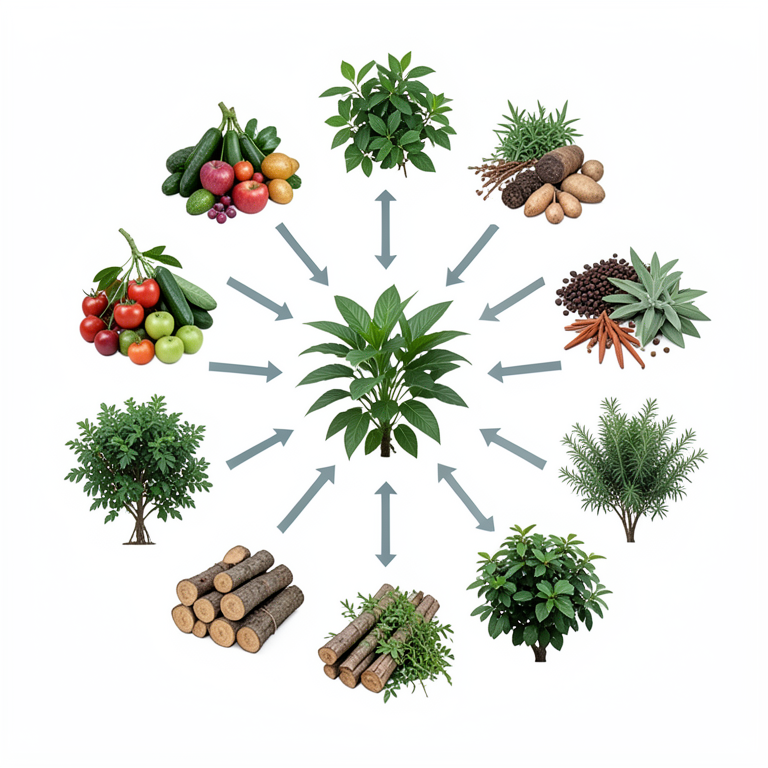
Plant Use Categories
AI-generated conceptual illustration (Various tropical plants of Central Sulawesi). It explains the idea and does not show study data.
View source evidence ↗Figures & tables
From the original paper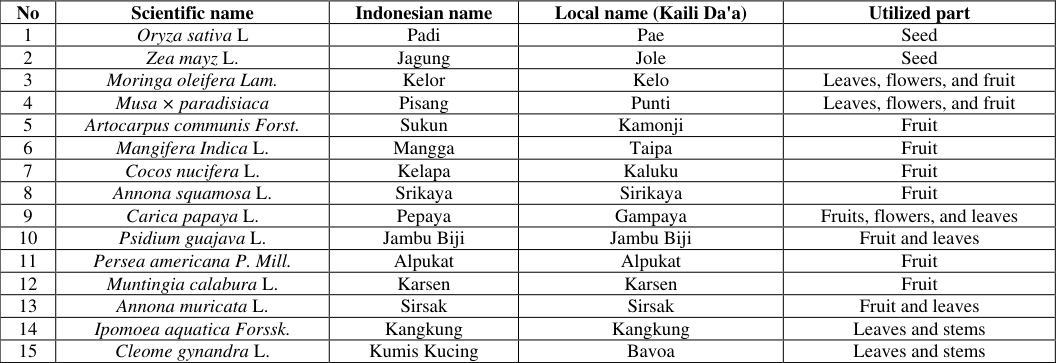 Table 1
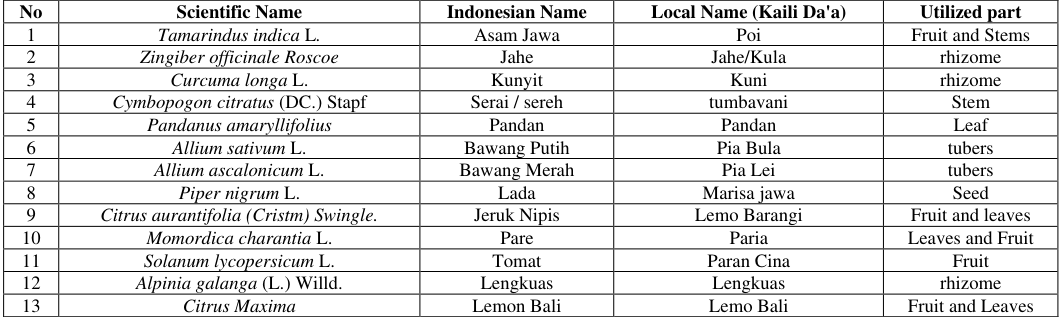 Table 2
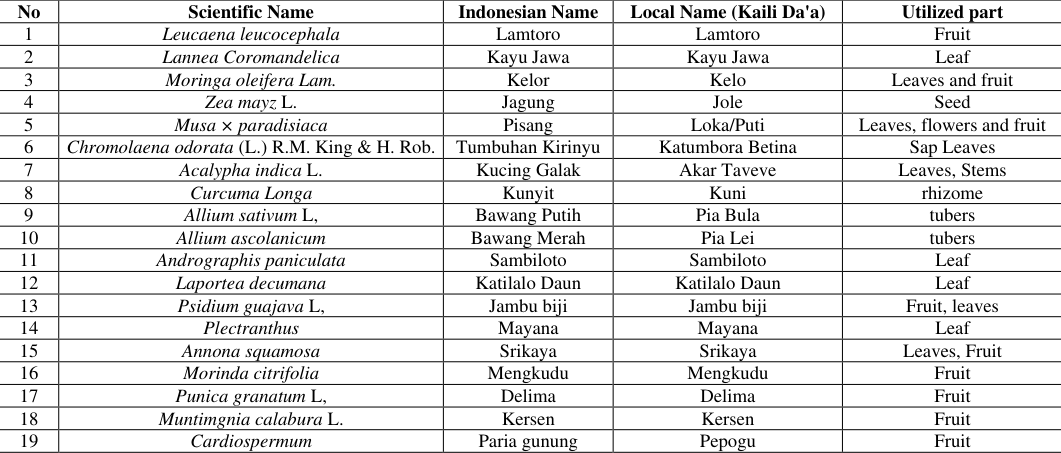 Table 3
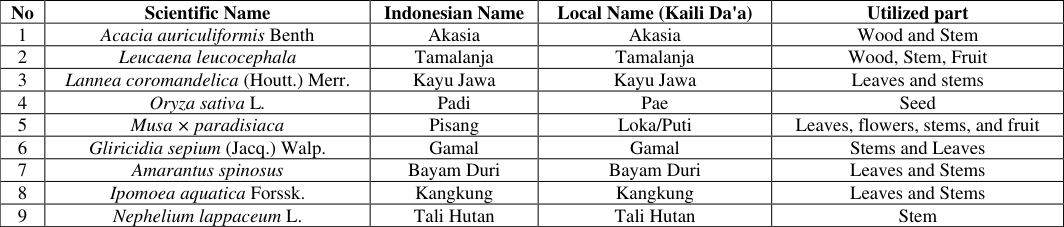 Table 4
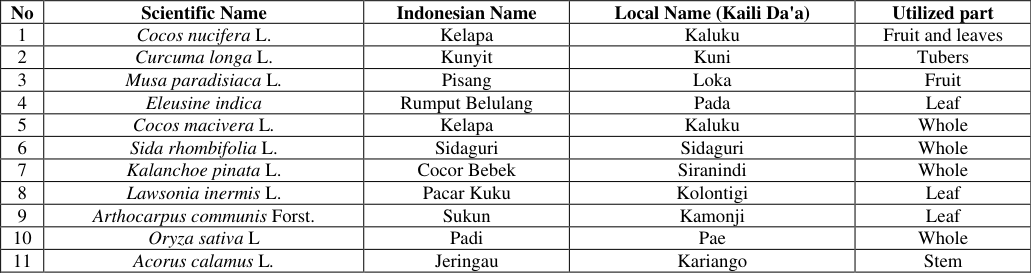 Table 5
 Table 6
 Table 7
 Table 8
 Table 9
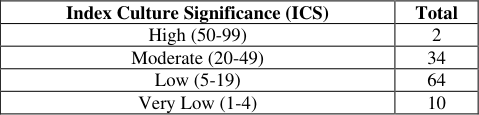 Table 10
Introduction
Indonesia is one of the countries known as "Mega biodiversity" countries, namely countries that have a wealth of biodiversity in the world [1,2] . Besides that, it is also known as a country rich in cultural diversity [17] . Widjaja et al. (2014) [4] state that Indonesia has the second highest biodiversity after Brazil for terrestrial flora and fauna and even the highest when combined with Indonesia's marine biodiversity [4] . This wealth must be utilized and managed optimally to provide benefits. Ismanto (2007) [5] added that the wealth of biodiversity is one of the basic assets in implementing national development so that it can be used to improve people's welfare. However, the utilization must be in accordance with the ability (carrying capacity), characteristics, and function [5] . According to Purwanto et al. (2020) [17] , unfortunately, the high diversity in the archipelago is underappreciated, resulting in the loss of many of these cultures. Studies to document and study traditional wisdom are urgently needed because traditional knowledge is often compatible with sustainable development goals, as discussed at the World Summit on Sustainable Development in Rio de Janeiro in 1992 and Johannesburg in 2002. Judging from its plant wealth, Indonesia has around 25,000-35,000 species of plants, half of which have the potential to be utilized for timber and fruit trees [15] . De Padua et al. (1999) [7] describe thousands of plants that are useful as medicinal plants in Southeast Asia, including Indonesia. Apart from that, plants are also a source of timber, edible fruits and nuts, spices and rigging, and others [18,9,10] . One of the indigenous peoples in Indonesia, especially in Central Sulawesi, who has long used plants for various daily needs is the Kaili Da'a tribe, who live in Kinovaro and West Marawola Districts, Sigi District, Central Sulawesi Province.
The Da'a tribe is an indigenous community of native people who live in the Sigi Regency. The tribe lives in forest and mountain areas. They live a nomadic life, moving from forest to forest while looking for places to open new fields. After the crops in the fields are harvested, they will look for new land again [16] . The people of the Kaili Da'a tribe who live in the area have a close relationship, a high sense of brotherhood between the village people who live very peacefully and peacefully and uphold the philosophy of "NOSAINDO NOSAUMA NOSABATUTU'. Besides that, they have local knowledge systems in utilizing various plants used in everyday life, both as food ingredients, medicinal ingredients, buildings, traditional rituals, and industrial materials. However, information about this local knowledge system has never been documented, especially in ethnobotanical studies, so it is necessary to conduct research in this area. The habit of using plants to support their life is very interesting to study. The local wisdom of the Kaili Da'a people is also interesting to study. This is very valuable knowledge and is a cultural wealth that needs to be explored so that this traditional knowledge is not lost. The researcher was encouraged to find out more by researching the Ethnobotany of the Kaili Da'a Community in Kinovaro and West Marawol Districts in Sigi Regency, Central Sulawesi. This study aimed to identify and explain the types and benefits of plants in the Kaili Da'a community.
Materials and Methods
This research used a descriptive research type with qualitative and quantitative methods. According to Martono (2010) [12] , descriptive research aims to describe the character of a variable that occurs in society through interview and observation techniques. Qualitative methods were used to determine the use of known plants by the Kaili Da'a people in the Kinavaro and West Marawola Districts in the Sigi Regency. Plants were analyzed qualitatively by grouping plant species, including regional names, Latin names, families, habitus, parts used, and the benefits of these plants. Meanwhile, by calculating the ICS value, the quantitative method was used to determine the level of knowledge, types of plants, and use of plants. The ICS calculation results showed the level of importance of each useful plant species by the community. This research was conducted from May to June 2021 in Balane Village and Matantimali Village, Sigi District, Central Sulawesi Province. The population in this study was the Kaili Da'a people in Balane Village, Kinovaro District, and Matantimali Village, Marawola Barat District, Sigi Regency. The selection of informants (respondents) was carried out by Snowball Sampling (13). Then the selection of key informants by setting the criteria, namely: Aged 15 -60 years more, Have status and role in society, Have knowledge about the use of plants, Recognizes the entire terrain extensively. The tools used were stationery, books, the questionnaire, a camera to document research objects, the book Serie Flora Malesiana (Volumes 1-16), PROSEA Series (Plant Resources of Southeast Asia), Indonesian Useful Plants volumes 1-4 (Heyne, 1987), a list of Indonesian medicinal plants, the Atlas of Indonesian Medicinal Plants Volumes 1-6 and the Smart Book of Medicinal Plants to identify plant species, meter and label paper. The data obtained in the field was presented in tabulations and then analyzed descriptively with a quantitative approach using the Index of Cultural Significance (ICS) equation. Plants as food ingredients aside from forests also come from gardens and fields owned by the community. The parts of the plant used are leaves, fruit, tubers, stems, seeds, and flowers. The main food of the Kaili Da'a people is what is called Pae (Oryza sativa L.), which is the staple food, and additional food such as Punti (Musa paradisiaca L.) and Jole (Zea mayz L.).
Results and Discussion
Results and Discussion
Plants as Food Ingredients
Plants as Food Ingredients
Plants as Spices
The people of Balane village use several plants as spices for daily use, such as cooking. Various plant species are often used because of the value of the ingredients, such as taste, culture, and ease of obtaining these plants. Plants as medicine: Based on the interview results, the people in Balane village still often use plants as medicine. These plants are presented in detail in Table 3. is orange juice mixed with warm water and sugar then drunk and Keji beling (Strobilanthes cripus BI.) is the top of the leaves boiled and the water is drunk. Wound medicine is Java wood (Lannea grandis Eng L.) the leaves are mashed and wrapped around the wound, Sambara oli (Lantana camara L.) the leaves are kneaded and the water is dripped on the wound, kolontigi (Lawsonia inermis L.) the leaves are pounded and wrapped around the injured toe, natural betadin (Jatropha multifida L.) and katilalo (Jatropha curcas L.) the sap is dripped on the wound. Asthma medicine is kelo (Moringa oleifera Lam.) the leaves are squeezed and rubbed on the body of people suffering from asthma, the treatment is carried out until the patient feels better. Blood-lowering medicine, namely Dutch sirikaya (Annona muricata L.), the leaves in the center of 7 sheets are boiled with 3 cups of water until it shrinks to 1 glass of water and then boiled until the leaves are dried panda (Pandanus amaryllifolius Roxb.) the leaves are finely ground, and the water is drunk, sanggulera (Averrhoa bilimbi L.) the leaves are cleaned and poured with warm water after that the water
| No | Scientific Name | Indonesian Name | Local Name (Kaili Da'a) | Utilized part |
|---|---|---|---|---|
| 1 | Leucaena leucocephala | Lamtoro | Lamtoro | Fruit |
| 2 | Lannea Coromandelica | Kayu Jawa | Kayu Jawa | Leaf |
| 3 | Moringa oleifera Lam. | Kelor | Kelo | Leaves and fruit |
| 4 | Zea mayz L. | Jagung | Jole | Seed |
| 5 | Musa × paradisiaca | Pisang | Loka/Puti | Leaves, flowers and fruit |
| 6 | Chromolaena odorata (L.) R.M. King & H. Rob. | Tumbuhan Kirinyu | Katumbora Betina | Sap Leaves |
| 7 | Acalypha indica L. | Kucing Galak | Akar Taveve | Leaves, Stems |
| 8 | Curcuma Longa | Kunyit | Kuni | rhizome |
| 9 | Allium sativum L, | Bawang Putih | Pia Bula | tubers |
| 10 | Allium ascolanicum | Bawang Merah | Pia Lei | tubers |
| 11 | Andrographis paniculata | Sambiloto | Sambiloto | Leaf |
| 12 | Laportea decumana | Katilalo Daun | Katilalo Daun | Leaf |
| 13 | Psidium guajava L, | Jambu biji | Jambu biji | Fruit, leaves |
| 14 | Plectranthus | Mayana | Mayana | Leaf |
| 15 | Annona squamosa | Srikaya | Srikaya | Leaves, Fruit |
| 16 | Morinda citrifolia | Mengkudu | Mengkudu | Fruit |
| 17 | Punica granatum L, | Delima | Delima | Fruit |
| 18 | Muntimgnia calabura L. | Kersen | Kersen | Fruit |
| 19 | Cardiospermum | Paria gunung | Pepogu | Fruit |
Table text extracted from the original PDF; superscript letters are shown inline. The original table image is below.
View original table image
is drunk and tolasi (Ocinum basilicum L.) the leaves are boiled with 3 cups of water until it shrinks to 1 glass and drunk. Eye pain medicine is "kelo" (Moringa oleifera Lam.) the leaves are kneaded and the water that comes out of the leaf juice is dripped on the eyes, Java wood (Lannea grandis Eng L.), namely the fresh sap is dripped on balaroa (Hibiscus tiliaceus L.) the treatment is the same as the treatment using kelo leaves (Moringa oleifera Lam.), namely the leaves are kneaded and the water that comes out of the leaf juice is dripped on the eyes and eyes. The appetite enhancer is tambulawa (Curcuma xanthorrhiza Roxb.), namely the tubers are cleaned and then grated and the water can be drunk directly or can also be added with warm water and Kuni bula (Curcuma mango L.), which is the same way of processing as when processing tambulawa (Curcuma xanthorrhiza Roxb.). Toothache medicine is silaguri (Sida rhombifolia L.), the roots are cleaned and mashed then inserted into the cavities and sambara oli (Lantana camara L.), the leaves are kneaded and the water is dripped on the cavities and toe (Diospiros celebica Bakh.). Diarrhea medicine is guava (Psidium guajava L.) leaf shoots directly bitten, and guava sera (Anacardium occidentale L.) leaf shoots and katilalo (Jatropha curcas L.) are mixed and poured with warm water and then drunk. Stomach pain medicine is kariango (Acorus calamus L.), where the tuber is cleaned and smoked. Medicine for leucorrhea is bolu (Piper betle L,) and Java wood (Lannea grandis Eng L.).
Plants as Animal Feed
Some of the people in Balane village still have cattle, and based on interviews, several plants are used as fodder for livestock. The following are the livestock-producing plants used by the people in Balane Village, as presented in Table 4. Of the several plants, banana stems are the most widely used and most preferred by breeders as animal feed because they are easy to obtain. Based on interviews with the community in Balane village, most of them are farmers, but there are also some people who also raise livestock. Animals raised in Balane village are japi (Bostaurus), beke (Capra aegagrus hircus), and manu (Gallus gallus domesticus).
| No | Scientific Name | Indonesian Name | Local Name (Kaili Da'a) | Utilized part |
|---|---|---|---|---|
| 1 | Acacia auriculiformis Benth | Akasia | Akasia | Wood and Stem |
| 2 | Leucaena leucocephala | Tamalanja | Tamalanja | Wood, Stem, Fruit |
| 3 | Lannea coromandelica (Houtt.) Merr. | Kayu Jawa | Kayu Jawa | Leaves and stems |
| 4 | Oryza sativa L. | Padi | Pae | Seed |
| 5 | Musa × paradisiaca | Pisang | Loka/Puti | Leaves, flowers, stems, and fruit |
| 6 | Gliricidia sepium (Jacq.) Walp. | Gamal | Gamal | Stems and Leaves |
| 7 | Amarantus spinosus | Bayam Duri | Bayam Duri | Leaves and Stems |
| 8 | Ipomoea aquatica Forssk. | Kangkung | Kangkung | Leaves and Stems |
| 9 | Nephelium lappaceum L. | Tali Hutan | Tali Hutan | Stem |
Table text extracted from the original PDF; superscript letters are shown inline. The original table image is below.
View original table image
The plant species commonly used as animal feed are punti (Musa paradisiaca L.), jole (Zea mays L.), tanggo and (Ipomea aquatica Forsk.) These plants are commonly used by the community as ingredients for their animal feed because they are easily available.
Plants are used for customary, ritual and religious purposes
Even though the people in Balane Village look modern, they still carry out traditions and rituals that their ancestors usually carried out. Several plant species are commonly used by the people of Binangga village in traditional and religious ceremonies, as presented in Table 5.
| No | Scientific Name | Indonesian Name | Local Name (Kaili Da'a) | Utilized part |
|---|---|---|---|---|
| 1 | Cocos nucifera L. | Kelapa | Kaluku | Fruit and leaves |
| 2 | Curcuma longa L. | Kunyit | Kuni | Tubers |
| 3 | Musa paradisiaca L. | Pisang | Loka | Fruit |
| 4 | Eleusine indica | Rumput Belulang | Pada | Leaf |
| 5 | Cocos macivera L. | Kelapa | Kaluku | Whole |
| 6 | Sida rhombifolia L. | Sidaguri | Sidaguri | Whole |
| 7 | Kalanchoe pinata L. | Cocor Bebek | Siranindi | Whole |
| 8 | Lawsonia inermis L. | Pacar Kuku | Kolontigi | Leaf |
| 9 | Arthocarpus communis Forst. | Sukun | Kamonji | Leaf |
| 10 | Oryza sativa L | Padi | Pae | Whole |
| 11 | Acorus calamus L. | Jeringau | Kariango | Stem |
Table text extracted from the original PDF; superscript letters are shown inline. The original table image is below.
View original table image
Acknowledgement
AcknowledgementThanks to The Kaili Da'a Community In Kinovaro District, Sigi Regency, Central Sulawesi Province for their assistance during data collection and data analysis.
Figures and tables from the paper
| No | Scientific name | Indonesian name | Local name (Kaili Da'a) | Utilized part |
|---|---|---|---|---|
| 1 | Oryza sativa L | Padi | Pae | Seed |
| 2 | Zea mayz L. | Jagung | Jole | Seed |
| 3 | Moringa oleifera Lam. | Kelor | Kelo | Leaves, flowers, and fruit |
| 4 | Musa × paradisiaca | Pisang | Punti | Leaves, flowers, and fruit |
| 5 | Artocarpus communis Forst. | Sukun | Kamonji | Fruit |
| 6 | Mangifera Indica L. | Mangga | Taipa | Fruit |
| 7 | Cocos nucifera L. | Kelapa | Kaluku | Fruit |
| 8 | Annona squamosa L. | Srikaya | Sirikaya | Fruit |
| 9 | Carica papaya L. | Pepaya | Gampaya | Fruits, flowers, and leaves |
| 10 | Psidium guajava L. | Jambu Biji | Jambu Biji | Fruit and leaves |
| 11 | Persea americana P. Mill. | Alpukat | Alpukat | Fruit |
| 12 | Muntingia calabura L. | Karsen | Karsen | Fruit |
| 13 | Annona muricata L. | Sirsak | Sirsak | Fruit and leaves |
| 14 | Ipomoea aquatica Forssk. | Kangkung | Kangkung | Leaves and stems |
| 15 | Cleome gynandra L. | Kumis Kucing | Bavoa | Leaves and stems |
Table text extracted from the original PDF; superscript letters are shown inline. The original table image is below.
View original table image
| No | Scientific Name | Indonesian Name | Local Name (Kaili Da'a) | Utilized part |
|---|---|---|---|---|
| 1 | Tamarindus indica L. | Asam Jawa | Poi | Fruit and Stems |
| 2 | Zingiber officinale Roscoe | Jahe | Jahe/Kula | rhizome |
| 3 | Curcuma longa L. | Kunyit | Kuni | rhizome |
| 4 | Cymbopogon citratus (DC.) Stapf | Serai / sereh | tumbavani | Stem |
| 5 | Pandanus amaryllifolius | Pandan | Pandan | Leaf |
| 6 | Allium sativum L. | Bawang Putih | Pia Bula | tubers |
| 7 | Allium ascalonicum L. | Bawang Merah | Pia Lei | tubers |
| 8 | Piper nigrum L. | Lada | Marisa jawa | Seed |
| 9 | Citrus aurantifolia (Cristm) Swingle. | Jeruk Nipis | Lemo Barangi | Fruit and leaves |
| 10 | Momordica charantia L. | Pare | Paria | Leaves and Fruit |
| 11 | Solanum lycopersicum L. | Tomat | Paran Cina | Fruit |
| 12 | Alpinia galanga (L.) Willd. | Lengkuas | Lengkuas | rhizome |
| 13 | Citrus Maxima | Lemon Bali | Lemo Bali | Fruit and Leaves |
Table text extracted from the original PDF; superscript letters are shown inline. The original table image is below.
View original table image
| No | Scientific Name | Indonesian Name Indonesia | Local Name (Kaili Da'a) |
|---|---|---|---|
| 1 | Streblus asper | Pohon Serut | Pakora |
| 2 | Cosmos caudatus | Kenikir | Bunga Tai Manu |
| 3 | Polyalthia longifolia | Gelodokan | Gelodokan |
| 4 | Bougainvillea spectabilis | Bunga Kertas | Flamboya |
Table text extracted from the original PDF; superscript letters are shown inline. The original table image is below.
View original table image
| No | Scientific Name | Indonesian Name | Local Name (Kaili Da'a) | Utilized Part |
|---|---|---|---|---|
| 1 | Pandanus amaryllifolius Roxb | Pandan | Pondan | Leaf |
| 2 | Curcuma longa L | Kunyit | Kuni | Tubers |
| 3 | Lawsonia inermis L | Pacar Kuku | Kolontigi | Leaf |
Table text extracted from the original PDF; superscript letters are shown inline. The original table image is below.
View original table image
| No | Scientific Name | Indonesian Name | Local Name (Kaili Da'a) | Utilized part |
|---|---|---|---|---|
| 1 | Cocos nucifera L. | Kelapa | Kaluku | Stems, shells, husks and fronds |
| 2 | Mangifera indica L. | Mangga | Taipa | Stems and Twigs |
| 3 | Artocarpus heterophyllus Lam | Nangka | Nangka | Stems and Twigs |
| 4 | Psidium guajava L. | Jambu | Jambu | Stems and Twigs |
| 5 | Tamarindus indica L. | Asam Jawa | Poi | Stems and Twigs |
| 6 | Citrus aurantifolia (Cristm) swing | Jeruk Nipis | Lemo baranga | Stems and Twigs |
| 7 | Acacia nilotica | Akasia Berduri | Karui | Stems and Twigs |
| 8 | Muntingia calabura L. | Kersen | Kersen | Stems and Twigs |
| 9 | Cassia florida Vah L | Johar | Johar | Stems and Twigs |
Table text extracted from the original PDF; superscript letters are shown inline. The original table image is below.
View original table image
| No | Scientific Name | Indonesian Name | Local Name (Kaili Da'a) | Utility | Utilized Part |
|---|---|---|---|---|---|
| 1 | Cocos nucifera L. | Kelapa | Kaluku | House wall | Stem |
| 2 | Oryza sativa L | Padi | Pae | High roof | Leaf |
| 3 | Ceiba pentandra L. | Kapuk Randu | Kakafu | For doll and pillow crafts | Fruit fiber |
| 4 | Acacia | Akasia | Akasia | House Building | Wood, Stem |
| 5 | Tectona grandis L.F | Jati | Jati | House Building | Wood, Stem |
Table text extracted from the original PDF; superscript letters are shown inline. The original table image is below.
View original table image
| Index Culture Significance (ICS) | Total |
|---|---|
| High (50-99) | 2 |
| Moderate (20-49) | 34 |
| Low (5-19) | 64 |
| Very Low (1-4) | 10 |
Table text extracted from the original PDF; superscript letters are shown inline. The original table image is below.
View original table image
References
10 in the original paper- Sutarno, Setyawan AD. Biodiversitas Indonesia: Penurunan Dan Upaya Pengelolaan Untuk Menjamin Kemandirian Bangsa. Pros Sem Nas Masy Biodiv Indon. 2015;1(1):1-13.
- Von RK, Arida E, Häuser C. A review of biodiversityrelated issues and challenges in megadiverse Indonesia and other Southeast Asian countries. Research Ideas and Outcomes. 2017;3(9):e20860.
- Krishna, Bhambri MC, Agrawal S, Samadhiya VK. Economic studies of quality rice (Oryza sativa L.) on different varieties under organic production system in Chhattisgarh. International Journal of Advanced Chemistry Research. 2022;4(2):266-272. DOI: 10.33545/26646781.2022.v4.i2d.110
- Widjaja EA, Rahayuningsih Y, Rahajoe JS, Ubaidillah R, Maryanto I, Waluj EB, et al., Ismanto. Inventarisasi Potensi Pakis (Cyathea sp) di Kabupaten Mamuju Provinsi Sulawesi Barat. Buletin Konservasi Alam. 2007;7(1):48-56.
- Shesh J, Jha SK, Singh RK, Kunjam S. Effect of detopping and nitrogen levels on yield and nutrients uptake of maize (Zea mays L.). International Journal of Research in Agronomy. 2020;3(1):45-48.
- de Padua LS, Bunyapraphatsara N emmens, Lemmens RHMJ. Plant resources of South-East Asia. Medicinal and poisonous plants 1. 1999;12(1):1-711.
- Sumekar Y, Widayat D, Riswandi D, Kurniadie D. Effects of metsulfuron methyl herbicide doses on International Journal of Agriculture and Nutrition https://www.agriculturejournal.net weed suppression, growth and yield of rice (Oryza sativa L.). International Journal of Agriculture and Food Science. 2020;2(1):18-23. DOI: 10.33545/2664844X.2020.v2.i1a.30
- Narang KK, Jha SK. Effect of weed management on weed dynamics, crop growth, fodder yield and economics of fodder maize (Zea mays L.) African tall under Chhattisgarh condition. International Journal of Advanced Chemistry Research. 2022;4(2):235-241. DOI: 10.33545/26646781.2022.v4.i2d.104
- Munawaroh E, Yuzammi, Purwanto Y. The euphorbiaceae (Spurge family) in Bogor botanic gardens, Indonesia: Diversity, conservation and utilization. Biodiversitas. 2020 Nov 1;21(11):50215031.
- Schmid R, Sosef MSM, Hong LT, Prawirohatmodjo S. Plant Resources of South-East Asia. No. 5(3). Timber Trees: Lesser-Known Timbers. Taxon. 1998;47(2):538.