
Research article · 2023 · Full text
International Journal of Agriculture and NutritionEvaluation of forage yield potential of Stylosanthes species on acid soils of southwestern Ethiopia
Volume 5(1) · Pages 50–54 · DOI: 10.33545/26646064.2023.v5.i1a.99 ↗
Research areasAgriculture and Rural Development ResearchRangeland Management and Livestock Ecology
Abstract
Author-writtenIn the current study, 100 accessions belonging to four species of the genus Stylosanthes were evaluated for adaptation and preliminary forage yield in an augmented block design at the forage nursery site of the Jimma Agricultural Research Center during the main cropping season of 2018 to 2021 under a rain-fed condition. Data on plant vigor, fresh and dry matter yields were collected and analyzed. The result revealed a significant difference among the genotypes for field plant vigor, fresh and dry matter yields. These results indicated that the test treatments were significantly different from checks. Among the accessions, 11755 scored the highest mean fresh and dry matter yields (t/ha).
Summary
Source-checkedPlain-language reading of the full paper, prepared with AI and checked against the text. Each point links to the authors' own words.
Why it matters
- Livestock production in Ethiopia is significantly hindered by a lack of high-nutritive feed supplies. View evidence ↗
- The primary feed source for ruminants, natural pasture, is declining due to crop expansion and overgrazing. View evidence ↗
- Introducing acid-tolerant forage legumes is considered a sustainable way to improve livestock productivity in western and southwestern Ethiopia. View evidence ↗
The question
- The study aimed to screen and identify the most suitable Stylosanthes species accessions for low pH (acidic) soils. View evidence ↗
What they did
- Researchers evaluated 100 Stylosanthes accessions from four species using an augmented block design at the Jimma Agricultural Research Center from 2018 to 2021. View evidence ↗
- The experiment was conducted on Nitosol soil with an acidic pH of approximately 4.4. View evidence ↗
- Three standard checks were used for comparison: S. hamata (75), S. scabra (140), and S. guianensis (11737). View evidence ↗
- Fresh biomass was measured from 1 m² plots, and dry matter yield was calculated from 500 g subsamples oven-dried at 65 °C for 72 hours. View evidence ↗
What they found
- Among the check treatments, accession 11737 showed the highest plant vigor (4.6), fresh biomass (43.8 t/ha), and dry matter (11.7 t/ha), while accession 75 performed the worst across all traits. View evidence ↗
- S. guianensis and S. seabrana exhibited better plant vigor than S. hamata and S. scabra across the study blocks. View evidence ↗
- S. guianensis and S. scabra produced higher fresh and dry matter yields compared to S. hamata and S. seabrana. View evidence ↗
- Accession 11755 was the top performer among all tested accessions, recording the highest mean fresh biomass (120.57 t/ha) and dry matter yield (32.4 t/ha). View evidence ↗
- The overall average for the test accessions was 2.7 for plant vigor, 23.11 t/ha for fresh biomass, and 8.12 t/ha for dry matter yield. View evidence ↗
What it means
- The authors concluded that several Stylosanthes accessions are well-suited for acidic environments based on their vigor and yield. View evidence ↗
- The authors recommend advancing the high-performing accessions for multi-location and multi-year testing to develop a candidate variety for release in Southwestern Ethiopia. View evidence ↗
- The authors state that further assessment across different seasons and locations is necessary to validate the performance of these accessions. View evidence ↗
Visual summary
3 visualsIllustrations explain the paper; charts are replotted from the paper's own table values.
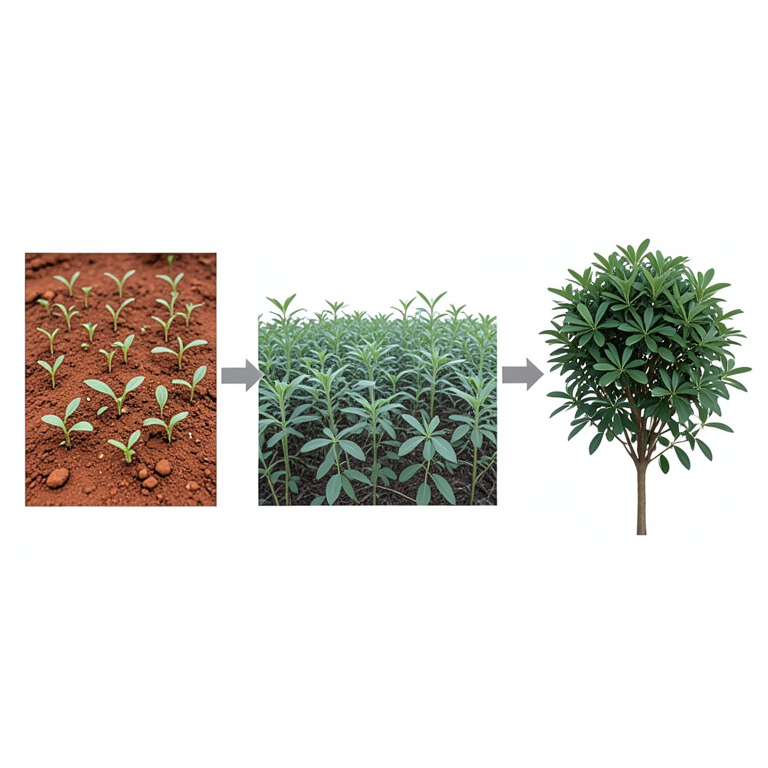
Experimental Workflow
AI-generated conceptual illustration (Stylosanthes forage legume plants in acidic soil). It explains the idea and does not show study data.
View source evidence ↗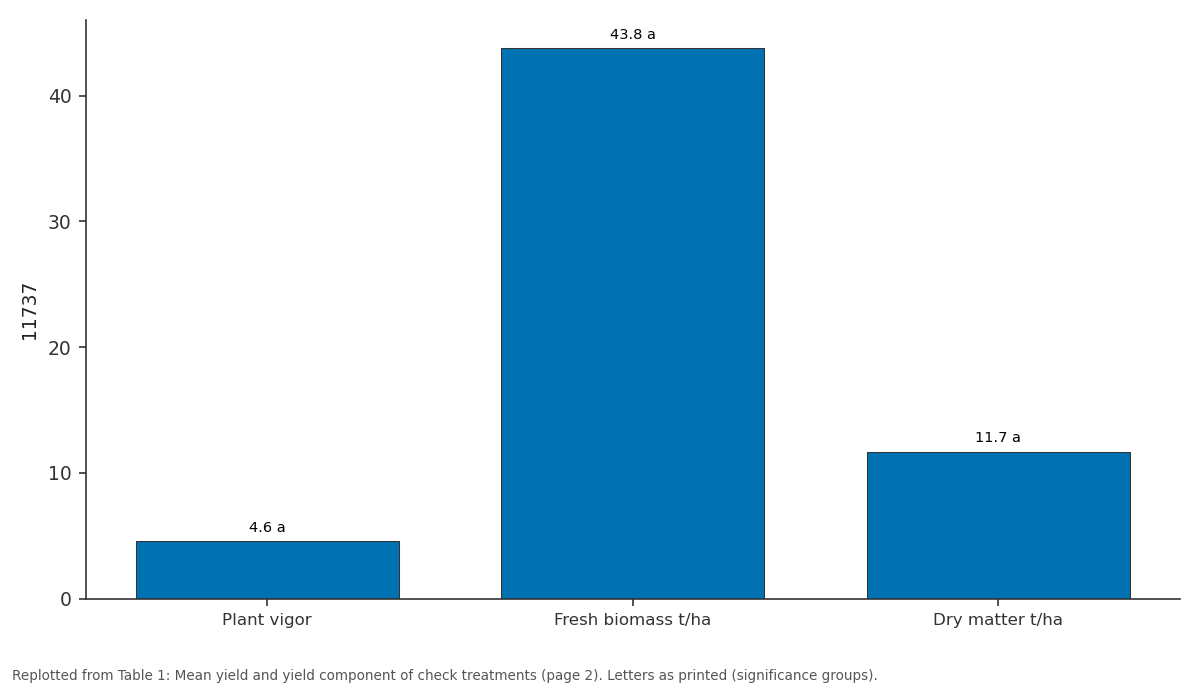
11737: Plant vigor vs Fresh biomass t/ha vs Dry matter t/ha
Replotted from Table 1 (page 2) of the original paper. Every bar is the paper's own table value.
View source evidence ↗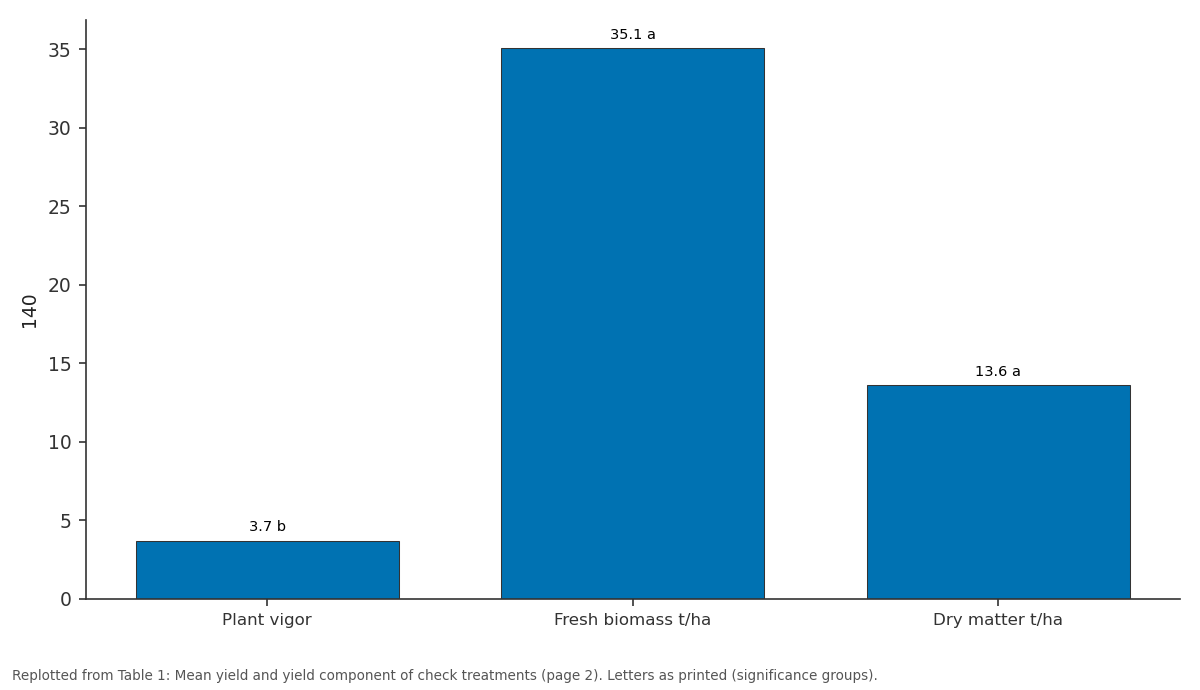
140: Plant vigor vs Fresh biomass t/ha vs Dry matter t/ha
Replotted from Table 1 (page 2) of the original paper. Every bar is the paper's own table value.
View source evidence ↗Figures & tables
From the original paper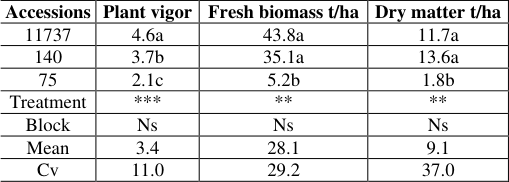 Table 1
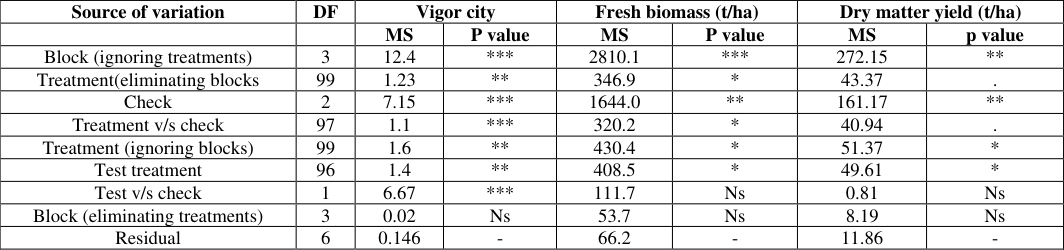 Table 2
 Table 3
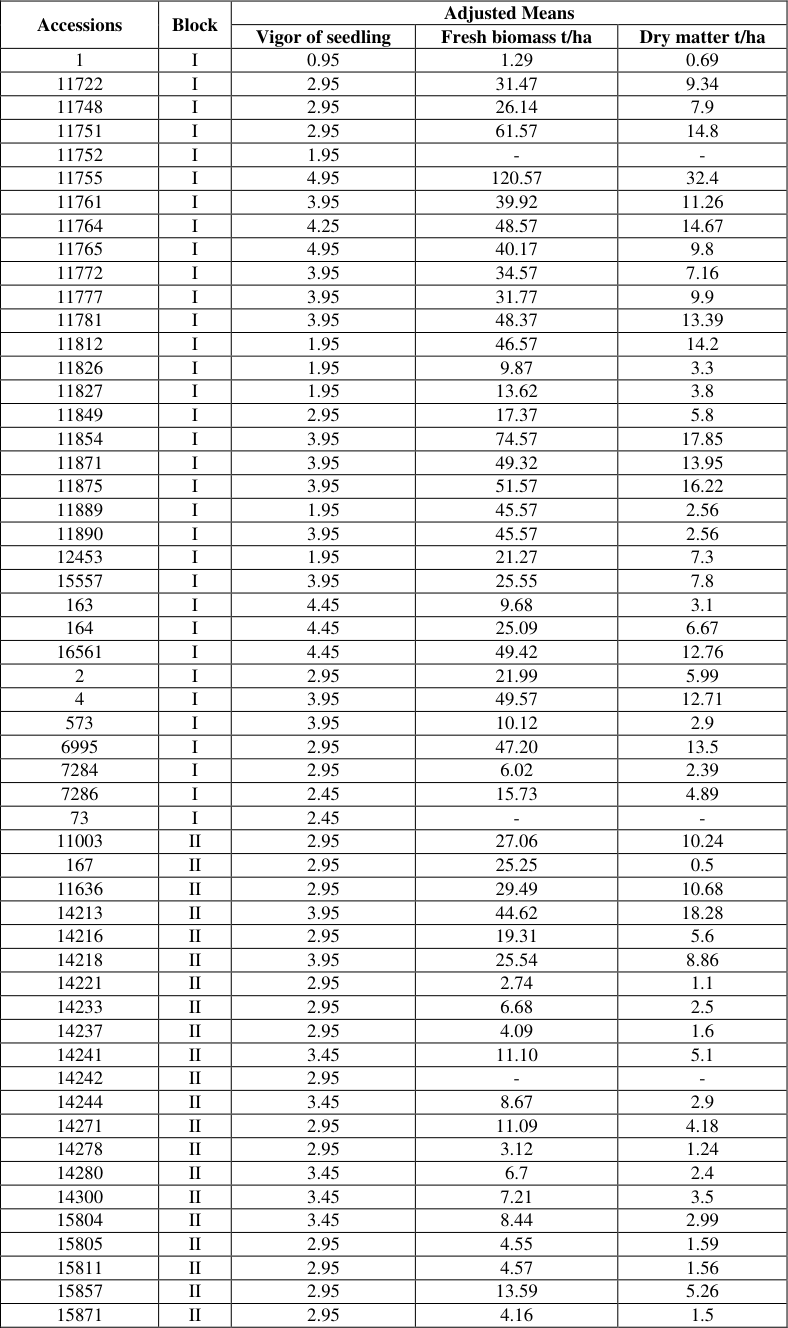 Table 4
Introduction
Among the complex interacting factors that affect livestock production in Ethiopia, the supply of feeds with high nutritive values comes to the forefront (Mengistu et al., 2021) [9] . Natural pasture remains the main source of feed for ruminants in the country. This is being negatively affected by overgrazing and the expansion of crop production (Kebede et al., 2017; Abduku, 2020) [5,1] . Farmers use their own traditional coping mechanisms to overcome the feed shortage problem during the long dry season. Supplementation of poor quality feeds with pulse residue and/or commercial concentrate is one of the common practices undertaken by farmers (Abduku, 2020) [1] . Most of the live weight gained in the wet season is lost in the dry season, resulting in low net annual growth. Herbage growth follows the rainfall pattern and is predominantly made up of low quality grass. Likewise, crude protein content in the herbage is sufficient only during the growing period. This nutritional stress is associated with reproductive wastage, deaths, and prolonged calving intervals in traditionally managed herds (Tolera et al., 2012) [13] . The adaptation and establishment of acid-tolerant forage legumes that could serve as sources of quality feed is a practical and sustainable strategy to increase livestock productivity in the southwest and western regions of the country. One of the forage that could be used for this purpose is Stylosanthes, which has been identified as a promising protein supplement with considerable potential for crop-livestock production systems in acid-affected soils (Larbie et al., 1992; Mpanza et al., 2020) [7,10] . The genus Stylosanthes contains about 30 species, and each species has several accessions. Stylosanthes accessions are easily and reliably established from seed in extensive, low-input systems where other legumes such as Centrosoma fail (Nada et al., 1992) [11] . This is apparently related to good seedling vigor in spite of small seed size. Rehabilitation and improvement of livestock productivity in acidaffected soils is possible with acid-tolerant improved forages. Therefore, there is a need to identify best-bet Stylosanthes accessions in the low pH areas of southwest Ethiopia. The objective of the study was to screen and identify the best accessions of Stylosanthes species for the low pH areas.
Materials and Methods
Materials and Methods
Description of the study area
The experiment was conducted on-site at the Jimma Agriculture Research Center during the 2018-2021 cropping season. The soil type is Nitosol with a pH of around 4.4.
The average annual rainfall is 1216.7 mm, with the main wet season from June to September. The maximum and minimum temperatures of the study area were 27 °C and 10 °C, respectively. The experimental study is located at 1753 m above sea level. The longitude and latitude of the study area are 7°36'N and 36° 50′E, respectively. The study areas practice mixed farming systems of crop-livestock.
Experimental Design and Planting Materials
The Stylosanthes accessions used in the study were obtained from the International Livestock Research Institute (ILRI), Addis Ababa, Ethiopia. A total of ninety seven Stylosanthes (Stylosanthes guianensis, hamata, scabra and seabrana) accessions along with three checks were evaluated in an augmented randomized block design at the onset of the rainy season in a single row. The experimental design consisted of four randomized blocks. The accessions were sown into a cultivated seed bed at a depth of not greater than 1.5 cm. The seeding rates were 4 to 5 kg/ha. One hundred accessions were planted in a single row of 0.5*2 m plot size in four blocks. The check accessions were planted in all blocks, but each of the test treatments to be evaluated was planted only once in the experiment. The positions of three checks and ninety seven test treatments in each block were fully randomized and planted in rows. The standard checks were S. hamata (75), S. scabra (140), and S. guianensis (11737). The S. guianensis accession was employed as a local check since it has good performance adaptations in southern Ethiopia (Larbi et al., 1992) [8] . The augmented design is used when a large number of test treatments are evaluated and there may not be sufficient seeds to replicate each (Federer and Crossa, 2012) [6] . The design is also used in screening new treatments such as genotypes and drugs (Asante and Dixon, 2009; Wandera et al., 2014) [2,14] . The standard check data is used to adjust mean values of test treatments to make them comparable and also provide an estimate of experimental error.
Data collection
Plant vigor, fresh and dry mater yield data were collected during the forage harvesting stage in main cropping season. Fresh biomass yields were determined by harvesting from 1 m 2 area of each plot and weighing first at field and then taking 500 g fresh subsample in the laboratory. The subsamples were oven dried for 72 hrs at 65 °C temperature from which dry matter yield per hectare was determined. The plots were visited for harvesting based on growth stage of the legume forage components. Harvesting took place only once during the establishment year and two times based on the existing rainfall situation afterwards.
Statistical analysis
The collected data were entered into the Microsoft Excel sheet to create a database and coded appropriately. The observation on standard checks was first subjected to a simple analysis of variance (ANOVA) using a randomized complement block design by R software. This gave information for further analysis with test treatments. Then the analysis of variance was carried out using augmented block design in R software. Fresh biomass, dry matter yield (t/ha) and plant vigor were determined to compare standard checks and test treatment means. Least significant difference (LSD) at 5% level of probability was used for comparison of means among test treatments and standard checks. Comparisons were made between test treatments in different blocks and between test treatments and standard checks.
Results and Discussion
Plant vigor, fresh and dry matter yield differed significantly among check treatments. The result showed that the 11737 accession had the highest plant vigor performance and fresh biomass yield compared to 140 and 75 accessions (Table 1). 75 accession of check treatment was shown to show lower performance in all traits. The overall mean of plant vigor, fresh and dry matter yield of check treatments were 3.4, 28, and 9, respectively. The block effect was not statistically significant among check treatments (Table 1). The analysis of variance revealed a significant mean sum of squares for the parameters studied (Table 2). The block effect (unadjusted) and treatment effects (adjusted and unadjusted) were significantly different for the plant vigor, fresh and dry matter yields. However, the adjusted block effects were non-significant for all parameters. The mean square due to checks versus test treatments was significant in results of the treatment adjustment analysis for all parameters. In the block adjustment analysis, check versus test treatment effects had the only significant difference for plant vigor. The two remaining parameters were nonsignificant. These results indicated that there is a significant difference among test treatments, checks, and test treatments versus checks.
| Source of variation | DF | Vigor city | — | Fresh biomass (t/ha) | — | Dry matter yield (t/ha) | — |
|---|---|---|---|---|---|---|---|
| MS | P value | MS | P value | MS | p value | ||
| Block (ignoring treatments) | 3 | 12.4 | *** | 2810.1 | *** | 272.15 | ** |
| Treatment(eliminating blocks | 99 | 1.23 | ** | 346.9 | * | 43.37 | . |
| Check | 2 | 7.15 | *** | 1644.0 | ** | 161.17 | ** |
| Treatment v/s check | 97 | 1.1 | *** | 320.2 | * | 40.94 | . |
| Treatment (ignoring blocks) | 99 | 1.6 | ** | 430.4 | * | 51.37 | * |
| Test treatment | 96 | 1.4 | ** | 408.5 | * | 49.61 | * |
| Test v/s check | 1 | 6.67 | *** | 111.7 | Ns | 0.81 | Ns |
| Block (eliminating treatments) | 3 | 0.02 | Ns | 53.7 | Ns | 8.19 | Ns |
| Residual | 6 | 0.146 | - | 66.2 | - | 11.86 | - |
Table text extracted from the original PDF; superscript letters are shown inline. The original table image is below.
View original table image
| Accessions | Plant vigor | Fresh biomass t/ha | Dry matter t/ha |
|---|---|---|---|
| 11737 | 4.6a | 43.8a | 11.7a |
| 140 | 3.7b | 35.1a | 13.6a |
| 75 | 2.1c | 5.2b | 1.8b |
| Treatment | *** | ** | ** |
| Block | Ns | Ns | Ns |
| Mean | 3.4 | 28.1 | 9.1 |
| Cv | 11.0 | 29.2 | 37.0 |
Table text extracted from the original PDF; superscript letters are shown inline. The original table image is below.
View original table image
Conclusion
This study identifies several Stylosanthes species accessions that exhibit superior performance in plant vigor, fresh biomass, and dry matter yield in acidic environments.
Figures and tables from the paper
| Block | Species | Plant vigor | Fresh biomass t/ha | Dry matter yield t/ha |
|---|---|---|---|---|
| I | Stylosanthes guainensis | 3.4 | 35.4 | 11 |
| II | Stylosanthes hamata | 2.8 | 14.4 | 5.1 |
| II | Stylosanthes scabra | 2 | 26.3 | 10.9 |
| IV | Stylosanthes seabrana | 3 | 13.9 | 5.8 |
Table text extracted from the original PDF; superscript letters are shown inline. The original table image is below.
View original table image
| Accessions | Block | Adjusted Means | — | — |
|---|---|---|---|---|
| Vigor of seedling | Fresh biomass t/ha | Dry matter t/ha | ||
| 1 | I | 0.95 | 1.29 | 0.69 |
| 11722 | I | 2.95 | 31.47 | 9.34 |
| 11748 | I | 2.95 | 26.14 | 7.9 |
| 11751 | I | 2.95 | 61.57 | 14.8 |
| 11752 | I | 1.95 | - | - |
| 11755 | I | 4.95 | 120.57 | 32.4 |
| 11761 | I | 3.95 | 39.92 | 11.26 |
| 11764 | I | 4.25 | 48.57 | 14.67 |
| 11765 | I | 4.95 | 40.17 | 9.8 |
| 11772 | I | 3.95 | 34.57 | 7.16 |
| 11777 | I | 3.95 | 31.77 | 9.9 |
| 11781 | I | 3.95 | 48.37 | 13.39 |
| 11812 | I | 1.95 | 46.57 | 14.2 |
| 11826 | I | 1.95 | 9.87 | 3.3 |
| 11827 | I | 1.95 | 13.62 | 3.8 |
| 11849 | I | 2.95 | 17.37 | 5.8 |
| 11854 | I | 3.95 | 74.57 | 17.85 |
| 11871 | I | 3.95 | 49.32 | 13.95 |
| 11875 | I | 3.95 | 51.57 | 16.22 |
| 11889 | I | 1.95 | 45.57 | 2.56 |
| 11890 | I | 3.95 | 45.57 | 2.56 |
| 12453 | I | 1.95 | 21.27 | 7.3 |
| 15557 | I | 3.95 | 25.55 | 7.8 |
| 163 | I | 4.45 | 9.68 | 3.1 |
| 164 | I | 4.45 | 25.09 | 6.67 |
| 16561 | I | 4.45 | 49.42 | 12.76 |
| 2 | I | 2.95 | 21.99 | 5.99 |
| 4 | I | 3.95 | 49.57 | 12.71 |
| 573 | I | 3.95 | 10.12 | 2.9 |
| 6995 | I | 2.95 | 47.20 | 13.5 |
| 7284 | I | 2.95 | 6.02 | 2.39 |
| 7286 | I | 2.45 | 15.73 | 4.89 |
| 73 | I | 2.45 | - | - |
| 11003 | II | 2.95 | 27.06 | 10.24 |
| 167 | II | 2.95 | 25.25 | 0.5 |
| 11636 | II | 2.95 | 29.49 | 10.68 |
| 14213 | II | 3.95 | 44.62 | 18.28 |
| 14216 | II | 2.95 | 19.31 | 5.6 |
| 14218 | II | 3.95 | 25.54 | 8.86 |
| 14221 | II | 2.95 | 2.74 | 1.1 |
| 14233 | II | 2.95 | 6.68 | 2.5 |
| 14237 | II | 2.95 | 4.09 | 1.6 |
| 14241 | II | 3.45 | 11.10 | 5.1 |
| 14242 | II | 2.95 | - | - |
| 14244 | II | 3.45 | 8.67 | 2.9 |
| 14271 | II | 2.95 | 11.09 | 4.18 |
| 14278 | II | 2.95 | 3.12 | 1.24 |
| 14280 | II | 3.45 | 6.7 | 2.4 |
| 14300 | II | 3.45 | 7.21 | 3.5 |
| 15804 | II | 3.45 | 8.44 | 2.99 |
| 15805 | II | 2.95 | 4.55 | 1.59 |
| 15811 | II | 2.95 | 4.57 | 1.56 |
| 15857 | II | 2.95 | 13.59 | 5.26 |
| 15871 | II | 2.95 | 4.16 | 1.5 |
Table text extracted from the original PDF; superscript letters are shown inline. The original table image is below.
View original table image
References
11 in the original paper- Abduku H. Livestock Feed Resource and Feeding Practices in Urban and Per-Urban Areas of Ethiopia. International Journal of Research and Analytical Reviews. 2020;7(3):176-181.
- Asante I, Dixon A. Field screening of cassava (Manihot esculenta Crantz) germplasm for desirable traits by the use of augmented design. West African Journal of Applied Ecology. 2009;10(1):1-8.
- Federer WT. Augmented (or hoonuiaku) designs. Hawaii. Plant Recreation Centre. 1956;55:191-208.
- Federer WT. Augmented designs with one way elimination of heterogeneity. Biometrics. 1961;17(3):447-473.
- Kebede G, Feyissa F, Assefa G. Review on Major Feed Resources in Ethiopia: Conditions, Challenges and Opportunities. Academic Research Journal of Agricultural Science and Research. 2017;5(3):176-185.
- Federer WT, Crossa J. Screening experimental designs for quantitative trait loci, association mapping, genotype-by-environment interaction, and other investigations. Frontiers in Physiology. 2012;3:1-8.
- Larbi A, Ochang J, Hanson J, Lazier J. Agronomic evaluation of Neonotonia wightii, Stylosanthes scabra and S. guianensis accessions in Ethiopia. In Tropical Grasslands. 1992;26(2):115-119.
- Mpanza T, Hassen A, Mayowa A. Evaluation of Stylosanthes scabra Accessions as Forage Source for Ruminants: Growth Performance, Nutritive Value and in vitro Ruminal Fermentation. Animals. 2020;1939(10):2-15.
- Nada Y, Ogawa Y, Mitamura T. Surface-sowing of legume seed in savanna of South America. Journal of Agricultural Research Quality. 1992;25(4):394-302.
- Simbarashe K, Joseph JB, Florence VN, Nobbert T, Gift M, Plaxedis IZ, et al. Apparent digestibility and microbial protein yield of Desmodium uncinatum, Mucuna pruriens and Vigna unguiculata forage legumes in goats, African Journal of Range and Forage Science. 2016;33(1):53-58.
- Wandera O, Ojung C, Ouko OE. Screening of New strains of sugarcane using Augmented Block Designs. Mathematical Theory and Modeling. 2014;4(8):153162.