
Research article · 2023 · Full text
International Journal of Veterinary Sciences and Animal HusbandryIn-vitro synergistic antibacterial activity of Punganur cow urine on enrofloxacin
Volume 8(2) · Pages 102–106 · DOI: 10.22271/veterinary.2023.v8.i2b.501 ↗
Research areasCancer Research and TreatmentsEducational Curriculum and Learning MethodsEducation and Character Development
Abstract
Author-writtenAntimicrobial resistance has emerged as a significant hazard to both livestock and humans. To overcome resistance, the latest trend in antibiotic therapy has been the combination of antibiotics with natural compounds. Indigenous cow urine was believed to have excellent therapeutic importance among numerous natural compounds. As a result, the current investigation was conducted to determine the interaction of Punganur Cow Urine Distillate (PCUD) and Photo Activated Punganur Cow Urine (PAPCU) on enrofloxacin using tube dilution method with MIC as end point. MIC values for enrofloxacin, PCUD, and PAPCU against E. coli were 0.223 µg.ml-1, 26.79 µL and 5.12 µL and S. aureus were 0.837 µg.ml-1, 35.71 µL and 4.91 µL respectively. The MIC of enrofloxacin reduced from 0.223 µg.ml-1 to 0.076 µg.ml-1 in the presence of PAPCU and 0.044 µg.ml-1 in the presence of PCUD against E. coli. The MIC of enrofloxacin against S. aureus was reduced from 0.837 µg.ml-1 to 0.167 µg.ml-1 and 0.153 µg.ml-1 and in the presence of PAPCU and PCUD, respectively. Based on findings, it can be concluded that PAPCU has greater antibacterial activity compared to PCUD when used alone. However, PCUD with enrofloxacin provided superior synergistic action compared to the combination of PAPCU with enrofloxacin.
Summary
Source-checkedPlain-language reading of the full paper, prepared with AI and checked against the text. Each point links to the authors' own words.
Why it matters
- Antimicrobial resistance is a major threat to both human and livestock health. View evidence ↗
- Combining antibiotics with natural compounds is a current strategy used to combat antimicrobial resistance. View evidence ↗
- The excessive use of the antibiotic enrofloxacin has led to the emergence of resistant bacteria, which reduces the drug's effectiveness. View evidence ↗
The question
- The study aimed to evaluate the in-vitro antibacterial activity of enrofloxacin alone and in combination with Punganur cow urine distillate (PCUD) and photo-activated Punganur cow urine (PAPCU) against S. aureus and E. coli. View evidence ↗
What they did
- Urine samples were collected from healthy Punganur cows at the Livestock Research Station in Andhra Pradesh. View evidence ↗
- Cow urine distillate (PCUD) was produced using a distillation apparatus at 100 °C for 4 hours. View evidence ↗
- Photo-activated Punganur cow urine (PAPCU) was prepared by exposing urine to sunlight for 7 hours a day over a period of 140 hours in March. View evidence ↗
- The minimum inhibitory concentration (MIC) for enrofloxacin against S. aureus and E. coli was measured using the broth microdilution method. View evidence ↗
What they found
- When used alone, PAPCU had MIC values of 5.12 μL against E. coli and 4.91 μL against S. aureus. View evidence ↗
- When used alone, PCUD had higher MIC values of 26.79 μL against E. coli and 35.71 μL against S. aureus compared to PAPCU. View evidence ↗
- Against E. coli, the MIC of enrofloxacin decreased from 0.223 μg.ml-1 (alone) to 0.076 μg.ml-1 with PAPCU and to 0.044 μg.ml-1 with PCUD. View evidence ↗
- Against S. aureus, the MIC of enrofloxacin decreased from 0.837 μg.ml-1 (alone) to 0.167 μg.ml-1 with PAPCU and to 0.151 μg.ml-1 with PCUD. View evidence ↗
- PCUD reduced the MIC of enrofloxacin by 81% for both bacteria, while PAPCU reduced it by 68% for E. coli and 80% for S. aureus. View evidence ↗
What it means
- The authors concluded that PAPCU is more effective as a standalone antibacterial agent, but PCUD is a superior bioenhancer for enrofloxacin. View evidence ↗
- The authors suggest that using enrofloxacin with PCUD or PAPCU can reduce the required antibiotic dose, potentially slowing the development of resistance. View evidence ↗
- The authors state that further research is needed to identify the specific active components of cow urine and to verify these findings in vivo using animal models. View evidence ↗
Visual summary
2 visualsIllustrations explain the paper; charts are replotted from the paper's own table values.
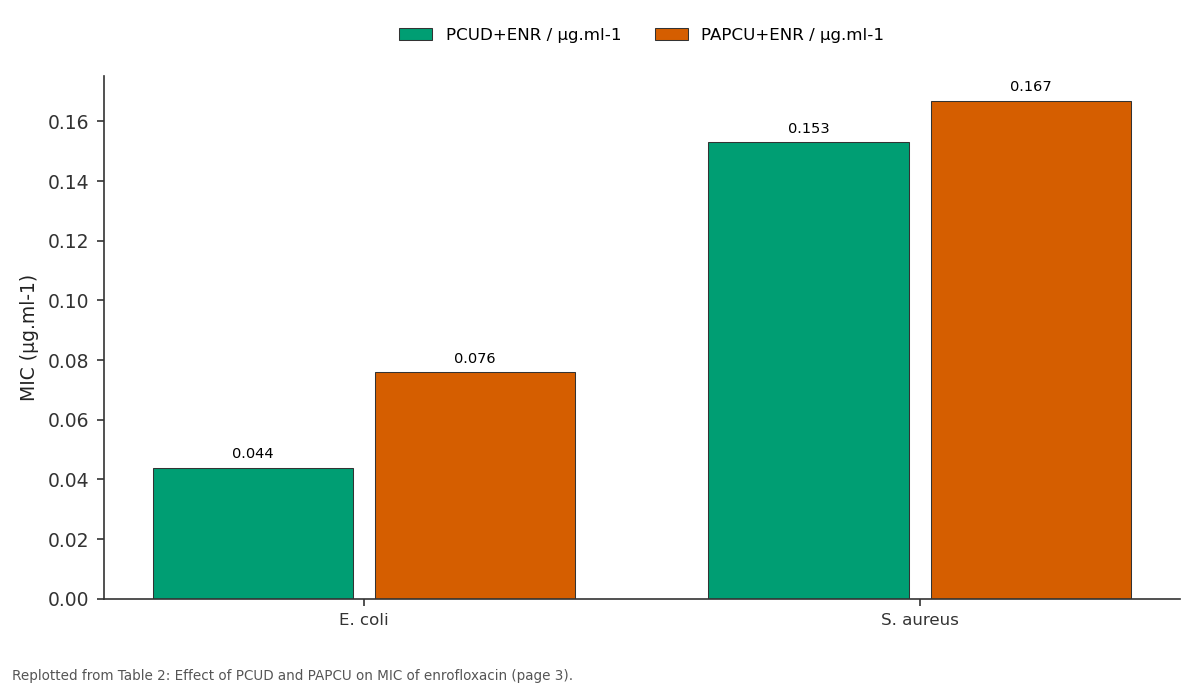
PCUD+ENR / µg.ml-1 and PAPCU+ENR / µg.ml-1: E. coli vs S. aureus
Replotted from Table 2 (page 3) of the original paper. Every bar is the paper's own table value.
View source evidence ↗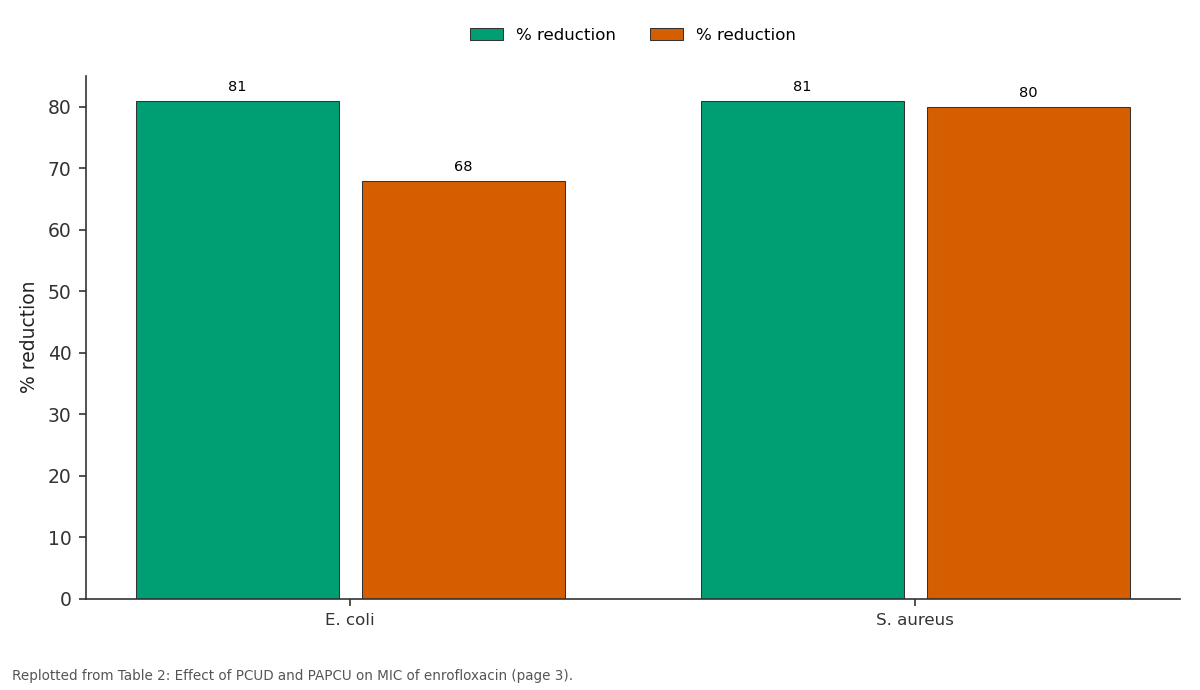
% reduction and % reduction: E. coli vs S. aureus
Replotted from Table 2 (page 3) of the original paper. Every bar is the paper's own table value.
View source evidence ↗Figures & tables
From the original paper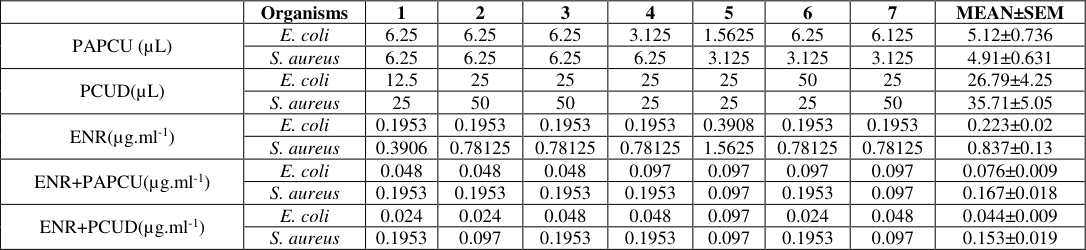 Table 1
 Table 2
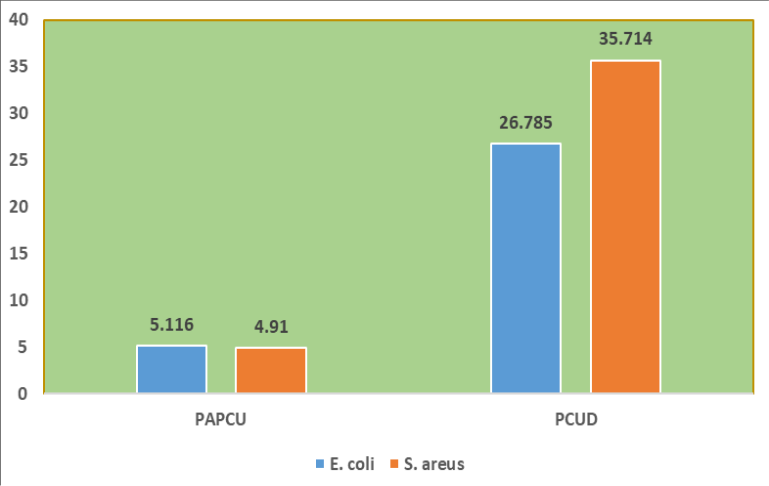 Figure 1
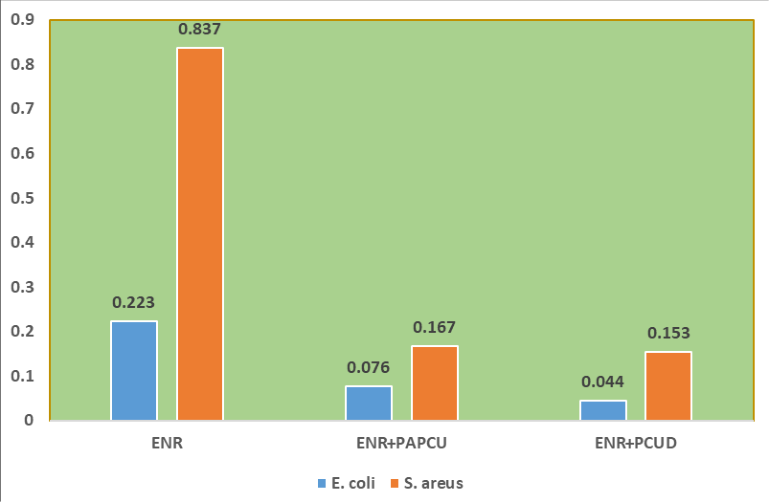 Figure 2
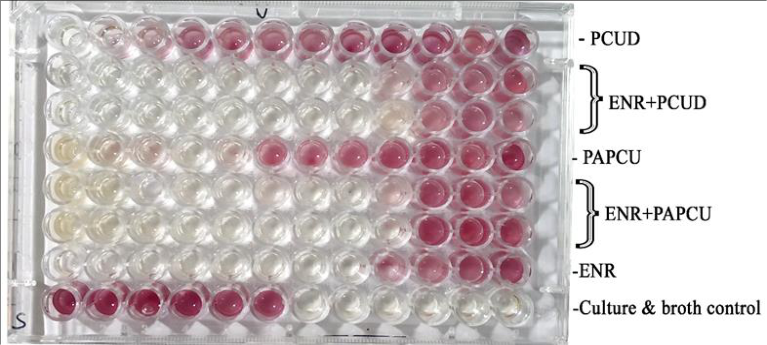 Figure 3
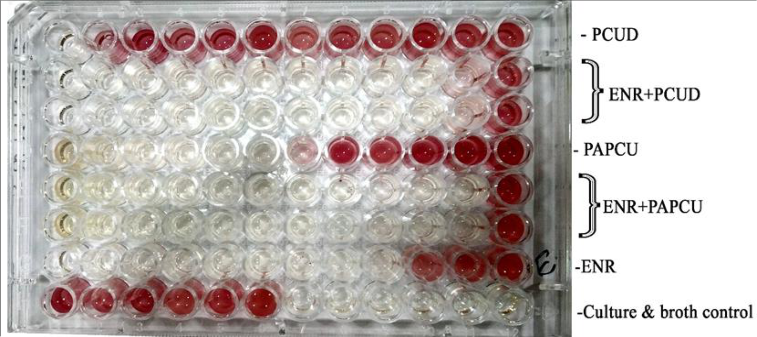 Figure 4
Introduction
India is a sacred land where every live entity and non-living organisms has something to offer. In India, the cow, also known as Kamadhenu, is regarded as a holy animal. The Indian Cow is distinguished by its hump, big ears, and bushy [1] . Cow urine consumption has been practiced widely for several years, and it has been experimentally proven that cow urine is the finest natural medication in the world [2] . Cow urine distillate, also known as cow urine ark, is cow urine that has been completely distilled and is used to cure illness caused by various pathogenic bacteria, opportunistic fungi, and parasitic helminths [3] . Cow urine distillate is patented as an bio-activity enhancer and bio-availability facilitator for anti-infective and anticancer bioactive molecules [4] . The Punganur cow is the world's shortest, humped cattle with a long tail and a switch which touches the ground. This breed is well-known for its small stature, efficient milk production and effective reproductive characteristics [5] . Enrofloxacin or 1-Cyclopropyl-6-fluoro-7-(4-ethyl-1-piperazinyl) 1, 4-dihydro-4-oxo-3quinolinecarboxylic acid, belongs to fluoroquinolone group which is a subgroup of quinolone. Enrofloxacin is the first fluoroquinolone patented in 1984 for veterinary use. Quinolones have an action on bacterial topoisomerase. Enrofloxacin is used as an exclusive veterinary medicine for the treatment of gastrointestinal and respiratory infections caused by Gram-positive and Gram-negative bacteria in several animal species diseases [6,7] . Although enrofloxacin has been used as an extremely effective treatment for colibacillosis in poultry [8] , increasing concern about the consequences of fluoroquinolones resistance led to a ban on its use in poultry production in the USA in 2005 [9] . Over-use of enrofloxacin has resulted in development of resistant bacterial populations leading to reduced clinical efficacy [10] .
Development of resistance to different kinds of antibiotics by microbes is an ever-increasing global threat [11] . Indiscriminate use of enrofloxacin has led to development of antimicrobial resistance (AMR) by the bacteria. Therefore, natural products have become alternative adjuncts for antibacterial therapy to revive back the antibacterial potential of the classic antibiotic agents and to reduce the AMR. Keeping the background in view, the present study was designed to determine the in-vitro antibacterial activity of enrofloxacin alone and in combination with photo activated punganur cow urine (PAPCU) and punganur cow urine distillate (PCUD) by determining minimum inhibitory concentration (MIC) against S.aureus ATCC 25923, E.coli ATCC 25922.
Materials and Methods
Materials and Methods
Chemicals
Enrofloxacin (CAS No: 85721-33-1) was procured from Sigma-Aldrich Chemicals, Pvt. Ltd, Bengaluru, Mueller-Hinton Broth, Magnesium Chloride Hexahydrate, Calcium chloride and Indonitrotetrazolium chloride (INT) was obtained from M/s Hi Media Laboratories Pvt. Ltd. Mumbai, India.
Microbial cultures
Staphylococcus aureus ATCC 25923 and Escherichia coli ATCC 25922 cultures were procured from Department of Veterinary Public Health and Epidemiology, CVSc, Tirupati, SVVU.
Punganur cattle urine Sample collection
Urine was collected from the healthy Punganur cows at Livestock Research Station, SVVU, Palamaner, Chittoor (Dist.), Andhra Pradesh. All the adult cows were taken into the consideration; randomly urine was collected and pooled from cows, without taking estrus cycle into the consideration. All the animals are in the semi-intensive care. Early morning first voided and mid-stream urine samples were collected in sterile amber colored glass containers.
Preparation of Cow urine distillate (CUD)
Punganur cattle urine was collected and filtered by muslin cloth followed Whatman filter paper No.1. Cow urine distillate (CUD) was prepared by using CUD apparatus at 100 ºC for 4hours. After distillation, CUD is stored in amber colored airtight glass bottles at 4-8 °C.
Preparation Photo Activated cow urine
Punganur cattle urine was exposed to sunlight from 10 AM to 5 PM (7 h/day) for 140 h during the month of March (early summer). After photo-activation, cow urine was filtered through muslin cloth and followed by Whatman filter paper No.1 and stored at 4 -8ºC in amber colored airtight glass bottles [12] .
Preparation of 0.5 McFarland turbidity standards
Stock solutions of 0.18 M (0.36 N) H2SO4 (1% v/v) and 0.048 M BaCl2 (1.175% w/v BaCl2•2H2O) were prepared. 0.5 mL of the BaCl2 solution was added to 99.5 mL of the H2SO4 stock solution while constantly swirling to maintain a suspension. The turbidity standard's density was validated by measuring absorbance with a spectrophotometer with a 1 cm light path and matched cuvettes. The absorbance at 625 nm for the 0.5 McFarland standard ranged from 0.08 to 0.13. According to CLSI, 2012 guidelines, 5 mL aliquots of BaSO4 were placed into screw cap tubes of the same size as those used for standardizing the bacterial inoculum. (13).
Preparation of cation stock solutions
A stock solution containing 10 mg of magnesium ions (Mg2+) per milliliter was made by dissolving 8.36 g of MgCl2.6H2O in 100 ml of deionized distilled water, while a stock solution containing 10 mg of Ca 2+ per milliliter was made by dissolving 3.68 g of CaCl2.2H2O in 100 ml of deionized distilled water. They were sterilized through membrane filtration and stored at temperatures ranging from 2 to 8 °C.
Preparation of cation-adjusted Muller-Hinton broth (CAMHB)
Muller-hinton broth (100ml) was prepared as directed by the manufacturer, autoclaved, and cooled overnight at 2 to 8°C. With steady stirring, 0.2 mL of MgCl2 stock solution was added to this chilled broth, followed by 0.4 mL of CaCl2 stock solution, resulting in a final concentration of Mg 2+ and Ca 2+ ions in the broth of 10 and 20 mg/L, respectively. The pH of the broth following cation addition ranged from 7.2 to 7.4.
Test sample preparation (Enrofloxacin)
Stock solution was prepared by adding 10mg of enrofloxacin in10ml 0.1N NaOH (1 mg.ml -1 ). To calculate the MIC of enrofloxacin alone, a working standard of 100 g/ml enrofloxacin was generated by diluting the stock solution with distilled water. Working standards of (100 g/ml) were established for the interaction investigation by diluting stock solution (1mg/ml) separately with PCUD and PAPCU.
MIC by broth microdilution method
Enrofloxacin's MIC against Staphylococcus aureus ATCC 25923 and E. coli ATCC25922 was determined using the broth microdilution method. In a 96-well microtiter plate, enrofloxacin was serially diluted two times in CAMHB until the final volume in all the wells was 100µl. After incubating the bacterial culture in CAMHB at 37±1 °C for 6 to 8 hours, the turbidity was modified to 0.5 McFarland turbidity standards (1 X 10 8 CFU/ml), which was subsequently diluted 1:20 in CAMHB. When 0.01 ml of this suspension was added to the broth, the final bacteria concentration was around 5 X 10 5 The CFU per mill (ranging from 2 -8X 10 5 CFU/ml or 5 X 10 4 CFU/well). Each plate was properly sealed to avoid drying during incubation. The inoculated microdilution trays were then incubated in an ambient BOD incubator at 35±2 °C for 16 to 20 hours.
MIC End Point
The MIC is the lowest antimicrobial agent concentration that totally suppresses organism growth in microdilution wells as observed by the unassisted eye. Bacterial growth and inhibition were measured by adding 25µL of p-Iodonitrotetrazolium (INT) dye to each well and incubating for 30 minutes at 35±2 °C. Biologically active organisms, in this example dividing bacteria, convert INT to a red formazan molecule. When the solution in the well stayed clear, bacterial growth was inhibited. This concentration was designated as the MIC. Each experiment included growth controls [13] .
Results and Discussion
The minimum inhibitory concentration (MIC) of enrofloxacin, punganur cow urine distillate (PCUD), Photo Activated Punganur Cow Urine (PAPCU) alone and enrofloxacin in combination with PCUD and PAPCU was carried out in vitro on Escherichia coli and Staphylococcus aureus. Results were expressed as mean MIC and percentage reduction of MIC of enrofloxacin and enrofloxacin in combination with PCUD and PAPCU which have presented in Table No 1 The in vitro bioenhancing property of enrofloxacin in the presence of PCUD and PAPCU was explored by determining MIC against E. coli and S. aureus. The MIC of enrofloxacin alone was 0.223μg.ml -1 and 0.837μg.ml -1 against E. coli and S. aureus, respectively (Table No 1). The above obtained values of MIC of enrofloxacin against E. coli and S. aureus agreed with the findings of Grobel et al., 2007 [14] . The MIC values of PAPCU alone against E. coli and S. aureus were 5.12 μL and 4.91 μL respectively (Table No 1). The PCUD alone showed the MIC end point against E. coli and S. aureus as 26.79μL and 35.71 μL respectively (Table No 1). Reduced MIC values of PAPCU in comparison to PCUD might be due to hydrolytic state and increased hydrophobicity of cow urine. Further enhanced antibacterial activity of PAPCU might be due to acidic pH, presence of a greater number of cations and biogenic volatile and non-volatile compounds like sulffinol, ketones, urinary peptides, phenols, and nitrosamines [12,15,16] . Enrofloxacin's minimal inhibitory concentration (MIC) alone was 0.223 μg.ml -1 against E. coli and which was reduced to 0.076 μg.ml -1 in the presence of PAPCU and even more decreased to 0.044 μg.ml -1 in the presence of PCUD. The MIC of enrofloxacin was 0.837μg.ml -1 against S. aureus that was decreased to 0.167 μg.ml -1 in the presence of PAPCU and further changed to 0.151μg.ml -1 in the presence of PCUD. The MIC of enrofloxacin was reduced to 81% in the presence of PCUD against E. coli and S. aureus whereas MIC of enrofloxacin was reduced 68% against E. coli and 80% against S. aureus in the presence of PAPCU, which indicates positive drug interaction between enrofloxacin and Punganur cow urine. PCUD and PAPCU showed effective in vitro bioenhancing property on enrofloxacin. In accordance with Mohanvel et al., Cow urine distillate (CUD) increases the bioactivity and bio-availability of bioactive compounds [17] . The combination of enrofloxacin with PAPCU and PCUD increased antibacterial activity of enrofloxacin as has been evidenced by the reduction of MIC values.
IAEC Approval details
The experimental protocol was approved by the IAEC vide reference number 281/ GO/ ReBi/ S/2000 /CPCSEA /CVSc/ TPTY/006/Pharmacology/2020dated 30.01.2020.
Conclusion
Based on the findings, it is concluded that, while PAPCU demonstrated superior antibacterial activity when compared to PCUD when used alone, PCUD demonstrated superior In vitro bioenhancing effect on enrofloxacin than PAPCU, which enhanced the antibacterial effect of enrofloxacin against selected bacteria. It has been concluded that the punganur cow urine distillate and photoactivated punganur cow urine both have antibacterial activity and bioenhancing property on enrofloxacin, which activity can be used to control the bacteria of various origins. The synergistic activity of enrofloxacin with natural compounds like PCUD and PAPCU can be made use of in reducing the effective doses of actual antibiotic, thereby reducing the development of antimicrobial resistance.
Further studies are required to analyze which components of cow urine were responsible for the antimicrobial and bioenhancing property. Future suitable animal model studies could reveal antibacterial and bioenhancing property of punganur cow urine distillate and photoactivated punganur cow urine in vivo.
Figures and tables from the paper
| — | Organisms | 1 | 2 | 3 | 4 | 5 | 6 | 7 | MEAN±SEM |
|---|---|---|---|---|---|---|---|---|---|
| PAPCU (µL) | E. coli | 6.25 | 6.25 | 6.25 | 3.125 | 1.5625 | 6.25 | 6.125 | 5.12±0.736 |
| S. aureus | 6.25 | 6.25 | 6.25 | 6.25 | 3.125 | 3.125 | 3.125 | 4.91±0.631 | |
| PCUD(µL) | E. coli | 12.5 | 25 | 25 | 25 | 25 | 50 | 25 | 26.79±4.25 |
| S. aureus | 25 | 50 | 50 | 25 | 25 | 25 | 50 | 35.71±5.05 | |
| ENR(µg.ml-1) | E. coli | 0.1953 | 0.1953 | 0.1953 | 0.1953 | 0.3908 | 0.1953 | 0.1953 | 0.223±0.02 |
| S. aureus | 0.3906 | 0.78125 | 0.78125 | 0.78125 | 1.5625 | 0.78125 | 0.78125 | 0.837±0.13 | |
| ENR+PAPCU(µg.ml-1) | E. coli | 0.048 | 0.048 | 0.048 | 0.097 | 0.097 | 0.097 | 0.097 | 0.076±0.009 |
| S. aureus | 0.1953 | 0.1953 | 0.1953 | 0.1953 | 0.097 | 0.1953 | 0.097 | 0.167±0.018 | |
| ENR+PCUD(µg.ml-1) | E. coli | 0.024 | 0.024 | 0.048 | 0.048 | 0.097 | 0.024 | 0.048 | 0.044±0.009 |
| S. aureus | 0.1953 | 0.097 | 0.1953 | 0.1953 | 0.097 | 0.1953 | 0.097 | 0.153±0.019 |
Table text extracted from the original PDF; superscript letters are shown inline. The original table image is below.
View original table image
| — | ENR µg.ml-1 | PCUD+ENR | — | PAPCU+ENR | — |
|---|---|---|---|---|---|
| µg.ml-1 | % reduction | µg.ml-1 | % reduction | ||
| E. coli | 0.223 | 0.044 | 81% | 0.076 | 68% |
| S. aureus | 0.837 | 0.153 | 81% | 0.167 | 80% |
Table text extracted from the original PDF; superscript letters are shown inline. The original table image is below.
View original table image
References
15 in the original paper- Vats S, Miglani K. Synergistic antimicrobial effect of cow urine and Azadirachta indica on infectious microbes. International journal of Pharmaceutical sciences and Research. 2011;2(7):1781.
- Dhama K, Chauhan RS, Singhal L. Anti-cancer activity of cow urine: current status and future directions. International Journal of Cow Science. 2005;1(2):1-25.
- Kekuda PTR, Nishanth BC, Praveen SN, Kamal D, Sandeep M, Meghara HK, et al. Cow urine concentrate: A potent agent with antimicrobial and anthelmintic activity. Journal of Pharmacy Research. 2010;3(5):10251027.
- Bhaskara RMV, Karthik A, Sasikala P. Protective role of punganur cow urine on streptozotocin induced diabetes in rats. International Research Journal of Pharmacy. 2013;4(8):164-167.
- Nielsen P, Gyrd-Hansen N. Bioavailability of enrofloxacin after oral administration to fed and fasted pigs. Pharmacology & toxicology. 1997;80(5):246-50.
- Araneda C, Villar P, Cuadros C, Valle M, Nunes P, Santelices M, et al. Single and multiple pharmacokinetics of enrofloxacin and ciprofloxacin in pigs. Journal of Bioequivalence & Bioavailability. 2013;5(1):041-6.
- Huff WE, Huff GR, Rath NC, Balog JM, Donoghue AM. Therapeutic efficacy of bacteriophage and Baytril (enrofloxacin) individually and in combination to treat colibacillosis in broilers. Poultry science. 2004;83(12):1944-1947.
- Nelson JM, Chiller TM, Powers JH, Angulo FJ. Fluoroquinolone-resistant Campylobacter species and the withdrawal of fluoroquinolones from use in poultry: a public health success story. Clinical Infectious Diseases. 2007;44(7):977-980.
- Sumano LH, Gutierrez OL, Zamora QM. Strategic administration of enrofloxacin in poultry to achieve higher maximal serum concentrations. The Veterinary Journal. 2003;165(2):143-148.
- Rajapandiyan K, Shanthi S, Murugan AM, Muthu GA, Singh AR. Azadirachta indica-cow urine extract, a novel controlling agent towards Clinically significant Multi Drug Resistant Pathogens. Journal of Applied Pharmaceutical Science. 2011;1(10):107-113.
- Upadhyay RK, Dwivedi P, Ahmad S. Antimicrobial activity of photo-activated cow urine against certain pathogenic bacterial strains. African journal of biotechnology. 2010;9(4):518-522
- Grobbel M, Lübke-Becker A, Wieler LH, Froyman R, Friederichs S, Filios S, et al. Comparative quantification of the in vitro activity of veterinary fluoroquinolones. Veterinary Microbiology. 2007;124(1-2):73-81.
- Shah CP, Patel DM, Dhami PD, Kakadia J, Bhavsar D, Vachhani UD, et al. In vitro screening of antibacterial activity of cow urine against pathogenic human bacterial strains. International Journal of Current Pharmaceutical Review and Research. 2011;1(3):1-5.
- Lakshmi PS, Gnanasaraswathi M, Rajadurai J, Ramya N, Devi Nandhini S. Potential source of fresh and photoactivated gomutra for study of antioxidant and antipathogenic activities against various pathogens. Asian Journal of Pharmaceutical and Clinical Research. 2015;8(2):459-462.
- Mohanvel SK, Rajasekharan SK, Kandhari T, Doss BP, Thambidurai Y. Cow urine distillate as a bioenhancer for antimicrobial & antiproliferative activity and redistilled cow urine distillate as an anticlastogen agent. Asian Journal of Pharmaceutical and Clinical Research. 2017;10(10):273-277.
Cited by 1
From OpenAlex, OpenCitations and reference lists read by Scinovex
- ВПЛИВ ПЕГІЛЬОВАНОГО АНТИБІОТИКА ЕНРОФЛОКСАЦИНУ НА ВМІСТ ПРОТЕЇНІВ КРОВІ ТА СТРУКТУРУ ПЕЧІНКИ У ЩУРІВ ↗
О. Зеленіна, В. В. Влізло, M. V. Skripka, Д. Остапів, В. Найда, Л. Афанасьєва et al. · Аграрний вісник Причорномор я · 2024
Серед лікарських засобів антибактеріальні препарати мають найбільш виражені побічні реакції, зокрема антибіотик енрофлоксацин може спричиняти токсичний вплив на організм. Актуальним є синтез нових сполук антибіотика енрофлоксацину з поліпшеною терапевтичною ефективністю та мінімальною побічною дією. Мета роботи дослідити вміст протеїнів сироватки крові та структуру печінки щурів за внутрішньом’язового введення пегільованого антибіотика енрофлоксацину і препаратів, які були використані при його створенні –…
❝ 0PDF