
Research article · 2023 · Full text
International Journal of Geography Geology and EnvironmentUsing non-parametric Kruskal-Wallis H test for assessing mean differences in the opinion of environmental sustainability
Volume 5(1) · Pages 74–80 · DOI: 10.22271/27067483.2023.v5.i1a.146 ↗
Research areasEnvironmental Education and Sustainability
Abstract
Author-writtenA workshop in environmental sustainability was organized to develop the skills and competencies in mitigating climate change, adapting climate risk management, managing waste, adapting sustainable human settlements and using sustainable transport, and developing skills of reducing CO2 emissions, and conserving energy and ecosystem, & educating people. The study aimed to compare current opinion of participants in environmental sustainability. After a short notification in the print medias and websites; students, teachers, and local people expressed their interested and joined in an environmental sustainability workshop organized in the Department of Education, Assam University, Silchar, India. Non-parametric Kruskal-Wallis H test used to assess the mean differences in the opinion of the participants in environmental sustainability. It resulted that the participants who were actively participated have no differences in their opinion in skills and competencies in mitigating climate change, adapting climate risk management, managing waste, adapting sustainable human settlements and using sustainable transport, and developing skills of reducing CO2 emissions, and conserving energy and ecosystem, & educating people.
Summary
Source-checkedPlain-language reading of the full paper, prepared with AI and checked against the text. Each point links to the authors' own words.
Why it matters
- Sustainability in human settlements has become a critical global, national, and state-level issue over the last decade. View evidence ↗
- Conventional training structures often fail to provide the necessary skills for environmental sustainability, necessitating a transformation in how experts approach ecological issues. View evidence ↗
- Various programs and policies are being implemented to address climate change, water management, and sustainable human settlements. View evidence ↗
The question
- The study aimed to compare the current opinions of participants regarding environmental sustainability. View evidence ↗
- The research sought to develop and compare participants' opinions on skills and competencies across several domains, including climate change, waste management, and energy ecosystems. View evidence ↗
What they did
- The study used a participatory empirical research design centered on a seven-day environmental sustainability workshop. View evidence ↗
- Participants' opinions were measured using a five-point scale across six dimensions of sustainability. View evidence ↗
- The non-parametric Kruskal-Wallis H test was used to analyze the differences in opinions among the participant groups. View evidence ↗
What they found
- There was no significant difference in participants' opinions regarding skills and competencies in climate change (Kruskal-Wallis = 3.129, p > .001). View evidence ↗
- No significant difference was found among participants' opinions on developmental skills and competencies for climate risk management (Kruskal-Wallis = 4.765, p > .001). View evidence ↗
- Participants showed no significant difference in their opinions on skills and competencies related to waste management (Kruskal-Wallis = 3.465, p > .001). View evidence ↗
- The study found no significant difference in opinions regarding adaptation and human settlements (Kruskal-Wallis = 2.530). View evidence ↗
- There was no significant difference in participants' opinions on skills and competencies for transport and CO2 emissions (Kruskal-Wallis = 4.765). View evidence ↗
- There was no significant difference among teachers, students, and local people regarding skills and competencies in educating others about environmental sustainability (Kruskal-Wallis = 3.722, p > .001). View evidence ↗
What it means
- The authors conclude that global sustainability challenges can be mitigated through hands-on activities, individual conscience, and direct participation in skill development training. View evidence ↗
- The authors state that the 2030 sustainability goals may not be achieved without collaborative efforts and specific policies regarding carbon management, biodiversity, and energy conservation. View evidence ↗
Visual summary
3 visualsIllustrations explain the paper; charts are replotted from the paper's own table values.
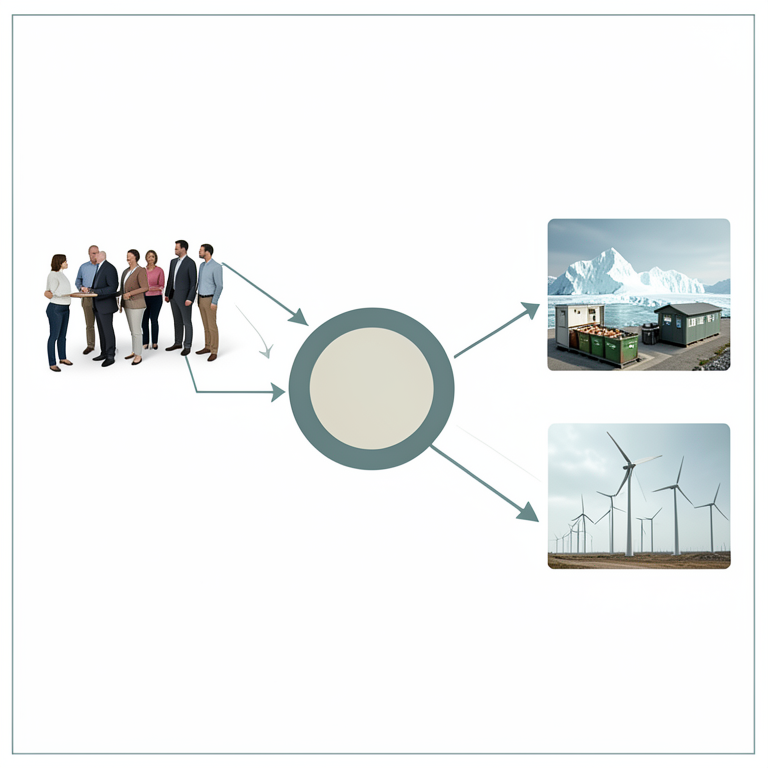
Workshop Structure
AI-generated conceptual illustration (diverse groups of adults including students, teachers, and local residents in a community center setting). It explains the idea and does not show study data.
View source evidence ↗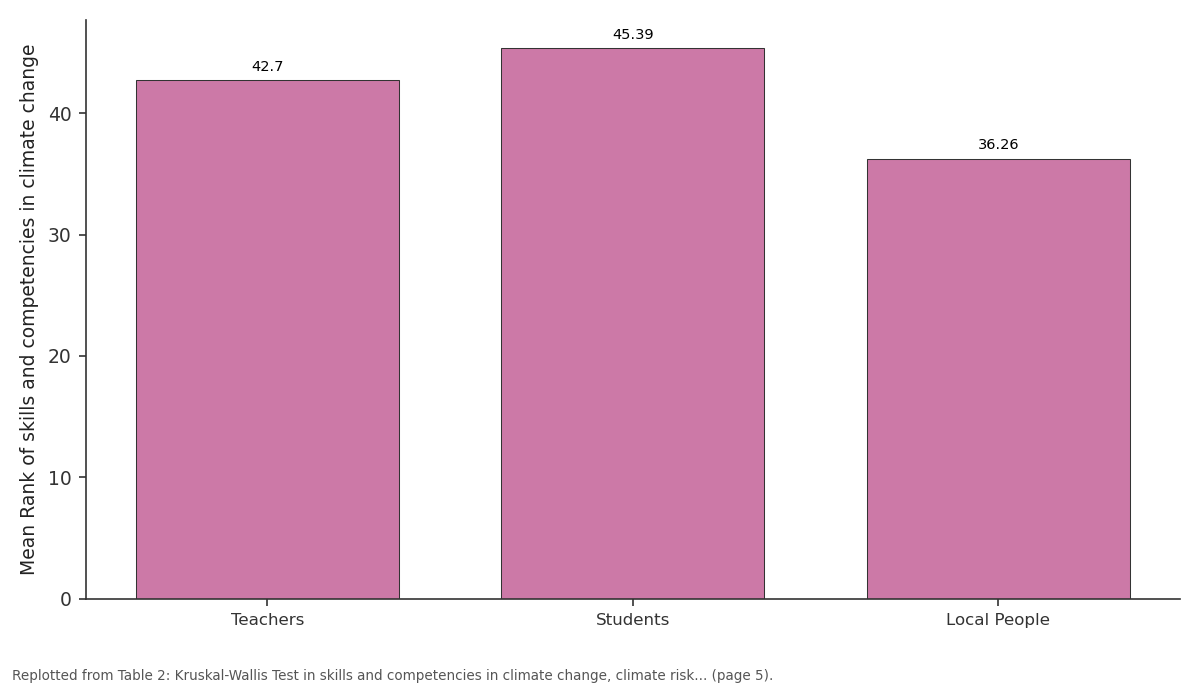
Mean Rank of skills and competencies in...: Teachers vs Students vs Local People
Replotted from Table 2 (page 5) of the original paper. Every bar is the paper's own table value.
View source evidence ↗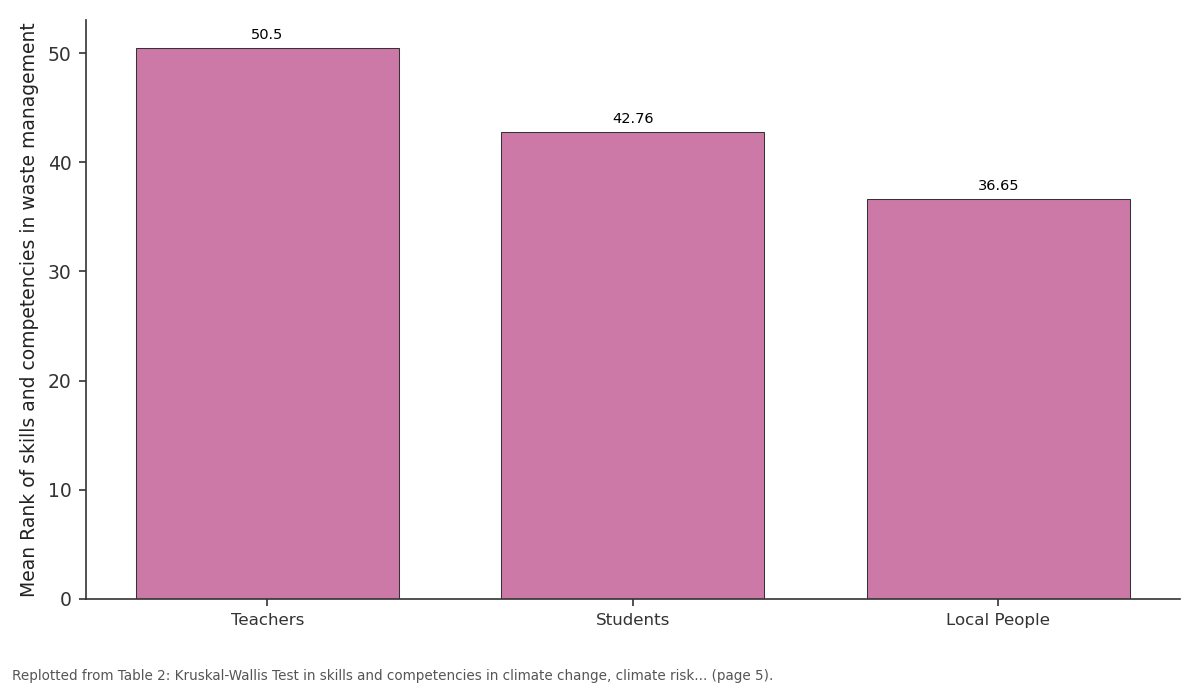
Mean Rank of skills and competencies in...: Teachers vs Students vs Local People
Replotted from Table 2 (page 5) of the original paper. Every bar is the paper's own table value.
View source evidence ↗Figures & tables
From the original paper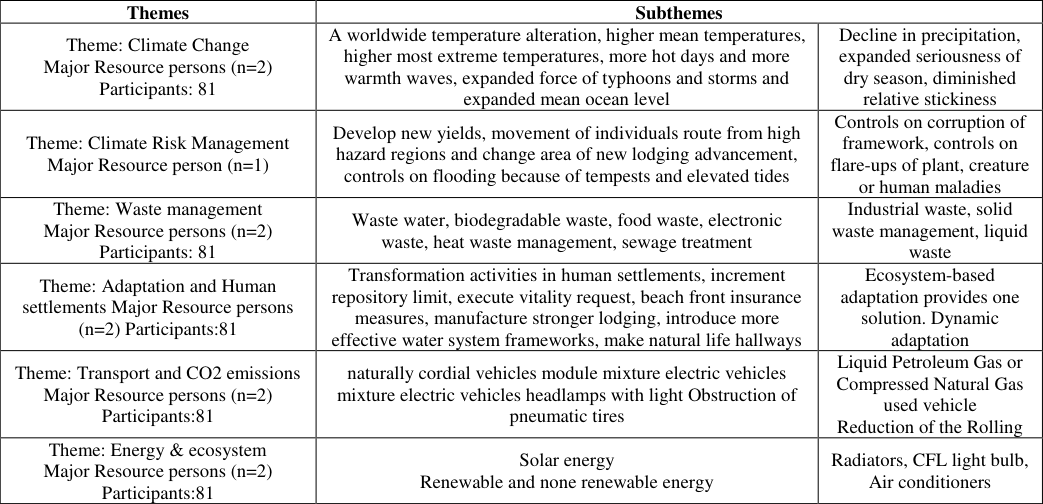 Table 1
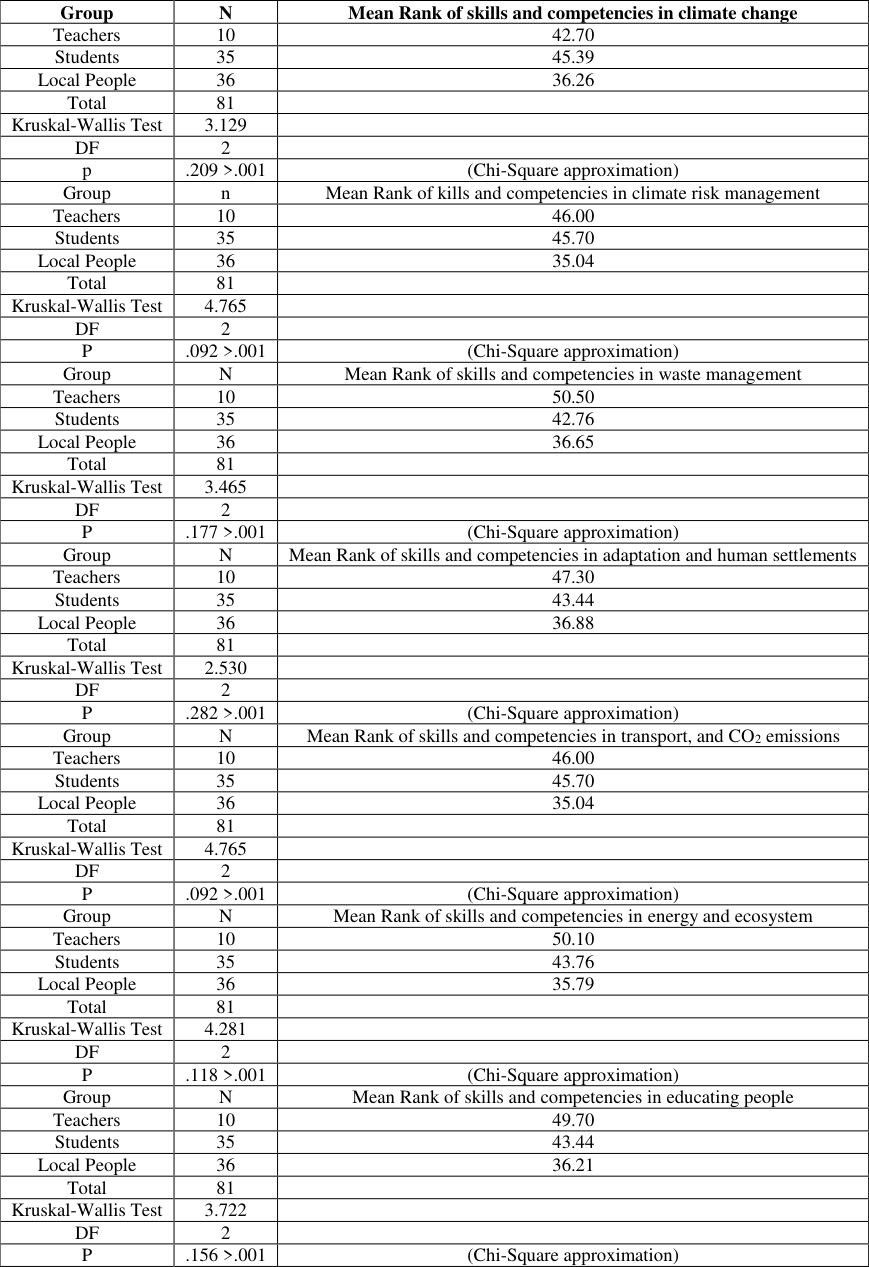 Table 2
Introduction
Introduction
Importance of developing skills and competencies in environmental sustainability
Presently a-days maintainability in human settlement is become a key issue at state, national, and worldwide level worried with strategy and projects since a decade ago. Be that as it may, even now, different strategies, projects and some particular difficulties as of late utilized in the educational plan of ecological manageability in advanced education in India such as sustainable food policy, rain water harvesting, ecosystem and energy production, environmental friendly building construction and conservation of energy. That's why, MoU, collaboration, networking, and coordination are establishing among different national and international institutes for developing skills and competencies in environmental sustainability. Recently, UNESCO is assisting to the developing and underdeveloped countries to make changes through works to achieve skills and competencies in achieving the goals of sustainability. In fact, programmes and policies are developing and implementing to manage climate change, water treatment, water supply, rainwater harvesting, and actions in human settlements (Carter, Tyrrel, & Peter, 1999) [3] . However, activities like innovative gardening, composting, solid, and liquid waste management, sewage treatment, and tree plantation are encouraging among community people to develop skills and competencies in environmental sustainability (Chowdhury, 2014) [5] . As a whole we can say, hands on activities are the sum of programmes including; mass tree plantation, disinfection, treating the soil, making economical house, living agreeably inside environmental frameworks, building up a mindful, dependable mentality toward nature, and advancing a feeling of progression with others (Hilary, 2013) [11] . In addition, activities in domestic wastewater management and animal excreta treatment, composting peel of the fruits for nurturing kitchen garden or grasslands for cattle may have directly links with metabolism and wellbeing of human health (Schand & Capon, 2012) [21] . Nevertheless, man himself or herself is accountable for air, soil, water pollution (Atmodiwirjo, 2013) [1] , and most probably, the urban ecosystems are deteriorating day-by-day (Douglas, 2012) [7] , is regulating on human health and well-being, interrelated with urban food systems. (Marsden & Sonnino, 2012 [16] ; Nagendra, Reyers, & Lavorel, 2013) [19] . In addition, human activity has potential impact on climate change and even in marine resources (Barange, Cheung, & Merino, 2010 [2] ; Macdonald, Anderson, Bardgett, & Singh, 2011 [15] ; McAlpine CA, Ryan JG, Seabrook L, Thomas S, Dargusch PJ, Syktus JI, et al. [17] Those we must try to mange. Urban wastes could be used in the construction of beautiful statues, paper works, fine arts with unused plastics and cans, and with broken glass, tin, metals, or in paper curtains (Erb K, Haberl H, Jepsen MR, Kuemmerle T, Lindner M, Müller D, et al. 2013. [8] It is possible to reuse the unused electronic wastes like; rejected desktops, laptop batteries, mobiles, toner, inverter, air conditioners, televisions, phones, and different unused and rejected machines (Farmer J, Matthews R, Smith JU, Smith P, Singh BK. 2011) [10] . In fact, individual conscience and direct hands on activities are essential to get benefit in the environment (Chapin, Knapp, Brinkman, Bronen, & Cochran, 2016) [4] . Activities include: covering unused lands in grasses, adaptating house for human settlement, increasing reservoir capacity, implementing energy demand, coastal protection measures, reducing soil erosion, building more resilient house, installing effective and efficient agriculture and irrigation, establishing wildlife corridors and trying to reducing carbon emission (Erisman, Galloway, Seitzinger, Bleeker, & Butterbach-Bahl, 2011 [9] ; Messerli, Heinimann, Gige, Breu, & Schönweger, 2013) [18] . Sikor, Auld, Bebbington, Benjaminsen, Gentry, Hunsberger, Anne-MarieIzac, Margulis, Plieninger, Schroeder, & Upton, 2013 organized a mass tree plantation programme in wastelands and hillsides to maximize the land use intensity in global land governance to mitigate pollution. Literature found that there was a huge positive connection among the factors of ecological maintainability for example hands on understanding, network investment, perception, field visit, sight and sound, and show in eco-accommodating abilities to relieve environmental change and financial turn of events (Jena, 2011) [13] . Instructors, understudies, and network individuals may utilize mindfulness, transparency, and ecoaccommodating (AOE) model to rehearse practical propensities (Jena, 2012) [12] . A community sanitation program was organized in Assam, India where teachers, students, and local people participated and tried to aware community people to how achieve environmental sustainability Jena, 2018 [24] and how to change socioecological system (Takeuchi, Ichikawa, & Elmqvist 2016) [23] . Question rose, is it possible to achieve 2030 agenda of environmental sustainability through active participation?
International efforts of developing skills and competencies in environmental sustainability
Generally, national and worldwide investigations uncovered in that the significant reasons for ecological corruption are populace development, industrialization, changes in utilization examples, and neediness undermining existed among individuals and biological systems. That is the reason, the partners should settle on choices on the improvement of natural supportability at grass root levels particularly among understudies. Natural maintainability materials ought to be given to the understudies' to get in expanded degree of information, disposition, aptitudes, and investment to arrive at anticipated objectives of manageability Orzali, 2009 [20] . The global education agenda has emphasized on external aid and international support for sustainable development could help to get in economic growth in macro-economic environment. Current ways to deal with ecological maintainability neglect to give the necessary aptitudes, because of the conventional training structure while manageability requires a transformation in transit natural experts see and take care of ecological issues. It needs to grow new close to home, relational, cultural, and specialized aptitudes to get dynamic all through their expert lives and to be of an incentive in the journey for manageability. Yet at present, most university programs cover little in the way of environmental issues or sustainability integrated into management, design, engineering, marketing, and service. However, it needs for including sustainability in professional practices and education and engineering. Considering these, literature found that in Malaysian essential and optional school understudies' degree of Knowledge, demeanor, abilities, and cooperation expanded to arrive at expected ES level. Reasonable advancement activities are being set by higher instructive bodies and bosses and mindful to accomplish the capabilities, information and abilities for manageable improvement of their workers in Europe. It indicated that auxiliary school understudies had "significant level" of ecological mindfulness in the idea of supportable turn of events. School can and ought to advance the improvement of supportable ways of life that lead networks to be more pleasant and more capable and deferential with the earth and individuals. Indeed, maintainable ecological training must be help to build up the aptitudes and skills. In Brazil, Serbia, Latvia, South Africa, Spain, Syria, and UK, the idea of training for supportable advancement has not been adequately coordinated into the idea of change in advanced education foundations needs community oriented methodologies, and talk about how to upgrade their own controls, and multicultural vision of maintainability. A study assessed individual competences in designing sustainable buildings in Netherland and found that individual competences is well fit to the environment norms, but not all individual competences appeared during the process. Because linking information with action for effective social group responses to persistent issues of property needs transformation includes collective downside framing, a plurality of views, effective dialog processes, and neutral participation. Instruction and preparing as a vital aspect for moving the workforce and society as a rule toward a feasible living procedure, yet the connection between regulatory approach, administration and manageability is significant, in light of the fact that there is no advancement without initiative particularly in the social, human and social measurement. Be that as it may, relational abilities influence the capacity to direct the change towards manageability ranch creation affirmed the critical job of supportability information, assistance aptitudes and systems administration skills on the inclination to advance economical agribusiness. Be that as it may, dynamic association of understudies, educators, just as network individuals could make change in the public arena and ecological. Be that as it may, the examination showed that there stays a huge hole between youthful gifted people groups' goals to create aptitudes for maintainability and accessible learning openings, proposing an expanded degree for abilities for manageability activities later on. In the appearance of popular government in South Africa in 1994, a changed radical law initiated at national level for directing natural manageability and featured troubles of accomplishing this by and by. In Sri Lanka, through maintainable formative projects, different social, financial, and natural issues were tackled. That is the reason, supportability training and commitment exercises, frameworks thinking, expectant capability and regularizing fitness and relational skill were thought of. Not just that mix of maintainability, proficient turn of events, and system building basic for creating aptitudes and capabilities in manageability (Pearce, Smith, Saxton and Soto, 2018). Likewise, proficient abilities in cultivating practices could assist the network with maintaining feasible rural strategy. Particularly, manageability in advanced education is commanded by reasonable 'greening the grounds' projects could be embraced. In Spanish colleges, natural maintainability educational plans was acquainted with rise the capabilities guide and substance of the topic and the points in the prospectuses any case, the Canadian metropolitan workers were the members shown abilities in critical thinking, featured in segments of the issue and recognizing the limitations, thinking aptitudes, hazard forecast, weakness examination, neighborhood information, arranging, and correspondence to transformation procedure to the ocean level ascent
National efforts of developing skills and competencies in environmental sustainability
India is troublesome by the nexus of natural corruption and monetary procedure in the midst of the strange beingness of need and extravagance in their multifaceted measurements. These difficulties are straightforwardly associated with the preservation and upkeep of the existence supporting frameworks like land, water, air, and organic assorted variety. In 1972, Prime Minister of India, Mrs. Indira Gandhi underscored, at the UN Conference on Human Environment at Stockholm, that the expulsion of destitution is a necessary piece of the objective of an ecological procedure for the world. The thoughts of interrelation, of a mutual planet, of world citizenship, and of 'spaceship earth' can't be confined to natural issues alone. They apply similarly to the common and between connected duties of ecological assurance and human turn of events. In 1986, the Govt. of India endorsed the significance of showing natural instruction all through the nation to make consciousness of maintainable practices in horticulture. Be that as it may, provincial townspeople couldn't create enough food to meet their yearly need because of expanded populace development diminished in the limit of land use strategy training need to present such issues in national educational plan. The administration would have liked to utilize air encouraging projects in schools and networks as a section to broaden mindfulness concerning the earth, and gives the information and aptitudes to answer to natural issues. Land use improvement program could reinforce to augmenting the utilization of no man's land and slopes. In any case, aptitudes improvement in natural maintainability is a difficult undertaking. Cooperation between educators, environmentalists, and network individuals empowered the improvement toward the expanded comprehension of thoughts through reasonable aptitudes advancement, thought investigation of understudies. Along these lines, reasonable and compelling trainings for practical instruction is a basic objective of late educator training. In a broad preparing; 600 learner, 35,000 understudies of 318 schools in Uttaranchal state took an interest and attempted to build up the abilities, and capabilities of maintainability of condition. The administration intends to expand the quantity of taking an interest understudies and schools all through the locale to create positive network activities towards the earth. Shared blend of these three spaces, for example, social, monetary, and natural measurements could assist with forming the general public's connection with the biosphere. Members of an examination; built up the information, disposition, abilities, basic reasoning, values direction and promise to work for a superior world for all, presently and later on. By and by, accomplishing the objectives of manageable advancement in the UN Decade of Education for Sustainable Development is a troublesome activity for the vast majority of the state administration of India particularly, in Puducherry area and Cuddalore locale of Tamil Nadu. Be that as it may, a sum of 240 understudies were chosen from four schools, of which 60 understudies from every four school were chosen dependent on their advantage, inspiration and duty and took an interest in a creative educational plan on natural instruction for feasible turn of events (EESD). In an examination, it came about that the test understudies accomplished significantly higher in execution, perspectives, aptitudes, and conduct on air, water, abilities in protection and strong waste.
Aim and Hypothesis
A workshop was organized in the environmental sustainability to develop the skills and competencies and compare the comparative opinion of the participants in climate change, climate risk management, waste management, adaptation and human settlements, transport and CO2 emissions, energy and ecosystem, & in educating people. It was assumed that participants who attended environmental sustainability program have no differences in skills and competencies in climate change, climate risk management, waste management, adaptation and human settlements, transport and CO2 emissions, energy and ecosystem, & educating people.
Methodology
Participatory empirical research design used to assess developmental skills and competencies of the participants who attend a seven-day workshop in environmental sustainability. After the notification in the print medias, and in the websites; students (n=35), teachers (n=10), and local people (n=36) expressed their interest to attended the workshop in environmental sustainability organized in the Department of Education, Assam University, Silchar, India. The purpose of the programme was to develop skills and competencies and to find out the sustainable solutions to mitigate climate change and socio-economic development and to achieve 2030 agendas of UNESCO in environmental sustainability (see table 1). In this seven days workshop, the issues of climate change, climate risk managements, waste management, adaptations and human settlements, transport and CO2 emissions and energy & ecosystem and sustainable solution, policy decisions, and action plans are prepared and practiced. In climate risk management, participants acquired the skills and competencies on innovation in agricultural harvestings, saving life of cattle, and human being from higher mean temperatures, and from more hot days, and more heat waves, cyclones, and storms, and from decreased relative humidity. In sustainable transport and CO2 emission concepts, participants understood why to use environmental friendly vehicles, hybrid-electric vehicles, liquid petroleum gas, and compressed natural gas used in vehicle and pneumatic tyres. In addition, they installed solar energy panel, radiators, CFL light bulbs, and used air conditioners in closed room to minimize heat waste. They realized the vulnerability of human settlement, and tried to learn how to adapt ecosystem-based solution, eco-buildings, and how to control river water movement for maximum irrigation. Especially, banana peels, apple cores, grape stacks, and vegetable peels they grinded and dried in the sun and prepared bio-manure and used these in their kitchen garden. In addition, students, teachers, and community people planted 250 saplings in the hillsides and wastelands of university campus, and in the local market complex. Participants took tea and soft drink without using plastic straw, and requested the local people to use recycle bins to dispose waste paper, plastic & waste metal. They aware people to work in for economic development and poverty reduction through agriculture and organic farming; established wildlife corridors and took actions in human settlements, controls on degradation of infrastructure, controls on outbreaks of plant, animal or human diseases, and adapted the action plan to secure life from decreased in precipitation, increased severity of drought, and decreased relative humidity.
Analysis and results
Table 1 shows the highest mean rank (46.00) of teachers than students (45.70) and local people (35.04), and the Kruskal-Wallis (3.129 p>.001) where, the Chi-Square approximation, corrected for the existence of ties in the ranks of the data indicated no significant difference in observed data. Hence, the null hypothesis was accepted and it resulted that there was no significant difference in the opinion of the participants towards the skills and competencies in climate Change. In the Kruskal-Wallis Test (4.765 p>.001) indicated no significant difference in the opinion and the null hypothesis was accepted. It resulted that there was no significant difference in the participants' opinion in the developmental skills and competencies on climate risk management.
Finding and Discussion
Author claimed that students, teachers, and the local people have on differences in their opinion in skills and competencies in achieving the goals of environmental sustainability. Especially, there was no significant difference in the skills and competencies in the concept of global warming, higher mean temperatures, higher most extreme temperatures, more hot days and more warmth waves, expanded power of tornadoes and storms and expanded mean ocean level, decline in precipitation, expanded seriousness of dry season, diminished relative moistness in environmental change. That as well as there was no distinction in the abilities and skills on atmosphere chance administration. They developed and develop new harvests, attempted to move and aided in relocation of individuals route from high-hazard zones and recommended the administration to change area of new lodging advancement, and built up early climate estimating focus to controlling flooding because of tempests and elevated tides.
After attending the workshop, the skills and competencies in waste management really upgraded and even found no differences among students, teachers, and the community people. Participants are so competent to manage the wastewater, sewage treatment, kitchen waste and other solid waste, food waste, electronic waste, heat waste, managing industrial waste, solid waste, and liquid waste, also they are skilled in minimizing the use of plastics, and polythene. The students, teachers, and the local people advised local people to use reusable cup, plate, glass, and permanent bags during lunch, dinner, and marketing. However, they worked on preparing compost, planting tree, reducing, and reusing the waste materials for keeping the circumstances clean and green. In addition, participants acquired skills and competencies in adaptation and human settlements includes adaptation of actions in human settlements, implement energy demand, developed coastal protection measures, build more resilient housing, increased the reservoir capacity, installed more efficient irrigation systems, created wildlife corridors and realized ecosystem-based adaptation could be a solution for human settlement. Teachers, students, and local people planted saplings in their garden and used bio-compost prepared in the kitchen wastes, reused old furniture, electrical appliances, and motivated local people to donate old clothes to the recycling group. Participants tried to understand the concept of insulation of building, and they used creeper and climber plants to cover the buildings and used radiators in their house to reflect the sunlight for keeping cool to the house, instead of using airconditioners. However, few of them used air-conditioners but usually kept the doors and windows closed, when heat or air conditioning is on. They developed the skills and competencies in transport, and CO2 by using environmentally friendly vehicles and plug-in hybridelectric vehicles with resistance of pneumatic tyres. They used Liquid Petroleum Gas or Compressed Natural Gas in vehicle. They thought to opt for public transport could reduce transport costs as well as carbon emissions have a great impact on the air quality of our cities. If every person use their personal vehicle then the discharged of gas produce by the internal combustion of the vehicle engines will affect on the environment, along with human health and these gases causes' greenhouse emissions affect the climate change. Participants also developed their skills and competencies in energy and ecosystem by using CLF light bulb and promised to save energy, by installing solar panels in their home and shopping complexes, and tried to unplugging the electric appliances while not in use.
Figures and tables from the paper
| Group | N | Mean Rank of skills and competencies in climate change |
|---|---|---|
| Teachers | 10 | 42.70 |
| Students | 35 | 45.39 |
| Local People | 36 | 36.26 |
| Total | 81 | |
| Kruskal-Wallis Test | 3.129 | |
| DF | 2 | |
| p | .209 >.001 | (Chi-Square approximation) |
| Group | n | Mean Rank of kills and competencies in climate risk management |
| Teachers | 10 | 46.00 |
| Students | 35 | 45.70 |
| Local People | 36 | 35.04 |
| Total | 81 | |
| Kruskal-Wallis Test | 4.765 | |
| DF | 2 | |
| P | .092 >.001 | (Chi-Square approximation) |
| Group | N | Mean Rank of skills and competencies in waste management |
| Teachers | 10 | 50.50 |
| Students | 35 | 42.76 |
| Local People | 36 | 36.65 |
| Total | 81 | |
| Kruskal-Wallis Test | 3.465 | |
| DF | 2 | |
| P | .177 >.001 | (Chi-Square approximation) |
| Group | N | Mean Rank of skills and competencies in adaptation and human settlements |
| Teachers | 10 | 47.30 |
| Students | 35 | 43.44 |
| Local People | 36 | 36.88 |
| Total | 81 | |
| Kruskal-Wallis Test | 2.530 | |
| DF | 2 | |
| P | .282 >.001 | (Chi-Square approximation) |
| Group | N | Mean Rank of skills and competencies in transport, and CO2 emissions |
| Teachers | 10 | 46.00 |
| Students | 35 | 45.70 |
| Local People | 36 | 35.04 |
| Total | 81 | |
| Kruskal-Wallis Test | 4.765 | |
| DF | 2 | |
| P | .092 >.001 | (Chi-Square approximation) |
| Group | N | Mean Rank of skills and competencies in energy and ecosystem |
| Teachers | 10 | 50.10 |
| Students | 35 | 43.76 |
| Local People | 36 | 35.79 |
| Total | 81 | |
| Kruskal-Wallis Test | 4.281 | |
| DF | 2 | |
| P | .118 >.001 | (Chi-Square approximation) |
| Group | N | Mean Rank of skills and competencies in educating people |
| Teachers | 10 | 49.70 |
| Students | 35 | 43.44 |
| Local People | 36 | 36.21 |
| Total | 81 | |
| Kruskal-Wallis Test | 3.722 | |
| DF | 2 | |
| P | .156 >.001 | (Chi-Square approximation) |
Table text extracted from the original PDF; superscript letters are shown inline. The original table image is below.
View original table image
References
23 in the original paper- Atmodiwirjo P. School ground as environmental learning resources: Teachers' and pupils' perspectives on its potentials, uses and accessibility. International Electronic Journal of Environmental Education. 2013;3(2):101-119.
- Barange M, Cheung WWL, Merino G. Modelling the potential impacts of climate change and human activities on the sustainability of marine resources. Current Opinion in Environmental Sustainability. 2010;2(5-6):326-333.
- Carter CR, Tyrrel FS, Peter H. Impact and sustainability of community water supply and sanitation programmes in developing countries. Journal of the Chartered Institution of Water and Environmental Management. 1999;13(4):292-296.
- Chapin FS, Knapp CN, Brinkman TJ, Bronen R, Cochran P. Community-empowered adaptation for selfreliance. Current Opinion in Environmental Sustainability. 2016;19:67-75.
- Chowdhury T. Nature of Environmental Education in Bangladesh: A School Level Assessment with Reference to the National Curriculum. International Electronic Journal of Environmental Education. 2014;4(1):53-60.
- Dawson JJC, Smith P. Integrative management to mitigate diffuse pollution in multi-functional landscapes. Current Opinion in Environmental Sustainability. 2010;2(5-6):375-382.
- Douglas I. Urban ecology and urban ecosystems: understanding the links to human health and well-being. Current Opinion in Environmental Sustainability. 2012;4(4):385-392.
- Erb K, Haberl H, Jepsen MR, Kuemmerle T, Lindner M, Müller D, et al. A conceptual framework for analysing and measuring land-use intensity. Current Opinion in Environmental Sustainability. 2013;5(5):464-470.
- Erisman JW, Galloway J, Seitzinger S, Bleeker A, Butterbach-Bahl K. Reactive nitrogen in the environment and its effect on climate change. Current Opinion in Environmental Sustainability. 2011;3(5):281-290.
- Farmer J, Matthews R, Smith JU, Smith P, Singh BK. Assessing existing peat land models for their applicability for modelling greenhouse gas emissions from tropical peat soils. Current Opinion in Environmental Sustainability. 2011;3(5):339-349.
- Hilary I. Cultivating artistic approaches to environmental learning: Exploring eco-art education in elementary classrooms. International Electronic Journal of Environmental Education. 2013;3(2):129-145.
- Jena AK. Awareness, Openness and Eco-friendly (AOE) Model Teaches Pre-service Teachers on How to be Eco-friendly. International Electronic Journal of Environmental Education. 2012;2(2):103-117.
- Jena AK. Hands on experience, community participation, observation, field visit, multimedia and demonstration are the predictors of environmental awareness: A hierarchical multiple regression analysis. International Journal of Environment and Sustainable Development. 2011;10(3):302-321.
- Rahman MA. Ecosystem management is the key to reduce climate impacts and food security. International Journal of Research in Agronomy. 2021;4(2):41-49.
- Macdonald CA, Anderson IC, Bardgett RD, Singh BK. Role of nitrogen in carbon mitigation in forest ecosystems. Current Opinion in Environmental Sustainability. 2011;3(5):303-310.
- Marsden T, Sonnino R. Human health and wellbeing and the sustainability of urban-regional food systems. Current Opinion in Environmental Sustainability. 2012;4(4):427-430.
- McAlpine CA, Ryan JG, Seabrook L, Thomas S, Dargusch PJ, Syktus JI, et al. More than CO2: A broader paradigm for managing climate change and variability to avoid ecosystem collapse. Current Opinion in Environmental Sustainability. 2010;2(56):334-346.
- Messerli P, Heinimann A, Gige M, Breu T, Schönweger O. From 'land grabbing' to sustainable investments in land: Potential contributions by land change science. Current Opinion in Environmental Sustainability. 2013;5(5):528-534.
- Nagendra H, Reyers B, Lavorel S. Impacts of land change on biodiversity: making the link to ecosystem services. Current Opinion in Environmental Sustainability. 2013;5(5):503-508.
- Schand H, Capon A. Cities as social-ecological systems: linking metabolism, wellbeing and human health. Current Opinion in Environmental Sustainability. 2012;4(4):375-377.
- Sikor T, Auld G, Bebbington AJ, Benjaminsen TA, Gentry BS, Hunsberger C, et al. Global land governance: From territory to flow? Current Opinion in Environmental Sustainability. 2013;5(5):522-527.
- Takeuchi K, Ichikawa K, Elmqvist T. Satoyama landscape as social-ecological system: Historical changes and future perspective. Current Opinion in Environmental Sustainability. 2016;19:3039.
- Jena AK. Effects of Community Sanitation Program on the Awareness of Environmental Sustainability in Assam, India. International Quarterly of Community Health Education. 2018;39(1):51-61.
Cited by 8
From OpenAlex, OpenCitations and reference lists read by Scinovex
- Do Faster-Growing Holoparasitic Plant Species Exhibit Broader Niches and Wider Global Distributions? ↗
Quanzhong Zhang, Jinming Hu · Plants · 2025
Parasitic organisms, as an important component of ecosystems, have long been a focal point in ecological research, particularly concerning the relationship between their growth characteristics, ecological niche, and distribution patterns. This study selects the holoparasitic plant species Cuscuta campestris Yunck., Cuscuta australis R.Br., and Cuscuta chinensis Lam. from the Cuscuta subgenus Grammica as model species to explore the relationship between…
❝ 3PDF - Preserving Heritage Buildings with Building Information Modelling: Addressing the Challenges and Opportunities ↗
Mohamad Lokman Idris, Abdul Rahimi Abdul Rahman, Bala Ishiyaku, Ahmad Rizal Alias · Smart and Green Materials · 2024
Preserving heritage buildings presents unique challenges in building conservation, demanding a comprehensive understanding of issues and strategic measures for long-term sustainability. The aims of this paper is to analyze the interrelationships among these organizations. The paper utilizes Cronbach's alpha reliability test, normalized mean ranking, overlap analysis, Kruskal-Wallis test, and Spearman's rank correlation for systematic data analysis. The findings of this…
❝ 3PDF - Characterizing Cattle Corralling Practices for Sustainable Soil Fertility Management in Northern Benin ↗
Awouminassi M. Atakoun, Pierre Gbènoukpo Tovihoudji, Rodrigue V.C. Diogo, William Amponsah, Murilo dos Santos Vianna, Thomas Gaiser et al. · Springer eBooks · 2025
Climate change is a global concern posing a multitude of challenges, including significant threats to agriculture, particularly in sub-Saharan Africa. The region’s reliance on rainfed agriculture and limited access to resources, such as mineral fertilizers, exacerbates soil fertility decline and reduces crop productivity. In this context, cattle corralling has emerged as a promising soil fertility management practice. This study assesses…
❝ 2PDF - “Where and Whom You Collect Weightings from Matters…” Capturing Wellbeing Priorities Within a Vulnerable Context: A Case Study of Volta Delta, Ghana ↗
Laurence Cannings, Craig William Hutton, Kristine Nilsen, Alessandro Sorichetta · Social Indicators Research · 2025
Abstract Wellbeing is a crucial policy outcome within sustainable development, yet it can be measured and conceptualised in various ways. Methodological decisions, such as how different components are weighted, can influence wellbeing classification. Many studies utilise equal weighting, assuming each component is equally important; however, does this reflect communities’ lived experiences? This study outlines a multidimensional basic needs deprivation measure…
❝ 2PDF - Statistical Analysis of Temperature Sensors Applied to a Biological Material Transport System: Challenges, Discrepancies, and a Proposed Monitoring Methodology ↗
Felipe Roque de Albuquerque Neto, José Eduardo Ferreira de Oliveira, Rodrigo Gustavo Dourado da Silva, Andrezza Carolina Carneiro Tomás, Álvaro Antônio Villa Ochoa, José Ângelo Peixoto da Costa et al. · Processes · 2025
Conventional methods for transporting biological materials typically use dry ice or ice for preservation but often overlook important aspects of temperature monitoring and metrological control. These methods generally do not include temperature sensors to track the thermal conditions of the materials during transport, nor do they apply essential metrological practices such as regular sensor calibration and stability checks. This lack…
❝ 1PDF - Hierarchical clustering of factors causing site clearance bottlenecks in ODA-funded salinity intrusion mitigation infrastructure projects ↗
Ha Duy Khanh, Nguyen Van Tiep, Nguyen Van Khoa · Engineering Construction & Architectural Management · 2026
Purpose Numerous infrastructure projects have been launched to address the challenges posed by climate change. In Vietnam, these projects are primarily financed through Official Development Assistance (ODA) funding. However, during implementation, site clearance bottlenecks (SCBs) arise as major obstacles, undermining project efficiency and eroding national credibility. Design/methodology/approach This study identified 22 potential SCB factors through literature review and expert consultation,…
❝ 0 - Assessment of plant communities and identification of indicator species under the influence of edaphic and topographic factors; a way forward for forest restoration in Karak region, Pakistan ↗
Siddiq Ullah, Fazle Malik Sarim, Mohib Ullah, Fazal Manan, Sana Faryal, Shujaul Mulk Khan · Community Ecology · 2025
❝ 0 - Between Anthropogenic Influence and Resource Management: Impacts of Risks and Preservation Strategies in the Ikopa Watershed, Madagascar ↗
Fidelio Arnold Ulrich, Bruno Razanamparany, Rejo Robert, Ratiarimananjatovo Narindra, Andrianjary Myriam, Robijaona Rahelivololoniaina Baholy · Britain International of Exact Sciences (BIoEx) Journal · 2024
The impacts of anthropogenic risks on water resource management underscore the necessity for a careful and adaptable approach to ensure long-term sustainability. In the Ikopa Watershed in Madagascar, numerous human activities present significant challenges. Water quality is impacted by pollution resulting from agricultural practices. Uncontrolled deforestation intensifies watershed degradation, jeopardizing the availability of water resources. Rapid urbanization and escalating human…
❝ 0PDF