
Research article · 2019 · Full text
International Journal of Biology SciencesALT Blood Test
Volume 1(2) · Pages 12–14 · DOI: 10.33545/26649926.2019.v1.i2a.10 ↗
Research areasLiver Disease Diagnosis and TreatmentDiet and metabolism studiesMetabolism and Genetic Disorders
Abstract
Author-writtenAlanine transaminase (ALT) is a transaminase enzyme (EC 2.6.1.2). It is also called alanine aminotransferase (ALAT) and was formerly called serum glutamate-pyruvate transaminase (SGPT) or serum glutamic-pyruvic transaminase (SGPT) and was first characterized in the mid-1950s by Arthur Karmen and colleagues. ALT is found in plasma and in various body tissues but is most common in the liver. It catalyzes the two parts of the alanine cycle. Serum ALT level, serum AST (aspartate transaminase) level, and their ratio (AST/ALT ratio) are commonly measured clinically as biomarkers for liver health. The tests are part of blood panels.
Summary
Source-checkedPlain-language reading of the full paper, prepared with AI and checked against the text. Each point links to the authors' own words.
Why it matters
- Alanine transaminase (ALT) is an enzyme primarily located in the liver, though it is also present in plasma and other body tissues. View evidence ↗
- Damage to liver cells causes ALT to be released into the bloodstream, making it a marker for liver injury. View evidence ↗
- Measuring ALT levels can help detect liver problems early, potentially before physical symptoms like jaundice appear. View evidence ↗
The question
- The paper describes the clinical use of ALT, AST, and their ratio as biomarkers to assess liver health. View evidence ↗
What they did
- The ALT test is performed by collecting a small blood sample from a vein in the patient's arm using a needle. View evidence ↗
- No special preparation is required for the ALT test itself, although fasting may be necessary if other tests are ordered simultaneously. View evidence ↗
- Biochemically, ALT functions by catalyzing the reversible transfer of an amino group from L-alanine to α-ketoglutarate to produce pyruvate and L-glutamate. View evidence ↗
What they found
- General normal levels of ALT are reported to range from approximately 7 to 56 units/liter. View evidence ↗
- Typical reference intervals for ALT are ≤ 34 IU/L for females and ≤ 45 IU/L for males. View evidence ↗
- In experimental studies, a standard reference range of 0-40 IU/L is often used, despite variations in clinical sources. View evidence ↗
- Significantly high ALT levels can be associated with various conditions, including viral hepatitis, diabetes, congestive heart failure, bile duct problems, myopathy, or infectious mononucleosis. View evidence ↗
- Various medications can increase ALT levels, including paracetamol, antibiotics, cholesterol drugs, certain antipsychotics (e.g., risperidone), and anti-inflammatory drugs. View evidence ↗
- ALT levels can fluctuate normally throughout the day or increase due to strenuous physical exercise, meaning elevation does not always indicate a medical problem. View evidence ↗
- When AST levels are higher than ALT levels, it may suggest that the elevation is related to myopathy rather than liver damage. View evidence ↗
What it means
- The author concludes that high ALT levels are indicative of liver damage resulting from conditions such as cirrhosis, liver cancer, infection, or hepatitis. View evidence ↗
- The author notes that the term 'transaminase' is now considered outdated in the context of liver disease. View evidence ↗
Visual summary
1 visualsIllustrations explain the paper; they do not show study data.
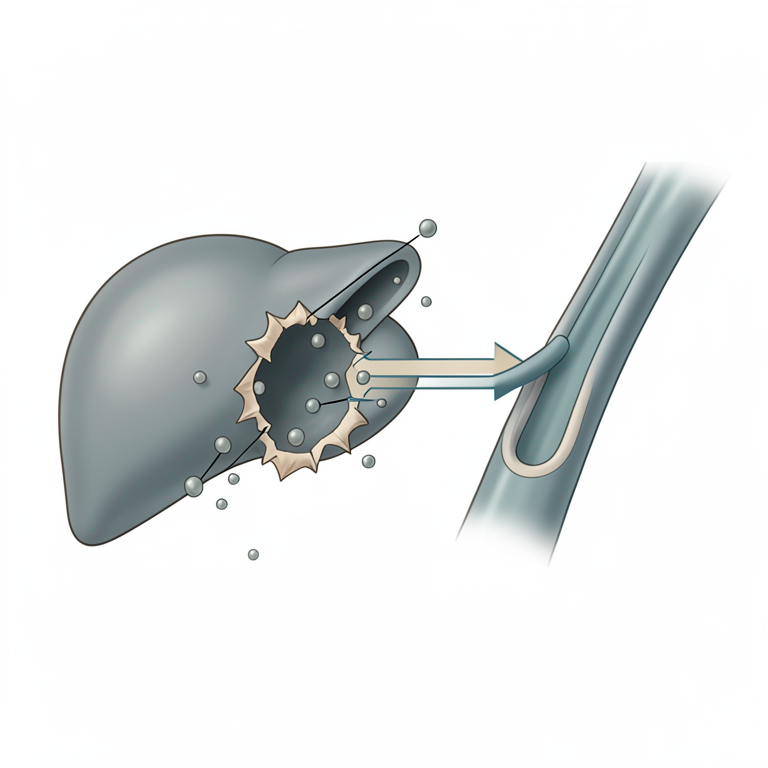
ALT Release Mechanism
AI-generated conceptual illustration (human hepatocyte and blood capillary). It explains the idea and does not show study data.
View source evidence ↗Introduction
A blood test is when a sample of blood is taken from the body to be tested in a lab. Doctors order blood tests to check things such as the levels of glucose, hemoglobin, or white blood cells. This can help them detect problems like a disease or medical condition. Sometimes, blood tests can help them see how well an organ (such as the liver or kidneys) is working. ALT, which stands for alanine transaminase, is an enzyme found mostly in the liver. When liver cells are damaged, they release ALT into the bloodstream. An ALT test measures the amount of ALT in the blood. High levels of ALT in the blood can indicate a liver problem, even before you have signs of liver disease, such as jaundice, a condition that causes patient skin and eyes to turn yellow. An ALT blood test may be helpful in early detection of liver disease. Other names: Alanine Transaminase (ALT), SGPT, Serum Glutamic-Pyruvic Transaminase, GPT.
Function
ALT catalyzes the transfer of an amino group from Lalanine to α-ketoglutarate, the products of this reversible transamination reaction being pyruvate and Lglutamate. L-alanine + α-ketoglutarate ⇌ pyruvate + L-glutamate ALT (and all aminotransferases) require the coenzyme pyridoxal phosphate, which is converted into pyridoxamine in the first phase of the reaction, when an amino acid is converted into a keto acid.
Clinical Significance
ALT is commonly measured clinically as part of liver function tests and is a component of the AST/ALT ratio. When used in diagnostics, it is almost always measured in international units/liter (IU/L) or µkat. While sources vary on specific reference range values for patients, 0-40 IU/L is the standard reference range for experimental studies.
Elevated levels
Test results should always be interpreted using the reference range from the laboratory that produced the result. Normal levels of ALT ranges from about 7-56 units/liter, and 10-40units/liters for AST. Elevated levels of AST and ALT may signify the level of liver damage in a person. However typical reference intervals for ALT are: Female: ≤ 34 IU/L Ranges and Male: ≤ 45 IU/L Ranges. Significantly elevated levels of ALT (SGPT) often suggest the existence of other medical problems such as viral hepatitis, diabetes, congestive heart failure, liver damage, bile duct problems, infectious mononucleosis, or myopathy, so ALT is commonly used as a way of screening for liver problems. Elevated ALT may also be caused by dietary choline deficiency. However, elevated levels of ALT do not automatically mean that medical problems exist. Fluctuation of ALT levels is normal over the course of the day, and they can also increase in response to strenuous physical exercise. When elevated ALT levels are found in the blood, the possible underlying causes can be further narrowed down by measuring other enzymes. For example, elevated ALT levels due to hepatocyte damage can be distinguished from bile duct problems by measuring alkaline phosphatase. Also, myopathy-related elevations in ALT should be suspected when the aspartate transaminase (AST) is greater than ALT; the possibility of muscle disease causing elevations in liver tests can be further explored by measuring muscle enzymes, including creatine kinase. Many drugs may elevate ALT levels, including zileuton, omega-3 acid ethyl esters (Lovaza), anti-inflammatory drugs, antibiotics, cholesterol medications, some antipsychotics such as risperidone, and anticonvulsants. Paracetamol (acetaminophen) may also elevate ALT levels. For years, the American Red Cross used ALT testing as part of the battery of tests to ensure the safety of its blood supply by deferring donors with elevated ALT DOI: https://doi.org/10.33545/26649926.2019.v1.i2a.10
Levels. The intent was to identify donors potentially infected with hepatitis C because no specific test for that disease was available at the time. Prior to July 1992, widespread blood donation testing in the USA for hepatitis C was not carried out by major blood banks. With the introduction of secondgeneration ELISA antibody tests for hepatitis C, the Red Cross changed the ALT policy. As of July 2003, donors previously disqualified for elevated ALT levels and no other reason may be reinstated as donors when they contact the donor-counseling department of their regional Red Cross organization. In 2000, the American Association for Clinical Chemistry determined that the appropriate terminology for AST and ALT are aspartate aminotransferase and alanine aminotransferase. The term transaminase is outdated and no longer used in liver disease.
Uses
An ALT blood test is a type of liver function test. Liver function tests may be part of a regular check-up. The test can also help diagnose liver problems.
ALT blood test
Health care provider may have ordered liver function tests, including an ALT blood test, as part of a routine exam or symptoms of liver damage. These may include: Nausea and vomiting Jaundice Abdominal pain Loss of appetite Unusual itching Tiredness Because ALT in the bloodstream can indicate liver damage before symptoms appear, health care provider may order an ALT blood test at a higher risk for liver damage. Risk factors for liver disease include: Family history of liver disease Heavy drinking Exposure or possible exposure to hepatitis virus Obesity Diabetes Taking certain medicines that can cause liver damage
During an ALT blood test
A health care professional will take a blood sample from a patient vein in arm, using a small needle. After the needle is inserted, a small amount of blood will be collected into a test tube or vial. Patient may feel a little sting when the needle goes in or out. This usually takes less than five minutes.
Need to do anything to prepare for the test Don't need any special preparations for an ALT blood test. If patients health care provider has ordered more tests on your blood sample, may need to fast (not eat or drink) for several hours before the test. Your health care provider will let know if there are any special instructions to follow. Risk Factors There is very little risk to having a blood test. Patient may have slight pain or bruising at the spot where the needle was put in, but most symptoms go away quickly.
Results
An ALT blood test is often part of liver function testing. Liver function tests measure several different proteins, substances, and enzymes and can determine how well liver is working. Patient health care provider may compare your ALT results with the results of other liver tests to help learn more about patient liver function. High levels of ALT may indicate liver damage from hepatitis, infection, cirrhosis, liver cancer, or other liver diseases. Other factors, including medicines, can affect results. Be sure to tell health care provider about all the prescription and over-the counter medicines are taking.
Conclusion
ALT used to be called SGPT, which stands for serum glutamic-pyruvic transaminase. The ALT blood test was formerly known as the SGPT test.
Acknowledgement
Acknowledgements the author wishes to thank Sayed Asaduzzaman Anik, Studying Bachelor of Social Science at National University Bangladesh. Financial support and sponsorship: None Conflict of interest: The authors declare no conflict of interest.
References
23 in the original paper- Hinkle J, Cheever K Brunner, Suddarth's. Handbook of Laboratory and Diagnostic Tests. 2nd Ed, Kindle. Philadelphia: Wolters Kluwer Health, Lippincott Williams & Wilkins; c2014. Alanine Aminotransferase (ALT); p. 31. Ashikujaman Syed. Up Dated Concepts of Cirrhosis'. Int. J. Adv. Res. Biol. Sci. 2019; 6(3):7-10.
- Ashikujaman Syed. In-vivo imaging study of distribution of liposoluble fluorescent drugs after epicardium-in-situ administration by ASD. Int. J. Adv. Res. Biol. Sci. 2019; 6(6): 58-70.
- Ashikujaman Syed. Jaundice it is not a disease, it is a symptom of several possible underlying illnesses. Int. J. Curr. Res. Med. Sci. 2018; 4(11):16-26.
- Md Rashedul Islam Rashed, Ashikujaman Syed, Md Al Sabah, Mia Md Momin. Review of diabetes types and Care. Int. J Curr. Res. Med. Sci. 2018; 4(11):27-32.
- Ashikujaman Syed, Saptarshi Panigrahi, Somnath Surai. 'Body Check-up in Diabetes Patients'. Int. J. Curr. Res. Biol. Med. 2019; 4(3):5-22.
- Ashikujaman Syed. New Concepts of Tumour microenvironment. Int. J Curr. Res. Med. Sci. 2019; 5(6):14-22.
- Md Nazim U, Rahman MA. Chromatographic (HPLC) analysis explores the potential antioxidative agents of Argyreia argentea var. discolor (Blume) Forman extract'. Journal of Pharmacy and Bioallied Sciences. 2019; 11(1):16-22.
- Md Nazim Uddin, Kanika Mitra, Md. Jahurul Hoque. Comparative bio-active compounds determination and invitro antioxidant properties of newly developed soy mixed wheat flour and traditional wheat flour. International journal of food properties. 2016; 19:21132126.
- Md. Nazim U, Rahman MA, Nazim UA, Akter R, Rehana Akter. Antioxidative potentials of the polyphenolics of Stephania. japonica var. discolor (Blume Forman: A Chromatographic (HPLC) and spectrophotometric measure. International journal of food properties. 2016; 19:911-928.
- Kanika M, Md Nazim U, Nusrat JC, Dipak KP. Nutritional Quality, Sensory Evaluation, Phytochemicals Analyses and In-Vitro Antioxidant Activity of the Newly Developed Soy Ice Cream, American Research Journal of Agriculture, 2015, 1(1).
- Mitra k, Uddin N. Total phenolics, flavonoids, proantrocyanidine, ascorbic acid contents and in-vitro antioxidant activities of newly developed isolated soya protein. Discourse journal of Agreculture and Food Science. 2014; 2(5):160-168.
- Uddin MN, Rahman MA2, Mitra K1, Akter R. Preliminary phytochemical analysis and in vitro antioxidant activities of methanol extract of Argyreia argentea (Roxb), International Journal of Applied Research in Natural Products. 2014; 7(1):1-7.
- Nazim MU, Mitra K, Rahman MM, Abdullah ATM, Parveen S. Evaluation of the nutritional quality and microbiological analysis of newly developed soya cheese, International Food Research Journal. 2013; 20(6):33733380.
- Md Atiar Rahman, Md Nazim Uddin, Nazim Uddin Ahmed, Md Rafiqul Islam. Phytochemical analysis and effect of whole Eclipta alba ethanolic extract on the central nociception and inflammation in rodent models, Journal of pharmaceutical and biomedical sciences. 2012; 25(25):130-140.
- Md Atiar Rahman, Nasima Akter, Hasanur Rashid, Nazim Uddin Ahmed, Nazim Uddin and Md, Shahidul Islam3. Analgesic and anti-inflammatory effect of whole Ageratum conyzoides and Emilia sonchifolia alcoholic extracts in animal models, African Journal of Pharmacy and Pharmacology. 2012; 6(20):1469-1476.
- Md Nazim Uddin, Dr. KanikaMitra, Md Mahfuzur Rahman, ATM Abdullah, Dr. Md Zahurul Haque. Evaluation of proximate, determination of minerals and chromatographic quantification of water soluble vitamin in newly developed soy protein isolate Sch. Acad. J Biosci. 2016; 4(8):604-608.
- Md Atiar Rahman1, Md Nazim Uddin. Antibacterial, Antioxidant and Cytotoxic Properties of Crinum asiaticum Bulb, Extract, Bangladesh J Microbiol. 2011; 28(1):1-5.
- Md Atiar Rahman, Rumana Sharmin, Md Nazim Uddin, Mahbubuzzaman, Sohel Rana, Nazimuddin Ahmed, Antinociceptive and anti-inflammatory effect of Crinum asiaticum bulb extract. Asian J Pharm Clin Res. 2011; 4(3):34-37.
- Nazim Uddin, Atiar Rahman, Nazim Uddin Ahmed, Sohel Rana, Rasheda Akter, fAM Masudul Azad Chowdhury. et al. Antioxidant, cytotoxic and antimicrobial properties of Eclipta alba ethanol extract, International Journal of Biological & Medical Research. 2010; 1(4):341-346.
- Uddin MN, Begum Rahman MA, Ahmed NU, Akter R, Abdullah AM1. Antinociceptive and Anti-Inflammatory Properties of the Methanol Leaf Extract of Argyreia argentea, J Pharm. Sci. & Res. 2010; 2(8):465-471.
- Taslima A Dina, Md A Rahman, Nazim U Ahmed, Md N Uddin. Analgesic and anti-inflammatory properties of Argyreia argentea methanol extract in animal model, JTUSCI. 2010; 3:1-7.
- Md Nazim Uddin, Mengyuan Li, Xiaosheng Wang. Identification of Transcriptional Markers and microRNAmRNA Regulatory Networks in Colon Cancer by Integrative Analysis of mRNA and microRNA Expression Profiles in Colon Tumor Stroma, Cells. 2019, 8(9):1054. https://doi.org/10.3390/cells8091054
- Md Nazim Uddin, Mengyuan Li, Xiaosheng Wang. Identification of Transcriptional Signatures of Colon Tumor Stroma by a Meta-Analysis, Article ID 8752862, 2019.