
Research article · 2019 · Full text
International Journal of Biology SciencesHealth and financial status as predictors of the utilization of health care services in Bauchi
Volume 1(1) · Pages 28–33 · DOI: 10.33545/26649926.2019.v1.i1a.39 ↗
Research areasGlobal Maternal and Child HealthGlobal Health and EpidemiologyHealthcare Systems and Reforms
Abstract
Author-writtenBackground: Health Care is very vital for human existence. It is the act of maintaining or improving of one’s health through the prevention, diagnosis and treatment of illness. This study was aimed determining how health status and financial status influence the utilization of Health Care services by rural dwellers in Bauchi State. Three research questions were answered using descriptive statistics, and analyzed using SPSS version 25. Survey design was used for the study, 3 local government areas were selected from each senatorial district. Materials and Methods: A total of 3,447 respondents were sampled for the study, using simple random sampling procedure. A well-structured questionnaire was used to elicit data for the study. The Instrument Titled “Questionnaire on Factors Affecting the utilization of Healthcare Facilities in Rural Areas. The reliability index was determined using Cronbach’s alpha test of internal consistency. The instrument was reliable at an alpha value of 0.861. Results: The result shows that the utilization of health care centers in Bauchi State is very low among the rural dwellers. In the rural areas of Bauchi State, the health status of the respondents did not aid the utilization of health care centers (r = 0.006). The insurance is positively correlated with health care centers utilization (r = 0.009). Occupation (r = -0.022) is negatively correlated with utilization of health care facilities among rural dwellers of Bauchi State. The financial status of the respondents is not significantly correlated with utilization of healthcare services in Bauchi State. Conclusion: The utilization of health care centers in Bauchi State is very low among the rural dwellers. In the rural areas of Bauchi State, the health status of the respondents did not aid the utilization of health care centers. Insurance can influence the utilization of health care services positively, while occupation. The Government of Bauchi, as well as none governmental organization must do a lot to enlighten the residence in the rural areas of the state on the importance of utilizing health care services, and the consequence of neglecting to do so, so as to encourage more patronage of the health facilities and thereby reduce mortality.
Summary
Source-checkedPlain-language reading of the full paper, prepared with AI and checked against the text. Each point links to the authors' own words.
Why it matters
- Health care is essential for human survival, focusing on the prevention, diagnosis, and treatment of illnesses to maintain or improve health. View evidence ↗
- People living in rural areas often face higher mortality rates due to a lack of health literacy and limited opportunities to learn about health. View evidence ↗
- Travel difficulties to urban clinics hinder rural residents from maintaining their health, leading to irregular use of health services. View evidence ↗
The question
- The study aimed to identify the factors that influence how rural inhabitants of Bauchi State utilize health care services. View evidence ↗
What they did
- The researchers employed a survey design, selecting three local government areas from each senatorial district. View evidence ↗
- A total of 3,447 respondents were selected using a simple random sampling procedure. View evidence ↗
- Data was collected using a structured questionnaire titled “Questionnaire on Factors Affecting the utilization of Healthcare Facilities in Rural Areas.” View evidence ↗
- The research instrument demonstrated reliability with a Cronbach’s alpha value of 0.861. View evidence ↗
- Data analysis was performed using SPSS version 25, utilizing descriptive statistics such as means and percentages. View evidence ↗
What they found
- While 65.3% (2,250) of respondents reported needing treatment in the past six months, only 2.3% (52) actually visited a hospital. View evidence ↗
- The majority of rural dwellers sought care from traditionalists (86.5%, 1,947 people) or drug stores (11.2%, 251 people) rather than formal health centers. View evidence ↗
- The health status of respondents showed almost no correlation with the utilization of health care centers (r = 0.006). View evidence ↗
- Insurance had a slight positive correlation with health center use (r = 0.009), whereas income (r = -0.017) and occupation (r = -0.022) were negatively correlated. View evidence ↗
- Overall, the financial status of the respondents did not have a significant correlation with the utilization of healthcare services. View evidence ↗
What it means
- The authors conclude that the government and NGOs should educate rural residents on the importance of using health services to increase patronage and reduce mortality. View evidence ↗
- The authors recommend that the state government make health insurance more accessible, especially for rural government workers, through subsidies and policy execution. View evidence ↗
Figures & tables
From the original paper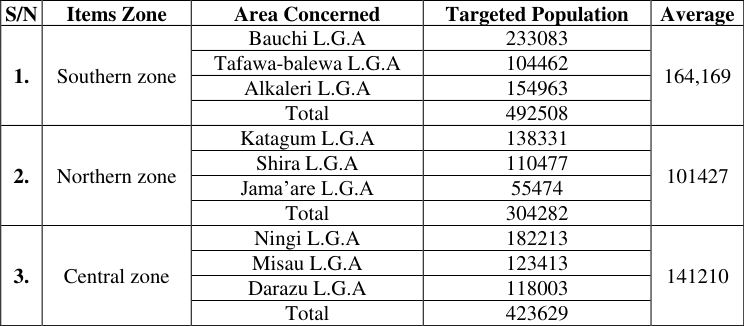 Table 1
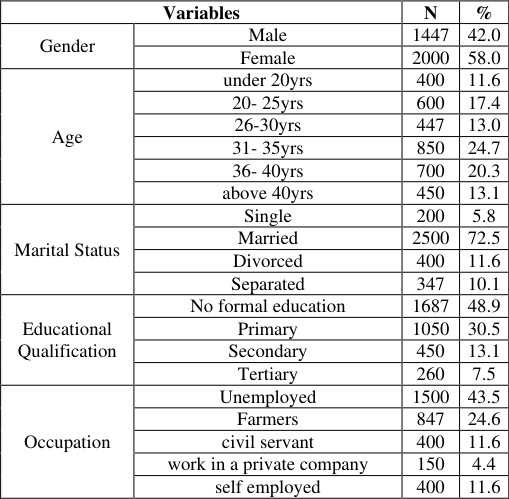 Table 2
 Table 5
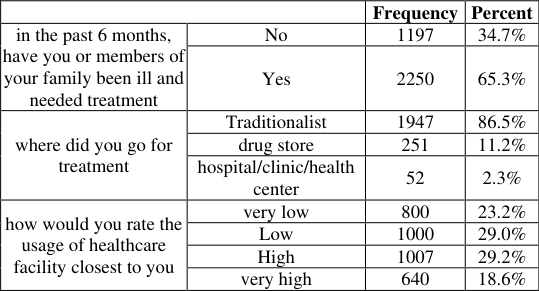 Table 3
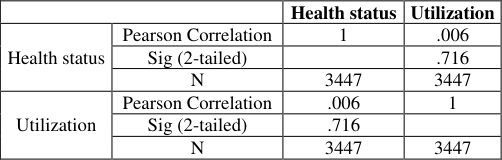 Table 4
Introduction
Health Care is very vital for human existence. It is the act of maintaining or improving of one's health through the prevention, diagnosis and treatment of illness. Healthcare of an individual is usually managed by health practitioners in facilities provided by the government or entrepreneurs who are willing to invest in the health sector. The choice of health facility varies from person to person and from place to place. It also depends on factors predisposed to the persons to use the facilities [1] . As a population of a country ages, there is the increase in diseases and health conditions which demands an increasing use of health care services. However, the trend is that a larger percentage of the population rather resort self-medical care than use the hospital facilities around them. It was stated that the utilization of health services in developing countries is not a satisfactory, owing to the importance in public health policy issues of any country [2] . The list of some factors that are associated with utilization of health services; among the factors listed are health status of the individuals and their financial status [3] . The health status of an individual involves his/her wellness or otherwise. The later may involve metabolic diseases or diseases caused by microbes. Metabolic diseases include diabetes, obesity, kidney failure, heart diseases etc., while diseases caused by microorganisms include bacterial, fungal, protozoal and viral diseases. Thus, the health status of an individual can be a barrier to the utilization of health care services. Financial Barrier has been a major hindrance of usage of health care services [4] . It was also stated that access to health care is tied to the affordability of the health insurance. Financial [4] . Barrier to health care is usually found among the low income earners who are uninsured that the high income earners [5] . In a 2013 commonwealth survey, most countries ranks low when it comes to access to health care because of the large number of insured people [6] . In a study conducted by on the importance of Medical Insurance to access to proper health care, it was found that people who lack insurance coverage have limited access to health care than those who don't, and a bulk of the adult who needed medical care could not afford it. They found that only 20% of the adults in the study area were able to conveniently afford their medical bills without insurance [7] . In a study carried out from a period of 2004-2014, uninsured adults were 4-5 times more likely than those who had private coverage and 1.5-3.0 times more likely than those who had medical insurance to report difficulty in medical care and prescription access. For adults who had insurance from government, medical care access problems were stable until 2008 and then decreased through 2014 [8] . Some researchers observed that the financial burden of paying for health services is analyzed at the household level. It is measured as a share of out-of-pocket health payment in a household's total capacity to pay. At any given period of time there always are some households that have no spending on health care [9,10] , some researchers found that average monthly salary showed a high positive correlation with utilization of dental services. They found that if the average monthly salary were reduced, a great number of patients would reduce their dental services sought for in the health centers. They therefore concluded that a low salary appears to discourage patients from seeking medical and dental services in Japan [11] . A study found that health status is a very strong determinant of the type of healthcare services preferred by older adults Ghanaians found that People with higher income preferred the private health facilities, while those with lower income rather use the traditionalist or public hospitals. Another study revealed that income correlates highly with risk factors for chronic disease: noting that people, who have lower family income have higher rates of heart disease, stroke, diabetes, or hypertension, and have four or more common chronic conditions. Accordingly, People in families whose income makes them fall on the poverty level are more likely to be obese and to smoke cigarettes than wealthier people. Adults who live in poverty are also more likely to have self-reported serious psychological distress, as measured by a series of questions about their perceived mental health. They stated that Economic resources (such as income and wealth) enable access to material goods and services, including health-care services. A study found that people with low income were more likely to delay in receiving medical care due to the cost than those with higher income [12] . They therefore concluded that the health-care needs of those under the poverty level are still being unmet because of their less utilization of medical facilities. The intensity of illness significantly affects utilization of health care services. The higher the severity or number of ill people, the higher the degree of utilization of services. The way people report their health status is directly related to their use of medical services [2] . In a study undertaken in southern Brazil, the probability of visiting a doctor by people with poor health is 30% higher than those who reported excellent health [14] . It has been discovered that the most significant predictor for health care utilization is the individual's health status. Health status had been determined to be a significant predictor for prescription drug use. Prescription drug insurance has also been shown to increase pharmacy utilization, but its impact on overall health care costs has yet to be determined 15 . Persons with disabilities often have health and medical needs stemming from their disability or from an underlying condition, cooccurring conditions, or common risk factors. Therefore, they may have greater need for both general and specialty care than adults without disabilities. They found that in general, adults with a disability reported more barriers to care than adults without a disability [16] . Generally, in Nigeria, it has been found that people hardly visit health facilities unless they are seriously ill, as majority believes that seeking health care in health facilities is too costly. In situation of illness, a utilization level of 76.7% [17] , a 77.8% level of utilization of health facilities [18] . A study revealed that only 50% of the respondent utilized health care facilities when they are ill 19 . This study therefore seeks to examine the factors that promotes the utilization of healthcare services by rural dwellers residing in Bauchi State, Nigeria. Several studies have shown that rural communities have higher mortality rate and increased financial burden caused by chronic diseases, limited financial reimbursement for healthcare costs, a higher percentage of people at the poverty level, demographic aging and de-population [12] . Generally Health service providers in rural areas struggle to maintain primary health services because of lack of all the basic amenities needed in the health care centers. Rural communities' dwellers suffer a higher mortality from illness, since they are without much opportunity and time to learn about health, residents of rural areas tend to lack awareness and health literacy. The difficulties of travelling to clinics in cities make it harder for individuals to maintain their health, and they tend to visit health services only irregularly. The study therefore seek to fill by gap by asking: what are the factors that affect the utilization of health care services by inhabitants of rural areas of Bauchi State?
Research Questions
The following research question were raised to guide the study
Sample Size and Sampling Technique
Using a simple random sampling technique, 3 local government areas were selected from each senatorial district; the LGAs selected are presented in Table 1. A total of 3447 respondents were sampled for the study. The procedure used is the simple random sampling procedure.
| S/N | Items Zone | Area Concerned | Targeted Population | Average |
|---|---|---|---|---|
| 1. | Southern zone | Bauchi L.G.A | 233083 | 164,169 |
| Tafawa-balewa L.G.A | 104462 | |||
| Alkaleri L.G.A | 154963 | |||
| Total | 492508 | |||
| 2. | Northern zone | Katagum L.G.A | 138331 | 101427 |
| Shira L.G.A | 110477 | |||
| Jama’are L.G.A | 55474 | |||
| Total | 304282 | |||
| 3. | Central zone | Ningi L.G.A | 182213 | 141210 |
| Misau L.G.A | 123413 | |||
| Darazu L.G.A | 118003 | |||
| Total | 423629 |
Table text extracted from the original PDF; superscript letters are shown inline. The original table image is below.
View original table image
Research Instrument
A well-structured questionnaire was used to elicit data for the study. The Instrument Titled "Questionnaire on Factors
Affecting the utilization of Healthcare Facilities in Rural Areas. The Instrument is divided into section. The First Section (Section A) dealt with the demographic and general information of the respondents. Variable such as age, gender, educational level was addressed in this section. The Second Section (Section B) addresses the living condition of the respondents.
Variables addressed here are ownership of house, type of toilets used, access to safe drinking water, etc. The Third Section (Section C) addresses the health utilization of the health centers, while the Fourth Section (Section D) dealt with the various factors that can influence the respondent use of health facilities around them.
Reliability of the Research Instrument
The reliability index was determined using Cronbach alpha test of internal consistency. The instrument was reliable at an alpha value of 0.861.
Method of Data Collection
The questionnaires were administered to adults in rural areas in Bauchi State. The questionnaires were administered by the researcher and some research assistants that were trained to evaluate them and interpret the content of the questionnaire to the respondents in the local dialect (for those who cannot read or understand English Language).The questionnaires were collected personally by the researcher and assistants immediately the questionnaires were filled by the respondents. All questionnaires collected from the respondents were received by the researcher, and data retrieved from the questionnaires were collated for analysis.
Method of Data Analysis
The data from the study were presented using descriptive statistics of mean and percentages for the research questions.
The analysis was carried out using SPSS version 25.
Implication of the Study
The result of the research work will help enlighten government on how to tackle problem that hinders utilization of Healthcare Facilities in Bauchi state and the country at large.
Results
The result obtained from the data analyses is presented in tables and figures. The demographic representation of the respondents was first presented and thereafter the research questions answered.
Demographic variables of respondents
The respondents' gender, age, marital status, educational status and occupation. The percentages of respondents based on these classification is presented in Table 2. Table 3 shows that in the rural areas of Bauchi State, out of the 3447 respondents, 65.3% (2250) of them stated that in the past six months they were sick and actually need treatment. But when asked where they went for treatment, only 2.3% (52) went to the hospital for treatment. 11.2% (251) got drugs form the drug shops around and 86.5% (1947) visited the traditionalist. The usage of the closet hospital or health care center was rated by the respondents. 23.3%(800) rated the usage very low, 29%(1000) rated it low, 29.2% (10070 rated the usage of the health center closet to them high while only 18.6% (640) respondents rated its usage very high. From the Table 3, the utilization of health care centers in Bauchi State is very low among the rural dwellers.
| — | — | Frequency | Percent |
|---|---|---|---|
| in the past 6 months, have you or members of your family been ill and needed treatment | No | 1197 | 34.7% |
| Yes | 2250 | 65.3% | |
| where did you go for treatment | Traditionalist | 1947 | 86.5% |
| drug store | 251 | 11.2% | |
| hospital/clinic/health center | 52 | 2.3% | |
| how would you rate the usage of healthcare facility closest to you | very low | 800 | 23.2% |
| Low | 1000 | 29.0% | |
| High | 1007 | 29.2% | |
| very high | 640 | 18.6% |
Table text extracted from the original PDF; superscript letters are shown inline. The original table image is below.
View original table image
| Variables | — | N | % |
|---|---|---|---|
| Gender | Male | 1447 | 42.0 |
| Female | 2000 | 58.0 | |
| Age | under 20yrs | 400 | 11.6 |
| 20- 25yrs | 600 | 17.4 | |
| 26-30yrs | 447 | 13.0 | |
| 31- 35yrs | 850 | 24.7 | |
| 36- 40yrs | 700 | 20.3 | |
| above 40yrs | 450 | 13.1 | |
| Marital Status | Single | 200 | 5.8 |
| Married | 2500 | 72.5 | |
| Divorced | 400 | 11.6 | |
| Separated | 347 | 10.1 | |
| Educational Qualification | No formal education | 1687 | 48.9 |
| Primary | 1050 | 30.5 | |
| Secondary | 450 | 13.1 | |
| Tertiary | 260 | 7.5 | |
| Occupation | Unemployed | 1500 | 43.5 |
| Farmers | 847 | 24.6 | |
| civil servant | 400 | 11.6 | |
| work in a private company | 150 | 4.4 | |
| self employed | 400 | 11.6 |
Table text extracted from the original PDF; superscript letters are shown inline. The original table image is below.
View original table image
Research question Two
How does health status influence the utilization of health care services by rural dwellers of Bauchi State? Health status of a respondent is one of the need factor that could necessitate the utilization of health care center, but table 4.4 shows that in the rural areas of Bauchi State, the health status of the respondents did not aid the utilization of health care centers (r = 0.006).
| — | — | Health status | Utilization |
|---|---|---|---|
| Health status | Pearson Correlation | 1 | .006 |
| Sig (2-tailed) | .716 | ||
| N | 3447 | 3447 | |
| Utilization | Pearson Correlation | .006 | 1 |
| Sig (2-tailed) | .716 | ||
| N | 3447 | 3447 |
Table text extracted from the original PDF; superscript letters are shown inline. The original table image is below.
View original table image
Research question Three
How does financial status influence the utilization of health care services by rural dwellers of Bauchi State? Table 5 shows that insurance is positively correlated with health care centers utilization (r = 0.009). But income (r = -0.017) and occupation (r = -0.022) are negatively correlated with utilization of health care facilities among rural dwellers of Bauchi State. The financial status of the respondents is not significantly correlated with utilization of healthcare services in Bauchi State.
| — | Utilization (r) |
|---|---|
| Insurance | 0.009ns |
| Income | -0.017ns |
| Occupation | -0.022ns |
Table text extracted from the original PDF; superscript letters are shown inline. The original table image is below.
View original table image
Discussion
The utilization of health care centers in Bauchi State is very low among the rural dwellers (about 14%). On the contrary, a study on the utilization of health and medical health care seeking behaviour and unmet health needs in rural areas of Kenya, found that about 70% to 80% of the people living in rural areas of Kenya who were sick utilized the formal healthcare facilities over informal services 24 . Another study revealed that about 76.7% of the household members who reported been ill, sought healthcare in a health facility 17 . They added that about 94% of those who sought healthcare in health facilities visited the dispensary -level facilities, while the remaining 6% sought health care in hospital and clinics in the sub-counties. It has been found that generally in Nigeria, people hardly visit health facilities unless they are seriously ill, as majority believes that seeking health care in health facilities is too costly. A study in South-Western Nigeria revealed that only 50% of the respondent utilized health care facilities when they are ill. The variations observed may be due to different study locations and state government policies 17 . Health status of a respondent is one factor that could necessitate the utilization of health care center, but the findings in the present study however showed that in rural areas of Bauchi State, the health status of the respondents did not aid the utilization of health care centers (r = 0.006). Some reports also showed however, that the intensity of illness significantly affects utilization of health care services. The higher the severity or number of ill people, the higher the degree of utilization of services, also, the probability of visiting a doctor by people with poor health is 30% higher than those who reported excellent health 2,14 . The study further revealed that the financial status of the respondents which may be evident in the insurance, occupation as well as income was not significantly correlated with their utilization of health facilities in the study location. In this study, insurance is positively correlated with health care centers utilization. But income and occupation are negatively correlated with utilization of health care facilities among rural dwellers of Bauchi State. It has been observed that the factors such as medical insurance, income, proximity, free health care, and influence from third party are all significantly correlated with healthcare facilities utilization 20 . The variation between this report and the present study may be as a result of variation in study area. In a study conducted on health insurance and the utilization of health care, it was found that health insurance increased access to health care and utilization of health services 25 . This report agrees with the findings in the present study. In Ghana however, a study found that those without insurance preferred the pharmacy and traditional treatment 12 , this contradicts the findings in this study.
Conclusion
Based on the outcome of this study, and the discussions made, the following conclusions are drawn:
1. The utilization of health care centers in Bauchi State is very low among the rural dwellers. 2. In the rural areas of Bauchi State, the health status of the respondents did not aid the utilization of health care centers. 3. Insurance can influence the utilization of health care services positively, while occupation.
Recommendations
Based on the conclusions drawn in this study, the following recommendation has become necessary: 1. The Government of Bauchi, as well as none governmental organization must do a lot to enlighten the residence in the rural areas of the state on the importance of utilizing health care services, and the consequence of neglecting to do so, so as to encourage more patronage of the health facilities and thereby reduce mortality. 2. Sick people in the rural areas should be discouraged from going to traditionalist, but to visit the health care centers, as this will help reduce mortality. 3. Since health Insurance is a factor that influence the utilization of health care services, then the state government should make such readily available for the populace to access, particularly the government workers in the rural areas. This can be achieved through policy making and execution with subsidy.
References
16 in the original paper- Girma F, Jira C, Girma B. Health services utilization and associated factors in Jimma zone, South West Ethiopia. Ethiop J Health Sci. 2011;21(86):85-94.
- Anderson RM. "Revisiting the behavioral model and access to medical care: does it matter?. Journal of Health and Social Behaviour. 1995;36:1-10.
- Suires D, Anderson C. US health care from a global perspective: Spending, use of services, prices, and health in 13 countries. Issue Brief Commonwealth Fund. 2015;15:115.
- Davis K, Ballreich J. Equitable access to care-how the United StatesEconomou A , Nikolaou A, Theodossiou I (2008) Socioeconomic status and health-care utilization: a study of the effects of low income, unemployment and hours of work on the demand for health care in the European Union. Health Serv Manage Res. 2014;21(1):4059.
- Schoen C, Osborn R, Squires D, Doty MM. Access, affordability, and insurance complexity are often worse in the United States compared to ten other countries. Health Affairs (Millwood). 2013;32(12):2205-2215.
- Babazono A, Kuwabara K, Hagihara A, Yamamoto E, Hillman A. Does income influence demand for medical services despite Japan's "Health Care for All" policy? (Abstract). Int J Technol Assess Health Care. Winter. 2008;24(1):125-30.
- Saeed BII, Yawson AE, Nguah S, Agyei-Baffour P, Nakua E, Ayesu E. Effect of socio-economic factors in utilization of different healthcare services among older adult men and women in Ghana. BMC Health Services Research. 2016;16(1):390. DOI 10.1186/s12913-016-1661-6
- NCHS. Health, United States. In Health, United States, 2015: With specialfeature on racial and ethnic health disparities. Hyattsville, MD: National Center for Health Statistics (US); c2016.
- Cifaldi M. Factors affecting health services utilization in the medicare population: Would providing prescription drug coverage to medicare recipients affect their use of health care resources?, in Irina Farquhar, Kent Summers, Alan Sorkin (ed.) Investing in Health: The Social and Economic Benefits of Health Care Innovation (Research in Human Capital and Development, Emerald Group Publishing Limited. 2001;14:119-141.
- MACPAC (Medicaid and CHIP Payment and Access Commission).0 Medicaid access in brief: Adults' experiences in obtaining medical care. Washington, DC: MACPAC; c2016. https://www.macpac.gov/wp content/uploads/2016/11/Adults-Experiences-in-ObtainingMedical-Care.pdf (accessed November 19, 2018).
- Ngugi AK, Agoi F, Mahoney MR, Lakhani A, Mang'ong'o D, Nderitu E, et al. Utilization of health services in a resource-limited rural area in Kenya: Prevalence and associated household-level factors. PLoS ONE. 2017;12(2):e0172728. https://doi.org/10.1371/journal.pone.0172728
- Ministry of Health, Kenya. Kenya Demographic and Health Survey, 2004, 390.
- Onyebeho NG, Amrazigo UV, Njepuome NA, Nwaorgu OC, Okeibuno JC. Perception and utilization of public health services in Southeast Nigeria: Implication for health care in communities with different degrees of Urbanization. International Journal for Equity in Health. 2016;15(1):12. https://doi.org/10.1186/s12939-016-0294-z
- Fang P, Han S, Zhao L, Fang Z, Zhang Y, Zou X. What limits the utilization of health services among the rural population in the Dabie Mountains-Evidence from Hubei province, China? BMC Health Services Research. 2014;14(379):1-7.
- Bauchi State Government. Bauchi State 2012-2016, Public Expenditure Review, 2018, 28.
- Kish L. Survey sampling. New York, J. Wiley, 1965, 643.