
Research article · 2022 · Full text
International Journal of Biology SciencesMorphometric characteristics, sexual dimorphic characters, length-weight relationship and feeding behavior of Chitala chitala from river Indus, Punjab, Pakistan
Volume 4(2) · Pages 125–131 · DOI: 10.33545/26649926.2022.v4.i2b.90 ↗
Research areasFish Biology and Ecology StudiesFish Ecology and Management StudiesAquatic Ecosystems and Biodiversity
Abstract
Author-writtenChitala chitala commonly known as clown fish is an important fresh water fish found worldwide. A study on the morphometric characteristics, length-weight relationship and feeding habit from stomach and gut analysis of C. chitala was conducted on 32 specimens collected from different zones of River Indus, Pakistan during the month of January and April. These samples were examined in Fisheries lab, Zoology department, Ghazi University, Dera Ghazi Khan. Various external and internal morphometric characters were studied to know their correlation with reference to size (TL and W). Correlation coefficient (r) value (0.98) showed high significant relationship between total length and wet weight, while growth pattern was near to isometric as value of ‘b’ being 2.86. The interrelationship of total length to the eye diameter (0.63), length of dorsal fin (0.44), pectoral fin length (0.69), pre orbital length (0.59), IOD (0.36), DFB(0.53), PFB (0.47) show poor correlation to total length (p>0.05). All other external parameters are highly significant to the total length (p
Summary
Source-checkedPlain-language reading of the full paper, prepared with AI and checked against the text. Each point links to the authors' own words.
Why it matters
- Chitala chitala, also known as the clown fish, is a commercially significant and high-value freshwater fish found globally in benthic environments. View evidence ↗
The question
- The study aimed to determine the growth patterns, overall condition, and morphometrics of C. chitala in its native habitat to aid in its conservation. View evidence ↗
What they did
- Researchers collected 32 specimens of C. chitala from the Indus River between January and April 2021, with weights ranging from 90 g to 752 g and lengths from 20 cm to 47.80 cm. View evidence ↗
- The study measured 21 external morphometric characters and performed laboratory dissections to obtain internal morphometric measurements. View evidence ↗
- To analyze feeding behavior, the entire gut from the esophagus to the anus was removed to measure its length and weight. View evidence ↗
What they found
- The growth pattern was found to be negatively allometric, with a regression coefficient (b) of 2.86, which is below the isometric value of 3. View evidence ↗
- There was a highly significant relationship between the total length and wet weight of the fish, indicated by a correlation coefficient (r) of 0.98. View evidence ↗
- Certain morphometric traits, including eye diameter (0.63) and inter orbital distance (0.36), showed poor correlation with the total length of the fish. View evidence ↗
- Dietary analysis revealed that fish and prawns were the primary food sources, with fish making up approximately 25% of the food content. View evidence ↗
- Other significant dietary components included mollusks (18%), insects (15%), crustaceans (10%), chlorophyceae (8%), and rotifers (4%). View evidence ↗
- Sexual dimorphism was observed in size, with males generally being smaller than females. View evidence ↗
- The condition factor (K) was less than one, suggesting that pollution or insufficient food in the Indus River is hindering the ideal growth of the species. View evidence ↗
What it means
- The authors conclude that C. chitala is a carnivorous species and exhibits sexual dimorphism where males are smaller than females. View evidence ↗
- The authors state that because the species is categorized as near threatened, serious attention is required for its conservation. View evidence ↗
- The authors recommend further research into the feeding behavior and length-weight relationships of C. chitala to improve population management and conservation. View evidence ↗
Visual summary
1 visualsIllustrations explain the paper; they do not show study data.
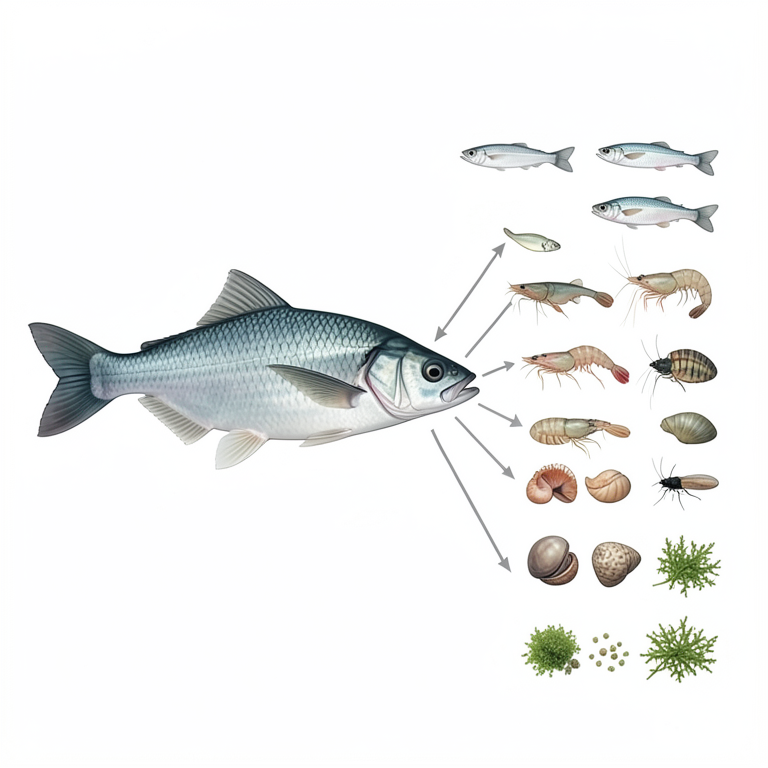
Dietary Composition of C. chitala
AI-generated conceptual illustration (Asian featherback fish (Chitala chitala)). It explains the idea and does not show study data.
View source evidence ↗Figures & tables
From the original paper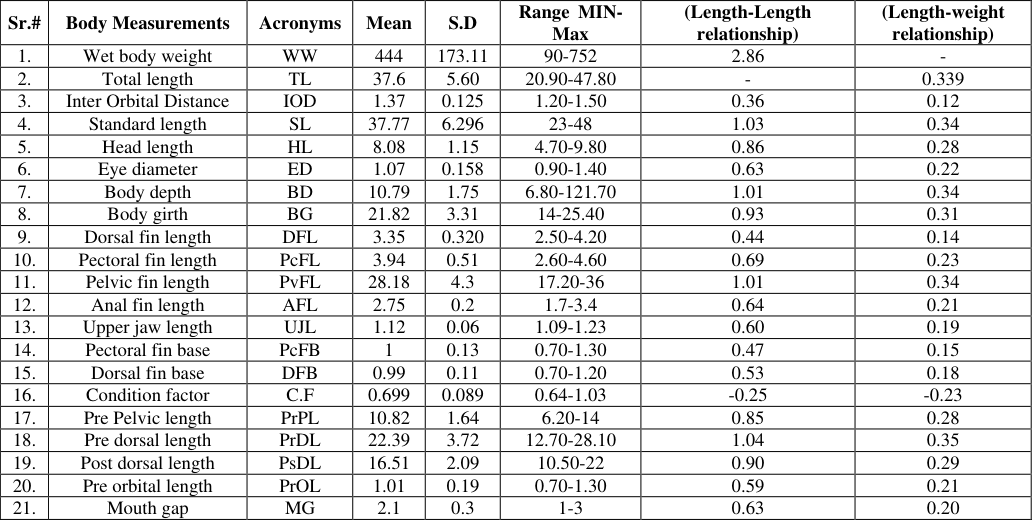 Table 1
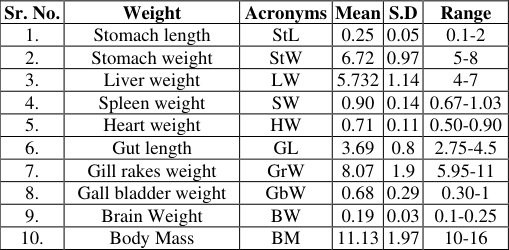 Table 2
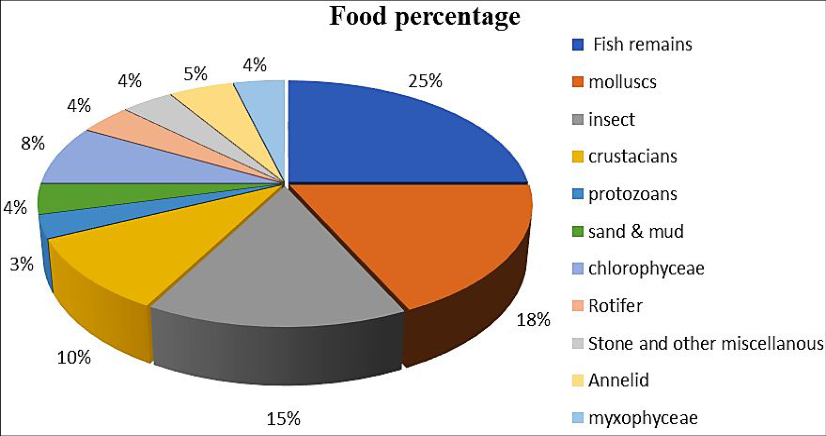 Figure 1
Introduction
Fish are most numerous vertebrate group on the planet, accounting for half of all vertebrate species (Rafique and Khan, 2012) [42] . Approximately 33,000 fish species have been discovered in marine, brackish and freshwater environments around the world (Di Pinto et al., 2015; Froese and Pauly, 2015) [14,18] . In Pakistan, 531 fish species have been identified, with 233 being freshwater and the remaining 298 being marine (Ghouri et al., 2020) [19] . Chitala is a genus of fish of the family Notopteridae. Based on Fishbase (2019), there are 6 species of Chitala, namely Chitala lopis, C. blanci, C. borneensis, C. chitala, C. hypselonotus and C. ornata. They are native to freshwater in South and Southeast Asia, and commonly known as the Asian knifefishes or featherbacks (Anjarsari et al., 2021) [3] . Chitala chitala is one of the significant freshwater fish found worldwide in benthic environments is considered one of the most commercially important and high-priced delicacies (Haji Muhammad et al., 2017; Hussain et al., 2015) [33,23] . This species can be found in deep rivers, reservoir, beels and ponds in Pakistan, Myanmar, India, Bangladesh, Thailand, Sri Lanka, Indonesia and Nepal (Mirza, 2004, Mitra et al., 2015) [30,31] . This species is primarily carnivorous as well as insectivorous, but it also feed on planktons and crustaceans and can occasionally engage in cannibalism. Fish can attain maximum length up to 122 cm with maximum body weight of 14 kg (Sarkar et al., 2006a) [47] . Chitala chitala is classified as "Near Threatened" due to a lack of understanding of its biology, as well as falling stocks of this population in natural waters due to overfishing, over exploitation, pressure on their habitat and contamination (Khan, https://www.biologyjournal.net/ [26, 49] . There are few studies on the length-weight relationship, morphometric indices and feeding habits of the Pakistani fish (Chitala chitala). (Hussain, et al., 2015; Mitra et al., 2017) [23,32] . Length and weight relationship of fish has much significant and used commercially for fishery assessment (Haimovici and Velasco, 2000; Ali et al., 2000; Fafioye and Oluajo, 2005) [1,16] . This relationship is applicable in defining a population. All fish in a certain length group are measured and assigned a predicted average weight. When a large number of live fish are sampled, this is typically faster and more appropriate than weighing them individually. Many authors have worked on significance of relationship between length and weight of various fish species ( [50,8,11,23] . The study on this relationship provide information about mortality rate, life duration, growth as well as production (Diaz et al., 2000; Fafioye and Oluajo, 2005) [16] . Fish morphology has traditionally been the principal source of data for taxonomy and evolutionary investigations (Rawat et al., 2017) [43] . Morphological measurements, meristic counts, shape and size provide information that can be used to determine taxonomic rank (Ihssen et al., 1981) [24] . Individual well-being and probable differences between independent unit populations of the same species can be assessed using morphometric relationships among various body sections of fish (King, 2007) [27] . Fish are extremely sensitive to changes in their environment and swiftly react by modifying their morphometrics (Hossain et al., 2010) [22] . Information for taxonomic studies, morphometric examinations of fish and the investigation of statistical relationships between them are required (Narejo, 2010; Brraich and Akhter, 2015) [38,7] . Feeding is the most important activity in a fish's life cycle (Royce, 2013) [45] . Fishes have a more diverse diet than any other vertebrate, and they exhibit significant specializing in the architecture, function and food processing of the mouth and stomach behavior to optimize feeding behavior as part of their survival strategy. The diet and dietary patterns of fish are crucial and necessary for growth of fish (Dewan, 1979) [13] . The food item % composition contained in the stomach indicated the eating patterns of fish, as did the length of a fish's or any other animal's gut. The gastrointestinal system's stomach content gives nutrition information, dietary patterns and preferential feeding, in fish (Arthi et al., 2011) [4] . Fish populations in both fresh and marine habitats are steadily declining in many regions of the world due to a variety of factors. Furthermore, industrial pollution, illicit fishing, massive deforestation, global warming and the river's westward movement pose serious risks to the fish species of the Indus River. Fish variety and distribution patterns in the Indus River and its drainage system still need to pay attention (Muhammad et al., 2017) [33] . For success in maintaining and conserving the natural fauna to the desired levels, studies of threatened as well as commercially valuable animals require special attention (Hussain et al., 2015) [23] .
The goal of present study was to determine the morphometrics, overall condition and growth pattern of C. chitala in their native home in order to conserve and appraise them. Major Morphometric proportions have been examined in this work to clarify taxonomic uncertainties in the case of C. chitala. Based on the contents of the fish stomach and the length of the alimentary canal as measured from the river Indus, Pakistan, the diet, feeding behavior an gut analysis of the fish were also determined. (Student) The research will aid taxonomists in the identification of suitable fish species with superior morphological characteristics and growth potential for excellent aquaculture output, and improve fisheries research management. It will important key in the systematic study of ichthyology.
Study Area
Different sites of Indus River near district Layyah of Punjab province (Pakistan) were selected as site of study. These sites of Indus river provides a huge and diverse macrohabitat in the form of off shoots, side streams, shallow waters, deep waters, clear stagnant water in hands, fast flowing water with high oxygen content, side water with low oxygen due to vegetation decomposition, shallow water with submerged vegetation, seepage water on sides to variety of fish fauna.
Material Method
A total of 32 samples of fish Chitala chitala ranging from 90 g to 752 g in body weight, 20 cm to 47.80 cm in total length were collected from January 2021 to end of April 2021. Sample were collected in early morning with the assistance of local fishermen who applied method of traditional fishing by using equipment such as cast nets with mesh sizes of 2 cm × 2 cm and 6 cm × 6 cm. 21 external morphometric characters were identified and measured samples were then dissected out in the laboratory from the abdominal cavity for internal morphometric measurement. Sartorius weighing balance was used to measure the weight of internal morphometric parameters. For the study of gut contents, the gut was removed intact from the esophagus to the anus and its length (GL) and weight (GW) were measured. The degree of stomach fullness and the degree of digestion were determined during the analysis. The gut section isolated was put in a Petri plate that contained distilled water and excised to take out the stomach contents with tweezers. The stomach contents were preserved in 70% alcohol for the assessment of prey species. Food items were identified and examined (magnifications: 6X to 400X) and counted to estimate their numerical involvement in the fish food. A log-log plot of data have been made for lengthweight relationship (LWR), outliers were identified and eliminated and the regressions has done. Using the linear transformation as proposed by Wootton (1990) [52] . Dimorphic characters of male and female Chitala chitala are being summarized after Chonder (1999) [9] and Sarkar et al.
(2006b) [48] . Statistical correlation between total length and body mass of the fish derived. To describe a fish's level of fitness or health following equation, given by Froese (2006) [17] , was utilized in this work to estimate the condition factor (K);
The data collected was analyzed by using percentage, mean and standard deviation. Regression analysis and descriptive analysis was done for morphometry and feeding habit analysis.
Results and Discussion
In fishery science, significance of length-weight relationships cannot be neglected as they are the basic indicators because they provide the knowledge about the seasonal changes in their specific environment, the physical well-being of the fish. It also determines the growth of the fish whether it is isometric or allometric because the information about the growth of the fish is considered to be an important aspect of the study of the fish population dynamics (Memon et al., 2021) [29] . Morphometric analysis is also standard approach for giving information about fish phenotypic traits, development, systemic variation, and population traits Because the length-weight connection of fish varies based on the state of life in an aquatic habitat, in fish bioecology the investigation of the length-weight association is important because it aids in a fish population, comprehending growth pattern and common good (Nagesh et al., 2004) [36] . Species of family Notopteridae are near threatened according to IUCN (Banik and Roy, 2014) [5] so its morphometric measurement and its length-weight relationship are most important to know its importance in fisheries.
A total of 32 samples of Chitala chitala were collected during study period from Indus River, Layyah, Pakistan. 21 external morphometric characteristics measured and their relations with wet total weight and with total length ranged 0.70-0.99 and 0.66 to 0.99 among the characters were compared respectively. The growth rate of different body regions in comparison to total length (TL) and wet mass of body (W) was studied by regression analysis, applying the formula: Y = a + bX and degree of interaction (r) between total length, was determined using the remainder of the body's characteristics by using SPSS 25 Spleen weight SW 0.90 0.14 0.67-1.03 5.
Heart weight HW 0.71 0.11 0.50-0.90 6.
Gut length GL 3.69 0.8 2.75-4.5 7.
Gill rakes weight GrW 8.07 1.9 5.95-11 8.
Gall bladder weight GbW 0.68 0.29 0.30-1 9.
Brain Weight BW 0.19 0.03 0.1-0.25 10.
Body Mass BM 11.13 1.97 10-16
Chitala chitala, establishing it as a strictly carnivorous species prioritized molluscs, insects and fish in its diet. In Chitala chitala, on the buccal cavity's dorsal wall, the presence of a sense organ aids in the identification of animal food, predatory behaviour is confirmed by the presence of a toothed jaw. Chitala chitala's greater relative mouth gap height and width aided it in engulfing larger prey species. The presence of molluscan remains and detritus in the gut suggested that Chitala chitala may be a benthic feeder. Chitala chitala's alimentary canals were revealed to be slightly less coiled, muscular, short, and bag-shaped. About 25% of the food was fish for Chitala chitala. Fish and prawns were the most popular foods for this fish. Small fishes about (2-3 mm) were found in semi-digested and entirely digested states and just the vertebral column was found in some stomach samples. After fish food mollusc's food were noticed about 18%. From gut analysis, this fish feed on insect about 15% of its food. Its food also includes crustaceans (10%), rotifer (4%) and chlorophyceae (8%).
Other food preferences include protozoans (3%), sand and mud (4%), stone and other miscellaneous (4%), myxophyceae (4%) and annelids (5%). Sexual dimorphic characters as size and coloration of body, appearance of urinogenital papillae and gonads were distinguished. Males are generally smaller in size than females. The ground color of the body of males is usually silver white depending upon habitat. During the breeding season, the male Chilata shows bright red color at the base of paired and anal fins female does not show any marked coloration. The abdomen of female is bulged externally and could be seen prominently disposed as compared to male. The urinogenital papilla is conical shaped, reddish, thin, muscular, hard and pointed. They shows diffused vent. In females the urinogenital papilla is fleshy, thin walled, stouter, broad, less pointed than the males and may not be tipped with red color. Fully mature female shows freely oozing ova. The testis in male are single and unilateral in position. The ovary in female is oval shaped and single lobed lying in the body cavity.
In the regression analysis a total of 21 morphometric characters were included. A parallel study about morphometric and length-weight relation of Notoptrus notoptrus which is a member of the same family is presently conducted by Bano et al., (2015) [6] . The mean value of parameters in the present study is closely related to that morphometric study of Chitala chitala in India (Banik and Roy, 2014) [5] . It is pertinent to mention that only a few studies are available on the identification and length-weight relationship. The "b" value can be used to represent fish growth in statistical analysis. For most fishes, reported by Froese, (2006) [17] the values of b were inside the bounds 2.5-3.5. In the present study, the b value is within range. As a consequence, we regarded our findings has a highly significant calculation for the LWR. When the body mass and length of fish increase equally the growth will be isometric (Ricker, 1975). When the "b" value is larger than 3, it implies positive allometry and when it is less than 3, it shows negative allometry (Wootton, 1990) [52] . In the present study b value for Chitala chitala is b = 2.86. Our result is similar to Chandran et al., 2020 [8] who reported "b" values in various sites across various rivers at different time periods were significant (but not different from 3), indicating a stable isometric growth, over the years. This reflects the stability in biological behaviour of Chilata chitala in these rivers over varying conditions. Our result also coincides with (Hussain et al., 2015) [23] who reported the growth coefficient (b) value of length-weight relationships provides useful information on fish growth.
The study shows, b = 2.61 that indicated negative allometric growth pattern and specimens became lighter for their length. The length-weight regression's estimated a and b parameters were used to determine the anticipated standard weight for each observed length. The length-weight relationship indicates that populations of Notoptrus notoptrus examined by Naeem et al., (2010) [34] were 2.83.
In the present study b value for Chitala chitala is b = 2.86 which is negative allometric and high than Notoptrus notoptrus. Our result is contradictory to the finding of Sarkar et al., 2009 [49] who reported the length-weight relationship of pooled data of males and females from 10 different geographical locations indicated that the value of b was almost 3. When the fish's average weight doesn't rises proportionately to the length cube, the condition factor may fluctuate with length. Condition factor (K) is an indicator of favorable environmental supplies. According to the Nikos (2004) findings, The 'K' of well-fed fish was equal to or more than 1, but fish that are malnourished having a lower 'K' than 1.
Another inquiry conducted by Naeem et al. (2011) [35] , shows in Oreochromis nilotica condition factor showed a very really important relationship with mass of body and low significant relation with total length. The value of 'K' in this investigation is less than one, indicating that available fish feed may be insufficient. Its size does not expand in synchrony with its weight or length. Our study coincides with the study conucted by Hussain et al., (2015) [23] who reported the K value of the sampled specimens from the polluted site ranged from 0.65 to 0.78 g/cm3 and may indicate disturbances in fish physiology, biochemistry and reproduction also reported by Lohner et al. (2001) [28] and Hedayati and Safahieh (2012) [21] . These changes in k value in different fish species are due to different factors like due to a transition in the cycle of spawning (Narejo et al., 2002) changes in environmental factors (Doddamani et al., 2001) [15] or maybe due to pollution (Devi et al., 2008) [12] . So at the river Indus due to inadequate food availability or pollution this species experiences difficulty in their ideal growth. Due to these factors, these fish are categorized as near threatened species by IUCN and serious attention are required towards this for its conservation. Few studies are available regarding C. chitala fish food studying its gut contents and stomach analysis (Alikunhi, 1957; Das and Moitra, 1963; Sharma, 1964) [2,10,51] . Due to its relatively large mouth gap and small gut length relative to total length indicates that C. chitala is a carnivore fish. Its gut length is less than 1.5cm in relative proportion to the total length of fish. The current findings revealed that highest feeding intensity occurred during the premonsoon and lowest during the monsoon, which might be linked to a drop in food supply. C. chitala's food preferences, as observed in this study, were comparable to those of catfishes in general. Gupta et al., (2021) [20] also confirm its carnivore nature and their studies shows that C. chitala gut length is relatively small to the total length. Similar work was done by Indian researchers (Gupta et al., 2021; Sarkar and Deepak, 2009) [20,49] at different sites and identifies the feeding habit of that fish. Similar work on feeding habits on many carnivores and omnivore fish species in Pakistan done by many researchers (Narejo et [37,25,38,41] None of them worked on feeding habit of C. chitala in Pakistan in the river Indus, Pakistan.
This is the first study on the feeding habit of C. chitala and conclude that C. chitala is a carnivore specie that is under pressure of food an its status is near threatened.
Conclusion
The present study is the first to report Indus Chitala chitala fish with complete morphometric description and lengthweight relationship, feeding habit, sexual dimorphic characters from river Indus, Layyah, Pakistan. Degree of correlation was significant (p<0.001) between weight and total length but value of b (regression coefficient) did not correspond to the optimum slope value which is negative allometric. Relationship between overall length and the lengths of various components shows isometric growth with an overall length. Feeing habit analysis revealed this specie is carnivorous with male being smaller in size as compared to female. The value of 'K' in this investigation is less than one indicating due to inadequate food availability or pollution at the site of River Indus this specie experiences difficulty in their ideal growth. Due to these factors, these fish are categorized as near threatened species By IUCN and serious attention are required towards this for its conservation.
Acknowledgements
Authors are very thankful to the Chairperson, Department of Zoology, Ghazi University, Dera Ghazi Khan for providing necessary laboratory facilities.
Figures and tables from the paper
| Sr.# | Body Measurements | Acronyms | Mean | S.D | Range MIN- Max | (Length-Length relationship) | (Length-weight relationship) |
|---|---|---|---|---|---|---|---|
| 1. | Wet body weight | WW | 444 | 173.11 | 90-752 | 2.86 | - |
| 2. | Total length | TL | 37.6 | 5.60 | 20.90-47.80 | - | 0.339 |
| 3. | Inter Orbital Distance | IOD | 1.37 | 0.125 | 1.20-1.50 | 0.36 | 0.12 |
| 4. | Standard length | SL | 37.77 | 6.296 | 23-48 | 1.03 | 0.34 |
| 5. | Head length | HL | 8.08 | 1.15 | 4.70-9.80 | 0.86 | 0.28 |
| 6. | Eye diameter | ED | 1.07 | 0.158 | 0.90-1.40 | 0.63 | 0.22 |
| 7. | Body depth | BD | 10.79 | 1.75 | 6.80-121.70 | 1.01 | 0.34 |
| 8. | Body girth | BG | 21.82 | 3.31 | 14-25.40 | 0.93 | 0.31 |
| 9. | Dorsal fin length | DFL | 3.35 | 0.320 | 2.50-4.20 | 0.44 | 0.14 |
| 10. | Pectoral fin length | PcFL | 3.94 | 0.51 | 2.60-4.60 | 0.69 | 0.23 |
| 11. | Pelvic fin length | PvFL | 28.18 | 4.3 | 17.20-36 | 1.01 | 0.34 |
| 12. | Anal fin length | AFL | 2.75 | 0.2 | 1.7-3.4 | 0.64 | 0.21 |
| 13. | Upper jaw length | UJL | 1.12 | 0.06 | 1.09-1.23 | 0.60 | 0.19 |
| 14. | Pectoral fin base | PcFB | 1 | 0.13 | 0.70-1.30 | 0.47 | 0.15 |
| 15. | Dorsal fin base | DFB | 0.99 | 0.11 | 0.70-1.20 | 0.53 | 0.18 |
| 16. | Condition factor | C.F | 0.699 | 0.089 | 0.64-1.03 | -0.25 | -0.23 |
| 17. | Pre Pelvic length | PrPL | 10.82 | 1.64 | 6.20-14 | 0.85 | 0.28 |
| 18. | Pre dorsal length | PrDL | 22.39 | 3.72 | 12.70-28.10 | 1.04 | 0.35 |
| 19. | Post dorsal length | PsDL | 16.51 | 2.09 | 10.50-22 | 0.90 | 0.29 |
| 20. | Pre orbital length | PrOL | 1.01 | 0.19 | 0.70-1.30 | 0.59 | 0.21 |
| 21. | Mouth gap | MG | 2.1 | 0.3 | 1-3 | 0.63 | 0.20 |
Table text extracted from the original PDF; superscript letters are shown inline. The original table image is below.
View original table image
| Sr. No. | Weight | Acronyms | Mean | S.D | Range |
|---|---|---|---|---|---|
| 1. | Stomach length | StL | 0.25 | 0.05 | 0.1-2 |
| 2. | Stomach weight | StW | 6.72 | 0.97 | 5-8 |
| 3. | Liver weight | LW | 5.732 | 1.14 | 4-7 |
| 4. | Spleen weight | SW | 0.90 | 0.14 | 0.67-1.03 |
| 5. | Heart weight | HW | 0.71 | 0.11 | 0.50-0.90 |
| 6. | Gut length | GL | 3.69 | 0.8 | 2.75-4.5 |
| 7. | Gill rakes weight | GrW | 8.07 | 1.9 | 5.95-11 |
| 8. | Gall bladder weight | GbW | 0.68 | 0.29 | 0.30-1 |
| 9. | Brain Weight | BW | 0.19 | 0.03 | 0.1-0.25 |
| 10. | Body Mass | BM | 11.13 | 1.97 | 10-16 |
Table text extracted from the original PDF; superscript letters are shown inline. The original table image is below.
View original table image
References
50 in the original paper- Ali M, Salam A, Iqbal F. Weight-length and condition factor relationship of wild Channa punctata from Multan. Punjab Univ. J Zool. 2000;15:183-189.
- Alikunhi KH. Fish culture in India. Farm Bulletin. 1957;20:1-144.
- Anjarsari Y, Syaifudin M, Jubaedah D, Taqwa FH, Yonarta D. Phylogenetic of Featherback Chitala sp from South Sumatra Based on Cytochrome C Oxidase Subunit I (COI) Gene. In IOP Conf. Ser. Earth Environ. Sci. 2021;810(1):012-009.
- Arthi T, Nagarajan S, Sivakumar AA. Food and feeding habits of two freshwater fishes, Ompak bimaculatus and O. malabaricus of river Amaravathy, Tamil Nadu. Bioscan. 2011;6(3):417-420.
- Banik S, Roy R. Effects of climate change on the occurrence of Chitala chitala (Hamilton Buchanan, 1822) in Tripura. Int. J Fish. Aquat. 2014;2(2):249-255.
- Bano N, Salam A, Naeem M. Morphometric Study of Notopterous (Male) in Relation to Body Size and Condition Factor. Acad. Res. Int. 2015;6(6):159-165.
- Brraich OS, Akhter S. Morphometric characters and meristic counts of a fish, Crossocheilus latius latius (Hamilton-Buchanan) from Ranjit Sagar Wetland, India. Int. J Fish. Aquat. Stud. 2015;2(5):260-265.
- Chandran R, Singh RK, Singh A, Paul P, Sah RS, Kumar R, et al. Spatio temporal variations in lengthweight relationship and condition factor of two notopterids, Chitala chitala (Hamilton, 1822) and Notopterus notopterus (Pallas, 1769). Indian J Fish 2020;67(2):120-124.
- Chonder SL. Biology of Finfish and Shellfish. Howrah, India: West Bangal SCSC Publishers, 1999, 514.
- Das SM, Moitra SK. Studies on the food and feeding habits of some fresh water fishes of India. 4. Review on the food and feeding habits, with general conclusions. Ichthyologica. 1963;2:107-115.
- Deka P, Bura Gohain A. Length-Weight relationship and relative condition factor of Rita rita (Hamilton, 1822), Pangasius pangasius (Hamilton, 1822) and Chitala chitala (Hamilton, 1822) of Brahmaputra river system of Assam, India. Inter. J Fish. Aquat. Stud. 2015;3(1):162-164.
- Devi J, Nagesh T, Das S, Mandal B. Length-weight relationship and relative condition factor of Pampus argenteus (Euphrasen) from Kakdwip estuarine region of West Bengal. J Inland Fish. Soc. India. 2008;40(2):70-73.
- Dewan S. Food and feeding habits of Tilapia nilotica (L.) (Perciformes: Cichlidae), 2: Diel and seasonal patterns of feeding, Bangladesh. Bangladesh J Zool. 1979;7(2):80.
- Di Pinto A, Marchetti P, Mottola A, Bozzo G, Bonerba E, Ceci E, et al. Species identification in fish fillet products using DNA barcoding. Fish. Res. 2015;170:913.
- Doddamani M, Ramesh T, Shanbhogue S. Lengthweight relationship and condition factor of Stolephorus bataviensis from Mangalore area. Indian J Fish. 2001;48(3):329-332.
- Fafioye OO, Oluajo OA. Length-weight relationships of five fish species in Epe lagoon, Nigeria. Afr. J Biotechnol. 2005;4(7):749-751.
- Froese R. Cube law, condition factor and weight-length relationships: history, meta-analysis and recommendations. J Appl. Ichthyol. 2006;22(4):241253.
- Froese R, Pauly D. Fish Base Version. World Wide Web electronic publication, 2015 July. https://www.fishbase.Org.Acessoem.
- Ghouri MZ, Ismail M, Javed MA, Khan SH, Munawar N, Umar AB, et al. Identification of edible fish species of Pakistan through DNA barcoding. Front. Mar. Sci. 2020;7:554-183.
- Gupta SS, Podder A, Homechaudhuri S. comparative ecology of feeding and digestion of two notopterid fishes inhabiting river Punarbhaba in India. Proc. Zool. Soc. 2021;74:135-146.
- Hedayati A, Safahieh A. Serum hormone and biochemical activity as biomarker of mercury toxicity in the yellow fin sea bream Acanthopagrus latus. Toxicol. Ind. Health. 2012;28(4):306-319.
- Hossain MAR, Nahiduzzaman M, Saha D, Khanam MUH, Alam MS. Landmark-Based morphometric and meristic variations of the endangered carp, Kalibaus Labeo calbasu, from stocks of two isolated Rivers, the Jamuna and Halda and a Hatchery. Zool. Stud. 2010;49(4):556-563.
- Hussain A, Shakir HA, Ali S, Qazi JI. Growth coefficient and fecundity of Chitala chitala (Osteoglossiformes: Notopteridae) from the river Ravi, Pakistan. J Anim. Plant Sci. 2015;25:401.
- Ihssen PE, Booke HE, Casselman JM, McGlade JM, Payne MR, Utter FM. Stock identification: Materials and methods. Can. J Fish. Aquat. Sci. 1981;38:18381855.
- Iqbal Z, Waseem M. Gut content of freshwater catfish Rita rita (Hamilton) from river Sutlej, district Kasur, Pakistan. Punjab Univ. J Zool. 2008;23(1-2):027-035.
- Khan MA, Miyan K, Khan S. Morphometric variation of snakehead fish, Channa punctatus, populations from three Indian rivers. J Appl. Ichthyol. 2013;29(3):637642.
- King M. Fisheries biology assessment and management. (2nd Ed.), Blackwell Scientific publications, Oxford, 2007, 1-381.
- Lohner TW, Reash RJ, Williams M. Assessment of tolerant sunfish populations (Lepomis sp.) inhabiting selenium-laden coal ash effluents. 2. Tissue biochemistry evaluation. Ecotoxicol. Environ. Safe 2001;50(3):217-224.
- Memon KH, Memon AM, Ursani TJ, Shaikh AM, Memon SW. Population Parameters and Exploitation Status of Clown Knifefish Notopterus chitala (Hamliton, 1822) from Indus River, Pakistan. Pakistan J Zool., 2021, 1-11.
- Mirza MR. Freshwater fishes of Pakistan. Edn 2, Urdu Science Board; Lahore (Pakistan). 2004;1:256.
- Mitra A, Mukhopadhyay PK, Homechaudhuri S. Histomorphological study of gut developmental pattern in the early life history stages of featherback, Chitala chitala (Hamilton). Arch. Pol. Fish. 2015;23:25-35.
- Mitra A, Mukhopadhyay PK, Homechaudhuri S. Pro file of digestive enzymes activity during early development of featherback Chitala chitala (Hamilton, 1822). Proc. Zool. Soc. 2017;70(2):141-149.
- Muhammad H, Iqbal Z, Saleemi S. Diversity and distribution of fish fauna of Indus River at Taunsa Barrage in Punjab, Pakistan. Pak. J Zool. 2017;49(1):149-154.
- Naeem M, Salam A, Gillani Q, Ishtiaq A. Length-weight relationships of Notopterus notopterus and introduced Oreochromis niloticus from the Indus River, southern Punjab, Pakistan. J Appl. Ichthyol. 2010;26(4):620-620.
- Naeem M, Zuberi A, Salam A, Ali M, Riaz-ul-Haq M, Khalid M, et al. Some morphometric relationships of hatchery reared male population of Oreochromis mossambicus from Pakistan. Afr. J Biotechnol. 2011;10(75):17362-17366.
- Nagesh TS, Jana D, Khan I, Khongngain O. Lengthweight relationship and relative condition of Indian major carps from Kulia Beel, Nadia, West Bengal. Aquac. 2004;5(1):85-88.
- Narejo NT, Laghari SM, Jafri SIH. Food and feeding habit of Palla, Tenualosa ilisha (Hamilton) from Ring Dam (up-stream) River Indus. Pak. J Zool. 2005;37(4):265.
- Narejo NT. Morphometric characters and their relationship in Gudusia chapra (Hamilton) from Keenjhar lake (Distt: Thatta), Sindh. Pak. J Zool. 2010;42(1):101-104.
- Narejo NT, Rahmatullah SM, Rashid MM. Lengthweight relationship and relative condition factor (Kn) of Monopterus cuchia (Hamilton). FAO U.S.A., 2011.
- Nikos D. The farming of Arctic Charr. Condition factor, 2004 Feb.
- Pervaiz K, Iqbal Z, Mirza M, Javed M, Naeem M, Ishtiaq A. Length-weight, length-length relationships and feeding habits of wild Indus Mahseer, Tor macrolepis, from Attock, Pakistan. J Appl. Ichthyol. 2012;28(4):673-676.
- Rafique M, Khan NUH. Distribution and status of significant freshwater fishes of Pakistan. Rec. Zool. Surv. Pakistan. 2012;21:90-95.
- Rawat S, Benakappa S, Kumar J, Naik K, Pandey G, Pema CW. Identification of fish stocks based on Truss Morphometric: A review. J Fish. Life Sci. 2017;2(1):914.
- Ricker WE. Linear regressions in fishery research. J Fish. Res. Board Can. 1973;30(3):409-434.
- Royce WF. Introduction to the fishery sciences. Edn. 1, Academic Press, 2013, 364.
- Sandhu AH, Lone KP. Comparative anatomy of the gastrointestinal tract of some freshwater catfishes Pakistan. 2017;6(2):101-117.
- Sarkar UK, Deepak PK. The diet of clown knife fish Chitala chitala (Hamilton-Buchanan) and endangered notopterid from different wild population (India). Environ. Sci., 2009.
- Sarkar UK, Khan GE, Dabas A, Pathak AK, Mir JI, Rebello SC, et al. Length weight relationship and condition factor of selected freshwater fish species found in River Ganga, Gomti and Rapti, India. J Environ Biol. 2013;34(5):961-6.
- Sharma MS. The cephalic lateral-line system in Notopterus chitala (Ham.). Copeia. 1964;3:530-533. https://doi.org/10.2307/1441518.
- Wootton R. Ecology of teleost fishes. Chapman and HaHall. London, 1990, 404.
Cited by 2
From OpenAlex, OpenCitations and reference lists read by Scinovex
- Morphometric-meristic characters of Sumatran featherback (Chitala hypselonotus, Bleeker 1852) from Kelekar River, South Sumatra, Indonesia ↗
Muslim Muslim, Mochamad Syaifudin, Ferdinand Hukama Taqwa · International Journal of Fisheries and Aquatic Studies · 2025
The Sumatran featherback (Chitala hypselonotus, Bleeker 1852) is an endemic freshwater fish species native to the island of Sumatra in Indonesia. The objective of this study was to measure and calculate the morphometric-meristic characters of C. hypselonotus. The study utilized a total of ten specimens, collected between July and September 2024, from the Kelekar River in Indonesia. The morphometric and
- Potential analysis of Chitala Chitala (Hamilton 1822) in the Mekong Delta: Morphological Characteristics, Population Assessment, and Sustainable Livelihoods of Fish Farming in An Giang ↗
Lưu Tăng Phúc Khang, Tran Thi Phuong Dung, Nguyễn Xuân Tòng, Luong Thi Thu Ngan, Nguyen Hữu Tai, Phan Do Trong Nghia · Proceedings of the Zoological Society · 2025
❝ 0