
Research article · 2022 · Full text
International Journal of Biology SciencesRegional perception of urbanization, COVID-19 and their impact on Aves in southern landscape of Kashmir valley, India
Volume 4(2) · Pages 244–250 · DOI: 10.33545/26649926.2022.v4.i2d.126 ↗
Research areasCOVID-19 impact on air qualityCOVID-19 epidemiological studiesCOVID-19 Pandemic Impacts
Abstract
Author-writtenBirds are considered as fascinating creatures and are acknowledged by humans for their beauty, melodious tonality and the magnificence attributed with their ability to fly. Bird community structure is considered as an inevitable component of vibrant ecosystem and is reflective of the quality of the habitats and truly offer pleasure, joy and spiritual enthralling to humans. Birds are truly considered as one of the best tools and parameters of environmental vitality of any ecosystem because of their sensitivity to various kinds of perturbances. Therefore any sort of fluctuation in avian community dynamics has serious ramifications for the entire ecosystem. The main purpose to understand urbanization, COVID-19 and their impact on avian community structure is to facilitate in depth analysis of the ecosystems that support all life forms on earth. In this study, a multidimensional questionnaire was designed and was circulated among 300 local people of Southern Landscape of Kashmir valley, India to generate varied responses without compromising the personal information of the respondents. The ultimate aim of coming with this research paper was to figure out conclusive perception and approach of regional populace in relation to urbanization, COVID-19 and their influence on aves. The data that surfaced from the survey was analyzed by employing standard statistical tools. The conclusive result of the study from the regional populace revealed that congested vehicular traffic, lack of vegetation, lack of proper nesting sites, unhygienic food, noisy surroundings, prevalence of aggressive species, large scale environmental pollution, least concern of humans towards the well-being of aves in an urbanized habitat has catastrophic and devastating bearing on majority of bird species in an urban setting. The respondents in unison reported the increased and frequent bird sightings during COVID-19 lock down. To overcome the challenges posed by urbanization to avifauna it was projected that mass scale awareness cum orientation initiatives need to be undertaken at governmental, non-governmental and community level to sensitize local people about the ecological role played by aves in a vibrant ecosystem.
Summary
Source-checkedPlain-language reading of the full paper, prepared with AI and checked against the text. Each point links to the authors' own words.
Why it matters
- Bird community structure is a vital part of healthy ecosystems and serves as a reflection of habitat quality. View evidence ↗
- Because birds are sensitive to environmental disturbances, they are considered excellent indicators of an ecosystem's overall vitality. View evidence ↗
- The Kashmir valley hosts about 287 bird species, with 137 species found specifically in the southern landscape across the districts of Anantnag, Pulwama, Shopian, and Kulgam. View evidence ↗
The question
- The study aimed to determine how local residents in the southern Kashmir Valley perceive the effects of urbanization and the COVID-19 pandemic on local bird populations. View evidence ↗
What they did
- The researchers used a qualitative approach involving face-to-face interviews, online group discussions, and a questionnaire survey. View evidence ↗
- Between 2020 and 2021, 200 respondents over the age of 25 (split equally between 100 urban and 100 rural residents) were interviewed in South Kashmir. View evidence ↗
- The study employed a stratified random sampling technique and analyzed the resulting data using SPSS software version 21. View evidence ↗
What they found
- Daily bird sightings varied by location: 43% of urban and 30% of rural residents saw 1-4 birds, 34% urban and 37% rural saw 5-7 birds, and 23% urban and 33% rural saw 8-11 birds. View evidence ↗
- Most respondents from both urban and rural areas agreed that they saw more birds in their immediate surroundings during the COVID-19 lockdowns. View evidence ↗
- Most respondents disagreed that there is a quality-driven abundance of food resources available for birds in all seasons, with mean scores of 2.12 for urban and 2.05 for rural settings. View evidence ↗
- Urbanization was perceived to have changed bird phonology by 78% of urban respondents and 46% of rural respondents. View evidence ↗
- A majority of participants (66% urban and 54% rural) believed that urbanization fragmented vegetation, which severely impacted bird foraging. View evidence ↗
- Over half of the respondents (56% urban and 61% rural) agreed that every citizen is responsible for bird conservation. View evidence ↗
- Approximately 39% of urban and 42% of rural respondents believed that rapid urbanization contributed to the faster transmission of COVID-19. View evidence ↗
What it means
- The authors recommend implementing extensive awareness and sensitization programs at all levels to teach the ecological importance of birds and biodiversity management to mitigate the negative effects of urbanization. View evidence ↗
- The authors state that while local respondents reported increased bird sightings during COVID-19, these findings cannot be generalized globally and require more extensive research. View evidence ↗
Visual summary
1 visualsIllustrations explain the paper; they do not show study data.
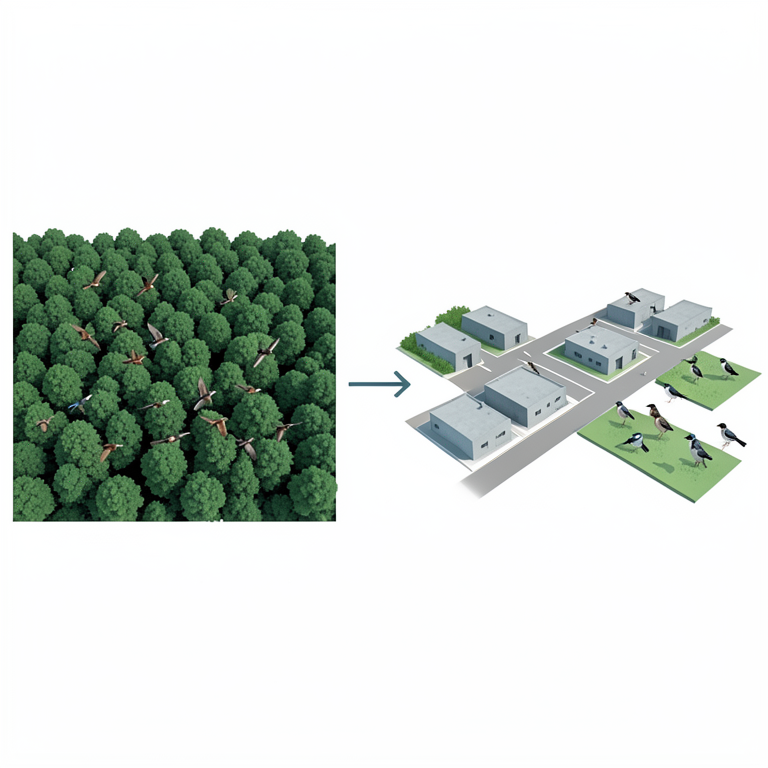
Urbanization and Habitat Fragmentation
AI-generated conceptual illustration (Wild birds in the Kashmir valley landscape). It explains the idea and does not show study data.
View source evidence ↗Figures & tables
From the original paper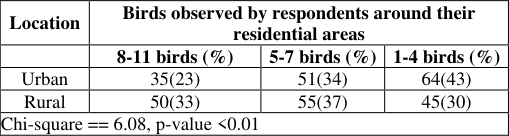 Table 1
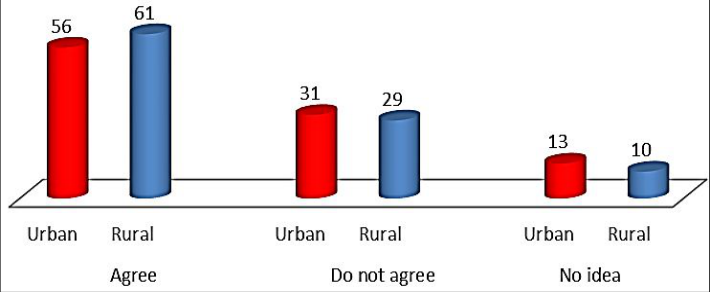 Figure 3
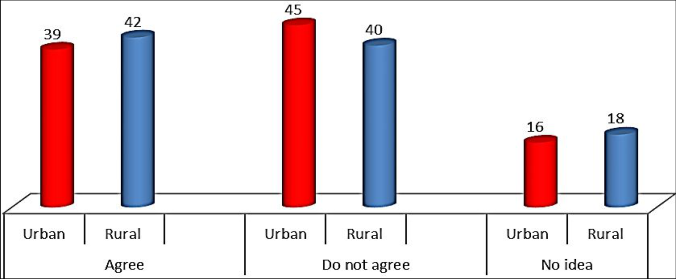 Figure 4
Introduction
Bird community structure is considered as an inevitable component of vibrant ecosystem and is reflective of the quality of the habitats. Birds, biologically Aves, homoeothermic vertebrates having pneumatic bones with average body temperature of 41-42 degree Celsius bearing wings and feathers. Birds have four chambered heart, precise vision, melodious voice and are therefore rightly remarked as mystifying and magnificent creatures. From humanistic point of view, birds have ecological, cultural, social and economic value as they play a significant role in the control of pests of agricultural crops, as predators of rodents, as scavengers and pollinating agents. Birds are sensitive to environmental perturbances and thus act as ecological indicators, thereby play significant role in maintaining ecological balance of varied ecosystems by supporting various food chains and food webs. As per various relied sources, it is estimated that there are 12000 living species of birds on planet earth and 13% species are found in India Though Indian sub-continent contributes immensely to avian diversity and India alone accounts for 13% of world species richness and their taxonomy, distribution and general habitat characteristics are well documented in India. Contrary to well documented data, very scarce information is available regarding avian community structure and their dynamics in India. The valley of Kashmir is inhabited by approximately 287 species comprising of both resident and migratory birds and the Southern landscape of Kashmir valley comprising four southern most districts namely Anantnag, Pulwama, Shopian and Kulgam is inhabited by 137 species of birds. A Study on avifauna (Gichuki, 1999) [29] documented that regional populace who regularly come across birds in their immediate environment may develop in depth understanding of the life cycle, behavior (breeding and habitat use), migration and seasonal changes in bird diversity composition and abundance. Another study (Huntington 2000) [33] pointed out that the traditional knowledge is overwhelmingly used by academicians, policy makers and other relevant stake holders as a source for deeper understanding on ecosystem management, restoration and conservation of biodiversity. Urban habitats and geographical landscapes are variedly different from nonurban "natural" habitats. The major difference is the transformation of land, from natural green areas to anthropogenic structures and impervious surfaces. To survive in the urban habitat, birds are forced to either accept or avoid the new conditions. Urban areas have low species richness than non-urban habitats, because the environmental stress factors such as chemical pollution, noise, artificial light at night and anthropogenic presence has rendered urban habitat as a major threat to avian diversity. In fact mass scale rapid urbanization along with climate change is regarded as one of the catastrophic threat to avifauna and their collective contribution has lead to decline in the avian population in urban area at rampant pace. Urban expansion has led to a highly fragmented landscape, with islets of suitable bird habitat surrounded by highways and buildings that frequently act as barriers. These adverse conditions have changed the avifauna dramatically, with many species vanishing once an area is urbanized. In exceptional and rare cases, some species seem to thrive in the urbanized area, and these urban-dwelling species often show prominent phenotypic differences e.g., marked change in behavior, physiological and morphological characteristics. Thus it is quite evident and ample clear that due to increased rate of urbanization and the rapid loss of wild habitats, urban areas are now viewed as challenging ecosystems for sustaining biotic communities. Some researchers are even of the opinion which is also corroborated by research data reflected in the work of Beissinger and Osborne (1982) [44] , Marzluff (2001) because urban habitat has the potential tendency to attract more individuals from the regional species pool. In total contrast to these research finding, most of the studies conducted on birds in urban settings have unanimously pointed out that urban areas are comparatively poor in species richness and diversity as compared with areas bestowed with more natural habitats such as rural areas and forest dwelling areas. Data available on avian diversity and richness in urban settings is contradictory and debatable and is truly a grey area in research that further needs to be explored by researchers to arrive at a unanimous conclusion regarding avifauna diversity in an urban habitat. Urban habitats witness increased anthropogenic disturbances. Anthropogenic disturbance is considered as an important parameter in determining the shape of the bird community which is supported by the research work conducted by Marzluff (2008) [73] , who has pointed out through his research that when anthropogenic disturbance is extreme, synanthropic species dominate bird community and when disturbance is rare native forest species dominate but when disturbance is intermediate a rich diversity coexists. Urbanized areas are a better habitat for those few species which are tolerant/acclimatized themselves to the disturbances. Such urban environments favor ground feeding granivorous or omnivores species and cavity-nesting species or need nesting sites resembling to cliffs or ledges, whereas most of the bird species avoid urban habitat because of disturbance factors such as walking, driving, pollution, crowding, transportation, waste solid material etc. Another important reason being noise pollution because birds use vocalization to warn danger, defend their territory and also attract their mates, so due to noisy surroundings which is main result of congested traffic, the birds are there by compelled to avoid urban dwellings. In urban habitat though food is in abundance but not in good quality, which thus severely affects the health and growth of the birds, so most of the birds try to avoid urban settings and is considered one of the prime determining factor in low species diversity in urbanized areas. The huge abundance of food in an urban habitat attracts feral animals (predators of birds) such as cats and dogs. The piece of research conducted by Chace and Walsh (2006) [71] concluded that cats cause unprecedented damage to birds in an urbanized habitat. Another important factor that has direct bearing on low species density and richness in an urban setting is loss of vegetation in an urban habitat. Vegetation is important factor for bird community, as birds perform majority of functions on it but scant and fragmented vegetation has severely impacted the urban ecosystem. (24). This mass scale abrupt and sudden dramatic disruption of most human social and economic activities had quantifiable effect on environment by high scale reduction in air pollution (25-27) and noise (28-30). The strict population confinement measures has literally emptied cities globally and virtually silent. This situation provides once in a life time opportunity to assess avifauna responses to less crowded, least noisy and less polluted cities and gain thoughtful insights on how anthropogenic activities affect avifauna. In this piece of research work we aimed to ascertain the regional perception of native inhabitants about the impact of Urbanization and COVID-19 on avifauna of southern Landscape of Kashmir Valley.
Materials and Methods
The current piece of research work executed in Southern landscape of Kashmir valley was qualitative in nature (questionnaire survey, online driven group discussions and face to face interviews) and directed to gauge the perception of local populace on urbanization, COVID-19 and their impact on avifauna in the study area. A set of questionnaire was designed and a total of 200 respondents (100 rural and 100 urban) above 25 years of age were interviewed (face to face as well as virtually) in South Kashmir during the survey period 2020-2021. Primary data was collected during the survey and thereafter appropriate literature was analyzed to corroborate with secondary data. Final questionnaire was designed by utilizing the findings of pre-testing of questionnaire survey. Stratified random sampling technique has been employed as sampling procedure. The data collected was tabulated and analyzed statistically using SPSS software (version 21).
Result and Discussion
The data depicted in Table 1 projects that majority of the respondents from urban as well rural settings exhibited inclination towards birds. 43% urban respondents and 30% rural respondents under study projected through their responses that they are observing 1-4 birds on daily basis, 34% urban respondents and 37% rural respondents reported that they are observing 5-7 birds around their residential establishments regularly, while as 23% urban respondents and 33% rural respondents projected that they are visualizing 8-11 birds on daily basis. Thus it is quite evident that rural settings cater to increased species diversity and richness than urban settings which proves to be a challenging habitat for majority of birds as they are unable to cope with circumstances prevalent in an urban setting. Statistically, it was observed that there was significant correlation between nature of habitat and avian diversity. The data depicted in table 2 demonstrates that the majority of respondents in both urban and rural settings agreed with all the statements pertaining to perception of regional populace on Urbanization and COVID-19 and their impact on avifauna in southern landscape of Kashmir valley, except statement number 2 i.e.; availability of quality driven abundance of food resources in all the seasons of the year which is disagreed by most of the respondents. Statistically, there was non-significant difference in the in the opinion of urban and rural respondents (p>0.05) as highlighted in the table. Majority of respondents in both urban and rural settings have unanimously agreed that bird sights have increased in their immediate environment during COVID-19 lock down which is quite evident from the higher frequency of chirping of bird's sounds which was otherwise very rare during pre-COVID-19 era. It is equally reciprocated by bird watcher enthusiasts and environment crusaders Like Dr. Raja Muzaffar, Bhat who has an in depth insight on avifauna of Jammu and Kashmir especially those inhabiting Wetlands of Kashmir that frequent sighting of birds is norm of the day in the era of COVID-19 pandemic. The data depicted in Figure 1, reveals that 55% urban and 67% rural respondents feed avifauna in their immediate surroundings on daily basis, 78 % urban respondents and 46% rural respondents reported that urbanization has resulted in change in bird phonology, 80% urban respondents and 77% rural respondents revealed that there will attitudinal shift among people towards conservation of avifauna post COVID-19 pandemic, 71% urban and 68%rural respondents agreed that demographic factors of birds got affected due to rampant urbanization,78% urban respondents and 83% rural respondents revealed that birds play a significant role in maintaining ecological balance in nature. The conclusive results of our research are in sync with other similar types of studies conducted across globe. The Data presented in figure 2, reveals that majority of respondents under study (66% urban and 54% rural) agreed that urbanization has led to fragmented vegetation thus severely impacting the foraging activity of the avifauna. Vegetation is the considered a major factor in determining bird community composition. Alteration in vegetation composition could impact the quality and quantity of habitat for birds in terms of food, water and cover which can further affect the diversity, abundance and distribution of birds. Due to vegetation changes along complex biological and environmental gradients, a particular bird species can appear, increase or decrease in number and vanish as the habitat change. Abundance of numerous bird species is highly influenced by the composition of the vegetation that forms the major element of their habitat. Increase in vegetation cover increases the species diversity. Analysis of varied research data on role of vegetation cover indicates an important trend that high vegetation cover in suburban and wild land areas supports rich avian diversity in comparison to urban landscape. Vegetation is important factor for bird community, as birds perform majority of functions on it but scant and fragmented vegetation has severely impacted the urban ecosystem. Besides birds are highly sensitive to alterations in habitat structure and function: consequently they serve as excellent indicators of changes and stresses in urban ecosystems.
| Location | Birds observed by respondents around their residential areas | — | — |
|---|---|---|---|
| 8-11 birds (%) | 5-7 birds (%) | 1-4 birds (%) | |
| Urban | 35(23) | 51(34) | 64(43) |
| Rural | 50(33) | 55(37) | 45(30) |
| Chi-square == 6.08, p-value <0.01 |
Table text extracted from the original PDF; superscript letters are shown inline. The original table image is below.
View original table image
The data demonstrated in figure 3, revealed that 56% urban respondents and 61% rural respondents agreed with the statement that avian conservation is the obligation and responsibility of every citizen. The benefits that birds possess for humans are not just aesthetic but they play a significant role in economy and food production as they are crucial in controlling pests, pollinate plants, purify surroundings through their scavenging nature and facilitate seed dispersal. Birds normally occupy apex level of food chain and are important indicators of the overall state of the biodiversity. The data depicted in figure 4, reveals that that 39% urban respondents and 42% rural respondents consider rampant urbanization as a significant contributor in transmission of COVID-19 at a faster rate and is substantiated by the data surfaced from other reliable sources that COVID-19 has wracked havoc more in urban areas than the rural areas. While as a significant proportion of respondents do not agree that urbanization has any influence on speedy transmission of COVID-19.
Conclusion
The ultimate purpose of this research work was to gauge the perception of local populace in Southern Landscape of Kashmir valley regarding the impact of urbanization and COVID-19 on local avifauna. The study pointed out that majority of the local populace had not sound understanding of avifauna. The respondents were found wanting when interviewed about the conservation and management of avifauna, although they aware that birds are ecologically significant in any type of ecosystem. Research data has pointed out strong patterns of association between bird community structure and the physical configuration of the environment. Analysis of diverse avian literature points towards some starking revelations that have jeopardized the entire avian community structure. The negative consequences of urbanization has severely affected the urban avifauna in multifaceted ways, be it availability of unhygienic food, diminished nesting sites, noisy surroundings because of high scale vehicular movement which has direct bearing on their communication channels there by affecting their mating pattern leading to reduced reproductive success. These negative consequences of urbanization on urban avifauna are highlighted by majority of the researchers through their published research work. On the impact of COVID-19 on avifauna, although respondents were of the opinion that birds sightings have increased during COVID times but it is still inclusive to generalize it at the global and there is need for extensive research in this area to arrive at some concrete conclusion. Majority of the respondents under study agreed that it is obligation and responsibility of every citizen to protect avifauna diversity as birds play multidimensional roles in an ecosystem ranging from contributing to economy by acting as pollinating agents, seed dispersal agents, controlling pests and rodents to being of aesthetic value to human mind and soul. In order to mitigate the negative consequences of urbanization on biodiversity in general and avifauna in particular, extensive awareness cum sensitization programmes need to be initiated at every level regarding the ecological significance of birds and management of biodiversity that will be in the larger interest of every stake holder concerned.
References
57 in the original paper- Snyder DP. Bird communities in the coniferous forest biome. The Condor. 1950 Jan;52(1):17-27.
- Gaston AJ. Ecology of the common babbler Turdoides caudatus. Ibis. 1978 Oct;120(4):415-32.
- Anderson RM, Heesterbeek H, Klinkenberg D, Hollingswrth TD. How will country-based mitigation measures influence the course of the COVID-19 epidemic? Lancet. 2020;395:931-934. (Doi: 10.1016/S0140-6736(20)30567-5
- Gatto M, Bertuzzo E, Mari L, Miccoli S, Carraro L, Casagrandi R, et al. Spread and dynamics of the COVID-19 epidemic in Italy: effect of emergency containment measures. Proc. Natl. Acad. Sci. USA. 2020;117:10484-10491. (Doi: 10.1073/pnas.2004978117).
- Aleta A, Moreno Y. Evaluation of the potential incidence of COVID-19 and effectiveness of containment measures in Spain: a data-driven approach. BMC Med. 2020;18:157. (Doi: 10.1186/s12916-02001619-5).
- Kumar S, Sahi DN. Avian fauna of Sewa River catchment area, District, Kathua (J&K). Nat. J Life Sciences. 2005;2:83-89.
- Kumar S, Sahi DN. Diversity of Avifauna of Jasrota Wild life Sanctuary, Kathua (J&K State). J Himalayan. Ecol. Sustain. Dev. 2006;(1):95-104.
- Kraemer MU, Yang CH, Gutierrez B, Wu CH, Klein B, Pigott DM, et al. The effect of human mobility and International Journal of Biology Sciences https://www.biologyjournal.net/ control measures on the COVID-19 epidemic in China. Science. 2020;368(6490):493-497.
- Rutz C, Loretto MC, Bates AE, Davidson SC, Duarte CM, Jetz W, et al. COVID-19 lockdown allows researchers to quantify the effects of human activity on wildlife. Nature Ecology & Evolution. 2020;4(9):11561159.
- Venter ZS, Aunan K, Chowdhury S, Lelieveld J. COVID-19 lockdowns cause global air pollution declines. Proc. Natl. Acad. Sci. USA. Declines. Proc. Natl. Acad. Sci. USA. 2020;117(18):984-8990. (Doi: 10.1073/pnas.2006853117)
- Bhat Bilal A, et al., A Study on Impact of COVID-19 Lockdown on Psychological Health, Economy and Social Life of People in Kashmir, IJSHR. 2020;5(2):3646.
- Bhat Bilal A, et al., A Study On Students Perception and Approach Towards Birds and Their Conservation, North Asian International Research Journal of Social Science & Humanities. 2018;4(9):82-97.
- Bhat Bilal A, Shazia Manzoor, Dwivedi S, Syed Sabahat Ashraf: A Study on Participants' Perception Towards influence of Climate Change on Human Health and the Environment. Agro Economist-An International Journal. 2018;5(2):01-09.
- Bhat Bilal A. Awareness and Attitude among College students Towards Climate Change in Kashmir. IJWM. 2018;2(1):4-9.
- Chen N, Zhou M, Dong X, Qu J, Gong F, Han Y, et al. Epidemiological and clinical coronavirus pneumonia in Wuhan, China: a descriptive study. Lancet. 2020;395:507-13.
- Cos tello A, Abbas M, Allen A, Ball S, Bell S, Bellamy R, Patterson C. Managing the health effects of climate change. Lancet. 2009;373:1693-733.
- Dar IA, Dar MA. Seasonal Variation of Avifauna of Shallabug Wetland, Kashmir. J Wetland Ecol. 2009;2:20-34. 10.
- Gichuki FN. Threats and opportunities for mountain area development in Kenya. AMBIO. 1999;28(5):430435.
- Ezeudu FO. Using concept map to teach ozone layer depletion and green house effects to senior secondary school chemistry students. STAN. Environmental Educational Series No. 2009;13:78-87.
- Gwinner E. Circannual clocks in avian reproduction and migration. Ibis. 1996;138:47-63.
- Harrington R, Woiwod IP, Sparks TH. Climate change and trophic interactions. Trends Ecol. Evol. 1999;14:146-150.
- Huntington HP. Using traditional ecological knowledge in science: methods and applications. Ecol. Appl. 2000;10(5):1270-1274.
- Jenkins D, Watson A. Dates of first arrival and song of birds during 1974-99 in mid-Deeside, Scotland. Bird Study. 2000;47:249-251.
- Kovats RS, Edwards SJ, Charron D, Cowden J, D'Souza RM, Ebi KL, et al. Climate variability and campylobacter infection: an international study. International Journal of Biometeorology. 2005;49(4):207-214.
- Kotwal D, Sahi DN. Diversity, Status and Abundance of avifauna of lake Mansar, Jammu and Kashmir. J The Bioscan. 2007;2(4):323-327.
- Briz-Redón Á, Belenguer-Sapiña C, Serrano-Aroca Á. Changes in air pollution during COVID-19 lockdown in Spain: a multi-city study. J Environ. Sci. 2021;101:1626. (Doi: 10.1016/j.jes.2020.07.029)
- Aloi A, et al. Effects of the COVID-19 lockdown on urban mobility: empirical evidence from the city of Santander (Spain). Sustainability. 2020;12:38-70. (Doi: 10.3390/su12093870).
- Lecocq T, et al. 2020 Global quieting of high frequency seismic noise due to COVID-19 pandemic lockdown measures. Science. 2020;369:1338-1343. (Doi: 10.1126/science.abd2438).
- Aletta F, Oberman T, Mitchell A, Tong H, Kang J. Assessing the changing urban sound environment during the COVID-19 lockdown period using short term acoustic measurements. Noise Mapping. 2020;7:123-134. (Doi: 10.1515/noise-2020-0011)
- Asensio C, Pavón I, De Arcas G. Changes in noise levels in the city of Madrid during COVID-19 lockdown in 2020. J Acoust. Soc. Am. 2020;148:17481755. (Doi: 10.1121/10.0002008).
- Rotenberry JT, Wiens JA. Habitat structure, patchiness, and avian communities in North American steppe vegetation: a multivariate analysis. Ecology. 1980 Oct;61(5):1228-50.
- Beissinger SR, Osborne DR. Effects of urbanization on avian community organization. The Condor. 1982 Feb;84(1):75-83.
- Baskaran ST. Sighting of Dusky Horned Owl. Newsletter for Birdwatchers. 1983;32(9):10.
- Root T. Environmental factors associated with avian distributional boundaries. Journal of Biogeography. 1988 May:489-505.
- Khan JA, Khan DN, Ahmed A. Preliminary investigations of bird community structure at Aligarh, India. Tropical Ecology. 1993;34(2):217-25.
- Clergeau P, Savard JP, Mennechez G, Falardeau G. Bird abundance and diversity along an urban-rural gradient: a comparative study between two cities on different continents. The Condor. 1998 Aug;100(3):413-25.
- Dr. Rajiv Nehra, Dr. Dwijendar Nath. Hepatic response in COVID-19. Int. J Adv. Biochem. Res. 2021;5(2):0104. DOI: 10.33545/26174693..v.i.65
- Blair RB. Birds and butterflies along an urban gradient: surrogate taxa for assessing biodiversity? Ecological applications. 1999 Feb;9(1):164-70.
- Lindström Å, Green M, Paulson G, Smith HG, Devictor V. Rapid changes in bird community composition at multiple temporal and spatial scales in response to recent climate change. Ecography. 2013 Mar;36(3):31322.
- Savard JP, Clergeau P, Mennechez G. Biodiversity concepts and urban ecosystems. Landscape and urban planning. 2000 May;48(3-4):131-42.
- Burke DM, Nol E. Landscape and fragment size effects on reproductive success of forest-breeding birds in Ontario. Ecological Applications. 2000 Dec;10(6):1749-61.
- Söderström BO, Pärt T. Influence of landscape scale on farmland birds breeding in semi-natural pastures. Conservation Biology. 2000 Apr;14(2):522-33.
- Donovan TM, Thompson FR. Modeling the ecological trap hypothesis: a habitat and demographic analysis for migrant songbirds. Ecological applications. 2001 Jun;11(3):871-82.
- Brown JH, Whitham TG, Ernest SM, Gehring CA. Complex species interactions and the dynamics of ecological systems: long-term experiments. Science. 2001 Jul;293(5530):643-50.
- Crick HQ, Robinson RA, Appleton GF, Clark NA, Rickard AD. Investigation into the causes of the decline of starlings and house sparrows in Great Britain. BTO research report. 2002 Jul;290:1-305.
- Erritzoe J, Mazgajski TD, Rejt Ł. Bird casualties on European roads-a review. Acta Ornithologica. 2003 Dec;38(2):77-93.
- Lee PY, Rotenberry JT. Relationships between bird species and tree species assemblages in forested habitats of eastern North America. Journal of Biogeography. 2005 Jul;32(7):1139-50.
- Both C, Bouwhuis S, Lessells CM, Visser ME. Climate change and population declines in a long-distance migratory bird. Nature. 2006 May;441(7089):81-3.
- Skórka P, Martyka R, Wójcik JD. Species richness of breeding birds at a landscape scale: which habitat type is the most important? Acta Ornithologica. 2006 Jun;41(1):49-54.
- Sandström UG, Angelstam P, Mikusiński G. Ecological diversity of birds in relation to the structure of urban green space. Landscape and urban planning. 2006 Jun;77(1-2):39-53.
- Daniels GD, Kirkpatrick JB. Does variation in garden characteristics influence the conservation of birds in suburbia? Biological Conservation. 2006 Dec;133(3):326-35.
- Chace JF, Walsh JJ. Urban effects on native avifauna: a review. Landscape and urban planning. 2006 Jan;74(1):46-69.
- Grimm NB, Faeth SH, Golubiewski NE, Redman CL, Wu J, Bai X, et al. Global change and the ecology of cities. Science. 2008 Feb;319(5864):756-60.
- Bonnington C, Gaston KJ, Evans KL. Ecological traps and behavioral adjustments of urban songbirds to fine-scale spatial variation in predator activity. Animal Conservation. 2015 Dec;18(6):529-38.
- Akram F, Ilyas O, PRUSTY B. Impact of urbanization on bird community structure in and around Aligarh City, UP, India. International Journal of Engineering Technology Science and Research. 2015;2(10):23943386.
- Skórka P, Lenda M, Sutherland WJ. Response of young and adult birds to the same environmental variables and different spatial scales during post breeding period. Landscape Ecology. 2016 Nov;31(9):2063-78.
- Sewell SR, Catterall CP. Bush land modification and styles of urban development: their effects on birds in south-east Queensland. Wildlife Research. 1998;25(1):41-63.