
Research article · 2022 · Full text
International Journal of Biology SciencesWastewater fish culture-way towards water reuse
Volume 4(2) · Pages 112–116 · DOI: 10.33545/26649926.2022.v4.i2b.87 ↗
Research areasFisheries and Aquaculture StudiesFish Biology and Ecology StudiesWater Quality Monitoring Technologies
Abstract
Author-writtenEarth is the only known planet where life exists. This is possible only due to presence of water and oxygen. Water is the most precious and major requirement for all life on earth. But only a small quantity of clean water is available to be usable by humans. Increase in population growth and development put several pressure in getting access to good quality water resulting in water scarcity. India is one of the countries worldwide facing water stress. In such circumstances, wastewater reclamation and reuse in various fields is the important method to cope up with water scarcity. Annual discharge of domestic sewage in India, contains around 90, 32, 55 Million Tonnes of nitrogen, phosphorous and potassium. Such nutrious water can be made use in aquaculture since aquaculture is an highly water intensive endeavor because large quantity of water is required for the culture year-around and the availability of water is a constrain in the dry months and in rural areas, where there is freshwater scarcity. Hence wastewater fish culture is an economical and helping towards sustainable production. This article deals with importance, scarcity of water and major use of sewage in aquaculture.
Summary
Source-checkedPlain-language reading of the full paper, prepared with AI and checked against the text. Each point links to the authors' own words.
Why it matters
- Water is essential for all life on Earth, yet only a small fraction of the planet's water is clean and usable for human needs. View evidence ↗
- Population growth and development have increased pressure on water access, leading to widespread water scarcity. View evidence ↗
- Domestic sewage in India contains significant amounts of nitrogen (90 million tonnes), phosphorous (32 million tonnes), and potassium (55 million tonnes), making it a potential nutrient source for aquaculture. View evidence ↗
The question
- The paper aims to discuss the importance of water, the nature of water scarcity, and the application of sewage in aquaculture. View evidence ↗
What they did
- The review describes a conventional wastewater treatment process consisting of primary and secondary stages, with an optional tertiary stage for further contaminant removal. View evidence ↗
- Primary treatment using sedimentation is used to reduce the Biochemical Oxygen Demand (BOD) of raw domestic sewage by 33%. View evidence ↗
- Secondary biological treatment is employed to remove more than 90% of suspended solids from the wastewater. View evidence ↗
- To maintain dissolved oxygen balance, treated sewage is diluted with freshwater at a ratio of 1:4.5 or 1:5 before entering fish ponds. View evidence ↗
What they found
- Only 0.3% of Earth's water is usable by humans, while 99.7% is found in oceans, icecaps, soils, and the atmosphere. View evidence ↗
- India is ranked 13th globally among countries facing extremely high water risk. View evidence ↗
- In Kolkata, 3,000 hectares of fishponds using 550,000 m³/day of untreated wastewater produce 13,000 tonnes of fish annually, meeting about 16% of the local demand. View evidence ↗
- Treatment of sewage water significantly reduces ammonia levels from a range of 12-63 ppm to 0.02-0.05 ppm. View evidence ↗
- Wastewater treatment increases dissolved oxygen levels from 0-3 ppm to 3.0-8.0 ppm. View evidence ↗
- The Biological Oxygen Demand (BOD) is reduced from 30-200 ppm before treatment to 6-40 ppm after treatment. View evidence ↗
- Total suspended solids are reduced from 160-420 ppm to trace levels following treatment. View evidence ↗
What it means
- The authors conclude that sewage-fed fisheries are an economical and eco-friendly technology that supports both fish production and environmental sustainability. View evidence ↗
- Wastewater reclamation is recommended as a primary water-saving measure to achieve more sustainable sanitation and address the global water crisis. View evidence ↗
Visual summary
1 visualsIllustrations explain the paper; they do not show study data.
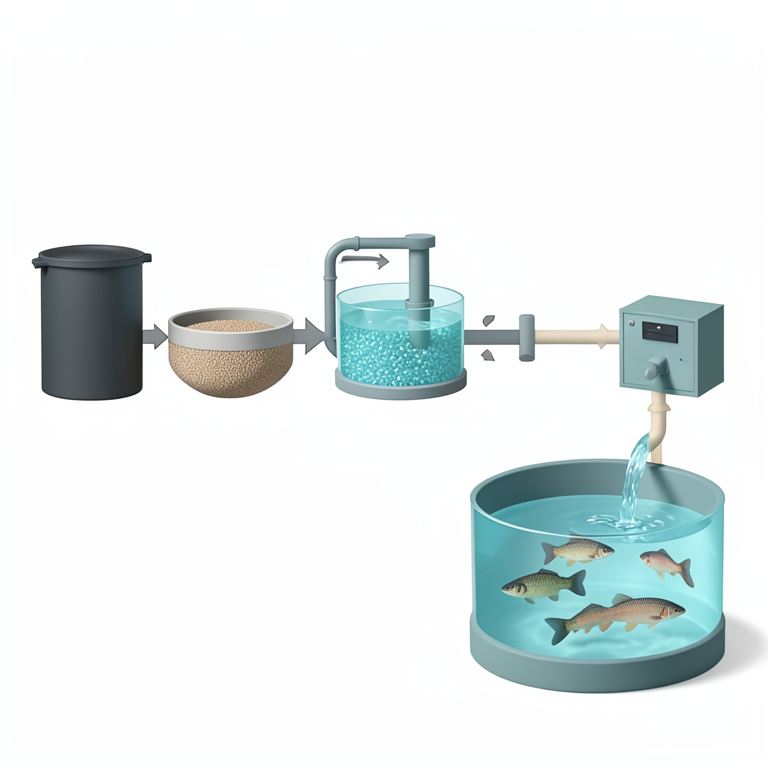
Wastewater Treatment Flow for Aquaculture
AI-generated conceptual illustration (Tilapia fish in a wastewater treatment and aquaculture system). It explains the idea and does not show study data.
View source evidence ↗Figures & tables
From the original paper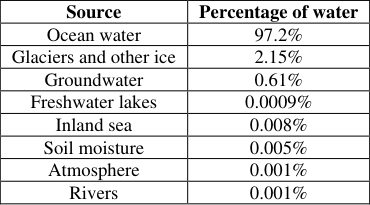 Table 1
 Table 2
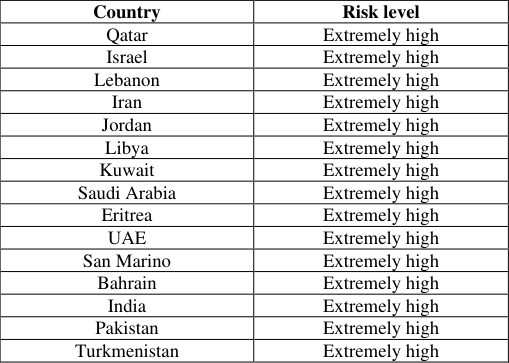 Table 3
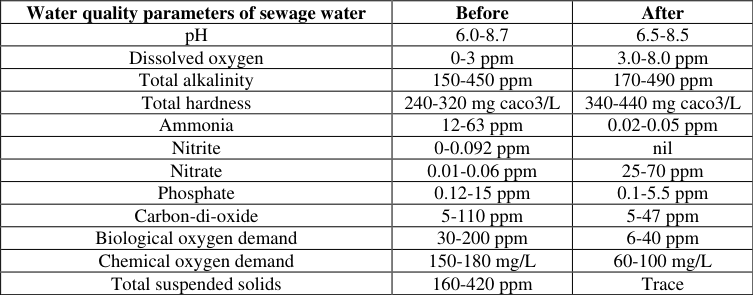 Table 4
Introduction
Earth is known as the "Blue Planet" or "Blue marble" since major part of Earth's crust (nearly 71%) is covered with water. The ocean on earth weight is 1.35 x 10 18 metric tonnes, which is 1/4400 the total mass of the earth (Williams, 2014) [35] . Water is the major requirement of any organisms in planet for the body nourishment, sustenance of life. It also act as a instrument of regulating body organs (Khanna et al., 2008). Water exists in the air as water vapour, in the land as soil moisture, in rivers, lakes, icecaps, glaciers and aquifers. The circulation of water through the hydro biological cycle involves a biggest flow providing 110,000 km 3 of water to the earth each year as snow and rainfall (Jackson et al., 2001) [37] . Although there is abundant of water available, only a little quantity of 0.3% water is usable by humans. The remaining portion of 99.7% is in the oceans, icecaps, soils and floating in the atmosphere (Oves, 2018) [29] as given in Table 1. There are nearly 475 million km 3 of freshwater resources available all over the world in the form of groundwater or surface water to be essentially used by humans (Shiklomanov, 1997) [33] .
| Source | Percentage of water |
|---|---|
| Ocean water | 97.2% |
| Glaciers and other ice | 2.15% |
| Groundwater | 0.61% |
| Freshwater lakes | 0.0009% |
| Inland sea | 0.008% |
| Soil moisture | 0.005% |
| Atmosphere | 0.001% |
| Rivers | 0.001% |
Table text extracted from the original PDF; superscript letters are shown inline. The original table image is below.
View original table image
Water stress:
Water stress is a devasting conflict increasing rapidly when there is stress to meet the demand of people and the quality of water. The common water stress that is being identified globally is drought stress (Oki et al., 2006) [27] . There are nearly 65% of people experiences some level of water stress due to the rapid increase in population. Water stress is caused mainly by socioeconomic factors such as population growth and increased wealth.
International Journal of Biology Sciences https://www.biologyjournal.net/ Chronic water stress may lead to restrictions in the use of freshwater among people (Wiltshire et al., 2013) [36] . The main cause of water stress is rise in sea level which results in encroachment of sea water into groundwater present near the coasts and thereby decrease the available groundwater resources (Oki et al., 2006) [27] . Table 2 provides the list of countries to face water stress by 2025 according to Jury et al. (2007) [18] . World Resources Institute (WRI) stated that there are nearly 167 countries to face water stress by 2030-2040 and 33 countries to face extremely high water stress in 2040 (Maddocks et al., 2015) [2] . India faces extremely high water risk holding 13 th position in the list of high water risk countries (Table 3) (Dormido, 2019).
| Country | Risk level |
|---|---|
| Qatar | Extremely high |
| Israel | Extremely high |
| Lebanon | Extremely high |
| Iran | Extremely high |
| Jordan | Extremely high |
| Libya | Extremely high |
| Kuwait | Extremely high |
| Saudi Arabia | Extremely high |
| Eritrea | Extremely high |
| UAE | Extremely high |
| San Marino | Extremely high |
| Bahrain | Extremely high |
| India | Extremely high |
| Pakistan | Extremely high |
| Turkmenistan | Extremely high |
Table text extracted from the original PDF; superscript letters are shown inline. The original table image is below.
View original table image
| Category | Countries | Population (millions) |
|---|---|---|
| Water scarce | 29 | 802 |
| Water stressed | 19 | 2027 |
| Water scarce or stressed | 47 | 2826 |
Table text extracted from the original PDF; superscript letters are shown inline. The original table image is below.
View original table image
Sewerage
Sewerage or wastewater is defined as "utilized water from any mix of residential, mechanical, business or farming exercises, surface overflow or storm water and any sewer inflow or sewer penetration" (Alaa Fahad, 2019). It is also composite of liquid carrying wastes arising from the sanitary conveniences of dwellings, commercial or industrial facilities. It also contains toxic inorganic and organic materials. Its quality is determined by its physical, chemical and biological characteristics (Patro et al., 2012) [22] . The characteristics and parameters of municipal sewage are constant whereas, only industrial waste changes (Englande et al., 2015) [10] . According to the Central Pollution Control Board (CPCB), 16,000 MLD of wastewater is generated from class 1 cities with population greater than 100,000 no's, and 1600 MLD from class 2 cities with the population 50,000-100,00. Of the 45,000 km length of Indian rivers, 6,000 km have a bio-oxygen demand (BOD) above 3mg/l which is not suitable for drinking purpose.
Anthropogenic causes of wastewater
The anthropogenic activities include metal finishing and electroplating processes, mining extraction operations, textile industries and nuclear power. The release of heavy metals in water bodies is found to significantly deteriorate the water quality (Akpor et al., 2014) [1] . Rapid increase in population and industrialization releases enormous amount of wastewater, which is used as a important asset for water system in urban and pre-urban agribusiness (Fahad et al., 2019). In rural areas agriculture practices include use of fertilizers, herbicides and pesticides; river siltation; run-off from degraded forest areas; and animal husbandry are the main cause of pollution. The water qualities in urban areas are affected mainly by increased industrialization, which releases enormous amount of wastewater and other domestic sources (Khatri et al., 2015) [20] . [28] . The fish, plants and anyother organisms living in wastewater will be contaminated with pathogens of human excreta on their body surfaces and visceral organs and hence fishes will be under stressful condition. Untreated sewage is harmful to workers and nearby communities. Wastewater effluents containing heavy metals may be toxic (acute, chronic or sub-chronic), neurotoxic, carcinogenic on humans (Duruibe et al., 2007; Akpor et al., 2014) [9,1] .
Implications of wastewater
Implications of wastewater
Management of wastewater
The goal of wastewater management is to improve the sustainable use of natural resources, with the aim of protection of public health and environment. Sustainable development is essential to meet the needs of society without compromising those for future generations. Hence, objectives for water use, reclamation, and reuse should be consistent with this goal (Englande et al., 2015) [10] . Management of this water depends on the various aspects, such as the types of composition of the wastewater like biomedical waste-clinical waste, e-Waste, industrial and municipal waste (Patro et al., 2012) [22] .
Wastewater Treatment Techniques
There are two types of wastewater treatment techniques such as non-conventional and conventional. Conventional treatment includes primary treatment followed by secondary. If necessary, tertiary treatment is included in the steps to separate particular contaminants to very lower levels (Englande et al., 2015) [10] . Advanced treatment techniques involves combination of physical, chemical, biological processes which results in removal of suspended, and dissolved solids, organic matter, contaminants, nutrients and pathogens from wastewater (Fahad et al., 2019).
Wastewater reclamation
Wastewater reclamation is the treatment or processing of wastewater to make it reusable for a beneficial use such as agricultural purposes (Asano, 1998) [3] . Globally, United States of America, Saudi Arabia, Qatar, Israel, and Kuwait are the most remarkable countries based on the per capita wastewater reuse (Jimenez et al., 2008) [17] . Effluents with discharge standards could be used for purposes such as aquaculture or for farmland irrigation (Bani, 2011) [4] . Reclamation and reuse plays an efficient role in aquaculture which reduces the usage of freshwater and paves way towards the sustainable environment. Also by using wastewater from aquaculture can be reclaimed and reused again in fish culture (Maharjan et al., 2022) [24] .
When the water quality is managed through the control of the concentrated input waste, the amount of wastewater treatment is indicated. Water must be reclaimed for aquaculture practices if it contains the waste that will produce abnormal physiological responses in aquatic lives. The untreated water also causes objectionable odour, colour, taste and turbidity. Hence sewage treatment should be flawless and robust. (Rowe et al., 1995) [32] . A survey conducted by National Environmental Engineering Research Institute (NEERI) in NAGPUR, India showed that many of the environment and public health problems in wastewater utilization sites are due to the untreated sewage. Hence it is very much important to treat the wastewater (Lyu et al., 2016) [23] .
Wastewater fish culture
Sewage-fed aquaculture is a unique system and has tremendous advantages. It act as a major source of nutrients for aquaculture. It is economical and helping towards sustainable production and combats environmental pollution. The use of municipal wastewater in the ponds first began in Calcutta in the 1930's (Jana, 1998) [16] . The Rahara Wastewater Aquaculture Farm (CIFA), Captain Bheri, Mudialy Farm and Kalyani Fish Farm are some of the examples of sewage-fed fisheries in and around Kolkata (Lahiri et al., 2015) [21] . The first large scale use of sewage fed ponds was at Strasbourg (France). India has the largest area of sewage fed ponds in the world and sewage fish culture occurs in several areas in China followed by Indonesia and Israel. The best is in Munich. Africa, north central and South America also practiced this system (Kaul et al., 2002) [19] . At present there are more than 130 wastewater aquaculture units in India covering an area of about 10 000 ha. Almost 80% of these farms are located in West Bengal. Vidyarthi Spill area or Salt Lake is another major sewage irrigated fisheries found in Kolkata (Ganguly et al., 2015) [12] . Fish raised in treated sewage are the important source of animal protein. In Kolkata, 3000 ha of fishponds are fed with approximately 550,000 m 3 /d of untreated wastewater which produce around 13,000 tonnes of fish (mainly IMC) which are supplied each year to the fish markets of central Kolkata, comprising nearly 16% of the local demand for fish (Mara et al., 1993) [25] . Ponds which are extensively used for wastewater fish farming cover an area of 2480 ha, with each fish ponds of area upto 162 ha (Bunting, 2007) [6] . In India, wastewater fish farming system started in four places, Nagpur, Bhilai, Chennai and Bhopal. Due to the enormous growth in this culture system the Indian government permitted growth of some fishes alternative to the carps like Clarias batrachus, Heteropneustes fossilis, Pangasius sutchi (FAO 2018).
Technology of sewage fed fish culture
From the above flow chart, the various phases of sewage treatment can be known (Englande et al., 2015) [10] . The influent raw sewage is first sent to the primary treatment for screening, skimming and grit removal process. Further, the water enters at a high velocity to initial sedimentation tank (primary) which is retained for 10-15 days. A considerable reduction on Biochemical oxygen demand levels of wastewater is required before its being transferred to aquaculture facilities, because the Biochemical oxygen demand of raw domestic sewage can be upto the level of 400 mg/l which is toxic to aquatic animals. Therefore, primary method with sedimentation is required to reduce it by 33% and this takes place in initial sedimentation tank (Jana, 1998) [16] . Further, the water is sent to secondary treatment which is abiological process. It removes more than 90% of suspended solids. It includes flocculation, biological filtration and waste stabilization (Cheremisinoff, 2001) [7] . The sludge from primary and secondary treatment tank is sent to the sludge digester to be digested. Oxidation pond is second sedimentation tank in sewage treatment. It contains the algal bacterial culture which oxidizes the organic matter into the CO 2, H 2 O, NH 3 that are used as nutrients like nitrite, nitrate, phosphate. Oxidation or water stabilization ponds are most suitable in India due to the availability of sunshine. In this pond, sewage is retained at the depth of 1-2m for 25-30 days.
Algal-bacterial cultures are abundant in this pond which oxidizes the organic matters into other decomposition products (Datta et al., 2005) [8] . It is then sent to tertiary treatment which is chemical removal of soluble products which includes chlorination, precipitation, filtration, coagulation etc. for nutrient removal. The disinfection is the final step in tertiary treatment which makes use of chlorine to kill disease causing agents. It is also recommended to pass the sewage to duckweed pond for 2 days with Lemna, Wolfia, Eicchornia etc. which absorbs the heavy metals and increases oxygen by their photosynthetic activity (Datta et al., 2005) [8] . Before releasing sewage into fish pond, dilution of treated water with freshwater in the ratio of 1:4.5 or 1:5 is necessary to maintain dissolved oxygen balance (1:1 or 1:2) (Datta et al., 2005) [8] . After effective dilution, the concentration of CO 2 , H 2 S, NH 3 etc. are reduced below the lethal level and sewage is stored for few days along with (duckweeds) to carry out the biological process by micro-organisms, and then the water is sent to the fish rearing pond and used for 3 months. Further, the fish is sent to fish marketing ponds and stored for 10-15 days for the deodoration (Paul et al., 2019) [30] . Table 4 shows the water quality parameters of sewage water before and after treatments. [8] Water quality parameters of sewage water Before After pH 6.0-8.
| Water quality parameters of sewage water | Before | After |
|---|---|---|
| pH | 6.0-8.7 | 6.5-8.5 |
| Dissolved oxygen | 0-3 ppm | 3.0-8.0 ppm |
| Total alkalinity | 150-450 ppm | 170-490 ppm |
| Total hardness | 240-320 mg caco3/L | 340-440 mg caco3/L |
| Ammonia | 12-63 ppm | 0.02-0.05 ppm |
| Nitrite | 0-0.092 ppm | nil |
| Nitrate | 0.01-0.06 ppm | 25-70 ppm |
| Phosphate | 0.12-15 ppm | 0.1-5.5 ppm |
| Carbon-di-oxide | 5-110 ppm | 5-47 ppm |
| Biological oxygen demand | 30-200 ppm | 6-40 ppm |
| Chemical oxygen demand | 150-180 mg/L | 60-100 mg/L |
| Total suspended solids | 160-420 ppm | Trace |
Table text extracted from the original PDF; superscript letters are shown inline. The original table image is below.
View original table image
Conclusion
Increase in population growth and development put several pressure in getting access to good quality water resulting in water scarcity. Thus due to the global water crisis, there is a need to provide water with good sanitation services to a large population in world. In such circumstances, wastewater reclamation acts as a tool to solve the problem.
It is a main water-saving measure and results in achieving more sustainable sanitation. Wastewater treatment also helps in various activities like agricultural purposes and aquaculture practices. It also prevents from sewage disposal to water affecting aquatic life. Thus, this article discussed that sewage fed fisheries is an efficient technology which has been recognized as a most economical and eco-friendly method benefitting in both the production and environmental sustainability.
References
37 in the original paper- Akpor OB, Ohiobor GO, Olaolu DT. Heavy metal pollutants in wastewater effluents: sources, effects and remediation. Advances in Bioscience and Bioengineering. 2014;2(4):37-43.
- Andrew Maddocks, Robert Samuel Young, Paul Reig, World Resource Institute, 2015 Aug.
- Asano T. ed., Wastewater reclamation and reuse: water quality management library. Crc Press, 1998, 10.
- Bani R. Wastewater Management. Waste Water: Evaluation and Management, 2011, 379.
- Bhutiani R. Laboratory manual of water and wastewater analysis. Daya Books, 2008.
- Bunting SW. Confronting the realities of wastewater aquaculture in Peri-urban Kolkata with bioeconomic modelling. Water Research. 2007;41(2):499-505.
- Cheremisinoff NP. Handbook of water and wastewater treatment technologies. Butterworth-Heinemann, 2001.
- Datta S, Pal AK. Environmentally sustainable management techniques for sewage fed aquaculture. Biotechnology in Environmental Management, 2005, 339-360.
- Duruibe JO, Ogwuegbu MOC, Egwurugwu JN. Heavy metal pollution and human biotoxic effects. International Journal of physical sciences. 2007;2(5):112-118.
- Englande Jr. AJ, Krenkel P, Shamas J. Wastewater Treatment & Water Reclamation. Reference Module in Earth Systems and Environmental Sciences, 2015.
- Fahad A, Mohamed RMS, Radhi B, Al-Sahari M. Wastewater and its Treatment Techniques: An Ample. Indian Journal of Science and Technology. 2015;12:25. International Journal of Biology Sciences https://www.biologyjournal.net/
- Ganguly SL, Paria DS, Jana BB. Evaluating the ecological resilient driven performance of a tropical waste stabilization pond system using ecological signature of biological integrity. Journal of Ecological Engineering, 2015, 97-107.
- Huang C, Zeng P, Yang S, Shao Y, Liu Y. Water reclamation and reuse. Water Environment Research. 2016;88(10):1261-1278.
- Lal K, Bhojak N. Adsorbents for removal of hazardous organic substance from waste water and natural water samples: A review. Int. J Adv. Chem. Res. 2021;3(2):1719. DOI: 10.33545/26646781.2021.v3.i2a.37
- Jana BB, Mandal RN, Jayasankar P. Wastewater Management through Aquaculture, 2018.
- Jana BB. Sewage-fed aquaculture: the Calcutta model. Ecological Engineering. 1998;11(1-4):73-85.
- Jimenez B, Asano T. Water Reuse: An International Survey of Current Practice, Issues and Needs. International Water Association, London, England, 2008.
- Jury WA, Vaux HJ. The Emerging Global Water Crisis: Managing Scarcity and Conflict between Water Users. Advances in Agronomy, 2007, 1-76.
- Kaul SN, Juwarkar AS, Kulkarni VS, Nandy T, Szpyrkowicz L, Trivedy RK. Utilization of wastewater in agriculture and aquaculture. Scientific Publishers (India), 2002.
- Khatri N, Tyagi S. Influences of natural and anthropogenic factors on surface and groundwater quality in rural and urban areas. Frontiers in Life Science. 2015;8(1):23-39.
- Lahiri S, Sarkar D, Jana BB, et al. Evaluating the ecological resilient driven performance of a tropical waste stabilization pond system using ecological signature of biological integrity. J Ecol Eng. 2015;16:97107.
- Lingaraj Patro. Waste management for sustainable environment, 2012, 52.
- Lyu S, Chen W, Zhang W, Fan Y, Jiao W. Wastewater reclamation and reuse in China: Opportunities and challenges. Journal of Environmental Sciences. 2016;39:86-96
- Maharjan N, Adlin N, Hatamoto M, Yamaguchi T, Murakami Y, Araki N. Advanced biological water reclamation and reuse technologies for recirculating aquaculture system. In Clean Energy and Resource Recovery. Elsevier, 2022, 51-68.
- Mara DD, Edwards P, Clark D, Mills SW. A rational approach to the design of wastewater-fed fishponds. Water Research. 1993;27(12):1797-1799.
- Norton-Brandao D, Scherrenberg SM, Van Lier JB. Reclamation of used urban waters for irrigation purposes-a review of treatment technologies. J Environ. Manag. 2013;122:85-98.
- Oki T, Kanae S. Global hydrological cycles and world water resources. Science. 2006;313(5790):1068-1072.
- Olaolu DT, Akpor OB, Akor CO. Pollution indicators and pathogenic microorganisms in wastewater treatment: implication on receiving water bodies. International Journal of Environmental Protection and Policy. 2014;2(6):205-212.
- Oves M. Freshwater Shortage and Arrangement by Modern Technology. Current World Environment. 2018;13(3):288.
- Paul M, Chanda MM. Sewage fed aquaculture system, 2019.
- Postel SL, Daily GC, Ehrlich PR. Human appropriation of renewable fresh water. Science. 1996;271(5250):785788.
- Rowe DR, Abdel-Magid IM. Handbook of wastewater reclamation and reuse. CRC press, 1995.
- Shiklomanov IA. Assessment of water resources and water availability in the world. Comprehensive Assessment of the Freshwater Re-sources of the World, 1997.
- Waqar K, Ahmad I, Kausar R, Tabassum T, Muhammad A. Use of Bio-remediated Sewage Effluent for Fish Survival. International Journal of Agriculture and Biology. 2013;15(5):988-992.
- Williams M. What percent of Earth is water. Universe Today, 2014-2016.
- Wiltshire A, Gornall J, Booth B, Dennis E, Falloon P, Kay G, et al. The importance of population, climate change and CO 2 plant physiological forcing in determining future global water stress. Global Environmental Change. 2013;23(5):1083-1097.
- Jackson RB, Carpenter SR, Dahm CN, McKnight DM, Naiman RJ, Postel SL, et al., Water in a changing world. Ecological applications. 2001;11(4):1027-1045.
Cited by 2
From OpenAlex, OpenCitations and reference lists read by Scinovex
- National innovations in climate resilient agriculture (NICRA): The reservoir of resilience enhancement
Manju Prem S., G Jayalekshmi, M. Mohanraj, Mohamed Aseemudheen M, K Manobharathi · International Journal of Agriculture Extension and Social Development · 2024
Climate change poses significant challenges for the agricultural sector, particularly in India, due to its large population, reliance on natural resources, and inadequate coping mechanisms. India has already experienced a temperature rise of 0.60°C in the past century, leading to negative impacts on crop yields and food security. To address this challenge, a scheme called Climate Resilient Agriculture (NICRA) has been introduced. NICRA aims to enhance the adaptability of Indian agriculture to climate change by creating and applying advanced technologies for production and the management of ris
- Hydraulic and environmental impacts of small hydropower projects mitigation strategies and regulatory frameworks ↗
Veronica Luis, Kathy Davis · International Journal of Hydropower and Civil Engineering · 2023
Small hydropower projects (SHPs) play a vital role in Mexico's renewable energy landscape, contributing to electricity generation while raising concerns about their hydraulic and environmental impacts. This research scrutinizes the hydraulic implications and environmental repercussions of SHPs in the Mexican context. It delves into the assessment of their effects on watercourses, aquatic ecosystems, and local communities. Furthermore, the study scrutinizes