
Research article · 2023 · Full text
International Journal of Biology SciencesPhytochemical study of some medicinal plants in Rajasthan
Volume 5(1) · Pages 99–103 · DOI: 10.33545/26649926.2023.v5.i1b.153 ↗
Research areasFood Science and Nutritional StudiesBotanical Research and Chemistry
Abstract
Author-writtenPhytochemicals are highly effective in terms of medicine. There is a constant and urgent need to create new pharmaceutical compounds with novel chemical structures and modes of action due to the worrisome increase in the incidence of new diseases. The qualitative analysis is extremely important for identifying the phytochemical elements present in medicinal plants. Plants have therapeutic value because they contain certain bioactive components. The goal of the current study was to identify the phytoconstituents present in leaf extracts from a variety of medicinal plants including Cocculus hirsutus, Solanum nigrum, Datura innoxia, Cuscuta reflexa and Salanum surattense. Plants' leaves were gathered from their natural habitats, cleaned, dried by air, and then ground. Using the Soxhlet apparatus with ethanol, the solvent extracts of the different leaves were created. Alkaloids, steroids, flavonoids and glycosides were estimate qualitatively by following the standard methods.
Summary
Source-checkedPlain-language reading of the full paper, prepared with AI and checked against the text. Each point links to the authors' own words.
Why it matters
- The rise in new diseases has created an urgent need for the development of new pharmaceutical compounds with novel chemical structures. View evidence ↗
- Medicinal plants are valuable for therapy because they contain bioactive components. View evidence ↗
- Qualitative analysis is a critical tool for identifying the specific phytochemical elements within medicinal plants. View evidence ↗
The question
- The study aimed to identify the phytoconstituents present in the leaf extracts of five medicinal plants: Cocculus hirsutus, Solanum nigrum, Datura innoxia, Cuscuta reflexa, and Salanum surattense. View evidence ↗
What they did
- Healthy leaves of the five target plants were collected from their natural habitats in Ajmer, India. View evidence ↗
- Extracts were prepared by processing 10 g of dried, powdered plant material with 160 ml of ethanol in a Soxhlet apparatus for 6 to 8 hours. View evidence ↗
- The study used standard qualitative methods to estimate the presence of alkaloids, steroids, flavonoids, and glycosides. View evidence ↗
What they found
- Datura innoxia was found to contain all of the tested phytochemical constituents. View evidence ↗
- Cocculus hirsutus and Cuscuta reflexa contained all tested constituents except for glycosides. View evidence ↗
- Solanum nigrum contained all tested constituents except for steroids. View evidence ↗
- Salanum surattense contained all tested constituents except for flavonoids and glycosides. View evidence ↗
- All of the plants studied were found to contain phenolic chemicals. View evidence ↗
- Saponins were present in all plant species, suggesting potential use for decreasing cholesterol and providing antibacterial and anthelmintic effects. View evidence ↗
What it means
- The authors conclude that all five studied plants contain at least one pharmacologically active component. View evidence ↗
- The authors state that further quantitative and chromatographic studies are needed for the phytochemical compounds in these plants. View evidence ↗
Visual summary
1 visualsIllustrations explain the paper; they do not show study data.
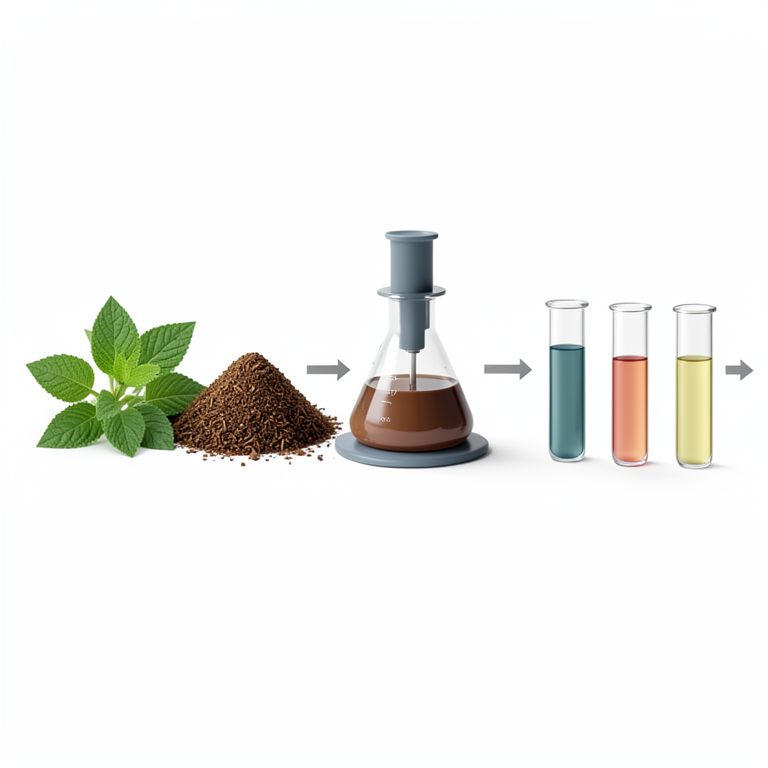
Phytochemical Screening Workflow
AI-generated conceptual illustration (Medicinal plant leaves from Rajasthan (Cocculus hirsutus, Solanum nigrum, Datura innoxia, Cuscuta reflexa, and Solanum s). It explains the idea and does not show study data.
View source evidence ↗Figures & tables
From the original paper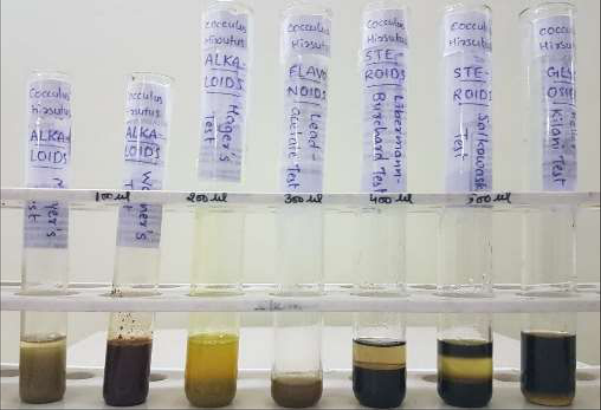 Figure 1
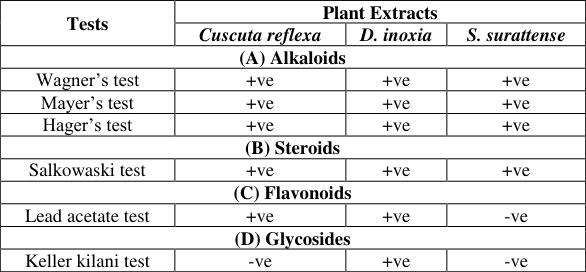 Table 1
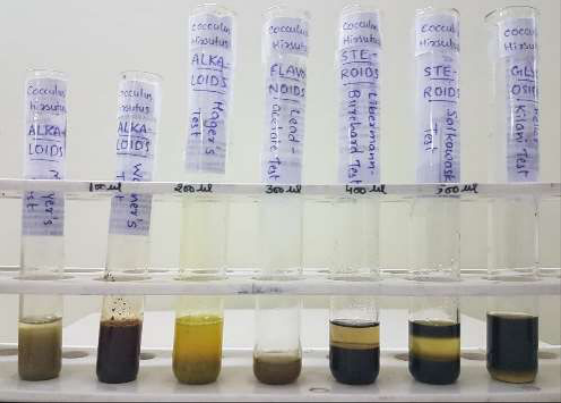 Figure 2
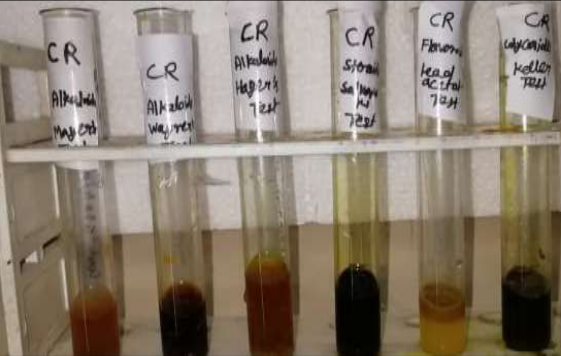 Figure 3
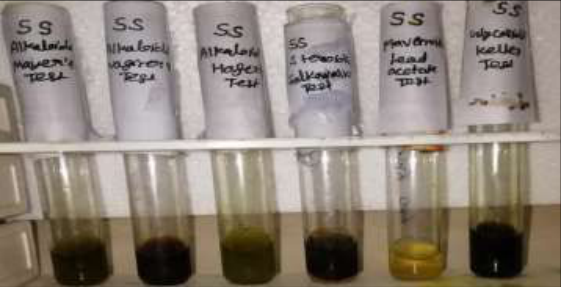 Figure 4
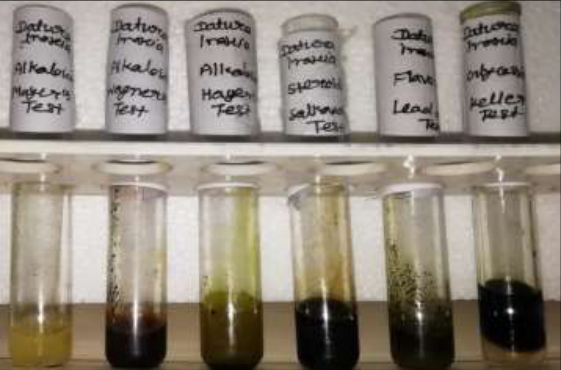 Figure 5
Introduction
Several plant chemicals are extracted by phytochemical screening in order to assess their biological activity or medicinal potential. Plants have medicinal value because they contain certain chemical components that clearly affect the biological system physiologically [1] . Plant-based chemicals have recently received a lot of interest due to their wide range of applications. Medicinal plants are a group of species that possess a wide range of active ingredients that can be utilised to treat various human or animal illnesses. They are the most plentiful source of bio-drugs on earth. Chemical entities and pharmacological intermediates, modern pharmaceuticals, conventional medical procedures, natural cures, dietary supplements, and nutraceuticals [2] . Due to the existence of phytochemical components that have a clear physiological effect on the human body, including as alkaloids, carbohydrates, terpenoids, steroids, flavonoids, and tannins, medicinal plants are effective for both treating and curing human ailments [3] . Due to its strong medicinal value, the roots and leaves of C. hirsutus are used both internally and externally for therapeutic purposes. The bitter root is used as a laxative, demulcent, tonic, diuretic, alternative medicine, and a treatment for constipation and renal problems. Several substances, including ginnol, glycosides, sterols, alkaloids, and essential oil, are said to be present in the C. hirsutus plant. Mice were used to investigate the oral acute toxicity of the C. hirsutus aerial component aqueous extract. Compounds found in S. nigrum L. are widely known for helping with a range of tasks and are useful for treating illnesses. The principal chemical constituents of this plant include polysaccharides, glycoproteins, and glycoalkaloids. Solamargine, solasonine, steroidal glycosides, and steroid alkaloids are all abundant in S. nigrum L. extracts. They have been found to be quite effective in treating liver diseases brought on by carbon tetrachloride, such as cirrhosis and fibrosis. Due to the variety of its metabolites, Datura innoxia is a species that may be considered for use in a variety of contexts, such as the management of phytopathogenic fungi that damage different crops and result in financial losses in agricultural production. The parasitic weed plant Cuscuta reflexa needs nutrients from the host plant in order to grow and thrive.
The parasitic weed plant Cuscuta reflexa needs nutrients from the host plant in order to grow and thrive. As a result, the host plant also affects its phytoconstituents. A variety of phytoconstituents have been identified from Cuscuta grown on different host plants. Alkaloids, flavonoids, saponins, terpenoids, glycosides, tanins, phenols, and steroids were subjected to routine phytochemical analysis for secondary metabolites. In Indian traditional medicine, S. surattense is frequently used to cure a range of ailments, including asthma, gonorrhoea, rheumatism, fever, and respiratory problems Fever, cough, asthma, and chest pain can all be treated with the herb as a decoction or an electuary. Fruit and leaf extract has been reported to have significant antihyperglycemic effect. More and more people are getting interested in using natural antioxidants like polyphenols, which are present in food and medicine plants and may help to prevent oxidative damage.
Materials and Methods
Materials and Methods
Plant sample collection:
The healthy leaves Cocculus hirsutus, Solanum nigrum, Datura innoxia, Cuscuta reflexa and Salanum surattense were collected from their natural habitats in Ajmer, India, and brought to the laboratory. The leaves were washed with tap water and air dried at room temperature. The dried samples of plants were powdered in an blender and stored in air tight plastic bags for further analysis. All the plants were botanically authenticated as per APG IV classification.
Preparation of plant extract:
Using a Soxhlet apparatus, 10 g of the dried and powdered plant material was extracted for 6 to 8 hours at a temperature below the boiling point of the solvents with 160 ml each of ethanol. The resulting crude extracts were filtered using Whatman No. 1 filter paper, concentrated using a rotary evaporator at 40 °C while under vacuum, and then kept at 4 °C for further use.
Phytochemical analysis Quantitative analysis of phytochemicals 1. Test for Alkaloids a. Mayer's test:
To a 1 mL of plant sample extract, 2 mL of Mayer's reagent was added along the sides of the test tube.
Appearance of white creamy precipitate indicates the presence of alkaloids.
b. Wagner's test:
To a 1 mL of plant sample extract, 2 mL of Wagner's reagent was added along the sides of the test tube. A reddish-brown precipitate confirms the test as positive.
c. Hager's test:
To a 1 mL of extract, 3 mL of Hager's reagent was added and appearance of yellow precipitate gives positive result.
Test for Steroids a. Libermann-Burchard's test:
The extract was dissolved in of 2 mL acetic anhydride. To this, 1 or 2 drops of concentrated sulphuric acid was added slowly along the sides of the test tube. An array of colour change shows the presence of steroids.
b. Salkowaski test: 1 mL of extract, chloroform and concentrated sulphuric acid was mixed and two layers were formed. Colour change from bluish red to cherry red in chloroform layer and green fluorescence in acid layer gives positive result.
Test for Flavonoids
a. Lead acetate test: 1 mL of plant extract was taken and slowly few drops of 10% Lead acetate solution was added. Formation of yellow precipitate gives a positive result.
Test for Glycosides
a. Keller kilani test: 1 mL of extract was mixed with acetic acid containing traces of ferric chloride, mixture was then transferred to a test tube containing concentrated sulphuric acid. Colour change from reddish brown to blue at function of two phase gives positive result.
Results
The pharmacological effects of these all plants are due to the presence of bioactive chemical constituents. Datura innoxia, contained all tested constituents as shown in Table . Cocculus hirsutus and Cuscuta reflexa contained all tested constituents as shown in
Discussion
The preliminary phytochemical analysis of the four medicinal plants used in this study revealed that they all possess the phytochemicals that make up them and that these phytochemicals have a variety of significant biological functions. Alkaloids have pharmacological actions such as antibacterial [4] , antiarrhythmic, analgesic [5] , and antihyperglycemic [6] actions, according to reports. Alphaglucosidase activity [7] , antioxidant activity [8] , and antiinflammatory activity [9] were all known properties of flavonoids.
Due to the presence of the aforementioned biologically significant phytochemicals that the current study was able to identify in the leaves Cocculus hirsutus, Solanum nigrum, Datura innoxia, Cuscuta reflexa and Salanum surattense these research findings clearly support the medicinal use of these plants.
Saponins have antifungal, antibacterial, anti-protozoal, and lipid-lowering characteristics, while glycosides are known for their effects on the contractile forces of cardiac muscle. The presence of ascorbic acid in plant species has demonstrated significant levels of overall antioxidant qualities of plants. The presence of saponin in all plant species demonstrates that they can be utilised to decrease cholesterol and have antibacterial and anthelmintic properties. Due to the presence of saponins, all of these may be utilised as cytotoxic and expectorants by inducing an upper digestive tract response [10] . The activity of numerous enzymes, including those thought to be involved in the formation of free radicals such xanthine oxidase, peroxidase, and nitric oxide synthase, can also be inhibited by flavonoids. As a result, the oxidative damage to macromolecules is reduced [11] .
All plants contain phenolic chemicals, which have been found to have a variety of biological benefits, including antioxidant, free radical scavenging, anti-inflammatory, and anti-carcinogenic properties. Due to the presence of phenolic compounds, they may help prevent a number of chronic illnesses, including diabetes, cancer, cardiovascular disease, and infections caused by bacteria and parasites [12] . While the presence of reducing sugars in these plants has a reductive qualities, tannins also have astringent, antioxidant, and free radical scavenger properties that aid in wound healing and are useful in treating peptic ulcers [13] .
Terpenoids included here may have antioxidant and cardio protecting effects [14] . In biological systems, steroids are commonly used as signalling chemicals and reduce membrane fluidity.
Conclusion
In conclusion, the overall results of study suggest that that all plants of leaves Cocculus hirsutus, Solanum nigrum, Datura innoxia, Cuscuta reflexa and Salanum surattense. have at least one component that is pharmacologically active. To create therapies that show promise in the treatment of dysfunctional disorders, it is also use discover a new compound use as drugs for treatment of disease.
Further quantitative and chromatographic studies should be carried out on the phytochemical compounds present in all plants.
Figures and tables from the paper
| Tests | Plant Extracts | — | — |
|---|---|---|---|
| Cuscuta reflexa | D. inoxia | S. surattense | |
| (A) Alkaloids | |||
| Wagner’s test | +ve | +ve | +ve |
| Mayer’s test | +ve | +ve | +ve |
| Hager’s test | +ve | +ve | +ve |
| (B) Steroids | |||
| Salkowaski test | +ve | +ve | +ve |
| (C) Flavonoids | |||
| Lead acetate test | +ve | +ve | -ve |
| (D) Glycosides | |||
| Keller kilani test | -ve | +ve | -ve |
Table text extracted from the original PDF; superscript letters are shown inline. The original table image is below.
View original table image
References
13 in the original paper- Aslam F, Rehman KMA, Sarwar M. Antibacterial activity of various phytoconstituents of neem. Pakistan Journal of Agricultural Sciences. 2009;46(3):209-213. International Journal of Biology Sciences https://www.biologyjournal.net
- Ncube NS, Afolayan AJ, Okoh AI. Assessment techniques of antimicrobial properties of natural compounds of plant origin: current methods and future trends. African Journal of Biotechnology. 2008;7(12):1797-1806.
- Krishnaiah D, Sarbatly R, Bono A. Phytochemical antioxidants for health and medicine: A move towards nature. Biotechnology and Molecular Biology Reviews. 2007;1(4):97-104.
- Cushnie TT, Cushnie B, Lamb AJ. Alkaloids: An overview of their antibacterial, antibiotic-enhancing and antivirulence activities. International Journal of antimicrobial agents. 2014;44(5):377-386.
- Qiu S, Sun H, Zhang AH, Xu HY, Yan GL, Han Y, et al. Natural alkaloids: basic aspects, biological roles, and future perspectives. Chinese Journal of Natural Medicines. 2014;12(6):401-406
- Geng P, Yang Y, Gao Z, Yu Y, Shi Q, Bai G. Combined effect of total alkaloids from Feculae bombycis and natural flavonoids on diabetes. Journal of Pharmacy and Pharmacology. 2007;59(8):1145-1150.
- Gil MI, Ferreres F, Tomas-Barberan FA. Effect of postharvest storage and processing on the antioxidant constituents (Flavonoids and vitamin C) of fresh-cut spinach. Journal of Agricultural and Food Chemistry. 1999;47(6):2213-2217.
- Panthong A, Kanjanapothi D, Tuntiwachwuttikul P, Pancharoen O, Reutrakul V. Anti-inflammatory activity of flavonoids. Phytomedicine. 1994;1(2):141-144.
- Ayoola PB, Adeyeye A. Phytochemical and Nutrient Evaluation of Carica papaya (Pawpaw) Leaves. International Journal of research and reviews in applied sciences. 2010;5(3):325-328.
- Cazarolli LH, Zanatta L, Alberton EH, Figueiredo MS, Folador P, Damazio RG, et al. Flavonoids: Prospective Drug Candidates. Mini-Reviews in Medicinal Chemistry. 2008;8(13):1429-1440.
- Canini A, Alesiani D, D'Arcangelo G, Tagliatesta P. Gas chromatography-mass spectrometry analysis of phenolic compounds from Carica papaya L. leaf. Journal of Food Composition and Analysis. 2007;20(7):584-590.
- Rajurkar NS, Gaikwad K. Evaluation of phytochemicals, antioxidant activity and elemental content of Adiantum-capillus-veneris leaves. Journal of Chemical and Pharmaceutical Research. 2012;4(1):365374.
- Kusmic C, Basta G, Lazzerini G, Vesentini N, Barsacchi R. The effect of Ginkgo biloba in isolated ischemic/reperfused rat heart: A link between vitamin E preservation and prostaglandin biosynthesis. Journal of Cardiovascular Pharmacology. 2004;44(3):356-362.