
Research article · 2023 · Full text
International Journal of Geography Geology and EnvironmentGeological setting, petrography and mineralogy of laterites from Swarnagadde plateau of Western Ghats, Karnataka
Volume 5(1) · Pages 25–31 · DOI: 10.22271/27067483.2023.v5.i1a.137 ↗
Research areasGeochemistry and Geologic MappingGeochemistry and Elemental Analysis
Abstract
Author-writtenThe word “laterite” has been applied to such a diverse range of geomorphic features that it no longer has value as a precise descriptive term (Paton and Williams, 1972) [19]. The present paper gives an account of Geological Setting, Petrography and Mineralogy of Laterites from Swarnagadde Plateau of Western Ghats, Karnataka. The most widespread occurrences of laterites within the Western India have been recognized in a series of different geological-geomorphological settings, and are found in two distinct geomorphological zones. Mineralogical characterization of laterite and parent rocks could help in understanding the process of Lateritisation and bauxitization. While genesis of laterite is subjected to the process of alteration and it mainly decipher by the composition of preexisting rocks and also processes involved in lateralization/bauxitization. Mineralogy of lithomarge zone is predominated by kaolinite that of aluminous laterite zone by gibbsite. But, laterite and ferruginous laterite zones are predominated by both gibbsite and goethite with good amount of heamatite. In the entire lateritic weathering profile quartz occurs ubiquitously as the main resistant relic mineral. The occurrence of anatase and ilmenite is restricted to aluminous laterite zone.
Summary
Source-checkedPlain-language reading of the full paper, prepared with AI and checked against the text. Each point links to the authors' own words.
Why it matters
- Analyzing the mineral composition of laterites and their parent rocks is useful for understanding how lateritization and bauxitization processes occur. View evidence ↗
- The formation of laterite is driven by alteration processes that depend on the composition of the original rocks and the specific mechanisms of lateritization or bauxitization. View evidence ↗
The question
- The study aims to describe the geological setting, petrography, and mineralogy of laterites found on the Swarnagadde Plateau in the Western Ghats of Karnataka. View evidence ↗
What they did
- The research was conducted on the coastal margin of western peninsular India, specifically between longitudes 14˚18' to 14˚24' N and latitudes 74˚24' to 74˚ 30' E. View evidence ↗
- The authors used thin section petrography for bedrocks and laterites, and X-ray diffraction (XRD) to analyze the mineralogy of laterite, aluminous laterite, ferruginous laterites, lithomarge clay, and altered rock fragments. View evidence ↗
- To prepare thin sections from porous or friable samples, the rocks were impregnated by immersion in acetone for 1 to 2 weeks. View evidence ↗
What they found
- The mineral composition varies by zone: the lithomarge zone is dominated by kaolinite, the aluminous laterite zone by gibbsite, and the ferruginous laterite zone by both gibbsite and goethite, along with significant hematite. View evidence ↗
- Quartz serves as the primary resistant relic mineral found throughout the entire lateritic weathering profile. View evidence ↗
- The presence of boehmite and anatase is limited specifically to the aluminous laterite zone. View evidence ↗
- Diaspore is a stable minor mineral found across the profile from altered gneiss to ferruginous laterite, though it is rare in the lithomargic zone. View evidence ↗
- Gibbsite grains in the samples were found to range in size from 10 mμ to 100 mμ. View evidence ↗
- Diaspore crystals in the study area range in size from 10 to 15 mμ. View evidence ↗
- Boehmite crystals were observed to be smaller than 10 mμ. View evidence ↗
- In high-grade, low-silica aluminous laterite, kaolinite content is less than 10%, and it appears only in trace amounts in the most desilicated deposits. View evidence ↗
What it means
- The authors conclude that the mineralogy of the Swarnagadde plateau is zoned, with kaolinite dominating the lithomarge, gibbsite dominating the aluminous laterite, and a mix of gibbsite, goethite, and hematite dominating the ferruginous laterite. View evidence ↗
- The authors state that quartz is the most ubiquitous and primary resistant relic mineral throughout the entire weathering profile. View evidence ↗
Visual summary
1 visualsIllustrations explain the paper; they do not show study data.
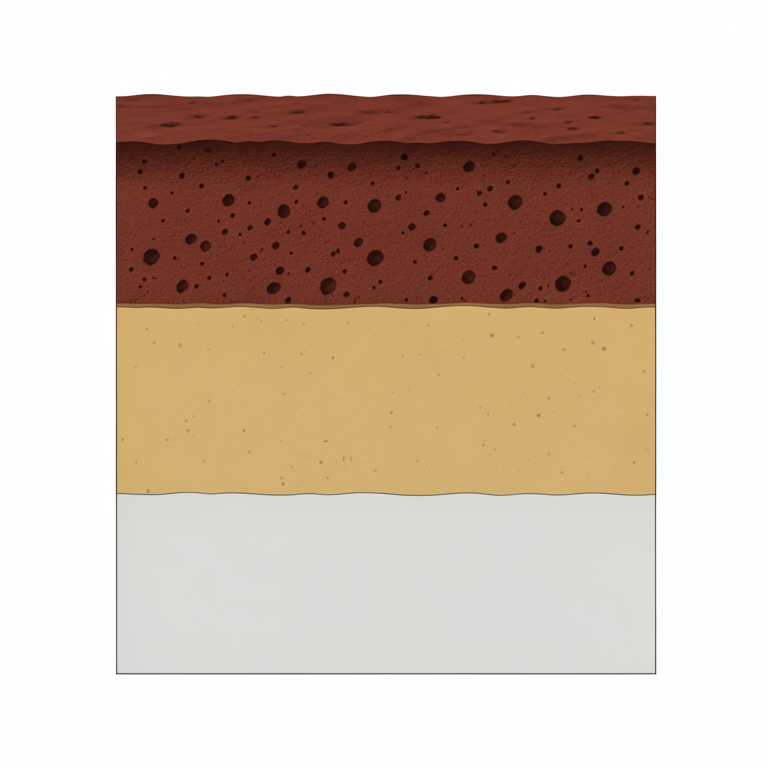
Mineral Zonation of Laterite Profile
AI-generated conceptual illustration (Laterite soil profile from the Swarnagadde plateau). It explains the idea and does not show study data.
View source evidence ↗Figures & tables
From the original paper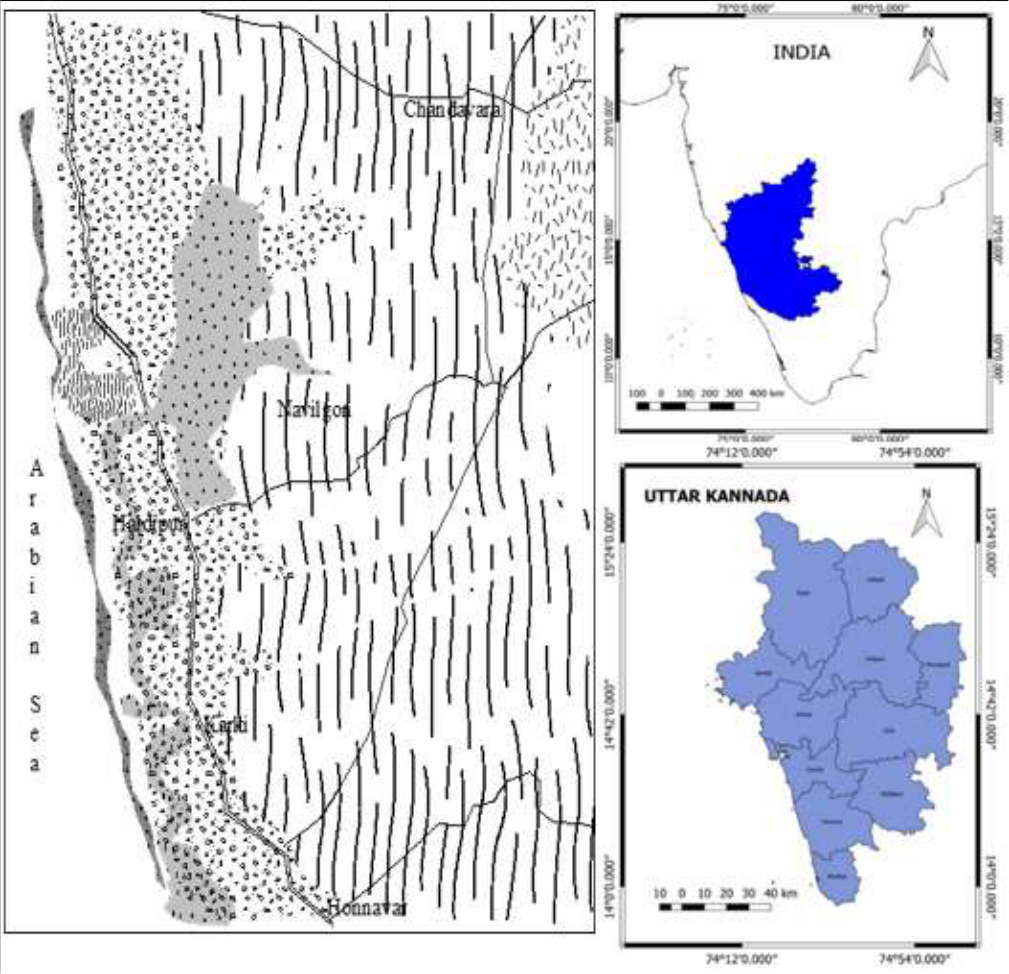 Figure 1
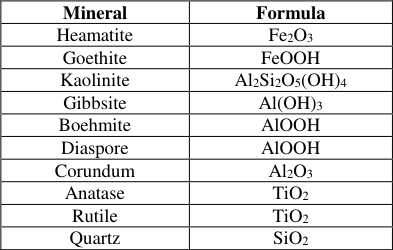 Table 1
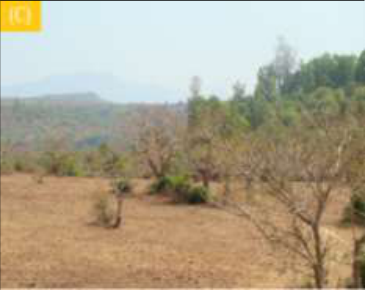 Figure 2
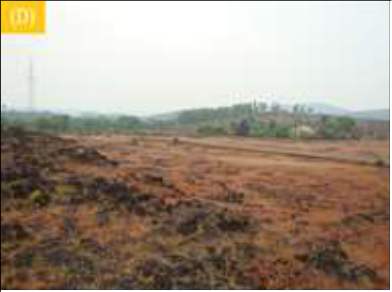 Figure 2
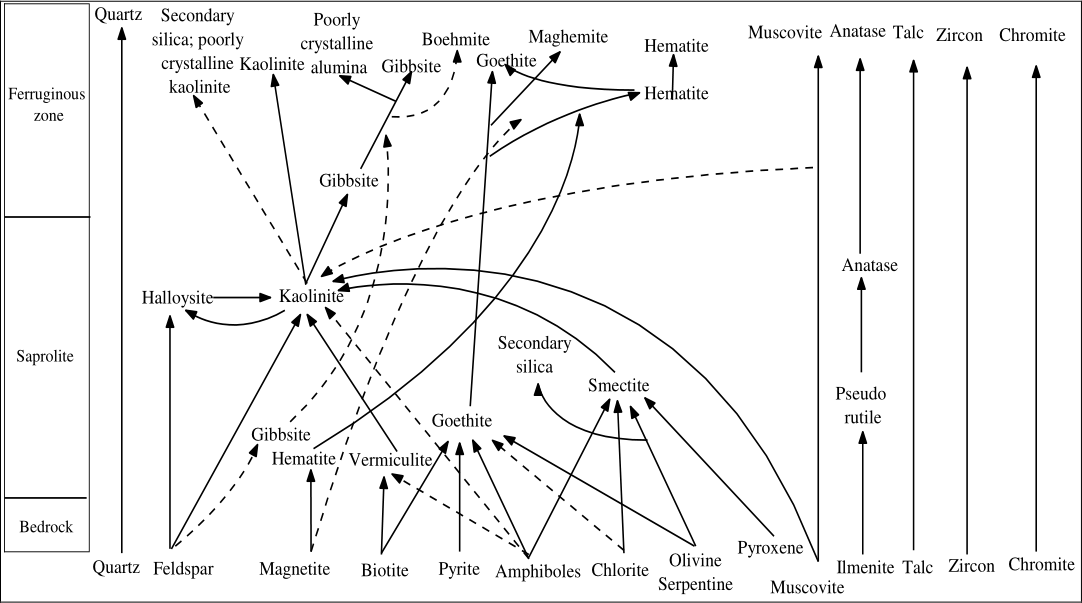 Figure 3
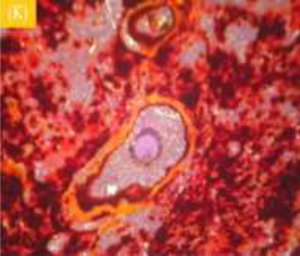 Figure 4
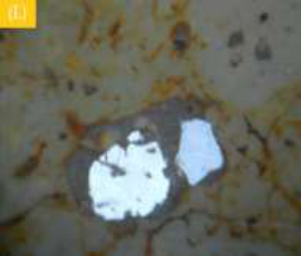 Figure 4
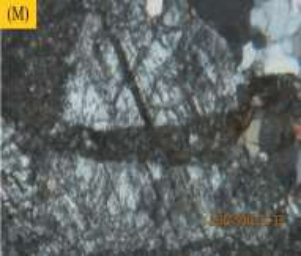 Figure 4
Text
The most widespread occurrences of laterites within the Western India have been recognized in a series of different geological-geomorphological settings and are found in two distinct geomorphological zones: 1. Capping the elevated basalt mesas of the Western Ghats, where they are developed upon the Deccan lavas (Sahasrabudhe and Deshmukh, 1981; Widdowson and Cox, 1996, 1997a) [23,31] . 2. An extensive, semi-continuous belt lying to the west of the main Western Ghats escarpment between Bombay and Mangalore capping the coastal plateaux of the outer Konkan plain (Widdowson, 1990) [31] .
The Western Ghats escarpment is preceded by a ramp of dissected laterite-capped mesas which slope gently from altitude of 180 to 200m in the east of the coastal plain, to 80 to 100m adjacent to the coast. A second generation of laterite mesas is particularly prominent in estuarine regions and occupies a lower elevation of 60-70 m. The study area is characterized by Precambrian crystalline rocks (Granites, Granitic gneisses and Schists), laterites and basic dykes (Figure 2A). The oldest rock of the study area is granitic gneiss and these are predominantly of tonalite/trondhjemites in nature and are comparable to similar early Precambrian granitic gneiss of other shield areas of the world. Granitic gneiss/granites cover major portion of the coastal tract, which is the North-Western coastal continuation of peninsular gneisses or Northern continuation of South Kanara gneisses/granites. The gneisses form prominent hills and headlands along the coasts, however, the granites are present as patches within gneisses. On the basis of lithological characters and criteria for superposition available rock masses were found to orient in an order and three different types of land forms comprising the laterites have been established. They are 1) Flat top plateau.
3) Slightly undulated top plateau (Figure 2A-2D).
Materials and Methods
Laboratory investigations included-Petrography of bedrocks and laterites (thin section study). Mineralogical analysisusing X-Ray diffraction (XRD)-laterite, aluminous laterite, ferruginous laterites, lithomarge clay and altered rock fragments. The systematically collected samples were analyzed for their mineralogical and geochemical characterization. Selected samples were sent for X-ray Diffraction (XRD) analysis for mineralogical characterization. A detailed optical study was carried out in order to decipher, the parent rock responsible for the formation of the laterites and aluminous laterites in the departmental laboratory. Preparation of thin sections of laterite and weathered/altered parent rock is a difficult task. For this, a porous or friable rock, ore or mineral sample is to be first impregnated before making a thin section out of it. This impregnation was done by using the method, the laterite, weathered/altered rock samples were immersed for 1-2 weeks in acetone kept in a covered glass beaker (longer time for highly porous and friable rocks), when it becomes sufficiently hard for grinding and mounting. Following the method quite good number of sample of laterites and weathered/altered, fresh associated rock thin sections have been prepared and studied its optical properties. Thin and polished sections were prepared for optical study and these sections were studied under microscope on varying magnifications (5X, 10X etc.). Thin and polished sections were studied in the departmental laboratory (Dept. of Geology, Karnatak Science College, Dharwad).
Results and Discussion
Results and Discussion
Mineralogy
The mineralogy of laterites, ferruginous and aluminous laterite is complex, at present with nearly 200 minerals having been identified in lateritic materials alone (Bardossy, 1979; Aleva, 1994) [5,1] . This range derives from the variety of protolith and/or host-rock compositions, and the several transformations can take place upon their mineral constituents (Tardy et al., 1973) [26] . However, the majority of laterites and aluminous laterites consists combination of less than a dozen 'rock-forming' minerals; this assemblage is dominated by stable secondary minerals and predominantly iron and aluminium oxides and sesquioxides (Table 1 and Figure 3). Mineralogical characterization of laterite and parent rocks could help in understanding the process of Lateritisation and bauxitization. While genesis of laterite is subjected to the process of alteration and it mainly decipher by the composition of preexisting rocks and also processes involved in lateralization/bauxitization. Present paper deals with the petrography and mineralogy of lateritic rocks of the study area along with their texture, forms and mineral transformations. The extent of chapter comprises thin section studies under polarizing microscope, and X-ray diffraction studies were also taken up on a few The present investigation has revealed that in the Swarna gadde, the mineralogy of lithomarge zone is predominated by kaolinite, that of aluminous laterite by gibbsite and of laterite/ferruginous laterite by both gibbsite and goethite with good amount of hematite. Generally, quartz is the chief resistant relic mineral occurring in the entire lateritic profile of the study area. Diaspore is the stable minor mineral phase that occur entire profile from altered gneiss to ferruginous laterite, but this is very rare in lithomargic zone. Occurrences of minerals like anatase and boehmite is restricted to aluminous laterite, while, existence of hematite in aluminous laterite, laterite, and ferruginous laterite is the most common characteristic feature of the entire laterite profile of the study area. In addition, nearly all the minerals of the parent granitic gneiss are noted to occur as occasional resistant relics in almost the entire laterite profile.
| Mineral | Formula |
|---|---|
| Heamatite | Fe2O3 |
| Goethite | FeOOH |
| Kaolinite | Al2Si2O5(OH)4 |
| Gibbsite | Al(OH)3 |
| Boehmite | AlOOH |
| Diaspore | AlOOH |
| Corundum | Al2O3 |
| Anatase | TiO2 |
| Rutile | TiO2 |
| Quartz | SiO2 |
Table text extracted from the original PDF; superscript letters are shown inline. The original table image is below.
View original table image
Mineral Composition
The most important constituent minerals were identified in the thin sections of laterites, aluminous, ferruginous laterite and altered granitic gneiss of the study area is as follows:
Aluminous Minerals Gibbsite-Al(OH)3:
The occurrence of gibbsite largely in samples of aluminous/ferruginous laterite as white patches or some time as extremely porous white mineral and very rarely in lithomargic clay. Gibbsite show a gradual upward increase up to the aluminous laterite/ferruginous laterite zone of the profile. Light coloured bands of gibbsitic composition are seen in nodules and concretions, gibbsite crystals have not been recognized megascopically in any samples, as the size of the gibbsite grains ranges between 10 mμ to 100 mμ (milli microns). The gibbsite crystals are generally colourless to pale brown in thin sections and display moderate to weak birefringence up to low second order. Large tabular gibbsitic crystals demonstrate polysynthetic twining with well-defined thin lamellae. In samples of altered granitic gneiss the direct alteration of feldspars to gibbsite along the grain boundaries and cleavage planes (Fig 4 -E, F andG) is evident in thin section. Alteration of kaolinite into gibbsite and its occurrence in the form of minute crystal can also be seen.
Diaspore-Al O (OH):
The presence of diaspore is a rare but constant alumina mineral phase of the entire laterite profile from the altered granitic gneiss to top ferruginous laterite except for lithomargic clay zone. The size of the diaspore crystals ranges between 10-15 mμ, with the contents of matrix between the pisoids contains less diaspore and more kaolinite (Figure 4-H).
Boehmite-AlO (OH):
Subsequent to gibbsite, though, the occurrence of this mineral phase in rare amounts is mainly restricted to ferruginous and aluminous laterite. The size of boehmite crystals is less than 10 mμ, and this mineral is present in pisoidal as comparison to gibbsite and occurs in nucleus of pisoids as minute grain. This mineral, however, it is not distinguished in any of the separated phases of aluminous laterite (Figure 4-I).
Iron Minerals
Hematite-Fe2O3: Hematite is the most common iron mineral present considerably greater amounts in ferruginous laterites than in aluminous laterite and lateritic bauxite, although it occur relatively minute proportion with goethite. Presence of hematite in aluminous laterite/lateritic bauxite is inferred from its typical reddish-brown colour. Hematite rich portions of laterite and aluminous laterite demonstrate as black or reddish brown patches in thin sections. The moderate orange pink-phase contains small amounts of it, and the moderate yellowish-brown and white phases are devoid of this mineral. It is also seen as scattered grains (Figure 4-H).
Goethite-Fe2O3H2O: Goethite is the chief consistent iron mineral phase occurs in laterites, ferruginous laterite and in aluminous laterite, but scares in clays of the study area. However, this mineral cannot be recognized megascopically and its existence may be ascertained by its fine diffusion in the aluminous laterite and lateritic bauxite giving aphanitic texture and distinguishing yellowish brown colour (Figure 4-J). This is the most significant constituent mineral phase of ferruginous laterite occurring in pisoids, nodules and concretions and it can also be seen as encrustations and fracture filling between grains of other minerals. In thin section of ferruginous laterite, goethite along with hematite appears as dark red and brown spherical bodies with weak margins, solution movement can also be seen along it. However, in thin sections of pisolitic laterite/ferruginous laterite, it appears as concentric rings. In addition, it is a constant minor mineral of all the separated coloured phases except the white one in which it is completely absent.
Clay minerals
Kaolinite-Al4 (OH)8(Si4O10): Kaolinite is the most common widespread clay mineral occurring within the lithomargic clay zone, its content in aluminous laterite/lateritic bauxite is very rare. Generally, there is a gradual increase of kaolinite from ferruginous laterite down to the lithomargic clay (saprolite) of the laterite profile of the study area. This decreasing trend of the kaolinite could be seen in one of the mining pits. High-grade, low silica aluminous laterite contains less than 10% kaolinite where as it is present in trace amount in the most desilicated deposits. Kaolinite found consistently distributed with aphanitic textures and also concentrated in the matrix between pisoids, nodules and concretions. The manifestation of kaolinite in thin section as worm like structures and its transformation into gibbsite could also be seen (Figure 4-K). With the exception of kaolinite, some samples of laterite/aluminous laterite were also found to contain montmorillonite and halloysite, but their existence was detected only from XRD results.
Other minerals-Relic minerals
Quartz/Silica-SiO2: Quartz is the most important resistant relic mineral in the complete profile, despite of a variety of neominerals described in the earlier and the ubiquitous occurrence of nearly all. The precursor minerals of the granitic gneiss are distinguished to take place as intermittent resistant relics in almost the complete weathering profile of laterite. Quartz is almost absent in aluminous laterite of study area, in some laterites a small amount of quartz is noticed. Quartz is identified in thin sections as minute irregular grains, between the crystals of gibbsite, goethite and hematite. Quartz differs from the other major minerals present in the profile in that it is a residual primary mineral, it shows a decreasing trend from lithomarge upwards into laterite/aluminous laterite and a slight increase upwards into ferruginous laterite (Figure 4-L).
Biotite-(Bt):
The sporadic occurrence of this mineral is distinguished in some of the laterite thin sections obtained from a sample of aluminous laterite. This mineral displays the typical brown colour rod/needle-like inclusions, which are a very common feature in the biotite of precursor granitic gneiss.
Feldspars: Occurrence of these minerals in small anhedral to sub-hedral grains, is restricted mostly to the lithomargic clay and altered gneisses, they are also noticed in the light fraction obtained from a sample of aluminous laterite (Figure 4-M). The observed optical properties suggest that both K-feldspar and albitic-plagioclase occur as residual relics.
Zircon-(Zr):
The presence of zircon as the resistant accessory mineral, practically unaffected by lateralization/bauxitization, and has absolutely retained in its original shape, size and other physical characteristics. Titanium minerals: Anatase (FeTiO2) and Rutile (TiO2) are the most common important titanium neominerals documented, but their occurrence is restricted to the aluminous laterite. These are the opaque minerals and appear as completely black in thin section and generally, anatase was determined by X-ray diffraction in aluminous laterites of the study area. Rutile (TiO2) is also inadequate in the lateritic profile of the entire study area and it is recognized by their deep red and orange colour. Rutile is characteristically prismatic in shape, however, sub rounded grains are also observed, they are mostly yellow orange in colour. The distinguishing features of the rutile grains as colour and dark boundaries.
Petrography of Laterite and Aluminous Laterite
Microscopic study of thin sections of laterites and aluminous laterites of Swarna gadde plateau reveals that petrographic characters of the study area are not much varied. However, different petrographic characters were identified in ferruginous laterite, pisolitic laterite and aluminous laterites of the study area.
Aluminous Laterite
Thin section studies of the massive and vermiform aluminous laterite display the existence of gibbsitic material closely associated with ferruginous material. In transmitted light the gibbsitic material is brownish yellow to greenish yellow in colour and looks like an amorphous mass. Whereas, in ferruginous laterite existence of gibbsitic material forms dust like patches. These materials are also traversed by numerous solution and pathways, along the center of which is noticed dark to almost blackish ferruginous material. Relatively larger and euhedral grains of gibbsite are noticed as infillings in circular to oval shaped cavities. Quartz, if present shows indication of chemical reaction and it is very fine to medium grained. Some pisolitic varieties of aluminous laterite exhibit either a gibbsitic core or ferruginous core with the indication of solution movement. Alternate coloured rings could be seen in hand specimen demonstrated in thin sections as gibbsitic and goethite/hematitic layers. However, movement and deposition of aluminous solution within ferruginous core can also be seen in the form of very fine grained gibbsitic and sometimes boehmite material. This reveals from the thin section study that the pisoids might have been developed from periodic precipitation of iron-aluminium hydroxide-gel into spherical or oval bodies. These pisoids are often heavily cracked which are filled with amorphous clay. Fine grained gibbsite is found intermittently distributed within the pisoids. Although, typical massive and pisolitic texture, some thin section of aluminous laterite illustrate segregation of gibbsite and goethite/hematite in the form of colloform bands. Valeton (1972) [28] , referred this type of texture as gel-like texture, formed by complete enrichment of Al or Fe resulting in destruction of relic textures, followed by rearrangement in spherical fabrics. Such types of textures are to be formed by colloidal deposition of aluminous and ferruginous material followed by recrystallization. The colloidal growth may be due to the variation of rhythmic differentiation of Fe +3 and Al +3 of the hydroxyl-gel.
Ferruginous Laterite
Ferruginous laterite demonstrate interrelationship between iron and aluminium minerals. In thin sections, ferruginous laterites show solution, movement and segregation of iron. Movement of iron solution along cracks within pisoids is visible. Iron solution also takes the irregular shape occupying cavities and voids. Similarly gibbsite can be seen occupying cavities within ferruginous material. Formation of gibbsite can also be seen between ferruginous pisoids.
Conclusion
The purpose of the present investigation is to find out the geological setting, mineralogy and petrology of lateritic deposit of the Swarna gadde plateau is one of the most important occurrences in the western part of the coastal Karnataka. Mineralogy of lithomarge zone is predominated by kaolinite that of aluminous laterite zone by gibbsite. But, laterite and ferruginous laterite zones are predominated by both gibbsite and goethite with good amount of heamatite. In the entire lateritic weathering profile quartz occurs ubiquitously as the main resistant relic mineral. The occurrence of anatase and ilmenite is restricted to aluminous laterite zone. Hematite occurrence in aluminous laterite/laterite/ferruginous laterite is not uncommon.
Figures and tables from the paper
References
14 in the original paper- Alexander LT, Cady JG. Genesis and hardening of laterite in soils. USDA Technical Bulletin. 1962;1282:1-90.
- Ananthamurthy KS, Mehran G. Infrared spectra of lateritic bauxite of Paduvari plateau, South Kanara, Karnataka: Abstract National workshop on red and lateritic soils of India, held at Bangalore (Proceedings volume, 1993); c1990.
- Bardossy GY. The role of tectonism in the formation of bauxite deposits. Travaux de I' ICSOBA (ZAGREB). 1979;15:16-34.
- Bourman RP, Ollier CD. Reply to the discussion of A critique of the Schellmann definition and classification of laterite by Bourman RP and Ollier CD (Catena). Catena 52, 81-83. 2003;47:117-131.
- Devaraju TC, Khanadali SD. Distribution of Alkali and alkaline Earth. Elements in Bauxites-laterites of Paduvari plateau (South Kanara Dist. Karnataka State). The Journal of the Geological Society of India. 1983;24(3):148-155.
- Khanadali SD, Devaraju TC. Laterites-bauxites of Paduvari plateau, South Kanara, Karnataka state. The Journal of the Geological Society of India. 1987;30(4):255-266.
- Ollier CD, Seth HC. The high Deccan duricrusts of India and their significance for the "Laterite" issue. Journal of Earth System Science. 2008;117(5):537-551.
- Pascoe EH. A Manual of the Geology of India and Burma, Delhi: Geological Survey of India. 1964;3:1345-2130.
- Paton TR, Williams MAJ. The concept of laterite: Annals of the Association of American Geographers. 1972;62:42-56.
- Raychoudhuri SP. The occurrence, distribution, classification and management of laterite and lateritic soils. Cahiers O.R.S.T.O.M. Serie Pedologie. 1980;18(3-4):249-252.
- Roy Chowdhury MK. Recent concepts on the origin of Indian laterite. Proceedings of the National Academy of Sciences, India, Section A: Physical Sciences. 1965;31A(6):547-558.
- Sahasrabudhe YS, Deshmukh SS. The laterites of the Maharashtra State. Lateritisation Processes: Proceedings of the International Seminar on Lateritisation Processes, Trivandrum, 1979. Rotterdam: Balkema; c1981. p. 209-220.
- Tardy Y, Bocquier G, Paquet H, Millot G. Formation of clay from granite and its distribution in relation to climate and topography. Geoderma. 1973;10(4):271284.
- Vishwanathaiah MN, Krishna Rao B, Venkatadas SP. Bauxites of Paduvare area, South Kanara, Karnataka. The Ind. Mineralogists. 1974;15:63-73.