
Research article · 2022 · Full text
International Journal of Horticulture and Food ScienceGrafting observation of tomatoes on potatoes for urban and peri-urban agriculture in North Wollo Sirinka
Volume 4(2) · Pages 244–246 · DOI: 10.33545/26631067.2022.v4.i2c.158 ↗
Research areasUrban Agriculture and Sustainability
Abstract
Author-writtenPomato is a grafted plant developed by grafting tomato and potato with an objective to achieve both potato and tomato yield from a single plant for urban and peri- urban agriculture. In the study grafting between tomato and potato was done during october, 2018 at the screen house of Sirinka. 30 days old tomato seedlings were cleft grafted in a 20 days old potato seedling. Successful graft union was observed after two weeks of grafting. The grafted plants produced new branches and flowers. Mature fruits were ready to start harvest in about 110 days after grafting and harvesting was continuing up to 150 days. The result also showed that average fruits per plant in tomato were 18, average fruit weight 53 gram and an individual plant produce about 954 gram fruits. Edible potato tubers were ready to harvest at 120 days after grafting and yielding about 4-5 number of potato around 219.27 gram tuber from each plant (table 2). Though the experiment was conducted just as observation interest to show whether the graft succeeds or not. But after the completion of the study, it may be suggested that any home gardener, urban agriculture can practice this technique as an amazing satisfaction which may fulfill home requirement to some extend for both tomato and potato.
Summary
Source-checkedPlain-language reading of the full paper, prepared with AI and checked against the text. Each point links to the authors' own words.
Why it matters
- Growing multiple vegetables on a single piece of land can help address marketing issues and increase overall output. View evidence ↗
- Vegetable grafting is a specialized method used to manage the challenges of intensive cultivation when land is limited. View evidence ↗
- Grafting can be used to mitigate production difficulties including various wilts, nematodes, temperature extremes, flooding, and issues with fruit durability. View evidence ↗
The question
- The study aimed to evaluate the performance of grafting tomato onto potato, the simultaneous yield of both crops from a 'pomato' plant, and the potential for commercialization. View evidence ↗
What they did
- The experiment was conducted in October 2018 at a screen house located in Sirinka, Ethiopia. View evidence ↗
- The researchers used the Mersa variety of tomato as the scion and the Belete variety of potato as the rootstock. View evidence ↗
- Cleft grafting was performed by fitting 30-day-old wedge-cut tomato seedlings into 20-day-old right-angle cut potato stems. View evidence ↗
- The data for all measured parameters were calculated as the average of five plants. View evidence ↗
What they found
- The grafting success rate was approximately 62%, with the graft union taking 12 to 15 days to establish. View evidence ↗
- Tomato fruits reached maturity and were ready for harvest approximately 110 days after grafting, with harvesting continuing until 150 days. View evidence ↗
- The pomato plants produced an average of 17.75 tomato fruits per plant, with an average fruit weight of 52.8 grams and a total fruit weight per plant of 938.735 grams. View evidence ↗
- Edible potato tubers were ready for harvest 120 days after grafting, averaging 5.25 tubers per plant with an average single tuber weight of 219.27 grams. View evidence ↗
- Grafted plants took longer to produce marketable fruits compared to standard transplanted tomato plants, which typically require 65 to 90 days. View evidence ↗
What it means
- The authors suggest that urban farmers and home gardeners can use this grafting technology to meet their own consumption needs for both tomato and potato. View evidence ↗
- The yield of potato was low, and the authors state that further study is needed to determine how to improve potato yields from pomato plants. View evidence ↗
Visual summary
1 visualsIllustrations explain the paper; they do not show study data.
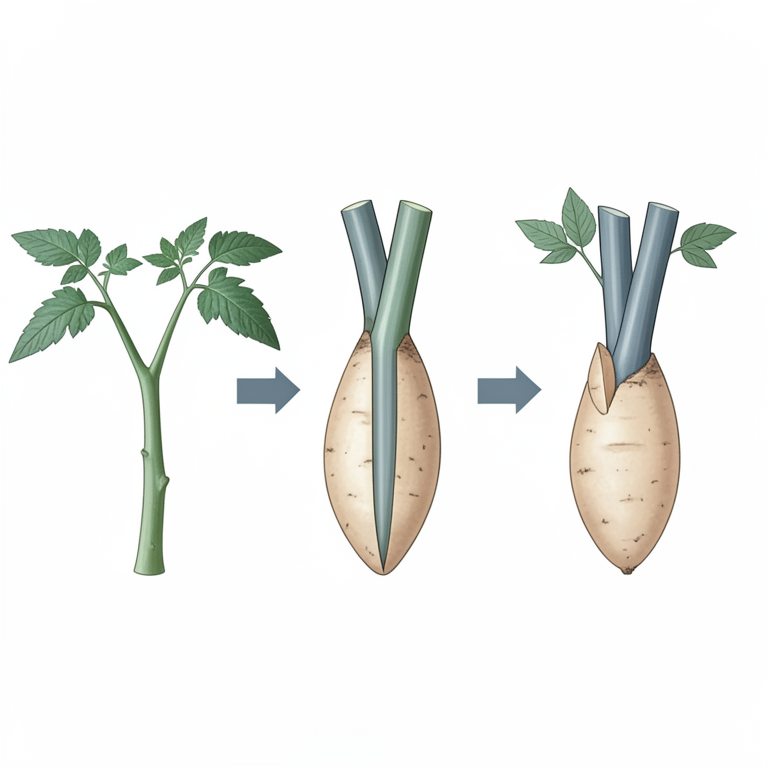
Cleft Grafting Concept
AI-generated conceptual illustration (tomato and potato seedlings). It explains the idea and does not show study data.
View source evidence ↗Figures & tables
From the original paper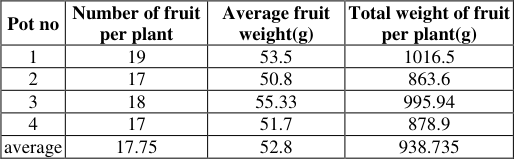 Table 1
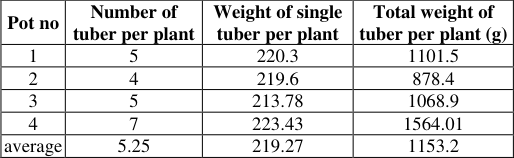 Table 2
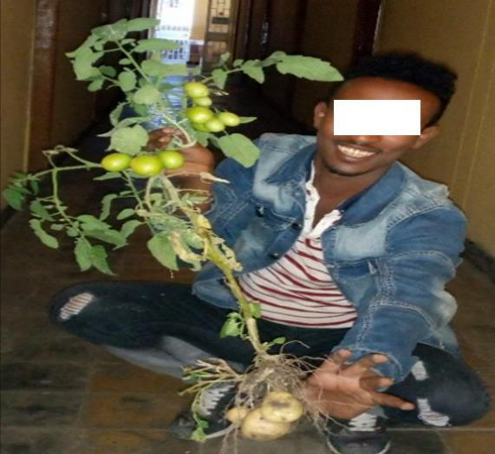 Figure 1
Introduction
Cultivation of multiple vegetables in a single unit of land is another way to overcome marketing problem and more outcomes. Climate change and urbanization along with a mass of population are force to shift agriculture in a changing situation. Modification of an existing system is a common practice to adopt in changing environmental situation. In Ethiopia urban and home gardening agriculture at present are grown for sustainable production and utilization. Grafting of vegetable is a unique strategy to overcome some difficult problem related to intensive vegetable cultivation using limited land. At first it was adapted by Japan and Korea and later by many countries in Europe, Northern Africa, Central America and other parts of Asia. In India, vegetable grafting has been started in different states of India however not adopted in Ethiopia. The vegetable grafting is an alternative strategy to overcome some important difficulty related to vegetable production such as bacterial wilt, fusarium wilt, nematodes, high and low temperature, flood, site specific adaptability, fruits durability etc. Kubota et al., (2008) [7] recorded that in North America using some particular rootstocks soil borne diseases and nematodes problem was overcome and increase yield. Pomato is a single plant artificially created by grafting of tomato in potato which has capability to produce both tomato and potato. Both the crops have a great demand in the daily life of Indian people and production is not increased so far as per population growth. Kumar et al., (2015) [10] reported that combination of scion and rootstock were greatly influenced growth, yield and fruit quality and applying grafting techniques resistance against low and high temperatures can be induced and improves quality of the plant. They also recorded that high post graft mortality of seedlings was occurred and still in infancy in India and improvement of grafting skills and healing environmental condition need to be standardized. Considering the point along with aesthetic interest present study was undertaken with the objectives of to see performance of grafting between tomato and potato, yield of tomato and potato from pomato in a same time, commercialization ability of the techniques.
Materials and Methods
The present study on vegetable grafting was done during october 2018 at screen house in Sirinka Ethiopia. In this experiment Mersa variety of tomato and Belete variety of potato were used as scion and rootstock respectively. About 4 square meters of well-prepared main land was used to sowing potato and tomatoes scion were grafted on it. The seed tubers of potato were sown 7 days before the tomato seeds in a well-prepared land. Tomato seedlings were raised using well managed nursery. The end portion of 30 days old seedlings of tomato (scion) were cut into wedge shaped and 20 days old potato stem (rootstock) were cut at right angles, and fitted both rootstock and scion in properly as cleft graft. Thickness of both rootstock and scion were same as pencil. After setting of the graft wrap properly with para-film. This process was early morning session of the days. Care had been taken during grafting so that xylem and phloem of both the root stock and scion were attached properly. Observation were taken about percentage of successful grafting, days taken for both tomato and potato yield, number of fruits and tuber per plant, yield per plant. Data for all the parameters were taken as average of five plants.
Results and Discussion
As both the crops belongs to same family plant, the grafting between tomato and potato became success which was about 62 percent and the graft union took 12-15 days to grow successfully. The grafting concept between potatoes and tomatoes was actually introduced in 1977 at the Max Planck Institute for Developmental Biology in Tubingen, Germany and successfully tomato fruit and potato tuber were produced in 1994 at the Max Planck Institute for Plant Breeding Research in Cologne. The grafted pomato plant already commercially introduced in the United Kingdom named as "Tom Tato" (David, 2013) [2] . The plant which was side branches of potato rootstock shown lower growth rate compared to branchless plant as more nutrients were supplied to the shoots of rootstock (table 1 and2). The grafted plants produced profuse branches and flowers though depend upon graft compatibility, environmental condition, scion and rootstock relationship etc. Mature fruits of tomato were ready to start harvest in about 110 days after grafting and harvesting was continuing up to 150 days. After transplanting tomato plant generally required about 65 to 90 days to produce marketable fruits but grafted plant took more time as the mineral nutrients from soil via root stock and photo-assimilates from scion was translocated in slowly due to two (tomato and potato) different pathways. So, it may cause against the more time taken. It was cleared that by applying this technique harvesting period of tomato can be enhanced. The rootstock-scion combination may change the hormonal behavior and influence on grafted organs to initiate the flower. Flowering period also change the fruit harvesting period, which influences the quality of the fruits. The result also showed that average fruits per plant in tomato were 35, fruit weight 78 gram and an individual plant produce about 2729.79 gram fruits. Tomato yield can be increased by applying grafting technique reported by Khah, et al., (2006) [5] ; Kleinhenz et al., (2009) [6] and Gebologlu et al., (2011) [3] . Soare et al., (2016) [9] were also worked on tomato grafting using tomato cultivar, Lorely F1" as a scion and, Beaufort" as a rootstock and shown that it had a positive effect on vegetative growth and production and the highest production (9.2 kg per plant) was achieved from variant 3-grafted tomatoes plant pruned with two stems. The present study also recorded that edible potato tubers were ready to harvest at 120 days after grafting and an average 5.25 number of potato tuber around 219.27gram tuber from each plant(table 2). Even Yield of potato was low but it creates and need further study how could improve yield of potato from pomato. Photoassimilate circulated by tomato scion to potato rootstock was less as compared to scion, this may cause the lower yield of potato.
| Pot no | Number of tuber per plant | Weight of single tuber per plant | Total weight of tuber per plant (g) |
|---|---|---|---|
| 1 | 5 | 220.3 | 1101.5 |
| 2 | 4 | 219.6 | 878.4 |
| 3 | 5 | 213.78 | 1068.9 |
| 4 | 7 | 223.43 | 1564.01 |
| average | 5.25 | 219.27 | 1153.2 |
Table text extracted from the original PDF; superscript letters are shown inline. The original table image is below.
View original table image
Conclusion
Grafting between tomato and potato plant was thriving and formed fruits in the upper portion of the plant and tuber formation in the underground portion from a single plant of pomato. Grafting technology may be suggested that any urban agriculture and home gardener in order to fulfill home consumption requirement.
Figures and tables from the paper
References
2 in the original paper- Muddebihal S, Chandrashekar GS, Ramegowda GK, Patil SV, Amarananjundeswara H, Krishna HC, et al. Studies on impact of storage materials and methods on potato tuber moth, Phthorimaea operculella Zeller (Lepidoptera: Gelechiidae) on potato. Int. J. Biol. Sci. 2021;3(2):53-56. DOI: 10.33545/26649926.2021.v3.i2a.135
- Kumar S, Ahlawat W, Kumar R, Dilbaghi N. Graphene, carbon nanotubes, zinc oxide and gold as elite nanomaterials for fabrication of biosensors for healthcare. Biosensors and Bioelectronics. 2015 Aug 15;70:498-503.
Cited by 2
From OpenAlex, OpenCitations and reference lists read by Scinovex
- Genetic variability studies in tomato (Solanum lycopersicum L.) from pomato grafts ↗
Vandana Thakur, Parveen Sharma, Akhilesh Sharma, Pardeep Kumar, Archi Gupta · Vegetos · 2024
❝ 1 - Insight to the conventional and biotechnological approaches in tomato on potato grafting (Pomato): A review ↗
Vandana Thakur, Pardeep Kumar, Sunny Sharma · Advances in Horticultural Science · 2025
Pomato is the result of a combination of a tomato scion and a potato rootstock. This grafted combination is also acknowledged as a horticultural magic plant, a recombinant double harvest plant, or a chimeric double harvest plant. This type of plant could meet the need for proper vertical resource usage in the future, as urbanization is increasing rapidly and agricultural…
❝ 0PDF