
Research article · 2023 · Full text
International Journal of Biology SciencesFasting in epileptic patients: What are the clinical and neurobiological data on this subject
Volume 5(1) · Pages 50–52 · DOI: 10.33545/26649926.2023.v5.i1a.147 ↗
Research areasDiet and metabolism studiesDietary Effects on Health
Abstract
Author-writtenAccording to the WHO, health is a state of complete physical, mental and social well-being and not merely the absence of disease or infirmity. In this respect, I would like to remind you that the practitioner, especially the neurologist, must be holistic in his therapeutic approach in order to ensure a global care of the patient. This being said, the epileptic patient deserves to be listened to in all aspects of his life (profession, leisure, sexuality, reproduction... etc.), especially those related to his beliefs and cultures, whose infringement is certainly a source of frustrations, fears and seizure-generating emotions, thus jeopardizing the correct management of his illness. The cult is therefore an essential part of these important aspects for the epileptic patient in general and the Muslim in particular.
Summary
Source-checkedPlain-language reading of the full paper, prepared with AI and checked against the text. Each point links to the authors' own words.
Why it matters
- Epilepsy is a widespread neurological condition, affecting approximately 70 million people globally. View evidence ↗
- Ramadan fasting is a central pillar of Islam, involving daily periods of abstinence from food and water that can range from 10 to over 16 hours depending on the season. View evidence ↗
- Time-restricted diets are thought to have anticonvulsant properties by altering energy metabolism. View evidence ↗
The question
- The objective of this review is to evaluate how fasting during Ramadan affects the quality of life and seizure control in adults with epilepsy. View evidence ↗
What they did
- The study by Magdy et al. tracked seizure frequency across three distinct periods: one month before, during, and one month after Ramadan. View evidence ↗
- A second study by the same Egyptian research team included a larger cohort of 430 patients. View evidence ↗
What they found
- Patients with focal and myoclonic seizures showed significant improvement during and after Ramadan compared to the month before fasting. View evidence ↗
- Absence seizures showed a reduction of 50% or more, though this significant improvement was only observed during the fasting month itself. View evidence ↗
- The frequency of generalized tonic-clonic seizures remained stable and did not change significantly across the three monitored months. View evidence ↗
- Research by Alqadi et al. found a significant decrease in seizures of 21% during the fasting month and 29% in the month following the fast compared to baseline. View evidence ↗
- Fasting is associated with increased serum urea and uric acid, but may provide cardiovascular benefits through increased HDL and Apo protein A1 and decreased LDL. View evidence ↗
What it means
- The author concludes that Ramadan fasting is possible and potentially beneficial for patients with epilepsy. View evidence ↗
- The author recommends that patients receive specific dietary and hygienic guidance, particularly regarding eating habits and sleep organization. View evidence ↗
- The author states that large-scale multicenter studies are necessary to further understand the impact of fasting on epilepsy. View evidence ↗
Visual summary
1 visualsIllustrations explain the paper; they do not show study data.
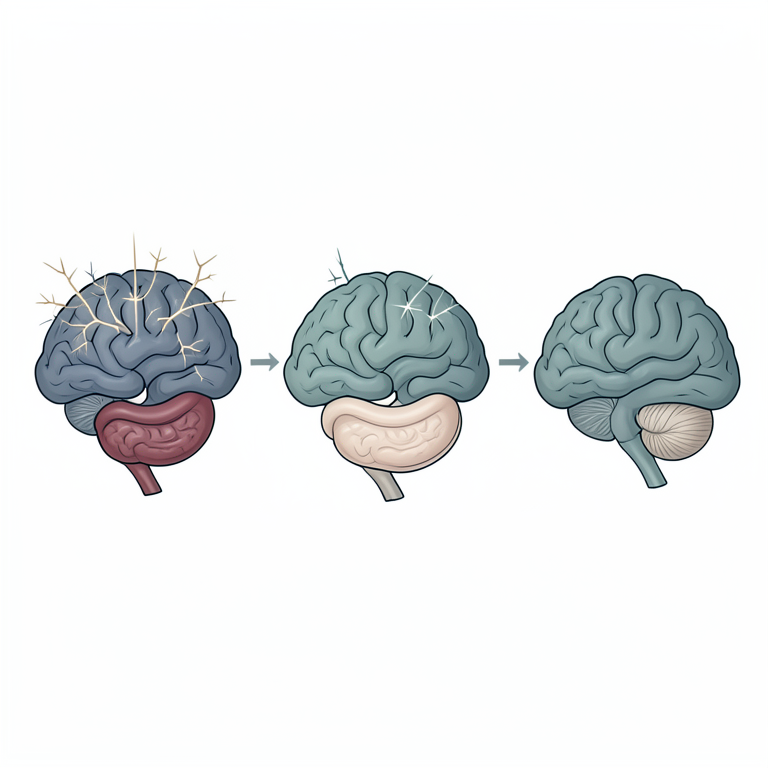
Study overview
AI-generated conceptual illustration (human brain and digestive system). It explains the idea and does not show study data.
View source evidence ↗Introduction
However, Ramadan is a period of fasting that is repeated annually and takes place in the ninth month of the Islamic calendar [1] . Fasting is obligatory for all Muslims in good health. Fasting extends from dawn to sunset. The period of fasting varies from season to season and from country to country but always from dawn to sunset or by estimating the duration. During the summer months, the fasting period can last up to 16 hours or more, while during the winter months, it is up to 10-12 hours. The variation in day length in summer means that at temperate altitudes, fasting can last up to 20 hours [1] . During the fasting period, adults are not allowed to receive food and water. During Ramadan, people who fast tend to change their eating habits and the type of food they eat [12] hence the concern of caregivers, patients, and their relatives about the management of epilepsy in this period. Epilepsy represents the second most common neurological disease in the world with 70 million epilepsy patients worldwide [3,4] . It is most common in children and the elderly [5] . Epilepsy is a neurological condition that can be suffered at any age. Almost 80% live in lowand middle-income countries. In black Africa, the median of epilepsy has been estimated to be 15 cases per thousand population. Epilepsy has long been considered a spiritual disease; since 2000 BC. In the 19 th century, with the emergence of a new medical discipline, Neurology, epilepsy was considered as a brain disease which is different from mental illness, i.e. madness [6] . Epilepsy affects all races and all continents, regardless of religion. The Muslim religion, Islam, has five pillars of which the fasting of Ramadan is one. The youth exists in the form of optional meritorious acts but especially the obligatory form taking place during the month of Ramadan. The interest of this topic is to examine the impact of fasting during Ramadan on seizure control and quality of life in adult epilepsy patients [7] . Nutritionally, caloric restriction and intermittent fasting appear to have a variety of health benefits, including improved immune system function. In addition, there is evidence of improved cognitive function and even a reduction in seizure episodes in some epilepsy patients. The time-restricted diet has an anticonvulsant effect and this restrictive diet may promote changes in energy metabolism [8] .
Although tissues preferentially use carbohydrate energy rather than fat and protein energy, the amount of carbohydrate stored in the body is only a few hundred grams (mainly glycogen in the liver and muscles) and it can provide the energy needed for body function [9,10] . Diet control is one of the oldest and most common forms of treatment for many diseases. Epilepsy is no exception; for centuries, physicians have treated epilepsy with dietary changes and restrictions. The use of fasting in the treatment of epilepsy dates back to the time of the British Empire [7] . Ramadan does not dramatically affect lipid, carbohydrate, and protein metabolism, nor does it affect average daily hormone and protein levels. An increase in serum urea and uric acid levels has been frequently reported, which could be attributed to the relative ''dehydration'' during fasting, but some changes, such as an increase in HDL, Apo protein A1, and a decrease in LDL, could be beneficial for the cardiovascular system [9] . A survey by Rehab Magdy et al., 2020 that included three hundred and twenty-one (321) Muslim patients [11] with active epilepsy and median age of 33 years, (some patients had more than one type of seizure). This was a prospective observational study of Muslim patients with active epilepsy who intended to fast during Ramadan of the year 2019, with an average of 16 hours of fasting per day. Seizure frequency for each seizure type was monitored for three months, one month before Ramadan (Shaaban), during Ramadan, and one month after (Shawwal), after ensuring medication adherence. During Ramadan, 86 of 224 patients with focal seizures, 17 of 38 patients with myoclonic seizures, and 6 of 10 patients with absence seizures. Patients with absence seizures showed a reduction ≥ 50%. In Shawaal, this improvement continued in 83, 13, and 4 patients with focal, myoclonic, and absence seizures, respectively. Focal and myoclonic seizures were significantly improved in Ramadan and Shawaal compared with Shaaban. However, absence seizures were significantly improved only during Ramadan compared to Shaaban. The frequency of generalized tonicclonic seizures did not differ significantly between the three months. On the other hand, another study [12] by the same Egyptian team included 430 patients. The majority of patients (75.58%) completed the Ramadan fast without seizures. Maximum seizure freedom before Ramadan and sleep hours were identified as independent predictors of successful Ramadan fasting, using multivariate analysis. Khalid Alqadi et al., 2020 [7] had found that seizures occurring before fasting accounted for 35.5% of all seizures. Multilinear regression analysis revealed a significant decrease in seizures by 21% during the fasting month compared to baseline (adjusted coefficient=0.79, p<0.01, 95% confidence interval (CI): 0.61-0.98, R2=0.81) and by 29% during the post-fasting month compared to baseline (adjusted coefficient=0.71, p<0.01). However, the neurologist must reassure patients and their parents in order to optimize lifestyle and compliance with antiepileptic drugs. The following factors according to A. Mahmood et al. (2020) [1] constitute a means of assessing the high or low risk in the epileptic patient wishing to fast during the month of Ramadan, it is therefore the staging of the risk of epileptic patients and suitability for fasting in Ramadan [13] . [1] Normal MRI. Normal EEG.
Low risk factors for fasting in epilepsy (A. Mahmood et al. (2020)
1 to 2 Seizures throughout adult life.
Maintained on immunotherapy due to low epileptic load. Moderate dose. [1] Abnormal MRI Abnormal EEG. Frequent crises. Continued use of combination medications due to poorly controlled seizures in the past. Previous epilepsies. Comorbid conditions such as hypertension, heart failure, malignancy, and diabetes. Seniors.
High risk factors for fasting in epilepsy (A. Mahmood et al (2020)
These data from the literature show that Ramadan fasting is indeed possible for epileptic patients and that it seems beneficial for them in the light of the results of different scientific series and cohorts. However, hygienic and dietary advice must be given to these patients, especially concerning sleep organization and eating habits. Furthermore, the neurologist must make the epileptic patient aware of the need to consult his or her nearest physician as soon as the slightest discomfort is noticed during the fasting state in order to discuss as a team (neurologist, patient, parents, and scholar) the possibility of continuing the fasting, its temporary or definitive cessation on a case-bycase basis according to age, comorbidities, the patient's clinical condition, and electrophysiological data. Large-scale multicenter studies are needed to better understand this important facet of epileptology, which is of great importance to epilepsy patients and which must also attract the attention of epileptologists and neurologists.
Conclusion
Fasting during Ramadan presents a complex yet manageable scenario for individuals with epilepsy. Studies indicate varying impacts on seizure frequency, with some patients experiencing significant improvements, particularly those with focal and myoclonic seizures. However, careful consideration is crucial, as fasting suitability depends on factors like seizure type, medication regimen, and overall health status. Clear guidelines distinguish between low and high-risk patients, aiding clinicians in decision-making and ensuring patient safety. While intermittent fasting may offer potential health benefits for epilepsy management, including possible seizure reduction, close monitoring, and individualized care remain paramount. Further research is needed to refine understanding and recommendations, underscoring the importance of collaboration between neurologists, patients, and caregivers in managing epilepsy during Ramadan.
References
10 in the original paper- Mahmood A, Abbasi HN, Ghouri N, Mohammed R, Leach JP. Managing epilepsy in Ramadan: Guidance for healthcare providers and patients. Epilepsy & Behavior. 2020 Oct 1;111:107-117.
- Vittal BG, Abhijith D. Fasting and non-fasting lipid profile: A comparative study. International Journal of Advanced Biochemistry Research 2021;5(1):06-08. DOI: 10.33545/26174693.2021.v5.i1a.56
- Ngugi AK, Bottomley C, Kleinschmidt I, Sander JW, Newton CR. Estimation of the burden of active and lifetime epilepsy: A meta-analytic approach. Epilepsia. 2010 May;51(5):883-890.
- Boubacar S, Basse AM, Sow AD. Epilepsy in the Elderly in Sub-Saharan Africa: An Experience of the Laboratory of Clinical Neurophysiology of the CHU Fann, Dakar, Senegal. African & Middle East Epilepsy Journal. 2019;8(3).
- Alqadi K, Alghamdi O, Babtain F, Ba'arma H, Bajammal S, Miad A, et al. Effects of fasting during Ramadan on seizure control and quality of life in patients with epilepsy. Epilepsy & Behavior. 2020 Nov 1;112:107-440.
- Hovinga CA, Asato MR, Manjunath R, Wheless JW, Phelps SJ, Sheth RD, et al. Association of nonadherence to antiepileptic drugs and seizures, quality of life, and productivity: Survey of patients with epilepsy and physicians. Epilepsy Behavior. 2008 Aug 1;13(2):316-22.
- Roky R, Houti I, Moussamih S, Qotbi S, Aadil N. Physiological and Chronobiological Changes during Ramadan Intermittent Fasting. Annals of Nutrition and Metabolism. 2004 Oct 14;48(4):296-303.
- Angel JF, Schwartz NE. Metabolic changes resulting from decreased meal frequency in adult male Muslims during the Ramadan fast. Nutrition Reports International. 1975;11:29-38.
- Magdy R, Kishk NA, Abokrysha NT, Ramzy GM, Rizk HI, Hussein M. Fasting and post fasting effect of Ramadan on different seizure types in patients with active epilepsy, Nutritional Neuroscience; c2020. DOI: 10.1080/1028415X.2020.1840048.
- Al-Mahdawi AM. Epilepsy and Ramadan Fasting. Neuroscience. 2002 Jul 1;7(3):207-209.