
Research article · 2023 · Full text
International Journal of Veterinary Sciences and Animal HusbandrySuccessful treatment of Otodectes cynotis infestation in domestic African pygmy hedgehogs (Atelerix albiventris): A case report
Volume 8(1) · Pages 103–105 · DOI: 10.22271/veterinary.2023.v8.i1b.476 ↗
Research areasDermatological diseases and infestationsBird parasitology and diseasesZoonotic diseases and public health
Abstract
Author-writtenSix domestic African pygmy hedgehogs (Atelerix albiventris) were treated for Otodectes cynotis infestation. Symptoms included skin lesions, itching, and slight lethargy. The hedgehogs were given a bath with a shampoo containing miconazole and chlorhexidine, and selamectin solution was applied to the skin in between the spines. Skin scraping was negative for mite infestation after 15 days of treatment, and the lesions, inflammation, and swelling decreased significantly. By day 30 of treatment, the hedgehogs were clear of any visible lesions on the body. These findings demonstrate the effectiveness of Miconazole and chlorhexidine shampoo and selamectin solution in the treatment of Otodectes cynotis infestation in domestic African pygmy hedgehogs.
Summary
Source-checkedPlain-language reading of the full paper, prepared with AI and checked against the text. Each point links to the authors' own words.
Why it matters
- Otodectes cynotis is a type of psoroptic mite that lives on the skin and in the ear canals of animals, leading to inflammation, itching, and skin lesions. View evidence ↗
- Infestations by these mites are common in domestic hedgehogs and cause the animals significant distress and discomfort. View evidence ↗
The question
- The authors aimed to describe the successful treatment of six domestic African pygmy hedgehogs infested with Otodectes cynotis and identify preventive measures and causes. View evidence ↗
What they did
- The study involved six domestic African pygmy hedgehogs presenting with itching, slight lethargy, and skin lesions. View evidence ↗
- Diagnosis was confirmed through physical exams, otoscope ear canal examinations, and mineral oil ear swab cytology. View evidence ↗
- To minimize stress and injury, diagnostic procedures were performed under isoflurane gas anesthesia. View evidence ↗
- To treat secondary dermatophytosis, the hedgehogs were bathed in a shampoo containing 2% miconazole and chlorhexidine. View evidence ↗
- All hedgehogs received a topical application of selamectin solution at a dose of 45 mg per animal between their spines. View evidence ↗
- The animals were also treated with amoxicillin-clavulanate (12.5 mg/kg twice daily for 5 days) and meloxicam (0.2 mg/kg once daily for 3 days). View evidence ↗
What they found
- By day 7 of treatment, there was a significant reduction in itching, swelling, inflammation, and the size of the lesions. View evidence ↗
- Follow-up mineral oil ear swab cytology performed 15 days after treatment showed no remaining mite infestation. View evidence ↗
- All visible body lesions had completely disappeared by day 30 of the treatment. View evidence ↗
- No symptoms returned during a 45-day monitoring period following the initial treatment. View evidence ↗
What it means
- The authors conclude that selamectin solution is an effective treatment for Otodectes cynotis infestations in domestic African pygmy hedgehogs. View evidence ↗
- The authors recommend preventing infestations by avoiding overcrowding and the sharing of contaminated equipment or bedding, as poor husbandry practices often lead to acariasis. View evidence ↗
Figures & tables
From the original paper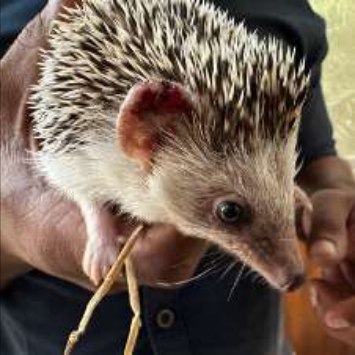 Figure 1
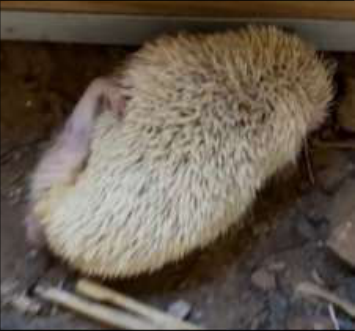 Figure 2
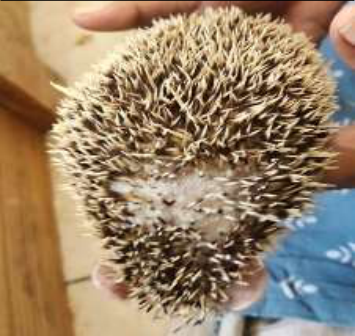 Figure 3
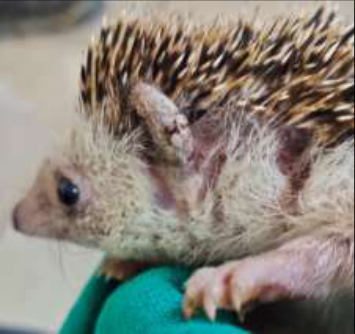 Figure 4
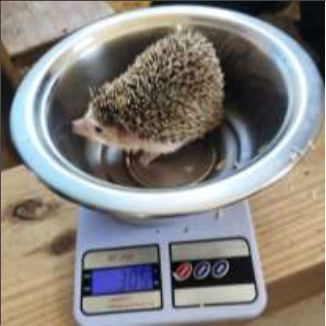 Figure 5
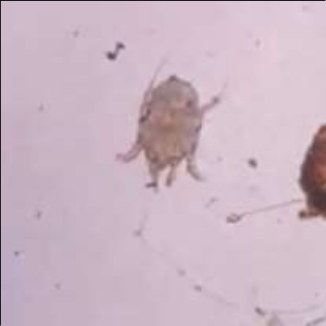 Figure 6
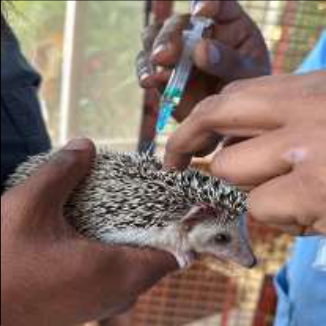 Figure 7
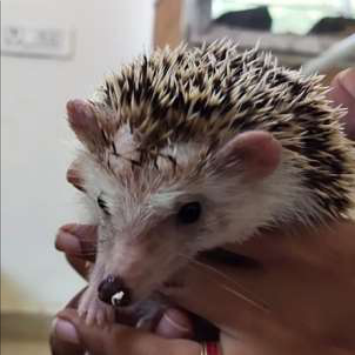 Figure 8
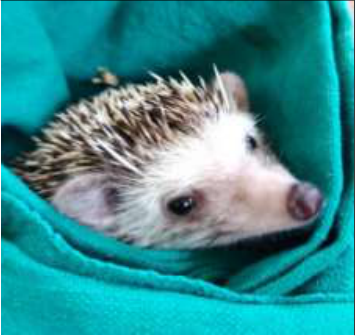 Figure 9
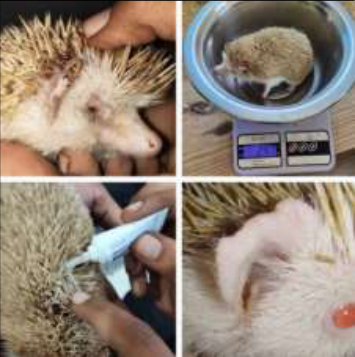 Figure 10
Introduction
Otodectes cynotis is a psoroptic mite that infests the ear canals and dwells on the skin surface of animals (Fig. 1), causing symptoms such as pruritus, inflammation, and skin lesions due to self-excoriations on the ears and head [1] . Acariasis due to Otodectes cynotis is commonly found in domestic hedgehogs, and can cause significant discomfort and distress for the affected animals [2] . In this case report, we describe the successful treatment of six domestic African pygmy hedgehogs with Otodectes cynotis infestation, as well as possible causes of infestation and preventive measures.
Case presentation
Six domestic African pygmy hedgehogs were presented with skin lesions characteristic of dermatophytosis, pruritus and slight lethargy. Flakes were present on the skin mantle, and selfmutilation due to excessive itching of ears using hind legs was observed in three hedgehogs (Fig. 2). The lesions consisted of scabs on the external ear pinna, over the digits, around the nose, denuding of spine from mantle and forehead, pinnal dermatitis and a powder-like deposit on the face (Fig. 3). Another hedgehog sustained aural haematoma in the right ear pinna (Fig. 4). Physical examination, ear canal examination using otoscope and mineral oil ear swab cytology [3] was performed on the ears for confirmatory diagnosis [4] , which revealed the presence of Otodectes cynotis mites (Fig. 6). To reduce handling stress and injury to the animal and the veterinarian, these were performed under mask induction of 5% isoflurane gas anaesthesia at 2 lit./min oxygen flow rate for 1 minute followed by mask maintenance of 2% isoflurane at 1.5 lit./min oxygen flow rate till the end of the procedure [5] .
Treatment
To control the secondary dermatophytosis, the hedgehogs were given a bath with a shampoo containing 2% miconazole and chlorhexidine [5,6] . The shampoo was lathered on the body, scrubbed with a soft bristle toothbrush, and left on for 10 minutes before being thoroughly rinsed with lukewarm water. Care was taken to avoid letting water enter the eyes, nose, ears, and mouth of the animals. Once dry, selamectin solution @ 45 mg/animal [4] (Radicate by Veko) was also applied on the skin in between the spines for all the hedgehogs (Fig. 7). Individual hedgehogs were weighed (Fig. 5) and treated with amoxicillin-clavulanate at 12.5 mg/kg BID for 5 days and meloxicam at 0.2 mg/kg OD for 3 days, which resolved the dermatitis and aided in the resolution of one hedgehog's aural haematoma. The animal enclosures were disinfected and sundried to ensure annihilation of ectoparasites and its stragglers [6] .
Outcome
The lesions progressively reduced along with the inflammation and swelling, and a stark reduction in itching was observed by day 7 (Fig. 8). Mineral oil ear swab cytology was performed again after 15 days, which was negative for mite infestation. By day 30 of treatment, the hedgehogs were clear of any visible lesions on the body (Fig. 9). Monitoring of the animals was done for 45 days after initial treatment but no signs of re-appearance of symptoms were observed.
Possible causes of infestation
Otodectes cynotis mites can be transmitted through contact with infected animals or their environments. They can also be transmitted through the use of contaminated bedding or equipment. Poor hygiene and overcrowding may also contribute to the spread of these mites [6] .
Preventive measures
To prevent infestation with Otodectes cynotis mites, it is important to maintain good hygiene and regularly clean and disinfect the hedgehog's environment. It is also recommended to avoid overcrowding and to avoid sharing bedding or equipment with infected animals. Regular check-ups with a veterinarian can help identify and treat infestations early on.
Conclusion and Discussion
This case report demonstrates the effectiveness of selamectin solution in the treatment of Otodectes cynotis infestation in domestic African pygmy hedgehogs (Fig. 10). Numerous doses are typically required for compounds that have been utilised in the past to treat and manage ectoparasites in exotic pets, which raises the possibility of owner infringement, distressed animal leading to poor therapeutic outcome.
Selamectin, an endectocide, does not penetrate the blood brain barrier in the host thereby increasing its margin of safety [7] . It is practical to use against a variety of endo and ecto-parasites because of its lengthy duration of impact and wide spectrum of therapeutic activity [8] .
Dermatophytosis may develop as a result of stresses such as mite infestation. Crusting at the base of the spine is a defining feature of dermatophytosis [6] . This case report also exemplifies the auxiliary use of miconazole and chlorhexidine bath as a remedy against mild secondary dermatophytosis. The use of these treatments resulted in a significant reduction in symptoms and a complete resolution of the mite infestation.
It is important to take preventive measures to avoid infestation with Otodectes cynotis mites as acariasis in African pygmy hedgehog is a common finding in individuals subjected to poor husbandry practices and avoiding overcrowding and sharing contaminated bedding or equipment. These findings may be useful for veterinarians treating similar cases in the future.
References
3 in the original paper- Fisher M, Beck W, Hutchinson M. Efficacy and safety of selamectin (Stronghold/Revolution) used off-label in exotic pets. Journal of Applied Research in Veterinary Medicine. 2007;5(3):87-96.
- Bishop BF. Selamectin: A novel broad-spectrum endectocide for dogs and cats. Veterinary Parasitology. 2000;91(3-4):163-176. Doi:10.1016/S03044017(00)00289-2.
- Digeronimo P. Therapeutic Review: Selamectin. Journal of Exotic Pet Medicine c2015. p. 25(1). Doi:10.1053/j.jepm.2015.11.001.
Cited by 6
From OpenAlex, OpenCitations and reference lists read by Scinovex
- Hedgehogs’ Parasitology: An Updated Review on Diagnostic Methods and Treatment ↗
Francisco Alfaia, Catarina Jota Baptista, Viktória Sós‐Koroknai, Márton Hoitsy, Endre Sós, Luís Madeira de Carvalho · Parasitologia · 2024
The genus Erinaceus is commonly found in rescue centres across the European continent despite the reported decline in some countries. Parasite infections are frequently detected in rescued hedgehogs, leading to increased morbidity and mortality and consequently conditioning their recovery. Some of the most frequent parasites include respiratory nematodes, such as Crenosoma striatum and Capillaria spp., which may lead to important…
❝ 5PDF - Prevalence detection of Otodectes cynotis in cats in Babylon city, Iraq ↗
Zahraa Kadhim AL-khafaji, Akeel Mohammad Kadim Al-Musawi · International Journal of Fauna and Biological Studies · 2025
Otodectes cynotis is a common parasitic mite affecting cats and dogs, primarily inhabiting the ear canal, where it causes otitis externa, itching, and potentially severe complications. Despite its clinical significance, data regarding its prevalence and identification in cats within Babylon City remain limited and incomplete. This study aimed to detect and identify Otodectes cynotis in cats using both light and
- Innovative therapies for Otodectes cynotis infestation in African pygmy hedgehogs: A clinical case report ↗
Yuki Tanaka, Haruki Nakamura, Sakura Watanabe, Kenji Ishikawa · Acta Entomology and Zoology · 2025
The absence of pharmacologically validated treatment protocols for ectoparasitic infestations in exotic insectivores represents a persistent gap in veterinary therapeutics. This clinical case report describes the application of a multimodal pharmacological approach to treat Otodectes cynotis ear mite infestation in an 18-month-old male African pygmy hedgehog (Atelerix albiventris) presented to the Osaka Institute of Comparative Medicine with bilateral otitis externa,
- Clinical approaches to treating Otodectes cynotis in African pygmy hedgehogs: A successful case review ↗
Oliver Whitfield · Journal of Entomology and Zoology Studies · 2025
Exotic companion animal medicine faces a persistent knowledge gap that threatens the welfare of millions of non-traditional pets worldwide. This case review describes the clinical management and successful treatment of Otodectes cynotis ear mite infestation in a 19-month-old male African pygmy hedgehog (Atelerix albiventris) presented to the Brisbane Research Institute of Veterinary Medicine in Queensland, Australia. The animal exhibited bilateral
- Ear mite infestation and treatment success in African pygmy hedgehogs (Atelerix albiventris) ↗
Rafael A Ferreira, Camila Santos Oliveira, Thiago M Costa · Zoological and Entomological Letters · 2024
The African pygmy hedgehog (Atelerix albiventris) has experienced rapid growth as an exotic companion species in Brazil, yet parasitological research addressing the specific health challenges of captive hedgehogs in tropical and subtropical environments remains notably sparse. This research reports the diagnosis, treatment, and eight-week follow-up of an Otodectes cynotis ear mite infestation in a 22-month-old male A. albiventris presented to
- A case study on the effective treatment of Otodectes cynotis in African pygmy hedgehogs ↗
Ji-Hoon Park, Soo-Min Choi · Journal of Case Reports and Scientific Images · 2024
What happens when a common feline and canine ear mite finds its way into the delicate auditory canals of an African pygmy hedgehog? This question spurred the present research after a 14-month-old male African pygmy hedgehog (Atelerix albiventris) was brought to the Seoul Institute of Veterinary Sciences with persistent head shaking, auricular pruritus, and excessive dark cerumen buildup. The hedgehog