
Research article · 2023 · Full text
International Journal of Biology SciencesAbundance and diversity of herpetofauna population of Korapuzha Estuary, India: A transitioning shoreline ecosystem
Volume 5(1) · Pages 01–05 · DOI: 10.33545/26649926.2023.v5.i1a.137 ↗
Research areasTurtle Biology and ConservationAmphibian and Reptile BiologyFish Biology and Ecology Studies
Abstract
Author-writtenA comprehensive assessment of the Korapuzha Estuary's herpetofauna species diversity was done from September 2018 to September 2019. Amphibians and reptiles were spotted along a terrestrial stretch using active searching; call survey; road-kill analysis and direct observation (opportunistic spotting). The findings reveal 16 species of reptiles from 11 families and 1 amphibian. The Indian Skipper Frog is the sole amphibian that has been identified. 4 species of the order Testudines and 12 species of the order Squamata were identified among all the reptiles. The Common Indian Monitor, garden lizard, Indian Cobra, Oriental Ratsnake, and Indian Black Turtle, were the most frequently seen reptiles. The banded Krait (Bungarus fasciatus) was recorded for the first time in Kerala's marshes. Pelochelys cantorii (Cantor's Giant Softshell), a species of reptile fauna, is listed on IUCN redlist as a critically endangered species. The frequency of herpetofauna is significantly limited owing to the region's close vicinity to the ocean, which prevents taxa from dispersing despite the fact that these organisms are difficult to locate due to their paradoxical activities.
Summary
Source-checkedPlain-language reading of the full paper, prepared with AI and checked against the text. Each point links to the authors' own words.
Why it matters
- Mangroves are specialized plants that grow in tropical and subtropical brackish waters and tidal beaches. View evidence ↗
- Mangrove ecosystems act as complex ecotones, providing a variety of terrestrial, aquatic, and intertidal microhabitats. View evidence ↗
- Herpetofauna (amphibians and reptiles) are vital to biodiversity as they act as intermediate consumers within food webs. View evidence ↗
The question
- The study aimed to comprehensively assess the diversity of herpetofauna species within the Korapuzha Estuary. View evidence ↗
What they did
- Observations were conducted at 12 different locations along the estuary between June 2018 and June 2019. View evidence ↗
- Researchers used a combination of microhabitat searching, call surveys, road-kill analysis, and opportunistic sightings to identify species. View evidence ↗
- Monthly diurnal surveys were performed to account for the nocturnal nature of many herpetofauna species. View evidence ↗
What they found
- The study recorded a total of 17 reptile species from 11 families and one single amphibian species. View evidence ↗
- The Indian Skipper Frog (Euphlyctis cyanophlyctis) was the only amphibian species identified in the area. View evidence ↗
- The identified reptiles consisted of 4 species from the order Testudines and 12 species from the order Squamata. View evidence ↗
- The most frequent reptiles observed were the Indian Cobra, Oriental Ratsnake, Indian Black Turtle, Common Indian Monitor, and garden lizard. View evidence ↗
- The banded Krait (Bungarus fasciatus) was recorded in Kerala's swamps for the first time. View evidence ↗
- The study identified species with high conservation priority, including the Critically Endangered Cantor's Giant Soft-shell (Pelochelys cantorii) and the Near Threatened Common Indian Monitor (Varanus bengalensis). View evidence ↗
- The Indian skipper frog was seen every month, with peak sightings from May to August, coinciding with rainfall. View evidence ↗
What it means
- The authors conclude that mangroves are critical sites for maintaining the richness of regional herpetofauna. View evidence ↗
- The authors recommend increased efforts to identify unique herpetological fauna in nature reserves to highlight their ecological importance. View evidence ↗
- The authors note that many species are still being described, indicating a need for more coordinated research and habitat protection in estuaries. View evidence ↗
Visual summary
1 visualsIllustrations explain the paper; they do not show study data.
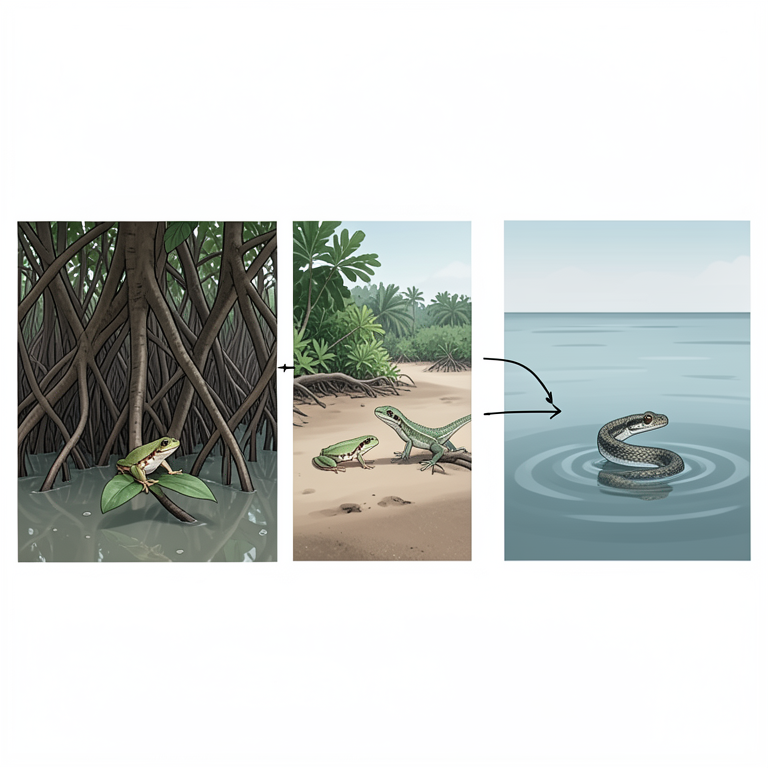
Mangrove Ecotone Food Web
AI-generated conceptual illustration (Mangrove estuary ecosystem with frogs, lizards, and snakes). It explains the idea and does not show study data.
View source evidence ↗Figures & tables
From the original paper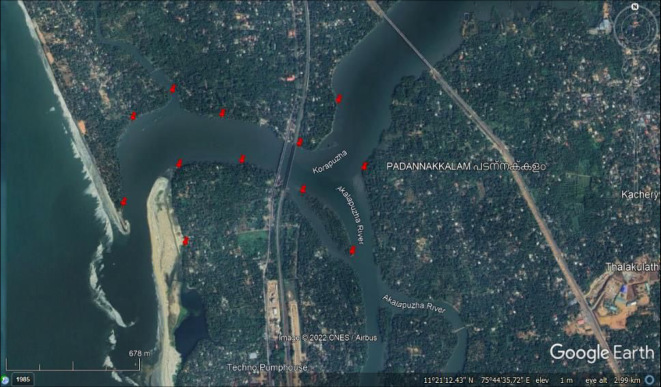 Figure 1
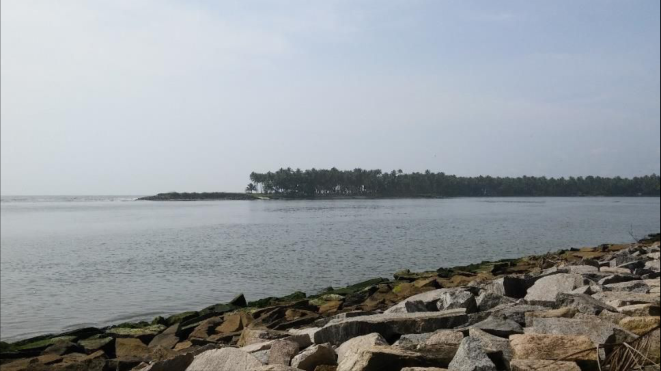 Figure 2
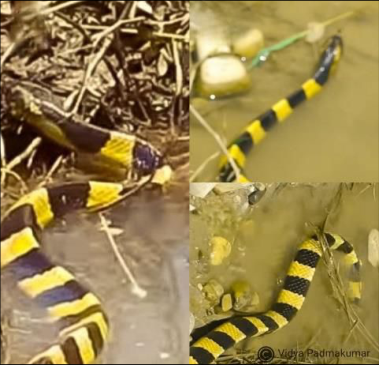 Figure 3
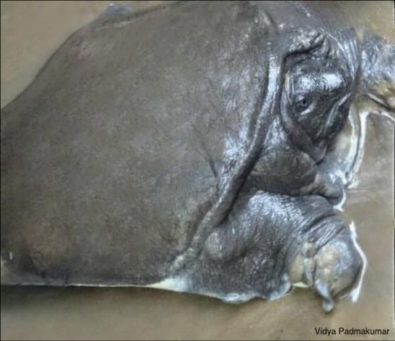 Figure 4
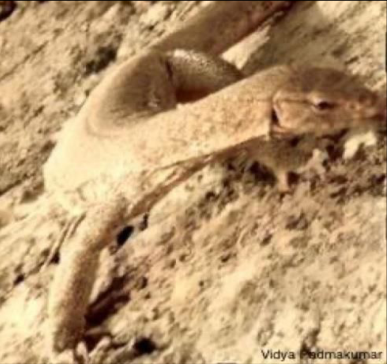 Figure 5
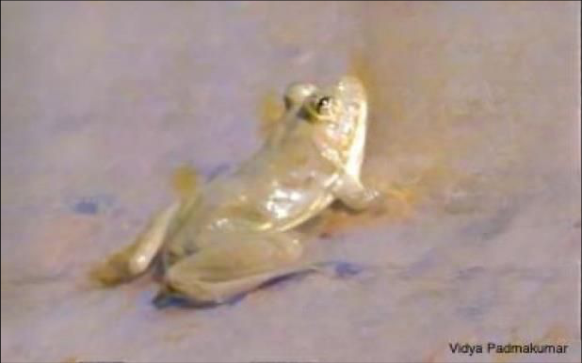 Figure 6
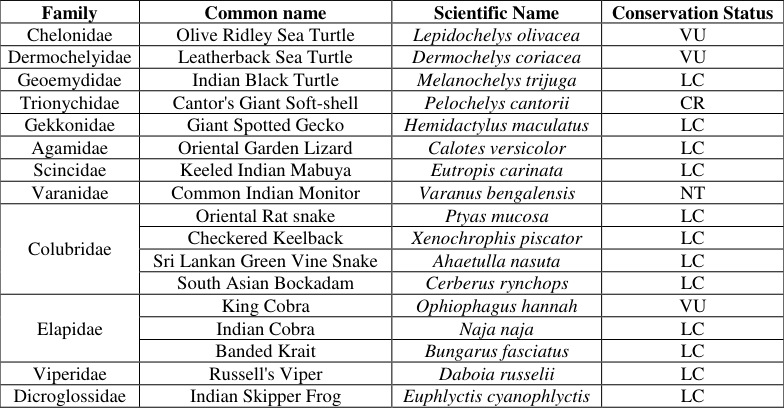 Table 1
Introduction
Mangroves are a diverse variety of halophytic trees, shrubs, and other plants that inhabit brackish waterways and tidal beaches in tropical and subtropical regions. The open networks of mangrove wetlands allow for the free interchange of materials and energy between both terrestrial and aquatic ecosystems (Padmakumar and Murugan, 2022) [15] . The mangrove ecosystem exhibits a variety of habitats, including microhabitats that are typical of terrestrial, intertidal, and aquatic environments. It performs biologically as a complex Ecotone or border region between both marine and terrestrial ecosystems. Mangroves are characterized by the existence of foliage in the intertidal, amid shorelines, in the semi-arid tropics. Temperature, sedimentation, and tidal currents are all extremely changing environmental conditions in the intertidal zone. Mangrove aerial roots help to stabilize the environment and offer a substratum for many plant and animal species. The mangrove forests and canopy above the waters provide critical habitats for a diverse range of creatures (Nagelkerken et al., 2008) [11] . Mangroves are only intermittently scattered throughout the shoreline of Kerala, usually restricted to the windward embayment's of intertidal backwaters. Small or extensive mangrove strips can be found along riverbanks in coastal plains where the tidal inflow of mangrove swamps is a frequent occurrence. In contrast to the very complex and dendritic mangrove systems created on the bigger floodplain of the primary eastward-running river basins on the eastern seaboard, Kerala's mangroves are less intricate in terms of tidal creek networks (Naskar and Mandal, 1999) [14] . Little over 4200 hectares (42 km 2 ) of Kerala's coastline length, which is roughly 590 km long, is covered with mangrove forests. This amount represents lower than 1% of the entire mangrove zones in India, which covers 4, 87,100 hectares (Radha Krishnan et al., 2006) [19] . The fact that mangrove ecosystems are important and have a variety of distinctive characteristics may have sparked a great deal of interest in them. Animal-mangrove associations and interactions have not yet been the subject of faunistic research with the same fervour and passion as floral investigations. Herpetofauna serves a crucial ecological role in biodiversity. They are a crucial element of a biosphere because they are the intermediate consumers at the midway level in a food web. They are also thought to be reliable biological controls and environmental health markers (Hammond et al., 2016) [6] . Due to several anthropogenic pressures, including development and the modification of the forest landscape, the population of herpetofauna species is falling. The destruction of habitat, illnesses, deforestation, and pollution are all contributing factors to this population reduction (Doherty-Bone, 2008) [2] . Additionally, the habitat disruption for amphibians and reptiles has been made worse by the increased rate of construction, particularly near the estuary (Gillespie et al., 2005) [5] . Numerous unique land and aquatic fauna species can be found in the mangrove swamps (Nagelkerken et al., 2008) [11] . They support the local wildlife by providing habitat, sustenance, and breeding sites for a variety of species such as crustaceans, fishes, frogs, reptiles, and mammals. Several advantageous elements have been added to the environment as a result of the mangrove ecosystem's unique qualities (Padmakumar and Joseph, 2022) [16] . A total of 14 species, including 13 species of reptile fauna and one species of amphibian, make up the herpetofauna of the northern Kerala mangrove ecosystem (Radha Krishnan et al., 2006) [19] .
Materials and Methods
The Kozhikode District of Kerala is located in the basins of three significant river basins. The Chaliyar, Korapuzha and Kuttiadi Rivers. The Elathur River, which enters the Korapuzha lagoon system (Image 2) close to the estuarine mouth, almost 1 km from the coastline, and another channel extending from the base of the elevated mountainous region encompassing the Kodiyanadumalai (700 m), which also flushes into the creeks near Kaniangode, about 16 km from the river mouth, make up the 52 km-long Korapuzha, a short and shallow river. The wetland never dries out. The ebbtide is almost entirely suppressed by the massive flow of siltfilled fresh waters that pour down the river during the monsoons. The river's shores are bereft of townships, industries, or major settlements (Rao and George, 1959) [20] , but there are tiny localities and extensive, biodiversity-rich mangrove forests. Large backwaters that mimic lagoons and connect the brackish waters of the Korapuzha and Kuttiadi Rivers have the potential to be important biological areas for a variety of species, particularly herpetofaunal (Padma Kumar and Murugan, 2022) [17] . The study area is the Korapuzha Estuary (Image 1) located at 11°35'N, 75°73'E. Herpetofaunal observations were done from June 2018 to June 2019 at 12 distinct locations along the estuarine expanse. Given that a substantial proportion of herpetofauna is nocturnal, routine diurnal surveys were conducted monthly over the observation period. Comprehensive searching in recognized microhabitats; call surveys, road-kill studies; and opportunistic sightings were all utilized to identify and describe numerous herpetofauna.
Results
A total of 17 reptile species from 11 families and 1 amphibian were recorded in the current study (Table 1). The only amphibian that has been identified is the Indian Skipper Frog-Euphlyctis cyanophlyctis. Among the reptiles, 4 species of the order Testudines and 12 species of the order Squamata were recognized. The most commonly encountered reptiles were the Indian Cobra (Naja naja), Oriental Ratsnake (Ptyas mucosa), Indian Black Turtle (Melanochelys trijuga), Common Indian Monitor (Varanus bengalensis), and garden lizard (Calotes versicolor). It was intriguing to notice that their frequency was greater during the monsoon rains than during the summer months. The banded Krait (Bungarus fasciatus) (Image 3) is reported for the first time in Kerala's swamps (Padmakumar and Murugan, 2022) [18] . The krait was spotted while plunging through the lagoon into a commune with very few dwellers and only once during the entire study. The Oriental Rat snake was spotted regularly all throughout the year, unlike the other reptiles. Among the reptile fauna identified, the vulnerable species include Lepidochelys olivacea (Eschscholtz), Dermochelys coriacea (Vandelli), and Ophiophagus Hannah (Cantor), which are listed on the IUCN Red List of Threatened Species. Pelochelys cantorii (Gray) (Image 4) is listed as Critically Endangered and Varanus Bengalensis (Daudin) (Image 5) is listed Near Threatened. The lizard and snake varieties documented are unscrupulous land-based vegetation foragers that can be observed in the vicinities of the agrarian biome in the surroundings close to or away from the Wetlands. The Indian skipper frog (Image 6), the only amphibian prevalent in the study area was recorded every month, with the highest number of sightings occurring in May, June, July, and August, indicating their ubiquity during the rainfalls. The solitary species is peculiarly the only anuran species that can sustain the frail salt concentrations component in wetlands and thus known to be the only salt adaptable organisms that are encountered in the climes of murky water with mild salt concentrations. [9] , owing to the harsh physical conditions that characterize the biota. The herpetofauna in the wetland ecosystem of northern Kerala is diverse, with roughly 14 species, including 13 species of reptile fauna and one species of Amphibia (Radha Krishnan et al., 2006) [19] . Certain beachfront cum wetland ecosystem zones in northern Kerala, such as the Korapuzha estuary, have been observed to be primary turtle breeding sites especially, Lepidochelys olivacea, and are also listed in CITES Appendix I (Radakrishnan et al., 2006) [19] .
| Family | Common name | Scientific Name | Conservation Status |
|---|---|---|---|
| Chelonidae | Olive Ridley Sea Turtle | Lepidochelys olivacea | VU |
| Dermochelyidae | Leatherback Sea Turtle | Dermochelys coriacea | VU |
| Geoemydidae | Indian Black Turtle | Melanochelys trijuga | LC |
| Trionychidae | Cantor's Giant Soft-shell | Pelochelys cantorii | CR |
| Gekkonidae | Giant Spotted Gecko | Hemidactylus maculatus | LC |
| Agamidae | Oriental Garden Lizard | Calotes versicolor | LC |
| Scincidae | Keeled Indian Mabuya | Eutropis carinata | LC |
| Varanidae | Common Indian Monitor | Varanus bengalensis | NT |
| Colubridae | Oriental Rat snake | Ptyas mucosa | LC |
| Checkered Keelback | Xenochrophis piscator | LC | |
| Sri Lankan Green Vine Snake | Ahaetulla nasuta | LC | |
| South Asian Bockadam | Cerberus rynchops | LC | |
| Elapidae | King Cobra | Ophiophagus hannah | VU |
| Indian Cobra | Naja naja | LC | |
| Banded Krait | Bungarus fasciatus | LC | |
| Viperidae | Russell's Viper | Daboia russelii | LC |
| Dicroglossidae | Indian Skipper Frog | Euphlyctis cyanophlyctis | LC |
Table text extracted from the original PDF; superscript letters are shown inline. The original table image is below.
View original table image
The studies revealed that the area's tidal-connected microhabitats are desirable for several amphibians and reptiles. The endurance of the amphibians and reptiles in the study to the saline water setting will expand the variety of habitats these species can occupy (Solania et al., 2020) [22] . According to Catenazzi et al., (2016) [23] , evidence on population demographics gleaned through fast ecological assessments at the species level could be useful for restoration, particularly for isolated, endangered, and rangerestricted taxa. There have been extensive reports on herpetofaunal richness in wetlands, particularly on the Indo-Pacific coast. Kadafi et al. (2020) [8] reported 38 herpetofauna taxa in the Kondang Merak forest, one of Java's last remnant low-lying woodlands. Rao (1998) [21] analyzed the ecological balance of Barkudia melanosticta (as B. Insularis) in Vellore. The only amphibian reported was recorded to inhabit foliage litters in substantial numbers, possibly because leaf litters include a greater diversity of habitat types, allowing more organisms and taxa to cohabit in the littered ecological niche (Fauth et al., 1989) [3] . Peninsular India, with its biomes, has great potential to host a wide range of reptiles, particularly snakes (Daniels, 2001) [1] . The snakes seen in the study were within and around human occupation, which might lead to humansnake conflict rather frequently. Xenochrophis piscator is one of India's most frequent snakes (Nath et al., 2011) [12] . It was also noticed to be the estuary's most frequent snake. Because of the potential significance of amphibians as markers of ecological decline, amphibian research attracts a lot of interest (Naresh et al., 2012) [13] . Retrospective investigation on solitary marshes indicates that terrestrial habitats next to the marshland are critical for a considerable majority of the animal population (Gibbons, 2003) [4] .
Conclusion
A swamp biome, regardless of how micro or inaccessible it is, contains biological and non-living factors that interplay to support richness at broader spatial dimensions. Mangroves, in particular, provide a substantial fraction of the regional fauna and are frequently crucial sites for sustaining herpetofaunal richness in the regions. As a result, extra efforts must be made to uncover unique and emblematic herpetological fauna of nature reserves or exceptional environments to strengthen and emphasize their ecological significance. These significant taxa can function as bioindicators for forecasting management needs and priorities in these ecosystems.
Although such recommendations are dependent on the findings of the current study, further work in the current study area can be undertaken. A substantial number of species are still being described, highlighting the need for more coordinated scientific research in estuarine environments, as well as increased protection of the remaining habitat.
Figures and tables from the paper
References
18 in the original paper- Daniels RJR. Snakes of Tamil Nadu: A status report. In Cobra. 2001;44:11-17.
- Doherty-Bone TM, Bielby J, Gonwouo NL, Le Breton M, Cunningham AA. In a vulnerable position? Preliminary survey work fails to detect the amphibian chytrid pathogen in the highlands of Cameroon, an amphibian hotspot. The Herpetological Journal. 2008;18(2):115-118.
- Fauth JE, Crother BI, Slowinski JB. Elevational patterns of species richness, evenness, and abundance of the Costa Rican leaf-litter herpetofauna. Biotropica. 1989;21(2):178-185.
- Gibbons JW. Terrestrial habitat: A vital component for herpetofaunal of isolated wetlands. Wetlands. 2003;23(3):630-635.
- Gillespie G, Howard S, Lockie D, Scroggie M. Herpetofaunal Richness and Community Structure of Offshore Islands of Sulawesi, Indonesia 1. Biotropica: The Journal of Biology and Conservation. 2005;37(2):279-290.
- Hammond SA, Nelson CJ, Helbing CC. Environmental influences on the epigenomes of herpetofauna and fish. Biochemistry and Cell Biology. 2016;94(2):95100.
- Kadafi AM, Fathoni M, Fauzi MA, Firmansyah R, Priambodo B, Kurniawan N. Study of Species Richness and Structure Community of Herpetofauna on Kondang Merak Forest, Malang, Indonesia. In Proceedings of the 6th International Conference on Advanced Molecular Bioscience and Biomedical Engineering (ICAMBBE 2019)-Bio-Prospecting Natural Biological Compounds for Seeds Vaccine and Drug Discovery; c2020. p. 8995.
- Mumthaz KM, John George M. Population fluctuations of amphibians in the Thattekkad Bird Sanctuary, Ernakulam District, Kerala. Journal of Global Biosciences. 2018;7(7):5489-5495.
- Nagelkerken ISJM, Blaber SJM, Bouillon S, Green P, Haywood M, Kirton LG, et al. The habitat function of mangroves for terrestrial and marine fauna: A review. Aquatic Botany. 2008;89(2):155-185.
- Nath A, Singha H, Das A. Snakes of Bongaigaon municipality area, Assam, India. Reptile Rap. 2011;13:9-13.
- Padmakumar V, Joseph SP. Understanding the mangrove-associated avifauna and their conservation status in the Gorai Creek, Western Mumbai, Maharashtra, India: A Recent Study. Environment. 2022;6(3):1-7.
- Padmakumar V, Murugan S. Mangrove ecology and species distribution along the Gorai Creek of Mumbai coast, Maharashtra, India. International Journal of Forest, Animal and Fisheries Research. 2022;6(4):2226. https://doi.org/https://dx.doi.org/10.22161/ijfaf.6.4.4
- Padmakumar V, Murugan S. First report of the banded krait (Bungarus fasciatus) in the Korapuzha Estuary, Kerala, India. Iconic Research and Engineering Journals. 2022;6(2):202-204.
- Radakrishnan C, Gopi KC, Palot MJ. Mangrove and their faunal associates in Kerala, with special reference to northern Kerala. Records of Zoological Survey of India. Occasional Paper. 2006;(246):1-81.
- Rao SV, George PC. Hydrology of the Korapuzha estuary, Malabar, Kerala state. Journal of Marine Biological Association of India. 1959;1(2&3):212-223.
- Rao RS. Vegetation and valuable plant resources of the Eastern Ghats with specific reference to Andhra Pradesh and their conservation. In Proceedings of the National Seminar on the Conservation of Eastern Ghats. Environmental Protection Training & Research Institute (EPTRI) Hyderabad Bulletin. 1998;1:59-86.
- Solania CL, De Venancio SPR, Sarco11 NJP, Gamalinda EF. A Preliminary Study of Herpetofauna and their Microhabitats in Pagatpatan Wetland Center, Caraga Region, Philippines. Journal of Ecosystem Science and Eco-Governance. 2020;2(1):01-12.
- Warne RW, LaBumbard B, LaGrange S, Vredenburg VT, Catenazzi A. Co-infection by chytrid fungus and ranaviruses in wild and harvested frogs in the tropical Andes. PLOS One. 2016;11(1):e0145864.