
Research article · 2023 · Full text
International Journal of Biology SciencesDesert locust (Schistocerca gregaria, Forskl) distribution, biology, management and its impact on agricultural production in Ethiopia: A review
Volume 5(1) · Pages 24–29 · DOI: 10.33545/26649926.2023.v5.i1a.141 ↗
Research areasPlant Parasitism and ResistanceInsect and Arachnid Ecology and Behavior
Abstract
Author-writtenDesert locust (Schistocerca gregaria, Forskl) is considered to be one of the most serious pests that cause a devastating amount of damage to crops and other agricultural products during the invasion. It is considered as the most dangerous migratory pest among the locust species because of its ability to reproduce rapidly, migrate long distances and devastate crops. Desert Locust has the largest distribution area, which extends from West Africa through the Middle East to East Asia. Eastern Africa has seen an upsurge of Desert locusts, spreading across several countries at rates not seen in decades. The consequences of Desert locust invasions can be disastrous for both the food security and livelihoods of the rural populations in affected areas. The invasions can result in the abandoning of crops and rural migrations. Damage can be considerable on all types of crops: annual rain-fed crops as well as perennial crops, tree cultivation, and irrigated crops which are even more sensitive since they are exposed throughout the year. Desert locusts invaded major areas in the Somali, Afar, Oromiya, Tigray and Amhara regions of Ethiopia regularly. The swarms of Desert locust also moved south across the Shebelle River in southeastern Ethiopia into the Juba River basin. Despite the recent and further possible Desert locust invasion in Ethiopia, there are no more systematic reviews conducted to assess the details on the invasion, impact on crop production and its possible control measures. Therefore the objective of this review is to highlight the invasion, Ecology, Biology, impact on crop production and control measures of Desert locusts.
Summary
Source-checkedPlain-language reading of the full paper, prepared with AI and checked against the text. Each point links to the authors' own words.
Why it matters
- The Desert locust is one of the most severe agricultural pests due to the devastating damage it causes to crops during invasions. View evidence ↗
- It is regarded as the most dangerous migratory locust species because it can reproduce quickly and travel long distances. View evidence ↗
- Invasions can have disastrous effects on the livelihoods and food security of rural populations. View evidence ↗
The question
- The objective of this review is to examine the invasion, ecology, biology, impact on crop production, and control measures of the Desert locust. View evidence ↗
What they did
- The review focuses on the regular invasions occurring in the Amhara, Tigray, Oromiya, Afar, and Somali regions of Ethiopia. View evidence ↗
- The authors conducted this systematic review to fill a gap in assessing the details of invasions and their impacts on Ethiopian crop production. View evidence ↗
What they found
- Desert locust swarms, consisting of millions or billions of individuals, can travel up to 150 km following the wind. View evidence ↗
- The species' range expands from a 16 million km² recession area (over 25 countries) to a 29 million km² invasion area (over 65 countries) depending on population density. View evidence ↗
- A moderate 10 km² swarm, with a density of 50 million individuals per km², can consume approximately 1,000 tonnes of fresh green vegetation every day. View evidence ↗
- Community estimates showed pasture reductions of 50% or more in Somali (61%), Tigray (59%), and Afar (54%) regions, with lower reductions in Oromia (31%), Dire Dawa (35%), Amhara (28%), and SNNPR (22%). View evidence ↗
- Female locusts lay between 50 and 100 eggs in burrows, mixing them with a frothy fluid. View evidence ↗
- The hopper stage of S. gregaria lasts approximately 30 to 40 days and consists of five to six developmental stages. View evidence ↗
What it means
- The authors recommend that the Ethiopian government implement policies to encourage cooperative locust control with neighboring countries. View evidence ↗
- The authors conclude that managing large swarms requires a shift from traditional methods to modern control approaches. View evidence ↗
Figures & tables
From the original paper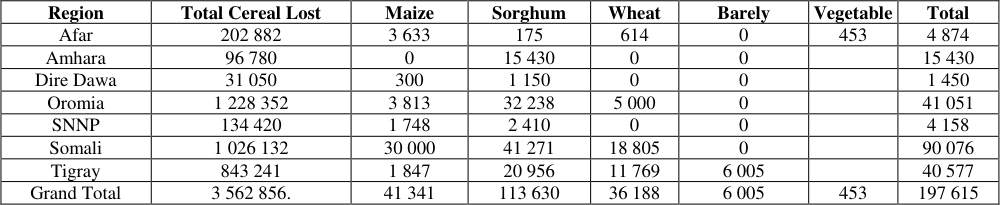 Table 1
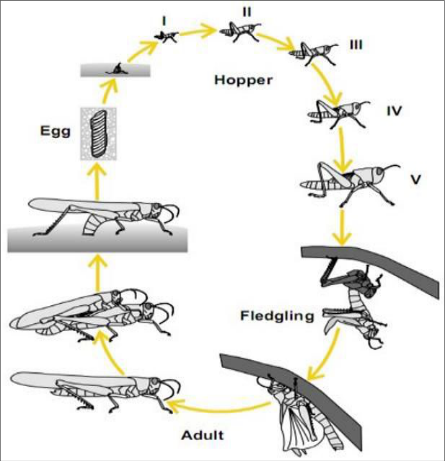 Figure 1
Introduction
Locusts are a group of different species of short-horned grasshoppers belonging to the family Acrididae (Order: Orthoptera). These are a special type of grasshoppers having the capacity of changing their habits and behavior when in large numbers and are regarded as a major threat to agriculture from the beginning of human civilization (Joshi et al.,) [1] . Locusts are generally differentiated from grasshoppers with their swarm-forming ability, body shape, size, and color-changing morphological characteristics (Cymons and Cresman 2001) [2] . The Desert locust Schistocerca gregaria, (Forskal) is considered to be one of the most serious pests causing a devastating amount of damage to crops and other agricultural products during their invasions. It has the largest distribution area, which extends from West Africa through the Middle East to East Asia (Abdela, 2004) [3] . Since 2019, Eastern Africa has seen an upsurge of desert locusts, spreading across several countries at rates not seen in decades. At the end of 2020, the situation was still critical in the whole region (ECPHAO, 2021) [4] . It is considered as the most dangerous migratory pest among the locust species because of its ability to reproduce rapidly, migrate long distances, and devastate crops. Swarms of Desert locust can fly large distances up to 150 km in the direction of wind containing a group of millions and billions of individuals (Zhang et al,) [5] . The Desert locust lives in arid and semi-arid desert habitats, living solitarily when the climatic conditions are not suitable for breeding. Its geographical range varies from a recession area of 16 million km² covering more than 25 countries, when locust densities are low, to an invasion area of 29 million km² covering over 65 countries when locust densities are high (Vanderworf et al, 2004) [6] . This is more than 20% of the total land surface of the world. During plagues, the locust population increases in size and invades vast areas, and more than 60 countries in Africa and Asia are affected at different degrees of infestation during the plague development, which normally occurs due to consecutive generations of successful breeding followed by favorable sequences of heavy and widespread rainfall (Dutta et al., 2004) [7] . The consequences of Desert locust invasions can be disastrous for both the food security and livelihoods of the rural populations in affected areas. The risk of new infestations and continuous breeding could limit food and fodder availability. The likelihood of an impact on vulnerable households will remain high due to rising food prices. Damage can be considerable on all types of crops: annual rain-fed crops as well as perennial crops, tree cultivation, and irrigated crops which are even more sensitive since they are exposed throughout the year (Cresman, 2016) [8] The invasions can result in the abandoning of crops and rural migrations. Pastorals zones are also subject to major destruction, affecting both total biomass production and its palatability for livestock. Control campaigns commonly cost many millions of dollars and the large amounts of chemical insecticides used can have serious side effects on the environment. Desert locust control has made progress through better knowledge of their biology and ecology, more efficient monitoring, and more environmentally sound control strategies and with the development of biological products and the increasing use of high-level technologies such as satellite imagery and geographic information systems (Hasanali et al., 2005) [9] . In December 2020 and January 2021, Desert locust swarms migrated from breeding areas in eastern Ethiopia and central Somalia to southern Ethiopia and northern and central Kenya, according to (FAO, 2021) [10] . Desert locusts invaded major areas in Somali, Afar, Oromiyaya, Tigray, and Amhara regions of Ethiopia regularly. Locust swarms also moved south across the Shebelle River in southeastern Ethiopia into the Juba River basin, subsequently crossing into prime rangeland for pastoral households' livestock in northern Kenya. Despite the recent and further possible Desert locust invasion in Ethiopia, there is no systematic review conducted to assess the details of the invasion, its impact on crop production, and its possible control measures. Therefore the general objective of this review is to assess the invasion, Biology, impact on crop production, and its control measures for Desert locusts.
Literature review 2.1 Desert Locust Distribution
The Desert Locust is one of about a dozen species of shorthorned grasshoppers that can form adult swarms or, bands of wingless nymphs called hoppers. (Ibrahim et al, 200) [46] . The total area subject to invasion by Desert Locust swarms is the greatest known among all locusts and covers the whole of west and north Africa, Eastern Africa, all countries of the Middle East up to Turkey, and the southern of most Soviet Republics, Iran, Afghanistan, Pakistan and the northern half of India (Uvarove, 1955) [12] . Desert Locust have been recorded in the Atlantic Ocean (In 1989 the swarm reached the Caribean and the northern part of South America) the British Isles, the Mediterranean, Italy, Greece, the Red Sea, the Gulf of Aden, the Arabian Sea, and Arabian Gulf (Meinzingen, 1993) [13] .
The Economic importance of the desert locust
Desert locust invasions normally cause great loss to the crops and pastures in a number of affected countries. They feed on a very wide range of plants, and there are four factors, which mainly contribute to its status as a major pest: the food intake per individual, the range of food plant and parts eaten, the frequency of occurrence of high-density population, and the mobility of the population (Suliman, 2005) [45] . The largest invasion during the last 15 years occurred in 2004, in North and West Africa and it affected a number of countries in the fertile regions of the continent. In Sudan, particularly in Kordofan State, around 55% of the food crops were damaged during the 1987-1988 plague (Ibrahim, 2006) [15] . The largest crop losses occur when young migrating swarms of immature adults reach cultivated areas. They need to eat at least their own weight (2-3 g) of fresh vegetation each day and possibly three times as much (Cecato et al., 2007) [16] . As swarms contain 50 million individuals per square kilometer, even a moderate-sized swarm measuring 10 km 2 could eat some 1000 tonnes of fresh green vegetation daily (DAFF, 2011) [17] .
Desert Locust Ecology
The Desert Locust has the widest distribution among all the species and may invade millions of square miles though not all at the same time. The invasion area of the desert locust extends from India and Pakistan to West Africa through the Middle East, and the main factors affecting the desert locust breeding and spreading along these regions includes the rainfall, vegetation cover, soil types, wind, temperature, and relative humidity (Sulman, 2005) [45] . The invasion area regions are characterized by annual rainfall averaging between 80-400 mm, and precipitation can be extremely heterogynous in frequency and intensity, as well as differing regionally. Moreover, rainfall is the most important requirement for the Desert Locust breeding, because it orients the necessary environmental conditions for the breeding, development, and multiplication. Rainfall is also found to be influencing the timing of certain developmental milestones in the egg indirectly through soil moisture, the developmental rate of nymphs, and sexual maturation of adults through food (DAFF, 2011) [17] . Frequency of the rain and the duration of the rainy season allow two and a partial third generation of the desert locust to breed, at a higher rate of multiplication than normal, either due to more eggs and/or greater survival occurrence, or after one or two high population growths, many approximately synchronous out-breaks appear and an upsurge begins (Van huis et al.,) [48] . According to Abdella (2004) [3] . Desert locusts are attracted to habitats of high vegetation density and compact structure, because they probably need to protect themselves against unfavorable weather conditions and against the attack of the natural enemies, in addition to their need for food. Moreover, during the overcast conditions, they spend all day in the vegetation, and it is clear that they 11 spend most of their time in the vegetation in habitats consisting of large, dense low plants (Cresman, 2016) [8] .
Damage caused by desert locust
Desert locusts are polyphagia's insects which feed on various parts of plants such as leaves, shoots, flowers, fruit, seeds, stems, and even bark. Crops and non-crop plants including cereals, vegetables, fruit trees, sugarcane, cotton, pasture grasses, and weeds are eaten by the insect. Single insect is estimated to consume green vegetation equivalent to their body weight (2 g) in a day (Shower, 2002) [19] . It is reported that in a day a small 1 sq. km swarm consumes the same amount of food as 35000 people (FAO, 2020) [44] . The damage caused by locusts is even mentioned in the Bible and Quran. The swarms are more dangerous as they are capable of creating large populations, and dense bands and can migrate many hundreds and even thousands of kilometers in a very short period of time which makes them capable of causing heavy damage in a very short period (Lecoq, 2003) [21] . So, these pest outbreaks can create critical conditions for the food security and livelihoods of people in affected areas (Long and Hunter, 2005) [22] . As these swarms can affect a large portion of the world such whole continents get affected and among them, Africa is most susceptible to locust attack.
Impacts of Desert locust on crop production in Ethiopia
Pasture and browse conditions depicting a slightly worse situation in areas invaded by the Desert locust compared to the other areas that were not invaded especially in parts of Somali, and Oromia regions. Community members, however, estimated a significant reduction in pasture availability of 50 percent or more in-Somali (61%), Afar (54%), Tigry (59%) Oromia (31%), Dire Dawa (35%), Southern Nations, Nationalities, and Peoples' Region (SNNPR) (22%) and Amhara (28%) compared to normal situation before the invasion of the locusts based on the report of Joint Assessment Findings (JAF, 2020) [23] . Most of these areas received adequate Karan and Deyr rains in 2019 that came after a prolonged dry spell. The table summarizes the crop loss caused by Desert locusts on different cereal crops and vegetables. 2 shows that Desert locusts has damaged different crops but the worst affected was cereal, especially Sorghum where 113 639 hectares were affected followed by maize (41 341 ha) and wheat (36 188 ha). Oromia was worst affected with a total cereal loss of 1,228 352 quintals (122 835 MT) on 41 051.4 hectares of cropland. Somali region experienced the second largest cereal crop loss of 1026 132 quintals (102 613 MT) on 90 076 ha of cropland. Tigray region was third with 843 241 quintals (84 324 MT) lost on 40 577 ha of land (JAF, 2020) [23] .
Impact of climate change on locust swarm
Climate plays a major role in insect distribution in the world and so it has been anticipated that changing climate will also likely change pest outbreak patterns (Wang et al., 2019) [24] . FAO has already stated that the pest outbreak is an 'unprecedented threat' to food security and livelihoods in regions that are already vulnerable to climate change (EAIOC 2020) [25] . Similarly, these locust outbreaks also depend on climate as they require moist soil for egg incubation, they prefer to migrate to those areas where recently rainfall has occurred in order to get plenty of green vegetation to feed and breed (Tratalos, 2010) [26] . So the region with exceptional weather events due to climate change becomes more susceptible and gets heavy damage by locust swarm outbreaks (20). Also, these swarms are getting more prevalent in the present context due to increase in deforestation, industrialization, urbanization, and all other human activities which increase greenhouse gases mainly methane and carbon dioxide on earth. This increased concentration of carbon dioxide gases results in enhancement of rainfall, soil moisture level, and vegetation growth which increases the size of the locust swarm and its outbreak frequencies. Moreover, from autocorrelation analysis and autoregressive integrated moving average (ARIMA) analysis, it has been observed that endogenous factors and rainfall play role in determining the size of the territory occupied by locust swarms and hopper bands across the entire range of the species (Clauesen, 2003) [27] . These locusts outbreak frequency are also affected with changes in frequency of both flood and droughts as during decades it has been observed that it becomes highly abundant in increased frequencies of both floods and droughts (Stige et al, 2007) [28] . Unusual weather and climate-causing locust outbreaks can be easily illustrated with year 2020 as the outbreak has been regarded as one of the worst in the last 25 years. As this outbreak occurred due to unusual climatic conditions like successive heavy rains and cyclones in the Empty Quarter in the Arabian Peninsula in May and October 2018 which resulted into favorable conditions for three-generation breeding and numerous swarms started to leave those area in early 2019 in order to cause outbreak (FAO, 2020) [44] .
Biology of desert locust 3.1 Life cycle
Mating: Mackean and Ian (2011) [29] mentioned that during mating the male locust mounts the back of the female, applies the tip of his adomen to hers, and passes sperms into her reproductive tract. The sperms are stored in a sperm sac in the female's abdomen, and as the eggs pass down the oviduct during laying, the sperms are released and so fertilize the eggs.
Eggs: Roffy and Magouer (2003) [30] indicated that after mating, the female lays her eggs in warm, moist sand following a rainy spell. It pushes her abdomen down into the sand, extending the membranes between the segments, and burrowing to a depth of 50 or 60 mm. In this burrow, 50 to 100 eggs are laid and mixed with a frothy fluid, which hardens slightly and may help to maintain an air supply round the eggs. Egg needs to absorb approximately their own weight of water to complete their development. Nymph: This stage starts with hatching an egg into a nymph called a hopper. S. gregaria hopper develops in about 30 to 40 days which undergoes five to six stages (Cresman, 2016) [2] . In these stages, solitaries hoppers shed their skin for five to six times, and five times in gregarious hoppers which is called as molting, and the stages between molting is called as instar. The first instars after hatching are white colored and get changed into black within 1 to 2 hours (Stedman, 1990) [31] . Furthermore, with change in the instar's color, its body structure and size also get changed so finally in the fifth instar, it is bright yellow with a black colored pattern but it varies with temperature. Adult: Fledgling develops into an immature adult which later develops into a mature adult. The wings of fledgling get hardened in ten days and it changes into an immature adult. The young adult (Fledgling), under optimal conditions, develops into an adult in 3 to 8 weeks but if the condition is unfavorable (like cool, no sufficient rain) then they remain in larval stages for six months or more (Stedman, 1990) [31] . The colour of an immature adult varies from light to dark pink colour according to weather and becomes sexually mature in a few weeks or months. The beginning of maturation is indicated by the disappearance of pink color from the hind tibia and the mature adult colour changes to yellow in which male adults are brighter yellow colored than females. Moreover, in the adult stage, the weight increases gradually however size doesn't increase (Cymons and Cresman, 2001) [2] . The immature solitarius adult is pale grey whose color on maturation changes to pale yellow. Similarly, immature gregarious is bright pink coloured which on maturation changes to bright yellow.
Source: (Symmons and Cressman, 2001) [2] These methods are practiced especially when the infestation or hopper bands are small. Some of them are killing or trampling the bands, ploughing or burning the egg-infested field & trapping the hoppers in pits or trenches, and killing them (Sharma A. 2014) [32] . When a huge swarm of locusts are about to land in cultivated areas, the best way is to chase them away. Local people use fire, clouds of smoke, and loud sounds to repel them from descending in the field. Gordon et al. (2014) [33] Reported that tympanal movement and electrophysiological response of locusts is between 4 and 8 kHz. They have the ability to distinguish between low frequencies (conspecific) and high frequencies (like predatory echo-locating bats) (Robert, 1989) [47] . Acoustic and electronic devices that pulses ultrasounds can be used to deter large swarms of desert locusts (Ibrahim et al, 2015) [35] . Also, people use nets to protect small nurseries and kitchen gardens. Medicated nets, which are sprayed with garlic or neem oil are also effective to repel different insects including locusts and grasshoppers (Kuar, 2017) [36] . However, these traditional methods work well when the swarms and crop areas are small.
Mechanical control
Methods such as digging trenches for hoppers to fall into, beating hoppers with branches, burning, and tillage are sometimes used as a last resort to try to protect crops. In some societies, people believe on a magician man that he can drive away swarm of locusts from their crops (Kalaffa Alla, 2004) [37] . Cresman (2016) [8] Said that mechanical control may prevent some crop damage if the locust infestation is light, but they have little effect on the overall population in the region and can fail to protect crops when there are locusts continuously invading the fields. Locust eggs in the ground are sometimes dug or ploughed up but this is a laborious work and it is difficult to find many of the locust egg beds without very good information on previous swarm laying sites.
Botanical methods
Botanicals mainly include plant-derived products. They are broad-spectrum pesticides, safe to the environment & non-target animals, less toxic, cheap & easily available. Resistance by pests against them is very slow and less common (Raghavendra 2016) [38] . Most widely used botanical products include pyrethrum, rotenone, Neem, and essential oils. Others include ryania, nicotine, Sabadilla, garlic oil, and capsicum oleoresin which are used in limited (low volume) regional use (Hernandez et al, 2006) [39] .
Chemical control
Previously, organochlorine like Dieldrin were widely used to control the locusts as barrier spraying (Rachardi and Focart, 1999) [40] . But after the ban of dieldrin in 1995, current locust operations use chemical insecticides of classes organophosphates, carbamates, pyrethroids, phenyl pyrazole, and benzoylurea (Dobson, 2001) [41] . These include broad-spectrum insecticides (Arthurs, 2008) [42] . Pesticide Referee Group (PRG), an independent advising body of FAO, recommends different pesticides, especially for locust control. According to PRG, neurotoxic insecticides should be only used as a last resort whereas Metarhizium acridum (Driver & Milner) comes in first priority and insect growth regulators in second. The hoppers (Young instars) are more susceptible to pesticides than the adults (Rachid, 2010) [43] . So spraying operation should be
Conclusion
The outbreak of Desert locusts leads to food insecurity and starvation. The invasion of desert locusts in addition with the effect of coronavirus and the political instability of Ethiopia is the cause of current food insecurity. In Ethiopia Desert locust outbreak occurs when there is a long dry season followed by a short rainy time before the entrance of summer. This climatic variability can be used as prepreparation to control Desert locus before its outbreak. But area-specific control is not a successful method to control Desert locusts. Because it can invade many areas in short time crossing countries as the movement is in a windward direction. As these transboundary pests appear in millions of numbers all the concerned authorities should be well-preprepared to reduce the damage. Traditional methods can be used but only when the swarms are very few in number. To control thousands or millions in swarms, we need to shift from traditional cultures to modern approaches. So the Ethiopian government should incorporate new policies that encourage the cooperative control of Desert locusts with neighboring countries.
Figures and tables from the paper
| Region | Total Cereal Lost | Maize | Sorghum | Wheat | Barely | Vegetable | Total |
|---|---|---|---|---|---|---|---|
| Afar | 202 882 | 3 633 | 175 | 614 | 0 | 453 | 4 874 |
| Amhara | 96 780 | 0 | 15 430 | 0 | 0 | 15 430 | |
| Dire Dawa | 31 050 | 300 | 1 150 | 0 | 0 | 1 450 | |
| Oromia | 1 228 352 | 3 813 | 32 238 | 5 000 | 0 | 41 051 | |
| SNNP | 134 420 | 1 748 | 2 410 | 0 | 0 | 4 158 | |
| Somali | 1 026 132 | 30 000 | 41 271 | 18 805 | 0 | 90 076 | |
| Tigray | 843 241 | 1 847 | 20 956 | 11 769 | 6 005 | 40 577 | |
| Grand Total | 3 562 856. | 41 341 | 113 630 | 36 188 | 6 005 | 453 | 197 615 |
Table text extracted from the original PDF; superscript letters are shown inline. The original table image is below.
View original table image
References
31 in the original paper- Joshi M, Varadharasu P, Solanki C, Birari V. Desert Locust (Schistocerca gregaria F.) outbreak in Gujarat, India. Agriculture and Food: E-Newsletter. 2020;2(6):691-693.
- European Civil Protection and Humanitarian Aid Operations, Desert locusts in Eastern Africa: Last updated 28/06/2021.
- Zhang L, Lecoq M, Latchininsky A, Hunter D. Locust, and grasshopper management. Annual Review of Entomology. 2019;64(1):15-34. DOI: https://doi.org/10.1146/annurev-ento-011118-112500.
- Werf VDW, Woldewahid G, Huis VA, Butrous M, Sykora K. Plant communities can predict the distribution of solitarious desert locust Schistocerca gregaria. Journal of Applied Ecology. 2005;42:989997.
- Hassanali A, Njagi P, Bashir M. Chemical ecology of locusts and related acridids. Annual Review of Entomology. 2005;50:223-45.
- FAO Locust watch. Desert Locust. Satellite information for locust forecasting. Food and Agriculture Organization; c2021. http://www.fao.org/ag/locusts/en/activ/DLIS/satel/index html. Accessed on 08/07/2021.
- Tamiru C. Assessments impact of an invasive alien weed species on indigenous species and its management practices in eastern Hararghe, Ethiopia. International Journal of Research in Agronomy. 2020;3(1):62-67.
- Mohamed RFK, Babiker AA, Mohammed WTO. Dietary diversity score (HDDS) in measuring food security status among refugees in the White Nile State, Sudan. Int. J Agric. Extension Social Dev. 2020;3(2):71-75. DOI: 10.33545/26180723.2020.v3.i2b.59
- Ibrahim EM. A method for detection of desert locusts, Schistocerca gregaria (Forskal), and estimation of the infested areas. M.Sc. Thesis; c2006 Accessed on 12/9/2011. http://crc-empres.org/public/Document/Document201012453920_M.Sc%20Essam.PDF.
- Ceccato P, Cressman K, Giannini A, Trzaska S. The desert locust upsurge in West Africa (2003-2005): Information on The desert locust early warning system, and the prospects for seasonal climate forecasting. International Journal of Pest Management. 2007;53(1):7-13.
- DAFF, Monitoring and Forecasting Locust Populations; c2011. Australian Government. Accessed on 10/8/2011. http://www.daff.gov.au/animal-planthealth/locusts/aplc-activities/monitoring.
- Jannat M, Hossain MK, Uddin MM. Socioeconomic factors that flavour forest conservation reducing forest dependency of local communities in developing countries: Lesson learned from the Rangamati hill district in Bangladesh. International Journal of Geography, Geology and Environment. 2020;2(1):2833.
- Agriculture, Ecosystems & Environment. 2002;90(1):97-103.
- Rivers states, Nigeria. International Journal of Agriculture Extension and Social Development. 2021;4(1):06-09.
- Lecoq M. Desert locust threat to agricultural development and food security and FAO/ international role in its control. Arab Journal of Plant Protection. 2003;21:188-193.
- Long Z, Hunter DM. Laboratory and field trials of Green Guard (Metarhizium anisopliae var. acridum) (Deuteromycotina: Hyphomycetes) against the oriental migratory locust (Locusta migratoria manilensis) (Orthoptera: Acrididae) in China. Journal of Orthoptera Research. 2005;14(1):27-30. DOI:10.1665/10826467(2005)14[27:LAFTOG]2.0.CO;2
- Wang B, Deveson E, Waters C, Spessa A, Lawton D, Feng P, et al. Future climate change likely to reduce the Australian plague locust (Chortoicetes terminifera) seasonal outbreaks. Science of the Total Environment. 2019;668:947-957. DOI: 10.1016/j.scitotenv.2019.02.439.
- Tratalos J, Cheke R, Healey R, Stenseth N. Desert locust populations, rainfall, and climate change: Insights from phenomenological models using gridded monthly data. Climate Research. 2010;43(3):229-239. DOI: 10.3354/cr00930.
- Claussen M, Brovkin V, Ganopolski A, Kubatzki C, Petoukhov V. Climate change in northern Africa: The past is not the future. Climate Change. 2003 Mar;57:99118. DOI: https://doi.org/10.1023/A:1022115604225.
- Stige LC, Chan KS, Zhang Z, Frank D, Stenseth NC. Thousand-year-long Chinese time series reveals climate forcing of decadal locust dynamics. Proceedings of the National Academy of Sciences of the United States of America. 2007 Oct 9;104(41):16 188-16 193. DOI: 10.1073/pnas.0706813104.
- Sharma A. Locust control management: Moving from traditional to new technologies: An empirical analysis. Entomology, Ornithology & Herpetology: Current Research. 2014 Jan 1;4(1):1-7. DOI: https://doi.org/10.4172/2161-0983.1000141.
- Gordon SD, Jackson JC, Rogers SM, Windmill JF. Listening to the environment: hearing differences from an epigenetic effect in solitarious and gregarious locusts. Proceedings of the Royal Society B: Biological Sciences. 2014;281(1795):20141693. DOI: https://doi.org/10.1098/rspb.2014.1693
- Begna T. Impact of drought stress on crop production and its management options. International Journal of Research in Agronomy. 2021;4(2):66-74.
- Ibrahim AG, Oyedum OD, Awojoyogbe OB, Okeke SS. N. Electronic pest control devices: a review of their necessity, controversies and a submission of design considerations. The International Journal of Engineering and Science (IJES). 2013 Sep 30;2(9):2630.
- Raghavendra KV, Gowthami R, Lepakshi NM, Dhananivetha M, Shashank R. Use of botanicals by farmers for integrated pest management of crops in Karnataka. Asian Agri-Hist. 2016 Jan 1;20(3):173-180.
- Escalona HM, Fiallo FV, Hernández AM, Pacheco AR, Isman M. Botanical insecticides, deterrents, and repellents in modern agriculture and an increase Ingly regulated world. Annual Review of Entomology. 2006 Jan 7;51(1):4566. DOI: 10.1146/annurev.ento.51.110104.151146
- Rachadi T, Foucart A. Barrier treatment with fipronil to control desert locust Schistocerca gregaria (Forskal, 1775) hopper bands infesting a large area in Mauritania. International Journal of Pest Management. 1999 Jan 1;45(4):263-273. DOI: https://doi.org/10.1080/096708799227671
- Dobson HM. Desert locust guidelines, Control. FAO. UN, Rome, Italy. 2001;4:1-85.
- Ibrahim KM, Patrica S, Godfrey MH. Are recession populations of the Desert Locust (Schistocerca gregaria) Molecular Ecology. 2000 Jun;9(6):783-791. www.onlinelibrary.wiley.com/doi/101046/j.1365294x.2 000.00932.x/pdf
- Robert D. The auditory behavior of flying locusts. Journal of Experimental Biology. 1989 Nov 1;147(1):279-301.
- Huis VA, Cressman K, Magor JI. Preventing desert locust plagues: Optimizing management interventions. Entomol. Experimental and Applied. 2007 Mar;122(3):191-214.
Cited by 6
From OpenAlex, OpenCitations and reference lists read by Scinovex
- Desert locust invasion in sub-Saharan Africa: A comprehensive academic review of biology, ecology and integrated management strategies with reference to Ethiopia ↗
Oumar Sow, Rokhaya Ndiaye Diop, Ibrahima Mbaye · International Journal of Advanced Academic Studies · 2026
Desert locust (Schistocerca gregaria Forskål, 1775) invasions constitute one of the most formidable biotic threats to agricultural stability and food security across sub-Saharan Africa, with Ethiopia representing one of the most severely and recurrently affected nations in the East African risk corridor. This comprehensive review synthesises the current state of knowledge on S. gregaria biology, ecology, geographic distribution, population dynamics,
- Impact of desert locust (Schistocerca gregaria) infestation on crop yield loss and food security in Ethiopia: Management interventions and policy implications
Jean Claude Nshimiyimana, Serafina Chissico Machava, Solange Uwimana Kabera · International Journal of Agriculture and Food Science · 2026
Desert locust (Schistocerca gregaria) infestations are among the most catastrophic threats to agricultural production and food security in sub-Saharan Africa. This multi-season study quantified crop yield losses across six major Ethiopian staple crops under three infestation severity levels, assessed food security consequences using the HFIAS instrument, and evaluated the comparative cost-effectiveness of six management interventions across 540 smallholder households in Afar, Oromia, and Amhara regions (2020-2022). Severe infestation caused yield losses of 74.8-86.2%. Combined IPM reduced seve
- Microbial entomopathogens as biocontrol agents against desert locust (Schistocerca gregaria) in Ethiopian farming systems: A microbiological review ↗
Kwabena Asante Bonsu, Adwoa Pokuaa Darko · Journal of Advances in Microbiology Research · 2026
Microbial entomopathogens represent the most ecologically promising alternatives to organophosphate chemical pesticides for the management of desert locust (Schistocerca gregaria) in Ethiopian farming systems. This microbiological review synthesises evidence on the efficacy, host specificity, environmental persistence, production feasibility, and deployment challenges of principal microbial biocontrol agents from 38 peer-reviewed publications. Four primary candidates were evaluated: Metarhizium acridum (Green Muscle®), Beauveria
- Biological Characteristics, Seasonal Distribution and Population Dynamics of Desert Locust (Schistocerca gregaria Forskål) in Ethiopian Agroecological Zones ↗
Omondi Otieno Achieng, Amira Salah El-Din Nour · Acta Entomology and Zoology · 2025
Desert locust (Schistocerca gregaria Forskål, 1775) poses a persistent and catastrophic threat to agricultural production across the Horn of Africa, with Ethiopia's diverse agroecological zones providing distinct habitats for breeding, roosting, and seasonal migration. This study examined the biological characteristics, seasonal distribution patterns, and population dynamics of S. gregaria across four Ethiopian agroecological zones Afar lowlands, Somali semi-arid zone, Oromia
- Evaluating the impact of climate change and agronomic inputs on sorghum yield a case study from Ethiopia ↗
Sisay Belete · International Journal of Pharmacognosy and Life Science · 2024
This study evaluates the dual impacts of climate change and agronomic inputs on sorghum yield in Ethiopia, a country where agriculture forms the backbone of the economy, particularly for rural populations. Sorghum (Sorghum bicolor), a drought-tolerant cereal, is widely cultivated in Ethiopia, offering crucial food security in arid and semi-arid regions. However, climate change poses a severe threat to its
- Socioeconomic consequences of desert locust (Schistocerca gregaria) outbreaks on smallholder farmers and agricultural markets in Ethiopia ↗
Abebe Kebede Tamiru, Hailemariam Tesfaye Woldu, Selamawit Girma Kassa · Asian Journal of Management and Commerce · 2024
❝ 0Found by Scinovex