
Research article · 2023 · Full text
International Journal of Agriculture and NutritionOn-farm demonstration and evaluation of Jimma replaceable drum multi-crop thresher in west Shawa zone, Ethiopia
Volume 5(1) · Pages 01–06 · DOI: 10.33545/26646064.2023.v5.i1a.89 ↗
Research areasAgriculture and Rural Development Research
Abstract
Author-writtenIn West Shawa Zone where this research endeavored to introduce Jimma made multi crop thresher, the most common methods of threshing a variety of crops is traditional. It involves striking the crops panicle with stick or trampling under animal hooves and winnowing it by tossing the threshed mixed mass in the air when there is enough wind to separate the chaff from grain on ogdi. This method is inefficient, slow, prone to drudgery as well as the time taken and the labor required are considerably high along with the problem of contamination of grains with extraneous material such as dung, urine and sand. To obviate these all, a multi crop thresher for major cereal crops was developed at JAERC and intended to demonstrate in Toke Kutaye and Liban Jawi districts with the specific objectives of building farmers awareness of Jimma MCT and its potential uses; evaluating the machine for its performance in terms of threshing efficiency, capacity and total threshing losses and eliciting farmers and other stakeholders’ feedback that can be used as an important data source for further refinement of the machine demonstrated. The participants were both extension functionaries and the purposively selected farmers from the areas where production of teff, wheat and maize are collectively predominating. data entailed Weight of the threshed grain, un threshed grains, damaged grains, time of operation, no of farmers participated in awareness creation training and field days, and feedback information was collected through a variety of indices of measurement, reckoning techniques and focus group discussions. It was found that the thresher could thresh the crops to a threshing efficiency of 91, 92, and 98.5% for teff wheat and maize; the output capacities of 69.09, 110.5 and 930 kg/hr for the same crops were satisfactory; and threshing loss of 12.9 and 10.9% achieved for teff and wheat respectively was rather high. Hence, the recommendation to pre scaling up the machine for maize threshing and on how to improve for teff and wheat were provided.
Summary
Source-checkedPlain-language reading of the full paper, prepared with AI and checked against the text. Each point links to the authors' own words.
Why it matters
- In Ethiopia's West Shawa Zone, traditional threshing methods involve striking crop panicles with sticks or using animal trampling, followed by wind-based winnowing. View evidence ↗
- Traditional threshing is considered inefficient and slow, requiring high labor and time while risking grain contamination from sand, urine, and dung. View evidence ↗
- Because farmers' socioeconomic status often prevents them from owning separate machines for different crops, there is a strong need for a multi-crop thresher. View evidence ↗
The question
- The study aimed to build farmer awareness of the Jimma Multi-Crop Thresher (MCT), evaluate its performance regarding capacity, efficiency, and losses, and collect stakeholder feedback. View evidence ↗
What they found
- The thresher achieved threshing efficiencies of 98.5% for maize, 92% for wheat, and 91% for teff. View evidence ↗
- The output capacities were 930 kg/hr for maize, 110.5 kg/hr for wheat, and 69.09 kg/hr for teff. View evidence ↗
- Threshing losses were high for teff (12.9%) and wheat (10.9%). View evidence ↗
- Compared to the Ethiopian Commodity Exchange standard of 0.2%, the total loss results were poor for all crops except maize. View evidence ↗
- Farmers reported that the machine was ineffective at cleaning teff and wheat, requiring additional manual effort to separate grain from chaff. View evidence ↗
What it means
- The authors recommend pre-scaling up the machine for maize threshing, while further improvements are needed for teff and wheat. View evidence ↗
- The machine requires design modifications, including a wider chaff outlet to prevent clogging, a greater distance between inlet and outlet to avoid mixing, and the addition of wheels and a hitch for better maneuverability. View evidence ↗
Visual summary
1 visualsIllustrations explain the paper; they do not show study data.
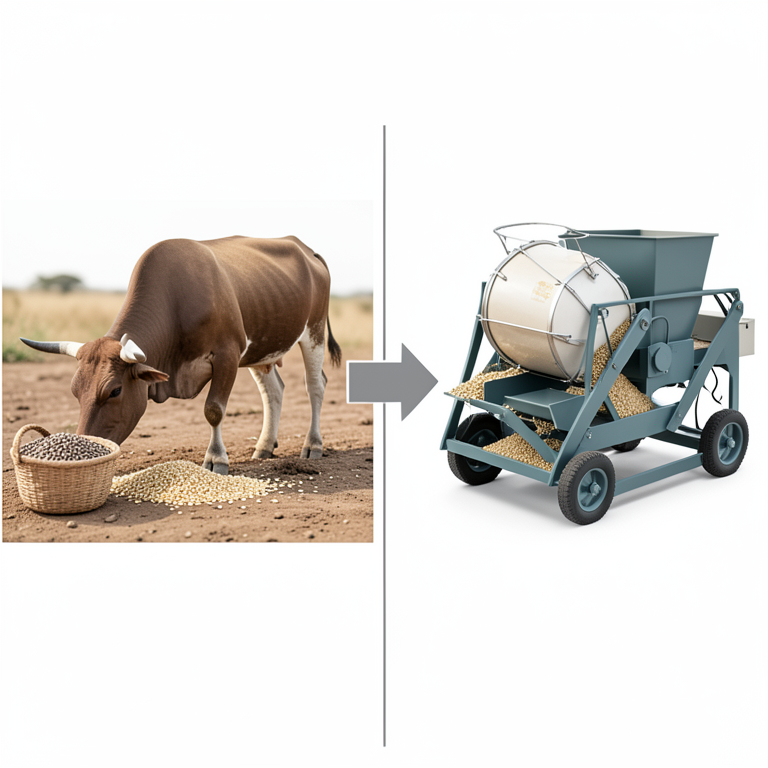
Traditional vs. Mechanical Threshing Workflow
AI-generated conceptual illustration (Jimma replaceable drum multi-crop thresher and livestock in an Ethiopian field). It explains the idea and does not show study data.
View source evidence ↗Figures & tables
From the original paper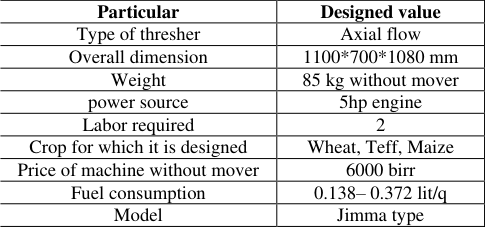 Table 1
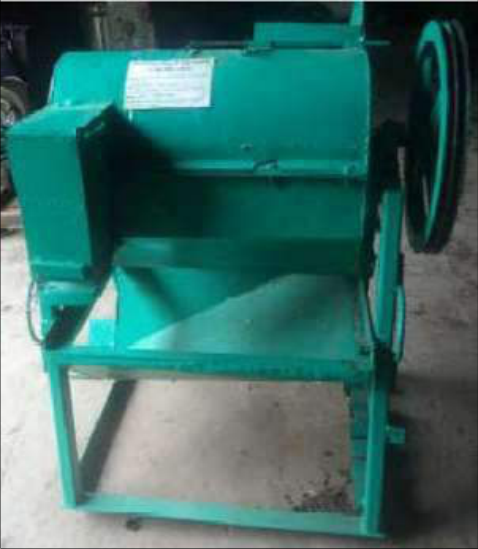 Figure 1
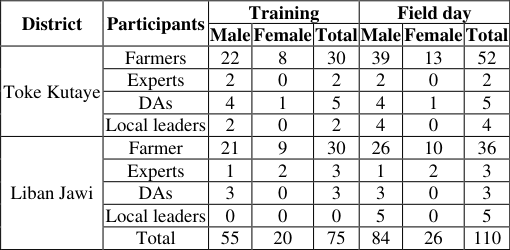 Table 2
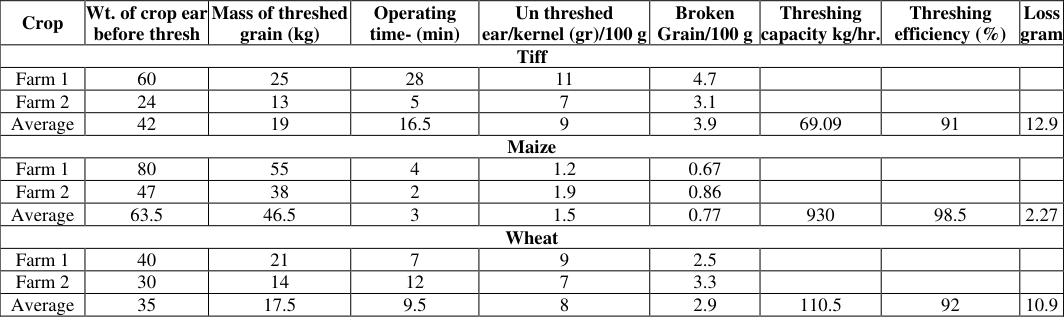 Table 3
Introduction
Agricultural sector is still indispensable to the Ethiopia's economic growth, food security, employment generation and poverty alleviation particularly at the rural level. It contributes 33.88 percent to the GDP (Plecher, 2020) [10] and provides employment to around 66.12 percent of the total labor force (World Bank, 2020) [13] . More than 65-70 percent of the population depends primarily on agriculture for its livelihood (Plecher, 2020) [10] . However the sector's growth rate and modernization has been being seriously constrained by arable land shrinkage, climate change, water shortages, large scale population, and low technological advancement along with labor shift from rural to urban areas (Diriba, 2020) [3] . Further development of agriculture as the leading sector in stimulating economic growth and job creation, therefore requires emphasis of new approach. Mechanization is an important link, inter alia, in getting agriculture moving. Various machines and associated implements are imperative inputs for agricultural crop establishment, protection, harvesting, threshing and other post-harvest processing (ATA, 2018) [2] . Carrying out these tasks timely is identified to result in remarkable improvement in production, productivity and cost characteristics. Traditional method is incapable of this whereas adoption of mechanization technologies is a way to meet such conditions.
Threshing is a post-harvest activity hardly challenging. It is a typical pinch point leading to huge losses, high cost and demands of excessive energy inputs. The operation is basically the thorough detachment and separation of grain from the ear head, cob or pod of the crops by striking, treading, rubbing or using a combination of these actions. In Ethiopia removing cereal grains from the rest of plant materials is manual undertaking which is well known for its large amount of human and animal power requirement. Animal trudging and stick beating threshing of crops remain the same for centuries down to the present day due to lack of a machine to accomplish threshing operation (Diriba, 2020) [3] with the exception of some areas like Arsi and Bale Zones. In this country threshing is also done sometimes by rubbing crops either between two palm hands or legs in case of small sized lots and production quantities (Gebissa, 2021) [4] . However there are evidences that such methods are inefficient, highly tedious, time-consuming and less productive (Asfaw et al, 2011) [1] . Besides in both cases the grain gets mixed with grit and dirt, making it inferior in quality. In fact traditional threshing methods do not support large-scale processing of crops especially for commercial purposes. There were also identified issues concerning these threshing processes, which include sinewy muscle strain, back pain and injuries to animal feet (Mestewal and Yihenew, 2018) [7] . In order to place threshing operation on a mechanical basis and in due course lessen the shortcoming of conventional methods, research in large quantities have been being carried out by various government and private organizations to device and introduce mechanical threshers that can process some cereal and pulse crops separately in Ethiopia and other countries of the world. Though thus different threshers which are distinguished according to the type of crops they process, are available in the market the socio economy situation of the farmers does not allow them having separate machine for each crop. A need for multi crop thresher, therefore strongly arises when seeking solution for this affair To avail such type of option, Adaptation efforts were made on conventional maize Sheller at JAERC by modifying it into a unit that could accommodate a replaceable bar type drum in a way that is thresh some cereal crops. The adapted prototype was tested on maize, wheat, teff, sorghum and barley crops for performance. Results then indicated that when both feed rate and speed are maintained at recommended values the optimum threshing capacity is 25.3 qthr -1 , 3.9 qthr -1 , 2.4 qthr -1 , 7.8 qthr -1 and 1.2 qthr -1 for an average grain-straw (cob) ratios of 1:0.36, 1:2.22, 1:2.56, 1:0.21 and 1:1.29 with the efficiencies found in the range of 81.86 to 99.39%, 99.53 to 100, 97.43 to 98.97%, 26.62 to 98.63% and 85.31 to 100% for maize, wheat, teff, sorghum and barley crops respectively. The corresponding kernel damage and total grain loss was 0.35% and 5.5%, 2.2% and 4.43%, 0% and 2.87%, 1.12% and 3.97%, and 0.1% and 0.1% for the mentioned crops respectively (Hussen, et al., 2015) [5] . As the same authors articulated, these test results were considered adequate to warrant starting on farm demonstration trials for crops like teff, wheat, maize and sorghum. This particular research therefore intended to conduct participatory demonstration for promotion of Jimma replaceable drum multi crop thresher (hereafter referred Jimma MCT) in West Shawa Zone with the specific objectives to create farmers awareness towards the existence and potential uses of that thresher; evaluate the machine for its performance and to assess feedback that worthy considering in improving the technology to the highest level of performance or effectiveness Agriculture constitutes Crops and livestock in large part is the main economic stay of the district. Both enterprises contribute their share to the livelihood of the whole communities. Among a variety of crops commonly growing in the area, wheat, teff, bean, maize and noug are the dominant in decreasing order. Teff and wheat are the major sources of daily food of the population. On the other hand Livestock (cattle, shat, poultry, equine) are highly valued, integrated and kept for draught power and as a source of food, wealth and savings, hedges against contingencies, and buying inputs (like fertilizers) in that order of importance.
Materials and Methods Description of the machine
Materials and Methods Description of the machine
Toke Kutaye
Toke kutaye district is located in west shawa administrative area, environed between Mida Kegn to the north, Dire Enchini to the south and Liban Jawi to the west, while Ambo district lies to its east direction. It extends between 36 0 35'58" E in the West to 50 0 00' E in the East, and between 8 0 0'47" N in the South to 8 0 25'0" N in the North, covered a total of 345 square kilometer land mass. The agro climatic zone of the district is categorized in to three major divisions: the cool, the warm-temperate and the hot. These climatic divisions cover 20.99%, 51.31% and 27.70%, respectively. Rainfall experienced in the district is patterned bimodal that falls generally from Match to September skipping May amid. The mean yearly temperature is 19.1 °C with the maximum and minimum values of 22.5 and 6.7 °C, respectively.
The production system in this part of study area is a mixed crop-livestock agricultural system. Teff, wheat and maize are the chief crops growing in the district. Sorghum and barley are important, but occupy much smaller hectares. Pulse occupy one-tenth of the cropping area with haricot bean being a major component (unpublished report from agricultural and natural resource office of this district). Keeping of cattle, small ruminant and a flock of chickens is also a common practice by smallholder inhabitants. Keeping of cattle, small ruminant and a flock of chickens is also a ubiquitous practice by smallholder inhabitants. Equines are reared as well by some families for transportation and seldom for threshing operation in Toke Kutaye.
Site and farmer selection
Preceding the main field work, preliminary field works were made during the months of October and November 2013 E.C. At that state, legality to field entry and creation of rapports with zone agriculture's officials and some staff were assured. After due consultation and discussions with these officials, Toke Kutaye and Liban Jawi districts were selected purposively in considering the current potential for some cereals like wheat, teff and maize production collectively. Using the same technique (again purposive) two kebeles from Liban Jawi and the same number of kebeles from Toke Kutaye district was selected for the study. From the four kebeles of the mentioned districts a total of sixty farmers, seventeen of which were females, were selected in unison with the district and kebele level extension functionaries and local leaders.
Methods of Demonstration FRG Establishment
Methods of Demonstration FRG Establishment
Training
Training is considered as a repository of knowledge product that to be shared for capacity building and awareness creation (Rogers, 2003) [11] . In current research the event was better embedded and organized for farmers and other concerned stakeholders for the knowledge of the existence of Jimma MCT. There were explanations that effective utilization of farm machinery requires more than transfer of information (King & Rollins, 1999; Miller and Cox, 2006) [6, 8] . New skills and capacities have to be built among users, especially those introducing machinery for the first time. In this case participants learned operating the machine as it should be. The training was also meant to give a brief account of the thresher's management, repair and maintenance for sustainable functioning of the machine. The expectation is that when they know of the existence of this machine and capable of operating, repair and maintaining, they will develop a need and, eventually, to adopt it.
Live technology demonstration and data collection
The thresher was placed on a level ground near the stack of teff, wheat and maize crops and was oriented in a manner that straws, chaffs and other fine residues are blown from threshed grains in the direction of the wind. Large plastic sheet or mat was covered underneath of the machine for easy collection of grain that spilled during threshing. The machine was first run under no load condition using a five HP diesel engine to ensure whether all components functioned properly. Adjusting the speed of threshing drum at recommended value the operations were started manually feed the crops and stop watch switched on for threshing operation to take place After the threshing operation was completed, the threshed output was collected and weighed using weighing balance. Then time used for the threshing operation was recorded. Also weighed were damaged seed and mass of un-threshed head. Computed the recorded observations, the machine was evaluated for its threshing efficiency (T E ), output capacity (T C ) the percent of visible damage (P DG ), un-threshed seed (P UT ) and total grain loss (L T ) of the aforementioned crops. These indices were determined by the following equations as suggested by (Olaoye, et al. 2010) [9] .
Where 𝑄 𝑈 = quantity of unthreshed grain in sample (g) 𝑄 𝐵 = quantity of broken grain in sample (g) 𝑄 𝑇 = Total grains in sample (g) 𝑄 𝑆 = Weight of grains threshed (kg) T= time taken for complete operation (min)
On occasion interviews and discussions were carried out with two Focus groups composed of fifteen discussants (Farmers DAs and experts) each for the search of qualitative feedback on performance of the model. In addition, data with regard to number of farmers DAs and subject matter specialists participated in awareness creation training was taken employing reckoning techniques.
Method of data Analysis
Data analysis involved both qualitative and quantitative methods. SPSS computer software was employed to create data files. Techniques of narration and explanation were used for analysis of qualitative data so obtained while simple descriptive statistic methods such as frequency count, percentage, and average or mean scores were used for analysis of quantitative data. Further, tables and figures were used to present both collected qualitative and quantitative data.
Results and Discussion
Results and Discussion
Awareness creation and capacity building
Training was conducted twice. A team of researchers instructed farmers the way to use, operate, maintain and repair Jimma MCT by providing a functional overview. The importance of threshing operation in determining grain quality, yield and marketability; demerits of traditional threshing systems as well as efforts made in research system so far to develop effective threshing technologies that boot problems associated with threshing were presented and discussed in brief. In whole sixty farmers composed of both sexes attended the sessions held for two days. Thirteen frontline extension workers and agricultural experts were also invited to this training in order to bring the thresher into their knowledge. There were two local leader recipients of the training delivered in the study area. Aside from training field days/live demonstrations were conducted on Jimma MCT. Two field events with live threshing of maize, wheat and teff crops in the project areas were carried out in the presence of about 110 participants. Table 2 visualizes details of farmers and other stake holders participated in awareness creation events
| District | Participants | Training | — | — | Field day | — | — |
|---|---|---|---|---|---|---|---|
| Male | Female | Total | Male | Female | Total | ||
| Toke Kutaye | Farmers | 22 | 8 | 30 | 39 | 13 | 52 |
| Experts | 2 | 0 | 2 | 2 | 0 | 2 | |
| DAs | 4 | 1 | 5 | 4 | 1 | 5 | |
| Local leaders | 2 | 0 | 2 | 4 | 0 | 4 | |
| Liban Jawi | Farmer | 21 | 9 | 30 | 26 | 10 | 36 |
| Experts | 1 | 2 | 3 | 1 | 2 | 3 | |
| DAs | 3 | 0 | 3 | 3 | 0 | 3 | |
| Local leaders | 0 | 0 | 0 | 5 | 0 | 5 | |
| Total | 55 | 20 | 75 | 84 | 26 | 110 |
Table text extracted from the original PDF; superscript letters are shown inline. The original table image is below.
View original table image
Output capacity
The shelling capacity of the Jimma made multi-crop thresher from the field evaluation results above was observed to be 930 kg per hour with 1.5-liter fuel consumption, whereas there obtained much lower threshing output of 69.09 and 110.5 kg per hour for teff and wheat respectively. This result was dissimilar to the capacity stated by the designers (Hussen et al. 2015) [5] probably on account of operator's skill (farmers).
Threshing efficiency
Evaluation results presented in the same table indicated that multi-crop thresher made in JAERC has 98.5, 92, and 91% threshing efficiency for major cereal like maize wheat and Teff crops respectively. This shows that the Jimma drum replaceable multi-crop thresher was much effective in threshing the maize.
Total loss
Table 3 depicts total loss of JAERC made multi crop thresher to be 12.9, 10.9 and 2.27 by per cent for teff, wheat and maize crops. It was determined from the percentage of grains un-threshed and damaged in the form of breakage. The result obtained was not good except for maize as compared to the Standard (0.2%) as set by Ethiopian commodity exchange.
| Crop | Wt. of crop ear before thresh | Mass of threshed grain (kg) | Operating time- (min) | Un threshed ear/kernel (gr)/100 g | Broken Grain/100 g | Threshing capacity kg/hr. | Threshing efficiency (%) | Loss gram |
|---|---|---|---|---|---|---|---|---|
| Tiff | ||||||||
| Farm 1 | 60 | 25 | 28 | 11 | 4.7 | |||
| Farm 2 | 24 | 13 | 5 | 7 | 3.1 | |||
| Average | 42 | 19 | 16.5 | 9 | 3.9 | 69.09 | 91 | 12.9 |
| Maize | ||||||||
| Farm 1 | 80 | 55 | 4 | 1.2 | 0.67 | |||
| Farm 2 | 47 | 38 | 2 | 1.9 | 0.86 | |||
| Average | 63.5 | 46.5 | 3 | 1.5 | 0.77 | 930 | 98.5 | 2.27 |
| Wheat | ||||||||
| Farm 1 | 40 | 21 | 7 | 9 | 2.5 | |||
| Farm 2 | 30 | 14 | 12 | 7 | 3.3 | |||
| Average | 35 | 17.5 | 9.5 | 8 | 2.9 | 110.5 | 92 | 10.9 |
Table text extracted from the original PDF; superscript letters are shown inline. The original table image is below.
View original table image
Feedback
All Focus groups praised the machine for maize highlighting the time can be saving, labor demand significantly decreasing, the Arduousness alleviating, frustrations and delays notably averting due to this machine in threshing operation. In contrast, Farmer complained the machine for teff and wheat in that it was not effective at cleaning. They described that extra effort from the farmers' side is still sought to clean and sort the grain from chaff-which is a pinch point to them. To improve this drawback, what was pronounced from the farmers' part is that the machine should be enhanced with a winnower to reduce drudgery in the grain cleaning process. On the other hand participant agricultural office authorities, professionals and even some farmers perceived that the technology is critical for all crops addressed in light of the challenge they are facing in threshing. They have promised to create enabling environment for promoting and scaling up the machine in close collaboration with research centers. The perceived-prominent hallmark of Jimma-MCT in relation to teff and wheat threshing was that a small-sized straw from the thresher are easier to be consumed by animals; straws chopped enough like this suit even for making agricultural compost fertilizer, as opposed to manually threshed ones. While operating machine mix of grain with straw and clogging were witnessed. All discussants un-anomalously suggested that the machine needs modification of its chaff outlet to be widen which otherwise demands extra labor in case of clogging; for mixture they gave comment to let inlet and out be far apart. They would also like wheels and a hitch to be added to the design for easy maneuverability even if it does not look like big.
Conclusion and Recommendation
Having carried out this demonstration research the working rate of jimma replaceable drum multi crop thresher was evaluated to meet the needs of West Shawa Zone smallscale farmers. The result showed that the performance of the thresher was not satisfactory as it has low output and performance efficiency for teff and wheat threshing. Farmers' remarks reflected in focus group discussions also confirmed the machine to function suitably only for maize but suggested extra design for other crops given that there no provision for cleaning and separation of grain from the chaff.
Based on this data and feedback from farmers, the JAERC developed drum replaceable MCT was recommended as the best tool currently available for threshing maize but for teff and wheat the result of current study was considered to be inadequate to warrant pre scaling up trial. Farmers, during focus group discussions, discussed how it was only possible for them to acquire the thresher for their maize farms. They raised that high cost of agricultural machinery remains a cardinal challenge for those who have not enough cash savings to afford the purchase of expensive machinery. To ease this, sharing the cost of agricultural machineries in general and of this thresher in particular by setting some Innovative arrangements were forwarded as recommendations.
Figures and tables from the paper
| Particular | Designed value |
|---|---|
| Type of thresher | Axial flow |
| Overall dimension | 1100*700*1080 mm |
| Weight | 85 kg without mover |
| power source | 5hp engine |
| Labor required | 2 |
| Crop for which it is designed | Wheat, Teff, Maize |
| Price of machine without mover | 6000 birr |
| Fuel consumption | 0.138– 0.372 lit/q |
| Model | Jimma type |
Table text extracted from the original PDF; superscript letters are shown inline. The original table image is below.
View original table image
References
8 in the original paper- Negassa A, Tsegaye W, Roberto La R, Aredo D, Giancristofaro M. The Adoption and Impacts of SG 2000 Promoted Tef Thresher in Shashamene District of Ethiopia. New Hopes for Revitalizing Tef Based Rural Economy. SG 2000 Technology Impact Brief No.1; c2011.
- Wendimu GY. The challenges and prospects of Ethiopian agriculture. Cogent Food & Agriculture. 2021;7(1):1923619. DOI:10.1080/23311932.2021.1923619
- Abagisaa H, Tesfaye T, Befikadu D. Modification and Testing of Replaceable Drum Multi-Crop Thresher. International Journal of Sciences: Basic and Applied Research (IJSBAR). 2015;23(1):242-255.
- King RN, Rollins TJ. An evaluation of an agricultural innovation: Justification for participatory assistance. Journal of Extension [On-line], 1999, 37(4). Available at: http://www.joe.org/joe/1999august/rb2.html
- Takele M, Selassie YG. Socio-economic analysis of conditions for adoption of tractor hiring services among smallholder farmers, Northwestern Ethiopia, Cognet Food and Agriculture. 2018;4(1):1453978. DOI:10.1080/23311932.2018.1453978
- Miller RL, Cox L. Technology Transfer Preferences of Researchers and Producers in Sustainable Agriculture. Journal of Extension [On-line]. 2006;44(3):1-6. Available at: http://www.joe.org/joe/1992summer/a4.html
- Olanrewaju OJ, Oni K, Olaoye MM. Computer applications for selecting operating parameters of stationary grain crop thresher. International Journal of International Journal of Agriculture and Nutrition https://www.agriculturejournal.net Agricultural and Biological Engineering. 2010;3(3):818.
- Plecher H. Ethiopia: Share of economic sectors in the gross domestic product (GDP) from 2009 to 2019; c2020. https://www.Plecher.com/statistics/455149/share-ofeconomic-sectors-in-the-gdp-in-ethiopia/ [Google Scholar]
Cited by 1
From OpenAlex, OpenCitations and reference lists read by Scinovex
- Studies on general test of multi-crop thresher for wheat crop
Ratnakiran D Wankhade, Abhishek Kumar, Ashutosh Singh, Chitra Pandey, Kuldeep Verma, Nitesh Mohan · International Journal of Agriculture and Food Science · 2025
The Research was carried out in the laboratory of Farm Machinery and Power Collage of Technology, Sardar Vallabhbhai Patel University of Agriculture and Technology, Meerut, for general testing of multi crop thresher on wheat crop, RAMSONS IMPEX made thresher. The testing was carried out as per the IS: 6284:1985 test codes. The various tests i.e. Checking of Specifications, Checking for Material of Construction, Visual Observations and Provisions of Adjustments, Checking of Safety Provision and Pre-test observation which comes under the general test were carried out. It is observed that during