
Research article · 2022 · Full text
International Journal of Veterinary Sciences and Animal HusbandryEctoparasites of free ranging local chickens in urban and peri-urban areas of Morogoro Municipality, Tanzania
Volume 7(6) · Pages 11–15 · DOI: 10.22271/veterinary.2022.v7.i6a.447 ↗
Research areasLivestock and Poultry ManagementBird parasitology and diseasesVector-Borne Animal Diseases
Abstract
Author-writtenA free range system of poultry production is an important economical investment to most of the poor farmers as a source of income and protein, however it faces several challenges including parasitic diseases such as ectoparasite infestation. A cross-sectional study was undertaken to determine the prevalence of ectoparasites, as well as to assess the possible predisposing risk factors infesting free-ranging local chickens in urban and per urban areas in Morogoro municipality, Tanzania. Samples were randomly taken from 144 chickens and age, sex and management practice status of the study population was simultaneously recorded. An overall 53.5% (77/144) prevalence was recorded in this study and three common taxa of ectoparasites were identified, which are lice, fleas, and mites. The individual ectoparasite prevalence were as follows Menopon gallinae 48.6% (70/144) followed by Cnemidocoptes mutans 16% (23/144), Echidnophaga gallinacean 9.7% (14/144) and Goniodes gigas 5.8% (8/144). Among the potential predisposing factors assessed, age and management practice was found to be statistically significantly associated with ectoparasitic infestation (p < 0.05). However, sex was not found statistically significantly associated with the level of infestation (p < 0.05). This study reveals that ectoparasites are highly prevalent in free-ranging local chickens in Morogoro Municipality, Tanzania.
Summary
Source-checkedPlain-language reading of the full paper, prepared with AI and checked against the text. Each point links to the authors' own words.
Why it matters
- Free-range poultry production is a vital economic investment for many poor farmers, providing both protein and income. View evidence ↗
- Ectoparasite infestations can harm chicken health by causing tissue damage, irritation, and blood loss, which may lead to anemia and increased mortality. View evidence ↗
- Ectoparasites also act as vectors that transmit various pathogens, including viruses and bacteria, creating significant setbacks for livestock production. View evidence ↗
The question
- The study aimed to determine the prevalence of ectoparasites and identify predisposing risk factors in free-ranging local chickens within the urban and peri-urban areas of Morogoro, Tanzania. View evidence ↗
What they did
- The research was conducted between March and August 2020 in the areas of Misufini, Chamwino, Kididimo, and Mafiga. View evidence ↗
- A total of 144 free-range local chickens were sampled for the study. View evidence ↗
- Chickens were inspected using the naked eye and hand lenses, while data on sex, age, and management practices were recorded. View evidence ↗
- Chi-square tests were used in SPSS version 20.0 to compare infestation prevalence across sex, age, and management practices, with significance set at p < 0.05. View evidence ↗
What they found
- The overall prevalence of ectoparasite infestation was 53.5%, with 77 out of 144 chickens infested by at least one species. View evidence ↗
- Four species were identified: Menopon gallinae (48.6% on feather shafts), Cnemidocoptes mutans (16% on legs), Echidnophaga gallinacea (9.7% on wattle and combs), and Goniodes gigas (5.6% on body and feathers). View evidence ↗
- Mixed infestations, where chickens were infested by two or more species, occurred in 21.5% of the sampled population. View evidence ↗
What it means
- The authors conclude that ectoparasite infestations are significant setbacks to poultry production in the Morogoro study area. View evidence ↗
- The authors identified age and management practices as the primary statistically significant risk factors for ectoparasite infestation. View evidence ↗
- The authors suggest that the observed prevalence may have been influenced by the small sample size, the season of the study, and local climatic variations. View evidence ↗
Visual summary
3 visualsIllustrations explain the paper; charts are replotted from the paper's own table values.
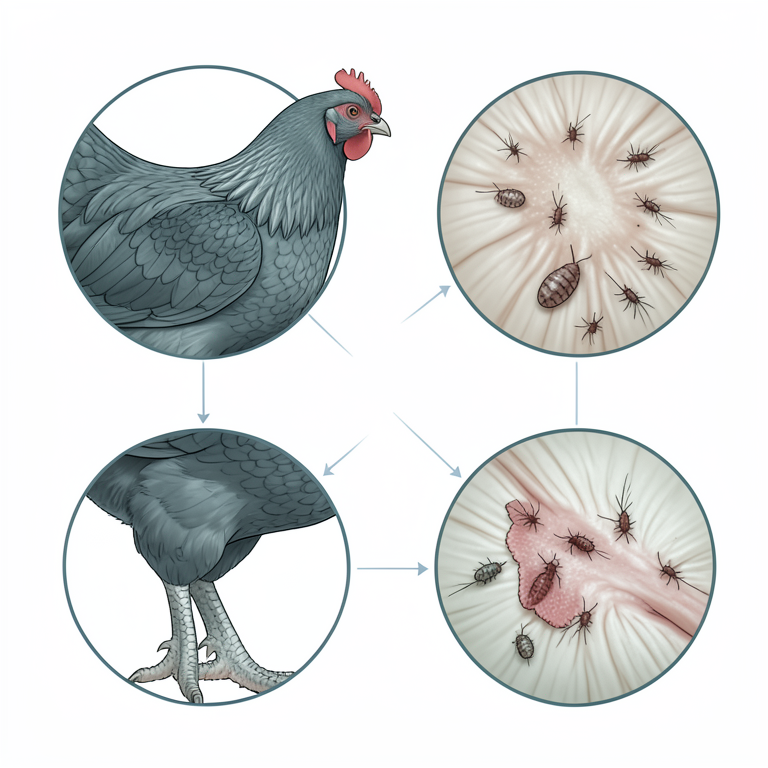
Ectoparasite Distribution on Chickens
AI-generated conceptual illustration (local chickens). It explains the idea and does not show study data.
View source evidence ↗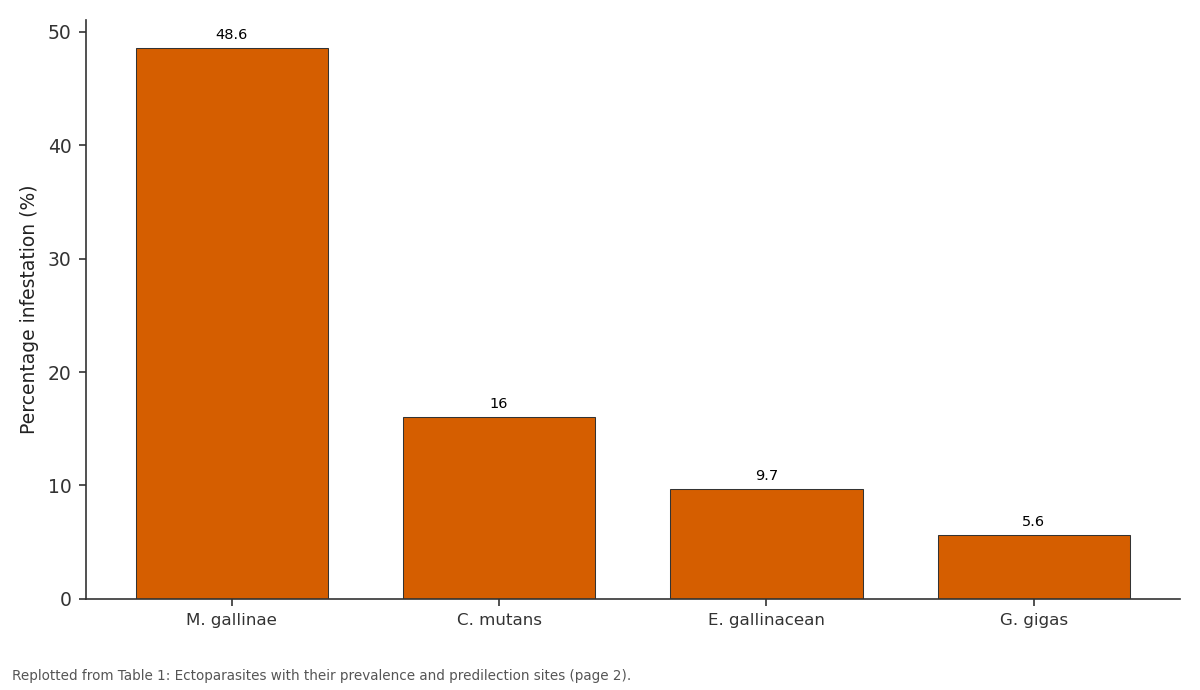
Percentage infestation (%): M. gallinae vs C. mutans vs E. gallinacean vs G. gigas
Replotted from Table 1 (page 2) of the original paper. Every bar is the paper's own table value.
View source evidence ↗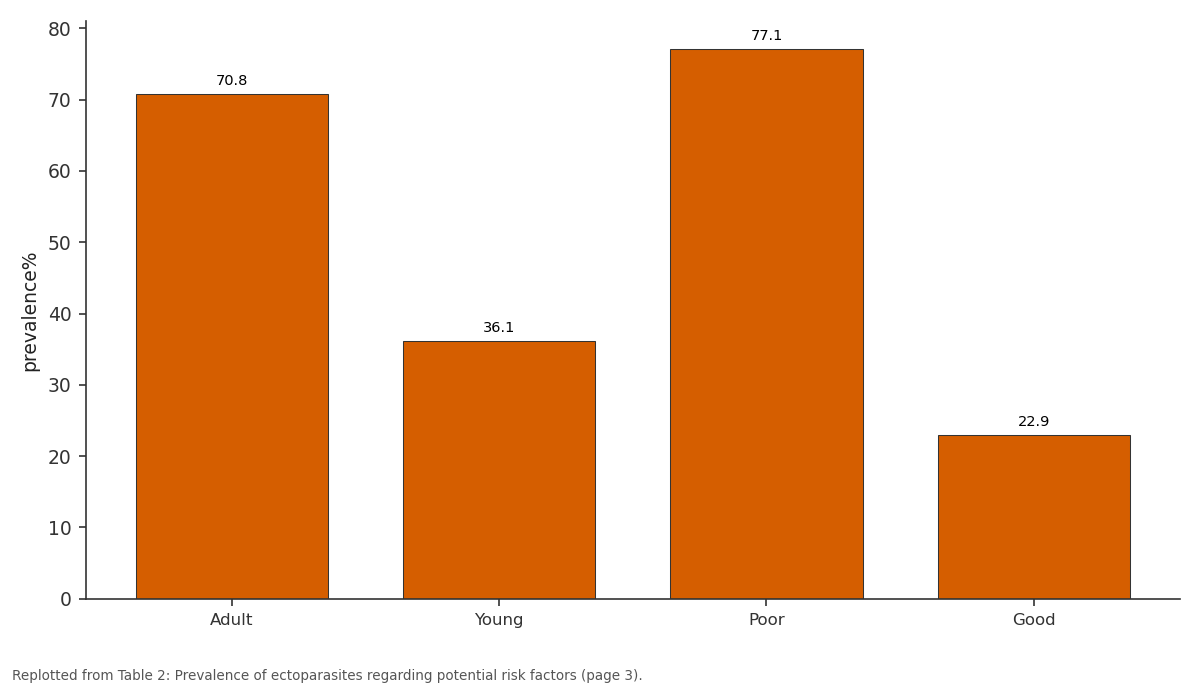
prevalence%: Adult vs Young vs Poor vs Good
Replotted from Table 2 (page 3) of the original paper. Every bar is the paper's own table value.
View source evidence ↗Figures & tables
From the original paper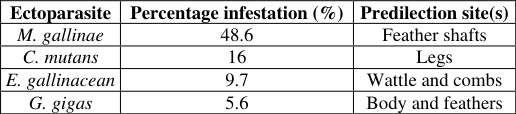 Table 1
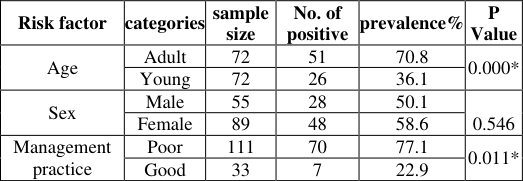 Table 2
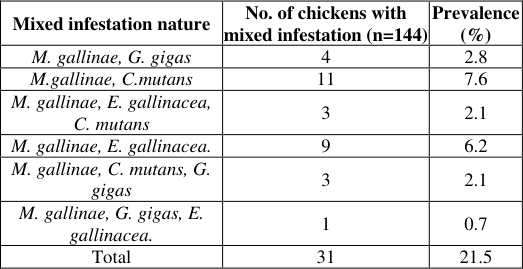 Table 3
Introduction
Poultry production plays an important role in society, major being the contributor to food security, it provides an integral part of a farming system in the majority of Sub-Saharan countries. Poultry production provides high quality protein to most of the families in rural, per urban, and urban areas, leading to improved health status and subsequently livelihood [1] . Tanzania has a relatively large number of poultry population, the chicken population is approximately to be 92.8 million, of which more than 42% are indigenous/native breeds [2] . There are various poultry production systems for keeping poultry ranging from extensive to intensive worldwide. However, in Tanzania there are three major chicken production systems, namely, traditional indigenous or free range scavenger chickens, improved family chickens, and commercial specialized chicken systems [3,4] . The traditional indigenous chickens are kept locally such as in the free range system, which is by far the predominant production system and it is distributed in all regions in Tanzania which contribute to the source of income, meat, and eggs in society. Notably, approximately more than 80% of the poultry population in Africa and Asia are raised/kept under the free ranging system [5] . Indeed, this is due to the fact that the system needs very low input, minimum management interventions, less feeding supplements, almost few to none, disease control strategies/methods, and poor housing [3] . However, the system is characterized by several shortcomings such as high mortality due to several contributing factors such as diseases, poor nutritional, and predators, to mention a few. Parasitic diseases, particularly ectoparasitic infestation, can have direct or indirect effects on host health, directly by causing discomfort, tissue damage, irritation, and blood loss which can lead to anemia, allergies and toxicities to mention a few, this in turn leads to a decrease in production and mortality.
Indirectly, the effects of ectoparasites are major setbacks to livestock production due to the fact that they are vectors of diseases, transmitting various pathogenic agents such as viruses, bacteria, protozoans and helminths to mention a few which are responsible for several devastating diseases.Several studies have been conducted previously from different areas reporting various ranges of the prevalence of ectoparasitic infestations in chickens, for instance studies that have been conducted in Iran, Kenya, Ethiopia, and Zimbabwe [6][7][8][9] . In Tanzania, few studies have been done to elucidate the ectoparasitic infestation in local scavenging chickens [10] . Furthermore, studies have been conducted in other parts of Tanzania, for instance Swai et al. [3] conducted a study on ectoparasite and hemoparasite on free indigenous chickens in Northern Tanzania. To the best of our knowledge, there is no research that has been conducted in Morogoro municipality to ascertain the prevalence and risk factors of ectoparasites infestation on free indigenous chickens, thus we sought for determining the prevalence and risk factors of ectoparasite infestation in this area. This study will contribute to the baseline information on free ranging local chicken ectoparasite infestations in Morogoro municipality, Tanzania.
Materials and Methods
Materials and Methods
Study area
The study was conducted in Morogoro Municipality, Morogoro Region is located between 6°49'S and 37°40'E and lies on the lower slopes of the Mt. Uluguru, that has a peak of 1600 feet above sea level and receives an average annual rainfall of between 600-1000mm, the annual temperature range is 15.56 °C -32 °C. Morogoro municipal is about 195 kilometers west of Dar es Salaam. Long rains usually occur between March and May, while short rains occur between October and December every year. The study was conducted from March to August 2020. The following areas were sampled: Misufini, Chamwino, Kididimo, and Mafiga.
Study design
The study design employed was cross-sectional.
Sample size determination
The following formula was used to obtain the sample size; n=1.96 2 pq/L 2 [11] . Where; n is the sample size, p the prevalence, q = 1-p, and L the limit of error on the prevalence. The expected prevalence used was 50%, maximum limit of error = 8.3%. The calculated sample size was 140. However, we sampled a total of 144 free local chickens, which is greater than required, to increase the precision of the result.
Sample
collection, processing and ectoparasite identification Randomly selected free local chickens were thoroughly inspected by the naked eye and by the aid of a hand lens in conjunction. Sex, age, and management practices (whether imposed a measure for controlling ectoparasitic infestation or not) were recorded during sample collection. Ectoparasites seen were hand-picked and/or by using tooth thumb forceps. Furthermore, deep scrapings were taken from the shanks. Collected ectoparasites were preserved in 70% alcohol and shank scraps were placed on a clean petri dishes. Samples were then transported to a parasitological laboratory within the Department of Veterinary Microbiology, Parasitology and Biotechnology at College of Veterinary and Biomedical Sciences, SUA. | The preserved lice were observed under stereo and compound microscope and were identified according to morphological keys. The preserved lice on shanks scraping, 10% of KOH was used to emulsify scrap debris overnight and observation was done using stereo and compound microscope and identification was aided by the usage of morphological keys. The procedure for flea processing for examination was done according to Kilonzo, [12] and then identity of fleas was observed under stereo and compound microscope and confirmed by using morphological keys. Different morphological keys were used to identify lice, fleas and mites; the keys are described by [13][14][15] .
Data analysis
The collected data was stored and cleaned in Microsoft Excel 2007. Descriptive statistics were also employed, the data was summarized by using graphs and charts. The prevalence of ectoparasites was established according to Bush et al. [16] . The prevalence of ectoparasitic infestation were compared with various variables such as sex, age, and management practice by Chi-square. All analysis was done by SPSS version 20.0. P-value of less than 0.05 was considered statistically significant.
Results and Discussion
The study found out that 77 of the 144 sampled free indigenous chicken was infested by at least one species of ectoparasite, giving out a total prevalence of 53.5%. Moreover, in the present study we were able to identify four species of ectoparasites from the following three taxa, flea, mite and lice. The most predominant ectoparasites were Menopon gallinae with the prevalence of 48.6%, followed by Cnemidocoptes mutans with the prevalence of 16.0%, Echidnophaga gallinacea with the prevalence of 9.7% and Goniodes gigas was the least with the prevalence of 5.6% as shown in Table 1. The mixed infestation (at least two or more ectoparasite infestation) prevalence was found to be 21.5% as shown in Table 3. The ectoparasite prevalence in males was 50.1%, lower than that of females which was 58.6%. However, there were no statistical significance differences (p> 0.05) of prevalence between the sexes (Table 2). We recorded a prevalence of 70.8% in adult free range indigenous chickens which was higher compared to the prevalence of 36.1% in young free range indigenous chickens. This was a statistical significance difference between the young ones and adults (p< 0.05) as shown in Table 2. We found that the prevalence of free ranging indigenous chickens that are having poor management practices is 77.1% in contrast to the 22.9% prevalence of those that had good management practices. Indeed, there was a statistical significance difference between the two categories of history of management practice (p< 0.05) as shown in Table 2. The following predilection sites were noted during the sampling; M. gallinae were found on the shaft of the feathers, C. mutans were found on the legs, E. gallinacean were found on wattle and combs and G. gigas were found on the body and feathers (Table 1). The prevalence recorded in this study was 53.5%, our findings are in disagreement with other studies that have been done in Tanzania. Indeed, Swai et al. [3] reported the prevalence of 83.9% in free scavenging chickens. Furthermore, the high prevalence of ectoparasites has been recorded in Kenya in which 100% prevalence and 95.8% have been reported by Chege et al. [8] in wet and dry seasons respectively. Belihu et al. [7] reported the prevalence of 91.5% in Central Ethiopia. Bala et al. [5] reported a high prevalence of 100% in Nigeria. Indubitably, the reported low prevalence in our study could be attributed to the low number of sampled chickens, time of season, and variations in temperature and humidity in the sampled areas. However, low prevalence has been reported in Nigeria and Ethiopia which was 41% and 2.6% [17,18] . The prevalence of ectoparasite infestation in females was 58.6%, which was slightly relatively high compared to the males that had a prevalence of 50.1%. Although the difference was not statistically significant, our study is in agreement with the study conducted by Nahal et al. [19] , Sabuni et al. [20] and Bala et al. [5] . Our results are in disagreement with the study conducted by Mungube et al. [21] who reported the higher prevalence of ectoparasites in males than females. Zeryehun and Yohannes, [22] findings are in agreement also with our study findings whereby the females were more exposed to ectoparasite infestation than males. Furthermore, Biu et al. [23] reported the same findings whereby females were having more ectoparasite infestation than males. Onyekachi [1] reported the higher prevalence of ectoparasitic infestation in females 53.3% than in males 46.6%, in which the results are in agreement with our findings. The difference could be attributed to several factors such as the high number of certain sex examined, and also the stationary nature of the females during the incubation period (spending more time in their nest) that predisposes them to infestation since the ectoparasites are most found in the surroundings areas such as the floor or beddings materials. Adult free ranging were found to have a high ectoparasite prevalence of 70.8% more than the young ones with 36.1%.
| Mixed infestation nature | No. of chickens with mixed infestation (n=144) | Prevalence (%) |
|---|---|---|
| M. gallinae, G. gigas | 4 | 2.8 |
| M.gallinae, C.mutans | 11 | 7.6 |
| M. gallinae, E. gallinacea, C. mutans | 3 | 2.1 |
| M. gallinae, E. gallinacea. | 9 | 6.2 |
| M. gallinae, C. mutans, G. gigas | 3 | 2.1 |
| M. gallinae, G. gigas, E. gallinacea. | 1 | 0.7 |
| Total | 31 | 21.5 |
Table text extracted from the original PDF; superscript letters are shown inline. The original table image is below.
View original table image
| Risk factor | categories | sample size | No. of positive | prevalence% | P Value |
|---|---|---|---|---|---|
| Age | Adult | 72 | 51 | 70.8 | 0.000* |
| Young | 72 | 26 | 36.1 | ||
| Sex | Male | 55 | 28 | 50.1 | 0.546 |
| Female | 89 | 48 | 58.6 | ||
| Management practice | Poor | 111 | 70 | 77.1 | 0.011* |
| Good | 33 | 7 | 22.9 |
Table text extracted from the original PDF; superscript letters are shown inline. The original table image is below.
View original table image
| Ectoparasite | Percentage infestation (%) | Predilection site(s) |
|---|---|---|
| M. gallinae | 48.6 | Feather shafts |
| C. mutans | 16 | Legs |
| E. gallinacean | 9.7 | Wattle and combs |
| G. gigas | 5.6 | Body and feathers |
Table text extracted from the original PDF; superscript letters are shown inline. The original table image is below.
View original table image
Nnadi & George [17] reported 92.6% prevalence of ectoparasites in adult chickens in South-Eastern Nigeria, this prevalence is relatively high compared to our findings. Our study findings are also in agreement with the study conducted by Sabuni, [24] , Biu et al. [23] and Permin et al. [6] . The difference observed in our study were statistically significant (p< 0.05), this could be explained by the fact that adult free ranging indigenous chickens explore or cover a large ground during their scavenging activities for food hence, they are more prone to infestation. Furthermore, little attention is being kept to these mature chickens compared to the young ones by the poultry keepers. Moreover, the high prevalence could be attributed to poor hygiene, poor management practices and keepers lack of knowledge on the effects of ectoparasitic infestations to the poultry. Management practice was statistically significantly associated with the prevalence of ectoparasites (p< 0.05). Indeed, the free ranging indigenous chickens that received poor management practices had a higher prevalence of 77.1% compared to those that received a better or good management practice that had a prevalence of 22.9%. Management practice plays a major role in controlling ectoparasite infestation since it reduces or prevents the rate of new infestation, usage of insecticide can scale up the prevention and control intervention but is alarming for the insecticide resistance. Ectoparasite infestation normally is associated with poor hygiene in the house or farm as well as poor and/or lack of control practices [21,25] .
Menopon gallinae was the most prevalent ectoparasite with a prevalence of 48.6% which is higher than the reported prevalence of 28% in free indigenous chickens of Northern Tanzania [3] . M. gallinae in Tanzania has been reported in chickens and domestic pigeons; it has been reported to be prevalent in the following areas; Mkinga, Babati, Ngorongoro, Mtwara, and Morogoro. M. gallinae seems to occupy various zones, spanning from northern to northerneast, from eastern to southern zones. Indeed, this can be explained by the ubiquitous nature of this feather shaft louse. M. gallinae has been reported in Nigeria by Bala et al. [5] with a prevalence of 8.1% which is lower than our findings. Interestingly, Sadiq et al. [26] reported the high prevalence which was 97.7% in Kashmir Valley and the recent study which was conducted in Algeria by Nahal et al. [19] showed the high prevalence of 82.84%. Prevalence of 57.33% has been reported in Free-ranging Backyard Chickens of Sabzevar City, Iran, by Shamsi et al. [27] . The high prevalence of M. gallinae in our study could be attributed to the poor management practice in the controlling of ectoparasites, a susceptible free ranging indigenous breed, and also poor hygiene that favors the increase in reproduction of the louse, and also a conducive environment in terms of weather and climate. The climatic conditions such as temperature and humidity play an important role in the life cycle of lice, favorable and optimum climatic conditions would potentiate the increase in abundance, and hence increase the infestation rate of lice while vice versa would lead to decrease the infestation rate. Notably, M. gallinae is considered a dangerous chewing louse as they have affinity to ingest blood and this can result in severe anemia [28] .
Cnemidocoptes mutans was the second most abundant species of ectoparasite and found to have the prevalence of 16.0%, this burrowing mite is the most prevalent species of mites among others that frequently affects poultry in Tanzania. Our findings are very close to the findings from Mungumbe et al. [21] that reported the prevalence of 13.3% in Kenya. Permin et al. [6] reported a prevalence of 32% in Zimbabwe which is relatively high compared to our findings. C. mutans has been reported in different areas in Tanzania, along Lake Victoria shores, Northern coastal areas, Meru, Babati, Monduli, and Ngorongoro. The prevalence of C. mutans in this study conforms to the prevalence that was recorded by Swai et al. [3] in northern zones. However, the high prevalence of C. mutans has been recorded in the Lake Victoria shores areas by Msanga & Tungaraza, [29] . The difference in infestation could be due to different management practices, geographical and climatic differences between the sampled areas. This high prevalence could be attributed to the transmission nature of the mite itself, it is usually transmitted between and amongst hosts by contact with the infested bird.
Echidnophaga gallinacea in the present study was the third most abundant ectoparasite which had the prevalence of 9.7%, our findings are in disagreement with the study conducted in the northern zone and alongside Lake Victoria Shores by Swai et al. [3] and Msanga & Tungaraza, [29] , the researchers reported the prevalence of 71.9% and 97.7% respectively. Sabuni [30] reported the prevalence of E. gallinacean to be 29.2% in Kenya which is slightly higher than our findings, While the findings from Iran by Mirzaei et al. [9] and from Eastern Ethiopia by Amede et al. [31] had a relatively low prevalence that is comparable to our findings, the prevalence was 8% and 6% respectively. Mungumbe et al. [21] and Maina, [32] reported the E. gallinacea prevalence of 76.7% and 50%, respectively. E. gallinacea also known as sticktight flea, is the only known flea that infests poultry in Tanzania. During past years, the percentage infestation to poultry was a little high, but since the sensitization of good reliable, and cheap way of controlling the parasite by using simple local ways such as usage of oil to suffocate the fleas, the infestation rate has gone down to a relatively large extent in some areas. E. gallinacea prevalence in neighbor countries bordering Tanzania such as Kenya ranges between 29% -76% as reported by Swai et al. [3] .
Goniodes gigas was the least ectoparasite with the prevalence of 5.6%, This prevalence was relatively very low compared to other findings that was done elsewhere, for instance Ekeh, et al. [33] reported the prevalence of 90.4% in domestic fowls. G. gigas is a large chicken louse widespread in East Africa, for example, it has been reported in Kenya by Chege et al. [8] . In the study conducted in Iran by Mirzaei et al. [9] the researcher reported the prevalence of 2.33% which is relatively low in comparison with our findings.
Conclusion
In conclusion, ectoparasitic infestations were found to be of important setbacks in the poultry production in the study area, four species of ectoparasites were able to be identified representing the major groups of lice, fleas and mites. M. gallinae was the most prevalent ectoparasite followed by C. mutans, E. gallinacea and G. gigas. The important risk factors determined to have statistical significance differences were age and management practices. Sex was not found to statistically associate with ectoparasite infestation. Age and management practices have been found as potential risk factors for ectoparasite infestations.
Acknowledgement
AcknowledgementThe authors wish to express sincere gratitude to Mr. Mwita Wambura and Mr. Salim O. Bwata for laboratory work; their contribution is highly appreciated. We also wish to thank all staff at the Department of Veterinary Microbiology, Parasitology and Biotechnology, and their cordial cooperation and contribution will forever be cherished.
References
21 in the original paper- Onyekachi O. Prevalence of Ectoparasites Infestation of Chicken in Three Poultry Farms in Awka. Asian Basic and Applied Research Journal. 2021;3(2):1-13.
- Mushi JR, Chiwanga GH, Amuzu-aweh EN, Walugembe M, Max RA, Lamont SJ et al. Phenotypic variability and population structure analysis of Tanzanian free-range local chickens. BMC Veterinary Research. 2020;16(1):360.
- Bala AY, Anka SA, Waziri A, Shehu H. Preliminary Survey of Ectoparasites Infesting Chickens (Gallus domesticus) in Four Areas of Sokoto Metropolis. Nigerian Journal of Basic and Applied Science. 2011;19:173-180.
- Permin A, Esmann JB, Hoj CH, Hove T, Mukaratirwa. Ecto-endo-and haemoparasites in free-range chickens in the Goromonzi District in Zimbabwe, Preventive Veterinary Medicine. 2002;45:237-245.
- Belihu K, Mamo A, Lobago F, Ayana D. Prevalence of ectoparasites in backyard local chickens in three agroecologic Zones of east Shoa in Ethiopia. Revue de Medecine Veterinaire. 2010;160:537-541.
- Mirzaei M, Ghashghaei O, Yakhchali M. Prevalence of ectoparasites of indigenous chickens from Dalahu region, Kermanshah province, Iran. Turkish Society for Parasitology. 2016;40:13-16.
- Rukambile EJ, Chengula A, Swai ES, Jongejan F. Poultry Ecto-, Endo-and Haemoparasites in Tanzania: A Review. Austin J Vet Sci & Anim Husb. 2020;7(1):1066.
- Bush AO, Lafferty KD, Lotz JM, Shostak AW. Parasitology meets ecology on its own terms: Margolis et al. revisited. J Parasitol. 1997;83:575-83.
- Tolossa YH, Tafesse HA. Occurrence of ectoparasites and gastro-intestinal helminthes infections in Fayoumi chickens (Gallus gallus Fayoumi) in Debre Zeit Agricultural Research Center Poultry Farm, Oromia region, Ethiopia. Journal of Veterinary Medicine and Animal Health. 2013;5(4):107-112.
- Nahal A, Righi S, Boucheikhchoukh M, Benakhla A. Prevalence of ectoparasites in free-range backyard chicken flocks in northeast Algeria. Veterinarska Stanica. 2021;52(6):693-702.
- Sabuni ZP, Mbuthia N, Maingi P, Nyaga L, Njagi L, Bebora J Michieka. Prevalence of haemoparasites infection in indigenous chicken in Eastern Province of Kenya. Livest. Res. Rural Dev. 2011;23:1-6.
- Mungube O, Bauni M, Tenhagen A, Wamae LW, Nzioka M, Mohammed L, et al. Prevalence of parasites of the local scavenging chicken selected semi-arid zone of Eastern Kenya. Tropical animal Health and Production. 2008;40:101-109.
- Zeryehun T, Yohannes Y. Ectoparasite infestation of free scavenging chickens reared under traditional backyard production system in Wolayita Zone, southern Ethiopia. Ethiopian. Vet. J. 2015;19:55-66.
- Biu A, Agbede R, Peace P. Studies on ectoparasites of poultry in Maiduguri, Nigeria. Nigerian J. Parasitol. 2007;28:69-72.
- Chege HW, Kemboi DC, Bebora LC, Maingi N, Nyaga PN, Mbuthia PG, et al. Chicken parasites and local treatments used against them in Mbeere District, Kenya Livestock Research for Rural Development. 2014;26:1.
- Sadiq A, Adejinmi O, Adedokun A, Fashanu O, Alimi A, Salam T, et al. Prevalence and seasonal variation of ectoparasite load in free-range chicken of Kashmir valley. Tropical Animal Health and Production. 2003;41(7):1371.
- Shamsi l, Samaeinasab S, Haghighatkhah A. Prevalence of ectoparasites in free-ranging backyard chickens of Sabzevar city, Iran. J Med Microbiol Infect Dis. 2020;8(3):119-124
- Kumar S, Ahmad A, Ali R, Kumar V. A note on the haematophagous nature of poultry shaft louse, Menopon gallinae (Amblycera: Phthiraptera). J. Paras. Dis. 2017;41:117-119.
- Msanga JF, Tungaraza R. The incidence of external and internal parasite of indigenous poultry in Mwanza Municipal. Tanzanian Veterinary Bulletin. 1985;7:11-13.
- Sabuni AZ, Mbuthia PG, Maingi N, Nyaga PN, Njagi LW, Bebora LC, et al. Prevalence of ectoparasites infestation in indigenous free-ranging village chickens in different agro-ecological zones in Kenya. Livestock Research for Rural Development. 2010;22:11.
- Amede Y, Tilahun K, Bekele M. Prevalence of Ectoparasites in Haramaya University Intensive Poultry Farm. Global Veterinaria. 2011;7:264-269.
Cited by 1
From OpenAlex, OpenCitations and reference lists read by Scinovex
- Epidemiology of Chewing Lice (Phthiraptera: Mallophaga) Fauna of Poultry in Sub-Saharan Africa ↗
Silindokuhle Mlondo, Danisile Tembe, Mokgadi Pulane Malatji, Samson Mukaratirwa · Pathogens · 2025
Chewing lice are among the most significant ectoparasites affecting poultry, causing irritation, anemia, and reduced productivity, thereby posing economic and welfare challenges for poultry farmers. Their impact is particularly pronounced in sub-Saharan Africa, where poultry production is predominantly free-range with limited biosecurity, which increases exposure to infestation. This review was conducted to determine the epidemiology of chewing lice species of…
❝ 1PDF