
Research article · 2022 · Full text
International Journal of Agriculture and Food ScienceDevelopment of burfi with incorporation of kodo millet
Volume 4(1) · Pages 93–97 · DOI: 10.33545/2664844x.2022.v4.i1b.119 ↗
Research areasFood Science and Nutritional StudiesNatural Antidiabetic Agents StudiesAdvances in Cucurbitaceae Research
Abstract
Author-writtenBurfi, prepared from khoa, is a popular sweet confectionery of Indian subcontinent. The present study was undertaken to develop value added burfi with khoa and kodo millet for better nutritional profile. Value added burfi was prepared by incorporating popped kodo millet flour at 10% (KBK1), 15% (KBK2) and 20% (KBK3) based on the weight of khoa. Sensory evaluation study revealed that KBK1 was best accepted among the variations and obtained an overall acceptability score of 8.55. The value added burfi KBK1 had a moisture content of 17.4%, 21.02g fat, 9.89g protein, 2.38g ash, 0.59g crude fibre, 80.19µg vitamin A, 355.5mg calcium and 0.69 mg iron per 100g. Though the rheological attributes showed a decreasing trend with incorporation of kodo millet, the native texture of burfi was retained. Millet incorporated burfi (KBK1) had a shelf life of 5 days at room temperature and 10 days at refrigeration temperature. Kodo millet can successfully be incorporated to khoa based burfi with highly acceptable sensory attributes.
Summary
Source-checkedPlain-language reading of the full paper, prepared with AI and checked against the text. Each point links to the authors' own words.
Why it matters
- Burfi is a widely enjoyed sweet confectionery in the Indian subcontinent, typically made from khoa. View evidence ↗
- Combining milk products with kodo millet can create a synergistic nutritional effect, as the millet provides fiber and iron while the milk provides lysine. View evidence ↗
The question
- The study aimed to develop a value-added burfi incorporating kodo millet to improve its nutritional profile. View evidence ↗
What they did
- Three variations of burfi were created by replacing khoa with popped kodo millet flour at levels of 10% (KBK1), 15% (KBK2), and 20% (KBK3). View evidence ↗
- Shelf life was studied by storing products in airtight polypropylene containers at both room and refrigerated temperatures. View evidence ↗
What they found
- The incorporation of millet led to a significant decrease in fat, protein, ash, and energy values compared to the control, because these nutrients are more concentrated in khoa. View evidence ↗
- Kodo millet incorporated burfi showed lower values for all measured rheological attributes, including hardness, cohesiveness, and chewiness, compared to the control. View evidence ↗
- The KBK1 burfi had a shelf life of 5 days when stored at room temperature and 10 days when refrigerated. View evidence ↗
- Fungal colonies in KBK1 samples exceeded standard limits by the 10th day at room temperature and by the 15th day under refrigeration. View evidence ↗
What it means
- The authors conclude that kodo millet can be successfully added to burfi while maintaining highly acceptable sensory qualities. View evidence ↗
- The authors recommend encouraging the consumption of milk-millet combination products to exploit their enhanced nutritional profiles. View evidence ↗
Visual summary
3 visualsIllustrations explain the paper; charts are replotted from the paper's own table values.
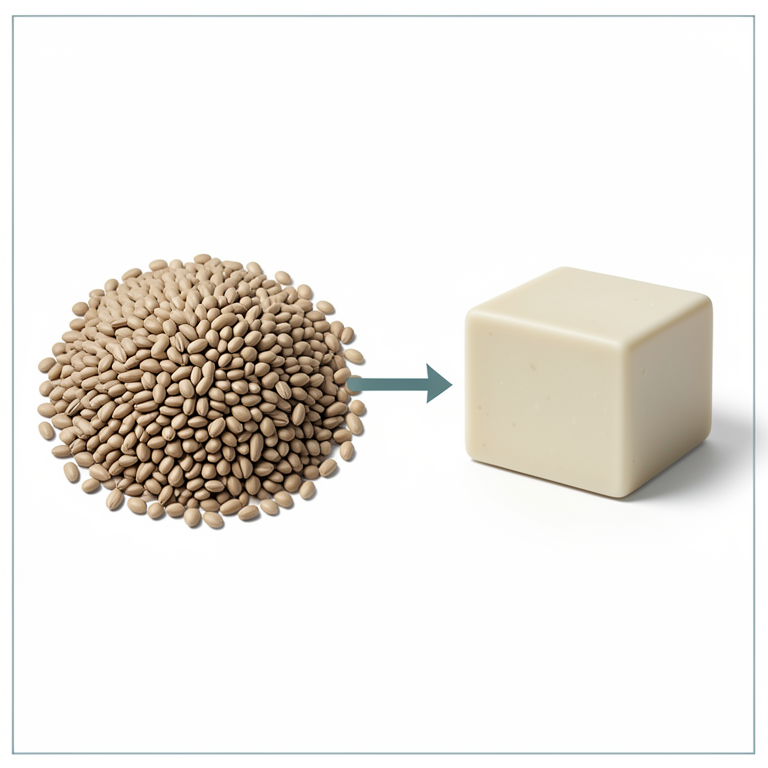
Nutritional Complementarity
AI-generated conceptual illustration (kodo millet grains and traditional milk-based burfi fudge). It explains the idea and does not show study data.
View source evidence ↗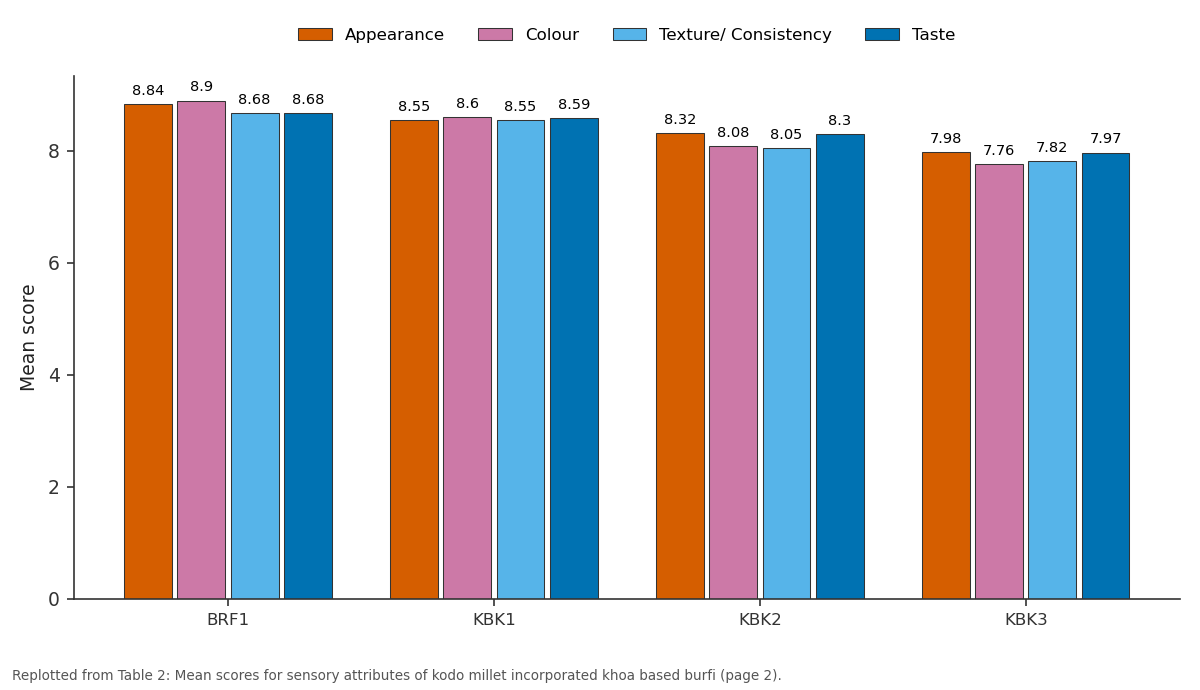
Appearance and Colour and more: BRF1 vs KBK1 vs KBK2 vs KBK3
Replotted from Table 2 (page 2) of the original paper. Every bar is the paper's own table value.
View source evidence ↗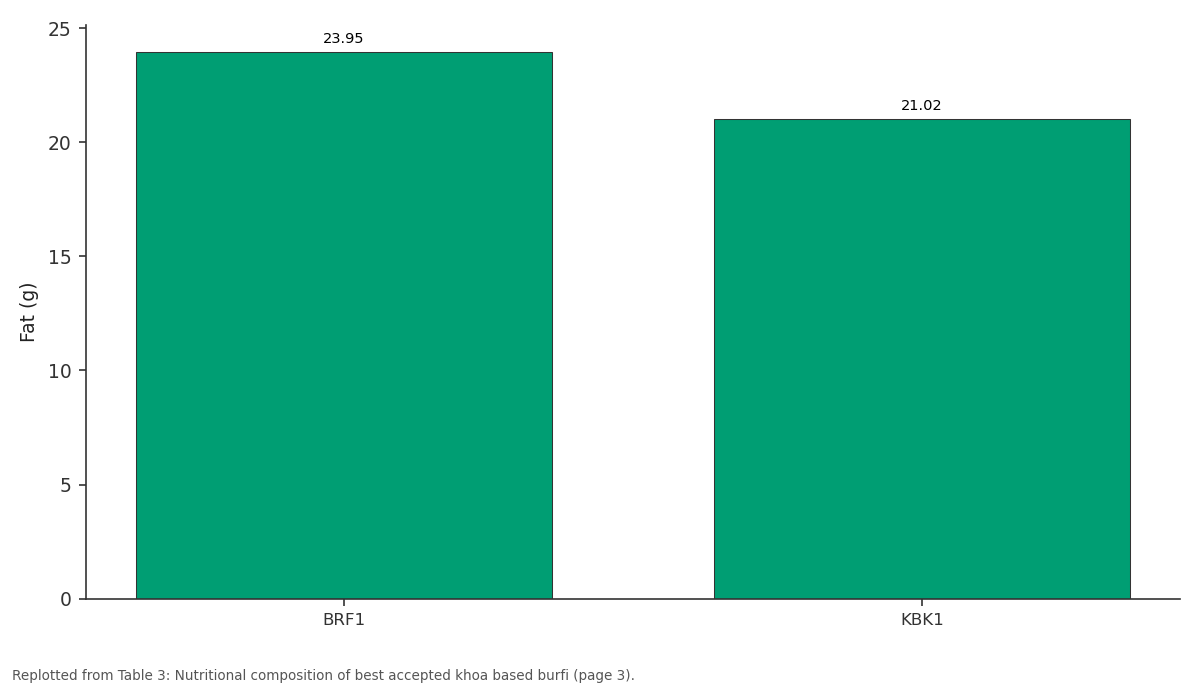
Fat (g): BRF1 vs KBK1
Replotted from Table 3 (page 3) of the original paper. Every bar is the paper's own table value.
View source evidence ↗Figures & tables
From the original paper Table 1
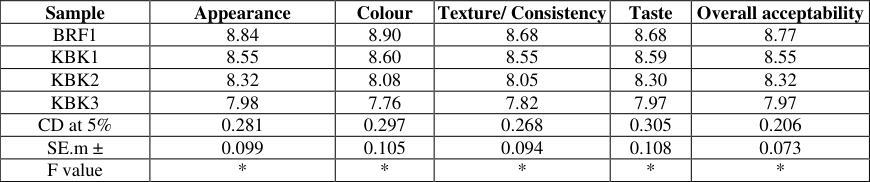 Table 2
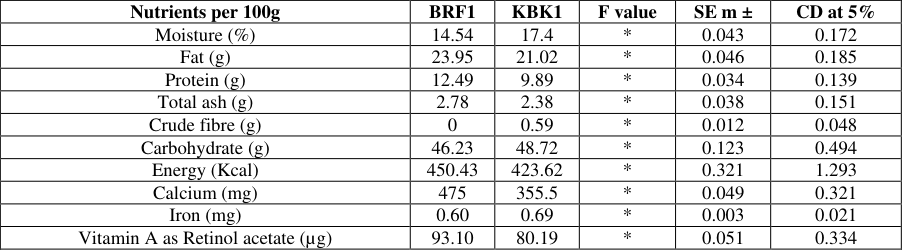 Table 3
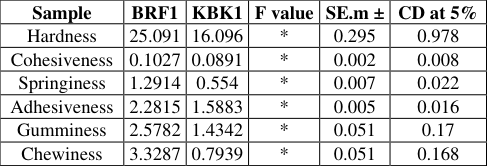 Table 4
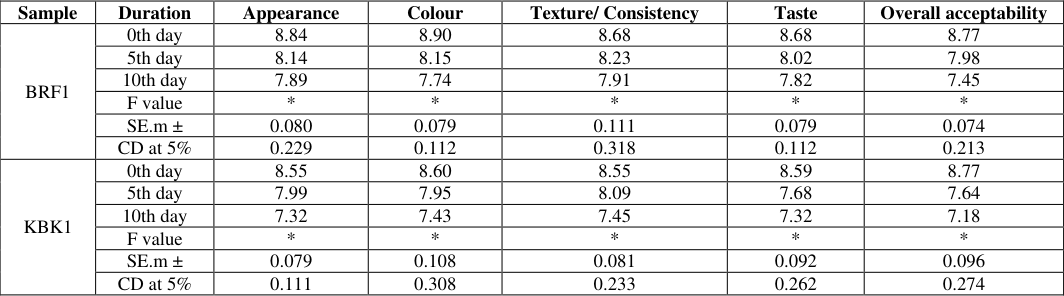 Table 5
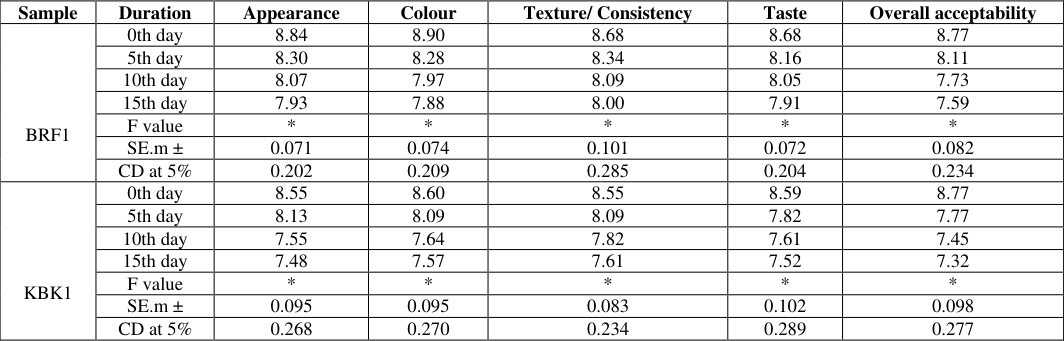 Table 6
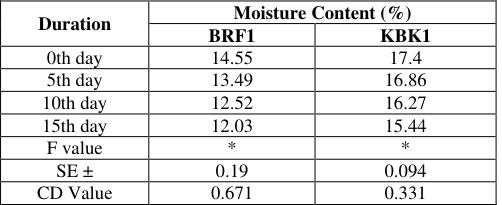 Table 8
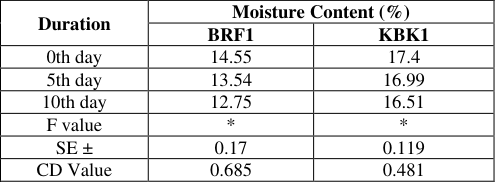 Table 7
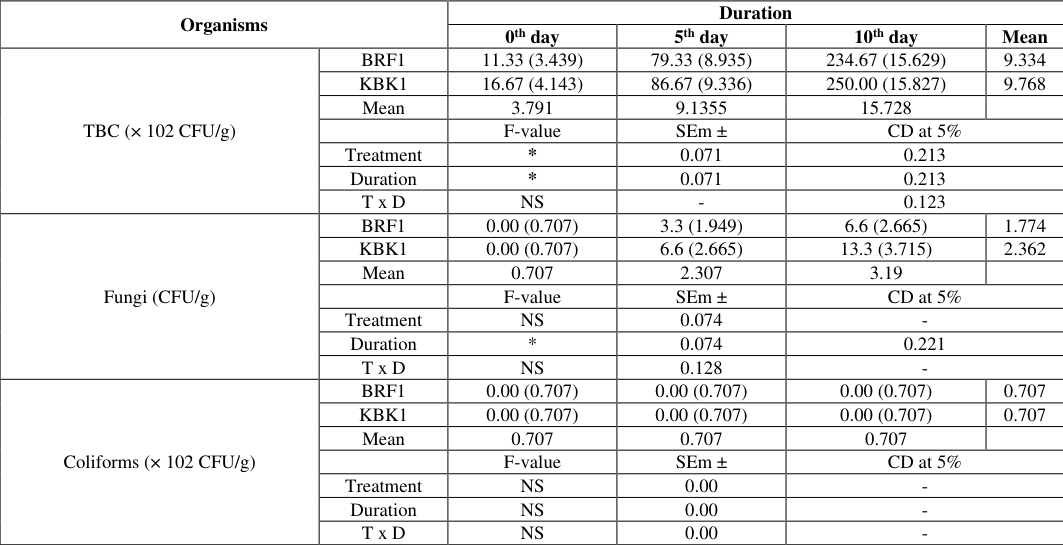 Table 9
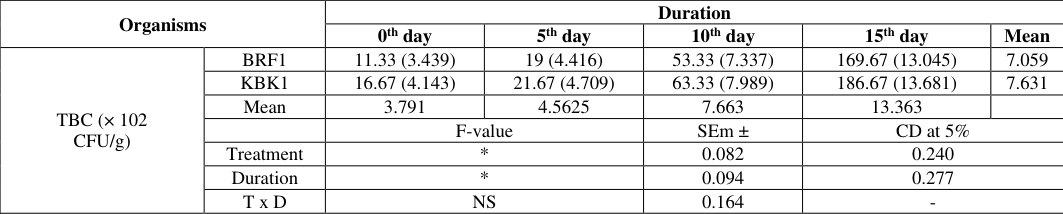 Table 10
Introduction
In the current millennium, the dairy market is experiencing a transition from bulk commodities to delightfully tasty and novel value-added goods, with a distinctive niche segment in taste, colour, and appearance. Value added food items have taken on significant importance nowadays. Burfi, prepared from khoa with an appropriate content of sugar, is a popular sweet confectionery of Indian subcontinent [1,2] . The simplest burfi consists only of milk solids and sugar, and its preparation involves evaporating milk in a wide mouthed open pan to obtain a thick pasty mass known as khoa and then blend khoa with sufficient quantity of sugar. During the repeated heat treatments, burfi acquires its aroma and taste characteristics [3] . There are several varieties of burfi made from different nutmeats and flavourings with a base of milk solids that also contributes to texture, taste and flavour. Kodo millet (Paspalum scrobiculatum), known as cow grass, rice grass, native Paspalum, ditch millet, or Indian crown grass, is widely spread throughout the world's tropics and subtropics in humid habitats. The seeds produced are very small and ellipsoidal, ranging in color from light brown to dark gray [4] . It is one of the major food sources in India's Deccan plateau, some regions of Maharashtra, Uttar Pradesh, Odisha, Rajasthan and West Bengal, and is traditionally consumed as food for health and vitality in rural India [5] . A combination of milk product (burfi) and millet (kodo) in the present scenario has synergistic effect, where, deficiency of lysine in kodo millet and deficiency of dietary fibre and iron in milk product are being complemented by each other. Thus, the present study was undertaken to develop value added burfi with khoa and kodo millet for better nutritional profile.
Development of product
Kodo millet was processed into hurihittu in order to avoid raw flavour in the final product. Kodo millet was sprinkled with a small quantity of curd and was kept undisturbed for 20-25 minutes. It was then popped in a wide mouthed pan, allowed to cool and was ground. Khoa was prepared from pasteurized full cream milk (6% fat and 9% SNF). It employed heating milk in an open pan with constant manual stirring-cum-scraping, till it reached a semi solid consistency. Fresh khoa was broken into bits and was spread uniformly in a karahi. Ground sugar was added at 30% based on the weight of khoa and mixed well. Kodo millet hurihittu was then added at 10%, 15% and 20% rate replacing khoa. The millet hurihittu was previously boiled in four times its quantity of water and gelatinized to a thick paste consistency in order to ensure uniform blending with khoa. The mixture was then worked thoroughly using a flattened ladle to avoid any lumps and uniform distribution was ensured. The homogenous mass was heated using a wide mouthed karahi in low flame till the desired consistency was obtained. The hot mass was then transferred to a stainless steel plate smeared with ghee, spread evenly and cut into pieces. The product was kept in a cool dry place (26-28 °C) for 8-12 h for setting.
Sensory evaluation
Sensory evaluation was carried out using nine-point hedonic scale. The score card was based mainly on appearance, colour, texture/consistency, taste and overall acceptability. Twenty-two semi trained judges having good health status and interested in sensory evaluation were selected from Department of Food Science and Nutrition, UAS, Bangalore.
Nutritional analysis
Moisture, protein, fat, ash and crude fibre content of best accepted burfi along with control burfi (BRF1) was analyzed using standard methods specified by AOAC.
Carbohydrate content of the same was calculated using difference method. Titrimetric method for calcium [6] , atomic absorption spectrophotometry for iron and liquid chromatography for vitamin A estimation was employed.
5 Texture analysis
Texture profile analysis (TPA) was done using Stable Micro System TAXDi Texture Analyzer fitted with 100kg load cell. A P36R cylindrical probe was used with 5mm/s of pretest, 0.5mm of test and post-test speeds. Representative graphs for the texture of products displayed in the computer attached to the instrument was studied to compute parameters such as hardness, cohesiveness, adhesiveness, springiness, gumminess and chewiness.
Shelf life study
The product best accepted by the sensory panel along with control burfi was considered for shelf life studies and the changes in sensory characteristics, moisture and microbial load were studied for a period of 15 days. The products were stored in air tight polypropylene containers and studied at room and refrigerated temperature
Data analysis
The data was analyzed using one-way analysis of variance (ANOVA) (F-test) and in randomized complete block design to determine the level of significance control product. However, among the variations, KBK1 with 10% incorporation levels was found to be best accepted and KBK3 with 20% incorporation levels had the lowest score.
The difference in all the sensory characteristics among different variations was found to be statistically significant at 5% level.
Result and discussion
The scores for khoa based burfi incorporated with kodo millet ranged from 7.98 to 8.84 for appearance, 7.76 to 8.90 for colour, 7.82 to 8.68 for texture/consistency, 7.97 to 8.68 for taste and 7.97 to 8.77 for overall acceptability. Sensory scores were observed to decrease with increasing incorporation levels. Highest score in all of the sensory characteristics was observed for the (7 ⁰C). The containers were dipped in 0.5 per cent H2O2 solution and dried in an oven maintained at 60-65 °C for 30 min. Kodo millet incorporated burfi seemed to hold in more moisture and an attempt to continued desiccation yielded a product that was dry and crumbly in appearance and had hard body and coarse texture. Owing to the addition of kodo millet, moisture, crude fiber and iron content significantly increased from 14.54 to 17.4, 0 to 0.59 and 0.60 to 0.69 respectively.
However, a significant decrease in fat, protein, ash and the energy values were observed, as, per gram availability of these nutrients are higher in khoa than the millets. Narwade [7] (2017) analyzed the nutritional composition of burfi incorporated with finger millet and the results so obtained were in line with the present study. It was observed that all the rheological attributes such as hardness, cohesiveness, springiness, adhesiveness, gumminess and chewiness were lower for the kodo millet incorporated burfi compared to control burfi. All of the attributes showed statistically significant difference at 5% level. It was evident from the above table that the addition of millet had an undesirable effect on texture of the product and could be attributed to the retention of higher moisture in the product. Gupta [8] et al., (1990) in their texture studies on khoa, as influenced by its composition, reported high levels of correlations between moisture content and various textural descriptors for khoa. Sensory scores for both control burfi and kodo millet incorporated burfi significantly decreased on storage. Samples had acceptable sensory scores between 'like moderately' to 'like very much' till 10 th day when stored at room temperature and till 15 th day at refrigeration temperature. During storage, the samples turned dry and lost the original greasy appearance, which resulted in a steady decrease in colour and appearance scores. In the present study, evaporation of moisture during storage might have aggregated the appearance of burfi as presence of moisture enlivens the appearance of product by reflecting incident light. The texture and consistency scores decreased during storage period, the stored samples progressively became brittle because of reduced cohesiveness. At refrigerated temperature the product became dry, hard, sandy and brittle which might be ascribed to the loss of moisture and possible due to crystallization of added sugar. In fresh product, the compounds formed during browning reactions are responsible for the typical flavour of the product, but as storage period progressed, the chemical reactions disturbed the delicate balance of the compounds. Moisture content of burfi samples decreased with increasing storage period. Control product showed a decrease in moisture content from 14.55 to 12.75 at room temperature at the end of 10th day and to 12.03 at refrigeration temperature over a period of 15 days. Burfi incorporated with kodo millet had a decrease in moisture from 17.4 to 16.51 at room temperature on 10th day and to 15.44 at refrigeration temperature on 15 th day. Similarly, Shrivas et al., [9] (2018) reported a decreasing trend in moisture content of rava burfi during storage, packed in composite polyethylene terephthalate (PET)/low density polyethylene (LDPE) film. The total bacterial count of burfi during storage study was well within the limits laid down by BIS (30,000 cfu/g). KBK1 developed visible mold growth on 11 th day of storage at room temperature and control product had visible mold growth on 12th day. However, a maximum of 10 cfu/g is specified for fungal colonies and millet incorporated burfi (KBK1) samples exceeded the standard limits by 10th day of storage at room temperature and by 15th day of storage at refrigeration temperature. Therefore, kodo millet incorporated burfi (KBK1) was acceptable up to 5 days at room temperature and up to 10 days at refrigerated storage.
Conclusion
Milk and dairy products are considered as 'nearly complete' foods as they contain a wide array of nutrients. However, it is well known that milk is not a good source of iron and fibre. Millets, in contrast, are deficient in essential amino acids like lysine, compromising the protein quality. An effort was therefore made in the present study to formulate food products from milk-millet combination. Results revealed that the kodo millet could successfully be incorporated to a dairy product like burfi, with highly acceptable sensory attributes. Thus, development and consumption of such products from milk-millet combination can be encouraged among all healthy sectors of population and the enhanced nutritional profile can be exploited.
Figures and tables from the paper
| Particulars | BRF1 | KBK1 | KBK2 | KBK3 |
|---|---|---|---|---|
| Khoa (g) | 100 | 90 | 85 | 80 |
| Kodo millet (g) | 0 | 10 | 15 | 20 |
| Sugar (g) | 30 | 30 | 30 | 30 |
Table text extracted from the original PDF; superscript letters are shown inline. The original table image is below.
View original table image
| Sample | Appearance | Colour | Texture/ Consistency | Taste | Overall acceptability |
|---|---|---|---|---|---|
| BRF1 | 8.84 | 8.90 | 8.68 | 8.68 | 8.77 |
| KBK1 | 8.55 | 8.60 | 8.55 | 8.59 | 8.55 |
| KBK2 | 8.32 | 8.08 | 8.05 | 8.30 | 8.32 |
| KBK3 | 7.98 | 7.76 | 7.82 | 7.97 | 7.97 |
| CD at 5% | 0.281 | 0.297 | 0.268 | 0.305 | 0.206 |
| SE.m ± | 0.099 | 0.105 | 0.094 | 0.108 | 0.073 |
| F value | * | * | * | * | * |
Table text extracted from the original PDF; superscript letters are shown inline. The original table image is below.
View original table image
| Nutrients per 100g | BRF1 | KBK1 | F value | SE m ± | CD at 5% |
|---|---|---|---|---|---|
| Moisture (%) | 14.54 | 17.4 | * | 0.043 | 0.172 |
| Fat (g) | 23.95 | 21.02 | * | 0.046 | 0.185 |
| Protein (g) | 12.49 | 9.89 | * | 0.034 | 0.139 |
| Total ash (g) | 2.78 | 2.38 | * | 0.038 | 0.151 |
| Crude fibre (g) | 0 | 0.59 | * | 0.012 | 0.048 |
| Carbohydrate (g) | 46.23 | 48.72 | * | 0.123 | 0.494 |
| Energy (Kcal) | 450.43 | 423.62 | * | 0.321 | 1.293 |
| Calcium (mg) | 475 | 355.5 | * | 0.049 | 0.321 |
| Iron (mg) | 0.60 | 0.69 | * | 0.003 | 0.021 |
| Vitamin A as Retinol acetate (µg) | 93.10 | 80.19 | * | 0.051 | 0.334 |
Table text extracted from the original PDF; superscript letters are shown inline. The original table image is below.
View original table image
| Sample | BRF1 | KBK1 | F value | SE.m ± | CD at 5% |
|---|---|---|---|---|---|
| Hardness | 25.091 | 16.096 | * | 0.295 | 0.978 |
| Cohesiveness | 0.1027 | 0.0891 | * | 0.002 | 0.008 |
| Springiness | 1.2914 | 0.554 | * | 0.007 | 0.022 |
| Adhesiveness | 2.2815 | 1.5883 | * | 0.005 | 0.016 |
| Gumminess | 2.5782 | 1.4342 | * | 0.051 | 0.17 |
| Chewiness | 3.3287 | 0.7939 | * | 0.051 | 0.168 |
Table text extracted from the original PDF; superscript letters are shown inline. The original table image is below.
View original table image
| Sample | Duration | Appearance | Colour | Texture/ Consistency | Taste | Overall acceptability |
|---|---|---|---|---|---|---|
| BRF1 | 0th day | 8.84 | 8.90 | 8.68 | 8.68 | 8.77 |
| 5th day | 8.14 | 8.15 | 8.23 | 8.02 | 7.98 | |
| 10th day | 7.89 | 7.74 | 7.91 | 7.82 | 7.45 | |
| F value | * | * | * | * | * | |
| SE.m ± | 0.080 | 0.079 | 0.111 | 0.079 | 0.074 | |
| CD at 5% | 0.229 | 0.112 | 0.318 | 0.112 | 0.213 | |
| KBK1 | 0th day | 8.55 | 8.60 | 8.55 | 8.59 | 8.77 |
| 5th day | 7.99 | 7.95 | 8.09 | 7.68 | 7.64 | |
| 10th day | 7.32 | 7.43 | 7.45 | 7.32 | 7.18 | |
| F value | * | * | * | * | * | |
| SE.m ± | 0.079 | 0.108 | 0.081 | 0.092 | 0.096 | |
| CD at 5% | 0.111 | 0.308 | 0.233 | 0.262 | 0.274 |
Table text extracted from the original PDF; superscript letters are shown inline. The original table image is below.
View original table image
| Sample | Duration | Appearance | Colour | Texture/ Consistency | Taste | Overall acceptability |
|---|---|---|---|---|---|---|
| BRF1 | 0th day | 8.84 | 8.90 | 8.68 | 8.68 | 8.77 |
| 5th day | 8.30 | 8.28 | 8.34 | 8.16 | 8.11 | |
| 10th day | 8.07 | 7.97 | 8.09 | 8.05 | 7.73 | |
| 15th day | 7.93 | 7.88 | 8.00 | 7.91 | 7.59 | |
| F value | * | * | * | * | * | |
| SE.m ± | 0.071 | 0.074 | 0.101 | 0.072 | 0.082 | |
| CD at 5% | 0.202 | 0.209 | 0.285 | 0.204 | 0.234 | |
| KBK1 | 0th day | 8.55 | 8.60 | 8.55 | 8.59 | 8.77 |
| 5th day | 8.13 | 8.09 | 8.09 | 7.82 | 7.77 | |
| 10th day | 7.55 | 7.64 | 7.82 | 7.61 | 7.45 | |
| 15th day | 7.48 | 7.57 | 7.61 | 7.52 | 7.32 | |
| F value | * | * | * | * | * | |
| SE.m ± | 0.095 | 0.095 | 0.083 | 0.102 | 0.098 | |
| CD at 5% | 0.268 | 0.270 | 0.234 | 0.289 | 0.277 |
Table text extracted from the original PDF; superscript letters are shown inline. The original table image is below.
View original table image
| Duration | Moisture Content (%) | — |
|---|---|---|
| BRF1 | KBK1 | |
| 0th day | 14.55 | 17.4 |
| 5th day | 13.49 | 16.86 |
| 10th day | 12.52 | 16.27 |
| 15th day | 12.03 | 15.44 |
| F value | * | * |
| SE ± | 0.19 | 0.094 |
| CD Value | 0.671 | 0.331 |
Table text extracted from the original PDF; superscript letters are shown inline. The original table image is below.
View original table image
| Duration | Moisture Content (%) | — |
|---|---|---|
| BRF1 | KBK1 | |
| 0th day | 14.55 | 17.4 |
| 5th day | 13.54 | 16.99 |
| 10th day | 12.75 | 16.51 |
| F value | * | * |
| SE ± | 0.17 | 0.119 |
| CD Value | 0.685 | 0.481 |
Table text extracted from the original PDF; superscript letters are shown inline. The original table image is below.
View original table image
| Organisms | — | Duration | — | — | — |
|---|---|---|---|---|---|
| 0th day | 5th day | 10th day | Mean | ||
| TBC (× 102 CFU/g) | BRF1 | 11.33 (3.439) | 79.33 (8.935) | 234.67 (15.629) | 9.334 |
| KBK1 | 16.67 (4.143) | 86.67 (9.336) | 250.00 (15.827) | 9.768 | |
| Mean | 3.791 | 9.1355 | 15.728 | ||
| F-value | SEm ± | CD at 5% | |||
| Treatment | * | 0.071 | 0.213 | ||
| Duration | * | 0.071 | 0.213 | ||
| T x D | NS | - | 0.123 | ||
| Fungi (CFU/g) | BRF1 | 0.00 (0.707) | 3.3 (1.949) | 6.6 (2.665) | 1.774 |
| KBK1 | 0.00 (0.707) | 6.6 (2.665) | 13.3 (3.715) | 2.362 | |
| Mean | 0.707 | 2.307 | 3.19 | ||
| F-value | SEm ± | CD at 5% | |||
| Treatment | NS | 0.074 | - | ||
| Duration | * | 0.074 | 0.221 | ||
| T x D | NS | 0.128 | - | ||
| Coliforms (× 102 CFU/g) | BRF1 | 0.00 (0.707) | 0.00 (0.707) | 0.00 (0.707) | 0.707 |
| KBK1 | 0.00 (0.707) | 0.00 (0.707) | 0.00 (0.707) | 0.707 | |
| Mean | 0.707 | 0.707 | 0.707 | ||
| F-value | SEm ± | CD at 5% | |||
| Treatment | NS | 0.00 | - | ||
| Duration | NS | 0.00 | - | ||
| T x D | NS | 0.00 | - |
Table text extracted from the original PDF; superscript letters are shown inline. The original table image is below.
View original table image
| Organisms | — | Duration | — | — | — | — |
|---|---|---|---|---|---|---|
| 0th day | 5th day | 10th day | 15th day | Mean | ||
| TBC (× 102 CFU/g) | BRF1 | 11.33 (3.439) | 19 (4.416) | 53.33 (7.337) | 169.67 (13.045) | 7.059 |
| KBK1 | 16.67 (4.143) | 21.67 (4.709) | 63.33 (7.989) | 186.67 (13.681) | 7.631 | |
| Mean | 3.791 | 4.5625 | 7.663 | 13.363 | ||
| F-value | SEm ± | CD at 5% | ||||
| Treatment | * | 0.082 | 0.240 | |||
| Duration | * | 0.094 | 0.277 | |||
| T x D | NS | 0.164 | - |
Table text extracted from the original PDF; superscript letters are shown inline. The original table image is below.
View original table image
References
7 in the original paper- Arora S, Gawande H, Sharma V, Wadhwa KB, George V, Sharma G, et al. The development of burfi sweetened with aspartame. Int. J Dairy technol. 2010;63(1):127-135.
- Chetana R, Ravi R, Yella RS, Effect of processing variables on quality of milk burfi prepared with and without sugar. J Food sci. Technol. 2010;47(1):114118.
- Hemavathy J, Prabhakar JV. Changes in the carbonyl composition of a milk based sweetmeat-burfi during preparation and storage. J Food sci. Technol. 1973;10(10):156-160.
- Yadav N, Chaudhary K, Singh A, Gupta A, Evaluation of hypoglycemic properties of kodo millet based food products in healthy subjects. IOSR J Pharm. 2013;3(2):14-20.
- Hegde PS, Chandra TS. ESR spectroscopic study reveals higher free radical quenching potential in kodo millet (Paspalum scrobiculatum) compared to other millets. Food chem. 2005;92(1):177-182.
- Gupta SK, Patil GR, Patel AA, Garg FC, Rajorhia GS. Instron texture profile parameters of khoa as influenced by composition. J Food Sci Technol. 1990;27:213-219.
- Shrivas AA, Pinto SV, Patel SM, Balakrishnan S. Effect of storage on composition, physico-chemical, rheology, sensory and microbiological quality of Indian cookie rava burfi, J Nat. Appl. Sci. 2018;10(1):88-97.
Cited by 1
From OpenAlex, OpenCitations and reference lists read by Scinovex
- Effect of Microwave Treatment on the Shelf-Life Characteristics of Date Burfi during Storage
AN Vyawahare, BD Meshram, Rupesh Datir, Shaikh Adil · International Journal of Agriculture and Food Science · 2026
Date Burfi is a nutrient-rich traditional dairy sweet; however, its high moisture and nutrient content make it susceptible to microbial and physicochemical deterioration during storage. The present study investigated the potential of microwave treatment as a post-packaging preservation technique to improve the shelf-life and quality of date Burfi. Date Burfi was prepared using buffalo milk khoa, sugar and date paste, with date paste incorporated at 30% of khoa. Packaged samples were subjected to microwave treatments of 180 W for 100 s (M1), 360 W for 50 s (M2), 540 W for 40 s (M3), 720 W for 3