
Research article · 2022 · Full text
International Journal of Biology SciencesAssessing the efficacy of tricaine methanesulfonate (MS-222) on sedation of Nile tilapia (Oreochromis niloticus) fingerlings during transportation
Volume 4(2) · Pages 30–34 · DOI: 10.33545/26649926.2022.v4.i2a.72 ↗
Research areasAquaculture disease management and microbiotaAquaculture Nutrition and GrowthFish Biology and Ecology Studies
Abstract
Author-writtenThe efficacy of the anaesthetic agent tricaine methanesulfonate (MS-222) was evaluated in the Nile tilapia (Oreochromis niloticus) fingerlings during transportation. MS 222 is an anaesthetic agent that is approved for use in the United States, Canada, the United Kingdom and other European countries. MS-222 is used to suppress the central and peripheral nervous systems of fish to immobilize them for transportation and experimental purposes to avoid mortality and injury. In the present study, juvenile Nile tilapia of length 7-10 cm were subjected to different concentrations (0-20 mg/L and 100-500 mg/L) of MS-222. O. niloticus subjected to 0 and 20 mg/L (trial experiment) of MS-222 in this study did not reach stage IV anaesthesia (Total loss of equilibrium) within 1 hour, indicating that none of the fish exposed to these concentrations of MS-222 was induced. At 20 mg/L, the buffered MS-222 slowly rendered the fingerlings physiologically inactive (calm) for a prolonged time (> 1 h) and the fish were almost instantly reactivated in untreated water. Sedation time for the fingerlings decreased significantly (p
Summary
Source-checkedPlain-language reading of the full paper, prepared with AI and checked against the text. Each point links to the authors' own words.
Why it matters
- Transporting fish is a challenging part of aquaculture because the process of capture, handling, and packaging subjects the fish to significant stress. View evidence ↗
- A primary issue during transportation is the buildup of toxic ammonia and carbon dioxide in the water, which results from the metabolic activities of the fish. View evidence ↗
- Nile tilapia is a significant freshwater fish species with high demand in both domestic and international markets. View evidence ↗
The question
- The study aimed to determine the effective dosage of the anaesthetic MS-222 for sedating Nile tilapia fingerlings during transportation. View evidence ↗
What they did
- Juvenile Nile tilapia were sourced from the Tono Fish Farm in Navrongo, Ghana. View evidence ↗
- The researchers tested MS-222 concentrations of 100, 200, 300, 400, and 500 mg/L. View evidence ↗
- The experiment used fingerlings with a total length of 7–10 cm, placing four fish in each test bath. View evidence ↗
- Data were analyzed using a one-way ANOVA with a 95% confidence level. View evidence ↗
What they found
- Sedation time decreased as concentration increased, ranging from 397.50±190 seconds at 100 mg/L to 41.50±30 seconds at 500 mg/L. View evidence ↗
- Recovery time increased significantly as the concentration of the anaesthetic increased. View evidence ↗
- The optimal concentration was identified as 250 mg/L, where the sedation and recovery times intersect. View evidence ↗
- At 20 mg/L, fish remained in a state of light sedation (Stage I) for over one hour without reaching total loss of equilibrium (Stage IV). View evidence ↗
- A very high concentration of 10,000 mg/L was lethal, causing death in less than 5 seconds. View evidence ↗
- Hyperactivity was observed in the fish starting at concentrations of 300 mg/L and above. View evidence ↗
What it means
- The authors recommend a dosage of 20 mg/L for long-distance transportation because it keeps fish calm for over an hour and allows for instant reactivation. View evidence ↗
- The study concludes that MS-222 is an efficient anaesthetic for Nile tilapia. View evidence ↗
Visual summary
1 visualsIllustrations explain the paper; they do not show study data.
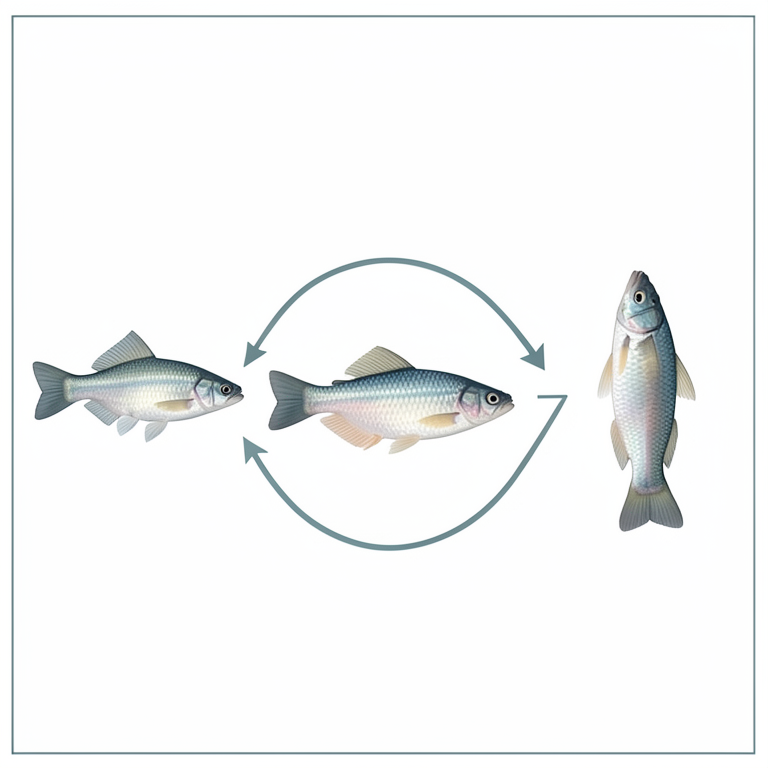
Sedation vs Recovery Relationship
AI-generated conceptual illustration (Nile tilapia fingerlings). It explains the idea and does not show study data.
View source evidence ↗Figures & tables
From the original paper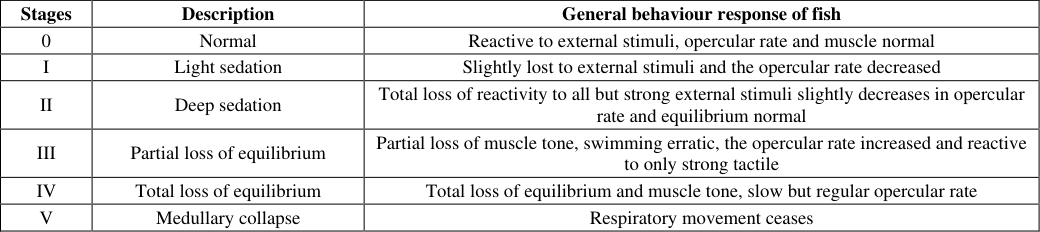 Table 1
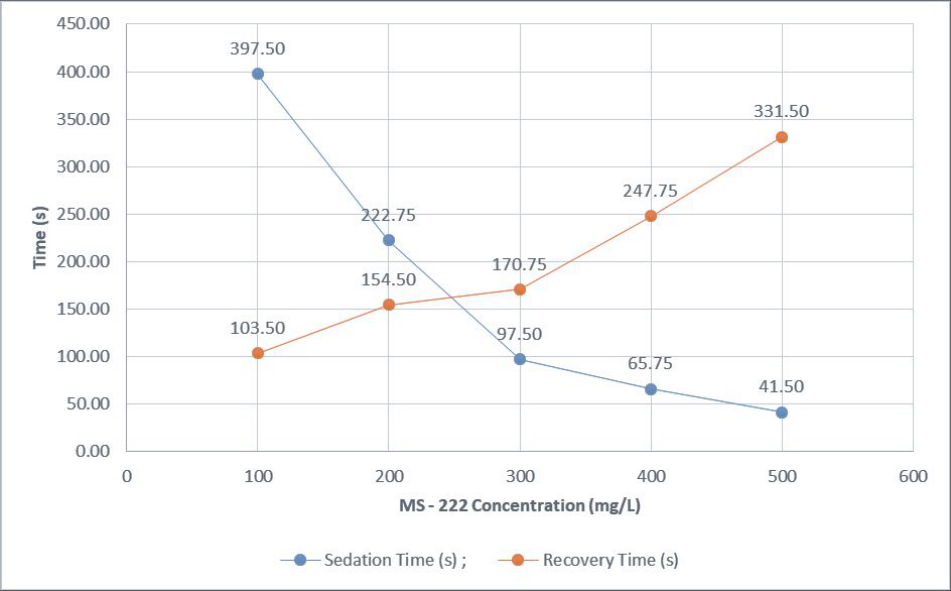 Figure 1
Introduction
With the development of commercial fish farming practices, the transportation of fish from one place to another has become an inevitable part of the aquaculture industry. Handling fish especially out of their natural habitat for transportation had always been difficult and fish are subjected to various stress during the period of capture, handling and packaging procedures (Maule et al., 1988; Nikinmaa et al., 1983; Specker and Schreck, 1980) [15,20,25] . Struggling fishes have been documented to have damaging effects on their physiology and behaviour, and may lead to death during successive transportation (Ross and ROSS, 1999) [21] . Nile tilapia is an important freshwater fish which is of high demand in both local and foreign markets. Tilapia fish is mainly exposed to constant stress during transportation which has a negative physiological effects on the wellbeing of the fish. The main problem encountered in the transportation is the accumulation of toxic gases like carbon dioxide and ammonia in the transport medium which are mainly attributed to fish metabolic activities (McFARLAND, 1959; Sindhu and Ramachandran, 2015) [16,22] . Chow et al. (1994) [4] opined that the mortality rate increases when the temperature of the transport medium increases (Chow et al., 1994) [4] . For this The main problem encountered in the transportation is the accumulation of toxic gases like carbon dioxide and ammonia in the transport medium which are mainly attributed to fish metabolic activities (McFARLAND, 1959; Sindhu and Ramachandran, 2015) [16,22] . Chow et al. (1994) [4] opined that the reason, the use of anaesthetics has become important to prevent injury to the fish, which may also attenuate the physiological stress response. The uses of anaesthetics or tranquillizing agents play a major role in the live fish transportation for fish culture. Anaesthetic is a biological state induced by an external agent, which results in a partial or complete loss of sensation or loss of voluntary neuromotor control through chemical means (Wedemeyer et al., 1990) [32] . A variety of anaesthetics have proven their ability to minimize the negative effects on the physiology and behaviour of fish due to stress. Examples of some of the anaesthetics employed in fish transportation are lidocaine, benzocaine, metonidate, tricaine methanesulphonate, 2-phenoxyethanol, quinidine sulphate etc. (Burka et al., 1997) [1] . Among these broad spectra of anaesthetics, the tricaine methanesulfonate, C 9 H 11 O 2 N + CH 3 SO 3 H, known also as MS-222, ethyl 3-aminobenzoate methanesulfonic acid, tricaine mesilate, metacaine, methanesulfonate appears to be the most widely used anaesthetic and tranquillizing agent for poikilotherms (such as fish) worldwide since its introduction in 1967 (Topic Popovic et al., 2012) [28] . MS-222 is currently recognized and approved by the United States Food and Drug Administration and many other European countries for use in food fish production (Carter et al., 2011; Daniel, 2009) [2,6] [3,5,20,17,20,24,29,31,12] . MS-222 acts systemically when absorbed through the gills and skin of fish in an anaesthetics bath. The potency of MS-222 is conditioned by environmental factors (temperature, oxygen content, pH, hardness and salinity of water), biological factors (age, sex, size, weight, lipid content), fish species and density of biomass (Ross and Ross, 1999; Topic Popovic et al., 2012) [21,28] . An effective dose of a successful anaesthetic hugely depends on the differences among fish species, size/length, maturity, and between individual fish (King et al., 2005) [11] . Given the growing concern and interest in the culturing of Nile tilapia, the present study aims to investigate the effective dose of MS-222 in sedating O. niloticus fingerlings in the field for transportation.
Materials and Methods
Materials and Methods
Study Area and Fish Species
Juvenile Nile tilapia (O. niloticus) were seined in a pond from the Tono Fish Farm in Navrongo, Upper East Region of Ghana, and transported to an experimental aquarium. The fish were held in a net cage inside an irrigation canal for 2 h to recover from the stress of seining. The fish had not been fed for up to 3 days before the capture to allow them to evacuate their bowels which is necessary to avoid faecal contamination of the experimental water.
Anaesthetic Agent
The anaesthetic agent, tricaine methanesulphonate (MS-222), was used and prepared by dissolving 10g in deionised water and buffered with Sodium bicarbonate (NaHCO 3 ). The buffering was necessary because unbuffered MS-222 is known to induce stress to fish.
Experimental Design
A stock solution of the MS-222 was prepared by dissolving 10g in deionised water and buffered with sodium bicarbonate (NaHCO 3 ) in a ratio of 1:1 (i.e. 10g MS-222: 10g NaHCO 3 ). The selected test concentrations of MS-222 were 100, 200, 300, 400 and 500 mg/L based on the study of Weber et al. (2009) [31] (Weber et al., 2009) [31] and following the recommendations of Hicks (1998) (Hicks, 1989). A preliminary study was conducted using 0, 20, 100 and 10,000mg/L of the buffered MS-222 solution to assess the full range of anaesthesia (slight sedation to death) for Nile tilapia fingerlings. Five 3 L capacity transparent plastic containers were each filled with 1 L of water from the irrigation canal where the fingerlings were held in a net cage. Four fingerlings (7 -10 cm TL) were transferred from the net cage inside the canal and placed in MS-222 test baths starting from 100 to 500 mg/L at intervals of 30 minutes. The time of sedation was recorded for each fingerling until all the fingerlings in each test bath were sedated. Sedation in this study referred to fish that showed a slight loss to external stimuli indicated by a slight decrease in opercular and fin movement, which corresponds to stage I of anaesthesia (light sedation) (Marking and Meyer, 1985) [14] . Sedated fish were removed from the MS-222 baths one after the other into a plastic bowl containing clean water from the canal to recover. Recovery was indicated by restoration of normal opercular and fin movements. The time for each sedated fish to recover was also recorded. The total length (TL) of the recovered fish was measured and the fish was returned to the pond. None of the doses used caused mortality in the fish. The experimental treatments were replicated three times.
Statistical Analysis
Sedation and recovery times were calculated for the various sizes of the fingerlings and the concentrations of the anaesthetic baths. The effects were tested statistically using one-way ANOVA at a 95% level of confidence. SPSS package (Windows version 20.0) was used to perform the analysis. Graphs were drawn to illustrate the response of the test concentrations using an Excel spreadsheet (Windows version 13.0)
Results and Discussions
In the trial, fish exposed to 0 mg/L (untreated water) were not sedated at all as expected. At the concentration of 20 mg/L, only slight anaesthesia described was evident within 1 h of exposure, and the fish remained calm till the study was terminated. From 100 mg/L various stages of advanced anaesthesia were induced at increasing rapidity until mortality occurred in less than 5 s at the highest concentration of 10,000 mg/L. No initial hypersensitivity (or hyperactivity) to the anaesthetic was exhibited by the fish at the low concentrations of 20 and 200 mg/L. However, from the concentration of 300 mg/L hyperactivity occurred in increasing intensity. Fish exposed to 20 mg/L MS-222 concentration remained calm or physiologically inactive in Stage I anaesthesia for a long time (> 1 h) and did not reach Stage IV anaesthesia before the termination of the study. This concentration could be suitable for transportation of live fingerlings of O. niloticus on long journeys exceeding 1 h. An inverse relationship was established between the concentration of the anaesthetic MS-222 and the time of sedation in 7-10 cm O. niloticus fingerlings (Fig. 1). Sedation time decreased significantly ((P<0.05)) as the concentration was increased. The longest sedation time (397.50±190 seconds) occurred when the fish were exposed to the concentration of 100 mg/L while the shortest time (41.50±30 seconds) occurred at the concentration of 500 mg/L Sedation in this study was defined as a slight decrease in the movement of the opercula (breathing) and movement of the fins (swimming) following exposure of the fish to the external stimulus (MS-222). Recovery time however increased significantly (P<0.05) with increasing concentrations of the anaesthetic (Fig. 1). Recovery in this study was defined as the restoration of normal movement of the opercula (breathing) and fins (swimming). The threshold or optimal concentration of the buffered anaesthetic MS-222 in this study is theoretically established at 250 mg/L, which corresponds to the point of intersection of the sedation curve and the recovery curve (Fig. 1). At the optimal concentration, the sedation time is theoretically the same as the recovery time (approximately 160 s) in this study. Sedation time for 7-10 cm fingerlings decreased significantly (p<0.05) with an increase in the anaesthetic concentration. This is consistent with previous studies by different researchers (Gullian and Villanueva, 2009 [7,8,10,18,31] . In the present study, MS-222 at 20 mg/L has been recommended for transportation of O. niloticus fingerlings, similar to the results made by Lin et al. (2012) in Culter mongolicus juvenile (20 -40 mg/L) (Lin et al., 2012), but lower than those obtained for temperate species such as Salmo gairdneri, Cyprinus carpio and Pimephales promelas (Ross and ROSS, 1999; Sylvester and Holland, 1982) [21] . O. niloticus subjected to 0 and 20 mg/L of MS-222 in this study did not reach stage IV anaesthesia (Total loss of equilibrium) within one hour, indicating that none of the fish exposed to these concentrations of MS-222 was induced. Similar results were reported by Sladky et al. (2001) in Piaractus brachypomus (Sladky et al., 2001) and Mercy et al. (2013) [18] in Puntius denisonii (Mercy et al., 2013) [31] . Altogether, the required concentration of an anaesthetic agent required to sedate fish varies with the concentration of chemical required to bring them to a given level of anaesthesia, their tolerance of a given chemical and their recovery time (Summerfelt, 1990) [26] . The times of sedation and recovery of O. niloticus at various concentrations of MS-222 in this study differed significantly (P<0.05). Stress responses vary widely between species, therefore, it is often necessary to screen effective dosages of anaesthetic agents for each cultured species (Ross and ROSS, 1999) [21] . The definition of efficacy concerning anaesthetics is more or less subjective (Marking and Meyer, 1985) [14] . The present study demonstrated that MS-222 is efficient in anaesthetizing O. niloticus, an important freshwater fish species in the Tono reservoir.
Conclusion
MS-222 induced various stages of anaesthesia in 7-10 cm fingerlings of O. niloticus. At 20 mg/L, the buffered MS-222 slowly rendered the fingerlings physiologically inactive (calm) for a prolonged time (> 1 h) and the fish were almost instantly reactivated in untreated water. This dosage is recommended for live fish transportation over a long distance. The extremely high concentration of 10,000 mg/L was lethal: sedation was almost instantaneous (< 5 s) but recovery failed. Lethal doses may be applied to kill fish humanely for post mortem studies in places where animal rights are in force. In general, the higher the concentration, the shorter the sedation time and the longer the recovery time. MS-222 at 100-500 mg/L successfully induced sedation in Nile tilapia fingerlings, but the optimal concentration was established at 250 mg/L at which sedation time was the same as recovery time.
Acknowledgement
AcknowledgementsThe researchers are grateful to Prof Mark Owusu-Frimpong of The Department of Applied Biology, CK Tedam University of Technology and Applied Sciences, Navrongo, Ghana, for his supervision and assistance. We are also grateful to the workers of the Tono Fish Farm, Navrongo, Ghana, for the provision of Nile tilapia.
Figures and tables from the paper
| Stages | Description | General behaviour response of fish |
|---|---|---|
| 0 | Normal | Reactive to external stimuli, opercular rate and muscle normal |
| I | Light sedation | Slightly lost to external stimuli and the opercular rate decreased |
| II | Deep sedation | Total loss of reactivity to all but strong external stimuli slightly decreases in opercular rate and equilibrium normal |
| III | Partial loss of equilibrium | Partial loss of muscle tone, swimming erratic, the opercular rate increased and reactive to only strong tactile |
| IV | Total loss of equilibrium | Total loss of equilibrium and muscle tone, slow but regular opercular rate |
| V | Medullary collapse | Respiratory movement ceases |
Table text extracted from the original PDF; superscript letters are shown inline. The original table image is below.
View original table image
References
29 in the original paper- Burka JF, Hammell KL, Horsberg T, Johnson GR, Rainnie D, Speare DJ. Drugs in salmonid aquaculture: A review. Journal of veterinary pharmacology and therapeutics. 1997;20(5):333-349.
- Carter KM, Woodley CM, Brown RS. A review of tricaine methanesulfonate for anesthesia of fish. Reviews in fish biology and fisheries. 2011;21(1):5159.
- Chambel J, Pinho R, Sousa R, Ferreira T, Baptista T, Severiano V, et al. The efficacy of MS-222 as anaesthetic agent in four freshwater aquarium fish species. Aquaculture Research. 2015;46(7):1582-1589.
- Chow P, Chen T, Teo L. Physiological responses of the common clownfish, Amphiprion ocellaris (Cuvier), to factors related to packaging and long-distance transport by air. Aquaculture. 1994;127(4):347-361.
- Cotter P, Rodnick K. Differential effects of anesthetics on electrical properties of the rainbow trout (Oncorhynchus mykiss) heart. Comparative Biochemistry and Physiology Part A: Molecular & Integrative Physiology. 2006;145(2):158-165.
- Daniel P. Available chemotherapy in Mediterranean fish farming: use and needs. CIHEAM (Centre International de Hautes Etudes Agronomiques Méditerranéennes)/FAO (food and agriculture organization of the United Nations), Zaragoza, 2009.
- Gullian M, Villanueva J. Efficacy of tricaine methanesulphonate and clove oil as anaesthetics for juvenile cobia Rachycentron canadum. Aquaculture Research. 2009;40(7):852-860.
- Heo GJ, Shin G. Efficacy of benzocaine as an anaesthetic for Crucian carp (Carassius carassius). Veterinary Anaesthesia and Analgesia. 2010;37(2):132135.
- Hicks B. Anaesthetics: sweet dreams for fragile fish. Canadian aquaculture. 1989;89:29-31.
- Hseu JR, Yeh SL, Chu YT, Ting YY. Comparison of efficacy of five anesthetics in goldlined sea bream, Sparus sarba. Acta Zoologica Taiwanica. 1998;9(1):3541.
- King W, Hooper B, Hillsgrove S, Benton C, Berlinsky DL. The use of clove oil, metomidate, tricaine methanesulphonate and 2-phenoxyethanol for inducing anaesthesia and their effect on the cortisol stress response in black sea bass (Centropristis striata L.). Aquaculture Research. 2005;36(14):1442-1449.
- Lewbart GA, Butkus DA, Papich MG, Coleman AK, Krum HN, Noga EJ. Evaluation of a method of intracoelomic catheterization in koi. Journal of the American Veterinary Medical Association. 2005;226(5):784-788.
- Lin M, Wang Q, Xia Y, Murphy BR, Li Z, Liu J, Zhang T, Ye S. Effects of two anesthetics on survival of juvenile Culter mongolicus during a simulated transport experiment. North American Journal of Aquaculture. 2012;74(4):541-546.
- Marking LL, Meyer FP. Are better anesthetics needed in fisheries? Fisheries. 1985;10(6):2-5.
- Maule AG, Schreck CB, Bradford CS, Barton BA. Physiological effects of collecting and transporting emigrating juvenile chinook salmon past dams on the Columbia River. Transactions of the American Fisheries Society. 1988;117(3):245-261.
- McFARLAND WN. A study of the effects of anaesthetics on the behaviour and physiology of fishes. Publ Inst Mar Sci. 1959;6:23-55.
- McKim JM, Kolanczyk RC, Lien GJ, Hoffman AD. Dynamics of renal excretion of phenol and major metabolites in the rainbow trout (Oncorhynchus mykiss). Aquatic toxicology. 1999;45(4):265-277.
- Mercy TA, Malika V, Sajan S. Use of tricaine methanesulfonate (MS-222) to induce anaesthesia in Puntius denisonii (Day, 1865) (Teleostei: Cypriniformes: Cyprinidae), a threatened barb of the Western Ghats, India. Journal of Threatened Taxa, 2013, 4414-4419.
- Mylonas CC, Cardinaletti G, Sigelaki I, PolzonettiMagni A. Comparative efficacy of clove oil and 2phenoxyethanol as anesthetics in the aquaculture of European sea bass (Dicentrarchus labrax) and gilthead sea bream (Sparus aurata) at different temperatures. Aquaculture. 2005;246(1-4):467-481.
- Nikinmaa M, Soivio A, Nakari T, Lindgren S. Hauling stress in brown trout (Salmo trutta): physiological responses to transport in fresh water or salt water, and recovery in natural brackish water. Aquaculture. 1983;34(1-2):93-99.
- Sindhu M, Ramachandran A. Evaluation of Stress Reducing Capacity of Selected Anaesthetics for the Live Transportation of Green Chromide Etroplus suratensis, Cochin University of Science and Technology, 2015.
- Sladky KK, Swanson CR, Stoskopf MK, Loomis MR, Lewbart GA. Comparative efficacy of tricaine methanesulfonate and clove oil for use as anesthetics in red pacu (Piaractus brachypomus). American journal of veterinary research. 2001;62(3):337-342.
- Späth M, Schweickert W. The effect of metacaine (MS222) on the activity of the efferent and afferent nerves in the teleost lateral-line system. NaunynSchmiedeberg's archives of pharmacology. 1977;297(1):9-16.
- Specker J, Schreck C. Stress responses to transportation and fitness for marine survival in coho salmon (Oncorhynchus kisutch) smolts. Canadian Journal of Fisheries and Aquatic Sciences. 1980;37(5):765-769.
- Sylvester J, Holland L. Influence of temperature, water hardness, and stocking density on MS-222 response in three species of fish. The Progressive Fish-Culturist. 1982;44(3):138-141.
- Topic Popovic N, Strunjak-Perovic I, Coz-Rakovac R, Barisic J, Jadan M, Persin Berakovic A, et al. Tricaine methane-sulfonate (MS-222) application in fish anaesthesia. Journal of Applied Ichthyology. 2012;28(4):553-564.
- Wagner GN, Singer TD, Scott McKinley R. The ability of clove oil and MS-222 to minimize handling stress in rainbow trout (Oncorhynchus mykiss Walbaum). Aquaculture research. 2003;34(13):1139-1146.
- Wajsbrot N, Gasith A, Krom MD, Popper DM.. Acute toxicity of ammonia to juvenile gilthead seabream Sparus aurata under reduced oxygen levels. Aquaculture. 1991;92:277-288.
- Weber R, Peleteiro J, Martín LG, Aldegunde M. The efficacy of 2-phenoxyethanol, metomidate, clove oil and MS-222 as anaesthetic agents in the Senegalese sole (Solea senegalensis Kaup 1858). Aquaculture. 2009;288(1-2):147-150.
Cited by 2
From OpenAlex, OpenCitations and reference lists read by Scinovex
- Streptomyces Kunmingensis Xk9 And Galactooligosaccharide Synergistically Enhance Growth Performance, Nonspecific Immunity And Disease Resistance In Striped Catfish ( Pangasianodon Hypophthalmus ) ↗
Nguyễn Thị Hiền, Vu Thi Bich Huyen, Nguyễn Thị Trung, Truong Quoc Phong, Man Hong Phuoc, Bui Thi Hoa et al. · Annals of Animal Science · 2024
Abstract The present study evaluated the effectiveness of the synergy of Streptomyces kunmingensis XK9 and galactooligosaccharides (GOS) in improving growth performance, nonspecific immunity, and protection of striped catfish ( Pangasianodon hypophthalmus ). Seven feed regimens were tested in striped catfish fingerlings, including commercial pellets supplemented with preparations S 7 , S 8 , and S 9 containing XK9 at 10…
❝ 1PDF - L‐Glutamine Plus L‐Glutamic Acid Enhances Antioxidant Status and Ammonia Toxicity Resilience, Upregulates Interleukin IL‐10 Gene, and Improves Gut Microbiota and Survival in Juvenile Nile Tilapia ↗
Cristiana Leonor da Silva Carneiro, Thaís Pereira da Cruz, Larissa Cassemiro Pacheco Monteiro, Larissa Glugoski, Mariana Vieira Feldhaus, Leandro Cavalcante Lipinski et al. · Journal of Animal Physiology and Animal Nutrition · 2026
ABSTRACT Glutamine (Gln) and glutamic acid (Glu) are the most abundant free amino acids (AAs) in the fish body. Although classified as non‐essential AAs, their supplementation can be a strategy to optimize the growth performance and health of fish. This study aimed to investigate the effects of dietary Gln and Glu blend on growth performance, biochemical parameters, gut microbiota composition,…
❝ 0PDF