
Research article · 2022 · Full text
International Journal of Biology SciencesFishing practices of the small scale fisheries in the selected coastal barangays of Malita, Davao Occidental
Volume 4(2) · Pages 55–66 · DOI: 10.33545/26649926.2022.v4.i2a.81 ↗
Research areasMarine and fisheries research
Abstract
Author-writtenSmall scale fishery is very important in many regions especially in developing countries. Their catches mostly contributed to the food being served in the table of middle to low income family. This study was conducted to identify the different fishing practices, catch composition and volume, fishing gears and the perception of the fishers in certain government restrictions implemented in the municipal waters of Malita, Davao Occidental. The researcher interviewed a total of 60 fishers in two fishing communities of the municipality barangay Tubalan and barangay Fishing Village. Based on the result of the study, majority of the fishers were male at the age bracket of 41-50 years old (Tubalan) and 31-40 years old (Fishing Village) with fishing experience of 1-10 years for Tubalan fishers and 11-20 years for Fishing Village Fishers. Most of the fishing family annual income range from 30,000 to 69,000.00 pesos. Fishers in both barangay spend their time fishing in the municipal waters of Malita and sometimes venture outside the municipal waters but within the Davao Gulf. Fishing practices were mostly passive (line fishing) with mist catch comprising pelagic fish species (scads, Tunas and squids). Fishers in both barangay agree that fishing restriction must be implemented to maintain fish catch and to sustain fish production in the area, fishing practices like blast and cyanide fishing were strongly supported by the fishers to be restricted and they know that implementation of fishing restriction in specific fishing practices is beneficial to them.
Summary
Source-checkedPlain-language reading of the full paper, prepared with AI and checked against the text. Each point links to the authors' own words.
Why it matters
- Small-scale fisheries are critical for income generation in Philippine coastal communities, with a reported annual harvest of 1.3 metric tons from municipal waters. View evidence ↗
- Philippine coastal fishery resources may be distorted due to overexploitation, despite the existence of laws and ordinances. View evidence ↗
- Illegal and destructive practices, such as cyanide and dynamite fishing targeting groupers and snappers, persist despite legal prohibitions. View evidence ↗
The question
- The study aimed to identify fishing practices, gear, catch volume and composition, and fisher perceptions of government restrictions in Malita, Davao Occidental. View evidence ↗
What they did
- Data was collected via personal interviews using a self-structured questionnaire, which was translated from English into the Visayan dialect. View evidence ↗
What they found
- The studied fishers are among the poorest in the country, with an average annual income of P 48,433.33, significantly lower than the Filipino household average of P 267,000.00. View evidence ↗
- Fishing practices varied by location: Tubalan used 6 passive and 2 active practices, while Fishing Village used 4 passive and 2 active practices. View evidence ↗
- The highest volumes of catch in both barangays belonged to the families Scombridae, Carangidae, and Loligilidae. View evidence ↗
- A majority of fishers support the implementation of fishing restrictions, with 40% in Tubalan and 73.33% in Fishing Village completely agreeing. View evidence ↗
- Most fishers view restrictions as very beneficial to themselves (60% in Tubalan and 63.33% in Fishing Village) for the sake of resource sustainability. View evidence ↗
What it means
- The authors conclude that the study serves as a reference for community-based fishery management, suggesting the government invest more resources in conservation from a community perspective. View evidence ↗
Visual summary
3 visualsIllustrations explain the paper; charts are replotted from the paper's own table values.
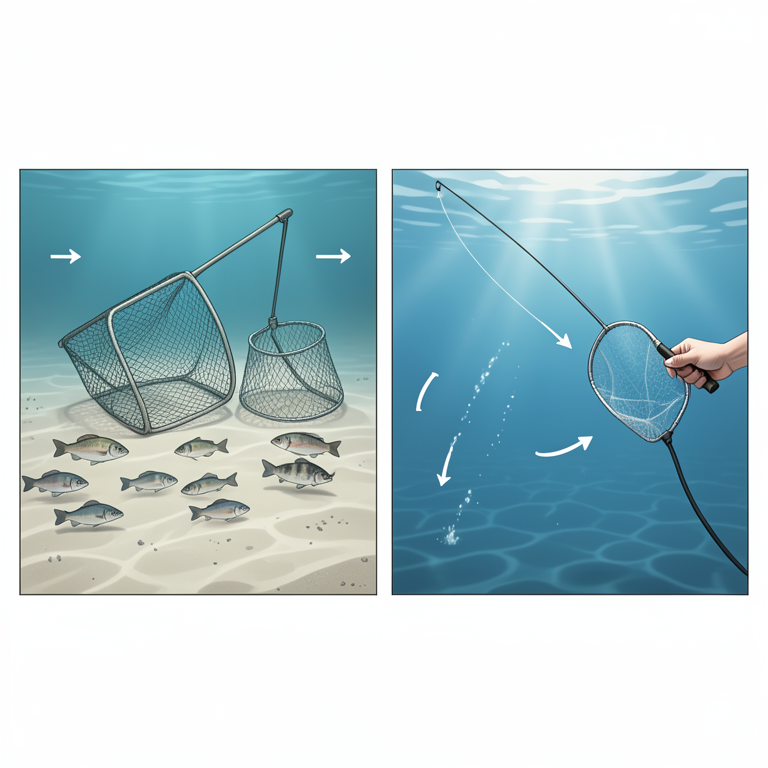
Active vs Passive Fishing
AI-generated conceptual illustration (small-scale fishing gear in a coastal marine environment). It explains the idea and does not show study data.
View source evidence ↗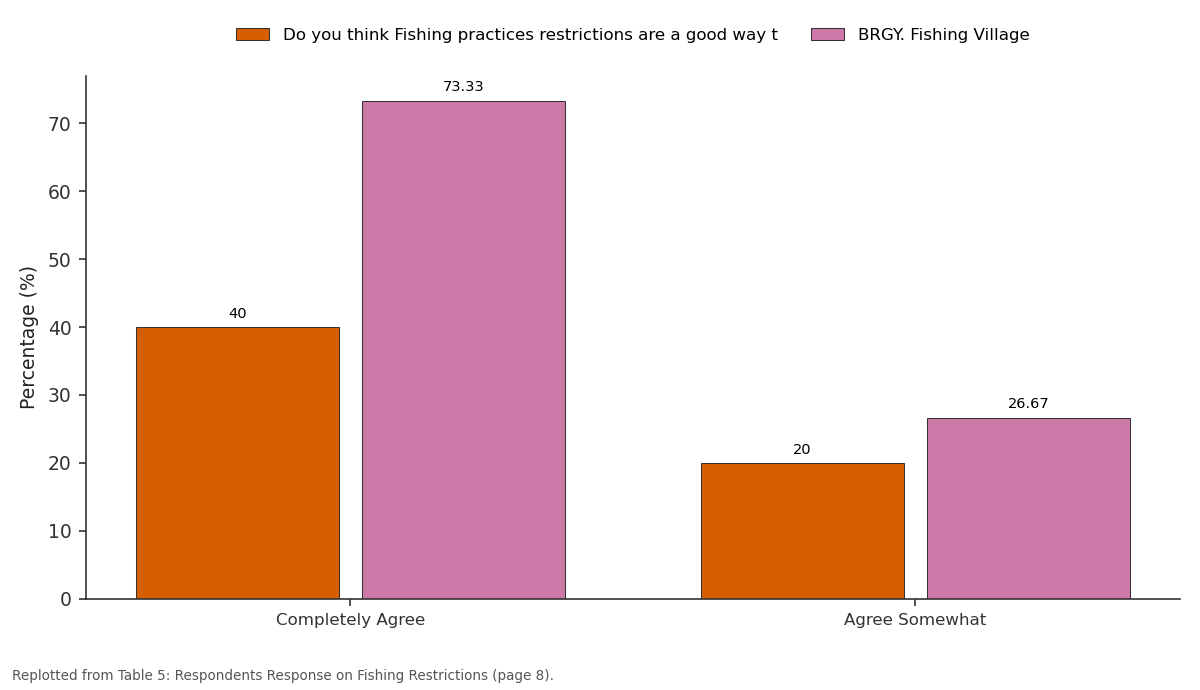
Do you think Fishing practices restrictions... and BRGY. Fishing Village: Completely Agree vs Agree Somewhat
Replotted from Table 5 (page 8) of the original paper. Every bar is the paper's own table value.
View source evidence ↗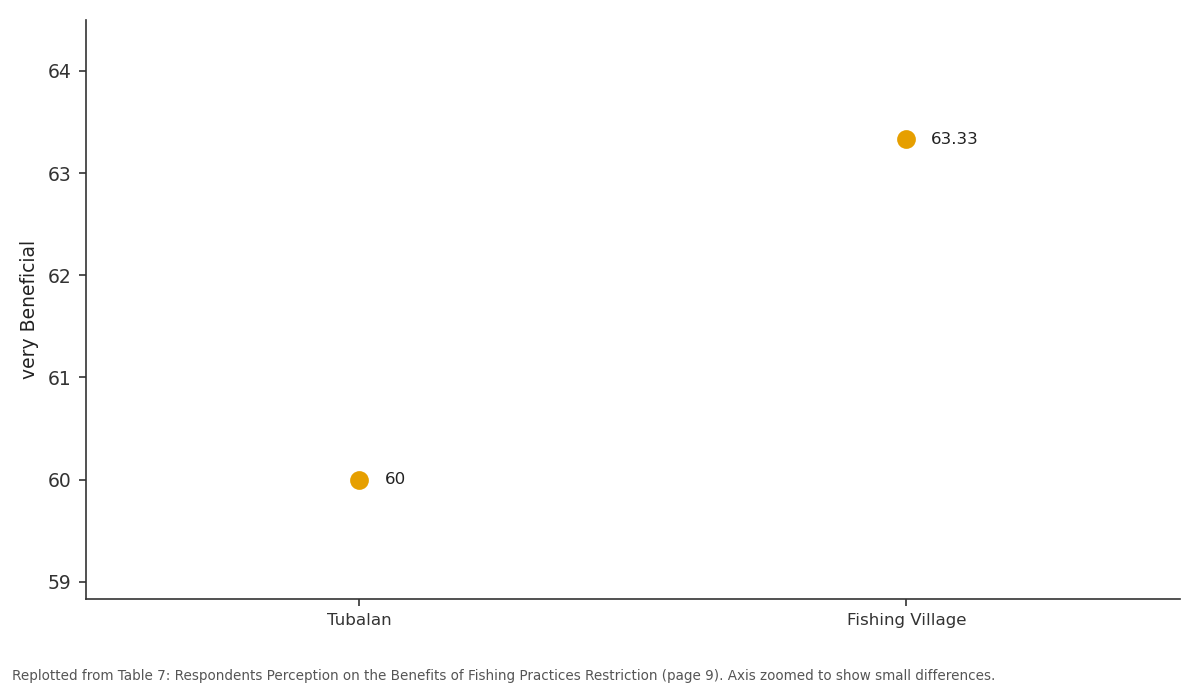
very Beneficial: Tubalan vs Fishing Village
Replotted from Table 7 (page 9) of the original paper. Every bar is the paper's own table value.
View source evidence ↗Figures & tables
From the original paper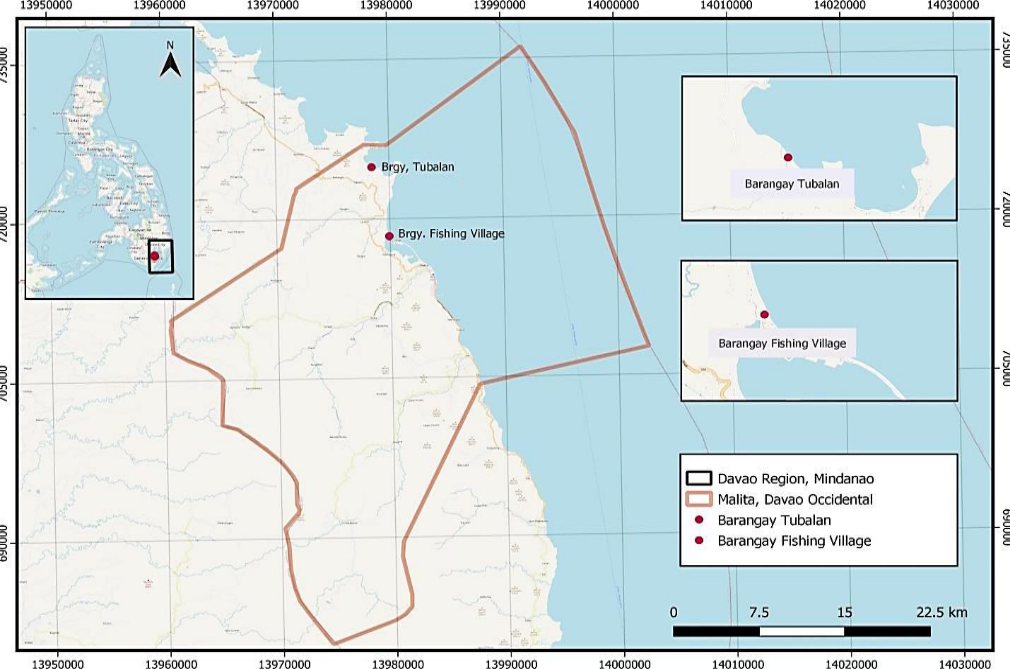 Figure 1
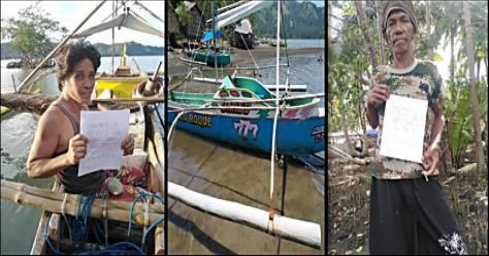 Figure 2
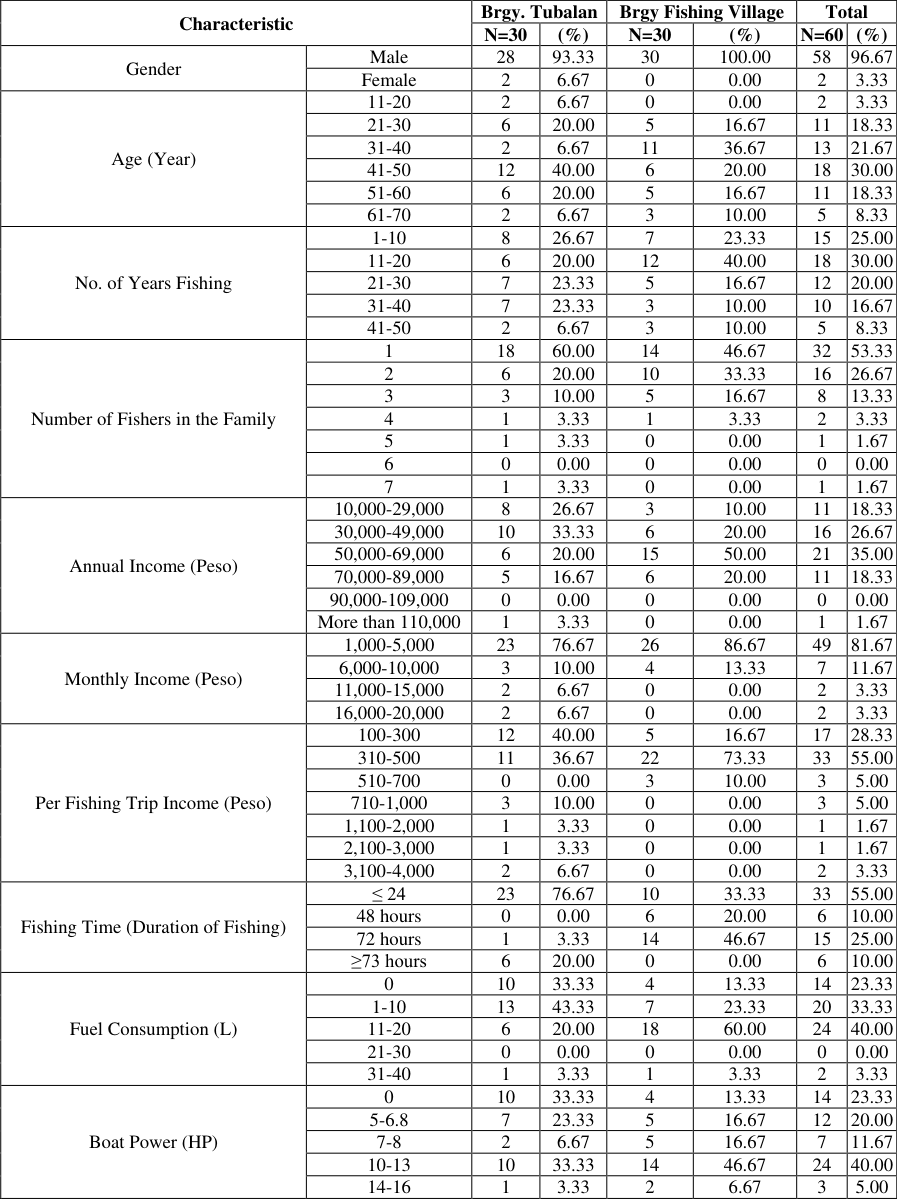 Table 1
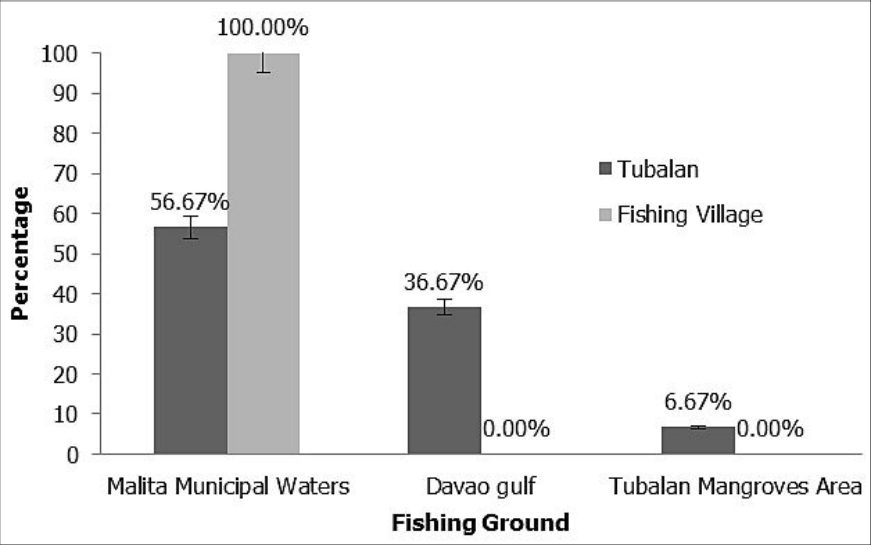 Figure 3
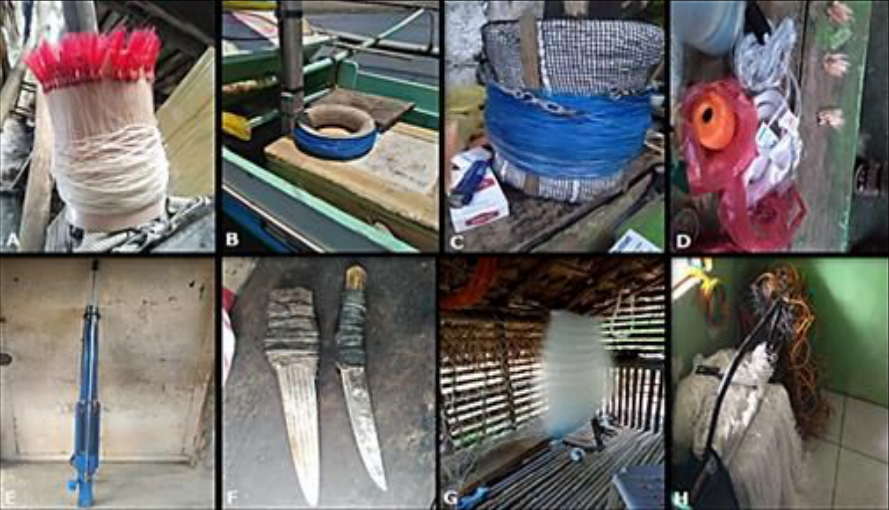 Figure 4
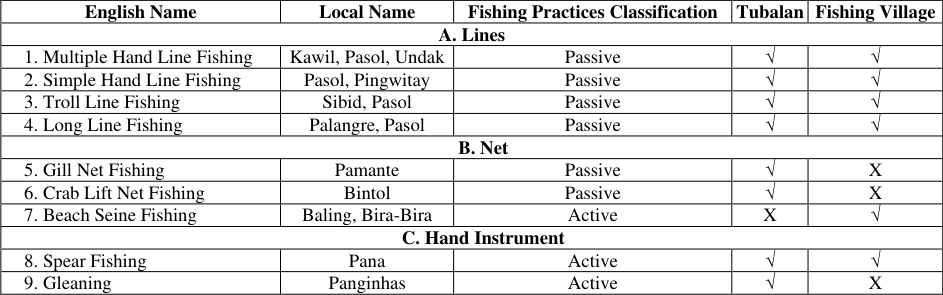 Table 2
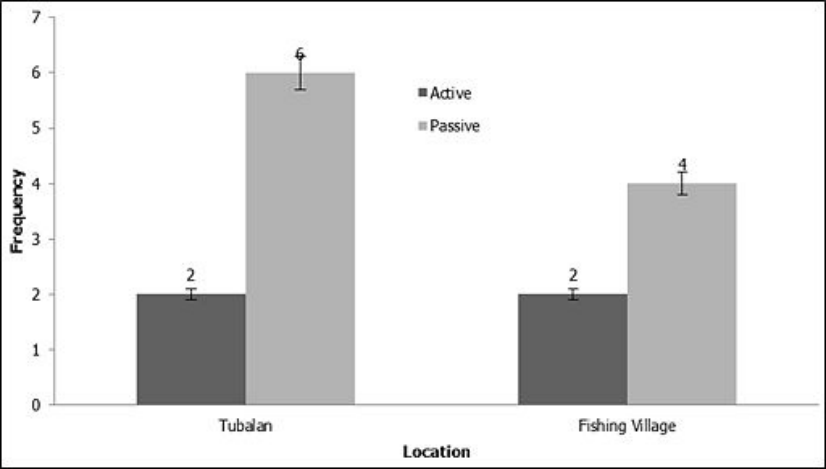 Figure 5
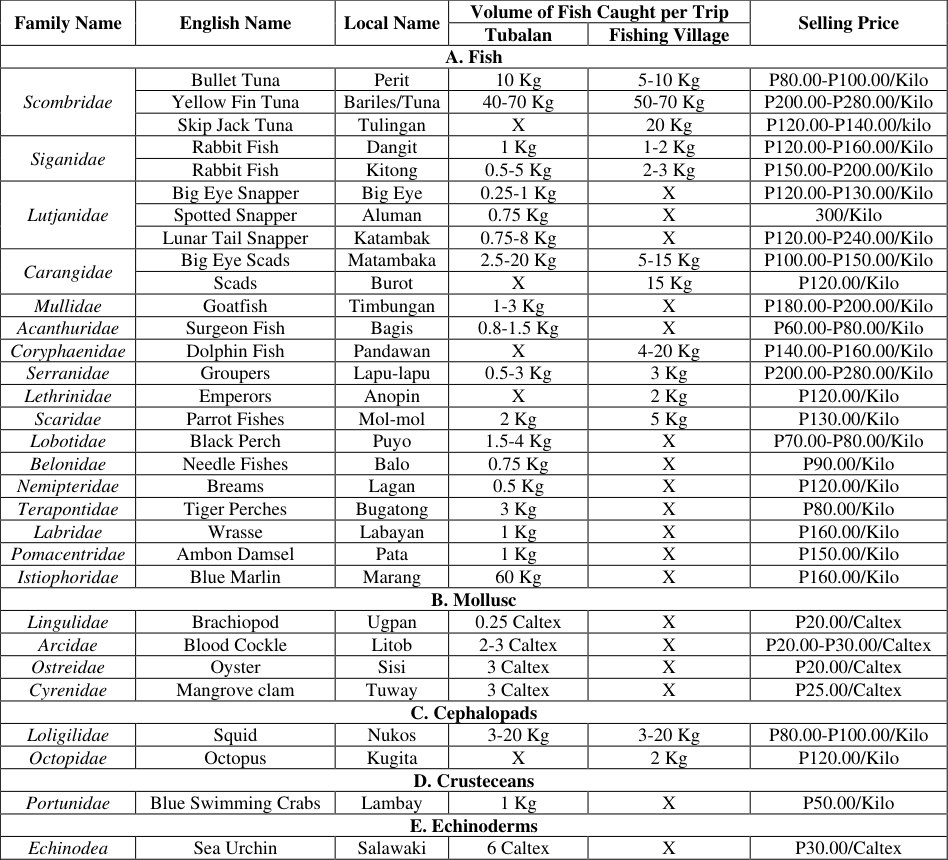 Table 3
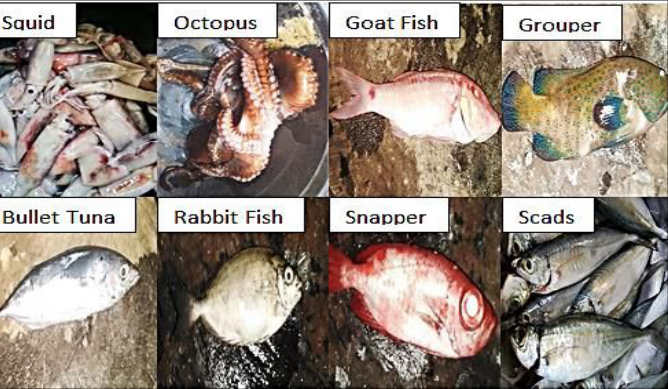 Figure 6
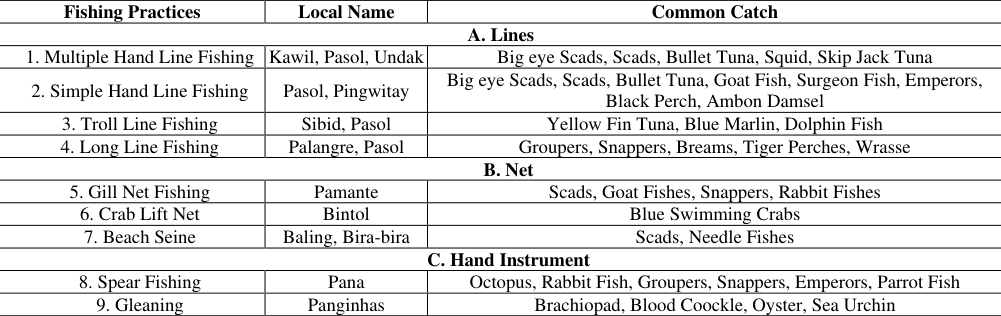 Table 4
 Table 5
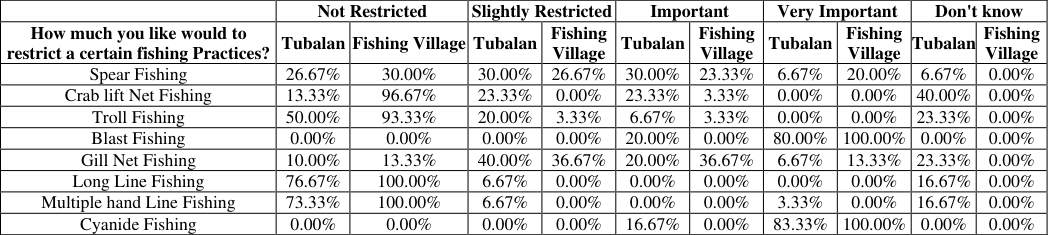 Table 6
 Table 7
Introduction
Small scale fishery plays a vital role both in developed and developing countries. Majority of the small scale fishers are in the tropical region as they predominantly fishing or gleaning for tropical marine fishes and invertebrates that was accessible by simple fishing gears, free diving and intertidal gleaners [1] . A small-scale fishery is recognized as fishers who catch fish mainly for daily consumption and sustenance. These fishers in contrast with the commercial fisherman that uses big fishing vessels and updated technology in fishing, they only used low-tech gears and small boats floating in the municipal waters in the area [2,3] . In the Philippines, small scale fisheries play an essential role in the income generation of coastal communities and in the country [4] . A reported annual harvest of 1.3 metric tons of fish was harvested from the nation's vast municipal waters. This fisheries sub-sector gives an important impact on the economy and produce majority of the dietary protein through fish consumption for over 90 million Filipinos thus provides adequate employment for individuals who want to engage in fishing [5] . A study conducted by Muallil et al. (2014) [6] reveal that most of the coastal fisheries resources in the Philippines may distorted because of the over exploitation alone even if certain laws and ordinances has been implemented. Small scale fisheries were also vulnerable towards climate change that affects the natural phenomena like changes in weather patterns, frequency and intensity of rainfall, occurrence of typhoons that leads to obliteration and flooding [7] . To minimized the negative effect that brought by the destruction of natural calamities and unsustainable fishing technique towards small scale fishers and the coastal community, efforts must be made towards conservation of fishery resources like stricter enforcement of law against unlawful fishing. In terms of natural calamities, study showed that there were mitigation and adaptation regime that could decreased the potential impacts of climate change in the fisheries sector [8,9] . A continued decline of catch in the municipal waters of the Philippines leads to reducing fishing effort or intensifying fishing effort, halting fishing activities temporarily, diversification of livelihoods and change in fishing technique and gears, of the small scale fishers [10,11] . Most common fishing techniques used by the small scale fishers were compressor fishing, gill net fishing, long line fishing, multiple hand line, troll fishing and spear fishing [12][13][14][15][16] . Destructive fishing practices like dynamite and cyanide fishing to catch and target snapper and grouper still exist even if there was an existing law prohibiting such illegal fishing activity [17] . Several studies showed that fishing practices in the municipal waters and places in the sea with existing fish aggregating device contributed to the decline in the fish stocks especially within an area with increase fishing pressure, extensive fishing, over exploitation, destructive fishing and weak execution of guidelines in relation to sustainable fish resources [13,[18][19][20][21] . In this paper, the researcher wanted to assess the different fishing techniques used by the small scale fishers in the selected barangay of Malita, Davao Occidental. Fishers in the selected study site was interviewed in order to identify the existing fishing practices, volume of fish catch, catch composition, fishing gears used, and their perception on the restriction of a certain fishing method.
Materials and Methods
Materials and Methods
Research Locale
The study was conducted in the barangays of Fishing Village and Tubalan in the municipality of Malita, Davao Occidental with a recorded 800 registered fishers [22] . Barangay Tubalan and Fishing Village has a total population of 4, 462 and 3, 611 in 2020 census respectively, this barangays were dominated by fisher folks that have small motorized boats and their main source of food and livelihood was the adjacent municipal sea water of Malita (figure 1).
Data Collection
The gathering of data in the study to determine the different fishing practices in two coastal barangay in the municipality of Malita was done through personal interview using a selfstructured survey questionnaire in English language but translated into Visayan dialect to facilitate easy comprehension of the small-scale fishers. The respondents in the survey were fishers and residents of barangay Tubalan (n=30) and Fishing Village (n=30) who were directly involved in fishing activities in Malita's municipal seawater (15 kilometers perpendicular to the shoreline) or in the Davao Gulf in which Malita was one of the coastal municipalities that lies in its coastline (R.A. 8550) [60] . Respondents were questioned based on the administered self-structured survey questionnaire.
Data Analysis
The data obtained in the study was analyzed through descriptive statistics in Microsoft excel 2010 to obtain the mean and percentage of the study and to identify which fishing practices was commonly used by the fishers in the study site as well as to determine the perception of the small scale fishers on the different variables (maintain fish catch, support to fishing practices and type of fishing practices restriction, benefits of fishing practices restriction) in terms of fishing restriction.
Results and Discussion
3.1 Small scale fisheries in Brgy. Tubalan and Brgy.
Fishing village
Based on the result of the study, the fisherman's socioeconomic background varied from age, years of fishing, number of fishers in the family, fishing time, fuel consumption, boat power, annual, monthly and per fishing trip income. Most of the fishers in barangay Tubalan was belong to the age bracket of 41-50 years old (40%) and in Brgy Fishing Village was in the age bracket of 31-40 years old (36.67%) and 30% of the fishers considered in the study in both barangay belongs to the age bracket of 41-50 years old. The same study was conducted in Davao region with the comparable result as to the age of the fishers involved in small scale fishing [9] . The mean age (43) of fishers engage in fishing in the study has already passed their potent days that reflects in the decreased in fish catch of the fishers as they cannot sustain their stamina and energy during the whole duration of fishing in every fishing trip and possibly could impact on the decline of the fish production in the small scale fishery sector [7,23] . The number of fishing years of the small scale fishers included in the study in barangay Tubalan was 1-10 years (26.67%) while in barangay Fishing Village was 11-20 years (40%) and 30% of all fishers in the study spend their life in fishing for 11-20 years. The number of years of fishing of fishers also corresponds to the change of fish catch composition in every decades they spent fishing in the sea [24] . Majority of the small scale fisher was unable to adapt to the change of depleted marine resources in which they rely on so much that even with the long years of fishing, the fishers was incapable of changing to the new technologies that allows them to fish outside the municipal waters [10] . Fisher households are vulnerable to a variety of crises and shocks, which adds to their already precarious situation, making them less economically resilient [25] . The fishers in Barangay Tubalan and Fishing Village said that they are the only member of the family who was involved in fishing activities as reflected in the result in barangay Tubalan (60%) and barangay Fishing Village (46.67%). The growing economy outside fishing industry reflects the decreased of the number of fishers in a certain community and because of the difficult life of a fisherman, the lack of credit, decreased living conditions, insufficient food and clothing and lack of access to social services, most fishermen no longer wish to teach their children their trade [9, 26] (table 1). Fishing time spent in every fishing trip of the small scale fishers was different in both barangay. Barangay Tubalan spend 24 hours or less (76.67%) in Fishing while majority of the fishers in barangay Fishing Village spend 72 hours (46.67%) in the sea to catch fish and 55% of the fishers in both barangay said that they fish 24 hours or less in the sea. The time spent by fishers in barangay Tubalan and Fishing Village in the study was in congruence with the result of the study conducted by Macusi et al. (2021) [7] in which most of the small scale fishers spend 7.29 hours in the sea for fishing activity. A study of Fung et al. (2013) [27] reveal that fishing duration together with target fishing and harvesting rate may significantly influence the decline in fish stocks in the marine environment. Fishing duration data could be used to assess the effects of fishing on target and non-target fish stocks, as well as the influence of management techniques on anglers [28] . The majority of the fishers in barangay Tubalan consumes 1-10 liters of fuel (43.33%) for fishing and in barangay Fishing Village 60% of the fishers consumes 11-20 liters of fuel, in both barangay most fishers consumes 11-20 liters of fuel (40%) in every fishing trip. Most fishers in barangay Tubalan used non-motorized boat (33.33%) and 10-13 horse power engine (33.33%) while in barangay Fishing Village majority of the fishermen used 10-13 horse power (46.67%). Engine power, fuel consumption and duration of fishing was inter related in each other, since most fishers consumes less fuel (11-20 liters (40%) if they spend less time in fishing (≤ 24hrs (55%) and if they used less engine power (10-13 HP (40%). Increase fuel consumption and fishing time could also mean that there was an increase in nitrogen oxide emitted in the atmosphere through the boat engine exhaust [29] . Certain technologies were already developed and practice to reduce fishing time and decreased fuel consumption, application of LED in squid jigging fishery, used of diesel engine and surface piercing propeller and installation of stern flap to decrease the boat resistance in water to name a few [30][31][32] . The adaptation of this new technology in fishing to reduce fuel consumption and increase efficiency in fishing was very effective to reduced pollutant gas and particulate emission and already practiced in present times [33] (table 1). Fisheries socio-economic data, including income was frequently not available thus leading to the difficulty to measure fishermen's economic situation [34] . Based on the result of the study 35% of the fishers income was P50,000.00-P69,000.00 which in barangay Tubalan fishers have an annual income of P30,000.00-P49,000.00 (33.33%) and in barangay Fishing Village 50% of fishers have an annual income ranging P50,000.00-P69,000.00 only, a huge discrepancies from the average annual income (P 267,000.00) for a Filipino family which means that fishers income were below the minimum annual income set by the government. This result was in congruence with the study conducted by Outeiro et al. (2018) [35] in Spain that most of the small scale fishers have a net income equal or below the national minimum wage set by Spanish Government. One factor of the low income of fishers was because of the market value integration of their catch by the traders leading to unequal generated income between fishers and traders [36] . According to Salas et al. (2007) [37] , small scale fishers in Mexico, like those in other regions, exhibit comparable characteristics such as low capital and labor intensive, weak market and bargaining strength among fishers (table 1).
| Characteristic | — | Brgy. Tubalan | — | Brgy Fishing Village | — | Total | — |
|---|---|---|---|---|---|---|---|
| N=30 | (%) | N=30 | (%) | N=60 | (%) | ||
| Gender | Male | 28 | 93.33 | 30 | 100.00 | 58 | 96.67 |
| Female | 2 | 6.67 | 0 | 0.00 | 2 | 3.33 | |
| Age (Year) | 11-20 | 2 | 6.67 | 0 | 0.00 | 2 | 3.33 |
| 21-30 | 6 | 20.00 | 5 | 16.67 | 11 | 18.33 | |
| 31-40 | 2 | 6.67 | 11 | 36.67 | 13 | 21.67 | |
| 41-50 | 12 | 40.00 | 6 | 20.00 | 18 | 30.00 | |
| 51-60 | 6 | 20.00 | 5 | 16.67 | 11 | 18.33 | |
| 61-70 | 2 | 6.67 | 3 | 10.00 | 5 | 8.33 | |
| No. of Years Fishing | 1-10 | 8 | 26.67 | 7 | 23.33 | 15 | 25.00 |
| 11-20 | 6 | 20.00 | 12 | 40.00 | 18 | 30.00 | |
| 21-30 | 7 | 23.33 | 5 | 16.67 | 12 | 20.00 | |
| 31-40 | 7 | 23.33 | 3 | 10.00 | 10 | 16.67 | |
| 41-50 | 2 | 6.67 | 3 | 10.00 | 5 | 8.33 | |
| Number of Fishers in the Family | 1 | 18 | 60.00 | 14 | 46.67 | 32 | 53.33 |
| 2 | 6 | 20.00 | 10 | 33.33 | 16 | 26.67 | |
| 3 | 3 | 10.00 | 5 | 16.67 | 8 | 13.33 | |
| 4 | 1 | 3.33 | 1 | 3.33 | 2 | 3.33 | |
| 5 | 1 | 3.33 | 0 | 0.00 | 1 | 1.67 | |
| 6 | 0 | 0.00 | 0 | 0.00 | 0 | 0.00 | |
| 7 | 1 | 3.33 | 0 | 0.00 | 1 | 1.67 | |
| Annual Income (Peso) | 10,000-29,000 | 8 | 26.67 | 3 | 10.00 | 11 | 18.33 |
| 30,000-49,000 | 10 | 33.33 | 6 | 20.00 | 16 | 26.67 | |
| 50,000-69,000 | 6 | 20.00 | 15 | 50.00 | 21 | 35.00 | |
| 70,000-89,000 | 5 | 16.67 | 6 | 20.00 | 11 | 18.33 | |
| 90,000-109,000 | 0 | 0.00 | 0 | 0.00 | 0 | 0.00 | |
| More than 110,000 | 1 | 3.33 | 0 | 0.00 | 1 | 1.67 | |
| Monthly Income (Peso) | 1,000-5,000 | 23 | 76.67 | 26 | 86.67 | 49 | 81.67 |
| 6,000-10,000 | 3 | 10.00 | 4 | 13.33 | 7 | 11.67 | |
| 11,000-15,000 | 2 | 6.67 | 0 | 0.00 | 2 | 3.33 | |
| 16,000-20,000 | 2 | 6.67 | 0 | 0.00 | 2 | 3.33 | |
| Per Fishing Trip Income (Peso) | 100-300 | 12 | 40.00 | 5 | 16.67 | 17 | 28.33 |
| 310-500 | 11 | 36.67 | 22 | 73.33 | 33 | 55.00 | |
| 510-700 | 0 | 0.00 | 3 | 10.00 | 3 | 5.00 | |
| 710-1,000 | 3 | 10.00 | 0 | 0.00 | 3 | 5.00 | |
| 1,100-2,000 | 1 | 3.33 | 0 | 0.00 | 1 | 1.67 | |
| 2,100-3,000 | 1 | 3.33 | 0 | 0.00 | 1 | 1.67 | |
| 3,100-4,000 | 2 | 6.67 | 0 | 0.00 | 2 | 3.33 | |
| Fishing Time (Duration of Fishing) | ≤ 24 | 23 | 76.67 | 10 | 33.33 | 33 | 55.00 |
| 48 hours | 0 | 0.00 | 6 | 20.00 | 6 | 10.00 | |
| 72 hours | 1 | 3.33 | 14 | 46.67 | 15 | 25.00 | |
| ≥73 hours | 6 | 20.00 | 0 | 0.00 | 6 | 10.00 | |
| Fuel Consumption (L) | 0 | 10 | 33.33 | 4 | 13.33 | 14 | 23.33 |
| 1-10 | 13 | 43.33 | 7 | 23.33 | 20 | 33.33 | |
| 11-20 | 6 | 20.00 | 18 | 60.00 | 24 | 40.00 | |
| 21-30 | 0 | 0.00 | 0 | 0.00 | 0 | 0.00 | |
| 31-40 | 1 | 3.33 | 1 | 3.33 | 2 | 3.33 | |
| Boat Power (HP) | 0 | 10 | 33.33 | 4 | 13.33 | 14 | 23.33 |
| 5-6.8 | 7 | 23.33 | 5 | 16.67 | 12 | 20.00 | |
| 7-8 | 2 | 6.67 | 5 | 16.67 | 7 | 11.67 | |
| 10-13 | 10 | 33.33 | 14 | 46.67 | 24 | 40.00 | |
| 14-16 | 1 | 3.33 | 2 | 6.67 | 3 | 5.00 |
Table text extracted from the original PDF; superscript letters are shown inline. The original table image is below.
View original table image
Common Fishing Grounds
The fishing activity of the small scale fisheries in barangay Tubalan (56.67%) and Fishing Village (100%) was concentrated in the municipal waters of Malita, however some fishers in barangay Tubalan derived their income in gleaning in the mangrove area found in the barangay (6.67%) and 36.67% of the fishers considered in the study in barangay Tubalan was fishing outside the waters of Malita and venture farther in the Davao Gulf in which a fishing ban was established in the months of June, July and August to give time of the pelagic fishes to reproduce and majority of the fishers from Malita was aware on the establishment of fishing ban during the said months [22] . The same fishing ban were also established in Zamboanga that resulted in the increase in sardines landed catch and improve society's welfare after implementation of the closed fishing season [38] (figure 3). The municipal water of Malita covers 9 barangays in which Barangay Tubalan and Fishing Village was included. Barangay Tubalan have an existing marine protected area that has been monitored and studied by the Department of natural Resources in which many high economically valued fish has been existing and targeted for fishing like parrot fishes and surgeon fishes [39] . In Tubalan, Malita, Davao
Occidental, mangroves was one of the sources of income of fishers as they gleaned in the area and harvest bivalves, gastropods and other invertebrates like crabs and shrimps.
Tubalan also was a recipient of various rehabilitation efforts from private and government sector to address the declining number of mangrove forest in the Philippines [40] .
Fishing Practices
The common fishing practices observed in the study were classified into passive and active fishing technique. Passive fishing was identified when a fisher folks install its fishing gears in the marine, brackish or fresh water environment and depends solely to the movement of water current to catch fish while fishing practices considered as active when the fisher folk actively chasing or targeting a fish species with the aid of a fishing gear [41] . Multiple hand line, simple hand line, troll line, long line, gill net, crab lift net were the active fishing practices observed in the study while beach seine fishing, spear fishing and gleaning was considered as active fishing practices observed in the study (table 2). The same fishing practices and the corresponding gears used in fishing was also common in the fishers of Isabela, Philippines based on the study of Baleta et al. (2017) [16] . Illegal fishing practices like cyanide and dynamite (blast) fishing was not practiced in both barangay since this fishing technique increases the degradation rate of marine habitat and resources and as to the strict implementation and proper enforcement of fisheries law in the Philippines [42,43] . (beach seine fishing and spear fishing) fishing practices was noted in the study (figure 5). The active fishing practices was characterized by movement to pursue and catch fish while passive fishing practices allow fish to move towards the fishing gear without any movements of the gear to trigger the catch [15] . The same fishing practices and fishing gears was also used by small scale fisher in Palanan, Isabela, Philippines in which it was dominated by lines, net and hand gears used in fishing [44] .
| English Name | Local Name | Fishing Practices Classification | Tubalan | Fishing Village |
|---|---|---|---|---|
| A. Lines | ||||
| 1. Multiple Hand Line Fishing | Kawil, Pasol, Undak | Passive | √ | √ |
| 2. Simple Hand Line Fishing | Pasol, Pingwitay | Passive | √ | √ |
| 3. Troll Line Fishing | Sibid, Pasol | Passive | √ | √ |
| 4. Long Line Fishing | Palangre, Pasol | Passive | √ | √ |
| B. Net | ||||
| 5. Gill Net Fishing | Pamante | Passive | √ | X |
| 6. Crab Lift Net Fishing | Bintol | Passive | √ | X |
| 7. Beach Seine Fishing | Baling, Bira-Bira | Active | X | √ |
| C. Hand Instrument | ||||
| 8. Spear Fishing | Pana | Active | √ | √ |
| 9. Gleaning | Panginhas | Active | √ | X |
Table text extracted from the original PDF; superscript letters are shown inline. The original table image is below.
View original table image
Catch Composition of Fishing Gears
The Diversity of fish catch by the small scale fisheries reflects to the area in which they usually fished as it was the only area that the boat they operate reaches since most of the small scale fishers navigates smaller boats compared to that of commercial fishers, and because of the smaller size boats they used, they can easily access the rich coastal shallow water that covers a wide variety of fish, crustaceans and invertebrates [2,3,45] . There were 33 species documented belonging 24 different families or groups that composed of fish, mollusk, cephalopods, crustaceans and echinoderms caught by different types of fishing practices and gears of the small scale fishers in Tubalan and Fishing Village. The common catch of the small scale fishers in barangay Tubalan and Fishing Village was presented in table 3. Fish species under the family of Scombridae, Carangidae and Loligilidae was the top 3 catches in terms of volume of catch of fishers in both barangay. Yellow Fin Tuna, Spotted Snapper and groupers were the fish species with high market value in all fish catch noted in the study. Even though coral reef fishes have higher market price, it was observed in the study that the fishers catch less of this fish species compared to that of the pelagic fishes like the scads and tuna this was because of the degradation of the coral reefs that leads to low reef fish abundance and biomass [46,47] . Also, over exploitation in the fisheries resources in the coral reefs by small scale fishers become problematic because it influence on the reduction of biodiversity and fish catch [11] . 4). A comparable catch of fish species was also documented in the study conducted at the two coastal areas in Palawan, Philippines in which almost the same fish species was observed caught by the different types of fishing practices and fishing gears used [15] .
| Family Name | English Name | Local Name | Volume of Fish Caught per Trip | — | Selling Price |
|---|---|---|---|---|---|
| Tubalan | Fishing Village | ||||
| A. Fish | |||||
| Scombridae | Bullet Tuna | Perit | 10 Kg | 5-10 Kg | P80.00-P100.00/Kilo |
| Yellow Fin Tuna | Bariles/Tuna | 40-70 Kg | 50-70 Kg | P200.00-P280.00/Kilo | |
| Skip Jack Tuna | Tulingan | X | 20 Kg | P120.00-P140.00/kilo | |
| Siganidae | Rabbit Fish | Dangit | 1 Kg | 1-2 Kg | P120.00-P160.00/Kilo |
| Rabbit Fish | Kitong | 0.5-5 Kg | 2-3 Kg | P150.00-P200.00/Kilo | |
| Lutjanidae | Big Eye Snapper | Big Eye | 0.25-1 Kg | X | P120.00-P130.00/Kilo |
| Spotted Snapper | Aluman | 0.75 Kg | X | 300/Kilo | |
| Lunar Tail Snapper | Katambak | 0.75-8 Kg | X | P120.00-P240.00/Kilo | |
| Carangidae | Big Eye Scads | Matambaka | 2.5-20 Kg | 5-15 Kg | P100.00-P150.00/Kilo |
| Scads | Burot | X | 15 Kg | P120.00/Kilo | |
| Mullidae | Goatfish | Timbungan | 1-3 Kg | X | P180.00-P200.00/Kilo |
| Acanthuridae | Surgeon Fish | Bagis | 0.8-1.5 Kg | X | P60.00-P80.00/Kilo |
| Coryphaenidae | Dolphin Fish | Pandawan | X | 4-20 Kg | P140.00-P160.00/Kilo |
| Serranidae | Groupers | Lapu-lapu | 0.5-3 Kg | 3 Kg | P200.00-P280.00/Kilo |
| Lethrinidae | Emperors | Anopin | X | 2 Kg | P120.00/Kilo |
| Scaridae | Parrot Fishes | Mol-mol | 2 Kg | 5 Kg | P130.00/Kilo |
| Lobotidae | Black Perch | Puyo | 1.5-4 Kg | X | P70.00-P80.00/Kilo |
| Belonidae | Needle Fishes | Balo | 0.75 Kg | X | P90.00/Kilo |
| Nemipteridae | Breams | Lagan | 0.5 Kg | X | P120.00/Kilo |
| Terapontidae | Tiger Perches | Bugatong | 3 Kg | X | P80.00/Kilo |
| Labridae | Wrasse | Labayan | 1 Kg | X | P160.00/Kilo |
| Pomacentridae | Ambon Damsel | Pata | 1 Kg | X | P150.00/Kilo |
| Istiophoridae | Blue Marlin | Marang | 60 Kg | X | P160.00/Kilo |
| B. Mollusc | |||||
| Lingulidae | Brachiopod | Ugpan | 0.25 Caltex | X | P20.00/Caltex |
| Arcidae | Blood Cockle | Litob | 2-3 Caltex | X | P20.00-P30.00/Caltex |
| Ostreidae | Oyster | Sisi | 3 Caltex | X | P20.00/Caltex |
| Cyrenidae | Mangrove clam | Tuway | 3 Caltex | X | P25.00/Caltex |
| C. Cephalopads | |||||
| Loligilidae | Squid | Nukos | 3-20 Kg | 3-20 Kg | P80.00-P100.00/Kilo |
| Octopidae | Octopus | Kugita | X | 2 Kg | P120.00/Kilo |
| D. Crusteceans | |||||
| Portunidae | Blue Swimming Crabs | Lambay | 1 Kg | X | P50.00/Kilo |
| E. Echinoderms | |||||
| Echinodea | Sea Urchin | Salawaki | 6 Caltex | X | P30.00/Caltex |
Table text extracted from the original PDF; superscript letters are shown inline. The original table image is below.
View original table image
Fishing Practices Restriction
Small scale fisheries creates problems such as lowers biodiversity and catch because of over exploitation and law informant might play a role in this system [11] . The survey on the restriction of a certain fishing practices was conducted in barangay Tubalan and Fishing Village with 30 respondents in each barangay. A self-structured survey questionnaire was used and was translated to visayan dialect to facilitate easy comprehension of the fishers included in the survey.
The respondents was asked about the restriction of a certain fishing practices and their idea on the level of acceptance on fishing restriction of their co-fishers (table 5). Majority of the fishers completely agrees (Tubalan 40%; Fishing Village 73.33%) if a fishing restriction will be implemented, however when the fishers asked about the perception of the other fishers in fishing practices restriction, 46.67% of the respondents in baranagay Tubalan was neutral while in barangay Fishing Village majority of the fishers said that their co-fishers completely agrees (73.33%) in the establishment of fishing practices restriction. The high percentage of acceptance on the idea of fishing practices restriction of the small scale fishers reflected that they wanted to sustain the fishery resources and it would greatly affects their livelihood and fish catch [9,26,35] . A study on a fishing restriction positively affects the area with implemented fishing restriction as it was observed higher abundance of marine resources compared to the area open for any fishing [48] . The same study conducted by Mcclanahan and Abunge (2016) [49] in Madagascar and Mozambique state that fishers rated higher on benefits of restriction. Aslo, fishers manager in Kenya and Madagascar rated the same and acknowledge that establishment of fishing restriction principally helps the resource users to sustain its fisheries resources. Marine resources continous to suffer from depletion through over exploitation and destructive and unregulated fishing practices [50] . Changes in the quantity, species composition, and behavior of target species all affect aquatic ecosystems through fishing activities [51] . Fishing techniques that targeted high-value fish species (e.g., Lutjanidae and Serranidae) have been restricted, and the results have been good in terms of fish biomass. However, if no restrictions are enforced, this marine resource will be subject to fisheries loss and population reduction [52] . Gear restrictions in particular was widely acepted compared to the closed seasons, speciess restrctions and minimum fish size [53] . Public participation is an important component of good governance, and there are numerous benefits to include stakeholders in decision-making [54] . Respondents in the study identified which observed fishing practices were needed to be restricted in order to maintain fish catch. The study listed eight common fishing practices spear fishing, crab lift net fishing, troll fishing, blast fishing, gill net fishing, long line fishing, multiple hand line fishing, and cyanide fishing. The fishing practices considered in the study was identified with the help of local fisherman in the study area (table 6).
| — | Not Restricted | — | Slightly Restricted | — | Important | — | Very Important | — | Don't know | — |
|---|---|---|---|---|---|---|---|---|---|---|
| How much you like would to restrict a certain fishing Practices? | Tubalan | Fishing Village | Tubalan | Fishing Village | Tubalan | Fishing Village | Tubalan | Fishing Village | Tubalan | Fishing Village |
| Spear Fishing | 26.67% | 30.00% | 30.00% | 26.67% | 30.00% | 23.33% | 6.67% | 20.00% | 6.67% | 0.00% |
| Crab lift Net Fishing | 13.33% | 96.67% | 23.33% | 0.00% | 23.33% | 3.33% | 0.00% | 0.00% | 40.00% | 0.00% |
| Troll Fishing | 50.00% | 93.33% | 20.00% | 3.33% | 6.67% | 3.33% | 0.00% | 0.00% | 23.33% | 0.00% |
| Blast Fishing | 0.00% | 0.00% | 0.00% | 0.00% | 20.00% | 0.00% | 80.00% | 100.00% | 0.00% | 0.00% |
| Gill Net Fishing | 10.00% | 13.33% | 40.00% | 36.67% | 20.00% | 36.67% | 6.67% | 13.33% | 23.33% | 0.00% |
| Long Line Fishing | 76.67% | 100.00% | 6.67% | 0.00% | 0.00% | 0.00% | 0.00% | 0.00% | 16.67% | 0.00% |
| Multiple hand Line Fishing | 73.33% | 100.00% | 6.67% | 0.00% | 0.00% | 0.00% | 3.33% | 0.00% | 16.67% | 0.00% |
| Cyanide Fishing | 0.00% | 0.00% | 0.00% | 0.00% | 16.67% | 0.00% | 83.33% | 100.00% | 0.00% | 0.00% |
Table text extracted from the original PDF; superscript letters are shown inline. The original table image is below.
View original table image
| — | Do you think Fishing practices restrictions are a good way to maintain fish catch? | — | Do you think other fishers would support the idea of Fishing Practices Restriction? | — |
|---|---|---|---|---|
| Brgy. Tubalan | BRGY. Fishing Village | Brgy. Tubalan | Brgy. Fishing Village | |
| Don’t know | 0.00% | 0.00% | 0.00% | 0.00% |
| Completely Disagree | 3.33% | 0.00% | 0.00% | 0.00% |
| Disagree Somewhat | 0.00% | 0.00% | 3.33% | 0.00% |
| Neutral | 36.67% | 0.00% | 46.67% | 23.33% |
| Agree Somewhat | 20.00% | 26.67% | 10.00% | 3.33% |
| Completely Agree | 40.00% | 73.33% | 40.00% | 73.33% |
Table text extracted from the original PDF; superscript letters are shown inline. The original table image is below.
View original table image
Fishing practices like mutiple hand line fishing (Tubalan 73%, Fishing Village 100%), long line fishing (Tubalan 76.67%, Fishing Village 100%), troll fishing (Tubalan 50%, Fishing Village 93.33%) and crab lift net fishing (Tubalan 40% (Don't Know), Fishing Village 96.67%) obtain higher percentage on the type of fishing that the fishers do not want to be restricted as this fishing practices were passive and not destructive. This fishing practices was considered as traditional and ecologically sustainable [41,55] . Spear fishing (Tubalan 30% restricted and important; Fishing Village 30% not restricted) and gill net fishing (Tubalan 40% slightly restricted; Fishing Village 36.67% slightly restricted and important), this results means that fishers have the perception on the possible damage on the reefs as this fishing practices with its gears usually used on the coral reefs. This results support to the claim that spear fishing might affect to the decline of fishery resources especially the fish species with high market value in the coral reef area and a gill net fishing have reported to have higher chance of catching non targeted species and mojority of this species were trash fishes [56][57][58][59] . Blast fishing and cyanide fishing practices were perceived to be destructive and fishers were aware on the effects of this destructive fishing that may brought to the marine resources as reflected on the result that these two fishing practices obtained 80% in Tubalan and 100% in Fishing Village and 83.33% in Tubalan and 100% in Fishing Village respectively to be very important to have fishing restrictions. This would also means that local fishers in the area was aware on the existing law in the Philippines on dynamite and cyanide fishing stated in section 88 of the Philippine fisheries code of 1998 (Republic Act 8550) [60] . In a study conducted in Malaysia, blast and poison fishing was the major threats to marine resources that greatly affects the volume of catch of the fishers in the future [61] . However a study conducted in Tanzania in which destructive and illegal fishing was existing, local fishers continue to used dynamite fishing even if they know the destruction it may brought to the scarce resources as a result of weak enforcement and illegal fishers thought that they were neglected and ignored by the local fishing authorities as opposed to the findings of the study conducted in Loreto, Baja California Sur, Mexico in which majority of the fisherman amit and respected the existing regulations in force [21,62] . Furthermore, according to Bailey and Sumaila (2015) [17] , eliminating damaging fishing techniques could provide a steady flow of benefits to the community throughout time.
Respondents Perception of Fishing Restriction (Self, Community, Government)
Many conservation programs throughout the world are grappling with how to increase the likelihood that resource users will participate in and follow management requirements. When resource users feel greater personal costs than gains from specific management activities, this is very typical [63] . Small scale fishers' perception on the benefits for themselves, community and government regarding on the idea fishing practices restriction was presented in table 7. Based on the result of the study majority of the fishers responded that fishing restriction was very beneficial (Tubalan 60%; Fishing Village 63.33%) to them since it helps on the sustainability of fisheries resources and destructive fishing practices will be prohibited to be practiced in fishing. Fishers acknowledge the favorable impact of fishing restrictions on the long-term health of fisheries, according to the same study, and have stated a desire for stricter management and improved implementation of the regulations [64] . However, fishers in both barangay have the idea that the community has less benefit (Tubalan 53.33%; Fishing Village 43.33%) and in barangay Tubalan (73.33%) fishers said that maybe the government could benefit from the fishing restriction while fishers in barangay Fishing Village (66.67%) said that Government have no benefits on the establishment of fishing restriction. The perception of the fishers specially in the government benefits on fishing practices and gear restriction perceived to be weak because of the monitoring and enforcement management in the existing laws and ordinances observed by the fishers [65] . The same study conducted by Pita, Pierce and Theodossiou (2010) [53] also states that majority of fishermen had a poor impression of government support for the fishing business, with only about a quarter believing that the government supports their activities (table 7). 3.33% 0.00% Self = Respondents perception on the degree of benefit they may gain from fishing practices restriction. Community = Respondents perception on the degree of benefit the community may gain from fishing practices restriction. Government = Respondents perception on the degree of benefit the government may gain from fishing practices restriction.
| To what degree do you think you would benefit from Fishing practices restrictions? | — | Tubalan | Fishing Village |
|---|---|---|---|
| Self | I Don’t know | 0.00% | 0.00% |
| No Benefits | 3.33% | 3.33% | |
| Maybe Beneficial | 16.67% | 3.33% | |
| Less beneficial | 20.00% | 30.00% | |
| very Beneficial | 60.00% | 63.33% |
Table text extracted from the original PDF; superscript letters are shown inline. The original table image is below.
View original table image
Conclusion
Interviews with knowledgeable local fisherman may be important in analyzing and identifying the different fishing practices and their perception on the establishment of fishing restriction in order to maintain and conserve fisheries resources in the future, according to this contribution. This was highlighted by the result of the study that small scales fisheries played a vital role both in developed and developing countries. Small scale fishers in barangay Tubalan and Fishing were among the poorest in the country as manifested by their low annual income of P 48,433.33, a huge discrepancy from the average annual income (P 267,000.00) for the Filipino household. Most fishers included in the study fished at municipal waters of Malita with varied fishing practices used like lines (multiple hand line, simple hand line, troll line and long line fishing), nets (gill net, crab lift net, beach seine) and by hand (spear fishing and gleaning). All fishing practices with hook and line gears was classified as passive, Beach seine was the only active fishing practices for nets made gears and both spear fishing and gleaning was classified as active. Common fish species catch by different fishing practices were scads, tuna, and squid while most coral reef fishes have even though corresponds to higher market value was harvested less. Respondents was also asked on the idea of fishing practices restriction and they are well aware that blast fishing and cyanide fishing was very important to be restricted and has already an existing law in the country (RA 8550). Fishers also perceived that fishing practices restriction will positively impacts the depleted marine resources. This paper could be an important reference on the community based fishery management that the government spent more time and money to conserve the coastal resources in community perspective. Also, the rising focus on community-based fisheries management arises from the poor performance of other techniques and the study of traditional community-based natural resource management systems that have not only survived but also appear to function better than the alternatives [66] .
Acknowledgment
The researchers would like to thank the fishers involved in the study. The Department of Science and Technology (DOST-ASTHRD) for the scholarship and to the Mindanao State University-Iligan Institute of Technology (MSU-IIT) for providing quality education towards their graduate student.
Conflict of Interest
The authors have declared that they have no conflicts interests exist.
Figures and tables from the paper
| Fishing Practices | Local Name | Common Catch |
|---|---|---|
| A. Lines | ||
| 1. Multiple Hand Line Fishing | Kawil, Pasol, Undak | Big eye Scads, Scads, Bullet Tuna, Squid, Skip Jack Tuna |
| 2. Simple Hand Line Fishing | Pasol, Pingwitay | Big eye Scads, Scads, Bullet Tuna, Goat Fish, Surgeon Fish, Emperors, Black Perch, Ambon Damsel |
| 3. Troll Line Fishing | Sibid, Pasol | Yellow Fin Tuna, Blue Marlin, Dolphin Fish |
| 4. Long Line Fishing | Palangre, Pasol | Groupers, Snappers, Breams, Tiger Perches, Wrasse |
| B. Net | ||
| 5. Gill Net Fishing | Pamante | Scads, Goat Fishes, Snappers, Rabbit Fishes |
| 6. Crab Lift Net | Bintol | Blue Swimming Crabs |
| 7. Beach Seine | Baling, Bira-bira | Scads, Needle Fishes |
| C. Hand Instrument | ||
| 8. Spear Fishing | Pana | Octopus, Rabbit Fish, Groupers, Snappers, Emperors, Parrot Fish |
| 9. Gleaning | Panginhas | Brachiopad, Blood Coockle, Oyster, Sea Urchin |
Table text extracted from the original PDF; superscript letters are shown inline. The original table image is below.
View original table image
References
64 in the original paper- Purcell SW, Pomeroy RS. Driving small-scale fisheries in developing countries. Front Mar Sci. 2015 Jun;2:1-7. DOI: 10.3389/fmars.2015.00044
- Quimby B. Emerging customs: Small-scale fishing practices in Aceh, Indonesia. Appl. Geogr. 2015 May 1;59:125-130. DOI: 10.1016/j.apgeog.2014.11.026
- Smith H, Basurto X. Defining Small-Scale Fisheries and Examining the Role of Science in Shaping Perceptions of Who and What Counts: A Systematic Review. Front Mar Sci. 2019 May 7;6:236. DOI: 10.3389/fmars.2019.00236
- Sarmiento JMP, Mendez QLT, Estaña LMB, Giray ES, Nañola CL, Alviola PA. The role of motorized boats in fishers' productivity in marine protected versus nonprotected areas in Davao Gulf, Philippines. Environ Dev Sustain. 01234-56789. 2021 Nov;23(11):16786802. DOI: 10.1007/s10668-021-01354-8
- Muallil RN, Mamauag SS, Cabral RB, Celeste-Dizon EO, Aliño PM. Status, trends and challenges in the sustainability of small-scale fisheries in the Philippines: Insights from FISHDA (Fishing Industries' Support in Handling Decisions Application) model. Mar Policy. 2014 Feb 1;44:212-221. DOI: 10.1016/j.marpol.2013.08.026
- Macusi ED, Camaso KL, Barboza A, Macusi ES. Perceived Vulnerability and Climate Change Impacts on Small-Scale Fisheries in Davao Gulf, Philippines. Front Mar Sci. 2021 July, 8. DOI: 10.3389/fmars.2021.597385
- Muallil RN, Mamauag SS, Cababaro JT, Arceo HO, Aliño PM. Catch trends in Philippine small-scale fisheries over the last five decades: The fishers perspectives. Mar Policy. 2014 July;47:110-117. DOI: 10.1016/j.marpol.2014.02.008
- Macusi ED, Macusi ES, Jimenez LA, Catam-Isan JP. Climate change vulnerability and perceived impacts on small-scale fisheries in eastern Mindanao. Ocean Coast Manag. 2020 August;189:105-143. DOI: 10.1016/j.ocecoaman.2020.105143
- Eluriaga LMT, Garcia YT, Sajise AJU, Catelo MAO. Assessment of Sensitivity and Adaptive Capacity to International Journal of Biology Sciences https://www.biologyjournal.net/ Fisheries Decline: The Case of Small-scale Fisheries in Guimaras. 2019;24:20-34.
- Selgrath JC, Gergel SE, Vincent ACJ. Shifting gears: Diversification, intensification, and effort increases in small-scale fisheries (1950-2010). PLoS One. 2018;13:3. DOI: 10.1371/journal.pone.0190232
- Baňez MAB. Compressor Fishing Practices among Fisher-divers of Lampirong (Placuna placenta) and their Associated Health Risks in a Coastal Municipality in Panay, Philippines. Philipp J Heal Res Dev. 2019;23(3):31-38.
- De la Cruz M, De la Cruz J, Ruizo EK, Tan I. The Blue Swimming Crab Fishers and Fishing Practices in Leyte and Samar, Philippines. Philipp J Fish. 2018;25(2):115. DOI: 10.31398/tpjf/25.2.2018-0001
- Saha B, Devi R, Kashyap D, Baruah DJ. Perceived effectiveness of indigenous traditional fishing methods including gears and traps in Nagaon district of Assam. Indian J Tradit Knowl. 2015;14(1):103-111.
- Balisco, et al. Fishing gears and their common catch in two coastal areas of Palawan, Philippines : Implications to fisheries management. Int. J Fish Aquat. Stud. 2019;7(2):216-222.
- Baleta FN, Beltijar JG, Mallillin J. Design, fabrication and operation of fishing gears used along the coastal areas of Isabela, Philippines. 2017;5(2):319-323.
- Bailey M, Sumaila UR. Destructive fishing and fisheries enforcement in eastern Indonesia. Mar Ecol Prog Ser. 2015 Jun 18;530:195-211. DOI: 10.3354/meps11352.
- Macusi ED, Katikiro RE, Babaran RP. The influence of economic factors in the change of fishing strategies of anchored FAD fishers in the face of declining catch, General Santos City, Philippines. Mar Policy. 2017 Jan;78:98-106. DOI: 10.1016/j.marpol.2017.01.016
- Massie CD, Sulawesi N. Law Enforcement Practice of Illegal Fishing in North Sulawesi. 2015;40:13-22.
- Bush SR, Mol APJ. Governing in a placeless environment: Sustainability and fish aggregating devices. Environ Sci. Policy. 2015 Nov 1;53:27-37. DOI: 10.1016/j.envsci.2014.07.016
- Katikiro RE, Mahenge JJ. Fishers' perceptions of the recurrence of dynamite-fishing practices on the coast of Tanzania. Front Mar Sci. 2016 Nov;3:1-14. DOI: 10.3389/fmars.2016.00233
- Macusi ED, Liguez AKO, Macusi ES, Digal LN. Factors influencing catch and support for the implementation of the closed fishing season in Davao Gulf, Philippines. Mar Policy. 2021 May;130:104-578. DOI: 10.1016/j.marpol.2021.104578
- Sheikh S. Socio-Economic Condition of Fishers of Chandakhola Wetland, Dhubri, Assam, India. 2013;3(2750):257-261.
- Katikiro RE. Perceptions on the shifting baseline among coastal fishers of Tanga, Northeast Tanzania. Ocean Coast Manag. 2014;91:23-31. DOI: 10.1016/j.ocecoaman.2014.01.009
- Lomboy CG, Belinario F, Pomeroy R, et al. Building household economic resilience to secure a future for near shore fishers in the Philippines. Mar Policy. 2019 June;99:334-342. DOI: 10.1016/j.marpol.2018.11.013
- Daw TM, Cinner JE, McClanahan TR, et al. To Fish or not to Fish: Factors at multiple scales affecting artisanal fishers' readiness to exit a declining fishery. PLoS One. 2012;7:2. DOI: 10.1371/journal.pone.0031460
- Fung T, Farnsworth KD, Shephard S, Reid DG, Rossberg AG. Why the size structure of marine communities can require decades to recover from fishing. Mar Ecol. Prog. Ser. 2013;484:155-171. DOI: 10.3354/meps10305
- Watson JT, Haynie AC, Sullivan PJ, et al. Vessel monitoring systems (VMS) reveal an increase in fishing efficiency following regulatory changes in a demersal longline fishery. Fish Res. 2018 May;207:85-94. DOI: 10.1016/j.fishres.2018.06.006
- Latorre R. Reducing fishing vessel fuel consumption and NO X emissions. 2001;28(X):723-733.
- Matsushita Y, Azuno T, Yamashita Y. Fuel reduction in coastal squid jigging boats equipped with various combinations of conventional metal halide lamps and low-energy LED panels. Fish Res. 2012;125-126:14-19. DOI: 10.1016/j.fishres.2012.02.004
- Zainol I, Yaakob O. Proposal of Use of Diesel Engine and Surface-Piercing Propeller to Achieve Fuel Savings for Inshore Fishing Boats, 2016, 1-8. Published online. DOI: 10.1007/s11804-016-1336-z
- Klara S, Mahmuddin F, Hariyanto S, Sitepu G, Aman AA. Effect of Different Stern Flap Position and Size as an Energy Saving Device (ESD) for Increasing Fishing Boat Speed. IOP Conf. Ser. Mater Sci. Eng. 2020;875(1):0-11. DOI: 10.1088/1757-899X/875/1/012079
- Zhang F, Chen Y, Chen Q, et al. Real-World Emission Factors of Gaseous and Particulate Pollutants from Marine Fishing Boats and Their Total Emissions in China. Environ Sci Technol. 2018;52(8):4910-4919. DOI: 10.1021/acs.est.7b04002
- Teh LCL, Ota Y, Cisneros-Montemayor AM, Harrington L, Swartz W. Are fishers poor? Getting to the bottom of marine fisheries income statistics. Fish Fish. 2020;21(3):471-482. DOI: 10.1111/faf.12441
- Outeiro L, Villasante S, Sumaila R. Estimating fishers' net income in small-scale fisheries: Minimum wage or average wage? Ocean Coast Manag. 2017-2018 Sep;165:307-318. DOI: 10.1016/j.ocecoaman.2018.09.002
- Wamukota A, Brewer TD, Crona B. Market integration and its relation to income distribution and inequality among fishers and traders: The case of two small-scale Kenyan reef fisheries. 2014;48:93-101. DOI: 10.1016/j.marpol.2014.03.013
- Salas S, Chuenpagdee R, Seijo JC, Charles A. Challenges in the assessment and management of smallscale fisheries in Latin America and the Caribbean. Fish Res. 2007 Oct 1;87(1):5-16. DOI: 10.1016/j.fishres.2007.06.015
- Rola AC, Narvaez TA, Naguit MRA, et al. Impact of the closed fishing season policy for sardines in Zamboanga Peninsula, Philippines. Mar Policy. 20142018 March;87:40-50. DOI: 10.1016/j.marpol.2017.09.029
- Ang OE, Delima AJP, Arroyo JCT. Assessment on tubalan marine sanctuary in conserving existing coastal habitat using data mining techniques. Int. J Adv. Trends Comput. Sci. Eng. 2020;9(2):2204-2207. DOI: 10.30534/ijatcse/2020/197922020
- Pacyao J, Barail S. Anthropogenic activities inside the mangrove conservation and rehabilitation are: A case of Davao Occidental, Philippines. Int. J Fish Aquat. Sci. 2020;8(5):294-298.
- Joaquin HD. Traditional Fishing Practices: A Documentary. 2021;25(4):12942-12947.
- Dalabajan D. Legal framework for live fish and cyanide fishing. SPC Live Reef Fish Inf. Bull #15. 2005;(271):3-12.
- Catedrilla LC, Espectato LN, Serofia GD, Jimenez CN. Fisheries law enforcement and compliance in District 1, Iloilo Province, Philippines. Ocean Coast Manag. 2012;60:31-37. DOI: 10.1016/j.ocecoaman.2012.01.003
- Padios HG, Baleta FN, Mallillin J. Influence of seasonal variation on the utilization and catch composition of fishing gears in Palanan, Isabela seashore, Philippines. 2017;5(1):314-318.
- Roberts CM, McClean CJ, Veron JEN, et al. Marine biodiversity hotspots and conservation priorities for tropical reefs science (80). 2002;295(5558):1280-1284. DOI: 10.1126/science.1067728
- Go KTB, Anticamara JA, De Ramos JAJ, et al. Species richness and abundance of non-cryptic fish species in the Philippines: A global center of reef fish diversity. Biodivers Conserv. 2015 Sep;24(10):2475-2495. DOI: 10.1007/s10531-015-0938-0
- Licuanan AM, Reyes MZ, Luzon KS, Chan MAA, Licuanan WY. Initial findings of the nationwide assessment of Philippine coral reefs. Philipp J Sci. 2017 Jun;146(2):177-185.
- Kaiser MJ, Blyth-Skyrme RE, Hart PJB, Edwards-Jones G, Palmer D. Evidence for greater reproductive output per unit area in areas protected from fishing. Can J Fish Aquat Sci. 2007 Sep 1;64(9):1284-1289. DOI: 10.1139/F07-090
- Mcclanahan TR, Abunge CA. Perceptions of fishing access restrictions and the disparity of benefits among stakeholder communities and nations of south-eastern Africa. Fish Fish. 2016 Jun;17(2):417-437. DOI: 10.1111/faf.12118
- Petrossian GA. Preventing illegal, unreported and unregulated (IUU) fishing: A situational approach. Biol. Conserv. 2014;189:39-48. DOI: 10.1016/j.biocon.2014.09.005
- Januchowski-Hartley FA, Graham NAJ, Cinner JE, Russ GR. Local fishing influences coral reef fish behavior inside protected areas of the Indo-Pacific. Biol. Conserv. 2015 Feb 1;182:8-12. DOI: 10.1016/j.biocon.2014.11.024
- Harmelin-Vivien M, Cottalorda JM, Dominici JM, Harmelin JG, Le Diréach L, Ruitton S. Effects of reserve protection level on the vulnerable fish species Sciaena umbra and implications for fishing management and policy. Glob Ecol Conserv. 2015 Jan 1;3:279-287. DOI: 10.1016/j.gecco.2014.12.005
- Pita C, Pierce GJ, Theodossiou I. Stakeholders' participation in the fisheries management decisionmaking process: Fishers' perceptions of participation. Mar Policy. 2010 Sep 1;34(5):1093-1102. DOI: 10.1016/j.marpol.2010.03.009
- McClanahan TR, Cinner JE, Abunge C, et al. Perceived benefits of fisheries management restrictions in Madagascar. E. col Soc. 2014 Mar 1;19:1. DOI: 10.5751/ES-06080-190105
- Sheela I, Rao GS. Social Status of Hook and Line Fishermen in Visakhapatnam I. Fish Technol. 2012;49(2):204-209.
- Lindfield SJ, McIlwain JL, Harvey ES. Depth refuge and the impacts of SCUBA spearfishing on coral reef fishes. PLoS One. 2014;9(3):1-12. DOI: 10.1371/journal.pone.0092628
- Lloret J, Zaragoza N, Caballero D, Font T, Casadevall M, Riera V. Spearfishing pressure on fish communities in rocky coastal habitats in a Mediterranean marine protected area. Fish Res. 2008 Oct 1;94(1):84-91. DOI: 10.1016/j.fishres.2008.07.002
- Ruma M, Hossain M, Ahamed F, Rahman B. Fishing Practices in Sandha River: An Impact Assessment on Fisheries Resources. 2018;6(3):55-61.
- Fazrul H, Hajisamae S, Ikhwanuddin M, Pradit S. Assessing Impact of Crab Gill Net Fishery to Bycatch Population in the Lower Gulf of Thailand. Turkish J Fish Aquat. Sci. 2015 Sep 1;15(3):767-777. DOI: 10.4194/1303-2712-v15_3_21
- Arai T. Diversity and conservation of coral reef fishes in the Malaysian South China Sea. Rev Fish Biol. Fish. 2015 Mar;25(1):85-101. DOI: 10.1007/s11160-014-9371-9
- Armenta-Cisneros M, Ojeda-Ruiz MA, Marín-Monroy EA, Flores-Irigoyen A. Opportunities to improve sustainability of a Marine Protected Area: Small-scale fishing in Loreto, Baja California Sur, México. Reg Stud Mar Sci. 2021 Jun 1;45:101-852. DOI: 10.1016/j.rsma.2021.101852
- McClanahan TR, Abunge CA, Cinner JE. Heterogeneity in fishers' and managers' preferences towards management restrictions and benefits in Kenya. Environ Conserv. 2012 Dec;39(4):357-369. DOI: 10.1017/S0376892912000197
- Yates KL. View from the wheelhouse: Perceptions on marine management from the fishing community and suggestions for improvement. Mar Policy. 2014 Sep 1;48:39-50. DOI: 10.1016/j.marpol.2014.03.002
- McClanahan T, Abunge C. Perceptions of governance effectiveness and fisheries restriction options in a climate refugia. Biol. Conserv. 2020 Jun 1;246:108585. DOI: 10.1016/j.biocon.2020.108585
- Yang D, Pomeroy R. The impact of community-based fisheries management (CBFM) on equity and sustainability of small-scale coastal fisheries in the Philippines. Mar Policy. 2017 Dec 1;86:173-181. DOI: 10.1016/j.marpol.2017.09.027
Cited by 5
From OpenAlex, OpenCitations and reference lists read by Scinovex
- First Evidence of Potential Microplastic Ingestion of Yellow Striped Goat Fish Upeneus vitattus (Forsskal, 1775) Caught in Malita, Davao Occidental, Philippines ↗
Michael Jeriel I. Bersaldo, Maria Lourdes Dorothy G. Lacuna, M. L. S. Orbita, Annielyn D. Tampus, Pedro M. Avenido, Edison D. Macusi · ILMU KELAUTAN Indonesian Journal of Marine Sciences · 2024
Microplastic (MP) study in the Philippines is gaining attention because of the recent trends in macro-microplastic study worldwide and there is already a call for research to help the degrading marine environment in the country. No study in Malita, Davao Occidental was conducted to document microplastic contamination. To address this gap, 30 goat fishes collected in 6 sampling stations were…
❝ 4PDF - Catch Assessment of Marine Fishes in Cabalian Bay, Philippines: Composition, Abundance, Gear, and Catch Rate ↗
Catherine Patual, Jackylou Sarsale, Marilou Siega, Anna Marie Sarsale · Croatian Journal of Fisheries · 2025
Abstract Marine fisheries play a crucial role in food security and livelihoods but face challenges from overfishing and environmental changes. This study assessed fish composition, abundance, fishing gear usage, and catch per unit effort (CPUE) at three key landing sites in Cabalian Bay, Philippines. Seventy-three fish species from 31 families were recorded, with the dominance of Carangidae (11%) and Scombridae…
❝ 1PDF - Overview of Mogadishu fish market ↗
Abdiaziz Hussein Hassan, Istiaque Hussain · International Journal of Fisheries and Aquatic Studies · 2023
The fish market for small-scale fisheries in developing countries is a series of matters that can let them grow, in this study, we investigated Favorite fish species, where people usually buy fish, Price determination, and Problems of fish consumption, and it is done through a questionnaire on 100 respondents, Traders took part in an interview together with their fish-selling activities,…
❝ 1PDF - Socio-economic characteristics of the farmers practicing cage farming in Karnataka ↗
Sahana S, Supriya NS, Maruthesh Am · The Pharma Innovation · 2023
The present study aims to understand the personal, communication and psychological characteristics of the farmers who are practicing cage farming. The study was conducted in two taluks practicing highest cage farming in Udupi district of Karnataka state namely, Uppunda and Byndoor during 2020. The primary data were collected randomly from 60 farmers from each of the taluks practicing cage farming.…
❝ 0PDF - Birds in and around the Gidhhi and Pushpakarni Lake: An ideal bird watching site in Nalanda ↗
Manu Manjula, Rahul Kumar, Rakesh Kumar · Journal of Entomology and Zoology Studies · 2022
Wetlands are considered amongst the most productive ecosystems in the world. They provide numerous beneficial services for organisms as well as to humans. The exploitation of ponds and lakes becomes a major problem nowadays. Nalanda comes under Gangetic floodplain and southern Chotanagpur plateau region. The Panchane river flow through the district of Nalanda which flows nearby the study sites. It…
❝ 0PDF