
Research article · 2023 · Full text
International Journal of Agriculture Extension and Social DevelopmentPre-extension demonstration of sorghum thresher in Diga and Guto Gidda Woreda, western Oromia
Volume 6(1) · Pages 37–40 · DOI: 10.33545/26180723.2023.v6.i1a.169 ↗
Research areasAgricultural Engineering and Mechanization
Abstract
Author-writtenThe pre-extension demonstration of engine driven sorghum thresher was conducted in 2021 with the objectives of demonstrating and evaluating, creating awareness through giving training and enhance stakeholder’s participation. A total of 30 farmers were selected from two potential sorghum growing kebeles of the two districts; Lalisa Dimtu kebele of Digga and Meti kebele of Guto Gidda woredas of East Wollega zone. Two FRGs having 30 farmers (24 male and 6 female) were established. Theoretical and practical training on advantage, usage and handling of an engine operated sorghum thresher was given to 30 (24 male and 6 female) farmers, 6(1 female) Development agents and 3 experts at Llisa dimtu and Meti kebeles. Data was collected through focus group discussions and observation. The collected data was grouped, summarized using Microsoft excel and analyzed qualitatively through narration and quantitively by simple discriptive statics like mean and percentage. The results indicated that the machines were demonstrated and found to be 95.88-97.2% efficient with output capacity of about 500-600 kg hr-1 at 520 rpm with no grain breakage. The traditional practices are inefficient; requiring a lot of labor and time and also it is one of the major problems which facilitate physical damage. Hence farmers preferred an engine driven sorghum thresher to alleviate sorghum post-harvest loss, save labor and time, minimize seeds wastage. Therefore, the thresher is preferred from every angle and thus should be widely available and disseminated.
Summary
Source-checkedPlain-language reading of the full paper, prepared with AI and checked against the text. Each point links to the authors' own words.
Why it matters
- Sorghum is one of the three most widely grown crops in Ethiopia and the Oromia region. View evidence ↗
- Threshing is a particularly difficult post-harvest task for sorghum because the seeds are firmly attached to inedible chaff and improved technologies are unavailable. View evidence ↗
- Traditional threshing methods in Ethiopia are inefficient and time-consuming, and the burden of this work falls primarily on women. View evidence ↗
The question
- The study aimed to demonstrate an engine-operated sorghum thresher in the Diga and Guto Gidda districts to create awareness, evaluate its performance in real farm conditions, and gather farmer feedback. View evidence ↗
What they did
- The demonstration utilized a sorghum thresher powered by a 5 hp KAMA engine. View evidence ↗
- The study was conducted in the Lalisa Dimtu and Meti kebeles, selecting 15 farmers from each location. View evidence ↗
- Researchers used both method demonstrations to show how the machine works and result demonstrations to showcase its capacity. View evidence ↗
- Data was gathered through direct observation during the demonstrations and focus group discussions (FGDs) held afterward. View evidence ↗
What they found
- The thresher demonstrated an efficiency of 95.88-97.2% and an output capacity of 500-600 kg/hr at 520 rpm without breaking the grains. View evidence ↗
- The engine-driven thresher reduced the time required for threshing from 8 hours (traditional) to 1 hour. View evidence ↗
- The thresher reduced the labor requirement from 5-6 persons in traditional methods to only 2 persons. View evidence ↗
- The thresher processed 5-6 quintals of sorghum, compared to 5 quintals processed by traditional methods in the same timeframe. View evidence ↗
- The machine was found to be portable enough for one person to transport, which is suitable for smallholder farmers. View evidence ↗
What it means
- The authors conclude that the thresher is superior to traditional practices in capacity, time, and labor, and they recommend it for further pre-scaling. View evidence ↗
- Because the machine is unaffordable for individual farmers, the authors suggest that cooperatives or investors purchase them to provide services to farmers. View evidence ↗
- A technical limitation of the current thresher is that it does not combine threshing and winnowing, requiring separate sieving and winnowing. View evidence ↗
Visual summary
1 visualsIllustrations explain the paper; they do not show study data.
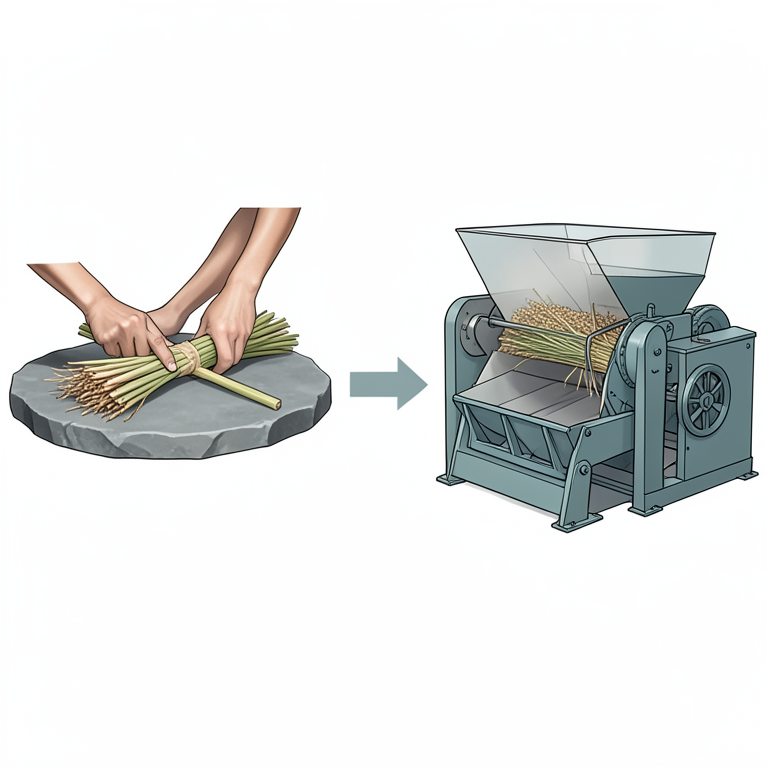
Efficiency Comparison
AI-generated conceptual illustration (sorghum plants and a mechanical sorghum thresher). It explains the idea and does not show study data.
View source evidence ↗Figures & tables
From the original paper Table 1
 Table 4
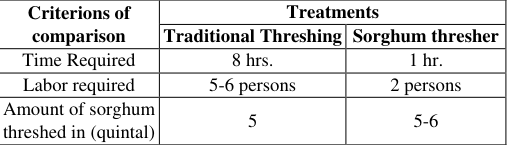 Table 3
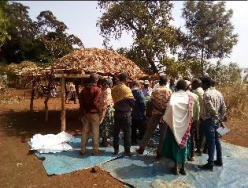 Figure 1
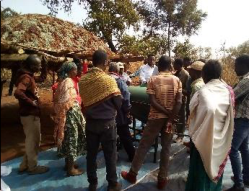 Figure 1
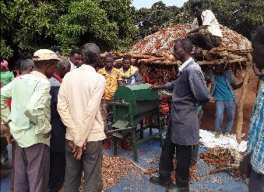 Figure 1
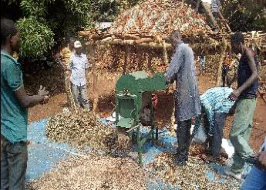 Figure 1
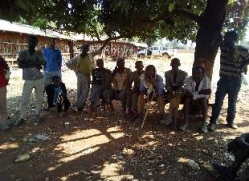 Figure 1
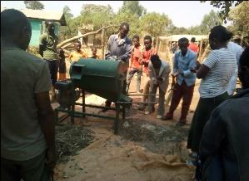 Figure 1
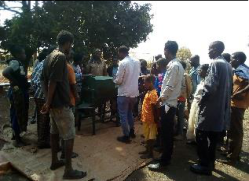 Figure 2
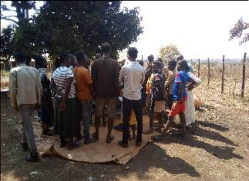 Figure 2
Introduction
Sorghum (Sorghum bicolor) is the third most widely cultivated crop, next to teff (Eragrotis teff) and maize (Zea mays) in Ethiopia as well as in Oromia region. Areas of greater concentration of sorghum production include much of north central, northwestern, western and eastern midaltitude area of Ethiopia (Wortman C.S. et al., 2009) [5] . In Ethiopia, Men do most of the work for sorghum production, Women are also primarily responsible for the field operations and Children account for about 16% of the labor invested in production. Among the major sorghum production activities, threshing is one the most difficult post-harvest activity, mainly due to the nature of the seed firm attachment to scaly, inedible chaff that surrounds it and lack (unavailability) of improved threshing technologies. Although the traditional methods of threshing are tedious time consuming and inefficient in operation, But, in most development countries, including Ethiopia, women are primarily responsible for post-harvest handling which generally is understood to include threshing, winnowing, and storage of the sorghum (D.B. Naveen Kumar, 2013) [3] . Fadis Agricultural Research Center (FARC) has developed an engine driven sorghum thresher in its area, the Hararghe major sorghum producer area. Accordingly, the machine has been evaluated and attained the threshing efficiency and output capacities of 88.97-97.08% and 7-12 qt/h respectively, and proven to reduce labor power, cost of threshing, and grain loss in comparison with traditional methods of threshing in the area (Bedada T., 2018 and Teha et al., 2020) [2,4] . The machine is powered by a 5horsepower petrol engine KAMA and can process. It is easily portable. In addition to the satisfactory performance capacity, the machine has been also reported as of low in its cost and construction and operation is simple and easily repairable. So that, this activity was aimed at demonstration of the FARC engine operated sorghum thresher in Diga and G/Gidda District of East Wollega, Western Oromia with the following objectives.
Objectives
To create awareness and demand on engine operated sorghum thresher To evaluate the performance of the sorghum thresher under farmers' condition To assess feedback on the engine operated sorghum thresher
Materials and Methods
Materials and Methods
Description of the study area
The on-farm demonstration of the machines was conducted in Guto Gida and Diga districts of East Wollega zone. The selected districts were known for sorghum production. Guto Gida is one of the 18 districts in the east Wollega zone covering an area of 1091.
Materials
The engine operated sorghum thresher with KAMA engine with 5 hp. was used for the on farm demonstration,
Sites and Farmers' Selection
Guto Gidda and Diga districts were selected purposively based on AGP-II target area as well as sorghum production potential and one Kebeles from each district was selected purposively based on sorghum production potential. Accordingly, Lalisa Dimtu Kebele of Digga district and Meti kebele of Guto Gidda district of East Wollega zone were selected. Fifteen (15) farmers per kebele were selected purposively. One host farmer was selected based on their willingness and production of sorghum on his farm. The farmers that hosted the demonstrations were selected in collaboration with development agents (DAs).
Technology evaluation and demonstration methods
Demonstrations of new agricultural technologies, especially when done in farmers' fields, are an effective and commonly used technique for showcasing the potential benefits of good farming practices (AGRA, 2016). On farm demonstrations were organized in each Kebele, and farmers came to learn about and evaluate the demonstrated engine operated sorghum thresher and farmers were able to compare with their traditional practices. Method and result demonstrations were used. Method demonstration was used to show the farmers how the technology thresh sorghum.
The result demonstration was used to show the capacity of the machine and the threshed sorghum.
Trainings of farmers and other stakeholders
Training was organized for farmers, DAs, SMS to upgrade their skills on importance, operation, management, and handling of Sorghum Thresher
Method of data collection
Both secondary and primary data were used. Primary data was collected through observation and focus group discussions. Data was collected through observation during demonstration and FGD after demonstration. The capacity, time and labor required for the machines was collected during demonstration while for traditional processing the labor and time required and the capacity was agreed during FGD among the participant.
Method of data analysis
The data was analyzed using descriptive statistics, average, for time and labor required for threshing sorghum and through clustering the qualitative data. The result was interpreted and discussed in comparison with other findings. Recordings of focus group discussions were transcribed and translated. The results were organized using Microsoft Excel to combine and compare the results from the two focus group discussions.
Results and Discussions 3.1 Awareness created and capacity building on engine operated sorghum thresher
In order to help raise awareness and understanding among farmers, DAs and experts, demonstrations were conducted and training was given for 30 farmers, 3 subject matter specialists (SMS) working on mechanization at woredas and 6 DAs at Lalisa Dimtu kebele of Digga and Meti kebele of Guto Gidda woredas of East Wollega zone in 2021 (Table 1). These training sessions are complemented by demonstrations, to ensure comprehensive knowledge transfer. Demonstration used to showcase the appropriate use of the machines, to improve the flow of information between farmers and researchers about technology performance and appropriateness under farmers' conditions (Snapp, 1999). On farm demonstration were organized in each kebele so that farmers could learn about and evaluate the sorghum thresher, to show how the demonstrated thresher can be operated and to get feedback on performances of the machine. In the demonstration, comparisons were made between: the sorghum thresher and traditional threshing. More than 100 farmers and experts made aware on the availability and importance of the sorghum thresher which was new to the demonstration site and the potential benefits of sorghum thresher across the two kebele where demonstrations were carried out. www.extensionjournal.com
| Title of training | Location | Participants | — | — | — | — | — | — | — | — |
|---|---|---|---|---|---|---|---|---|---|---|
| Farmers | DAs | SMS | ||||||||
| M | F | Total | M | F | Total | M | F | Total | ||
| Usage, handling and advantage of Sorghum thresher | Digga & Guto Gidda | 24 | 6 | 30 | 5 | 1 | 6 | 3 | - | 3 |
Table text extracted from the original PDF; superscript letters are shown inline. The original table image is below.
View original table image
Capacity of sorghum thresher during on farm demonstration
Traditional sorghum threshing is a laborious, manual and slow exercise which is mainly done by beating the harvested heads with sticks on bare ground. In addition to the torturous exercise which exposes the people threshing to grain dust with skin and respiratory repercussions, it results in losses due to spillage, incomplete removal of grains from the heads, grain damage and contamination with soil, stones and other impurities. Table 2 shows comparison of the demonstrated sorghum Thresher and traditional farmers practice with regard to average time spent and labor required in sorghum threshing.
As estimated by the respondents, the average time required to thresh and winnow one quintal of sorghum traditionally is one-man day. Threshing about five quintals of sorghum requires 8 hrs., 5-7 oxen-days and 5-6 man-days are required if it is done traditionally. However, the demonstrated thresher has the capacity to thresh 5-6 Qt per hour depending on the feeding rate and dryness of the heads with no grain breakage at 560-570 rpm. This is in line with the findings of (Bedada T., 2018 and Teha et al., 2020) [2,4] .
Farmers could save considerable time and labor using the demonstrated sorghum thresher as compared to traditional sorghum threshing.
Farmers' opinion and feedback on sorghum thresher
The feedback was collected using focus group discussions (FGDs) in the demonstration site. One FGD was conducted in each kebele to learn about farmers' interests, perspectives, opinions and knowledge about sorghum thresher (Table 3). Knowing the perspectives, attitudes and desires is essential to know support services, and dissemination approaches. The farmers found the demonstrated engine-driven sorghum thresher outperforms traditional practices such as animal trampling and stick beating in terms of reducing unthreshed head, reducing workload, saving time spent and reduce labor required for sorghum threshing, as well as reducing postharvest losses. The thresher that has been demonstrated is portable and can be transported by one person, making it perfect for smallholder farmers because it can be easily moved from one farmer field to another once the harvested heads are ready for threshing. Machine threshing of sorghum, on the other hand, attracted the interest of the youth and men who attended the demonstration which can be a business in the area to provide services with the machine for farmers in the kebeles.
| Criterions of comparison | Treatments | — |
|---|---|---|
| Traditional Threshing | Sorghum thresher | |
| Time Required | 8 hrs. | 1 hr. |
| Labor required | 5-6 persons | 2 persons |
| Amount of sorghum threshed in (quintal) | 5 | 5-6 |
Table text extracted from the original PDF; superscript letters are shown inline. The original table image is below.
View original table image
Box 1: Farmers opinion on demonstrated sorghum thresher Excerpts from one of FGD member at Meti kebele of Guto Gida 'Hojiin isaa warqeedha. Kun dhibbaaf dhibba ce'eera'. In a farmer's word meaning "Its operation is gold. This is passed 100 percent"
This indicates that farmers preferred the demonstrated sorghum thresher comparing with their practices and recommending for further promotion. Apart from its good features, the thresher does not combine threshing and winnowing which is technically an area for future improvement. The chaff with sorghum grain needs further sieving and winnowing to get clean sorghum grain which is done with locally produced winnowing baskets. Two people (usually women) can be employed to do this. The FGD participants suggested that they gave their feedback to modify certain parts of the sorghum thresher; www.extensionjournal.com the modification suggested by them included widening of the feeding table and feeding inlet, and adding cleaning unit.
Conclusions and Recommendations
The demonstrated sorghum thresher is better in terms of capacity, time and labor required as compared to farmer's practice. However, the thresher is not affordable at individual farmers. Therefore, farmers group, cooperatives and investors working in the district could buy the machine and provide threshing services for farmers. The adoption and use of the demonstrated sorghum thresher will also contribute to employment creation and in entrepreneurship opportunities especially for youth to provide threshing, repair and maintenance services to farmers at a fee. Therefore, it is suggested that governments and NGOs working on youth employment in agriculture and rural development can create job opportunity using the demonstrated sorghum thresher. For researchers working on the improvement of the machine, it is suggested to add cleaning unit to the thresher. Based on the findings above the sorghum thresher is recommended for further pre scaling up.
Figures and tables from the paper
| Site | Districts | Kebele | # Participants | — | — | Date |
|---|---|---|---|---|---|---|
| Female | Male | Total | ||||
| East Wollega | Guto Gida | Meti | 3 | 12 | 15 | Jan 14, 2021 |
| Digga | Lalisa Dimtu | 3 | 12 | 15 | Jan 15, 2021 |
Table text extracted from the original PDF; superscript letters are shown inline. The original table image is below.
View original table image
References
3 in the original paper- Bedada T. Improvement of IITA Multi-crop Thresher for Sorghum Threshing. 2018;2:1. Retrieved from: http://ijopaar.com/files/IssueContent/D-B1820912018.pdf
- Kumar DN, Prasanna K, Kumar HA, Sandeep TN, Sudhadevi G. Efficiency of mechanical thresher over traditional method of threshing finger millet. International Journal of Agricultural Engineering. 2013;6(1):184-188.
- Tirfi AG. Sorghum yield response to climate and other input factors in Ethiopia. Int. J Agric. Food Sci. 2022;4(2):88-100. DOI: 10.33545/2664844X.2022.v4.i2b.100