
Research article · 2022 · Full text
International Journal of Research in AgronomyPerceived determinants of maize production output among small-scale maize producers in Anambra State, Nigeria
Volume 5(2) · Pages 102–108 · DOI: 10.33545/2618060x.2022.v5.i2b.118 ↗
Research areasCrop Yield and Soil Fertility
Abstract
Author-writtenThe study assessed determinants of maize production output among small-scale maize producers in Anambra State, Nigeria. Primary data were collected using a questionnaire, administered to 180 respondents, who were selected using purposive and simple random sampling techniques. Data collected were analyzed using descriptive (frequency counts, percentages, and mean scores) and inferential (gross margin and multiple regression) statistics. The study reveals that the majority (67.2%) of the maize producers were male, with another majority (84.4%) having a household size range of 1 to 5, while 89.5% were between the ages of 31 and 50 years. Most (63%) were married, 54.4% attended secondary school and 77.8% made use of both hired and family labour. More than half (53.9%) of the maize producers rented land for production, while 79% either bought seed from the market or used previously harvested seeds. A greater proportion (65.0%) of the maize producers had an annual income of N81, 000 to N120, 000, while the majority (88%) had a farming experience of fewer than 10 years. The result on net farm income indicated an increase in profit for the maize producers that cultivated one-hectare using hybrid maize and recommended fertilizer rate. Although they incurred production costs of N140, 517, they made a profit of N125, 083 with a return on investment of N1.89. The explanatory variables such as planting hybrid maize, amount of fertilizer used, amount of pesticides used and the number of hectares planted were the major determinants of profitability (p
Summary
Source-checkedPlain-language reading of the full paper, prepared with AI and checked against the text. Each point links to the authors' own words.
Why it matters
- Maize is a critical cereal crop in sub-Saharan Africa (SSA), serving as the grain with the highest annual production and supporting the food and livelihood needs of approximately 300 million people. View evidence ↗
- Despite being Africa's second largest producer, Nigeria's domestic maize production cannot meet local demand, leading to the import of approximately 200,000 tonnes during the 2020/2021 marketing year. View evidence ↗
- Low maize productivity in Nigeria is linked to the use of poor-quality seed varieties and insufficient government support for the small-scale farmers who comprise most of the producers. View evidence ↗
The question
- The study aimed to identify the specific factors that influence maize production output among small-scale producers in Anambra State, Nigeria. View evidence ↗
What they did
- The researchers collected primary qualitative and quantitative data via a validated questionnaire from 180 purposively selected maize producers. View evidence ↗
- Data analysis involved descriptive statistics (frequencies, percentages, means), a budgetary technique for income estimation, and ordinary least square multiple regression to determine output factors. View evidence ↗
What they found
- The typical producer in the study was a married male (67.2%) aged 31-50 (89.5%) with a household size of 1-5 (84.4%), secondary education (54.4%), and a reliance on both family and hired labor (77.8%). View evidence ↗
- The most significant determinants of profitability (p<0.01) were the use of hybrid maize, the amount of fertilizer used, the amount of pesticides used, and the total number of hectares planted. View evidence ↗
- Other factors positively related to profit included seed rate, labor amount, herbicide amount, household size (p<0.05), early planting, and animal manure use (p<0.10). View evidence ↗
- Labor costs were a major expense, accounting for more than 50% of the total production costs for both groups of farmers studied. View evidence ↗
What it means
- The authors conclude that to maximize profit and ROI, government subsidies must expand beyond basic inputs to include hybrid maize and improved access to efficient extension agents. View evidence ↗
- The authors recommend that crop scientists develop hybrid maize requiring less fertilizer and that new practices be found to reduce the high cost of labor. View evidence ↗
Figures & tables
From the original paper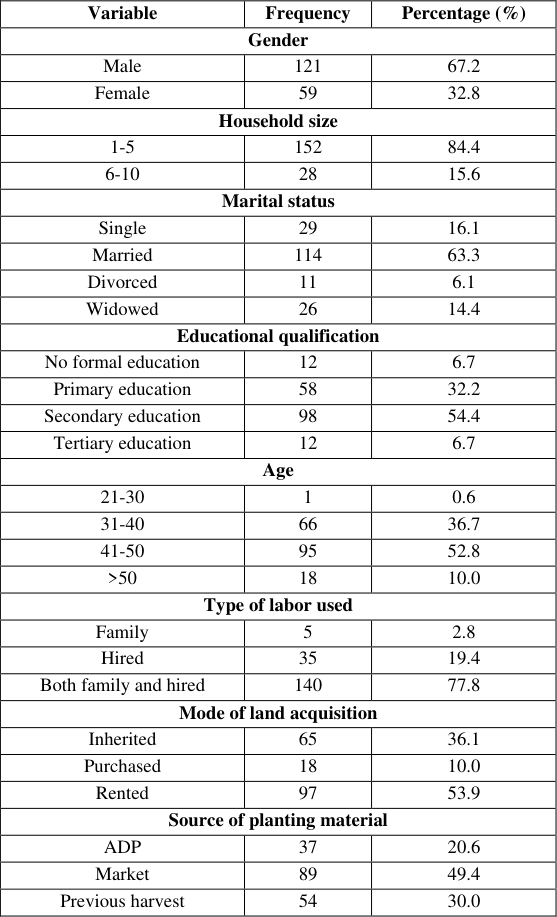 Table 1
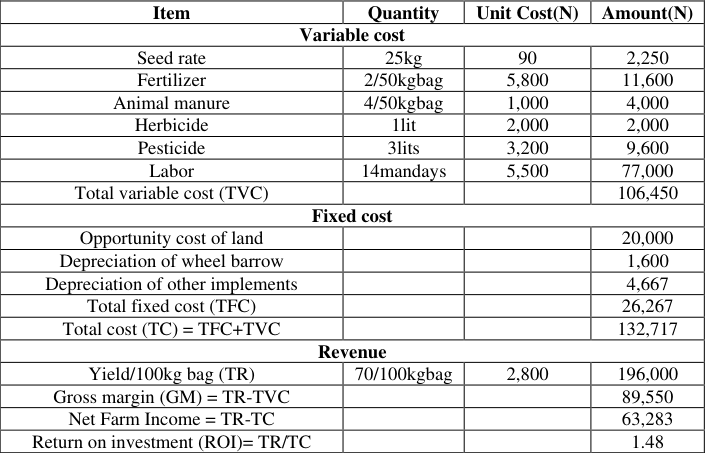 Table 2
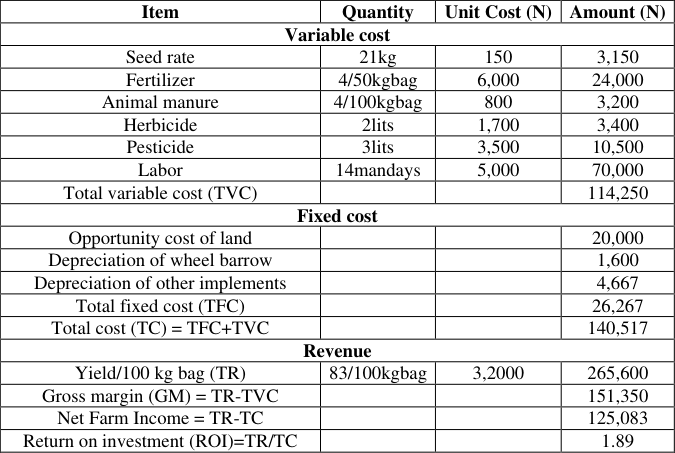 Table 3
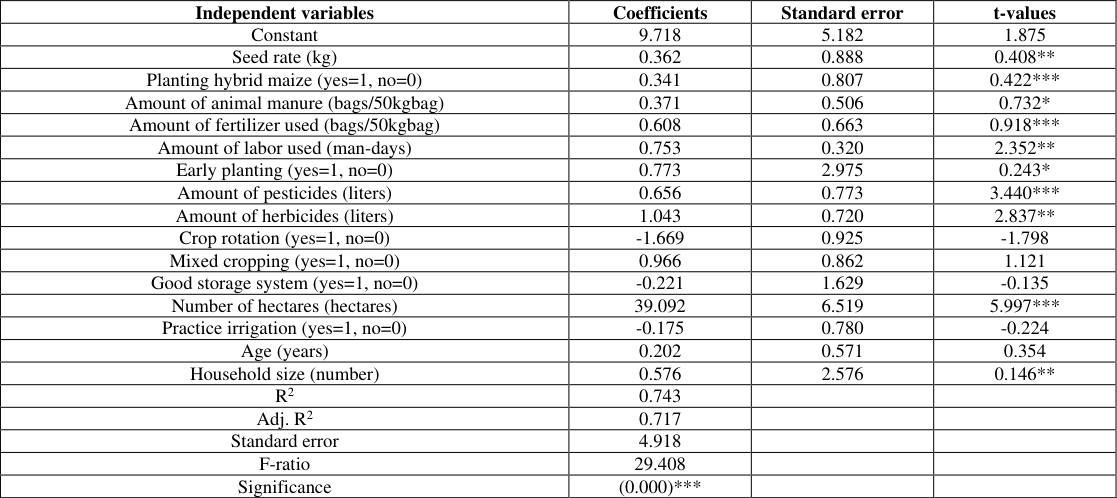 Table 4
Introduction
Food insecurity challenges remain a critical issue in our world today particularly, in the developing countries of Africa and Asia where a huge part of the population is considered poor and rural dwellers. According to the joint report of the FAO, IFAD, UNICEF, WFP and WHO (FAO et al., 2021) [7] , between 2014 to 2019, the prevalence of undernourishment (POU) in Africa grew from 17.6% to 19.1%, which was the highest in all regions and was more than double the global average (FAO et al., 2021) [7] . With the recent increasing trend in population growth, the reverberating multi-faceted impacts of climate change, COVID-19 pandemic, and increasing conflicts in many parts of the sub-Saharan African (SSA) regions are expected to cause an even greater increase in the population of the vulnerable and food insecure persons (Grote et al., 2021) [11] . Additionally, the capacity of many SSA countries for continued food imports (which they are hugely dependent on) has been compromised by the recent global economic hardships and turmoil, thus worsening situations (FSIN, 2020a, 2020b; OECD, 2020) [9-10, 16] .
Therefore, as recommended (IPCC, 2019; Willett et al., 2019) [24, 18] , there is an urgent need for the efficient management and utilization of locally available resources like land, water and nutrients for ensuring sustainable food production and long-term improvement of the food insecurity situations. Maize is a major cereal crop in SSA and is the grain with the highest annual production output (Abdulaleem et al., 2019) [1] . Maize has become an important global food crop and means of livelihood to millions of people around the world due to its wide domestic and industrial uses. In the SSA regions, an estimated 300 million persons are dependent on maize for food or livelihood (Macauley and Ramadjita, 2015) [13] . Its high yielding capacity and ability to grow in different agro-ecological regions make it a choice staple crop for farmers especially, in areas with limited land availability and high population density (Grote et al., 2021) [11] . Globally, livestock feeding takes up about 61% of the world maize production, with only 13% used for human consumption (Grote et al., 2021) [11] . In Nigeria, an estimated 45% of the maize produced are utilized for animal feed production, of which about 98% are used by poultry farmers (PWC, 2021) [17] . The bakery and brewery industries gulps up about 13% and 6.5% of total maize production, respectively, with only about 10-15% utilized for household consumptions (PWC, 2021) [17] . Regardless of the recognized nutritional, industrial and economic benefits, and utilizations of maize in Nigeria, and being the second largest maize producer in Africa, the domestic production is yet to satisfy local demands, hence, making the country a net importer of this crop. In 2020/2021 marketing year, Nigeria reportedly, imported an estimated 200,000 tonnes to support its domestic needs (FAO AMIS, 2022) [7] . The relatively low productivity of maize in Nigeria is attributable to several factors including the cultivation of poor-quality varieties and poor government support of small-scale farmers who make up the bulk of the farmers. For instance, while the average yield of maize in Nigeria is around 2.55 tonnes per hectare (t/ha), those of South Africa and Ethiopia representing the 1 st and 3 rd largest producers in the continent are pegged at an average of 4.9 t/ha and 4.2 t/ha, respectively (PWC, 2021; FAO AMIS, 2022) [17,7] . In addition, maize production in Nigeria is heavily concentrated in the northern region of the country. Recent reports noted that the North-East, North-West, and North-Central ecological zones all together contributed a total of 73.57% (24.76%, 22.97%, and 25.84%, respectively) of the country's total production, with the remaining regions of South-West, South-East, and South-South having about 15.09%, 5.46%, and 5.88%, respectively (NAERLS & FMARD, 2020). The ripple effect of this disproportion can be felt in the higher cost of maize for human food, its derived products, and livestock feeding, with a consequent discouragement of animal production particularly, in the South which heavily depends on the North for most of its supplies. Also, the beneficial impact of this on the total agricultural productivity and gross GDP of the country cannot be over emphasized. Despite numerous efforts by breeders and agronomists in developing technologies (including new varieties that are tolerant to drought conditions, diseases, low nitrogen, and Striga infestations) for improving productivity in the country, production is still low. According to FAO's projections (FAO, 2017) [6] , staple cereals like maize will remain a key element in ensuring food security and making up about 50% of the daily energy and protein requirements in low-and middle-income countries, at least until 2050. Consequently, conducting a holistic analysis of the key determinants of maize production in the Nigerian states with relatively low productivity is critical in both short and long term policy formulations, in view of boosting food production and economic development of these regions and the country in general (Amaza et al., 2021) [3] . Hence the present study was designed to determine the factors influencing maize production in Anambra State. The conclusion from this study is expected to provide important information to major stakeholders, for effectively developing and implementing appropriate strategies for addressing the challenges of maize production in Southeast Nigeria, as well as boosting the country's gross production and export capacity for maize. Furthermore, it may suggest ideas and directions for similar policy driven studies and efforts which can be adapted for any agricultural intervention programme in the SSA. The present study was thus, designed to: 1. Describe the socio-economic characteristics of the maize producers. 2. Estimated the profitability of maize production using seed purchased from the market, improved seed and recommended fertilizer. 3. Determined factors affecting maize production output in the study area.
Materials and Method
Three Agricultural Zones (AZs) (Awka, Aguata and Onitsha) out of the four Agricultural Zones in existence were selected for the study. Purposive sampling was employed in selecting 180 maize producers that were used for the study. Stage two involved the selection of two local government areas, each from the three AZs, making it a total of six LGAs. The third stage involved a random selection of three maize producing communities, from each of the six LGAs selected, making a total of 18 maize producing communities. Finally, the fourth stage involved random selection of 10 maize producers, from the 18 maize producing communities to make a total of 180 respondents used in the study. Data for the study were obtained from a primary source. Both qualitative and quantitative types of data were collected using a well-structured and validated questionnaire. Descriptive and inferential statistics were used to analyze the data generated. Descriptive statistics such as frequency tables and distribution, percentages and means were used to achieve Objectives i. Budgetary technique, and ordinary least square (multiple regression) were employed to achieve objectives ii and iii respectively. Budgetary technique was employed to estimate the farm income (revenue) and expenses (cost) as well as the return on investment (RoI) associated with maize production. The budgetary technique is given by: The model used to determine the factors affecting maize production output is stated explicitly as follows: 1n Y = β0 + β 1 X 1 + β 2 X 2 + β 3 X 3 + β 4 X 4 + β 5 X 5 + β 6 X 6 + β 7 X 7 + β 8 X 8 + β 9 X 9 + β 10 X 10 + β 11 X 11 + β 12 X 12 + β 13 X 13 + β 14 X 14 + β 15 X 15 + β 16 X 16 +U i
Where; Y = output of maize (in kg) X 1 = Seed rate (Kg/ha) X 2 = Planting hybrid maize (yes = 1, otherwise = 0) X 3 = Amount of animal manure (Kg/ha) X 4 = Amount of fertilizer (Kg/ha) X 5 = Irrigation when rain is inadequate (yes = 1, otherwise = 0) X 6 = Early planting (yes =1, otherwise = 0) X 7 = Number of Labor (persons/ ha) X 8 = Amount of insecticides (Lit./ha) X 9 = Amount of herbicides (Lit./ha) X 10 = Crop rotation (yes = 1, otherwise =0) X 11 = mixed cropping (yes =1, otherwise =0) X 12 = Land (ha) X 13 = Good storage system (yes = 1, otherwise =0) X 14 = Age (years) X 15 = Farming experience (years) X 16 = Household size (number) β0 = constant factor and βi= estimates of the coefficients with (i= 1, 2…13). μ=an error term measuring variation in maize output unaccounted for by independent variable. 1n = logarithm to base "e" subscripts
Results and Discussion
Results and Discussion
Socio-economic characteristics of the maize producers
Table 1 shows the socio-economic profile of the respondents.
| Variable | Frequency | Percentage (%) |
|---|---|---|
| Gender | ||
| Male | 121 | 67.2 |
| Female | 59 | 32.8 |
| Household size | ||
| 1-5 | 152 | 84.4 |
| 6-10 | 28 | 15.6 |
| Marital status | ||
| Single | 29 | 16.1 |
| Married | 114 | 63.3 |
| Divorced | 11 | 6.1 |
| Widowed | 26 | 14.4 |
| Educational qualification | ||
| No formal education | 12 | 6.7 |
| Primary education | 58 | 32.2 |
| Secondary education | 98 | 54.4 |
| Tertiary education | 12 | 6.7 |
| Age | ||
| 21-30 | 1 | 0.6 |
| 31-40 | 66 | 36.7 |
| 41-50 | 95 | 52.8 |
| >50 | 18 | 10.0 |
| Type of labor used | ||
| Family | 5 | 2.8 |
| Hired | 35 | 19.4 |
| Both family and hired | 140 | 77.8 |
| Mode of land acquisition | ||
| Inherited | 65 | 36.1 |
| Purchased | 18 | 10.0 |
| Rented | 97 | 53.9 |
| Source of planting material | ||
| ADP | 37 | 20.6 |
| Market | 89 | 49.4 |
| Previous harvest | 54 | 30.0 |
Table text extracted from the original PDF; superscript letters are shown inline. The original table image is below.
View original table image
From the result, it was observed that 121 of the respondents were male and the remaining 59 female. This shows that majority (67.2%) were male, and this could be attributed to the fact that men have more access to land. The result is in line with the observation made by Okeke (2014) [20] who established that majority of the household heads that engaged in maize production in Anambra State were male. More so, the result indicated that majority (84.4%) of the maize producers had household size of between 1 and 5, while 15.6%, accounting for 28 maize producers, had household size of 6 to 10 people. The implication is that the maize producers in the study area may not have adequate supply of family labour. Thus, forcing them to depend majorly on hired labour for production. This aligns with the observation made by Mohammed, Ayanlere, Ibrahim and Muhammad (2013) [19] in Kogi State, Nigeria, who established in their study that the family size of maize producers in Kogi State ranged from 2 to 5. This implies that small family size could have a negative effect on labor cost and profitability of maize production. Consequently, resulting in increased production cost as extra money would be required to pay for hired labor.
The majority (63.3%, accounting for 114) of the household heads were married with 29 (16.1%) single, 26 (14.4%) widowed, and 11(6.1%) were divorced. This indicates that married people dominated maize production in the study area.
The result also shows that regardless of one's marital status, maize production can be practiced by just anybody. A greater percentage (54.4%) of the maize producers attended secondary school, 32.2% attended primary school while 6.7% had tertiary education and the remaining 6.7% had no formal education. This finding implies that majority of the producers can read and write and as such, can adopted and utilize innovations with little efforts made by the extension agents who introduced the innovations. Thus, this will in turn have a positive impact on the adoption of new technologies that would ensure sustainability of maize production. The finding conforms to the observation made by Oladejo and Adetunji (2012) [21] , who indicated that more than half of his respondents in maize production in Oyo State, Nigeria were literates. The result showed that 52.8% of the maize producers fell between the ages of 41-50 years, followed by 36.7% being between 31-40 years of age while 10.0% were greater than 50 years of age. Only one of them was less than 30years. This implies that maize production in the area is dominated by young individuals who can be classified as economic group while the minority fell within the age group regarded as dependent group (children and aged). The result corroborates Okeke (2014) [20] , who is of the opinion that 90% of the respondents in Anambra State fell between the ages of 30 and 50 years.
The result of the analysis revealed that only 2.8% of the sampled respondents, depended solely on family labour and 19.4% on hired labor, while majority (77.8%) used both family and hired labor. This could be attributed to low household size of the maize producers or due to the absence of their children who migrated to urban areas for education or in search of better livelihood options. The study further revealed that a greater proportion (53.9%) of the maize producers cultivated on rented land, 36.1% inherited theirs while the remaining 10.0% purchased theirs. The domination of maize producers who rented land for maize cultivation could be attributed to low or unavailability of land for cultivation. In addition, there were incidents of erosion in the study area, which has made fertile agricultural land too expensive to purchase, thereby leaving the poor farmers with the option of renting land from their neighbours who live very close to them. The result shows that 49.4% and 30.0% of the respondents depended on the market and previous harvest, respectively for their planting materials, while 20.6% go to ADP to seek theirs. This could be the cause of low income and yield as it has been observed that hybrid maize produce up to three times more than local breed. Report from ADP informed that hybrid maize should not be stored by farmers after harvesting for next farming season as it reduces the quality and quantity of yield. In addition, the stored yield are more susceptible to pest and disease because of contamination from soil and storage medium.
Profitability of maize production in Anambra state
Even at the subsistence level of production, maize farming may not only be for home consumption, rather the farmers aim to sell part of the produce in order to purchase other items needed by the household. In order to achieve that purpose, profit maximization is a prerequisite for engaging in maize production. In this study, efforts were made to determine the costs associated with maize production and the revenue that accrued to the maize farmers. The study looked at two different groups of farmers namely: per hectare net revenue of maize farmers that depended on the previous harvest and market for source of planting materials and per hectare net revenue of maize farmers that made use of improved seed and recommended fertilizer sourced from the ADP. Both tables (2 and 3) reveals the profitability of maize production using farm budgetary techniques to get the net farm income (NFI) as well as the return on investment (ROI).
Table 2 shows the profit made by maize producers who cultivated one hectare using seeds from previous harvest or bought from the market. From the gross margin analysis it could be seen that they made a profit of N63, 283 after investing N132, 717. This set of respondents could be said to be making profit, but the return on investment (ROI) was only N1.48, implying that for every one naira invested, there was a return of 48 kobo. When we compare this result with the one in Table 3, which shows the average profit made by those that cultivated hybrid maize sourced from the ADP and using the recommended fertilizer rate, though they invested more (N140,517) and they made a profit of N125,083. Looking at the ROI (N1.89), which implies that for every N1 invested, there is a corresponding net ROI of 89 kobo. Hence, one is right to assume that every other thing been equal, cultivation of hybrid maize with the recommended fertilizer rate is a "sine qua non" for increased profit in the study area. This is in concurrence with the observation made by Oladejo, et al. (2012) [21] , that when farmers make use of scientifically improved seeds, experienced hired labor, as well as scientifically recommended quality and quantity of fertilizer in the process of production activities, they obtain better yields compared to others. They concluded that they expend more on production cost but the better yield obtained resulted to increased revenue and consequently, higher returns compared with the other group. Therefore, it is suggested that if farmers could have access to these inputs at subsidized prices, it will enhance the profitability of maize production in the area. The result of the analysis further suggests that there is a high prospect for maize production in the study area. One striking observation about the profitability of maize production in the area was the significance of labor cost in maize production. For the two groups of farmers, labor cost accounted for more than 50% of the total production cost, thus any practice that would bring about reduction in the cost of labor will be a welcome development, as it will increase the profitability of maize production in the study area. But viewed from social sustainability point, it could be said that maize production provides local employment for the vulnerable groups (women and children), there by meeting one of the sustainability criteria.
| Item | Quantity | Unit Cost (N) | Amount (N) |
|---|---|---|---|
| Variable cost | |||
| Seed rate | 21kg | 150 | 3,150 |
| Fertilizer | 4/50kgbag | 6,000 | 24,000 |
| Animal manure | 4/100kgbag | 800 | 3,200 |
| Herbicide | 2lits | 1,700 | 3,400 |
| Pesticide | 3lits | 3,500 | 10,500 |
| Labor | 14mandays | 5,000 | 70,000 |
| Total variable cost (TVC) | 114,250 | ||
| Fixed cost | |||
| Opportunity cost of land | 20,000 | ||
| Depreciation of wheel barrow | 1,600 | ||
| Depreciation of other implements | 4,667 | ||
| Total fixed cost (TFC) | 26,267 | ||
| Total cost (TC) = TFC+TVC | 140,517 | ||
| Revenue | |||
| Yield/100 kg bag (TR) | 83/100kgbag | 3,2000 | 265,600 |
| Gross margin (GM) = TR-TVC | 151,350 | ||
| Net Farm Income = TR-TC | 125,083 | ||
| Return on investment (ROI)=TR/TC | 1.89 |
Table text extracted from the original PDF; superscript letters are shown inline. The original table image is below.
View original table image
| Item | Quantity | Unit Cost(N) | Amount(N) |
|---|---|---|---|
| Variable cost | |||
| Seed rate | 25kg | 90 | 2,250 |
| Fertilizer | 2/50kgbag | 5,800 | 11,600 |
| Animal manure | 4/50kgbag | 1,000 | 4,000 |
| Herbicide | 1lit | 2,000 | 2,000 |
| Pesticide | 3lits | 3,200 | 9,600 |
| Labor | 14mandays | 5,500 | 77,000 |
| Total variable cost (TVC) | 106,450 | ||
| Fixed cost | |||
| Opportunity cost of land | 20,000 | ||
| Depreciation of wheel barrow | 1,600 | ||
| Depreciation of other implements | 4,667 | ||
| Total fixed cost (TFC) | 26,267 | ||
| Total cost (TC) = TFC+TVC | 132,717 | ||
| Revenue | |||
| Yield/100kg bag (TR) | 70/100kgbag | 2,800 | 196,000 |
| Gross margin (GM) = TR-TVC | 89,550 | ||
| Net Farm Income = TR-TC | 63,283 | ||
| Return on investment (ROI)= TR/TC | 1.48 |
Table text extracted from the original PDF; superscript letters are shown inline. The original table image is below.
View original table image
Determinants of output in maize production in the study area
The research has shown that maize production in the study area is profitable, multiple regression analysis shows the factors and to what extent they affected or influenced the output of this venture. Maize profit (N) was regressed against seed rate, planting hybrid maize, amount of animal manure, fertilizer, labor, pesticides and herbicides used, early planting, crop rotation, mixed cropping, good storage system, number of hectares and irrigation practice. The result of the analysis in Table 4 presents the Ordinary Least Square result of the factors affecting profitability of maize in the area. The R 2 was 0.74, which suggests that 74% of the variation in profitability of maize production was explained by the independent variables in the model. All other variables were positive, except for seed rate, amount of animal manure used, crop rotation and good storage system. The result of the analysis indicated that the coefficient of seed rate was positive and significant at 5% level. This is in line with the "apriori" expectation, and conforms to the study of Abu, Raoul, and Okpachu (2011) [2] who reported that seed rate is a significant determinant of output in most cases. The coefficient of planting hybrid maize was positive and significant at 1% level, this met the "apriori" expectation that increase in the use of hybrid maize will lead to increase in output thereby increasing profit. Ogala (2011) [23] noted that deploying hybrid maize to farmers will have a positive impact on yield. The amount of animal manure used was positive and significant at 10%, indicating that an increase in the amount of animal manure used, will result to an increase in yeild. The result conforms with Asfaw (2022) [4] who reported that poultry manure unlike chemicals and other organic fertilizers, added organic matter to the soil which improved soil composition, nutrient retention, aeration, soil moisture-holding capacity, and water infiltration. Also, Ferreira, Ceretta, Lourenzi, De-Conti, Marchezan, Girotto, et al., (2022) [5] opined that animal manure significantly increases soil moisture, as well as soil compaction, which results to increase in soil moisture and water retention capacity. On the other hand, the amount of fertilizer used was positive and statistically significant at 1% level, which agrees with the "apriori" expectation. The result of the analysis indicates that a little increase in fertilizer will have a corresponding increase of 0.608 in the yield of maize which is more profit and return on investment. This conforms to Mohammed et al. (2013) [19] that fertilizer is positive and statistically significant approach in maize output. The estimated coefficient of the amount of labor used, was positive and statistically significant at 5% level which is in line with Yu, Lu, Xu, Muhhamad and Muhhamad (2018) [22] that yeild increases by increasing human labor, meaning that increase in labor will amount to increased profit. This further suggests that increased labor use may be needed for timeliness in execution of work, which could translate to increased productivity. The coefficient of early planting was found positive and statistically significant at 5% level indicating that by planting early (onset of rainy season), farmers will take advantage of rain to reduce the rate at which they apply irrigation system on their crops. This is to say that planting date plays important role in the growth, development and yield of maize. Hence, optimum planting date becomes important for higher crop production (Shrestha, Kandel and Chaudhary, 2018). Also, the amount of pesticides and herbicides were positive and statistically significant at 1% and 5% levels, respectively. The positive effects implies that adequate application of required chemicals will hinder pest and weed growth thereby reducing competition for nutrients by weeds, and destroying the insect pests. The estimated coefficient of crop rotation was negative and insignificant, while mixed cropping was positive but not statistically significant. The farmers are aware that planting cover crops alongside maize will help to protect the soil from direct heat of the sun, there by retaining the moisture content of the soil. The result does not conform with the expectations, as according to Horner, Browett, and Antwis (2019) [14] , mixed cropping can bring about an increase in yield and improve the nutrient by replenishing lost nutrient. The coefficient of good storage system was negative and statistically not significant. This is not in line with the "apriori" expectation. The negative sign could be because the maize farmers do not have enough to sell to the consumers, thereby not reserving any room or store for storage. In other words, the increasing demand for maize do not allow for its storage. On the other hand, the number of hectares cultivated was positive and statistically significant at 1% level. This met with "apriori" expectation, indicating that increase in the area of land cultivated, will leave a positive impact on the farmers' profit. This is in agreement with Mohammed et al. (2013) [19] that farm size has a positive relationship with output at 1% level of significance, the larger the farm size, the higher the yield obtained. The coefficient of practice irrigation was negative and statistically not significant, the negative sign does not conform with the expectation, it could be because most farmers in the area only cultivate maize during the rainy season and as such depend solely on rain as a source of water supply to crops. The coefficient of age was positive but not significantly related to profit meaning that an increase in age may result in to increase in profit. Finally, the coefficient of household size was positive and significant at 5% level. This is in line with the "apriori" expectation as the members of the household will serve as labor, thus reducing production costs.
| Independent variables | Coefficients | Standard error | t-values |
|---|---|---|---|
| Constant | 9.718 | 5.182 | 1.875 |
| Seed rate (kg) | 0.362 | 0.888 | 0.408** |
| Planting hybrid maize (yes=1, no=0) | 0.341 | 0.807 | 0.422*** |
| Amount of animal manure (bags/50kgbag) | 0.371 | 0.506 | 0.732* |
| Amount of fertilizer used (bags/50kgbag) | 0.608 | 0.663 | 0.918*** |
| Amount of labor used (man-days) | 0.753 | 0.320 | 2.352** |
| Early planting (yes=1, no=0) | 0.773 | 2.975 | 0.243* |
| Amount of pesticides (liters) | 0.656 | 0.773 | 3.440*** |
| Amount of herbicides (liters) | 1.043 | 0.720 | 2.837** |
| Crop rotation (yes=1, no=0) | -1.669 | 0.925 | -1.798 |
| Mixed cropping (yes=1, no=0) | 0.966 | 0.862 | 1.121 |
| Good storage system (yes=1, no=0) | -0.221 | 1.629 | -0.135 |
| Number of hectares (hectares) | 39.092 | 6.519 | 5.997*** |
| Practice irrigation (yes=1, no=0) | -0.175 | 0.780 | -0.224 |
| Age (years) | 0.202 | 0.571 | 0.354 |
| Household size (number) | 0.576 | 2.576 | 0.146** |
| R2 | 0.743 | ||
| Adj. R2 | 0.717 | ||
| Standard error | 4.918 | ||
| F-ratio | 29.408 | ||
| Significance | (0.000)*** |
Table text extracted from the original PDF; superscript letters are shown inline. The original table image is below.
View original table image
Conclusion
A need for a sustainable increase in maize production with the minset to increase farmers' income is achievable when the farmer knows how best to manage and combine available resources within his or her disposal. As shown in the study, economic sustainability of maize production among the maize farmers who cultivate hybrid maize using the recommended fertilizer rate, made significant profit and had more return on investment than others. The increasing trend in terms of the quantity of maize produced and profit made can be traced to the hybrid maize and the use of recommended fertilizer. However, it is pertinent to note that excess fertilizer and other chemicals in the farm will not only affect the yield but also the return on investment, as a result of nutrient imbalance.
References
0 in the original paperCited by 2
From OpenAlex, OpenCitations and reference lists read by Scinovex
- Climate-compatible Agri-food Supply Chain Master Planning using Chebyshev Goal Programming for the Nigerian Agri-food Industry ↗
Dimkpa U. David, Ogheneruona E. Diemuodeke, Harold U. Nwosu · SSRN Electronic Journal · 2026
❝ 0PDF - Climate-compatible Agri-food Supply Chain Master Planning using Chebyshev Goal Programming for the Nigerian Agri-food Industry ↗
Dimkpa U. David, Ogheneruona E. Diemuodeke, Harold U. Nwosu · SSRN Electronic Journal · 2026
❝ 0PDF