
Research article · 2022 · Full text
International Journal of Advanced Chemistry ResearchDetermination of the best combination of organic materials for enhanced 6-gingerol in ginger (Zingiber officinale): An effort towards enhancing the medicinal activity of ginger
Volume 4(2) · Pages 1–10 · DOI: 10.33545/26646781.2022.v4.i2a.47 ↗
Research areasGinger and Zingiberaceae research
Abstract
Author-writtenOrganic manure use to meet crop nutrient requirements is anticipated to become an inevitable practice for sustainable agriculture in the future, as it has been shown to improve soil physical, chemical, and biological qualities. It is also been frequently utilized to dispose of animal waste and reduce pollution. The objective of this study was to evaluate the influence of combination of organic material for enhanced 6-gingerol content of ginger hence field and laboratory experiments were carried out to evaluate this. The treatments used were Cow dung+ Sawdust at 50% each, Cow dung+ Poultry manure at 50% each, Poultry manure+ rice mill waste at 50% each, Rice mill waste + Sawdust at 50% each, absolute control(no amendments), Poultry manure+ Sawdust at 50% each, Cow dung +Rice mill waste at 50%each and Poultrymanure +Rice mill waste + Sawdust+Cowdung at 25%each.Eight treatments were used and replicated three times using randomized complete block design (RCBD). 6-gingerol content of the harvested ginger was quantified in the laboratory using reverse phase high performance liquid chromatography. Data analysis was done using Open source R environment version 4.1.0 statistical software. The result showed that combination of organic amendments enhanced the 6-gingerol concentration of ginger at different rates. The plot amended with cowdung+poultry manure gave the highest value which was significantly different from the absolute control. 6-gingerol content of other combinations of organic materials used in this experiment were also significantly different from the control. The rank order of 6-gingerol content among the treatments were > cowdung + Poultry manure (476.5089 ug/ml) > Cowdung +Ricemillwaste,(467.1398ug/ml)> PoultryManure+Ricemillwaste+Sawdust+Cowdung(455,4349ug/ml)>Poultry manure + Rice mill waste (449.0128 ug/ml) > Cowdung + Sawdust (444.8956 ug/ml) > Poultry manure + Sawdust (434.4819 ug/ml) > Rice mill waste + Sawdust (428.5675 ug/ml) > Absolute Control (270.1886 ug/ml).. The result showed that use of cowdung manure +poultry manure at the rate of 134g and 157g respectively for a 2m bed gave the best result among the organic combinations used in this study.
Summary
Source-checkedPlain-language reading of the full paper, prepared with AI and checked against the text. Each point links to the authors' own words.
Why it matters
- The compound 6-gingerol is primarily responsible for the therapeutic properties of ginger. View evidence ↗
- Ginger is used to help manage various health conditions, such as cardiovascular disease, obesity, neurological diseases, respiratory disorders, and diabetes mellitus. View evidence ↗
- Organic manure is preferred over chemical fertilizers because chemical fertilizers can harm human health and the environment. View evidence ↗
The question
- The study aimed to identify the most effective combination of organic materials to increase the 6-gingerol content in seed ginger. View evidence ↗
What they did
- The field experiments were conducted at the National Root Crops Research Institute's Umudike field. View evidence ↗
What they found
- The combination of cow dung and poultry manure produced the highest 6-gingerol concentration at 476.5089 ug/ml. View evidence ↗
- All organic material combinations significantly increased 6-gingerol concentration compared to the absolute control (p < 0.05). View evidence ↗
- The study found that increasing the overall yield of the ginger crop does not necessarily lead to a proportional increase in 6-gingerol yield. View evidence ↗
- The increase in 6-gingerol from organic amendments is attributed to elements not found in standard fertilizers, including organic carbon, organic matter, and various amino acids. View evidence ↗
What it means
- The authors recommend using a combination of 134g of cow dung and 157g of poultry manure per 2m plot to achieve the highest 6-gingerol concentration. View evidence ↗
Visual summary
3 visualsIllustrations explain the paper; charts are replotted from the paper's own table values.
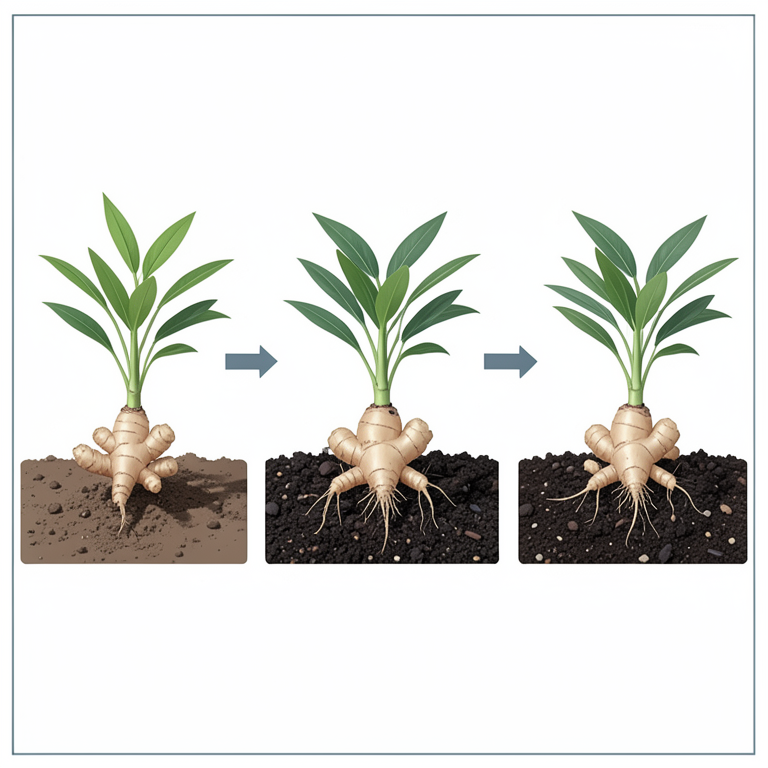
Comparison of 6-gingerol levels
AI-generated conceptual illustration (Ginger plants (Zingiber officinale) and organic manure). It explains the idea and does not show study data.
View source evidence ↗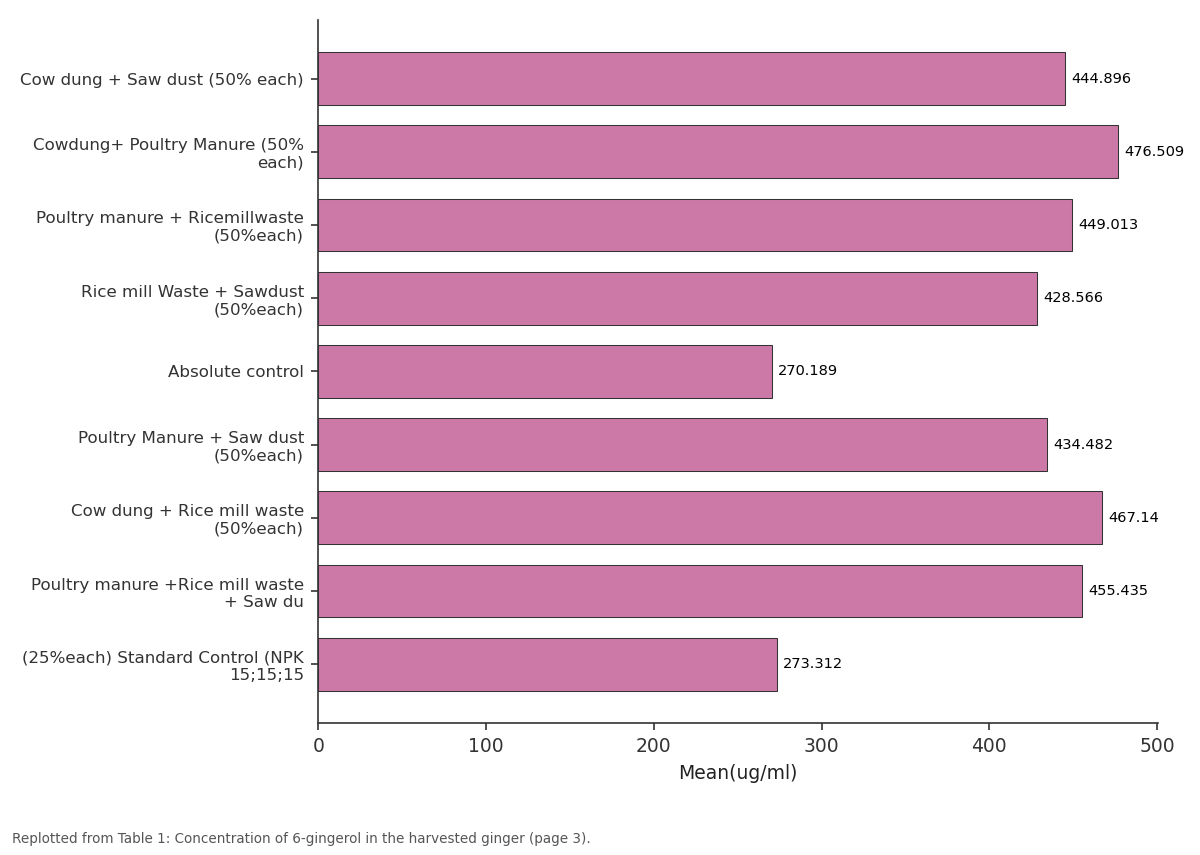
Mean(ug/ml): Cow dung + Saw dust... vs Cowdung+ Poultry Manure... vs Poultry manure +... vs Rice mill Waste +... vs Absolute control
Replotted from Table 1 (page 3) of the original paper. Every bar is the paper's own table value.
View source evidence ↗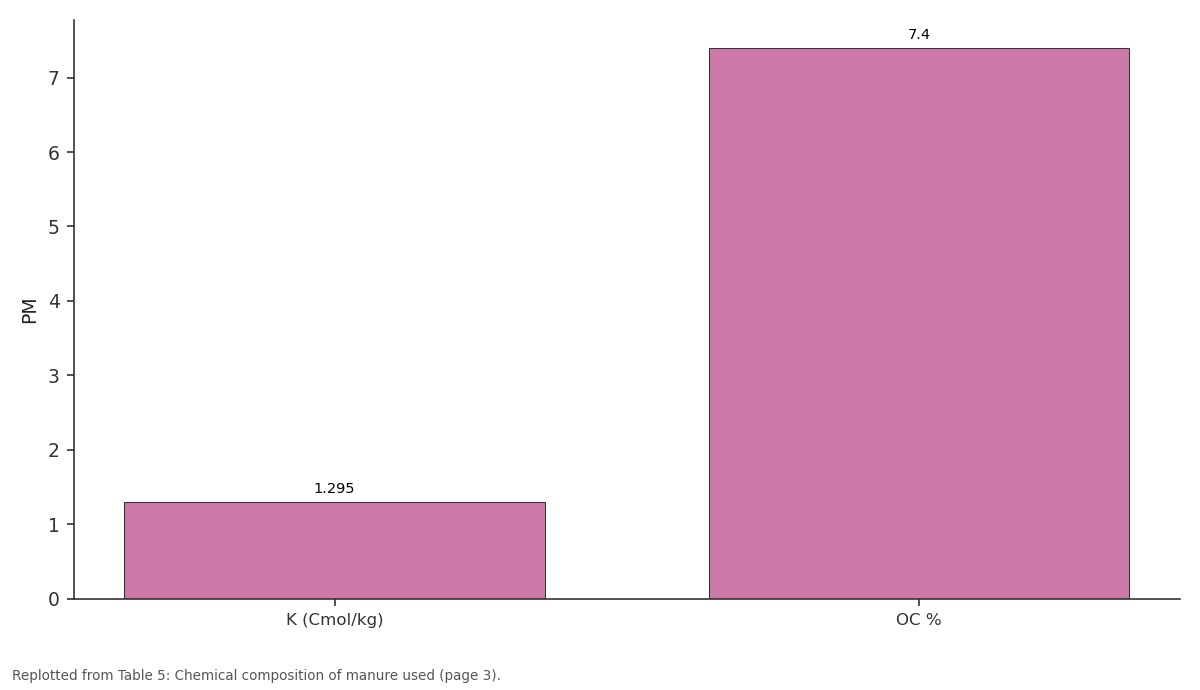
PM: K (Cmol/kg) vs OC %
Replotted from Table 5 (page 3) of the original paper. Every bar is the paper's own table value.
View source evidence ↗Figures & tables
From the original paper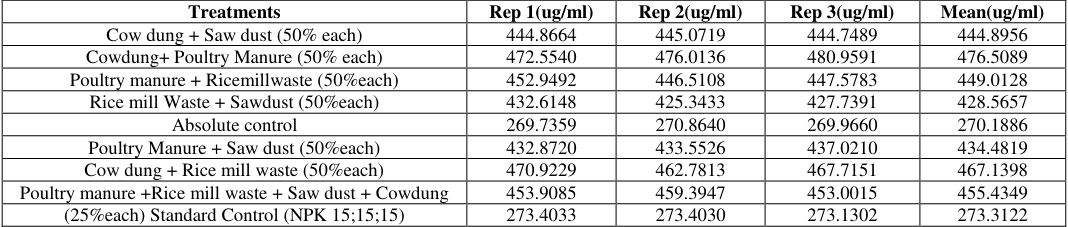 Table 1
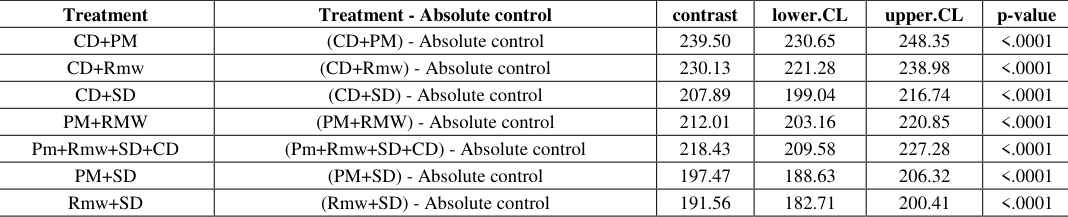 Table 2
 Table 3
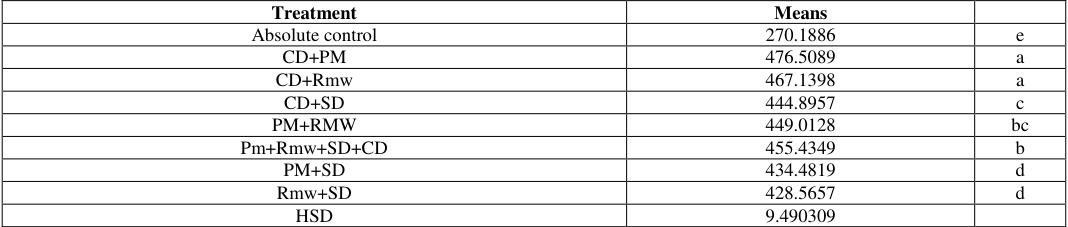 Table 4
 Table 5
 Table 6
 Table 7
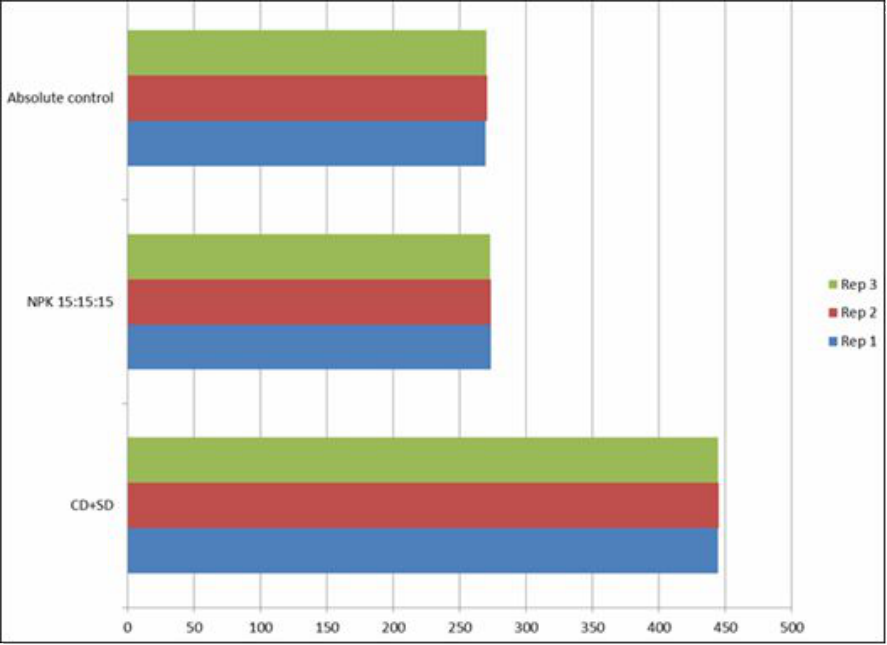 Figure 2
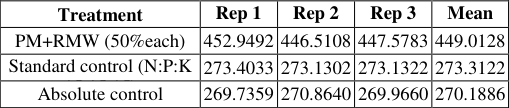 Table 8
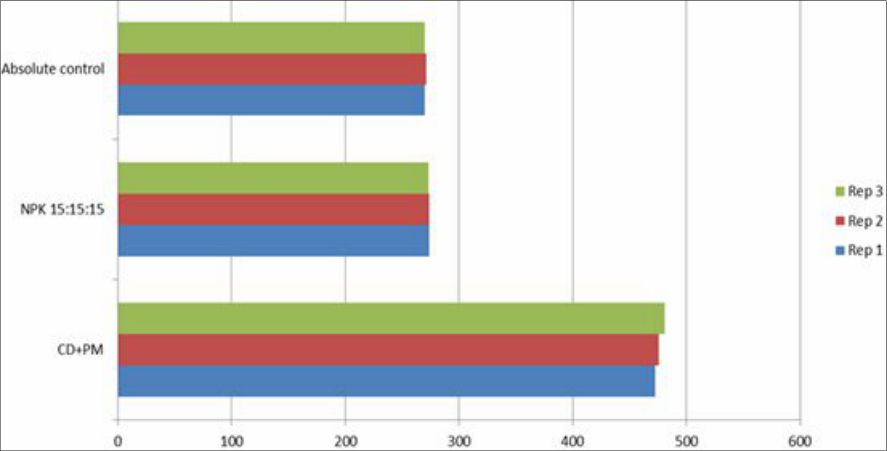 Figure 3
 Table 9
 Table 10
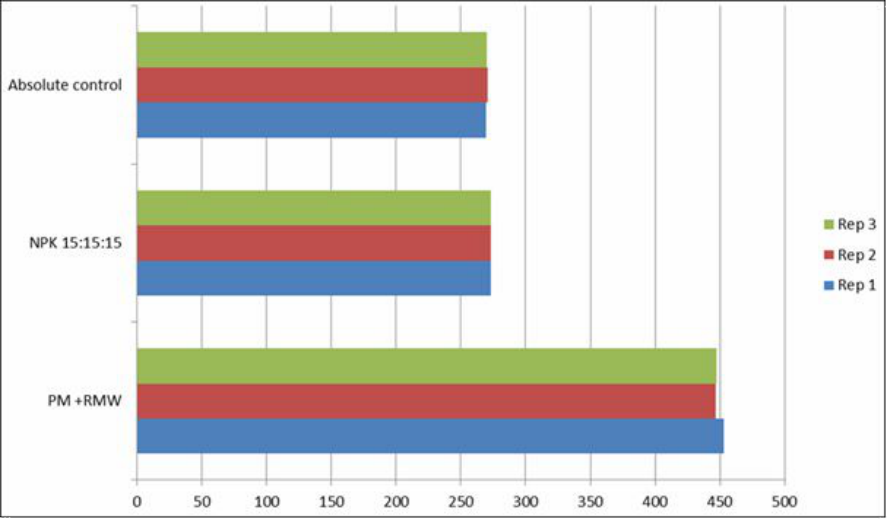 Figure 4
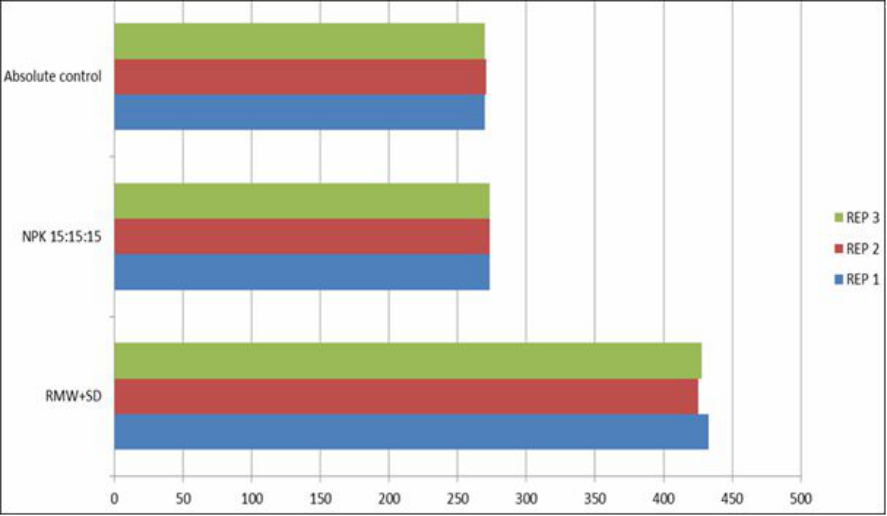 Figure 5
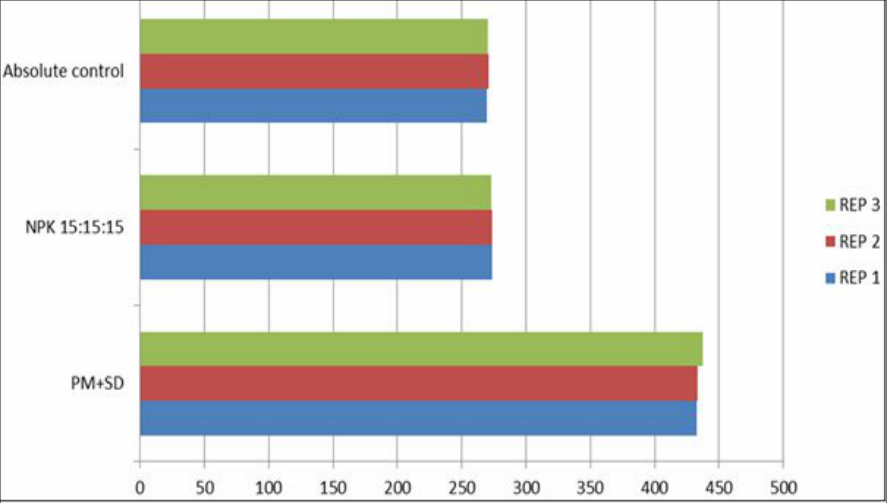 Figure 6
 Table 11
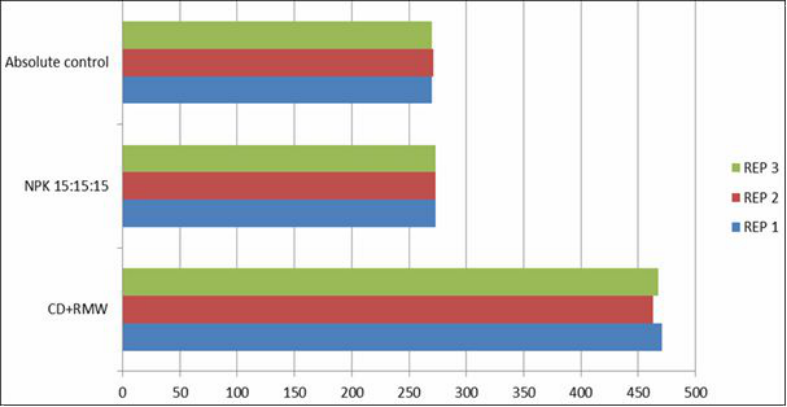 Figure 7
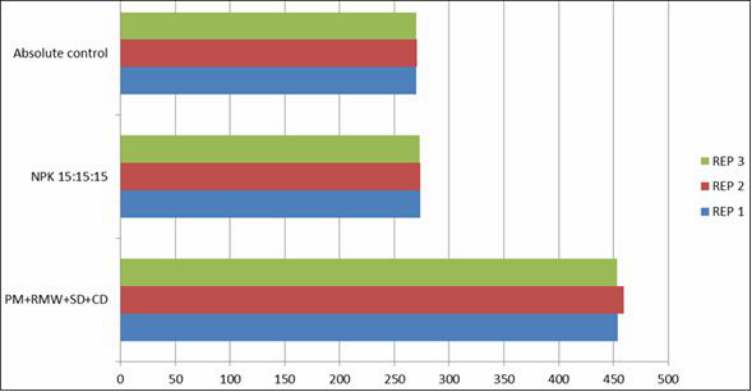 Figure 8
 Table 12
Introduction
Ginger (Zingiber officinale) is a member of the Zingiberaceae family and has been used as a spice and herbal medicine for centuries (Han et al., 2013). In recent years, there has been a surge in interest in the use of ginger all over the world. According to (stoner 2013), the presence of 6-gingerol (5-hydroxy -1 -(4-hydroxy-3-methoxyphenyl) decan-3-one) is responsible for the majority of Ginger's therapeutic properties. Furthermore, numerous studies have shown that ginger has the potential to prevent and control a variety of ailments, including cardiovascular disease (Akinyemi et al. 2015) [1] , obesity (Suk et al 2017) [11] , neurological disease (ho et al. 2013), and respiratory disorder (Townsend et al. 2017) [13] , and diabetes mellitus (Wei et al.). In recent years, ginger has also been found to possess antiinflammatory (Zhang et al. 2016) [19] , anticancer (Cintroberg et al. 2013) and antioxidant (Nile et al. 2015) activities. Consumers are increasingly concerned about agrochemical exposure, particularly in fresh foods (Fortis-hernandiz et al., 2012) [4] , implying that they want chemical-free foods. They have become highly interested in a better diet hence boosting their intake of ginger, fruits, and vegetables (Jahansson et al, 2014). Inorganic/chemical fertilizer has been shown to have significant harmful consequences on the environment and human health (Rande et al 2013). Manure as a soil amendment is preferred over chemical fertilizers because it minimizes pollution and improves food quality. Studies on ginger with organic and inorganic sources of fertilization have been primarily concerned with their productive qualities. This study therefore seeks to determine the best combination of organic materials that will improve the 6gingerol (5-Hyoroxy-1-(4-hydroxy-3-methoxyphenyl) decan-3-one) content of seed ginger.
Methodology The Study Site
The field trial was executed at the National Root Crops Research Institute's Umudike field, which is located on the Umuahia Ikot-Ekpene Road at kilometer 7. It is at an altitude of 122 meters above sea level. The minimum temperature in the area is 22°C, while the maximum temperature is 32°C. The rainfall ranges between 2500 and 3000 mm.
Experimental Design and Manure Rates
The field experiment was carried out in a randomized complete block design with manure source: Poultry manure, Rice mill waste, Sawdust and Cow dung in factorial combination with manure rates of 50% (quantity required to supply 22.5kgN) and 25% (quantity required to supply 11.25kg N) replicated three times with a plot size of 1mx2 m, inter plot distance of 50cm and inter rep distance of 1m. Absolute control treatment (without amendment material) was also included. The Nitrogen content of the organic materials used in this experiment were analyzed in the lab using kjedahl method and found to be Cow dung
Results and Discussion
Reverse phase high performance liquid chromatography was used to quantify the quantity of 6-gingerol content of the ginger extract. The gingerol showed a UV absorption maximum at 280nm and retention time of 3.8 minutes. The result is shown in Table 1. Effect of soil amended with cow dung and sawdust on the 6-gingerol content of Ginger: The 6gingerol content of seed ginger extract was quantified and qualitatively evaluated using the reverse phase HPLC-UV method with gradient elution. The results indicated that ginger harvested from the soil amended with cowdung and saw dustat a rate of 50% each(i.e. 134g and 803.5g) per plot of 1m x 2m, which corresponds to the quantity required to supply 45 kg N per hectare, yielded a mean gingerol concentration of 444.8956 ug/ml. When compared to the standard control (N:P:K 15:15:15), it had a significant effect (p<0.05) on the 6 gingerol content. Additionally, it exhibited a statistically significant effect (p<0.05) when compared to the Absolute Control (No amendment material). Additionally, it was discovered that the gingerol content of ginger grown on soil modified with cowdung and sawdust at 50% each was not significantly different from that of ginger produced on soil amended with poultry manure and rice mill waste at 50% each..
| Treatments | Rep 1(ug/ml) | Rep 2(ug/ml) | Rep 3(ug/ml) | Mean(ug/ml) |
|---|---|---|---|---|
| Cow dung + Saw dust (50% each) | 444.8664 | 445.0719 | 444.7489 | 444.8956 |
| Cowdung+ Poultry Manure (50% each) | 472.5540 | 476.0136 | 480.9591 | 476.5089 |
| Poultry manure + Ricemillwaste (50%each) | 452.9492 | 446.5108 | 447.5783 | 449.0128 |
| Rice mill Waste + Sawdust (50%each) | 432.6148 | 425.3433 | 427.7391 | 428.5657 |
| Absolute control | 269.7359 | 270.8640 | 269.9660 | 270.1886 |
| Poultry Manure + Saw dust (50%each) | 432.8720 | 433.5526 | 437.0210 | 434.4819 |
| Cow dung + Rice mill waste (50%each) | 470.9229 | 462.7813 | 467.7151 | 467.1398 |
| Poultry manure +Rice mill waste + Saw dust + Cowdung | 453.9085 | 459.3947 | 453.0015 | 455.4349 |
| (25%each) Standard Control (NPK 15;15;15) | 273.4033 | 273.4030 | 273.1302 | 273.3122 |
Table text extracted from the original PDF; superscript letters are shown inline. The original table image is below.
View original table image
Additionally, the findings of this study indicate that treatments or amendments that boost ginger crop production may not always convert into increased 6-gingerol yield, demonstrating that ginger yield is not directly proportional to 6-gingerol yield. The increase in 6-gingerol in organic fertilization using combination of cow dung and saw dust could be attributed to the presence of other major and minor elements in cow dung and saw dust that are not present in fertilizer, such as organic carbon, organic matter (composed primarily of approximately 55-57 percent carbon, 35-45 percent hydrogen, and 3-5 percent oxygen), phenylalanine, glutamic acid, hydroxyproline, methionine, tyrosine, and leucine. This could improve food accessibility and physiological processes that support metabolic pathways such as those that generate 6-gingerol.
The reverse phase HPLC-UV technique with gradient elution was used to quantify and qualitatively evaluate the 7-Gingerol content of seed ginger extract. Furthermore, it was revealed that the gingerol content of ginger grown on soil amended with 50% cowdung and 50% poultry manure was not substantially different from ginger cultivated on soil amended with 50% cow dung and 50% rice mill waste. There was also no significant difference in the gingerol content of ginger grown on soil amended with cowdung and poultry manure at 50% each and that of ginger cultivated on soil amended with poultry manure. Furthermore, the results of this study show that treatments or amendments that increase ginger crop output do not always result in greater 6-gingerol yield, suggesting that ginger yield is not directly proportional to 6-gingerol yield. The presence of other major and minor elements in cow dung and saw dust that are not present in fertilizer, such as organic carbon, organic matter (composed primarily of approximately 55-57 percent carbon, 35-45 percent hydrogen, and 3-5 percent oxygen), phenylalanine, glutamic acid, hydroxyproline, methionine, tyrosine, and leucine, could explain the increase in 6-gingerol in organic fertilization using a combination of cow dung and saw dust. Effect of soil amended with poultry manure and Rice mill waste on the 6-gingerol content of Ginger. The quantity of 6gingerol in seed ginger extract harvested from soil amended with poultry manure and rice mill waste was quantified and qualitatively evaluated using the reverse phase HPLC-UV method with gradient elution. Ginger harvested from soil amended with poultry manure and rice mill waste at a rate of 50 percent each (157g and 338.5g) per plot of 1m x 2m, which corresponds to the quantity required to supply 45 kg N per hectare (ie 22.5kg N each), yielded a mean 6-gingerol concentration of 449.0128 ug/ml, according to the results of the study. Comparing the gingerol content of the 6 gingerol extract to that of the standard control (NPK 15:15:15), it had a statistically significant effect (p<0.05). Additionally, when compared to the Absolute Control, it had a statistically significant effect (p<0.05). Also revealed was that the 6-gingerol content of ginger cultivated on soil amended with poultry manure and rice mill waste at 50% each was not significantly different from that of ginger grown on soil treated with cow dung and sawdust at 50% each. The 6-gingerol content of ginger grown on soil amended with poultry manure and rice mill waste at 50 percent each did not differ significantly from that of ginger grown on soil amended with poultry manure +sawdust + rice mill waste + cowdung at 25 percent each.
The findings of this study also suggest that treatments or amendments that increase ginger crop output may not always result in greater 6-gingerol yield, suggesting that ginger yield is not directly proportional to 6-gingerol yield. The presence of other major and minor elements in cow dung and saw dust that are not present in fertilizer, such as organic carbon, organic matter (composed primarily of carbon, hydrogen, and oxygen), phenylalanine, glutamic acid, hydroxyproline, methionine, tyrosine, and leucine, could explain the increase in 6-gingerol in organic fertilization using a combination of poultry manure and rice mill waste.
Effect of Soil Amended with Rice Mill Waste and Sawdust on the 6-Gingerol Content of Ginger.
Using the reverse phase HPLC-UV technique with gradient elution, the 6-gingerol content of seed ginger extract obtained from soil amended with 50% rice mill waste and 50% sawdust was measured and quantitatively evaluated. The results showed that ginger harvested from soil amended with rice mill waste and sawdust at a rate of 50% each (338.5g and 803.5g) per plot of 1m x 2m, corresponding to the quantity required to supply 45 kg N per hectare, ie 22.5kg N each, yielded a mean 6-gingerol concentration of 428.5657 ug/ml. It had a significant influence (p<0.05) on the 6 gingerol content when compared to the standard control (N:P:K 15:15:15). Furthermore, when compared to the Absolute Control, it had a statistically significant effect (p<0.05).. Furthermore, the 6-gingerol concentration of ginger grown on soil amended with rice mill waste and sawdust at 50% each was not substantially different from ginger cultivated on soil supplemented with rice mill waste.
There was also no statistically significant difference between the 6-gingerol concentration of ginger cultivated on soil amended with rice mill waste and sawdust at 50% each and ginger grown on soil amended with poultry manure and sawdust at 50% each. Furthermore, the results of this study show that treatments or amendments that increase ginger crop output do not always result in greater 6-gingerol yield, suggesting that ginger yield is not directly proportional to 6gingerol yield. The presence of other major and minor elements in rice mill waste and saw dust that are not present in NPK fertilizer, such as organic carbon, organic matter (composed primarily of carbon, hydrogen, and oxygen), phenylalanine, glutamic acid, hydroxyproline, methionine, tyrosine, and leucine, could explain the increase in 6gingerol in organic fertilization using a combination of poultry manure and rice mill waste.
Effect of soil amended with poultry manure and sawdust on the 6-gingerol content of Ginger
Using the reverse phase HPLC-UV technique with gradient elution, the 6-gingerol content of seed ginger extract cultivated on soil modified with poultry manure and sawdust was measured and qualitatively evaluated. A mean 6-gingerol concentration of 434.4819 ug/ml was obtained from ginger harvested from soil supplemented with poultry manure and sawdust at 50% each (157g and 803.5g) per 1m × 2m plot. Compared to the standard control (N: P: K 15:15:15), it had a significant effect (p<0.05). It also had a statistically significant influence (p<0.05) on the Absolute Control (No amendment material). The 6-gingerol content of ginger cultivated in soil amended with 50% poultry manure and 50% sawdust was not substantially different from ginger grown in soil treated with rice mill waste. The 6-gingerol concentration of ginger cultivated on soil amended with rice mill waste and sawdust at 50% did not differ from ginger grown on soil treated with poultry manure and sawdust at 50%. This study also found that treatments or amendments that enhance ginger crop yield may not always increase 6-gingerol yield, proving that ginger yield is not directly proportional to 6-gingerol yield.
In rice mill waste and saw dust, there are other major and minor elements that are absent in NPK fertilizer, such as organic carbon, organic matter (composed primarily of carbon, hydrogen, and oxygen), phenylalanine, glutamic acid, and leucine. Ginger harvested from soil amended with cow dung and rice mill waste at a rate of 50% each (i.e. 134g and 338.5g) per plot of 1m x 2m, which corresponds to the quantity required for 45 kg N per hectare, i.e. 22.5kg N each, yielded a mean 6-gingerol concentration of 467.1398 ug/ml, according to the findings. Comparing the gingerol content of the 6 gingerol extract to that of the standard control (NPK 15:15:15), it exhibited a statistically significant impact (p<0.05). Additionally, when compared to the Absolute Control, it had a statistically significant impact (p<0.05) (No amendment material). It was found that the 6-gingerol content of ginger cultivated on soil amended with cowdung and rice mill waste at 50% each was not substantially different from the 6-gingerol content of ginger grown on soil supplemented with poultry manure. The 6-gingerol content of ginger cultivated on soil amended with cow dung and rice mill waste at 50 percent each did not vary significantly from the 6-gingerol content of ginger grown on soil treated with cow dung and poultry manure at 50 percent each. Organic fertilization using a combination of cowdung and rice mill waste resulted in an increase in 6-gingerol levels, which could be attributed to the presence of other major and minor elements in rice mill waste and cowdung that are not present in NPK fertilizer, such as organic carbon, organic matter (which is composed primarily of carbon, hydrogen, and oxygen) amd phenylalanine.
Effect of soil amended with poultry manure, Rice mill waste, Sawdust and cow dung on the 6-gingerol content of Ginger
The reverse phase HPLC-UV technique with gradient elution was used to quantify and qualitatively assess the 6-gingerol content of seed ginger extract cultivated from soil amended with poultry manure.rice mill waste.sawdust and cowdung at 25%each. Ginger grown on soil amended with cowdung+ rice mill waste + sawdust+ poultry manure at a rate of 25 percent each did not have a statistically significant difference in 6gingerol content from ginger grown on soil amended with poultry manure and rice mill waste at a rate of 50 percent each, according to the findings. The results of this research also suggest that treatments or amendments that enhance ginger crop output may not necessarily result in higher 6gingerol yield, showing that ginger yield is not directly proportional to 6-gingerol yield. Organic fertilization using a combination of cowdung + rice mill waste + poultry manure + sawdust at a rate of 25 percent each could result in an increase in 6-gingerol due to the presence of other major and minor elements in the organic fertilizer that are not present in NPK fertilizer, such as organic carbon, organic matter (composed primarily of carbon, hydrogen, and oxygen), phenylalanine, glutamic acid, hydroxyproline, methionine, tyrosine,
Conclusion
The organic manures combinations used in this study significantly affected the 6-gingerol concentration of ginger but at different degrees. Cow dung + Poultry manure at 50% each has the most significant effect when Compared with the other organic combinations used in this experiment though all the other combinations of organic manures used had significant effect (p<0.05) when compared with the Absolute control and Standard control.
There was no significant difference between the effect of poultry manure + rice mill waste and poultry manure + rice mill waste + sawdust + cow dung. There was also no significant difference between the effect of Cow dung + sawdust and poultry manure + rice mill waste. The result equally showed no significant difference between the effects of poultry manure + saw dust and rice mill waste + saw dust. Different Organic manures combinations affected the 6-gingerol content of ginger at different degrees. The result of this research showed that the soil/plot amended with the combination of 134g of cow dung and 157g of poultry manure at 50% each per plot of 2m yielded the highest concentration of 6-gingerol among the organic manure combinations and is therefore recommended.
Figures and tables from the paper
| Treatment | Treatment - Absolute control | contrast | lower.CL | upper.CL | p-value |
|---|---|---|---|---|---|
| CD+PM | (CD+PM) - Absolute control | 239.50 | 230.65 | 248.35 | <.0001 |
| CD+Rmw | (CD+Rmw) - Absolute control | 230.13 | 221.28 | 238.98 | <.0001 |
| CD+SD | (CD+SD) - Absolute control | 207.89 | 199.04 | 216.74 | <.0001 |
| PM+RMW | (PM+RMW) - Absolute control | 212.01 | 203.16 | 220.85 | <.0001 |
| Pm+Rmw+SD+CD | (Pm+Rmw+SD+CD) - Absolute control | 218.43 | 209.58 | 227.28 | <.0001 |
| PM+SD | (PM+SD) - Absolute control | 197.47 | 188.63 | 206.32 | <.0001 |
| Rmw+SD | (Rmw+SD) - Absolute control | 191.56 | 182.71 | 200.41 | <.0001 |
Table text extracted from the original PDF; superscript letters are shown inline. The original table image is below.
View original table image
| Treatment | Treatment - Standard control | contrast | SE | df | lower.CL | upper.CL | p-value |
|---|---|---|---|---|---|---|---|
| CD+PM | (CD+PM) - Standard control | 203.20 | 2.55 | 24.00 | 194.35 | 212.05 | <.0001 |
| CD+Rmw | (CD+Rmw) - Standard control | 193.83 | 2.55 | 24.00 | 184.98 | 202.68 | <.0001 |
| CD+SD | (CD+SD) - Standard control | 171.59 | 2.55 | 24.00 | 162.74 | 180.43 | <.0001 |
| PM+RMW | (PM+RMW) - Standard control | 175.70 | 2.55 | 24.00 | 166.85 | 184.55 | <.0001 |
| Pm+Rmw+SD+CD | (Pm+Rmw+SD+CD) - Standard control | 182.12 | 2.55 | 24.00 | 173.28 | 190.97 | <.0001 |
| PM+SD | (PM+SD) - Standard control | 161.17 | 2.55 | 24.00 | 152.32 | 170.02 | <.0001 |
| Rmw+SD | (Rmw+SD) - Standard control | 155.26 | 2.55 | 24.00 | 146.41 | 164.10 | <.0001 |
Table text extracted from the original PDF; superscript letters are shown inline. The original table image is below.
View original table image
| Treatment | Means | — |
|---|---|---|
| Absolute control | 270.1886 | e |
| CD+PM | 476.5089 | a |
| CD+Rmw | 467.1398 | a |
| CD+SD | 444.8957 | c |
| PM+RMW | 449.0128 | bc |
| Pm+Rmw+SD+CD | 455.4349 | b |
| PM+SD | 434.4819 | d |
| Rmw+SD | 428.5657 | d |
| HSD | 9.490309 |
Table text extracted from the original PDF; superscript letters are shown inline. The original table image is below.
View original table image
| MANURE | N (%) | P (mg/kg) | K (Cmol/kg) | OC % | OM (%) | Na (Cmol/kg) |
|---|---|---|---|---|---|---|
| CD | 3.36 | 7.5 | 1.205 | 6.30 | 23.94 | 0.725 |
| PM | 2.87 | 19.0 | 1.295 | 7.40 | 28.12 | 2.300 |
| RMW | 1.33 | 5.8 | 0.15 | 8.60 | 32.68 | 1.025 |
| SD | 0.56 | 2.0 | 0.08 | 8.4 | 31.92 | 12.700 |
Table text extracted from the original PDF; superscript letters are shown inline. The original table image is below.
View original table image
| Treatment | Rep 1 Ug/ml | Rep 2 Ug/ml | Rep 3 Ug/ml | Mean Ug/ml |
|---|---|---|---|---|
| CD+SD(50%each) | 444.8664 | 445.0719 | 444.7489 | 444.8956 |
| N:P:K 15:15:15 | 273.4033 | 273.1302 | 273.1322 | 273.3122 |
| Absolute control | 269.7359 | 270.8640 | 269.9660 | 270.1886 |
Table text extracted from the original PDF; superscript letters are shown inline. The original table image is below.
View original table image
| Treatment | Rep 1 Ug/ml | Rep 2 Ug/ml | Rep 3 Ug/ml | Mean Ug/ml |
|---|---|---|---|---|
| CD+PM (50%each) | 472.5540 | 476.0136 | 480.9591 | 476.5089 |
| Standardcontrol (N:P:K 15:15:15) | 273.4033 | 273.1302 | 273.1322 | 273.3122 |
| Absolute control | 269.7359 | 270.8640 | 269.9660 | 270.1886 |
Table text extracted from the original PDF; superscript letters are shown inline. The original table image is below.
View original table image
| Treatment | Rep 1 | Rep 2 | Rep 3 | Mean |
|---|---|---|---|---|
| PM+RMW (50%each) | 452.9492 | 446.5108 | 447.5783 | 449.0128 |
| Standard control (N:P:K | 273.4033 | 273.1302 | 273.1322 | 273.3122 |
| Absolute control | 269.7359 | 270.8640 | 269.9660 | 270.1886 |
Table text extracted from the original PDF; superscript letters are shown inline. The original table image is below.
View original table image
| Treatment | Rep 1 | Rep 2 | Rep 3 | Mean |
|---|---|---|---|---|
| RMW+SD (50%each) | 432.61 | 425.34 | 427.73 | 428.56 |
| Standard control | 273.40 | 273.13 | 273.13 | 273.31 |
| Absolute control | 269.73 | 270.86 | 269.96 | 270.18 |
Table text extracted from the original PDF; superscript letters are shown inline. The original table image is below.
View original table image
| Treatment | Rep 1 Ug/ml | Rep 2 Ug/ml | Rep 3 Ug/ml | Mean Ug/ml |
|---|---|---|---|---|
| PM+SD (50%each) | 432.8720 | 433.5526 | 437.0210 | 434.4819 |
| Standard control (N: P: K 15:15:15) | 273.4033 | 273.1302 | 273.1322 | 273.3122 |
| Absolute control | 269.7359 | 270.8640 | 269.9660 | 270.1886 |
Table text extracted from the original PDF; superscript letters are shown inline. The original table image is below.
View original table image
| Treatment | Rep 1 Ug/ml | Rep 2 Ug/ml | Rep 3 Ug/ml | Mean Ug/ml |
|---|---|---|---|---|
| CD+RMW (50%each) | 470.9229 | 462.7813 | 467.7151 | 467.1398 |
| Standard control (N:P:K 15:15:15) | 273.4033 | 273.1302 | 273.1322 | 273.3122 |
| Absolute control | 269.7359 | 270.8640 | 269.9660 | 270.1886 |
Table text extracted from the original PDF; superscript letters are shown inline. The original table image is below.
View original table image
| Treatment | Rep 1 | Rep 2 | Rep 3 | Mean |
|---|---|---|---|---|
| Ug/ml | Ug/ml | Ug/ml | Ug/ml | |
| PM+RMW+SD+CD(25%each) | 453.9085 | 459.3947 | 453.0015 | 455.4349 |
| Standardcontrol(N:P:K 15:15:15) | 273.4033 | 273.1302 | 273.1322 | 273.3122 |
| Absolute control | 269.7359 | 270.8640 | 269.9660 | 270.1886 |
Table text extracted from the original PDF; superscript letters are shown inline. The original table image is below.
View original table image
References
16 in the original paper- Akinyemi AJ, Thome GR, Morsch VM, Stefanello N, Goularte JF, Bello-Klein A et al. Effect of dietary supplementation of ginger and turmeric rhizomes on angiotensin-1 converting enzyme (ACE) and arginase activities in L-NAME induced hypertensive rats. J. Funct. Foods,2015:17:792-801. [Cross Ref]
- Citronberg J, Bostick R, Ahearn T, Turgeon DK, Ruffin MT, Djuric Z et al. Effects of ginger supplementation on cell-cycle biomarkers in the normal-appearing colonic mucosa of patients at increased risk for colorectal cancer: Results from a pilot, randomized, and controlled trial. Cancer Prev. Res,2013:6:271-281. [Cross Ref] [PubMed]
- Faezah-Omar N, Aishah-Hassan S, Kalsom-Yusoff U, Psyquay-Abdullah NA, Megatwahab PE, Rani-Sinniah U. phenolics, Flavonoids Antioxidant Activity and Cyanogenic Glycosides OF Organic and Mineral-base fertilized cassava Tubers. Molecules,2012:17:23782387. Https://doi.org/10.3390/molecules,180910973
- Fortis-Hernandez M, Preciado-Rangel P, GarciaHernandez Jl, Navarro-Bravo A, Antonio-Gonazalalez j, Omana-Silvestre JM. Organic Subtrates in the production of Sweet pepper. Revista Mexicana de Ciencias Agarias,2012:3:1203-12161.
- Ho S, Chang K, Lin C. Anti-neuro inflammatory capacity of fresh ginger is attributed mainly to 6gingerol. Food Chem,2013:141:3183-3191. [Cross Ref]
- Horrigan H, Lawrence RS, walk p. how sustainable agriculture can address the environmental and human health harms of industrial agriculture. Environmental health perspectives,2002:110:445-446. Https://doi.org/10.1289/ehp.02110445
- Johansson E, Hussian A, Kuktaite R, Andersson SC, Osson ME. Contribution of Organically Grown Crops to Human Health. International Journal of Environmental Research and Public Health,2014:11:3870-3893.
- Ramos -Auero D, Terry-Alfonso E. Generalities of the Organic Manures Boccashis Importance like Nutritional Alternatives for soil and plants. Cultivoros Tropicals,2014:35:52:59.
- Selahle KM, silvakumar D, Jifon J, Soundy P. Postharvest Responses of Red and Yellow Sweet peppers Grown under photo -Selective nets. Food Chemistry,2015:173:951-956. Https://doi.org/10.1016/j.foodchem.2014.10.034
- Stoner, G.D. Ginger: Is it ready for prime time? Cancer Prev. Res. 2013, 6, 257-262. [Cross Ref]
- Suk S, Kwon GT, Lee E, Jang WJ, Yang H, Kim JH et al. Gingerenone A, a polyphenolpresent in ginger, 12. suppresses obesity and adipose tissue inflammation in high-fat -diet fed mice. Mol. Nutr. Food Res,2017:61:1700139. [Cross Ref
- Townsend EA, Siviski ME, Zhang Y, Xu C, Hoonjan B, Emala CW. Effects of ginger and its constituents on 14. airway smooth muscle relaxation and calcium regulation. Am. J Resp. Cell Mol,2013:48:157-163. [Cross Ref]
- Ullah I, Muammad A, Ullah N, Ali U, Khan S, Khan I. Effect of natural preservative (Ginger extract) on the over quality of carrot and Kinnow blended jam. Int. J Hortic. Food Sci. 2020;2(1):01-09. DOI: 10.33545/26631067.2020.v2.i1a.31
- Walstab J, Krueger D, Stark T, Hofmann T, Demir IE, Ceyhan GO et al. Ginger and its pungent constituents 17. non-competitively inhibit activation of human recombinant and native 5-HT3 receptors of enteric neurons. Neurogastroent. Motil,2013:25:439-447. [Cross Ref]
- Wei C, Tsai Y, Korinek M, Hung P, El-Shazly M, Cheng Y et al. 6-Paradol and 6-shogaol, the pungent 19. compounds of ginger, promote glucose utilization in adipocytes and myotubes, and 6-paradol reduces blood glucose in high-fat diet-fed mice. Int. J. Mol. Sci,2017:18:168. [Cross Ref]
- Anovel therapeutic approach for the prevention and treatment of inflammatory bowel disease and colitisassociated cancer. Biomaterials,2016:101:321-340. [Cross Ref]